Betta persephone Care Guide – Tank Setup, Feeding and Breeding
Quick summary
Betta persephone is an advanced-level, aggressive wild Betta that demands extremely soft, acidic blackwater conditions (pH 3.5-5.5) and dedicated species-only housing, so it is not suitable for beginners or standard community tanks. If you cannot commit to RO/peat-filtered water, careful aggression management, and live/frozen food feeding, this is not the right fish for you.
🐠 Build a tank around this fish
In this guide:
- Introduction
- Quick Stats
- Appearance
- Natural Habitat
- Tank Size and Setup
- Water Parameters
- Filtration and Equipment
- Diet and Feeding
- Behaviour and Temperament
- Tank Mates
- Breeding
- Common Diseases
- FAQs
Introduction
Betta persephone is one of the most captivating and challenging wild Betta species available to the specialist aquarist. Described by Schaller in 1986 and named after Persephone, the Greek goddess of the underworld, this tiny fish carries a reputation that far exceeds its diminutive size. Known in the trade as the Batman Betta or the Queen of Bettas, it has earned a less flattering nickname among seasoned wild Betta keepers: the “problem child.” Despite – or perhaps because of – its demanding nature, Betta persephone is one of the most popular and widely discussed wild Bettas in the hobby, commanding a genuine specialist trade presence since it first appeared in collections during the 1980s.
Endemic to peat swamp forests in a remarkably small area of southwestern Johor state in Peninsular Malaysia, Betta persephone occupies one of the most threatened habitats on Earth. Its range is restricted to areas around Ayer Hitam, Muar, and Kluang, where ongoing agricultural expansion – particularly oil palm plantations – has drastically reduced the peat swamp forests on which this species depends. This precarious existence in the wild makes responsible captive husbandry all the more important, not only for the enjoyment of the hobby but as a potential safeguard against extinction.
As the smallest member of the Betta coccina group, Betta persephone is a bubble-nesting species that displays remarkable aggression for its size. It is not suitable for standard community aquariums and requires careful planning, dedicated housing, and a thorough understanding of blackwater biotope conditions. This guide covers everything you need to know to keep this extraordinary species successfully, from tank setup and water chemistry to feeding, breeding, and managing its famously combative temperament.
Quick Stats
| Scientific name | Betta persephone |
| Common names | Batman Betta, Queen of Bettas, Persephone Betta |
| Family | Osphronemidae |
| Origin | Peat swamp forests of southwestern Johor, Peninsular Malaysia (Ayer Hitam, Muar, Kluang) |
| Adult size | 3 – 4 cm |
| Lifespan | 3 – 5 years |
| Difficulty | Advanced |
| Breeding difficulty | Advanced |
| Temperature | 22 – 27 °C |
| pH range | 3.5 – 5.5 |
| General hardness (GH) | 0 – 3 dGH |
| Carbonate hardness (KH) | 0 – 1 dKH |
| Minimum tank size | 30 litres |
| Conservation status | Critically Endangered (IUCN) |
Appearance
Betta persephone is a strikingly beautiful yet subtle fish, embodying the understated elegance that characterises many wild Betta species. Adults are remarkably small, typically reaching only 3 to 4 centimetres in total length, making it the smallest recognised member of the Betta coccina complex. Its body is slender and laterally compressed, with a shape that is broadly typical of the coccina group but noticeably more delicate and compact.
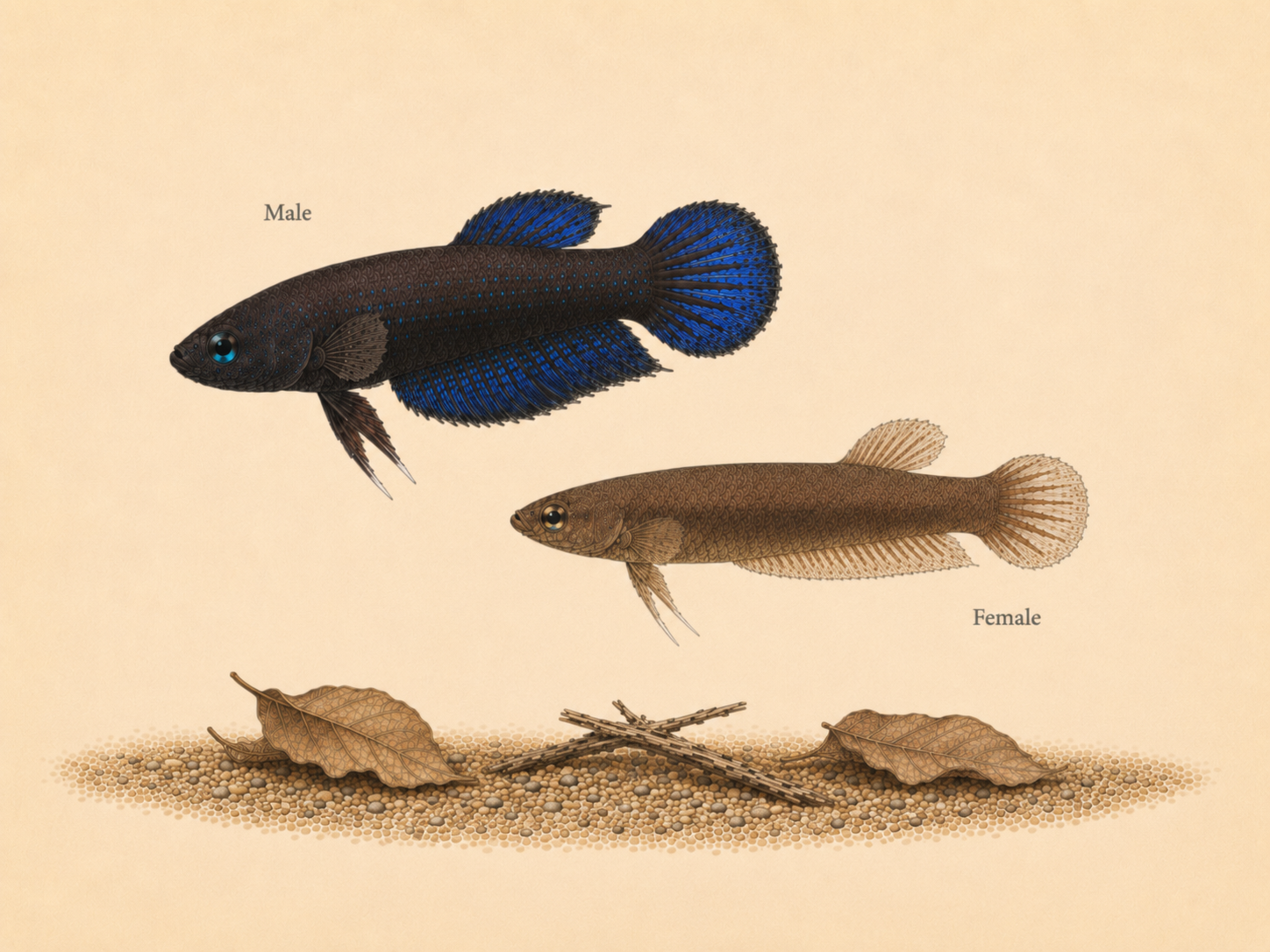
The base colouration of Betta persephone is a deep, velvety black to dark brown, which provides the foundation for its “Batman Betta” trade name. Overlaying this dark ground colour, males display vivid iridescent blue to blue-green highlights, particularly on the unpaired fins and flanks. When in full display or breeding condition, males become genuinely stunning – the contrast between the near-black body and the electric blue fin margins and body iridescence is remarkable for such a tiny fish. The ventral (pelvic) fins are elongated and typically tipped with bright blue or white, adding a graceful accent.
Females are more subdued in colouration, retaining the dark brown to brownish-black base but showing much less iridescence. They tend to appear slightly plumper when gravid and generally lack the intense blue highlights seen in displaying males. However, dominant females can occasionally show surprising amounts of colour, and sexing juveniles can be challenging until they begin to mature.
The eyes are proportionally large relative to the head, lending the fish an alert, attentive expression. The mouth is small and slightly upturned, reflecting its surface-oriented feeding habits. The dorsal fin is relatively short-based and positioned far back on the body, while the anal fin is longer and more sweeping. The caudal fin is rounded, as is typical for bubble-nesting Betta species. Overall, Betta persephone has a jewel-like quality that photographs rarely capture fully – it is a fish that must be seen in person, under subdued lighting, to be truly appreciated.
Natural Habitat
Betta persephone is found exclusively in the peat swamp forests of southwestern Johor state on the southern tip of Peninsular Malaysia. Its known range is extremely restricted, centred around the towns of Ayer Hitam, Muar, and Kluang. These peat swamp habitats are ancient, complex ecosystems where thick layers of partially decomposed organic matter have accumulated over thousands of years, creating waterlogged, acidic environments that support highly specialised communities of plants and animals.
The waters in which Betta persephone lives are among the most extreme freshwater environments on Earth from a chemical standpoint. Peat swamp water is characteristically dark brown to almost black – stained by humic acids and tannins leached from decomposing plant material. The pH is remarkably low, often falling between 3.0 and 5.0, and the water is extremely soft, with negligible mineral content. General hardness and carbonate hardness are essentially zero. Dissolved oxygen levels can be very low, which is one reason why Betta persephone, like all members of its family, possesses a labyrinth organ that allows it to breathe atmospheric air.
The substrate in these habitats consists of deep layers of leaf litter, fallen branches, and decomposing peat. The forest canopy above is dense, meaning light levels at the water surface are very low. During the wet season, shallow pools, rivulets, and flooded forest floor provide the fish with interconnected habitat. During the dry season, however, water levels can drop dramatically. When water becomes scarce, Betta persephone will bury itself among damp leaf litter and wait for the return of the rains – a remarkable survival adaptation shared with a handful of its closest relatives, including Betta rutilans and Betta livida. This behaviour underscores the species’ resilience and adaptability within its narrow ecological niche.
Tragically, peat swamp forests in Johor have been extensively cleared for agriculture, particularly oil palm cultivation. The conversion of these habitats is irreversible in any meaningful human timescale, and the restricted range of Betta persephone makes it acutely vulnerable to extinction. The species is classified as Critically Endangered by the IUCN, and ongoing habitat loss continues to threaten the remaining wild populations.
Tank Size and Setup
A single pair or a lone male Betta persephone can be housed in a tank of at least 30 litres, though 40 to 60 litres is preferable and provides more stable water conditions. If you intend to keep a small group – for example, a pair with the aim of breeding, or a trio of one male and two females – a tank of 45 to 60 litres is recommended. Larger groups or multiple males require proportionally larger tanks with extensive visual barriers, and even then, aggression management will be an ongoing concern.
The aquarium should be set up to replicate a peat swamp biotope as closely as possible. Begin with a base of fine, dark sand or bare-bottomed glass – some keepers prefer no substrate at all to make maintenance easier in very soft, acidic water. On top of this, add a generous layer of dried leaves. Indian almond leaves (Terminalia catappa), oak leaves, and beech leaves are all suitable. The leaf litter should be deep enough to provide hiding places and mimic the forest floor – a layer 3 to 5 centimetres thick is not excessive. These leaves will decompose over time, releasing tannins that help maintain the correct water chemistry and providing a source of biofilm and microorganisms that supplement the fish’s diet.
Driftwood and bogwood are essential additions. Use small, branching pieces to create a complex structure of hiding spots and visual barriers. Coconut shells cut in half also make excellent caves and spawning sites. The goal is to create an environment where the fish feel secure and where subordinate individuals can retreat from dominant ones.
Live plants are not strictly necessary and many are unable to thrive in the extremely acidic, nutrient-poor conditions preferred by this species. However, Cryptocoryne species (particularly Cryptocoryne nurii and Cryptocoryne cordata, which are native to similar habitats in Johor) can work well. Java moss (Taxiphyllum barbieri) will also tolerate these conditions and provides useful cover. Floating plants such as Salvinia or Ceratopteris thalictroides can be used to diffuse light and provide surface cover, but be careful not to block the surface entirely, as Betta persephone needs access to air.
Lighting should be dim. Betta persephone comes from deeply shaded forest floor habitats and will be stressed by bright aquarium lighting. Use low-intensity LED lights, or filter the light through a thick layer of floating plants. The tannin-stained water itself will also reduce light penetration. A tight-fitting lid is essential, as all Betta species are capable jumpers, and this species is no exception.
Water Parameters
Water chemistry is arguably the single most critical aspect of keeping Betta persephone successfully, and it is the area where most failures occur. This species requires extremely soft, acidic water that many aquarists will need to prepare specifically, as tap water in most regions is far too hard and alkaline.
| Temperature | 22 – 27 °C |
| pH | 3.5 – 5.5 |
| General hardness (GH) | 0 – 3 dGH |
| Carbonate hardness (KH) | 0 – 1 dKH |
| Ammonia | 0 ppm |
| Nitrite | 0 ppm |
| Nitrate | Below 10 ppm |
The pH range of 3.5 to 5.5 is not a typographical error. Betta persephone genuinely thrives in water that would be lethal to the vast majority of aquarium fish. Most keepers find a pH of 4.0 to 5.0 to be the sweet spot. Achieving and maintaining this requires the use of reverse osmosis (RO) water or distilled water, remineralised only very slightly (if at all) and acidified using natural methods such as peat filtration, Indian almond leaf extract, or commercially available blackwater extracts. Some keepers use dilute phosphoric acid or similar products, but natural methods are generally preferred as they also introduce beneficial tannins and humic substances.
Standard biological filtration is compromised at very low pH values, as the nitrifying bacteria that convert ammonia to nitrite and nitrite to nitrate function poorly below pH 6.0 and may cease to function meaningfully below pH 5.0. At these extremely low pH levels, ammonia exists predominantly in its less toxic ionised form (ammonium), which provides some margin of safety, but regular water changes and careful feeding remain essential to prevent the accumulation of organic waste. Many experienced keepers of blackwater Betta species rely on frequent small water changes (10 to 15 per cent, two to three times per week) using pre-prepared water of the correct chemistry, rather than depending heavily on biological filtration.
Temperature should be maintained between 22 and 27 degrees Celsius. Room temperature in many temperate homes during summer may be sufficient, but a reliable, adjustable heater is recommended to prevent temperature fluctuations, particularly overnight or during colder months. Avoid temperatures above 28 degrees Celsius for extended periods.
Filtration and Equipment
Filtration for Betta persephone should be gentle, effective at mechanical filtration, and compatible with the extremely acidic water conditions this species requires. Air-driven sponge filters are the most commonly recommended option among wild Betta specialists. They provide gentle water movement, adequate mechanical filtration, and some biological filtration surface area, while the air bubbles ensure the surface is gently disturbed – important for gas exchange in a covered tank. Choose a sponge filter rated for the tank size, and adjust the air flow to produce only a very gentle current. Betta persephone inhabits still to very slow-moving water in the wild and will be stressed by strong flow.
An alternative is a small internal filter or a hang-on-back filter set to its lowest flow setting, with the intake covered by a fine sponge pre-filter to prevent the fish from being drawn against it. Canister filters are generally unnecessary and overpowered for the small tanks typically used for this species.
Adding peat to the filter media compartment or using a mesh bag of aquarium-grade peat in the tank is a traditional and effective method of maintaining low pH and introducing tannins. However, the peat must be free of additives and fertilisers – use only products specifically sold for aquarium use. Peat exhausts its buffering capacity over time and must be replaced regularly.
A reliable, adjustable heater is essential. Choose a heater appropriately sized for the tank volume – an overpowered heater in a small tank can cause dangerous temperature spikes. A separate thermometer (digital or glass) should be used to verify the heater’s accuracy. Place the heater near the filter outflow to ensure even heat distribution.
Lighting should be subdued. A simple low-wattage LED strip is usually sufficient. Many keepers position the tank away from direct sunlight and use ambient room lighting supplemented by a dim aquarium light on a timer set for 8 to 10 hours per day. A tight-fitting lid or cover glass is non-negotiable to prevent jumping and to maintain the warm, humid air layer above the water surface that labyrinth fish need for healthy respiration.
Diet and Feeding
Betta persephone is a micro-predator that feeds primarily on tiny invertebrates in the wild. In captivity, it can be fussy, and newly acquired specimens may initially refuse prepared foods entirely. A varied diet based predominantly on live and frozen foods is the foundation of successful feeding.
Live foods are strongly preferred and should form the core of the diet. Suitable options include baby brine shrimp (Artemia nauplii), Daphnia, Moina, micro-worms, Grindal worms, vinegar eels, and wingless fruit flies. Many experienced keepers of wild Betta species maintain their own live food cultures, which is highly recommended if you intend to keep Betta persephone long-term. Live food encourages natural hunting behaviour, provides excellent nutrition, and is readily accepted even by newly imported or shy individuals.
Frozen foods are a practical alternative and are generally accepted once the fish have settled in. Frozen baby brine shrimp, frozen Daphnia, and frozen cyclops are all suitable. Thaw frozen food in a small amount of tank water before feeding to avoid introducing excessively cold material into the tank. Frozen bloodworms can be offered occasionally but should not form the staple diet, as they are relatively fatty and have been linked to digestive issues in small Betta species when fed in excess.
High-quality micro-pellets designed for small carnivorous fish may be accepted by well-established specimens, but many individuals will consistently refuse dry foods. Do not rely on pellets or flakes as the primary diet for this species. If your fish accept them, treat prepared foods as a supplement rather than a staple.
Feed small amounts once or twice daily, offering only what the fish can consume within a few minutes. Overfeeding is a particular risk in low-pH tanks where biological filtration is compromised, as uneaten food will decompose and foul the water quickly. A weekly fast day is beneficial for digestive health.
Behaviour and Temperament
Betta persephone has earned its reputation as the “problem child” of wild Betta keeping for good reason. Despite its tiny size, it is genuinely one of the most aggressive species in the Betta coccina group, and its territorial behaviour can catch even experienced aquarists off guard.
Males are highly territorial and will aggressively defend their chosen area – typically a cave, overhanging leaf, or sheltered spot near the water surface where they intend to build a bubble nest. In small tanks, a dominant male may claim the entire aquarium as his territory, making cohabitation with other males virtually impossible. Male-on-male aggression includes intense flaring, opercular displays, body posturing, and physical attacks that can result in serious fin damage or death in confined spaces. Keeping two males together in anything less than a very large, heavily decorated tank is strongly inadvisable.
Male-female aggression is also a significant concern. Outside of active spawning, males will frequently chase and harass females. In small tanks without adequate hiding places, this can lead to severe stress, injury, or death of the female. This is one reason why a well-structured tank with numerous visual barriers, dense leaf litter, and multiple hiding spots is so important.
Interestingly, female-female aggression can also be notable. While less intense than male conflicts, dominant females will establish hierarchies and may bully subordinate females, particularly in small groups or confined spaces.
Despite this aggression towards conspecifics, Betta persephone is not generally aggressive towards other species – provided those species are not perceived as rivals. The aggression is largely intraspecific and driven by territorial and reproductive competition. With appropriate tank mates (see below), Betta persephone can coexist peacefully, though its shyness and small size mean it is easily outcompeted for food and stressed by boisterous or fast-moving companions.
When not engaged in territorial disputes, Betta persephone is a relatively slow-moving, deliberate fish that spends much of its time hovering among leaf litter and driftwood, occasionally rising to the surface to gulp air. It is most active during dawn and dusk and may be largely inactive during brighter periods. In well-established tanks with subdued lighting and appropriate water conditions, the species becomes noticeably bolder and displays more natural behaviour.
Tank Mates
Choosing tank mates for Betta persephone requires exceptional care. The combination of its aggressive temperament towards conspecifics, its tiny size, its requirement for extremely soft and acidic water, and its tendency to be outcompeted for food by more assertive species severely limits the list of suitable companions. Many experienced keepers opt to maintain this species in a species-only setup, and this is arguably the safest and most rewarding approach. If you do wish to add tank mates, choose only very small, peaceful species that can tolerate the same extreme water conditions.
Good tank mates
- Pangio semicincta (Half-banded Kuhli Loach) – A small, peaceful bottom-dweller from similar Southeast Asian habitats that stays out of Betta persephone’s way and tolerates soft, acidic water.
- Boraras brigittae (Chili Rasbora) – A tiny, peaceful cyprinid that thrives in blackwater conditions and occupies different areas of the tank.
- Boraras maculatus (Dwarf Rasbora) – Another diminutive rasbora suited to very soft, acidic water, unlikely to provoke territorial behaviour.
- Boraras merah (Phoenix Rasbora) – A similarly tiny species from peat swamp habitats that shares compatible water requirements.
- Sundadanio axelrodi (Neon Blue Rasbora) – A small, peaceful species from Borneo that tolerates the same extreme blackwater conditions.
- Trigonostigma espei (Espei Rasbora) – A calm, small rasbora that can adapt to softer, more acidic water and does not compete aggressively for food.
- Pangio cuneovirgata – A small, slender loach from peat swamp habitats in Peninsular Malaysia that coexists peacefully with wild Bettas.
Fish to avoid
- Betta splendens (Siamese Fighting Fish) – Will be perceived as a rival and provoke intense aggression; also has different water chemistry requirements in most domestic strains.
- Paracheirodon innesi (Neon Tetra) – Cannot tolerate the extremely low pH required by Betta persephone and may nip fins.
- Corydoras paleatus (Peppered Cory) – Requires harder, more alkaline water and is too active a bottom-dweller for this sensitive species’ comfort.
- Poecilia reticulata (Guppy) – Completely incompatible water requirements; livebearers need hard, alkaline conditions.
- Trichogaster lalius (Dwarf Gourami) – Too large and too competitive; may also display territorial aggression towards Betta persephone.
- Caridina multidentata (Amano Shrimp) – Unlikely to survive long-term in the extremely acidic conditions required and may be harassed.
- Puntigrus tetrazona (Tiger Barb) – Far too boisterous, fin-nipping, and requires different water parameters.
Breeding
Breeding Betta persephone in captivity is achievable but demands patience, preparation, and close attention to water quality and the behaviour of the breeding pair. This is a bubble-nesting species, and the male is responsible for nest construction, egg care, and fry guarding.
To condition a pair for breeding, feed heavily on live foods – particularly Daphnia, Moina, and baby brine shrimp – for two to three weeks prior to introducing them. The female should become noticeably plumper as she fills with eggs. Ensure water parameters are within the optimal range, with a pH of 4.0 to 5.0 and temperature around 25 to 26 degrees Celsius. Very soft water is essential.
The male will construct a bubble nest, typically under a broad leaf (Indian almond leaves are ideal), inside a coconut shell cave, or beneath a piece of driftwood positioned near the surface. The nest is relatively small and may be difficult to spot against a dark background. When the male is ready to spawn, he will intensify his displays towards the female, flaring and showing his most vibrant colouration.
Monitor the pair closely during courtship. The male’s aggression towards the female can escalate rapidly, and if the female is not ready or receptive, she may be injured. Provide ample hiding places for the female to retreat to. Signs that the female is receptive include a lighter body colouration, the appearance of vertical barring, and a willingness to approach the male without fleeing.
Spawning follows the typical anabantoid embrace, with the male wrapping his body around the female beneath the bubble nest. Eggs are released and fertilised in small batches during multiple embraces. The eggs are small, white to cream in colour, and are collected by the male and placed into the bubble nest. Total clutch sizes are small, typically ranging from 10 to 40 eggs.
After spawning, the female should be removed or separated using a divider, as the male will become increasingly aggressive in defending the nest. The male guards the eggs and tends the nest, replacing bubbles and retrieving any eggs that fall. Eggs typically hatch within 24 to 48 hours, and the fry become free-swimming after a further two to three days.
Once the fry are free-swimming, the male should be removed. First foods for the tiny fry include infusoria, vinegar eels, and paramecium. After approximately one week, they can begin to take newly hatched brine shrimp nauplii. Growth is slow, and fry require very clean, stable water conditions. Maintain the same extreme water parameters as for the adults. Perform very small, frequent water changes using pre-prepared water to prevent fouling without shocking the fry with parameter swings.
Raising Betta persephone fry to adulthood is a genuine challenge, and mortality rates can be high if water quality lapses or appropriate first foods are not available. Maintaining live food cultures before attempting to breed this species is strongly recommended.
Common Diseases
Betta persephone is generally a hardy species when maintained in the correct water conditions, but it is susceptible to several common ailments, particularly when stressed or kept in suboptimal parameters.
Velvet disease (Piscinoodinium pillulare) is one of the most commonly encountered illnesses in wild Betta species. It manifests as a fine, gold or rusty dusting on the skin, often visible only under a torch beam shone at an angle. Affected fish may clamp their fins, become lethargic, and scratch against objects. Velvet thrives in warm, still water, and outbreaks are often triggered by stress or poor water quality. Treatment involves raising the temperature slightly (to around 27 to 28 degrees Celsius), dimming the lights, and using a copper-based medication – though care must be taken with dosing in very soft water, as copper can be more toxic at low pH and hardness levels.
Fin rot is another concern, particularly in fish that have been involved in aggressive encounters. Torn or bitten fins are vulnerable to bacterial and fungal infection. Maintaining pristine water quality is the single most effective prevention and treatment. In mild cases, clean water and the addition of Indian almond leaf extract may be sufficient. More severe infections may require treatment with a broad-spectrum antibacterial medication.
Internal parasites can be present in wild-caught specimens. Signs include weight loss despite a good appetite, white or stringy faeces, and a generally emaciated appearance. A prophylactic course of an anti-parasitic medication (such as praziquantel or levamisole) is advisable for newly acquired wild-caught fish, following the manufacturer’s dosage instructions carefully.
Bacterial infections, including columnaris and other gram-negative bacterial diseases, can occur in stressed or immunocompromised fish. Symptoms vary but may include white or grey patches on the body, ulcers, rapid gill movement, and lethargy. Treatment typically involves antibacterial medications, but prevention through proper husbandry is always preferable.
The most common cause of illness and death in Betta persephone is inappropriate water chemistry. Keeping this species in water that is too hard, too alkaline, or insufficiently clean is a recipe for chronic stress and eventual disease. If your fish are showing signs of illness, the first step should always be to test and, if necessary, correct the water parameters.
FAQs
Can I keep Betta persephone in a standard community aquarium?
No. Betta persephone requires extremely soft, acidic water with a pH as low as 3.5 to 5.5, which is incompatible with the vast majority of common aquarium fish and invertebrates. It is also aggressive towards conspecifics and can be stressed by larger or more active tank mates. A species-only setup or a carefully selected blackwater biotope with only the most compatible species is essential.
What pH does Betta persephone need?
Betta persephone thrives at a pH between 3.5 and 5.5, with most keepers finding the 4.0 to 5.0 range ideal. This extremely acidic water must be achieved using reverse osmosis or distilled water, acidified naturally with peat, Indian almond leaves, or commercial blackwater extracts. Standard tap water, even when treated, is almost always unsuitable without significant modification.
Why is Betta persephone called the Batman Betta?
The nickname “Batman Betta” derives from the species’ dark, almost black base colouration, which gives it a brooding, shadowy appearance reminiscent of the comic book character. The deep black body contrasted with flashes of vivid iridescent blue on the fins and flanks creates a dramatic visual effect. Its scientific name, referencing the Greek goddess of the underworld, further reinforces the association with darkness and mystery.
How aggressive is Betta persephone compared to other wild Bettas?
Betta persephone is notably more aggressive than most other members of the coccina group and is widely considered one of the most combative wild Betta species kept in the hobby. Males will fight fiercely over territory, and male-female aggression outside of spawning is common. Even female-female hierarchies can involve notable aggression. This is why providing ample hiding places, visual barriers, and adequate space is so critical. Many keepers find that maintaining a single individual or a carefully managed pair produces the best results.
Is Betta persephone endangered?
Yes. Betta persephone is classified as Critically Endangered by the IUCN. Its natural range is limited to a very small area of peat swamp forest in southwestern Johor, Peninsular Malaysia, much of which has been destroyed or degraded by agricultural expansion, particularly oil palm plantations. Responsible captive breeding and maintenance of healthy captive populations may play an important role in the long-term conservation of this species. Prospective keepers should source fish from reputable breeders whenever possible rather than supporting wild collection from already depleted populations.
Related Guides
- Betta coccina Care Guide – The type species of the coccina complex, with closely related care requirements and a similarly striking appearance.
- Betta livida Care Guide – A close relative from Peninsular Malaysia that shares the remarkable dry-season leaf-litter burying behaviour.
- Betta rutilans Care Guide – Another small coccina-group member from Borneo with similar husbandry needs and the same survival adaptation during dry periods.
- Betta brownorum Care Guide – A popular coccina-group species with comparable blackwater requirements, useful for comparison.
- Boraras brigittae Care Guide – One of the best potential tank mates for Betta per