Quick summary
The Blueberry Snail is a peaceful, low-maintenance freshwater snail that works beautifully in community tanks and planted setups alike. If you want an algae-grazing companion that will not overrun your aquarium the way many pest snails do, this livebearing snail is an excellent choice for beginners and experienced keepers alike.
🐠 Build a tank around this species
- Introduction
- Quick stats
- Appearance
- Natural habitat
- Tank size and setup
- Water parameters
- Filtration and equipment
- Diet and feeding
- Behaviour and temperament
- Tank mates
- Breeding
- Common diseases and health
- Frequently asked questions
- Related guides
Introduction
The Blueberry Snail belongs to the genus Viviparus, a group of freshwater snails found across Europe and parts of Asia. It gets its common name from the rounded, dark shell that carries a subtle blue-grey or dusky purple hue, somewhat reminiscent of a ripe blueberry. These snails have been quietly gaining popularity in the fishkeeping hobby over the past several years, and for good reason. They bring a calm, methodical presence to any aquarium, spending their days gliding across glass, substrate, and plant leaves in search of biofilm and algae.
One of the biggest draws of the Blueberry Snail is that it reproduces slowly compared to notorious pest snails like Physa or Malaysian Trumpet Snails. Because Viviparus species are livebearers, giving birth to small, fully formed juveniles rather than scattering eggs everywhere, population growth stays manageable. You get the cleaning benefits of keeping snails without waking up one morning to find hundreds of tiny hitchhikers on every surface in the tank.
This species suits nearly every type of freshwater keeper. Beginners appreciate its hardiness and forgiving care requirements. Planted-tank enthusiasts like that it does not demolish healthy plants. And seasoned hobbyists enjoy it as a functional member of a cleanup crew in community and biotope setups. If you have been looking for a snail that earns its keep without causing headaches, the Blueberry Snail deserves a spot on your shortlist.
Quick stats
| Scientific name | Viviparus sp. |
| Family | Viviparidae |
| Origin | Europe and western Asia |
| Adult size | 3 – 4 cm shell diameter |
| Lifespan | 3 – 5 years |
| Difficulty | Beginner |
| Breeding difficulty | Easy |
| Temperature | 18 – 26 °C |
| pH range | 6.8 – 8.2 |
| Minimum tank size | 20 litres |
Appearance
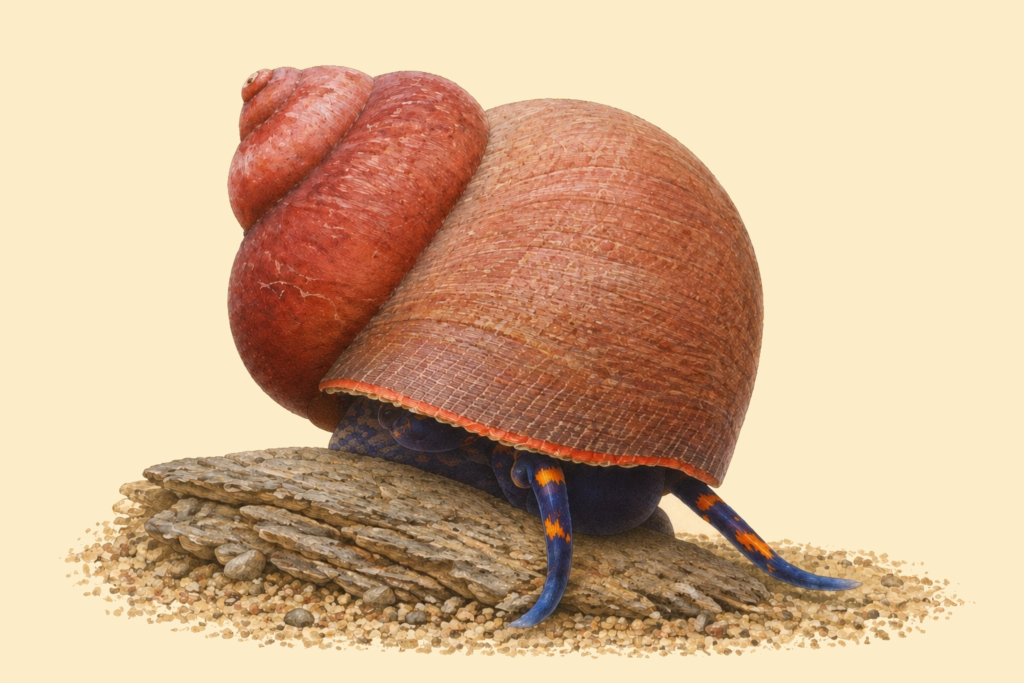
The Blueberry Snail’s shell is globular and moderately tall-spired, typically consisting of five to six smooth whorls. Coloration ranges from dark olive-green to a distinctive dusty blue-grey, with some individuals showing a purplish cast that intensifies under certain lighting conditions. The shell surface often carries faint, darker banding that spirals along the whorls, though the exact patterning varies between individuals and populations. The body of the snail itself is grey to olive, with a broad, muscular foot and a pair of short, sturdy tentacles. A hard, round operculum, essentially a trapdoor, seals the shell opening when the snail retracts, providing excellent protection against predators and fluctuating water conditions.
Telling males from females is straightforward once you know what to look for. In Viviparus species, the male’s right tentacle is noticeably shorter, thicker, and slightly curved compared to the left, because it has been modified to function as a reproductive organ (a penial tentacle). Females have two tentacles of roughly equal length and shape. Females also tend to grow slightly larger than males on average. Juveniles are born as tiny, fully shelled miniatures of the adults, usually around 3 to 5 mm across, and they darken in colour as they mature.
Natural habitat
Blueberry Snails are found in slow-moving rivers, canals, ponds, and lakes across much of Europe, extending into parts of western Asia. They favour still or gently flowing water with muddy, silty, or sandy substrates where they can graze on biofilm and decaying organic matter. These habitats are typically well vegetated, with emergent and submerged plant growth providing surfaces for algae colonisation and shelter from predators. Water in these environments tends to be moderately hard and slightly alkaline, though Viviparus species have been recorded in a fairly wide range of conditions.
Understanding their natural habitat helps you set up an aquarium where they truly thrive rather than merely survive. The key takeaways are gentle water movement, a soft substrate they can burrow into slightly, plenty of surfaces for biofilm growth, and stable, calcium-rich water to support shell health. Mimicking these conditions is not difficult, and it makes a real difference to the snail’s activity level, growth rate, and longevity.
Tank size and setup
A single Blueberry Snail can live comfortably in a tank as small as 20 litres, but if you plan to keep a small group of three to five, aim for 40 litres or more. These snails produce a moderate bioload for their size, so extra volume gives your filter some breathing room and keeps water quality stable.
For substrate, a fine sand such as pool filter sand or a planted-tank soil like Tropica Aquarium Soil works well. Blueberry Snails like to partially bury themselves and will spend time ploughing through the upper layer of substrate, which helps prevent gas pockets. Avoid sharp gravel or crusite substrates that could damage their foot.
Plants are a welcome addition. Hardy, low-demand species like Anubias barteri, Java Fern (Microsorum pteropus), Vallisneria, and Java Moss (Taxiphyllum barbieri) all complement this snail nicely. The snails will graze biofilm and soft algae from plant leaves without harming healthy tissue. Driftwood and smooth river stones add extra grazing surfaces and create a more natural look.
Lighting can be moderate. Enough light to sustain plant growth will also encourage the thin film of algae and biofilm that Blueberry Snails feed on. Very dim tanks may leave them short on natural food. Water flow should be gentle to moderate, matching the calm waters these snails inhabit in the wild. If you are using a hang-on-back or canister filter with a strong output, point the return toward the glass or add a spray bar to diffuse the current.
Water parameters
| Parameter | Recommended range |
|---|---|
| Temperature | 18 – 26 °C |
| pH | 6.8 – 8.2 |
| General hardness (GH) | 8 – 18 dGH |
| Ammonia | 0 ppm |
| Nitrite | 0 ppm |
| Nitrate | Below 40 ppm |
Calcium availability is particularly important for any shell-building invertebrate, and the Blueberry Snail is no exception. If your tap water is naturally soft, consider adding a mineral supplement such as Seachem Equilibrium, or place a small bag of crushed coral in the filter to gradually raise GH. Consistent calcium and carbonate hardness keep the shell strong and prevent the pitting or erosion that soft, acidic water can cause over time. Weekly water changes of around 20 to 25 percent will help maintain stable chemistry and keep nitrate in check.
Filtration and equipment
A gentle sponge filter is the safest and most snail-friendly option, especially in smaller tanks. Sponge filters provide excellent biological filtration, produce a soft current, and pose zero risk of trapping juvenile snails. For larger tanks, a hang-on-back filter like the AquaClear 20 or 30 works well. Just cover the intake with a pre-filter sponge to protect baby snails from being sucked in.
Whether you need a heater depends on your ambient room temperature. Blueberry Snails tolerate a wide range down to about 18 °C, so in many temperate homes they do fine without supplemental heating. If your room regularly dips below 18 °C in winter, a small adjustable heater such as the Eheim Jäger 25W will keep things stable. Always pair it with an accurate thermometer.
A reliable liquid water test kit, such as the API Freshwater Master Test Kit, is essential for monitoring ammonia, nitrite, nitrate, and pH. A GH and KH test kit (also available from API) is worth picking up so you can keep an eye on mineral levels. Testing weekly during the first couple of months, then biweekly once the tank is mature, is a sensible routine.
Diet and feeding
In the wild, Blueberry Snails are detritivores and biofilm grazers. They consume decomposing plant matter, algae, diatoms, and microscopic organisms living on submerged surfaces. They are not active hunters and will not go after live fish or shrimp.
In the aquarium, they will happily graze on naturally occurring algae and biofilm, but most tanks do not produce enough of this to sustain them long-term, especially once the snail is fully grown. Supplement their diet with blanched vegetables such as zucchini slices, cucumber, spinach, and romaine lettuce. Sinking algae wafers from brands like Hikari or Sera make a convenient staple. Calcium-enriched snail foods, such as ShrimpKing Snail Stixx, are excellent for supporting shell growth.
Feed a small amount every two to three days, or daily in very small portions. Remove uneaten food after 12 to 24 hours to prevent water quality issues. You will quickly learn how much your snails consume. If food is consistently left over, cut back. If the snails are actively seeking food along every surface and seem restless, offer a bit more.
Behaviour and temperament
Blueberry Snails are wonderfully peaceful. They spend most of their time grazing slowly across the substrate, glass, and decorations. They are not particularly social in the way schooling fish are, but they seem content in small groups and will often end up in the same area of the tank, drawn to the same food source or patch of algae.
One behaviour that sometimes alarms new keepers is the snail’s tendency to seal itself inside its shell with its operculum and sit motionless for hours or even a day or two. This is normal. It usually indicates the snail is resting, digesting, or responding to a minor environmental change. As long as the snail does not emit a foul odour when you gently pick it up, it is almost certainly fine. Give it time and stable conditions, and it will resume grazing.
Blueberry Snails are primarily active during the evening and overnight hours, though they often move around during the day as well, especially at feeding time. They are surprisingly good climbers and will sometimes venture above the waterline, so keep a lid on the tank or lower the water level by a couple of centimetres to discourage escapes.
Tank mates
Good tank mates
- Neon Tetra, small and peaceful, completely ignores snails
- Ember Tetra, gentle community fish that stays in the mid-water column
- Corydoras Catfish, bottom-dwelling and non-aggressive, great substrate companions
- Cherry Shrimp, another peaceful invertebrate that shares the cleanup role
- Otocinclus, quiet algae grazers that coexist perfectly with snails
- Endler’s Livebearer, small and active, no interest in snails
- Kuhli Loach, peaceful bottom dweller that leaves snails alone
- Mystery Snail, another calm snail species that can share the tank without conflict
Fish to avoid
- Clown Loach, a dedicated snail eater that will actively hunt Blueberry Snails
- Yoyo Loach, another loach species known for cracking snail shells
- Assassin Snail, specifically preys on other snails
- Oscar, large, boisterous cichlid that may crush or eat snails
- Green Spotted Puffer, requires snails as food and will devour them quickly
- Convict Cichlid, territorial and aggressive enough to harass or kill snails
Breeding
Breeding Blueberry Snails is refreshingly simple, which is one more reason they appeal to beginners. As mentioned in the appearance section, sexing is easy: males have a visibly modified right tentacle that is shorter, thicker, and slightly curved. If you keep a mixed-sex group of three to five snails, breeding will typically happen on its own without any special intervention.
Viviparus species are ovoviviparous, meaning females carry fertilised eggs internally and give birth to live, fully developed young. After mating, the female will carry the developing embryos for several weeks, sometimes up to two months depending on temperature. Warmer water within the safe range (around 22 to 25 °C) tends to speed development. You will not see any egg clutches on the glass or decorations, which is part of what makes this species so appealing compared to prolific egg-laying snails.
Females typically give birth to only a handful of juveniles at a time, often between three and fifteen. The babies are tiny, just a few millimetres across, with fully formed shells. They immediately begin grazing on biofilm and are completely independent from birth. If you want to maximise juvenile survival in a community tank, dense plantings of Java Moss or similar fine-leaved plants give the babies plenty of hiding spots and grazing surfaces. No special fry food is needed, though you can lightly dust the substrate with powdered algae wafer or spirulina powder to boost food availability for the newborns.
Common diseases and health
Shell erosion and pitting
The most common issue with Blueberry Snails is shell deterioration. Thin, pitted, or flaky shells are almost always caused by soft, acidic water that lacks sufficient calcium and carbonate hardness. To treat and prevent this, maintain GH above 8 dGH, keep pH at or above 7.0, and offer calcium-rich foods. Adding cuttlebone (sold cheaply in the bird section of pet stores) to the tank is a simple, long-lasting calcium supplement. Over time, new shell growth will come in strong and smooth.
Parasitic infections
Wild-caught or poorly sourced Blueberry Snails can sometimes harbour parasites, including certain trematode species that use snails as intermediate hosts. While these parasites rarely affect the fish in your tank directly, they can weaken and eventually kill the snail. Symptoms include lethargy, retracted behaviour, and failure to thrive. There is no reliable home treatment for trematode infections in snails, so prevention is key: source your snails from reputable breeders or shops, and always quarantine new arrivals.
Bacterial and fungal infections
Occasionally, a Blueberry Snail may develop a whitish or fuzzy patch on its body, particularly near the foot or around the operculum. This usually indicates a bacterial or fungal infection, often triggered by poor water quality or physical injury. Improving water conditions through water changes and good filtration is the first step. Mild cases may resolve on their own. Methylene blue baths can help in more stubborn situations, though always use invertebrate-safe concentrations.
Quarantine note: Always quarantine new snails for at least two to three weeks in a separate container with a small sponge filter. This gives you time to observe for parasites, shell issues, or unusual behaviour before introducing them to your main tank. It also helps prevent the accidental introduction of pest snails or unwanted hitchhikers.
Frequently asked questions
Are Blueberry Snails safe for planted tanks?
Yes, Blueberry Snails are generally safe for planted tanks. They graze on biofilm, algae, and decaying plant matter, but they do not eat healthy, living plant tissue. You may occasionally see them rasping on a leaf, but they are targeting the film growing on the surface, not the plant itself. Hardy species like Anubias, Java Fern, and Vallisneria are perfect companions.
Will Blueberry Snails overpopulate my tank?
This is one of the biggest advantages of keeping Viviparus snails. Unlike many aquarium snails that reproduce explosively, Blueberry Snails are livebearers that produce only a small number of young at a time. Population growth is slow and manageable, and most keepers find they can maintain a stable group without needing to cull.
Why is my Blueberry Snail not moving?
A motionless snail is not necessarily a dead snail. Blueberry Snails often rest with their operculum sealed for hours at a time. This can happen after a water change, during the day when they are less active, or simply because they have finished eating and are digesting. Gently pick the snail up and smell it. A dead snail produces a strong, unmistakable rotten odour. If there is no smell, put it back and give it time.
Do Blueberry Snails need a heater?
Not necessarily. These snails tolerate temperatures down to about 18 °C, so if your home stays above this level year-round, a heater is optional. If you live in a cooler climate or keep the tank in an unheated room, a small adjustable heater is a worthwhile investment to prevent temperature swings, which are more stressful than a consistently cool temperature.
Can Blueberry Snails live with shrimp?
Absolutely. Blueberry Snails are completely peaceful toward shrimp. Cherry Shrimp, Amano Shrimp, and other popular freshwater shrimp species make excellent tank mates. They occupy slightly different niches and both contribute to keeping the tank clean. Just make sure the water parameters suit both species, which is usually straightforward since their needs overlap significantly.
Related guides
- Blueberry Snail breeding guide
- Blueberry Snail tank setup and equipment guide
- Blueberry Snail diet and feeding guide
- Best tank mates for Blueberry Snail
- Blueberry Snail diseases and health guide
- Why is my Blueberry Snail losing colour?
- Back to the fish species directory
- Beginner’s guide to cycling your tank