Quick summary
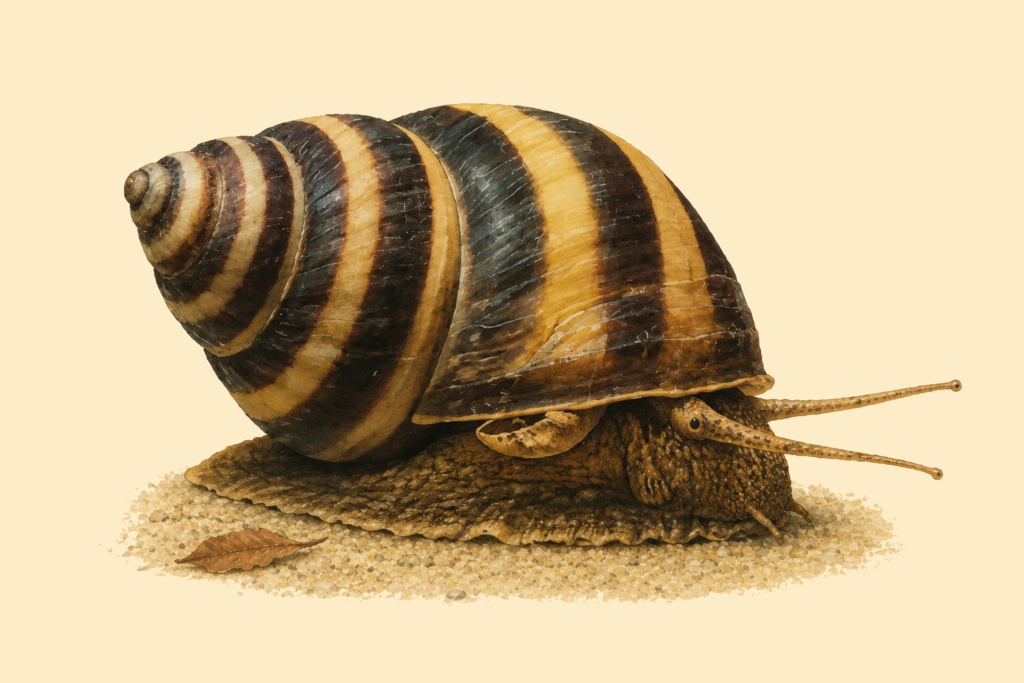
The Piano Snail is a peaceful, easy-to-care-for freshwater snail with striking striped shells that add visual interest to almost any community tank. If you want an attractive algae and biofilm grazer that won’t overrun your aquarium the way some pest snails do, this is an excellent choice for beginners and experienced keepers alike.
🐠 Build a tank around this species
- Introduction
- Quick stats
- Appearance
- Natural habitat
- Tank size and setup
- Water parameters
- Filtration and equipment
- Diet and feeding
- Behaviour and temperament
- Tank mates
- Breeding
- Common diseases and health
- Frequently asked questions
- Related guides
Introduction
The Piano Snail, known scientifically as Taia naticoides, has steadily grown in popularity among freshwater aquarists over the past decade, and for good reason. Its boldly patterned shell, marked with alternating dark and light vertical stripes resembling piano keys, makes it one of the most visually appealing freshwater snails available. Unlike many snail species that wind up in tanks as hitchhikers, the Piano Snail is one you deliberately seek out and proudly display.
One of the things keepers love most about this species is that it reproduces slowly. If you have ever battled an explosion of bladder snails or Malaysian trumpet snails, the Piano Snail offers welcome relief. Females give birth to just one or two fully formed juveniles at a time, so there is virtually no risk of your tank being overrun. That slow reproductive rate, paired with a calm temperament and genuine usefulness as a cleanup crew member, makes this snail a real asset in planted and community tanks.
The Piano Snail suits just about any keeper who can maintain a stable, reasonably warm freshwater tank with decent water quality. Beginners will appreciate its hardiness and low demands, while experienced aquascapers will value its elegant appearance and the way it gently grazes surfaces without damaging plants. Whether you keep a simple community setup or a carefully curated planted tank, this snail fits right in.
Quick stats
| Scientific name | Taia naticoides |
| Family | Viviparidae |
| Origin | Myanmar (Shan State, Inle Lake region) |
| Adult size | 3 to 4 cm shell diameter |
| Lifespan | 3 to 5 years |
| Difficulty | Beginner |
| Breeding difficulty | Moderate |
| Temperature | 22 to 28 °C |
| pH range | 7.0 to 8.5 |
| Minimum tank size | 20 litres |
Appearance
The Piano Snail earns its common name from the bold vertical stripes that run across its globular shell, alternating between dark brown or black and creamy tan or ivory. The effect genuinely does evoke the look of piano keys. The shell itself is rounded and somewhat compact, closer in shape to a Nerite than the elongated, conical form you see on trumpet snails. Adult specimens typically reach 3 to 4 cm across, making them a mid-sized snail that is easy to spot in the aquarium. The body and foot of the snail are usually a dark grey to black, providing a nice contrast with the lighter shell bands. They have a solid operculum, the little trapdoor that seals the shell opening when the snail retracts, which is a handy indicator of the snail’s health.
Telling males from females is not straightforward from external observation alone, especially with younger individuals. In mature specimens, males tend to have a slightly thicker right tentacle compared to the left, as it doubles as a reproductive organ. However, the difference is subtle enough that most hobbyists simply keep a small group and let nature sort things out. Shell pattern intensity can vary between individuals, with some displaying crisp, high-contrast stripes and others showing more muted or blended banding. Shells in good condition have a smooth, polished look, while worn or eroded shells can indicate mineral-poor water.
Natural habitat
Taia naticoides is native to Myanmar, specifically the waters of the Inle Lake basin in Shan State. Inle Lake is a large, shallow, freshwater lake situated at an elevation of around 880 metres. The lake and its surrounding waterways are characterised by clear to slightly turbid water, a limestone-influenced substrate that keeps the pH on the alkaline side, and a moderate current fed by inflowing streams. The lake supports extensive stands of aquatic vegetation, including native plants and the famous floating gardens cultivated by the Intha people.
Understanding this habitat helps explain the Piano Snail’s preferences in captivity. It thrives in moderately hard, alkaline water, which supplies the calcium it needs to maintain its shell. The natural environment features a mix of sandy and silty substrates with rocky areas, gentle to moderate flow, and plenty of surfaces covered in biofilm and algae. Replicating these conditions, especially the mineral content and neutral-to-alkaline pH, is the single most important thing you can do to keep your Piano Snails healthy and their shells in good condition.
Tank size and setup
A single Piano Snail can live comfortably in a tank as small as 20 litres, but if you plan to keep a small group of three to five, a 40-litre tank or larger is a better starting point. These snails are not fast-moving or particularly space-hungry, but they do produce waste and benefit from the extra water volume that a slightly larger tank provides for stable parameters. For each additional snail beyond the first, adding roughly 5 to 10 extra litres is a sensible guideline.
For substrate, a fine sand such as pool filter sand, CaribSea Super Naturals, or an inert aquarium sand works well. Piano Snails spend a good deal of time on the substrate and occasionally burrow lightly, so avoid anything with sharp edges that could damage their foot. You can also mix in some crushed coral or aragonite sand to help buffer the water and keep mineral levels up, which directly benefits shell health.
Plants are welcome and won’t be harmed. Piano Snails graze on biofilm and soft algae coatings but leave healthy plant tissue alone. Good choices include Java Fern (Microsorum pteropus), Anubias species, Vallisneria, and Java Moss (Taxiphyllum barbieri). These plants tolerate the harder, alkaline water that the snails prefer. Adding a piece of driftwood or a few smooth river rocks gives extra surfaces for biofilm to develop, which the snails will graze happily. Avoid overly acidic driftwood in large quantities, as it can lower the pH and soften the water more than is ideal.
Lighting does not need to be intense. Standard LED aquarium lighting on a timer set for 8 to 10 hours per day is perfectly fine and will encourage a thin coat of algae on hard surfaces, giving the snails a natural food source. A gentle to moderate water flow is ideal, mimicking the lake and stream conditions of their native habitat. A small internal filter or hang-on-back filter creates enough movement without overwhelming the snails.
Water parameters
| Parameter | Recommended range |
|---|---|
| Temperature | 22 to 28 °C |
| pH | 7.0 to 8.5 |
| General hardness (GH) | 8 to 18 dGH |
| Carbonate hardness (KH) | 4 to 15 dKH |
| Ammonia | 0 ppm |
| Nitrite | 0 ppm |
| Nitrate | Below 20 ppm |
Piano Snails are quite forgiving within their preferred range, but the key factor that separates a healthy, long-lived snail from one with an eroding shell is mineral content. They need calcium and carbonate in the water to build and maintain their shells. If your tap water is naturally soft or acidic, you will want to supplement it. Adding crushed coral to the filter, using a remineralising product like Seachem Equilibrium for GH, or placing a cuttlebone in the tank are all proven methods. Regular water changes of 20 to 25 percent weekly keep nitrates in check and replenish trace minerals.
Filtration and equipment
A hang-on-back filter or a small sponge filter is ideal for a Piano Snail tank. Sponge filters are especially good in smaller setups because they provide gentle flow, biological filtration, and an extra surface for the snails to graze. In larger tanks, a hang-on-back filter such as the AquaClear 20 or 30 works well and offers adjustable flow. If you use a filter with an exposed intake, cover it with a pre-filter sponge to prevent juvenile snails from being sucked in.
A reliable heater is necessary unless your room temperature stays consistently in the 22 to 28 °C range. An adjustable heater rated for your tank volume, something like the Eheim Jager or Aquael Ultra Heater, lets you dial in a stable temperature around 24 to 26 °C, which is a comfortable sweet spot. A basic stick-on or digital thermometer helps you verify the heater is doing its job.
A good liquid water test kit is essential, especially during cycling and the first few months of keeping any new tank. The API Freshwater Master Test Kit covers ammonia, nitrite, nitrate, and pH. For hardness, pick up a GH/KH test kit as well. Monitoring calcium-related parameters is more important for snail keepers than it is for many fish-only setups, so do not skip this step.
Diet and feeding
In the wild, Piano Snails feed primarily on biofilm, soft algae, detritus, and decaying plant matter. They are true detritivores and grazers, spending their days methodically working over surfaces with their radula. In captivity, they will do the same, happily cleaning glass, rocks, driftwood, and plant leaves of biofilm and algae coatings.
While they will find some food on their own in a mature, well-established tank, supplemental feeding is important to keep them in peak condition. Algae wafers are a staple, with brands like Hikari Algae Wafers and Sera Spirulina Tabs being widely available and well received. Blanched vegetables such as zucchini, cucumber, spinach, and kale are excellent additions. Drop a piece in during the evening, and remove any uneaten portions within 24 hours to avoid water quality issues. For calcium supplementation, snail-specific foods like Snello (a homemade snail jelly made from calcium carbonate, fish food, and gelatine) are popular in the snail-keeping community.
Feed a small amount every day or every other day, adjusting based on how quickly the food is consumed. If you notice leftover food accumulating, cut back. In a tank with multiple snails, dropping in one or two algae wafers in the evening and supplementing with blanched vegetables two to three times a week is a good routine. A piece of cuttlebone left in the tank at all times provides an always-available calcium source that the snails will rasp at when they need it.
Behaviour and temperament
Piano Snails are peaceful, unhurried creatures that spend most of their time slowly cruising surfaces in search of food. They are more active during the evening and at night, though they will often be visible during the day as well, especially once they feel settled in a tank. You will frequently see them on the glass, on hardscape, or gliding across the substrate. Occasionally they burrow into sand, sometimes disappearing for a day or two before resurfacing as if nothing happened.
They are completely non-aggressive and get along with their own kind without any issues. There is no territorial behaviour, and you can keep them singly or in groups. That said, keeping at least three or four together is more interesting to watch and increases the chance of having both sexes if you are interested in breeding. One charming quirk is their tendency to “ride” on each other’s shells, sometimes forming little snail stacks. They will also sometimes float at the surface by trapping air in their shells, drifting along before releasing the air and sinking back down.
Tank mates
Good tank mates
- Corydoras catfish, peaceful bottom dwellers that ignore snails completely
- Cherry Barbs, calm and small enough to coexist without any conflict
- Endler’s Livebearers, tiny, peaceful, and they enjoy similar water parameters
- Otocinclus, fellow algae grazers that share space without issues
- Neon Tetras, a classic community fish that will not bother snails
- Kuhli Loaches, peaceful and occupy the same zone without competing
- Nerite Snails, compatible snail species with similar needs
- Amano Shrimp, great cleanup crew partners and completely harmless to snails
Fish to avoid
- Clown Loaches, known snail eaters that will actively hunt Piano Snails
- Yoyo Loaches, another loach species with a strong appetite for snails
- Green Spotted Puffers, specialist snail crushers that need snails as food
- Assassin Snails, predatory snails that target other snail species
- Oscars, large cichlids that may crush or eat snails
- Large crayfish, opportunistic predators that will catch and eat snails when they can
Breeding
Piano Snails belong to the family Viviparidae, which means they are livebearers. Females do not lay eggs in the traditional sense. Instead, they carry developing embryos internally and give birth to one or two fully formed miniature snails at a time. This reproductive strategy is one of the main reasons the species does not overrun tanks the way egg-laying pest snails can.
Sexing is tricky but possible in adults. Males have a slightly thickened or modified right tentacle that serves as a reproductive organ. If you keep a group of at least four to six snails, you will almost certainly have both sexes represented. No special conditioning is required to encourage breeding. As long as the water quality is good, the temperature is in the 24 to 26 °C range, the water is mineral-rich, and the snails are well fed, mating will happen naturally.
Mating itself is not always easy to observe, as it tends to happen at night. After a gestation period that can last several weeks, the female will release a tiny, fully shelled juvenile. The baby snail is essentially a miniature version of the adult, complete with the characteristic striped pattern, and it is immediately independent. It will begin grazing on biofilm right away. There is no parental care, but there is also no parental predation, so you do not need to separate the young from the adults.
Raising juveniles is straightforward. Make sure the tank has plenty of biofilm-covered surfaces. A thin coating of algae on rocks and glass is ideal. You can supplement with finely crushed algae wafers or powdered snail food. Keep the water well mineralised so the growing snails can build strong shells. Growth is slow, and it will take several months for a juvenile to reach adult size.
Common diseases and health
Shell erosion and pitting
This is the most common issue Piano Snail keepers encounter, and it is almost always caused by water that is too soft or too acidic. Symptoms include thinning of the shell, white patches, pits, and a rough or chalky texture. The fix is to raise the GH and KH by adding crushed coral, cuttlebone, or a mineral supplement. Prevention is always better than repair, as shell damage cannot fully heal, though the snail will grow new, healthy shell material going forward once conditions improve.
Copper poisoning
Snails, including Piano Snails, are extremely sensitive to copper. Many fish medications and some plant fertilisers contain copper, which can be lethal even in small concentrations. Always check the ingredient list of any product you add to a tank containing snails. If you need to medicate fish, move them to a separate hospital tank rather than dosing the main tank.
Inactivity and prolonged retraction
A Piano Snail that stays retracted in its shell for more than a day or two, or that is not responding to gentle touch, may be stressed or unwell. Check your water parameters immediately, especially ammonia, nitrite, and temperature. Poor water quality or a sudden temperature swing are the most common triggers. If the snail smells bad when held close, it has likely died and should be removed to prevent an ammonia spike.
Quarantining new snails for at least two weeks before adding them to your main tank is always a good practice. A simple quarantine setup with a small container, a heater, and an air-driven sponge filter will do. This gives you time to observe the snails for parasites, unusual behaviour, or signs of illness before they have a chance to introduce problems to your established tank.
Frequently asked questions
Do Piano Snails eat live plants?
No. Piano Snails graze on biofilm, soft algae, and decaying organic matter, but they leave healthy plant tissue alone. They are completely plant-safe and are a popular choice for planted aquariums. You might see them crawling on leaves, but they are eating the microscopic film on the surface, not the plant itself.
How many Piano Snails can I keep in a 60-litre tank?
A 60-litre tank can comfortably house four to six Piano Snails, assuming the tank is cycled and well maintained. They have a modest bioload, but you should still account for them in your overall stocking plan, especially if the tank already has fish and other invertebrates.
Will Piano Snails breed out of control?
No, and this is one of their biggest selling points. Piano Snails are livebearers that produce just one or two babies at a time, with a relatively long gestation period. Population growth is very slow compared to species like bladder snails or ramshorns. You are far more likely to wish you had more than to feel overwhelmed by them.
Why is my Piano Snail’s shell turning white?
White patches, pitting, or an overall chalky appearance on the shell usually point to low calcium or acidic water conditions. Test your GH, KH, and pH. If the water is soft or below pH 7.0, add a calcium source such as cuttlebone, crushed coral, or a mineral supplement. The damaged shell will not repair itself, but new growth will come in healthy once the water chemistry is corrected.
Can I keep Piano Snails with shrimp?
Absolutely. Piano Snails are completely peaceful and pose zero threat to any shrimp species. They are frequently kept alongside Cherry Shrimp, Amano Shrimp, and other dwarf shrimp. Both groups benefit from similar water conditions, and they will graze side by side on biofilm without any conflict.