Quick summary
Betta sp. ‘Antuta/Bulungan’, usually sold in the trade as Betta Antuta, is a large mouthbrooding wild betta associated with the Bulungan region of northern Indonesian Borneo. It is best suited to experienced keepers who can provide a tightly covered 72-litre-or-larger species aquarium, stable soft water, shaded cover and some gentle water movement. A compatible pair may live together, but these are powerful, territorial fish and separation facilities should always be available. The species is still scientifically undescribed, so its exact distribution and some husbandry details remain provisional.
🐠 Build a tank around this species
In this guide:
- Introduction
- Quick Stats
- Appearance
- Natural habitat
- Tank size and setup
- Water parameters
- Filtration and equipment
- Diet and feeding
- Behaviour and temperament
- Tank mates
- Breeding
- Common diseases and health
- Frequently asked questions
- Related guides
Introduction
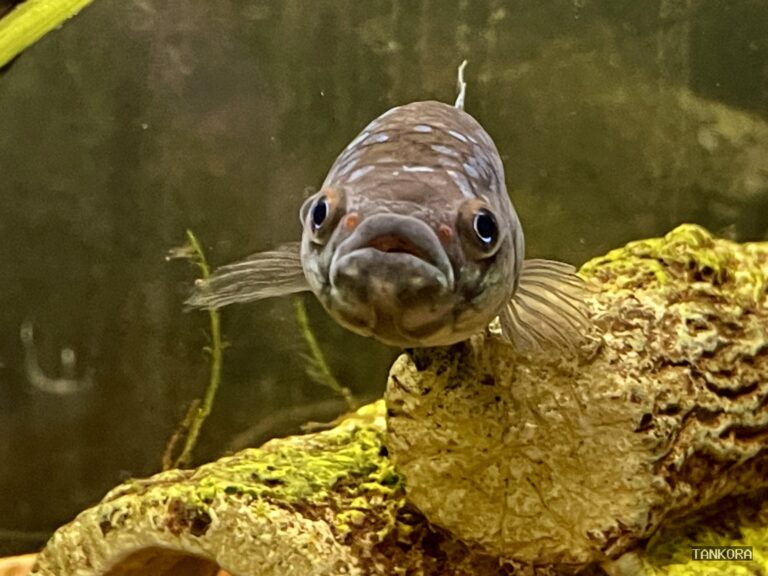
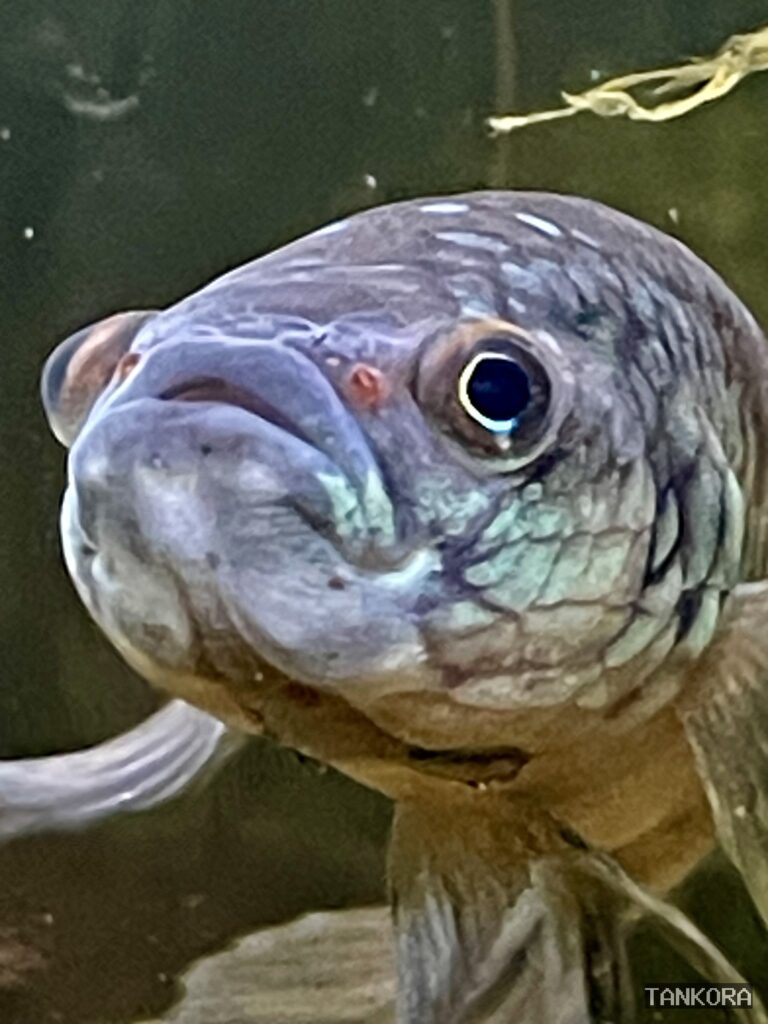
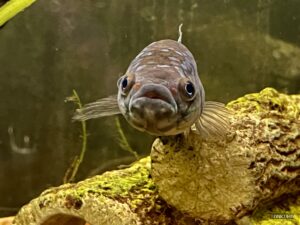
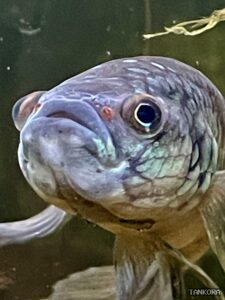
Betta Antuta is one of the largest and most distinctive wild bettas seen in the aquarium hobby. Mature males develop a heavy, blunt head and extensive blue-green iridescence across the face and forward body, creating the metallic “mask” for which these fish are admired. Their long, athletic shape and alert behaviour are very different from the flowing fins and compact body of a domestic Betta splendens.
The most important fact about this fish is also the easiest to lose in a care guide: Betta Antuta has not yet been formally described as a species. It should therefore be written as Betta sp. ‘Antuta/Bulungan’, not presented as a valid, formally authored binomial. The name refers to aquarium fish associated with the Bulungan area of northern Borneo, placed provisionally within the Betta unimaculata species complex. Locality labels such as “Antuta,” “Bulungan,” “LB” and “LP” occur in the trade, but they should not be treated as scientifically defined subspecies or colour morphs without supporting taxonomic work.
This uncertainty does not prevent responsible aquarium care, but it does change how confidently the profile can speak. The available record supports a large, clearwater, stream-associated mouthbrooder requiring secure housing and good water quality. It does not support an invented taxonomic authority, a precise IUCN category, or rigid claims about every population sold under the Antuta name.
Quick Stats
| Scientific name | Betta sp. 'Antuta/Bulungan' |
|---|---|
| Common names | Betta Antuta, Antuta Betta, Bulungan Betta |
| Family | Osphronemidae |
| Origin | Bulungan Regency, North Kalimantan, Indonesian Borneo |
| Adult size | 10 cm |
| Difficulty | Advanced |
| Breeding difficulty | Moderate |
| Temperature | 21–27 °C |
| pH | 5.5–7.5 |
| GH | 0–10 dGH |
| Minimum tank size | 72 L |
| Conservation status | Not evaluated (undescribed aquarium population) |
Appearance
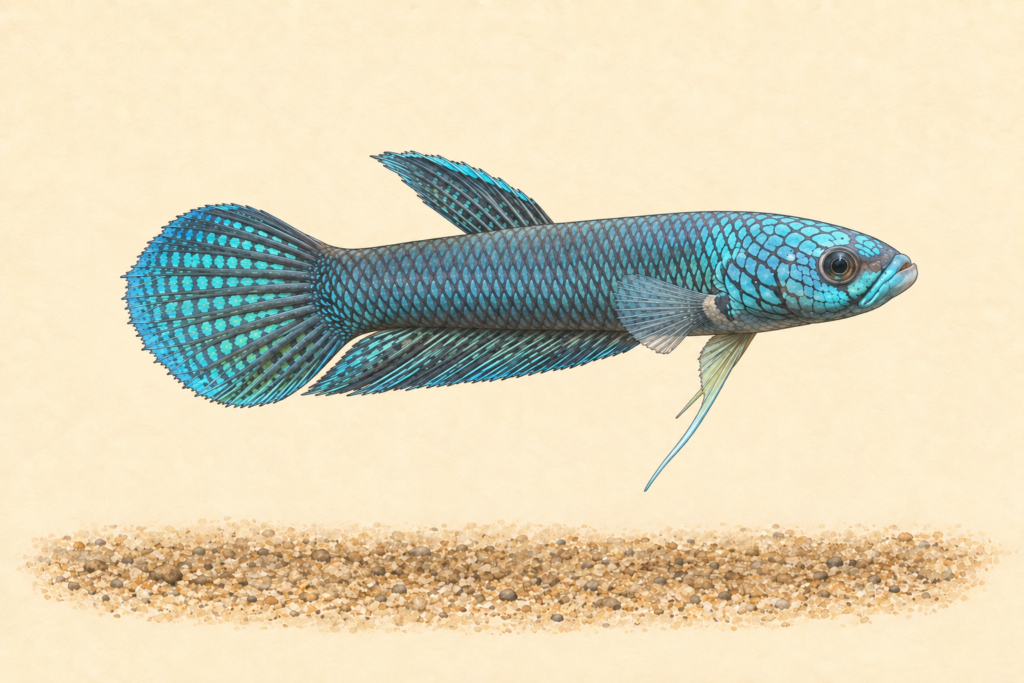
Betta Antuta has the long, laterally compressed but muscular body typical of the Betta unimaculata complex. The head is large and blunt, the mouth is broad, and the dorsal and anal fins taper towards pointed ends. The caudal fin is generally rounded, while the pelvic fins are short and filamentous. Aquarium references report a maximum of roughly 10 cm standard length. Because standard length excludes the tail, a fully grown fish measures noticeably longer from snout to the end of the caudal fin.
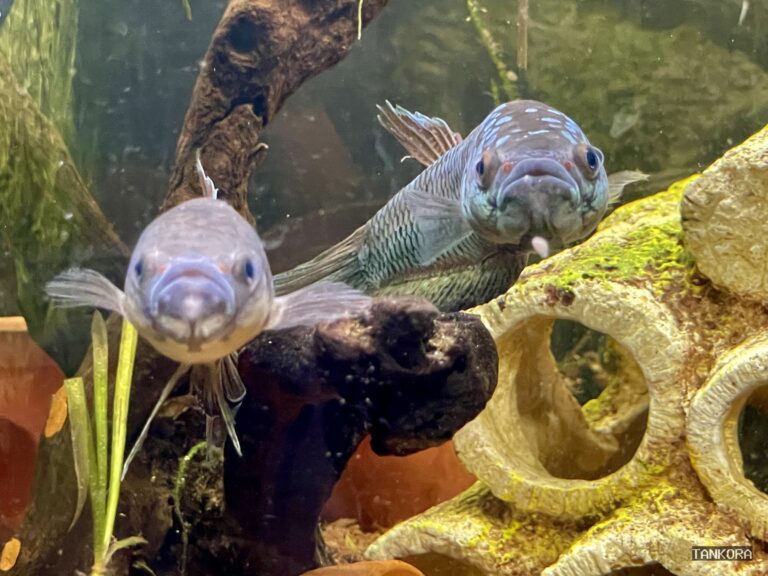
Adult males usually grow larger and develop stronger iridescent scaling over the head and body. Blue, turquoise or green highlights can cover much of the face, while the body beneath may appear brown, bronze or grey depending on lighting, condition and social state. Mature males also tend to have longer fins and a broader head profile. Females are usually smaller, shorter-finned and more subdued, though individual variation is considerable and young fish can be difficult to sex confidently.
Trade labels should be recorded with the fish rather than converted into formal taxonomy. If a seller supplies a collection locality or strain label, that information is worth keeping attached to the breeding line, avoiding crossing it with differently labelled Antuta stock. The visible metallic mask alone is not enough to establish provenance or prove that two traded forms are genetically distinct.
Natural habitat
The collection information published for Betta sp. ‘Antuta/Bulungan’ is incomplete. The fish is associated with Bulungan Regency in northern Indonesian Borneo, and hobby records often connect it with tributaries of the Kayan River system. Older sources sometimes call the area East Kalimantan; today Bulungan lies in North Kalimantan province. The exact natural range and boundaries of the aquarium population have not been established in a formal species description.
Available habitat accounts point towards flowing forest or upland streams rather than stagnant peat-swamp pools. These waters are described as clear or lightly stained, with stones, sand, woody material and accumulated leaf debris creating shelter. Shade from forest cover and broken underwater structure let the fish avoid strong light and direct current while remaining in oxygenated water.
This species should not be described as an obligate blackwater fish, and no precise altitude, pH, temperature or conductivity values for the wild population should be treated as settled fact unless a traceable field survey becomes available. In the aquarium, a natural-looking arrangement built from smooth stones, driftwood, robust plants and some leaf litter provides cover and visual barriers, but does not replace controlled water preparation and testing.
Tank size and setup
A pair should be given an aquarium with a base of at least 80 x 30 cm, around 72 litres, though larger quarters are needed for a group. A larger footprint is preferable, since these fish are active, substantial for the genus, and capable of territorial disputes. For a group, use at least 120 – 150 litres with a much broader footprint, extensive cover, and a plan for removing bullied individuals.
The aquarium must have a tightly fitting lid. Betta Antuta is an excellent jumper and can pass through surprisingly small openings around pipes and cables. Leave a modest air space between the water and the lid so the fish can reach warm, humid air with its labyrinth organ. The labyrinth organ supplements gill breathing; it is not a reason to tolerate dirty, stagnant or oxygen-poor water.
Use driftwood, rounded stones and sturdy planting to divide the aquarium into separate sight lines. Include more shelters than fish, and provide retreats at different levels. Floating plants can reduce glare but should not cover the entire surface. A sand or fine-gravel substrate is suitable, although some breeders use bare-bottomed tanks for easier cleaning. Any arrangement is acceptable if it stays secure, easy to maintain and rich in visual cover.
Water parameters
| Temperature (both units) | 21 – 27 °C (70 – 81 °F) |
| pH | 5.5 – 7.5 |
| General hardness (GH) | 0 – 10 dGH |
| Ammonia | 0 ppm |
| Nitrite | 0 ppm |
| Nitrate | Below 20 ppm |
Maintain a stable temperature around 23 – 25 °C and mildly acidic to neutral, soft water as a sensible starting point for most captive stock. Match conditions gradually to those in which the fish was bred or held, especially when acquiring wild-caught or recently imported animals.
No dependable field dataset exists for carbonate hardness in the wild population. In practice, keep KH low to moderate and avoid sudden pH movement. Reverse-osmosis water can be blended with mineralised tap water where local water is unsuitable, but unmineralised RO water should not be used on its own. Botanicals and driftwood may tint the water and contribute organic compounds, but they do not reliably set hardness or stabilise pH on their own; measure the water rather than assuming a tea-brown colour means the chemistry is correct.
Ammonia and nitrite should remain undetectable, and nitrate should be controlled through feeding discipline and regular partial water changes, using replacement water closely matched for temperature and mineral content. A large, abrupt chemistry change can be more stressful than a slightly imperfect but stable value within the accepted range.
Filtration and equipment
Use mature biological filtration with gentle-to-moderate circulation. Unlike small peat-swamp bettas, Antuta is associated with flowing water and should not automatically be placed in a nearly stagnant aquarium. A sponge filter, an adjustable internal filter or a small external filter can all work well. Diffuse the outlet through hardscape or a spray bar so the tank offers both moving water and calmer resting areas.
Choose equipment based on measured performance rather than a fixed turnover multiplier: the filter needs to process the aquarium’s waste, maintain oxygen exchange, and avoid pinning the fish in the current. Fit an intake guard where juveniles may be present. Use a reliable thermometer and, where room temperatures fall below the target range, an adjustable heater with a protective guard or safe placement. Lighting should be subdued or filtered by floating plants, with enough open surface for air access to the labyrinth organ.
Diet and feeding
Betta Antuta is best treated as an insect- and invertebrate-eating predator. Offer a varied diet built around appropriately sized frozen or live foods such as daphnia, mosquito larvae, brine shrimp, mysis, small bloodworms and chopped earthworm. Captive-bred individuals may accept quality floating or slow-sinking carnivore pellets once they recognise them as food, while newly imported fish can be reluctant to take dry products at first.
Feed measured portions once or twice daily and remove uneaten food. A large mouth does not mean every large food item is safe, and repeated heavy meals can contribute to obesity and deteriorating water quality. Dietary variety is a more defensible goal than claims that a single food enhances immunity, prevents disease, or guarantees colour. Quarantine live foods of uncertain origin, and avoid using feeder fish as a routine diet.
Behaviour and temperament
This is a comparatively bold wild betta once settled, but it remains territorial. Males may display, chase and spar, especially when space or cover is inadequate. A compatible male and female can often be maintained together, and larger groups have been kept in spacious, well-structured aquaria, but harmony should never be assumed. Every keeper should have a divider or spare aquarium available in case a pair or group stops getting along.
The fish spends much of its time in the upper and middle levels, moving between shaded retreats and open feeding areas. It can learn to approach the keeper and may become conspicuous at feeding time. Persistent hiding, clamped fins, rapid breathing, loss of appetite, or a fish being excluded into one corner of the tank should prompt a check of social pressure, water quality and health, rather than being dismissed as normal shyness.
Tank mates
A species-only aquarium is the safest recommendation for Betta Antuta. It protects the provenance of this undescribed fish, avoids hybridisation with other Betta, reduces feeding competition, and makes courtship or brooding easier to observe. If a community is attempted, use a substantially larger aquarium and select calm, non-nipping fish that share the same temperature and soft-water range and are too large to be swallowed.
Good tank mates
- None recommended as a default – a species-only tank is the safest approach for this species.
Fish to avoid
- Betta splendens – risks hybridisation and territorial conflict with a wild Betta unimaculata-complex species.
- Other Betta unimaculata-complex species – same hybridisation risk.
- Tiger Barb – a known fin-nipper that would target this fish’s fins.
- Serpae Tetra – another persistent fin-nipper.
- Oscar – large and powerful enough to view this species as a threat or prey, and needs harder water.
- Jack Dempsey Cichlid – aggressive, with fundamentally different water needs.
- Red Devil Cichlid – one of the most aggressive commonly kept cichlids.
- Jaguar Cichlid – highly predatory, capable of injuring or killing a fish this size.
- Convict Cichlid – small but fiercely territorial, competes aggressively for shelter.
- Neon Tetra – small enough to be readily eaten.
- Red Cherry Shrimp – and dwarf shrimp generally, treated as food by this fish.
Compatibility ultimately depends on the actual aquarium footprint, group composition and individual behaviour; no fixed list can guarantee success with this species.
Breeding
Betta sp. ‘Antuta/Bulungan’ is a mouthbrooder. The usual pattern reported by aquarists is paternal care: following courtship and a series of spawning embraces, fertilised eggs are collected and transferred to the male, who holds the developing brood in his mouth. Incubation commonly lasts roughly two to three weeks, with the precise period affected by temperature and individual behaviour. The released fry are comparatively large and can usually take newly hatched brine shrimp and other small live foods straight away.
A 2026 study (Zworykin & Kuznetsova, Behaviour) added an important caution to this standard description. It reported repeated female involvement in egg collection and incubation, including one observation in which a female carried the brood through to fry release. The authors described this as anecdotal evidence of biparental mouthbrooding, not proof that every Antuta pair follows a fixed shared-care system. This guide therefore describes the species as usually paternal, while acknowledging that genuine female participation has now been documented.
Condition a settled pair on varied foods in a mature, quiet aquarium. Provide numerous shelters and minimise disturbance once a fish is holding. Brooding fish may refuse food and become reclusive. Moving or repeatedly inspecting the brooding parent can cause the brood to be swallowed or abandoned, so any intervention should be based on the behaviour of the particular pair rather than a rigid timetable. After release, protect fry from filter intakes and monitor the adults; some pairs tolerate their fry, while others may prey on them.
Common diseases and health
No disease is unique to Betta Antuta. The main preventable risks are unstable or polluted water, injuries from aggression, damage during transport, and pathogens introduced with new fish or live food. Quarantine new arrivals separately, observe feeding and respiration, and keep handling to a minimum. Recently imported fish deserve particular attention, since weight loss or abnormal faeces can have several causes and should not automatically be labelled as internal parasites.
Many fish diseases share similar visible signs, and the right treatment depends on water chemistry, temperature, an actual diagnosis, and the specific product used. Avoid blanket half-doses, routine antibiotics, prophylactic antiparasitic drugs, or automatic heat-and-salt treatments applied without a reason. If signs persist or several fish are affected, isolate the animal where practical, confirm water quality, document the symptoms, and seek diagnosis from an aquatic veterinarian or experienced fish-health professional. Follow any licensed product label exactly, including aeration, repeat dosing and water-change instructions.
Frequently asked questions
Is Betta antuta a formally recognised species?
No. The aquarium fish is currently best written as Betta sp. ‘Antuta/Bulungan’. “Betta Antuta” is a hobby name for an undescribed population associated with Bulungan in northern Borneo.
How large does Betta Antuta grow?
Published aquarium references give an unconfirmed maximum of about 10 cm standard length. Total length is greater, since standard length excludes the caudal fin.
Can a male and female live together?
A compatible pair can be maintained together in a well-structured aquarium with an 80 x 30 cm or larger footprint, but aggression is still possible. Provide multiple shelters and be ready to separate them if needed.
Is Betta Antuta a bubble-nester?
No. It is a mouthbrooder. The male usually carries the developing brood, although a 2026 observational study recorded genuine female participation and one female-only incubation event.
Does Betta Antuta require blackwater?
Not necessarily. Available locality accounts associate it with flowing, clear forest streams rather than peat-swamp blackwater. Soft, stable water and appropriate cover matter more than making the water very dark.
Related guides
- Wild Betta Species hub – browse other undescribed and species-complex wild bettas.