L052 Atabapo Butterfly Pleco Care Guide – Tank Setup, Feeding and Breeding
Quick summary
The L052 Atabapo Butterfly Pleco is best suited to experienced aquarists who can maintain soft, acidic blackwater conditions and provide plenty of driftwood, making it a poor choice for beginners or standard hard-water setups. If you can commit to precise water chemistry and a well-aquascaped tank of at least 120 litres, this peaceful, moderately hardy pleco makes a rewarding centrepiece fish.
🐠 Build a tank around this fish
In this guide:
- Introduction
- Quick Stats
- Appearance
- Natural Habitat
- Tank Size and Setup
- Water Parameters
- Filtration and Equipment
- Diet and Feeding
- Behaviour and Temperament
- Tank Mates
- Breeding
- Common Diseases
- FAQs
Introduction
The L052 Atabapo Butterfly Pleco is a striking and somewhat elusive loricariid catfish belonging to the genus Dekeyseria. Collected primarily from the blackwater tributaries of the Atabapo and upper Orinoco river systems in southern Venezuela and possibly adjacent Colombia, this species has earned a devoted following among pleco enthusiasts for its flattened, ray-like body shape and intricate dark banding that matures into increasingly complex, almost labyrinthine patterns as the fish ages. Often compared to its close relative L168 (Dekeyseria brachyura), the L052 is distinguished by subtle differences in pattern density, head shape, and collection locality, though the taxonomy within Dekeyseria remains somewhat fluid and subject to ongoing revision.
In the aquarium trade, the L052 is considered a collector’s pleco – not typically mass-produced in commercial facilities but rather wild-caught and imported in relatively small numbers. This makes it a fish that commands a premium price and is best suited to aquarists who appreciate the unique demands of keeping blackwater-adapted species. While not the most difficult pleco to maintain once settled, the L052 does require specific water chemistry and a well-considered setup to truly thrive. Its relatively modest adult size, peaceful disposition, and captivating appearance make it an excellent centrepiece species for a carefully planned South American biotope aquarium or a dedicated pleco community tank.
This guide covers everything you need to know to successfully keep and potentially breed the L052 Atabapo Butterfly Pleco, from tank setup and water parameters to diet, compatible tank mates, and breeding strategies.
Quick Stats
| Scientific name | Dekeyseria sp. (L052) |
| Common names | L052 Atabapo Butterfly Pleco, L052 Pleco, Atabapo Butterfly Pleco |
| Family | Loricariidae |
| Origin | Rio Atabapo and upper Rio Orinoco basin, southern Venezuela |
| Adult size | 12-15 cm (5-6 inches) |
| Lifespan | 8-12 years |
| Difficulty | Moderate |
| Breeding difficulty | Difficult |
| Temperature | 25-30 °C |
| pH range | 4.5-6.5 |
| General hardness (GH) | 0-4 dGH |
| Carbonate hardness (KH) | 0-2 dKH |
| Minimum tank size | 120 litres |
| Conservation status | Not Evaluated |
Appearance
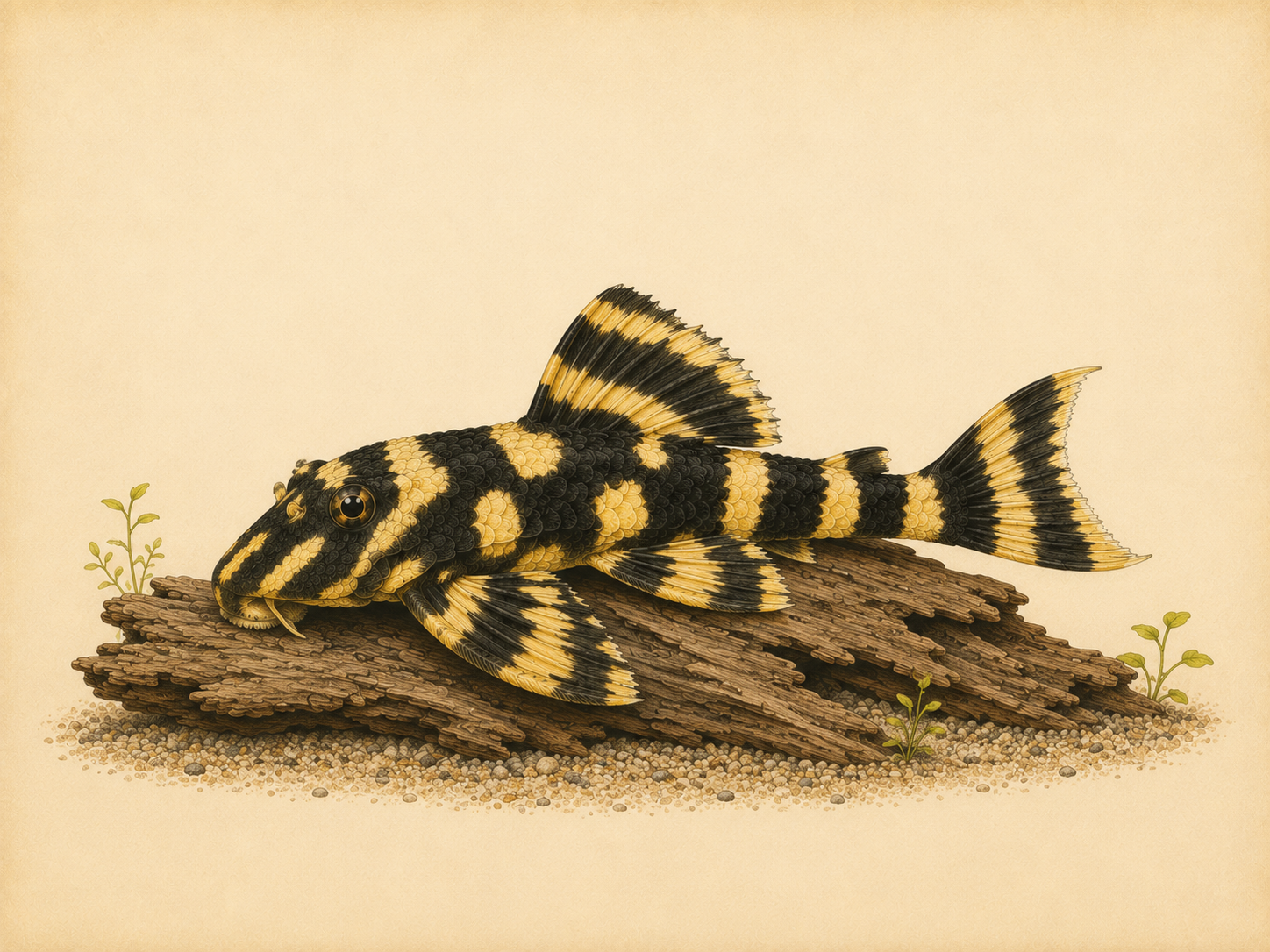
The L052 Atabapo Butterfly Pleco is immediately recognisable by its strongly dorsoventrally flattened body, a characteristic feature of the Dekeyseria genus that gives these fish their “butterfly” common name. When viewed from above, the body appears broad and almost disc-like, with expansive pectoral and pelvic fins that splay outward and contribute to the butterfly silhouette. This flattened profile is an adaptation to life in moderate to strong currents, where the fish presses itself against submerged wood and rock surfaces to resist being swept away.
The base colouration is typically a warm brown to dark chocolate, overlaid with a pattern of darker banding and striping that runs laterally across the body and extends into the fins. In juveniles, this pattern tends to be relatively clean and well-defined, consisting of bold dark bands on a lighter ground. As the fish matures, the banding becomes progressively more complex, breaking up into a network of irregular spots, vermiculations, and maze-like patterns that are unique to each individual. This pattern evolution is one of the most appealing aspects of keeping the species, as long-term keepers can observe their fish’s markings develop over months and years.
The head is broad and slightly pointed, with relatively small eyes positioned high on the skull – a trait common to many blackwater loricariids. The mouth is a well-developed suckermouth, equipped with small rasping teeth adapted for scraping biofilm, aufwuchs, and decomposing wood. Males tend to develop slightly broader heads and more pronounced odontodal growth (small tooth-like projections) along the leading edges of the pectoral fins and on the cheeks, particularly during breeding condition. Females are generally slightly more rounded in the body when viewed from above, though sexing can be challenging outside of breeding condition.
The fins are proportionally large, especially the dorsal and caudal fins. The dorsal fin, when erect, displays the banding pattern beautifully, and the caudal fin is typically fan-shaped with dark bars that continue the body pattern. The interradial membranes of all fins are somewhat delicate in appearance, and the overall impression is of a fish that is both robust and elegant.
Natural Habitat
The L052 Atabapo Butterfly Pleco originates from the Rio Atabapo and adjacent tributaries within the upper Orinoco river basin in southern Venezuela. This region is characterised by some of the most pristine blackwater environments on earth. The Rio Atabapo is a classic blackwater river, its waters stained a deep amber-brown by the leaching of tannins and humic acids from decomposing vegetation in the surrounding tropical forests. The resulting water chemistry is extremely soft and acidic, with conductivity often measuring below 10 microsiemens per centimetre and pH values that can drop below 4.5 in the most extreme locations.
The substrate in these rivers and streams is typically composed of fine white sand, sometimes mixed with leaf litter and scattered rocks. However, the primary microhabitat for Dekeyseria species is submerged wood. Fallen trees, branches, and root tangles provide the surfaces on which these fish spend the vast majority of their time, grazing on the biofilm and decomposing wood that forms their primary food source. The wood also provides shelter from predators and from the sometimes significant current in these rivers.
Water temperatures in the Atabapo system are warm year-round, typically ranging from 26 to 30 degrees Celsius, with seasonal variations driven by rainfall patterns. The region experiences a pronounced wet season from approximately May to November, during which river levels rise dramatically, flooding the surrounding forest and creating vast areas of igapo (flooded forest) habitat. This seasonal flooding is thought to play a role in triggering breeding behaviour in many species from the region, including loricariids.
Light levels in the natural habitat are typically subdued. The dark water colour itself filters out much of the light penetrating the surface, and the dense canopy of overhanging vegetation further reduces illumination. This means the L052 is adapted to low-light conditions and can be somewhat light-shy in the aquarium, especially when first introduced to a new environment.
Tank Size and Setup
A minimum tank size of 120 litres is recommended for a single L052 or a pair, though a larger aquarium of 180 to 240 litres is preferable if you plan to keep a small group or house them alongside other species. The tank footprint is more important than height for this bottom-dwelling species; a tank with generous floor space, such as a standard 100 x 40 cm or larger base, is ideal. Taller tanks are less useful unless they are also proportionally wide and long.
The aquascape should be designed with the L052’s natural habitat in mind. Driftwood is absolutely essential – not merely as decoration, but as a functional element of the fish’s environment. Dekeyseria species are xylophagous (wood-eating) to some degree, and they require access to submerged wood for both nutritional and behavioural reasons. Provide multiple pieces of driftwood, ideally of varying types and sizes. Mopani, Malaysian driftwood, and bog wood are all suitable. Arrange the wood to create caves, overhangs, and narrow gaps where the fish can wedge themselves during the day. Purpose-made pleco caves made from ceramic or slate can supplement the natural wood structures and are particularly useful if you intend to breed the species.
The substrate should be fine sand, preferably a natural colour such as white, cream, or pale brown, which mimics the sandy bottoms of Atabapo streams. Avoid sharp-edged gravel or substrates that could damage the fish’s delicate ventral surface. A layer of dried leaf litter – Indian almond leaves, oak leaves, or similar – is highly beneficial. The leaves release tannins that soften and acidify the water, while also providing additional surface area for biofilm growth and serving as a supplementary food source as they decompose.
Live plants are not strictly necessary, as the natural habitat of the L052 is not heavily planted, but certain low-light species can work well in a blackwater setup. Anubias species attached to driftwood, Java fern, and various mosses are all suitable choices that tolerate the low pH and subdued lighting that the L052 prefers. Floating plants such as Amazon frogbit or Salvinia can be used to further diffuse lighting and provide a sense of security.
Lighting should be kept moderate to low. The L052 is naturally crepuscular to nocturnal, and bright lighting will often cause it to hide away during daylight hours. If you wish to observe the fish during the day, use dim lighting or provide sufficient cover that the fish feels secure enough to emerge. A moonlight or blue LED setting during the evening hours can be an excellent way to observe natural behaviour without stressing the fish.
Water Parameters
| Temperature | 25-30 °C |
| pH | 4.5-6.5 |
| General hardness (GH) | 0-4 dGH |
| Carbonate hardness (KH) | 0-2 dKH |
| Ammonia | 0 ppm |
| Nitrite | 0 ppm |
| Nitrate | Below 20 ppm |
The water chemistry requirements for the L052 Atabapo Butterfly Pleco are among its most demanding aspects. This is a true blackwater species, adapted to extremely soft and acidic conditions. Maintaining a low pH (ideally between 5.0 and 6.0) and very soft water (GH below 4 dGH, KH below 2 dGH) is critical for long-term health and especially for breeding. While wild-caught specimens may tolerate slightly harder or more neutral conditions for a time, prolonged exposure to water that is too hard or alkaline can lead to stress, reduced immune function, and a shortened lifespan.
Many aquarists keeping this species use reverse osmosis (RO) water or a combination of RO and tap water to achieve the necessary softness. The addition of tannin-producing materials – driftwood, Indian almond leaves, alder cones, and peat filtration – helps to naturally acidify and condition the water. Commercial blackwater extracts can also be used, though they are no substitute for proper base water chemistry.
Temperature should be maintained between 25 and 30 degrees Celsius, with 27 to 28 degrees being an ideal midpoint for general maintenance. Slightly higher temperatures (29 to 30 degrees) can be used to simulate wet-season conditions when attempting to trigger breeding. Ensure that any temperature increases are gradual and accompanied by adequate oxygenation, as warmer water holds less dissolved oxygen.
Water quality must be kept consistently high. While the L052 tolerates the naturally low mineral content of blackwater, it is sensitive to dissolved waste products. Ammonia and nitrite must be maintained at zero at all times, and nitrate should be kept below 20 ppm, with lower values being preferable. Regular water changes of 20 to 30 per cent weekly are recommended, using water matched to the tank’s temperature and chemistry.
Filtration and Equipment
Effective filtration is essential for maintaining the water quality that the L052 demands. A canister filter rated for a volume somewhat above the tank’s actual capacity is typically the best choice, as it provides reliable mechanical, biological, and chemical filtration without creating excessive turbulence at the water’s surface. Models from reputable manufacturers with adjustable flow rates offer the flexibility to fine-tune water movement to suit the fish’s preferences.
While the L052 comes from rivers with moderate current, it is not a species that requires extremely high flow in the aquarium. A gentle to moderate current is sufficient, and the flow should be directed in a way that creates areas of both movement and calm within the tank. Positioning the filter outlet to flow along the back or side of the tank, with driftwood and decor breaking up the flow, is an effective approach. Supplementary powerheads or wave makers are generally unnecessary for this species.
Incorporating peat or activated carbon alternatives designed for blackwater setups into the filter media can help to maintain the acidic, tannin-rich conditions that the L052 prefers. Note that standard activated carbon will remove tannins from the water, which is counterproductive if you are aiming for a blackwater environment. If chemical filtration is needed to address specific water quality issues, use it temporarily rather than as a permanent fixture.
A reliable heater is necessary to maintain the warm temperatures this species requires. A high-quality thermostatically controlled heater, ideally with an external temperature display, should be used. In larger tanks, two smaller heaters can provide redundancy and more even heat distribution. Place a heater guard over the unit to prevent the pleco from resting directly against it and suffering burns, as loricariids are prone to this due to their habit of pressing against surfaces.
An air pump with a sponge filter or airstone can be a useful addition, particularly if the tank is maintained at the higher end of the temperature range. The increased surface agitation helps to maintain dissolved oxygen levels, which is especially important in warm, tannin-rich water where oxygen saturation can be naturally lower. Sponge filters also provide additional biological filtration surface and a grazing surface for biofilm.
Diet and Feeding
The L052 Atabapo Butterfly Pleco is primarily a biofilm grazer and wood rasper in the wild, and this dietary preference should be reflected in the aquarium. Access to driftwood for rasping is not optional – it is a fundamental dietary requirement. The wood itself provides fibre and microorganisms that form an important component of the fish’s gut flora and overall nutrition. Fish kept without access to appropriate wood often develop digestive issues and fail to thrive long-term.
Beyond wood, the L052 readily accepts a range of prepared and fresh foods. High-quality sinking wafers designed for herbivorous or omnivorous plecos form a good staple diet. Look for products that list whole algae, spirulina, or vegetable matter as primary ingredients, with some animal protein content as well. The L052 is not a strict herbivore; in the wild, it would consume small invertebrates, insect larvae, and crustaceans as part of its biofilm grazing.
Fresh vegetables should be offered regularly. Blanched courgette (zucchini), cucumber, sweet potato, and green beans are all well accepted. These can be secured to a weight or clip and left in the tank overnight, as the fish is most active during the evening and night hours. Remove any uneaten vegetables after 12 to 24 hours to prevent water quality deterioration.
Protein-rich foods should be offered once or twice a week to supplement the primarily vegetable-based diet. Frozen or live bloodworm, brine shrimp, daphnia, and mosquito larvae are all suitable options. These foods can help to condition the fish for breeding and provide essential amino acids and fats. However, overfeeding protein-rich foods should be avoided, as this can lead to digestive issues and water quality problems.
Repashy gel foods, particularly the “Morning Wood” and “Soilent Green” formulas, are excellent supplementary foods for the L052. These gel-based diets can be applied directly to driftwood, encouraging natural grazing behaviour and providing a nutritionally complete food source. Many experienced pleco keepers consider Repashy products to be among the best prepared foods available for wood-grazing loricariids.
Feed primarily in the evening, shortly before or after lights out, to coincide with the fish’s natural activity period. Observe the fish’s body condition regularly – a healthy L052 should have a gently rounded abdomen and should not appear sunken or emaciated behind the head. Adjust feeding quantities based on the number of fish in the tank and the amount of natural biofilm available.
Behaviour and Temperament
The L052 Atabapo Butterfly Pleco is a generally peaceful and somewhat retiring species. During daylight hours, it typically remains attached to its preferred piece of driftwood or hidden within a cave, emerging primarily during the evening and night to feed and explore. This crepuscular to nocturnal activity pattern is entirely normal and should not be a cause for concern. As the fish becomes more settled in its environment – which can take several weeks to months after introduction – it will often become bolder and may be observed grazing during the daytime, particularly if lighting is subdued.
Intraspecific behaviour can vary depending on the sex, size, and number of individuals kept together. Males can be territorial, particularly towards other males, and will defend favoured cave sites and driftwood surfaces. This territoriality is generally expressed through posturing and fin displays rather than outright aggression, but in smaller tanks, subordinate fish may be stressed if they cannot find their own territory. Providing multiple caves and sufficient driftwood for each individual to claim its own space is the key to keeping groups harmoniously.
Towards other species, the L052 is almost invariably peaceful. It largely ignores fish that occupy different niches in the tank and is not predatory towards small fish or shrimp. It may occasionally engage in mild disputes with other pleco species over preferred resting spots, but these interactions rarely result in injury. The main concern with heterospecific interactions is that the L052 can be outcompeted for food by more assertive species, so care should be taken to ensure it has access to food during its active periods.
The species shows a strong preference for clinging to vertical and overhanging surfaces, often positioning itself upside down beneath driftwood or on the underside of decorative structures. This behaviour is entirely natural and is related to its flattened body morphology, which is adapted for adhering to surfaces in flowing water. Watching an L052 navigate the complex surface of a piece of driftwood, its body pressed flat and its fins splayed, is one of the simple pleasures of keeping this species.
Tank Mates
The ideal tank mates for the L052 Atabapo Butterfly Pleco are species that share its preference for warm, soft, acidic water and that will not outcompete or harass it. Given the specific water chemistry requirements of this species, the best companions are other blackwater-adapted South American fish. Avoid large, aggressive species, fish that are highly competitive for territory on the substrate, and any species that require hard, alkaline water. The L052’s peaceful and somewhat timid nature means it is best housed with calm, non-confrontational tank mates.
Good tank mates
- Cardinal Tetra – A classic blackwater species that shares identical water chemistry requirements and occupies the mid-water column, posing no competition.
- Rummy Nose Tetra – Another excellent blackwater tetra that thrives in soft, acidic conditions and schools peacefully in the upper water column.
- Green Neon Tetra – A small, gentle tetra from the same geographical region that is perfectly suited to the subdued blackwater environment.
- Chocolate Gourami – A soft-water specialist that occupies the upper and middle areas of the tank and is temperamentally compatible.
- Apistogramma agassizii – A dwarf cichlid that does well in soft, acidic water and generally ignores bottom-dwelling plecos.
- Corydoras sterbai – A warm-water Corydoras species that occupies the substrate without directly competing for the same food or hiding spots.
- Otocinclus cocama – A small, peaceful algae-eating catfish that tolerates soft water and poses no threat or competition.
- Marbled Hatchetfish – A surface-dwelling species from blackwater habitats that remains well away from the pleco’s territory.
Fish to avoid
- Common Pleco – Grows far too large, will compete aggressively for territory and food, and may bully the smaller L052.
- Oscar – A large, aggressive cichlid that will stress or potentially injure the L052 and requires different water parameters.
- African Rift Lake Cichlids – Require hard, alkaline water that is completely incompatible with the L052’s needs.
- Tiger Barb – A boisterous fin nipper that can harass slow-moving plecos and prefers harder water.
- Chinese Algae Eater – Becomes aggressive and territorial as it matures, and may attach to the pleco’s body to feed on its slime coat.
- Red Tail Catfish – A massive predatory catfish that will eventually consume any fish small enough to fit in its mouth.
- Convict Cichlid – Highly territorial, especially when breeding, and will aggressively chase bottom-dwelling species from its territory.
- Royal Pleco (L190) – While sharing some habitat preferences, this large pleco can dominate territory and food resources in all but the largest tanks.
Breeding
Breeding the L052 Atabapo Butterfly Pleco in captivity is achievable but requires dedication, patience, and precise environmental conditions. This species is a cave spawner, with the male selecting and defending a suitable cavity in which the female deposits her eggs. In the aquarium, this cavity is typically a pleco cave of appropriate size – ceramic or slate tubes with an internal diameter just large enough for the fish to enter comfortably are ideal.
Sexing adult fish is possible but can be challenging. Males tend to be slightly larger and have broader, more flattened heads. During breeding condition, males develop more pronounced odontodal growth on the pectoral fin spines and along the margins of the head. Females are typically slightly plumper when viewed from above, especially when carrying eggs. Having a group of at least four to six individuals increases the likelihood of obtaining at least one compatible pair.
To condition the fish for breeding, provide a varied and protein-enriched diet for several weeks prior to attempting to trigger spawning. Increase the frequency of high-quality frozen foods and ensure that the fish are in excellent body condition. Water parameters should be at the extreme end of the species’ preferred range: very soft (GH below 2 dGH), acidic (pH 5.0 to 5.5), and warm (28 to 30 degrees Celsius).
Spawning can often be triggered by simulating the onset of the wet season. This is achieved through a combination of large, cool water changes (dropping the temperature by 2 to 3 degrees temporarily), increased water flow from the filter, and the addition of fresh tannin-rich materials such as new leaf litter or driftwood. Some breeders also report success with slightly lowering the water level for a period before refilling with cooler, softer water, mimicking the rising flood waters of the rainy season.
When ready to spawn, the male will occupy his chosen cave and attempt to attract a female by displaying and vibrating within the entrance. If the female is receptive, she will enter the cave and deposit a clutch of relatively large, adhesive eggs on the ceiling or walls of the cavity. Clutch sizes are typically modest, ranging from 15 to 40 eggs depending on the size and condition of the female.
The male assumes sole responsibility for egg care, fanning the eggs to ensure oxygenation and removing any infertile or fungused eggs from the clutch. He will remain in the cave for the duration of the incubation period, which typically lasts 7 to 10 days depending on temperature. During this time, the male will not feed and should not be disturbed. Hatching larvae are relatively large and retain a significant yolk sac, which sustains them for the first few days of life.
Once the yolk sac is absorbed, the fry can be offered finely powdered spirulina-based foods, biofilm growing on surfaces within the tank, and very small pieces of blanched vegetable. Rearing the fry in soft, acidic water with excellent water quality is essential. Growth is relatively slow compared to many other pleco species, and it may take several months before the fry reach a size at which they are robust enough for rehoming.
Common Diseases
The L052 Atabapo Butterfly Pleco, like many wild-caught loricariids, can be susceptible to a range of health issues, particularly during the acclimation period following importation. Newly imported specimens should be quarantined for a minimum of four to six weeks before being introduced to an established community tank, and careful observation during this period is essential.
One of the most common issues affecting this species is bacterial infection, which often manifests as reddening of the skin, frayed fins, or ulceration. These infections are typically secondary to stress caused by poor water quality, inappropriate water chemistry, or the rigours of transport and importation. Maintaining pristine water conditions and providing the correct soft, acidic environment is the single most effective preventative measure. If bacterial infections are detected, treatment with a broad-spectrum antibacterial medication appropriate for scaleless fish should be commenced promptly.
Internal parasites are another concern with wild-caught specimens. Fish that appear to feed well but remain thin or that produce white, stringy faeces may be harbouring internal parasites such as nematodes or flagellates. Treatment with appropriate anti-parasitic medications, administered either through medicated food or bath treatment, is usually effective. Prophylactic deworming of newly acquired wild-caught fish is a practice many experienced keepers employ as standard.
Ich (white spot disease) is less common in the very soft, acidic water that the L052 prefers, as the Ichthyophthirius multifiliis parasite struggles to complete its life cycle in such conditions. However, if the fish is kept in suboptimal water chemistry, it can become vulnerable. Treatment with heat (raising the temperature to 30 degrees Celsius) combined with a half-dose of a malachite green-free white spot remedy is generally effective. Avoid using medications containing copper, as loricariids are highly sensitive to copper-based treatments.
Fungal infections can occur, particularly on damaged skin or fin tissue. These appear as white, cotton-like growths and are best treated with antifungal medications suitable for sensitive fish. Good water quality and the natural antifungal properties of tannin-rich water help to prevent fungal issues from developing in the first place.
Nutritional deficiencies can arise if the fish is not provided with adequate wood for rasping or if the diet lacks variety. Symptoms may include slow growth, faded colouration, and a generally poor body condition. Ensuring a balanced diet that includes wood, vegetable matter, and occasional protein-rich foods will prevent most nutritional issues.
FAQs
Is the L052 Atabapo Butterfly Pleco the same as the L168?
No, though they are closely related. Both belong to the genus Dekeyseria, and they share a similar flattened body shape and banding pattern. The L168 is identified as Dekeyseria brachyura and is typically collected from different localities. The L052 comes specifically from the Rio Atabapo system and tends to show differences in pattern complexity and head shape. However, the taxonomy within Dekeyseria is not fully resolved, and some overlap or confusion in the trade is not uncommon. If locality information is important to you, purchase from reputable dealers who can confirm the collection origin.
Can I keep the L052 in hard, alkaline tap water?
This is not recommended. The L052 is a true blackwater species adapted to extremely soft, acidic conditions. While it may survive temporarily in harder, more neutral water, long-term exposure to inappropriate water chemistry will compromise its immune system, reduce its lifespan, and make breeding virtually impossible. If your tap water is hard or alkaline, you will need to use reverse osmosis water or a similar method to achieve the required softness and acidity. This is a non-negotiable aspect of keeping this species successfully.
How can I tell if my L052 is male or female?
Sexing the L052 can be difficult, especially in juveniles and subadults. In mature specimens, males typically have slightly broader, flatter heads and may develop more pronounced odontodal growths on the pectoral fin spines and along the lateral margins of the head. Females tend to be slightly rounder in the body when viewed from above, particularly when carrying eggs. Behavioural cues, such as a fish persistently occupying and defending a cave, can also suggest a male. Having a small group of fish increases the chances of obtaining both sexes.
Why does my L052 always hide and never come out?
This is very common behaviour, especially in newly introduced specimens or tanks with bright lighting. The L052 is naturally crepuscular to nocturnal and will spend the majority of daylight hours hidden within caves or pressed against driftwood. To see more of your fish, reduce the lighting intensity, add floating plants to diffuse light, and provide ample cover so the fish feels secure. Over time, as the fish settles into its environment, it will often become bolder. Feeding in the evening, shortly before or after lights out, is the best time to observe your L052 actively grazing.
Does the L052 actually eat wood?
Yes, to a degree. Like other Dekeyseria and related loricariid genera, the L052 rasps at driftwood and ingests the softened wood fibres along with the biofilm and microorganisms growing on the surface. The wood fibre provides dietary roughage and supports healthy gut flora, while the biofilm offers nutrition. This is why providing driftwood is essential – it is not merely a decorative element but a critical component of the fish’s diet. You will often see characteristic rasping marks on your driftwood, which is a sign that the fish is feeding naturally.
Related Guides
- L168 Butterfly Pleco (Dekeyseria brachyura) – A closely related species with similar care requirements, useful for comparison and identification purposes.
- Cardinal Tetra – An ideal tank mate for blackwater setups and one of the most popular companions for Orinoco basin species.
- Apistogramma