Striped Raphael Catfish Care Guide – Tank Setup, Feeding and Breeding
Quick summary
The Striped Raphael Catfish is a hardy, peaceful, and easy-to-keep bottom dweller ideal for beginners with a community tank of at least 200 litres, as long as tankmates aren’t small enough to be eaten. It’s nocturnal and can live 15-20 years, so be prepared for a fish that mostly hides by day and needs a long-term commitment, plus careful handling due to its sharp, sound-producing spines.
🐠 Build a tank around this fish
In this guide:
- Introduction
- Quick Stats
- Appearance
- Natural Habitat
- Tank Size and Setup
- Water Parameters
- Filtration and Equipment
- Diet and Feeding
- Behaviour and Temperament
- Tank Mates
- Breeding
- Common Diseases
- FAQs
Introduction
The Striped Raphael Catfish (Platydoras armatulus) is one of the most enduringly popular catfish species in the freshwater aquarium hobby, and for good reason. This sturdy, armour-plated South American native is hardy, peaceful, and wonderfully characterful, making it an excellent choice for community tanks housing medium to large species. First described by Valenciennes in 1840, the Striped Raphael has been a staple of the hobby for decades, though its taxonomy was revised in 2008 when Piorski and colleagues determined that the species long traded as Platydoras costatus was in fact Platydoras armatulus. The true P. costatus has a far more restricted range and is rarely, if ever, seen in the aquarium trade.
One of the most endearing traits of this catfish is its ability to produce audible sounds. When handled, netted, or stressed, the Striped Raphael generates a distinctive croaking or clicking noise by stridulation of its pectoral fin spines against the pectoral girdle, as well as through vibrations of its swim bladder. This has earned it a host of colloquial names including the Talking Catfish, Humming Catfish, and Chocolate Doradid. While this vocalisation is fascinating, it is worth noting that the rigid, serrated pectoral spines that produce these sounds can easily become tangled in nets, and they can deliver a painful puncture wound if handled carelessly. Aquarists should always use a rigid container rather than a net when moving this species.
Platydoras armatulus is a nocturnal species that spends the daylight hours wedged into a favourite hiding spot, emerging after dark to forage along the substrate. In a well-maintained aquarium with appropriate decor, the Striped Raphael can live for well over a decade – sometimes exceeding 15 or even 20 years – making it a genuinely long-term commitment. Despite its retiring daytime habits, this catfish rewards patient keepers with entertaining nighttime activity, and over time individuals often become bold enough to emerge at feeding time even with the lights on.
Quick Stats
| Scientific name | Platydoras armatulus |
| Common names | Striped Raphael Catfish, Talking Catfish, Striped Talking Catfish, Humming Catfish, Chocolate Doradid, Striped Doradid Catfish, Humbug Catfish |
| Family | Doradidae |
| Origin | South America – Amazon, Orinoco, Tocantins, Parana, and Paraguay River basins (Brazil, Peru, Bolivia, Colombia, Venezuela, Guyana, Suriname) |
| Adult size | 20-24 cm (8-9.5 inches) |
| Lifespan | 15-20 years, sometimes longer |
| Difficulty | Easy |
| Breeding difficulty | Expert |
| Temperature | 24-30 °C |
| pH range | 5.8-7.5 |
| General hardness (GH) | 2-20 dGH |
| Carbonate hardness (KH) | 2-15 dKH |
| Minimum tank size | 200 litres |
| Conservation status | Not Evaluated |
Appearance
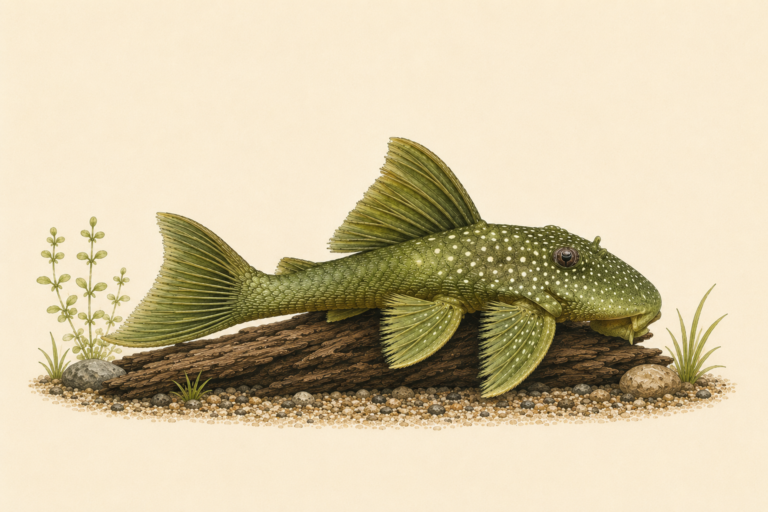
The Striped Raphael Catfish has a robust, somewhat flattened body shape that is immediately recognisable. The body is broad and cylindrical towards the head, tapering to a narrower caudal peduncle. The head is large and depressed, with a wide, subterminal mouth equipped with three pairs of barbels – one maxillary pair and two mandibular pairs. The eyes are relatively small and positioned laterally on the head, reflecting the species’ nocturnal lifestyle.
The base body colour is a deep chocolate brown to near-black, overlaid with striking creamy-white to yellowish lateral stripes. A prominent pale stripe runs from the snout, through the eye, and along the lateral line towards the caudal fin. A second stripe runs along the upper edge of the body from the dorsal fin base towards the tail, and further pale markings adorn the head and ventral areas. In juveniles, these stripes are sharply defined and extremely attractive, but they may fade slightly with age, becoming less distinct in very old specimens, though they never disappear entirely.
As a member of the family Doradidae, the so-called “thorny catfishes,” Platydoras armatulus is heavily armoured. Rows of bony scutes run along the flanks, each bearing a small, backward-pointing thorn or hook. These scutes give the fish a rough, textured appearance and provide formidable physical protection against predators. The dorsal and pectoral fins each bear a strong, sharp spine that can be locked in an erect position. These spines are serrated and can cause painful wounds, and they readily become entangled in soft mesh netting. The caudal fin is forked, and the adipose fin is small but present, as is typical for catfishes.
There is limited sexual dimorphism in this species. Mature females tend to be slightly broader and deeper-bodied when viewed from above, particularly when carrying eggs, but this difference is subtle and unreliable for sexing outside of breeding condition. Both sexes display the same colouration and patterning.
Natural Habitat
Platydoras armatulus is widely distributed across much of tropical South America. Its range encompasses the Amazon River basin, the Orinoco basin, the Tocantins and Araguaia drainages, and the upper Parana and Paraguay River systems. It occurs in Brazil, Peru, Bolivia, Colombia, Venezuela, Guyana, and Suriname, making it one of the most geographically widespread doradid catfishes.
In the wild, Striped Raphael Catfish inhabit slow-moving to moderately flowing rivers, streams, flooded forests, and backwater areas. They favour soft, sandy, or muddy substrates where they can forage effectively, and they seek shelter during the day among submerged tree roots, fallen branches, leaf litter, and rocky crevices. During the wet season, when rivers flood the surrounding forest (the varzea and igapo environments), these catfish move into the inundated areas to exploit the abundant food resources.
The water in their native habitats varies considerably depending on location and season but is generally warm, soft to moderately hard, and ranges from acidic to neutral in pH. Blackwater environments with tannin-stained water are common in parts of their range, while whitewater tributaries offer more turbid, mineral-rich conditions. This broad ecological tolerance is reflected in the species’ remarkable adaptability in captivity.
An interesting aspect of the Striped Raphael’s ecology is its symbiotic relationship with other species. In the wild, juvenile Striped Raphaels have been observed sheltering among the tentacles of large freshwater sponges, and they are known to clean ectoparasites from larger fish. This cleaning behaviour is rarely observed in aquaria but speaks to the species’ complex behavioural repertoire.
Tank Size and Setup
A single Striped Raphael Catfish requires a minimum aquarium volume of 200 litres, with a footprint that provides ample floor space. Because this species is primarily bottom-dwelling, a tank with a larger base area is preferable to a tall, narrow design. If keeping multiple Striped Raphaels, or housing them alongside other large species, a tank of 300 litres or more is strongly recommended. While juveniles can initially be kept in smaller tanks, bear in mind that this species grows steadily over its first few years and will need its permanent home relatively quickly.
The substrate should ideally be fine sand or smooth, rounded gravel. The Striped Raphael spends considerable time foraging along the bottom, sifting through substrate with its barbels, and sharp or coarse materials can cause abrasion damage to these sensitive sensory organs. A sandy substrate also more closely replicates the species’ natural environment and allows for more natural feeding behaviour.
Providing adequate hiding places is essential for this species. Without secure refuges, the Striped Raphael will be perpetually stressed, which can compromise its immune system and shorten its lifespan. Suitable hides include lengths of PVC pipe, ceramic caves, coconut shells, driftwood with hollows, stacked rocks with crevices, and dense plantings. The chosen hiding spots should be snug enough for the catfish to feel secure – this species actively wedges itself into tight spaces and seems to prefer shelters where it can feel contact with surfaces on multiple sides. Provide at least one hiding spot per catfish, and ideally several, to prevent territorial squabbles over favoured locations.
Driftwood is an excellent addition to a Striped Raphael tank. Not only does it provide shelter and a natural aesthetic, but it also slowly releases tannins into the water, softening it slightly and tinting it to a tea-brown colour that replicates the blackwater conditions found in parts of the species’ range. Dried Indian almond (Catappa) leaves can serve a similar function and also provide a surface for biofilm growth, which the catfish will graze upon.
Live plants are not essential but can contribute to a more natural and stable environment. Robust species such as Java Fern (Microsorum pteropus), Anubias species, and Amazon Sword plants (Echinodorus species) are suitable choices. The Striped Raphael is not a plant-destroyer, though its nocturnal foraging may occasionally uproot poorly established plants.
Lighting should be subdued or at least offer shaded areas. As a nocturnal species, the Striped Raphael is most active in dim conditions. A moonlight or low-blue LED mode can allow aquarists to observe nighttime activity without disturbing the fish. Floating plants such as Amazon Frogbit or Water Lettuce can help diffuse overhead lighting and create the dappled, shaded conditions this catfish prefers.
Ensure that all decor is stable and secure. The Striped Raphael is a strong, determined fish that will push and rearrange objects in its quest for the perfect hiding spot. Unsecured rockwork or ornaments could topple and cause injury or damage to the tank.
Water Parameters
| Temperature | 24-30 °C |
| pH | 5.8-7.5 |
| General hardness (GH) | 2-20 dGH |
| Carbonate hardness (KH) | 2-15 dKH |
| Ammonia | 0 ppm |
| Nitrite | 0 ppm |
| Nitrate | Below 40 ppm |
The Striped Raphael Catfish is one of the more tolerant freshwater species when it comes to water chemistry, which is a significant factor in its popularity. It can thrive across a broad range of pH values and hardness levels, and it handles moderate temperature fluctuations without issue. That said, stability is always more important than hitting a specific number. Rapid swings in pH or temperature are far more harmful than a steady reading that sits slightly outside the ideal range.
Regular partial water changes of 20-30% weekly are recommended to keep nitrate levels in check and maintain overall water quality. Although this species is robust, chronically elevated nitrates above 40 ppm can still contribute to health problems over time, particularly given the Striped Raphael’s long potential lifespan. Use a quality dechlorinator when performing water changes, and try to match the temperature and chemistry of the replacement water to the tank water to avoid sudden shifts.
If keeping this species in a community with other South American fish, slightly acidic to neutral water in the range of pH 6.0-7.0, with soft to moderately hard water, represents an excellent compromise that suits a wide variety of compatible species.
Filtration and Equipment
Given that the Striped Raphael Catfish can reach a substantial adult size and produces a proportionate amount of waste, robust filtration is essential. An external canister filter rated for at least the full volume of the tank – ideally with some overcapacity – is the best choice. Canister filters provide excellent mechanical, biological, and chemical filtration, and they can be easily customised with different media to suit the aquarist’s needs. For larger tanks or heavily stocked communities, running two filters or supplementing with an internal powerhead or sponge filter is a worthwhile investment.
Water flow should be moderate. While the Striped Raphael can tolerate a range of flow rates, excessively strong currents are not appreciated by this species, which naturally inhabits slower-moving waters and backwaters. Positioning the filter outlet to create a gentle current across part of the tank, while leaving calmer areas near the hiding spots, provides an ideal arrangement.
A reliable heater is necessary to maintain stable tropical temperatures. A heater rated at approximately 1 watt per litre is a standard guideline, though this can vary depending on the ambient room temperature. A heater guard is recommended – while the Striped Raphael’s armoured body provides some protection, the barbels and softer ventral areas could be burned if the fish rests against an unguarded heater element during the day.
An air pump with an airstone, while not strictly mandatory, can be beneficial for maintaining adequate dissolved oxygen levels, particularly in warmer tanks where oxygen solubility is reduced. The Striped Raphael is not a high-oxygen-demand species, but good oxygenation supports overall tank health and biological filtration efficiency.
A timer-controlled lighting system helps establish a consistent day-night cycle, which is particularly important for a nocturnal species. The Striped Raphael benefits from a predictable photoperiod, and a gradual dimming phase in the evening can encourage the fish to emerge from its hiding spot earlier, giving the aquarist more opportunity to observe its behaviour.
Diet and Feeding
The Striped Raphael Catfish is an omnivore with a hearty appetite and a wonderfully unfussy approach to food. In the wild, its diet consists of aquatic invertebrates, insect larvae, small crustaceans, fallen fruit, seeds, detritus, and organic matter gleaned from the substrate. In captivity, it will readily accept virtually any sinking food offered.
A good staple diet should be based on high-quality sinking pellets or wafers designed for catfish or bottom-dwelling species. These provide a balanced nutritional profile and are conveniently formulated to reach the bottom of the tank where the Raphael feeds. Supplement this base diet with frozen or live foods such as bloodworm, tubifex, brine shrimp, daphnia, and chopped earthworms. Occasional vegetable matter – blanched courgette (zucchini), cucumber, peas, or spinach – rounds out the diet and provides essential fibre and micronutrients.
Feed this species after lights-out. Because the Striped Raphael is nocturnal, it may not compete effectively for food during the day, especially in a busy community tank. Dropping sinking pellets or frozen food into the tank shortly after the lights go off ensures that the catfish gets its fair share before more assertive diurnal tankmates can intercept the food. Over time, many Striped Raphaels learn to associate the aquarist’s presence with feeding and will emerge even during the day to take food, but this should not be relied upon, particularly with newly acquired specimens.
Avoid overfeeding. While the Striped Raphael has an impressive appetite and will eagerly consume large quantities if given the chance, obesity is a genuine concern for this long-lived species. Feed an amount that can be consumed within a few minutes, once daily or every other day for adults. Juveniles benefit from slightly more frequent feeding to support their growth.
One feeding behaviour worth noting is the Striped Raphael’s habit of “vacuuming” the substrate. Using its sensitive barbels, the catfish systematically works across the tank floor, sifting sand and picking up any edible morsels it encounters. This makes it a useful, if unintentional, clean-up crew member, as it will consume uneaten food that other fish have missed.
Behaviour and Temperament
The Striped Raphael Catfish is fundamentally peaceful, though its large adult size and armoured body mean it should not be housed with very small fish that could be swallowed. This species is not aggressive and poses no threat to tankmates of a similar or larger size. It will largely ignore other occupants of the tank during the day, as it spends the vast majority of daylight hours wedged into its chosen hiding spot.
Nocturnal activity is the hallmark of this species’ behaviour. After nightfall, the Striped Raphael emerges to explore the tank, forage along the substrate, and patrol its territory. Watching this transformation – from an apparently inert lump of wood or rock to a surprisingly active and inquisitive fish – is one of the great pleasures of keeping this species. New keepers are sometimes disappointed by the Raphael’s daytime inactivity, but patience is rewarded with increasingly bold behaviour as the fish settles in and learns to associate the keeper with food.
The sound-producing ability of this species has already been mentioned, but it bears elaboration. The Striped Raphael can generate two distinct types of sound: a clicking or drumming produced by stridulation of the pectoral spine in its socket, and a deeper croaking or buzzing created by rapid contraction of muscles attached to the swim bladder. These sounds are most commonly heard when the fish is caught, handled, or otherwise distressed, but some keepers report hearing quiet sounds from settled fish during nighttime activity, possibly as a form of communication. The sounds are surprisingly loud for the size of the fish and can easily be heard from across a room.
Striped Raphaels are generally tolerant of conspecifics, though they may squabble mildly over preferred hiding spots if insufficient shelter is provided. They are not schooling fish but can be kept in groups if the tank is large enough and adequate refuges are available. Individuals may share a hiding spot on occasion, particularly if they have grown up together.
This species is not a dedicated digger, but it will rearrange lightweight decor and uproot loosely planted vegetation during its nocturnal wanderings. This is normal exploratory behaviour rather than destructive intent.
Tank Mates
The Striped Raphael Catfish is an excellent community fish for medium to large tropical setups. Its peaceful disposition, thick armour, and nocturnal habits mean it rarely comes into conflict with other species. The key considerations when selecting tankmates are size compatibility – avoid anything small enough to fit in the Raphael’s mouth – and ensuring that any diurnal companions do not outcompete the catfish for food. Aggressive or highly territorial species that might harass the Raphael in its hiding spot should also be avoided.
Good tank mates
- Severum Cichlid – A similarly sized, relatively peaceful South American cichlid that occupies the mid-water column and leaves bottom-dwellers alone.
- Angelfish – Graceful mid-water swimmers that coexist peacefully with the Striped Raphael, provided the catfish is not small enough to be harassed.
- Bristlenose Pleco – Another peaceful bottom-dweller that occupies a slightly different ecological niche, feeding primarily on algae and biofilm.
- Blue Acara – A moderately sized cichlid with a calm temperament that makes it an ideal companion in a South American biotope setup.
- Silver Dollar Fish – Active, schooling mid-water species that are too large to be eaten and far too peaceful to cause trouble.
- Clown Loach – A sociable bottom-dweller from Southeast Asia that shares the Raphael’s love of hiding spots and nocturnal exploration.
- Geophagus – Earth-eating cichlids are peaceful substrate sifters that complement the Raphael’s habits without competing aggressively.
- Congo Tetra – A larger tetra species that is far too big to be eaten and adds colour and movement to the upper water column.
Fish to avoid
- Neon Tetra – Far too small and easily swallowed by an adult Striped Raphael during nocturnal foraging.
- Cardinal Tetra – Similarly tiny and vulnerable to predation, especially at night when the catfish is most active.
- Flowerhorn Cichlid – A large, highly aggressive cichlid that would harass the Raphael relentlessly and could cause serious injury.
- Red Devil Cichlid – Extremely territorial and aggressive, this cichlid would make life intolerable for a peaceful catfish.
- Cherry Shrimp – Shrimp of any small species will be consumed as a midnight snack without hesitation.
- Guppy – Too small and slow-moving to be safe alongside an adult Striped Raphael.
- Oscar – While sometimes kept with Raphaels, Oscars can become very aggressive and territorial, particularly during breeding, and their large adult size can lead to bullying.
- Jaguar Cichlid – A powerfully built predatory cichlid that is far too aggressive and dangerous for a peaceful tankmate.
Breeding
Breeding the Striped Raphael Catfish in captivity is extremely challenging, and verified accounts of successful aquarium spawnings are exceedingly rare. The vast majority of specimens available in the trade are wild-caught. There are some reports of captive breeding using hormonal induction, but this technique is generally the province of commercial fish farms rather than home aquarists.
In the wild, Platydoras armatulus is believed to be an egg scatterer. Spawning is thought to coincide with the onset of the rainy season, when rising water levels, increased food availability, and changes in water chemistry trigger reproductive behaviour. Some sources suggest that wild Striped Raphaels may construct bubble nests or utilise existing structures such as submerged vegetation for egg deposition, but detailed field observations remain limited.
Sexing this species is difficult. As noted in the Appearance section, females tend to be slightly broader when viewed from above, particularly when gravid, but this distinction is unreliable outside of breeding condition. There are no reliable external sexual differences in colouration, finnage, or body proportions.
For aquarists determined to attempt breeding, the following conditions are generally recommended based on the limited available information. Maintain a group of at least four to six individuals in a large tank of 400 litres or more. Condition the fish heavily with a varied diet rich in live and frozen foods. Simulate the onset of the rainy season by performing large, cool water changes (dropping the temperature by 2-3 degrees Celsius) and softening the water. Reduce lighting and provide abundant sheltered spawning sites. Even with these measures, success is not guaranteed and should be considered a long-term project.
If spawning does occur, the eggs are small and adhesive. Incubation time and fry-rearing details are poorly documented for this species. Newly hatched fry would likely require infusoria or very fine powdered food initially, transitioning to newly hatched brine shrimp as they grow.
Common Diseases
The Striped Raphael Catfish is a genuinely hardy species that is resistant to many common aquarium ailments, provided its basic environmental needs are met. However, no fish is entirely immune to disease, and awareness of potential health issues is important for any responsible keeper.
White spot disease (Ichthyophthirius multifiliis), commonly known as ich, is the most frequently encountered illness in freshwater aquaria. The Striped Raphael can contract ich, particularly when stressed by poor water quality, sudden temperature drops, or the introduction of infected tankmates. Exercise caution when treating scaleless or armour-plated catfish with medication, as they can be more sensitive to certain chemicals – particularly copper-based treatments and formalin. Always use medications at half the recommended dose initially when treating doradid catfishes, and monitor the fish closely for signs of adverse reactions. Raising the temperature to 30 degrees Celsius and adding aquarium salt at a low concentration (1-2 grams per litre) can be an effective and safer first-line treatment for mild ich infections.
Bacterial infections, including fin rot and body ulcers, can occur if water quality deteriorates. These are almost always secondary to environmental stress rather than primary infections. Maintaining clean water through regular partial changes and effective filtration is the best prevention. If bacterial infection does occur, broad-spectrum antibacterial treatments designed for catfish-safe use should be employed.
Fungal infections may occasionally affect the Striped Raphael, particularly if the fish has suffered a wound – for example, from the serrated spines of a conspecific during a territorial dispute. Antifungal treatments are generally well tolerated by this species, but the same precaution regarding dosage sensitivity applies.
Internal parasites can be a concern, particularly with wild-caught specimens. Signs of parasitic infection include weight loss despite a healthy appetite, white or stringy faeces, and lethargy. Antiparasitic treatments containing praziquantel or levamisole are generally effective and well tolerated.
Barbel erosion is a condition to watch for in any catfish species. It is caused by keeping the fish on sharp or abrasive substrate, or in tanks with chronically poor water quality. Eroded barbels reduce the fish’s ability to find food and can become secondarily infected. Prevention through the use of smooth sand substrate and good husbandry is far preferable to treatment.
FAQs
Why does my Striped Raphael Catfish make noise?
The Striped Raphael produces sounds through two mechanisms: stridulation of the pectoral fin spines against the pectoral girdle, and rapid vibration of muscles attached to the swim bladder. These sounds are most commonly heard when the fish is caught, handled, or stressed, serving as a warning or deterrent to potential predators. Occasional quiet sounds during normal activity may represent a form of communication. The noise is entirely natural and not a cause for concern, though frequent sound production in an otherwise undisturbed fish could indicate ongoing stress that should be investigated.
Can I keep a Striped Raphael Catfish in a planted tank?
Yes, the Striped Raphael is generally compatible with planted aquariums. It does not eat or deliberately destroy plants. However, its nocturnal foraging can occasionally uproot loosely planted or newly introduced specimens, so it is best to use well-established plants or species that attach to hardscape, such as Java Fern and Anubias. Planting into pots or weighting down stems until they are well rooted can also help prevent disturbance.
Why can I never see my Striped Raphael Catfish?
This is entirely normal behaviour for a nocturnal species. The Striped Raphael spends the daylight hours hidden in a secure refuge and emerges only after dark to feed and explore. To observe your catfish, try watching the tank after lights-out using a dim red or blue light, which is less disturbing to the fish. Over months and years, many Striped Raphaels become bolder and will emerge during the day, particularly at feeding time, as they learn to associate the aquarist with food. Patience is key.
How big will my Striped Raphael Catfish get?
In captivity, the Striped Raphael typically reaches 20 to 24 centimetres (approximately 8 to 9.5 inches) in total length, though growth rate can vary depending on diet, tank size, and water quality. Growth is relatively slow compared to some other large catfish species, and it may take several years for a juvenile to reach its full adult size. Wild specimens may occasionally exceed these dimensions.
Should I use a net to catch my Striped Raphael Catfish?
No. The Striped Raphael’s serrated pectoral and dorsal spines will almost certainly become tangled in a conventional aquarium net, potentially injuring the fish and making extraction extremely difficult. Always use a rigid container such as a plastic jug, specimen container, or fish trap to move this species. When handling the container, be mindful that the fish can lock its spines in an erect position, and a puncture wound from these spines is painful and prone to infection. Handle with care and avoid direct contact with the fish whenever possible.
Related Guides
- Spotted Raphael Catfish – The closely related Agamyxis pectinifrons shares similar care requirements and makes an excellent companion or alternative species.
- Bristlenose Pleco – Another hardy, popular catfish species that thrives in similar conditions and is often kept alongside the Striped Raphael.
- Common Pleco – A large South American catfish with comparable environmental needs but different feeding habits, offering useful points of comparison for keepers.
- Clown Loach – A fellow nocturnal bottom-dweller that shares the Raphael’s love of hiding spots and makes a compatible tankmate in large setups.
- Pictus Catfish – Another popular South American catfish with similar care considerations, including sensitivity to medications and a need for sandy substrate.