Quick summary
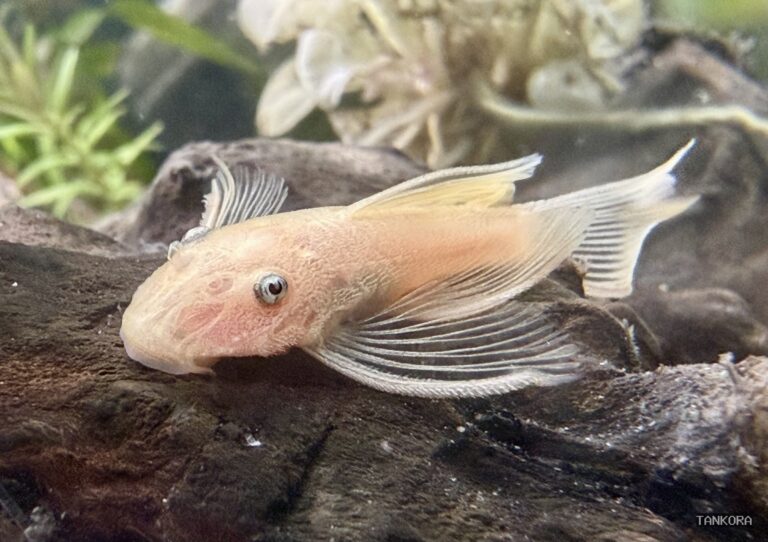
The Bristlenose Pleco is an easy, hardy algae-eater that stays a manageable 12-15 cm, making it a great choice for beginners and community tanks of 110 litres or more. It’s peaceful with most tank mates, breeds readily in captivity, and needs driftwood, caves, and regular vegetable feedings to thrive.
🐠 Build a tank around this species
In this guide:
- Introduction
- Quick Stats
- Appearance
- Varieties and Morphs
- Natural Habitat
- Tank Size and Setup
- Water Parameters
- Filtration and Equipment
- Diet and Feeding
- Behaviour and Temperament
- Tank Mates
- Breeding
- Common Diseases
- FAQs
Introduction
The Bristlenose Pleco is one of the most popular and widely kept catfish in the freshwater aquarium hobby, and for good reason. Compact, hardy, and endlessly useful as an algae grazer, this unassuming fish has earned a permanent place in community tanks around the world. Unlike its larger cousin the Common Pleco, which can exceed 40 cm and rapidly outgrow most home aquariums, the Bristlenose Pleco remains a manageable size throughout its life, making it suitable for a far broader range of setups.
Native to the rivers and tributaries of South America, Ancistrus cirrhosus belongs to the family Loricariidae, the armoured catfish, and is characterised by its flattened body, sucker-shaped mouth, and the distinctive fleshy tentacles (or bristles) that develop on the snouts of mature males. These bristles, while perhaps not conventionally attractive, give the species its common name and make sexing adult fish remarkably straightforward.
Beyond their algae-eating prowess, Bristlenose Plecos are genuinely interesting fish to keep. They are largely nocturnal, emerging from their hiding places at dusk to forage across driftwood, rocks, and glass. Males are devoted fathers, guarding and fanning eggs until they hatch. They are peaceful towards the vast majority of tank mates, and their modest care requirements make them an excellent choice for beginners and experienced aquarists alike. This guide covers everything you need to know to keep Bristlenose Plecos healthy and thriving in your aquarium.
Quick Stats
| Scientific name | Ancistrus cirrhosus |
|---|---|
| Common names | Bristlenose Catfish, Bushynose Pleco, Bushy Nose Catfish |
| Family | Loricariidae |
| Origin | South America, Amazon and Parana river basins |
| Adult size | 15 cm |
| Lifespan | 5–10 years |
| Difficulty | Easy |
| Breeding difficulty | Easy |
| Temperature | 22–28 °C |
| pH | 5.8–7.8 |
| GH | 2–20 dGH |
| KH | 2–15 dKH |
| Minimum tank size | 110 L |
| Conservation status | Least Concern (IUCN, assessed 2020) |
Appearance
The Bristlenose Pleco has a broad, flattened body covered in bony plates, a defining feature of the Loricariidae family. When viewed from above, the body is roughly teardrop-shaped, widest at the head and tapering towards the tail. The underside is flat and pale, housing the large, disc-like sucker mouth that allows the fish to cling to surfaces and rasp algae from hard substrates. The dorsal fin is relatively tall and sail-like, and the caudal fin is broad and fan-shaped, providing bursts of propulsion when the fish moves between foraging spots.
In their wild-type form, Bristlenose Plecos are typically dark brown to grey-black, adorned with a scattering of lighter spots or mottled markings that provide effective camouflage against river substrates and driftwood. The fins usually display alternating bands of light and dark colouration. Juveniles often show more pronounced spotting, which may become subtler as the fish matures.
The most iconic feature of this species is, of course, the bristles. Males develop prominent fleshy tentacles, technically called tentaculi, along the upper surface of the snout, sometimes extending up between the eyes and even onto the forehead. These structures can become quite elaborate in mature males and are thought to play a role in signalling fitness to females. Females may develop very small bristles along the lip margin, but these are typically modest and restricted to a single row along the edge of the snout, making sex determination in adults relatively simple.
Adult Bristlenose Plecos generally reach between 12 and 15 cm in total length, though some individuals kept in spacious tanks with optimal nutrition may approach 15 cm. This manageable adult size is one of the primary reasons for the species’ enduring popularity.
Varieties and Morphs
Decades of captive breeding have produced a number of attractive colour morphs and fin variants that are widely available in the aquarium trade. While these are all the same species (or closely related Ancistrus species bred under the same common name), they can look strikingly different from the wild-type form.
The Albino Bristlenose Pleco is arguably the most commonly encountered variant, displaying a pale yellow to golden body with pinkish-red eyes. It is just as hardy as the wild-type and is often recommended for planted tanks, where its lighter colouration stands out attractively against green foliage. The Super Red Bristlenose is another popular morph, exhibiting a rich reddish-orange to deep russet body colour that intensifies with a diet high in carotenoids. This variety commands slightly higher prices but is no more difficult to keep than the standard form.
The Longfin Bristlenose Pleco features dramatically elongated fins that trail behind the fish as it moves, giving it an almost ethereal appearance. Longfin variants are available in wild-type, albino, and super red colour forms, and while their flowing finnage makes them slightly more susceptible to fin damage from aggressive tank mates or sharp decorations, their care is otherwise identical. The Starlight Bristlenose, sometimes sold as L183, is a distinct but closely related species (Ancistrus dolichopterus) with a jet-black body covered in tiny white spots resembling a starry sky, along with a white seam along the dorsal and caudal fin edges.
The Calico or Marble Bristlenose displays irregular patches of dark and light colouration, creating a piebald effect that varies considerably between individuals. The Lemon Drop or Green Dragon Bristlenose is a newer morph with a pale greenish-yellow body that has gained a following among aquascapers. The Blue-Eye Lemon Bristlenose is a particularly striking variant that combines a bright lemon-yellow body with vivid blue irises. The Peppermint Bristlenose (L071) is another related species with bold white spots on a dark background, popular among enthusiasts seeking something a little different.
Natural Habitat
In the wild, Ancistrus cirrhosus inhabits the freshwater rivers, streams, and tributaries of the Amazon and Paraná river basins across a wide swathe of South America. These waterways range from fast-flowing, well-oxygenated streams to slower, tannin-stained backwaters, and the Bristlenose Pleco has proven adaptable across this spectrum. The species is particularly associated with areas where submerged wood is abundant, as driftwood serves both as a food source and as shelter.
The substrates in their native habitats typically consist of sand, gravel, and smooth river stones, often overlaid with leaf litter and fallen branches. The water is generally soft to moderately hard, slightly acidic to neutral, and well-oxygenated. Seasonal flooding can alter conditions significantly, with temperature and chemistry fluctuating as floodwaters rise and recede, a factor that explains the species’ tolerance for a broad range of water parameters in captivity.
During the day, Bristlenose Plecos shelter in crevices, beneath rocks, inside hollow logs, and amongst the tangles of submerged root systems. They emerge primarily at night or during periods of low light to graze on the biofilm, algae, and decomposing organic matter that coat surfaces throughout their environment. This crepuscular and nocturnal lifestyle is well established in captive populations and should be accommodated in the aquarium through the provision of adequate hiding places.
Tank Size and Setup
A single Bristlenose Pleco requires a minimum tank size of around 110 litres, which equates to a standard 80 cm or 90 cm tank. While these fish are not particularly active swimmers, they are territorial by nature, especially males, and they produce a surprisingly high bioload for their size. A larger tank of 150 litres or more is preferable if you intend to keep a pair or a small group, and additional volume is always beneficial for maintaining stable water quality.
The aquarium should be furnished with plenty of hiding places. Driftwood is not merely decorative for this species; it appears to be an essential component of their diet, as Bristlenose Plecos rasp at wood and are believed to derive fibre and possibly beneficial microorganisms from doing so. Include at least one or two substantial pieces of bogwood, mopani wood, or Malaysian driftwood. Caves are equally important, particularly if you plan to breed these fish. Commercially available ceramic or coconut-shell caves work well, as do sections of PVC pipe, slate overhangs, and stacked rocks arranged to form dark recesses.
The substrate can be sand or smooth gravel. Avoid sharp-edged substrates, as Bristlenose Plecos spend a great deal of time resting on and moving across the bottom of the tank, and rough materials can damage their soft undersides. Live plants are entirely compatible with this species; contrary to some reports, Bristlenose Plecos rarely damage healthy plants, instead preferring to graze on the algae and biofilm that grow on plant leaves. Hardy species such as Java Fern, Anubias, and Vallisneria are excellent choices, as they tolerate the same water conditions and are robust enough to withstand occasional contact.
Moderate to gentle water flow is ideal, replicating the streams and tributaries these fish inhabit in the wild. Ensure the tank is not excessively bright during the day, or provide shaded areas where the fish can retreat, floating plants can help diffuse overhead lighting and create the dimmer conditions that encourage Bristlenose Plecos to be more active and visible during daylight hours.
Water Parameters
Bristlenose Plecos are remarkably tolerant of a wide range of water conditions, which is one of the reasons they are so well suited to community aquariums. Nonetheless, maintaining stable parameters within the recommended ranges will help ensure optimal health, colouration, and breeding behaviour. Sudden swings in temperature, pH, or hardness should be avoided, as even hardy fish can be stressed by rapid changes.
| Temperature | 22–28 °C |
| pH | 5.8–7.8 |
| General hardness (GH) | 2–20 dGH |
| Carbonate hardness (KH) | 2–15 dKH |
| Ammonia | 0 ppm |
| Nitrite | 0 ppm |
| Nitrate | Below 30 ppm |
Regular water changes of 20–30% per week are strongly recommended. Bristlenose Plecos are sensitive to elevated nitrate levels and poor water quality in general, despite their reputation for hardiness. Accumulated waste and organic matter can contribute to bacterial infections, fin erosion, and a general decline in vitality. Consistent maintenance is the single most important factor in keeping these fish in good condition over the long term.
Filtration and Equipment
Given the substantial bioload that Bristlenose Plecos produce, they eat prodigiously and generate a corresponding amount of waste, robust filtration is essential. An external canister filter rated for the tank’s volume, or slightly above, is the ideal choice, as it provides excellent mechanical, biological, and chemical filtration without consuming valuable space inside the aquarium. Internal power filters and hang-on-back filters can also work well for smaller setups, provided they are maintained regularly and offer sufficient biological media capacity.
Good oxygenation is important for this species. In the wild, Bristlenose Plecos are often found in well-aerated streams, and stagnant, poorly oxygenated water can cause stress and health problems. The filter outlet should create enough surface agitation to promote gas exchange, or you may wish to add a small air pump with an airstone for additional aeration, particularly in warmer tanks where dissolved oxygen levels naturally decrease.
A reliable heater with a thermostat is necessary unless the room in which the tank is kept consistently remains within the species’ preferred temperature range. Choose a heater with a guard or position it where the fish cannot press against it, as plecos will occasionally rest on equipment and may sustain burns from unprotected heaters. Standard aquarium lighting is perfectly adequate; there is no requirement for specialised lighting, though a timer-controlled photoperiod of 8–10 hours per day helps maintain a consistent day-night cycle and supports any live plants in the setup.
Diet and Feeding
The Bristlenose Pleco is primarily a herbivore and detritivore, spending much of its time rasping algae, biofilm, and decomposing plant matter from surfaces throughout the aquarium. While they will certainly help to control algae growth, particularly green spot algae and brown diatoms, it is a mistake to assume that naturally occurring algae alone will provide sufficient nutrition. In all but the most heavily algae-covered tanks, supplementary feeding is essential.
High-quality sinking algae wafers or vegetable-based catfish pellets should form the staple of their diet. These are specifically formulated to meet the nutritional needs of herbivorous bottom-dwellers and will be eagerly consumed, typically at night. In addition to prepared foods, Bristlenose Plecos benefit greatly from regular offerings of blanched vegetables. Courgette (zucchini) slices, cucumber rounds, peas (shelled), spinach, broccoli, and sweet potato are all relished. Blanch the vegetables briefly in boiling water to soften them, allow them to cool, and then weigh them down in the tank with a vegetable clip or a small piece of stainless steel. Remove any uneaten portions within 24 hours to prevent water quality issues.
While primarily herbivorous, Bristlenose Plecos are opportunistic and will accept occasional protein-rich foods such as bloodworms, brine shrimp, or sinking carnivore pellets. These can be offered once or twice a week as a supplement but should not constitute a large proportion of the diet, as excessive protein can contribute to digestive issues over time. Driftwood should always be present in the tank, as these fish actively rasp at wood and appear to require the fibre it provides for proper digestion.
Feed primarily in the evening or after lights-out to align with the species’ natural nocturnal foraging behaviour. This also helps ensure that the plecos receive their fair share of food without competition from more assertive diurnal species in a community setting.
Behaviour and Temperament
Bristlenose Plecos are peaceful, retiring fish that spend the majority of the day hidden away in caves, beneath driftwood, or wedged into crevices. As dusk falls, they become noticeably more active, emerging to forage methodically across every available surface. Their movements are deliberate rather than frantic, and it is common to find them suctioned to the glass, where their undersides and rasping mouthparts can be observed in detail.
While generally placid towards other species, male Bristlenose Plecos can be territorial towards one another, particularly in smaller tanks or when caves are in limited supply. Disputes between males typically involve posturing, flaring of the gill covers, and attempts to block rivals from accessing preferred hiding spots. These confrontations rarely result in serious injury, but providing multiple caves, ideally one per male plus a few extras, will significantly reduce aggression and stress.
Females are considerably more sociable and can be kept together without issue. A ratio of one male to two or three females works well if you intend to maintain a small group. In larger aquariums with ample territory and hiding places, multiple males can coexist, though some degree of hierarchical squabbling is to be expected.
One behaviour that often surprises new keepers is the occasional dash to the surface to gulp air. This is entirely normal. Bristlenose Plecos, like many loricariids, possess a modified stomach that can function as an accessory respiratory organ, allowing them to extract oxygen from atmospheric air. While frequent, prolonged surface breathing may indicate low dissolved oxygen or poor water quality, occasional gulps are nothing to worry about.
Tank Mates
The Bristlenose Pleco’s calm disposition and bottom-dwelling habits make it compatible with a wide range of community fish. Because it occupies a different zone of the aquarium from most common species and is largely nocturnal, conflicts with tank mates are rare. The main considerations when choosing companions are to avoid species that are overly aggressive, large enough to view the pleco as food, or that directly compete for the same cave-based territories.
Good tank mates
- Neon Tetra, a peaceful, small-bodied schooling fish that occupies the mid-water column and poses no threat to a bottom-dwelling pleco.
- Cardinal Tetra, Similar in temperament and size to the Neon Tetra, cardinals appreciate the same soft, slightly acidic water conditions that suit Bristlenose Plecos.
- Corydoras Catfish, another peaceful bottom-dweller that forages the substrate rather than competing for cave space, making cohabitation harmonious.
- Harlequin Rasbora, a gentle, mid-water schooling fish that thrives in similar water parameters and adds colour without creating territorial disputes.
- Cherry Barb, a mild-mannered barb species that stays small and does not harass bottom-dwelling tank mates.
- Honey Gourami, a calm, slow-moving surface and mid-water dweller that is far too gentle to bother a Bristlenose Pleco.
- Kuhli Loach, a shy, peaceful loach that shares the bottom of the tank but tends to burrow into substrate rather than compete for caves.
- Rummy-Nose Tetra, an active but peaceful schooling species that adds movement to the upper water column without disturbing bottom-dwellers.
- Pearl Gourami, a docile gourami that occupies the upper portions of the tank and is an excellent companion in medium to large community setups.
- Ember Tetra, a tiny, non-aggressive nano fish that thrives in planted tanks alongside Bristlenose Plecos without any compatibility concerns.
Fish to avoid
- Oscar, a large, predatory cichlid that may attack or attempt to eat a Bristlenose Pleco, particularly when the pleco is young or small.
- Jaguar Cichlid, an aggressive, territorial species capable of inflicting serious harm on slower-moving tank mates such as plecos.
- Common Pleco, while not aggressive per se, the Common Pleco grows far larger and may outcompete and stress a Bristlenose for territory and food.
- Red-Tail Catfish, a massive predatory catfish that will consume virtually any tank mate it can fit into its mouth.
- Green Terror, a highly territorial cichlid that becomes increasingly aggressive as it matures and will harass bottom-dwelling species.
- Tiger Barb, a notorious fin-nipper that may target the flowing fins of longfin Bristlenose variants and cause persistent stress.
- Flowerhorn Cichlid, an extremely aggressive hybrid cichlid that is best kept alone and will readily attack any tank mate.
- African Cichlids (Mbuna), highly territorial rock-dwelling cichlids from Lake Malawi that prefer hard, alkaline water and will aggressively defend cave territories.
Breeding
One of the most rewarding aspects of keeping Bristlenose Plecos is how readily they breed in captivity. Unlike many aquarium fish that require specialised conditions or considerable intervention, Bristlenose Plecos will often spawn spontaneously in well-maintained community tanks, making them an excellent species for aquarists looking to experience fish breeding for the first time.
To encourage breeding, ensure that the tank contains at least one suitable cave. Males will select and defend a cave, cleaning it meticulously to prepare it as a spawning site. Purpose-made pleco caves, typically narrow, tube-shaped ceramic or slate structures with one closed end, are ideal, as they replicate the snug cavities the species favours in the wild. The opening should be just large enough for the male to enter and block with his body. Providing several caves allows males to choose their preferred site and reduces territorial disputes.
A slight drop in temperature, achieved through a partial water change with cooler water, can sometimes trigger spawning behaviour. This mimics the onset of the rainy season in their native habitat. A well-fed pair in good condition, maintained at a temperature around 24–26 °C, will typically breed without any additional encouragement. The female will enter the male’s chosen cave, where she deposits a cluster of large, adhesive, bright orange eggs, usually between 20 and 100, depending on her size and maturity. After laying, she departs, and the male assumes sole responsibility for the eggs.
The male is an exemplary parent. He remains in the cave throughout the incubation period, which lasts approximately four to ten days depending on temperature, fanning the eggs with his fins to ensure adequate oxygenation and removing any that develop fungus. He will not leave the cave to feed during this time. The eggs hatch into larvae with large, conspicuous yolk sacs, and the fry remain in or near the cave for a further few days until the yolk is absorbed. Once free-swimming, the fry can be fed on finely crushed algae wafers, blanched vegetables, and powdered fry food. Growth is steady, and juveniles begin to develop their adult colouration and body shape within a few weeks.
Common Diseases
Bristlenose Plecos are generally robust fish, but they are not immune to disease, particularly when water quality is allowed to deteriorate or when they are subjected to chronic stress from overcrowding, poor diet, or aggressive tank mates. Prevention through consistent maintenance and good husbandry is always more effective than treatment.
Ich, or white spot disease, caused by the protozoan parasite Ichthyophthirius multifiliis, is one of the most common ailments affecting freshwater fish, and Bristlenose Plecos are no exception. Infected fish display small white cysts on the body and fins, along with signs of irritation such as flashing against surfaces. Treatment involves gradually raising the temperature to around 30 °C and adding aquarium salt at a low dose, or using a proprietary ich medication. Note that Bristlenose Plecos, like many scaleless and armoured catfish, can be sensitive to certain medications, particularly those containing copper. Always check that any treatment is safe for catfish before administering it, and consider using half doses initially.
Bacterial infections can manifest as fin rot, body sores, or red patches on the skin, and are almost always associated with poor water quality. Maintaining pristine water conditions is the best preventative measure. If bacterial infection does occur, improving water quality through more frequent water changes, combined with treatment using an appropriate antibacterial medication, is usually effective.
Malnutrition is an underappreciated issue in Bristlenose Plecos. Fish that are not provided with sufficient vegetable matter and driftwood may develop a sunken belly, slow growth, and dull colouration. This is easily remedied by ensuring a varied, plant-based diet and access to driftwood at all times. Internal parasites can also cause similar symptoms, particularly in wild-caught specimens, and may require treatment with a suitable antiparasitic medication if dietary improvements alone do not resolve the issue.
Dropsy, characterised by a severely swollen abdomen and raised scales giving a pinecone-like appearance, is typically a sign of organ failure rather than a disease in itself. It is often associated with chronic poor water conditions and carries a poor prognosis. Early intervention with antibacterial treatment and pristine water conditions may help in mild cases, but advanced dropsy is unfortunately usually fatal.
FAQs
Do Bristlenose Plecos eat all types of algae?
Bristlenose Plecos are effective grazers of green spot algae, brown diatoms, and general biofilm, but they are not particularly adept at dealing with black beard algae (BBA), green hair algae, or blue-green algae (cyanobacteria). While they will help control common algae types, they should not be relied upon as the sole solution to a significant algae problem, which is usually better addressed by correcting the underlying cause such as excessive light or nutrient imbalances.
Why does my Bristlenose Pleco hide all day?
This is completely normal behaviour. Bristlenose Plecos are primarily nocturnal and crepuscular, meaning they are most active during the hours of darkness and twilight. During the day, they will typically remain concealed in caves, under driftwood, or behind decorations. If you wish to observe them more during the day, providing subdued lighting, floating plants for shade, and adding food shortly before or after lights-out can encourage them to emerge earlier in the evening.
Can I keep more than one Bristlenose Pleco in the same tank?
Yes, but some consideration is required. Multiple females can coexist peacefully in most setups. Males, however, are territorial and will compete for caves and hiding spots, particularly in smaller aquariums. In a tank of 150 litres or more with plenty of caves, at least one per male plus a few spares, it is usually possible to keep a small group including more than one male, though some squabbling is to be expected.
Do Bristlenose Plecos need driftwood in their tank?
Driftwood is considered essential rather than optional for this species. Bristlenose Plecos actively rasp at wood, and it is widely believed that the fibre and lignin they obtain aids their digestion. Fish kept without driftwood may develop digestive problems or fail to thrive over the long term. Driftwood also provides valuable hiding places and surfaces for biofilm growth, both of which contribute to the fish’s overall wellbeing.
How can I tell if my Bristlenose Pleco is male or female?
Sexing juvenile Bristlenose Plecos is difficult, but once the fish reach maturity at around 6–12 months of age, the difference becomes quite obvious. Males develop prominent, branching fleshy tentacles (bristles) across the top of the snout and sometimes extending up between the eyes. Females may develop very small, stubby bristles confined to the lip margin, or none at all. Males also tend to have a slightly broader, flatter head when viewed from above.
Related Guides
- Common Pleco Care Guide, a comparison species that grows far larger but is often confused with the Bristlenose Pleco in the aquarium trade.
- Clown Pleco Care Guide, another small, wood-rasping pleco species that makes an excellent alternative or companion to the Bristlenose.
- Corydoras Catfish Care Guide, a popular bottom-dwelling companion that complements the Bristlenose Pleco in community setups.
- How to Control Algae in Your Aquarium, a comprehensive guide to understanding and managing algae growth, relevant to anyone keeping algae-eating species.
- Rubber Lip Pleco Care Guide, a similarly sized pleco species with comparable care requirements and algae-grazing habits.