Amano Shrimp Care Guide — Tank Setup, Feeding and Breeding
Introduction
The Amano Shrimp is one of the most popular and widely kept freshwater invertebrates in the aquarium hobby, and with good reason. Named after the legendary aquascaper Takashi Amano, who famously introduced them into planted aquaria during the 1990s as a natural means of algae control, these industrious little crustaceans have earned an enduring reputation as the finest algae-eating shrimp available to hobbyists. Their tireless foraging behaviour, peaceful disposition, and remarkable hardiness make them an excellent choice for both beginners and experienced aquarists alike.
Scientifically classified as Caridina multidentata (formerly Caridina japonica), the Amano Shrimp hails from Japan and parts of Taiwan, where it inhabits freshwater streams and rivers. Unlike many of the dwarf shrimp species that have exploded in popularity in recent years, the Amano Shrimp is notably larger and considerably more robust, making it less vulnerable to predation and better suited to community aquaria. Its ability to consume a wide range of algae types, including the notoriously stubborn hair algae and brush algae, has cemented its status as an indispensable member of the planted tank clean-up crew.
Despite their ease of care in a general sense, Amano Shrimp do present one significant challenge: breeding them in captivity is exceptionally difficult. Their larvae require brackish to marine conditions to survive, a trait that sets them apart from popular Neocaridina species. This guide covers everything you need to know to keep your Amano Shrimp healthy and thriving, from water parameters and tank setup to diet, behaviour, and the intricacies of their fascinating but demanding reproductive cycle.
Quick Stats
| Scientific name | Caridina multidentata |
| Common names | Amano Shrimp, Yamato Shrimp, Japonica Shrimp, Algae-eating Shrimp |
| Family | Atyidae |
| Origin | Japan, Taiwan, and parts of the Ryukyu Islands |
| Adult size | 4–5 cm (up to 6 cm for large females) |
| Lifespan | 2–3 years (occasionally longer with optimal care) |
| Difficulty | Easy |
| Breeding difficulty | Expert |
| Temperature | 20–26 °C |
| pH range | 6.5–7.8 |
| General hardness (GH) | 6–12 dGH |
| Carbonate hardness (KH) | 3–8 dKH |
| Minimum tank size | 40 litres |
| Conservation status | Least Concern (IUCN) |
Appearance
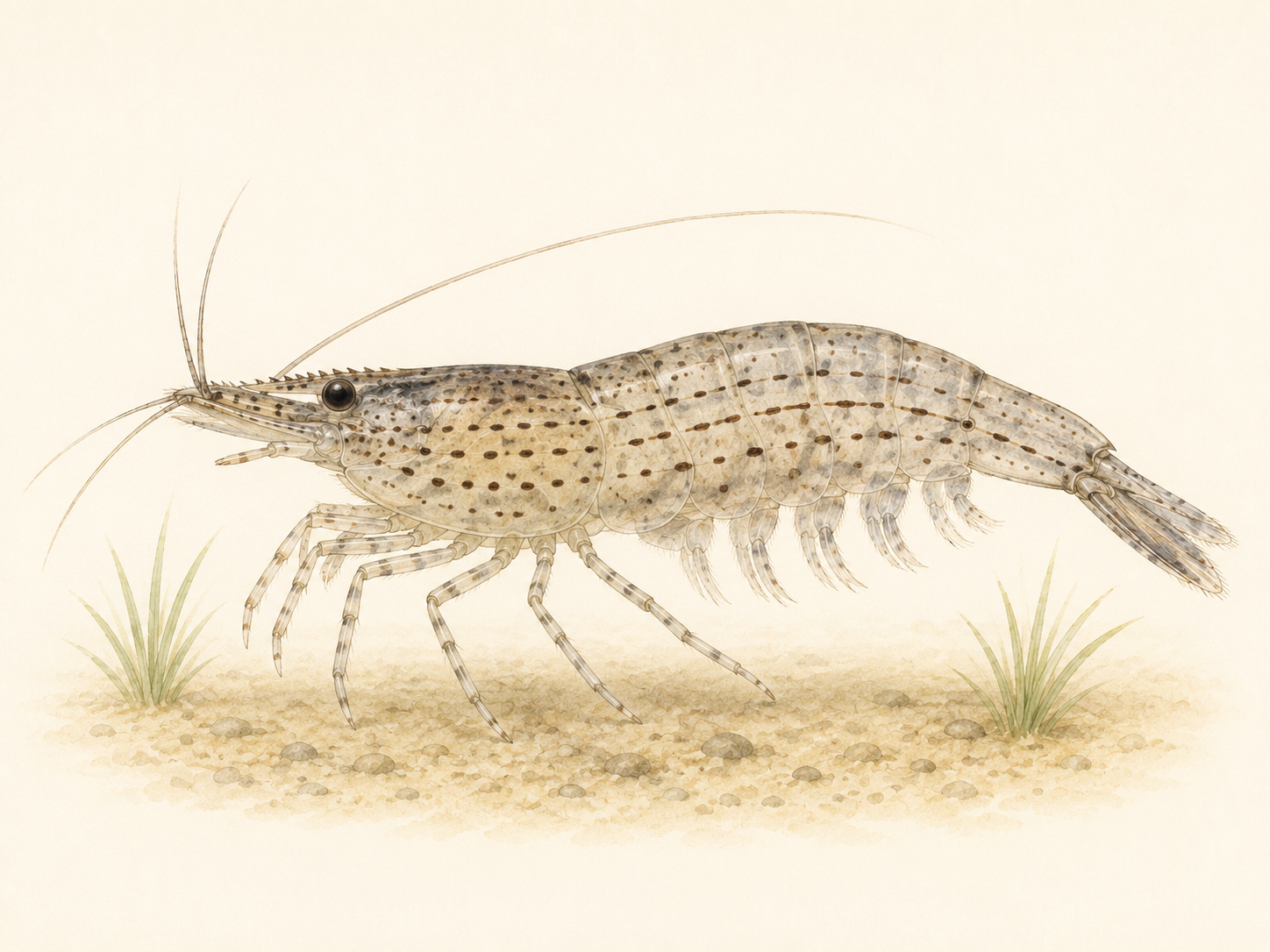
The Amano Shrimp possesses a subtle, understated beauty that grows on you the more you observe it. The body is largely translucent to greyish-green, sometimes taking on a light brown or even slightly reddish hue depending on diet and environment. Running along each flank is a series of broken dashes and dots that extend from the rostrum to the tail. These markings are one of the most reliable ways to distinguish the species from similar-looking shrimp, and they also help differentiate males from females. In females, the lateral markings tend to appear as elongated dashes, while in males they are more distinctly dotted.
A thin, lighter dorsal stripe runs along the top of the body from head to tail, which is a characteristic feature shared by several Caridina species but is particularly clean and well-defined in Amano Shrimp. The eyes are relatively large and sit on short stalks, giving the shrimp excellent awareness of their surroundings. The antennae are long and constantly in motion, used for sensing food and detecting changes in water chemistry.
Amano Shrimp are noticeably larger than most popular dwarf shrimp species. Adult females can reach up to 6 centimetres in length, making them some of the largest commonly kept freshwater aquarium shrimp outside of the fan shrimp and long-arm species. Males are somewhat smaller and more slender, typically maxing out at around 4 centimetres. When well-fed on a varied diet rich in plant matter, the body often takes on a slightly greenish tinge, while shrimp that have been consuming protein-rich foods may appear more brownish or reddish. This colour variability is entirely normal and not a cause for concern.
Natural Habitat
In the wild, Amano Shrimp are found in the freshwater streams and rivers of Japan, particularly on the main islands of Honshu, Shikoku, and Kyushu, as well as parts of Taiwan and the Ryukyu archipelago. They inhabit clean, well-oxygenated waterways where moderate to strong current flows over rocky and gravelly substrates. These streams are typically bordered by dense riparian vegetation, which provides shade, leaf litter, and a constant supply of organic material that forms the basis of the shrimp’s diet.
The species has a catadromous life cycle, meaning that while adults live in freshwater, the larvae must wash downstream into brackish or fully marine estuarine environments to complete their development. After spending several weeks in saltwater as free-swimming zoea, the juveniles metamorphose into their adult form and begin migrating upstream into freshwater. This remarkable lifecycle is one of the key reasons why captive breeding is so challenging, and it also explains why wild populations are found predominantly in rivers with unimpeded access to the sea.
The natural water conditions in their home streams are characterised by a near-neutral to slightly alkaline pH, moderate hardness, and temperatures that fluctuate seasonally between roughly 15 °C in winter and 27 °C in summer. The water is typically crystal clear with very low levels of dissolved pollutants, reflecting the pristine mountain and hillside environments these shrimp call home. Replicating these conditions in the aquarium — clean, well-oxygenated water with stable parameters — is straightforward and one of the reasons Amano Shrimp adapt so readily to captive life.
Tank Size and Setup
A minimum tank size of 40 litres is recommended for a small group of Amano Shrimp, though larger aquaria are always preferable and allow for a more stable environment. Because these shrimp are social animals that feel most comfortable in groups, keeping at least five or six individuals together is advisable. For larger groups of ten or more, a tank of 60 litres or greater is more appropriate. Amano Shrimp are active foragers that cover a lot of ground during their waking hours, so providing ample floor space is more beneficial than vertical height.
When it comes to aquascaping, the ideal setup draws inspiration from the shrimp’s natural habitat. A substrate of fine gravel or aquarium sand works well, and the addition of smooth river stones, driftwood, and live plants creates a naturalistic environment with plenty of surface area for biofilm and algae to grow — both of which are primary food sources. Dense plantings of species such as Java Fern, Anubias, and various mosses provide excellent grazing surfaces and offer the shrimp places to retreat during moults, when they are at their most vulnerable.
Driftwood is an especially valuable addition, as it develops a rich biofilm over time that Amano Shrimp will pick at endlessly. Cholla wood, spider wood, and Malaysian driftwood are all excellent choices. Leaf litter from dried Indian almond leaves or oak leaves provides additional foraging opportunities and releases beneficial tannins into the water. Ensure that the tank has a secure lid, as Amano Shrimp are notorious escape artists and will climb out of open-topped aquaria, particularly when water conditions deteriorate or when they are newly introduced and stressed. Even small gaps around filter pipes and cable entry points should be covered.
Water Parameters
Amano Shrimp are adaptable creatures, tolerating a reasonably wide range of water conditions, but they perform best when parameters are kept stable and within their preferred ranges. Like all freshwater shrimp, they are sensitive to ammonia and nitrite, which must always read zero, and they do not tolerate sudden shifts in temperature, pH, or hardness well. Consistency is far more important than hitting a precise number.
| Temperature | 20–26 °C |
| pH | 6.5–7.8 |
| General hardness (GH) | 6–12 dGH |
| Carbonate hardness (KH) | 3–8 dKH |
| Ammonia | 0 ppm |
| Nitrite | 0 ppm |
| Nitrate | Below 20 ppm |
Copper is highly toxic to all invertebrates, and Amano Shrimp are no exception. Many fish medications, plant fertilisers, and even tap water treatments contain copper in various forms, so always check ingredient lists before adding anything to a shrimp tank. If your tap water contains elevated levels of copper, using a dechlorinator that binds heavy metals or switching to remineralised reverse osmosis water is strongly recommended. Regular water changes of around 15–20 per cent weekly help maintain water quality, but always ensure that the replacement water is temperature-matched and dechlorinated before adding it to the tank.
Filtration and Equipment
Effective filtration is essential for keeping Amano Shrimp healthy, as they are sensitive to the build-up of nitrogenous waste. A sponge filter is an excellent choice for shrimp-dedicated tanks, providing gentle biological filtration without any risk of the shrimp or their offspring being sucked into the mechanism. For community tanks, hang-on-back filters and canister filters work well, but the intake should always be fitted with a fine sponge pre-filter to prevent the shrimp from being trapped or injured.
Amano Shrimp come from well-oxygenated streams with moderate flow, so providing some degree of water movement is beneficial. An air stone or the output from a filter that creates gentle surface agitation will help maintain dissolved oxygen levels. However, excessively strong currents can stress smaller individuals and make feeding difficult, so aim for a moderate flow rate that keeps the water moving without creating a torrent.
Lighting requirements are dictated more by the needs of your plants than the shrimp themselves. Amano Shrimp are not particularly light-sensitive, though they do tend to be more active and visible under moderate lighting. Extremely intense lighting can promote excessive algae growth, which, while not directly harmful, may indicate an imbalance in the system. A standard planted tank lighting schedule of eight to ten hours per day works perfectly well. A reliable heater with a thermostat is recommended to maintain stable temperatures, particularly in cooler climates or rooms with significant temperature fluctuations.
Diet and Feeding
One of the Amano Shrimp’s greatest assets is its voracious and indiscriminate appetite for algae. These shrimp will consume virtually every common type of aquarium algae, including green spot algae, hair algae, brush algae, and even some forms of the dreaded black beard algae. They are not miracle workers — a single shrimp will not clear a heavily infested tank overnight — but a group of ten or more in a moderately planted aquarium will make a significant and visible difference over the course of a few weeks.
Beyond algae, Amano Shrimp are enthusiastic consumers of biofilm, decaying plant matter, and detritus. They are true omnivores and will also accept a wide range of prepared and supplementary foods. High-quality shrimp pellets, algae wafers, blanched vegetables such as courgette, spinach, and cucumber, and occasional treats of frozen or freeze-dried bloodworms and daphnia all make excellent dietary additions. It is important not to rely solely on the algae and biofilm present in the tank, particularly in well-maintained aquaria where natural food sources may be limited.
Overfeeding is a common mistake with Amano Shrimp. While they are remarkably efficient at scavenging leftover food, excess nutrients will fuel algae blooms, degrade water quality, and can lead to bacterial issues. Feed sparingly, offering only as much food as the shrimp can consume within two to three hours, and remove any uneaten portions. Many experienced keepers feed their Amano Shrimp every other day rather than daily, which encourages them to forage naturally on biofilm and algae between feedings, maintaining their effectiveness as a clean-up crew.
Providing a source of calcium is important for healthy moulting. Cuttlebone fragments, mineral stones designed for shrimp, or simply maintaining an adequate GH through your water chemistry will usually supply sufficient calcium and other trace minerals. Regular, successful moults are a strong indicator that your shrimp are well-nourished and living in appropriate conditions.
Behaviour and Temperament
Amano Shrimp are peaceful, social, and endlessly entertaining to watch. They spend the vast majority of their time foraging, using their small, fan-like appendages to pick through substrate, scrub plant leaves, and comb over every surface in the aquarium for edible morsels. This constant, methodical grazing behaviour is what makes them such effective algae controllers, and it is also one of their most endearing qualities.
While they are generally non-aggressive, Amano Shrimp do exhibit a notable competitive streak at feeding time. It is common to see individuals grab a piece of food and swim rapidly to a secluded corner to eat in peace, a behaviour that has earned them a reputation as the “food thieves” of the invertebrate world. Larger females, in particular, can be quite assertive when it comes to claiming the best morsels. This behaviour is harmless and adds a touch of personality and drama to the aquarium.
Moulting occurs regularly as the shrimp grow, and during this process they shed their entire exoskeleton. In the hours immediately following a moult, the shrimp’s new shell is soft and vulnerable, and the individual will typically hide among plants, driftwood, or rockwork until it hardens. Providing plenty of cover is therefore essential for reducing stress during this period. The discarded exoskeleton should be left in the tank, as the shrimp and their tank mates will often consume it to recycle the valuable minerals it contains.
Amano Shrimp are primarily crepuscular and nocturnal, meaning they tend to be most active during dawn, dusk, and nighttime hours. However, in a well-established tank where they feel secure, they will frequently forage throughout the day as well. If you notice your Amano Shrimp hiding constantly during daylight hours, this may indicate stress from aggressive tank mates, poor water quality, or inadequate cover.
Tank Mates
Thanks to their relatively large size for a dwarf shrimp and their peaceful nature, Amano Shrimp are compatible with a wide range of community fish. The primary consideration when selecting tank mates is ensuring that no fish in the aquarium is large or aggressive enough to view the shrimp as a potential meal. As a general rule, any fish with a mouth large enough to swallow an adult Amano Shrimp should be avoided.
Good tank mates
- Neon Tetra — These small, peaceful schooling fish are far too tiny to threaten adult Amano Shrimp and share similar water parameter preferences.
- Ember Tetra — A diminutive and gentle species that coexists beautifully with shrimp in planted tanks without causing any harassment.
- Harlequin Rasbora — A calm, mid-water schooling fish that completely ignores shrimp and adds lovely colour to the aquarium.
- Otocinclus Catfish — A fellow algae eater that is entirely peaceful and shares the same grazing lifestyle as Amano Shrimp.
- Corydoras Catfish — Gentle bottom-dwellers that pose no threat to shrimp and make excellent companions in community setups.
- Cherry Shrimp — Another peaceful shrimp species that cohabits well with Amano Shrimp, though Amanos may outcompete them for food at feeding time.
- Celestial Pearl Danio — A beautiful, tiny fish that is too small to pose any risk to Amano Shrimp and thrives in similar planted environments.
- Kuhli Loach — A shy, nocturnal bottom-dweller that is entirely harmless to shrimp and adds interesting activity during evening hours.
- Nerite Snail — A superb algae-eating snail that works alongside Amano Shrimp as part of a comprehensive clean-up crew without any compatibility issues.
- Honey Gourami — One of the most peaceful gourami species, typically far too gentle and slow to bother adult Amano Shrimp.
Fish to avoid
- Oscar — A large, predatory cichlid that will readily consume any shrimp it can catch, making cohabitation impossible.
- Angelfish — Although sometimes kept with shrimp, adult angelfish can and do eat Amano Shrimp, particularly smaller individuals.
- Betta — While some bettas ignore shrimp, many are aggressive enough to harass or kill Amano Shrimp, making this pairing unreliable.
- Goldfish — Their large mouths, cooler temperature preferences, and opportunistic feeding habits make them a poor match for Amano Shrimp.
- African Cichlids — Most African cichlids are far too aggressive and territorial to be housed with any shrimp species.
- Jack Dempsey — A highly aggressive and predatory cichlid that would view Amano Shrimp as nothing more than live food.
- Pea Puffer — Despite their small size, pea puffers are dedicated invertebrate hunters and will actively prey upon shrimp.
- Rainbow Shark — Territorial and fast-moving, rainbow sharks will chase and stress shrimp, often causing injuries or death.
Breeding
Breeding Amano Shrimp is widely regarded as one of the most difficult challenges in the freshwater aquarium hobby. While getting them to mate and produce eggs is relatively straightforward — it often happens spontaneously in a well-maintained tank — raising the larvae through to adulthood requires a completely separate setup, specialised knowledge, and a considerable investment of time and patience.
In a mature aquarium with stable water conditions, berried females (those carrying eggs under their abdomen) are a common sight. After mating, the female will carry anywhere from several hundred to over two thousand tiny green or brownish eggs tucked beneath her pleopods (swimming legs) for approximately four to six weeks. During this period she will constantly fan the eggs to keep them oxygenated and free of fungus. As the eggs near hatching, they gradually become lighter in colour and individual larval eyes may become visible under close inspection.
Upon hatching, the larvae are released into the water as free-swimming zoea — microscopic, planktonic creatures that bear no resemblance to adult shrimp. In the wild, these zoea would be carried downstream by the current into brackish estuarine waters. In captivity, the keeper must transfer them to a separate rearing tank filled with saltwater at a specific gravity of approximately 1.024 to 1.026, replicating marine conditions. This is the critical step where most breeding attempts fail.
The larval zoea must be fed extremely fine foods such as marine phytoplankton, spirulina powder suspended in the water column, or commercially available liquid larval feeds. The rearing tank must be kept scrupulously clean, as the tiny zoea are highly susceptible to bacterial infections and water quality issues. Gentle aeration is needed to keep food particles suspended without creating currents strong enough to damage the fragile larvae. The zoea pass through multiple developmental stages over a period of four to eight weeks before metamorphosing into miniature versions of the adult shrimp.
Once metamorphosis is complete and the juveniles have taken on the adult shrimp body form, they must be gradually acclimated back to freshwater over the course of several days. This transition period is another critical stage where losses can occur. Successfully raised juveniles can then be moved into a standard freshwater aquarium. Given the complexity of this process, the vast majority of Amano Shrimp available in the hobby are wild-caught, which is worth bearing in mind when considering the ecological impact of your purchase.
Common Diseases
Amano Shrimp are generally hardy and resistant to disease when kept in clean, well-maintained aquaria, but they are not immune to health problems. The most common issues are related to water quality, and prevention through good husbandry is always preferable to treatment.
Bacterial infections can manifest as milky or opaque patches on the body, loss of colour, lethargy, and a reluctance to feed. These infections are almost always secondary to stress caused by poor water quality, dramatic parameter swings, or injuries sustained during failed moults. Maintaining pristine water conditions and a stable environment is the best preventative measure. If a bacterial infection does occur, isolating the affected individual and performing frequent water changes in the main tank can help, though treatment options for shrimp are limited as many medications are toxic to invertebrates.
Fungal infections occasionally appear as white, cotton-like growths on the body or appendages. These are most commonly seen on shrimp that have been damaged or stressed, and they may also colonise eggs carried by berried females if water quality is suboptimal. Indian almond leaves or other sources of natural tannins can offer mild antifungal properties and are a safe, low-risk treatment option.
Vorticella is a parasitic protozoan that sometimes affects freshwater shrimp, appearing as a white, fuzzy coating, particularly on the rostrum and legs. It is usually introduced through contaminated plant material or new livestock. Mild cases may resolve naturally when the shrimp moults, shedding the parasites along with the old exoskeleton. Persistent infections can be treated with aquarium salt baths, though these must be administered carefully and for short durations only.
Failed moults are perhaps the most common cause of death in captive Amano Shrimp. These occur when the shrimp is unable to fully shed its old exoskeleton, becoming trapped and eventually dying. Failed moults are typically caused by insufficient mineral content in the water, particularly a lack of calcium and magnesium. Ensuring that GH remains within the recommended range and providing supplemental mineral sources such as cuttlebone or mineralised feeding dishes can significantly reduce the risk.
It cannot be overstated that copper is lethal to Amano Shrimp even in trace amounts. Always verify that any product added to the aquarium — including plant fertilisers, water conditioners, and fish medications — is copper-free before use. If fish in a community tank require medication containing copper, the shrimp must be removed to a separate holding tank for the duration of the treatment and for a period afterwards until the copper has been removed through water changes and chemical filtration such as activated carbon.
FAQs
How many Amano Shrimp should I keep together?
Amano Shrimp are social creatures and should be kept in groups of at least five or six to feel secure and exhibit natural behaviour. A group of this size also provides a meaningful level of algae control. In larger tanks, groups of ten or more are ideal and create a more visually appealing and effective clean-up crew. Keeping a single Amano Shrimp is not recommended, as isolated individuals tend to hide constantly and may exhibit signs of stress.
Will Amano Shrimp eat all the algae in my tank?
While Amano Shrimp are the most effective algae-eating shrimp commonly available, they are not a silver bullet for algae problems. A group will make a noticeable difference, particularly with soft green algae, hair algae, and brush algae, but they will not eliminate the root cause of an algae outbreak, which is typically an imbalance of light, nutrients, or carbon dioxide. Think of them as part of a holistic approach to algae management rather than a standalone solution.
Why do my Amano Shrimp keep trying to escape the tank?
Amano Shrimp are well-known escape artists, and climbing behaviour is relatively normal, particularly in newly set up tanks or when they are first introduced. However, persistent escape attempts can indicate a problem with water quality, such as elevated ammonia, nitrite, or nitrate levels, or the presence of contaminants like copper. Test your water parameters thoroughly if you notice this behaviour and ensure the tank is well-oxygenated. A tightly fitting lid is essential regardless of water conditions.
Can Amano Shrimp live with Cherry Shrimp?
Yes, Amano Shrimp and Cherry Shrimp (Neocaridina davidi) can coexist peacefully in the same aquarium. They do not interbreed, as they belong to different genera, and there is no aggression between the two species. The main consideration is that Amano Shrimp are larger and faster, so they may outcompete Cherry Shrimp for food at feeding time. Distributing food in multiple locations around the tank can help ensure both species get their fair share.
How can I tell male and female Amano Shrimp apart?
Sexing Amano Shrimp becomes relatively straightforward once the shrimp are mature. Females are noticeably larger than males, with a rounder, deeper abdomen and a visible saddle (undeveloped eggs) on the back of the head when viewed from above. The lateral markings on females tend to appear as elongated dashes, whereas on males they present as distinct dots or shorter dashes. Males are slimmer and generally more active swimmers.
Related Guides
- Cherry Shrimp Care Guide — A popular Neocaridina species that is considerably easier to breed and makes an excellent companion or alternative for those new to shrimp keeping.
- Ghost Shrimp Care Guide — Another transparent freshwater shrimp often used as a clean-up crew member, offering an interesting comparison to the Amano Shrimp.
- Otocinclus Catfish Care Guide — A peaceful algae-eating fish that works brilliantly alongside Amano Shrimp as part of a comprehensive algae management strategy.
- Nerite Snail Care Guide — An outstanding algae-eating invertebrate that pairs perfectly with Amano Shrimp in planted aquaria and community tanks.
- Planted Tank Setup Guide — Essential reading for anyone looking to create the ideal planted aquarium environment in which Amano Shrimp truly thrive.