Burnt Tail Shark Care Guide – Tank Setup, Feeding and Breeding
Quick summary
The Burnt Tail Shark is an extremely rare, critically endangered giant cyprinid that needs a 570+ litre tank, a shoal of four to six, and stable water quality, making it unsuitable for beginners and best left to experienced keepers. It is also almost never available in the trade, so most hobbyists will need to look into the far more common Bala Shark instead.
🐠 Build a tank around this fish
In this guide:
- Introduction
- Quick Stats
- Appearance
- Natural Habitat
- Tank Size and Setup
- Water Parameters
- Filtration and Equipment
- Diet and Feeding
- Behaviour and Temperament
- Tank Mates
- Breeding
- Common Diseases
- FAQs
Introduction
The Burnt Tail Shark (Balantiocheilos ambusticauda) is one of the rarest and most enigmatic freshwater cyprinids in the aquarium hobby. A close relative of the far more common Bala Shark (Balantiocheilos melanopterus), this species was only formally described in 2007 and hails from a very limited range in Southeast Asia. Its common name derives from the distinctive darkened, almost charred-looking margins on its caudal fin, which set it apart from its better-known cousin. In the wild, the Burnt Tail Shark is critically endangered, and sightings have become exceptionally rare, making any specimens that do appear in the aquarium trade a genuine curiosity.
Despite its rarity, the Burnt Tail Shark shares many care requirements with the Bala Shark, meaning experienced keepers of large cyprinids will find much of its husbandry familiar. However, the species’ conservation status demands that any hobbyist fortunate enough to keep it should do so with the utmost responsibility. This guide provides comprehensive care information for Balantiocheilos ambusticauda, covering everything from tank size and water parameters to diet, behaviour, breeding, and disease prevention. Given how little is known about this species compared to many mainstream aquarium fish, some recommendations are extrapolated from closely related species and from the limited field data available.
It is worth noting that the Burnt Tail Shark is not a true shark. Like the Bala Shark, it belongs to the family Cyprinidae and is more closely related to barbs, danios, and carps than to any elasmobranch. The “shark” label in the aquarium trade refers to its torpedo-shaped body and prominent dorsal fin, which give it a superficially shark-like silhouette. Prospective keepers should be aware that this is a large, active, shoaling fish that requires a spacious aquarium and should not be housed in small or cramped setups.
Quick Stats
| Scientific name | Balantiocheilos ambusticauda |
| Common names | Burnt Tail Shark, Burnt-tail Barb, Siamese Burnt-tail Shark |
| Family | Cyprinidae |
| Origin | Southeast Asia (Mekong and Chao Phraya river basins, Thailand) |
| Adult size | 25-30 cm (10-12 inches) |
| Lifespan | 8-12 years |
| Difficulty | Moderate |
| Breeding difficulty | Expert |
| Temperature | 22-28 °C |
| pH range | 6.0-7.5 |
| General hardness (GH) | 2-12 dGH |
| Carbonate hardness (KH) | 2-8 dKH |
| Minimum tank size | 570 litres |
| Conservation status | Critically Endangered (IUCN) |
Appearance
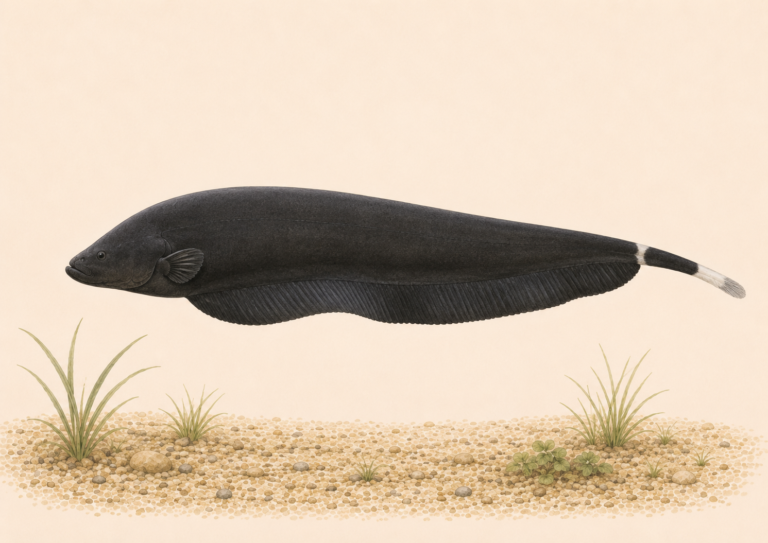
The Burnt Tail Shark is a sleek, laterally compressed cyprinid with a streamlined, torpedo-shaped body built for sustained swimming in flowing waters. Adults typically reach between 25 and 30 cm in total length, though some reports suggest they may grow marginally larger under optimal conditions. The overall body shape closely mirrors that of the Bala Shark, with a high, erect dorsal fin, well-developed pectoral and pelvic fins, and a deeply forked caudal fin that provides powerful thrust.
The base body colour is a bright, reflective silver, with large, well-defined scales that catch the light and produce a metallic sheen. The dorsal, anal, pelvic, and pectoral fins are generally pale to translucent with subtle yellowish or greyish tinting. The distinguishing feature of this species is its caudal fin, which displays a conspicuously darkened, smoky or brownish-black margin that appears scorched or burnt – hence the common name. This darkened caudal margin is typically more intense and more broadly distributed than the black fin edging seen on the Bala Shark, and it is the most reliable visual characteristic for distinguishing the two species at a glance.
The eyes are proportionally large, positioned laterally on the head, and have a dark iris. The mouth is subterminal and relatively small, lacking barbels, which is consistent with the genus. Juveniles tend to display a somewhat more muted colouration, with the caudal fin darkening becoming more pronounced as the fish matures. The lateral line is complete and clearly visible, running from behind the operculum to the base of the caudal fin. Both sexes are very similar in appearance, though mature females may appear slightly deeper-bodied when in breeding condition.
Overall, the Burnt Tail Shark is an elegant and visually striking fish. Its combination of bright silver scales, active swimming behaviour, and distinctive caudal markings make it a highly desirable species for those who appreciate large, graceful cyprinids. However, its rarity in the trade means that many hobbyists may never encounter one in person.
Natural Habitat
Balantiocheilos ambusticauda is native to the large river systems of mainland Southeast Asia, specifically the Mekong and Chao Phraya basins in Thailand. The species has historically been associated with large, flowing rivers and their major tributaries, where it inhabits mid-water zones with moderate to strong currents. These habitats are characterised by relatively deep water, sandy or muddy substrates, and variable visibility depending on the season and level of sediment load.
The rivers in which the Burnt Tail Shark occurs are typically warm, slightly acidic to neutral, and moderately soft. Seasonal flooding plays a significant role in the ecology of these river systems, with water levels, flow rates, and turbidity fluctuating dramatically between the wet and dry seasons. During the wet season, fish may move into flooded forests and marginal habitats to feed and potentially breed, before retreating to the main river channels as waters recede.
Sadly, the Burnt Tail Shark’s natural habitat has been severely degraded by dam construction, deforestation, pollution, and overfishing. The species is classified as Critically Endangered by the IUCN, and there is genuine concern that wild populations may already be functionally extinct or perilously close to it. Habitat fragmentation caused by large hydroelectric dams has disrupted migratory routes and altered flow regimes, which are believed to be essential for the species’ reproductive cycle. The plight of the Burnt Tail Shark mirrors that of many large-bodied freshwater fishes in Southeast Asia, where rapid development has outpaced conservation efforts.
For aquarists, understanding the natural habitat of this species is essential for replicating appropriate conditions in captivity. The emphasis should be on spacious tanks with good water flow, stable water chemistry, and high dissolved oxygen levels – all of which reflect the riverine conditions the fish evolved in.
Tank Size and Setup
Given the adult size and highly active nature of the Burnt Tail Shark, a spacious aquarium is non-negotiable. The absolute minimum tank size for a small group is 570 litres (approximately 125 imperial gallons), though larger is always better. A tank of at least 180 cm in length is recommended to provide adequate swimming room. These fish are fast, powerful swimmers and will become stressed and prone to injury if housed in cramped quarters. For a group of four to six individuals – which is the recommended social grouping – a tank of 750 litres or more is ideal.
The tank should be set up to mimic a flowing river environment. A sandy or fine gravel substrate is appropriate, as this reflects the natural river bottom. Smooth river rocks and pieces of driftwood can be used to create visual barriers and areas of varying flow, but the overall layout should leave plenty of open swimming space in the middle and upper water column. Dense planting is not essential and may even be counterproductive, as the Burnt Tail Shark prefers open water. However, some hardy plants such as Vallisneria, Anubias, or Java Fern can be placed along the sides and back of the tank to provide a sense of security without impeding movement.
A secure, tight-fitting lid is essential. Like the Bala Shark, the Burnt Tail Shark is a known jumper, especially when startled or during acclimation to a new environment. Any gaps in the lid or canopy should be sealed. The tank should be positioned in a relatively calm area of the home, away from heavy foot traffic and loud noises, as sudden disturbances can trigger panic behaviour and jumping.
Lighting should be moderate. Overly bright lighting can cause stress, particularly in newly introduced specimens. A gradual dawn-to-dusk lighting cycle, easily achieved with modern LED fixtures on timers, will help the fish settle into a natural routine. Background panels on the rear and sides of the tank can also help reduce reflections and make the fish feel more secure.
Water Parameters
Maintaining stable, clean water is critical for the long-term health of the Burnt Tail Shark. As a riverine species accustomed to well-oxygenated, flowing water, it is relatively intolerant of poor water quality, elevated waste products, and stagnant conditions. The following parameters should be maintained consistently:
| Temperature | 22-28 °C |
| pH | 6.0-7.5 |
| General hardness (GH) | 2-12 dGH |
| Carbonate hardness (KH) | 2-8 dKH |
| Ammonia | 0 ppm |
| Nitrite | 0 ppm |
| Nitrate | Below 20 ppm |
A temperature in the range of 24-26 °C is often considered the sweet spot for day-to-day maintenance. The species is adaptable to slightly acidic through to neutral water, but sudden swings in pH or hardness should be avoided. Consistency is more important than hitting a precise number. Weekly water changes of 25-30% are strongly recommended to keep nitrate levels in check and maintain overall water quality. In heavily stocked tanks or those with less efficient filtration, more frequent changes may be necessary.
Dissolved oxygen levels should be kept high. This can be achieved through strong surface agitation, the use of spray bars, wavemakers, or dedicated air pumps with air stones. The Burnt Tail Shark evolved in flowing, oxygen-rich waters and will show signs of distress – such as gasping at the surface or lethargy – if oxygen levels drop too low, particularly in warm water where dissolved oxygen naturally decreases.
Filtration and Equipment
Robust filtration is a cornerstone of successful Burnt Tail Shark keeping. Given the species’ large size, high metabolism, and sensitivity to poor water quality, an oversized external canister filter – or ideally a pair of them – is the most practical choice. The total filtration turnover rate should aim for at least six to eight times the tank volume per hour. For a 570-litre tank, this means a combined flow rate of approximately 3,400 to 4,500 litres per hour.
External canister filters such as those from the Fluval FX, Eheim Professional, or Oase BioMaster ranges are well-suited to tanks of this size. These units provide excellent mechanical, biological, and chemical filtration stages and can be loaded with a variety of media to suit the specific needs of the setup. A combination of coarse and fine mechanical media, ceramic biological media or sintered glass, and activated carbon or Purigen for chemical polishing will ensure comprehensive water treatment.
Supplemental circulation is beneficial. A wavemaker or powerhead positioned to create a gentle to moderate current along the length of the tank will replicate the riverine flow the Burnt Tail Shark is accustomed to. However, ensure there are also areas of lower flow where the fish can rest, as constant battling against strong currents can lead to exhaustion over time.
A reliable aquarium heater rated for the tank’s volume is essential unless the room temperature consistently stays within the species’ preferred range. Heaters with external temperature controllers or built-in thermostats of proven reliability are preferred. An additional digital thermometer placed at the opposite end of the tank from the heater provides a useful cross-check on temperature stability.
An air pump with a large air stone or a spray bar angled to maximise surface agitation will help maintain high dissolved oxygen levels. UV sterilisers can be a useful addition, particularly in larger systems, to help control free-floating pathogens and reduce the risk of disease outbreaks.
Diet and Feeding
The Burnt Tail Shark is an omnivore with a broad diet in the wild, feeding on a variety of small invertebrates, insect larvae, algae, plant matter, and detritus. In captivity, it is generally an enthusiastic and unfussy feeder, readily accepting a wide range of prepared, frozen, and live foods.
A high-quality staple pellet or flake food formulated for large cyprinids or omnivorous tropical fish should form the foundation of the diet. Pellets are generally preferable to flakes for fish of this size, as they are more nutrient-dense and produce less waste. Sinking pellets are suitable, though the Burnt Tail Shark will also take floating foods with ease given its mid-water to surface-feeding habits.
The diet should be supplemented regularly with frozen or live foods to provide variety and ensure complete nutrition. Bloodworms, brine shrimp, daphnia, mysis shrimp, and chopped earthworms are all excellent choices. Vegetable matter should also be offered; blanched spinach, courgette, peas (shelled), and spirulina-based foods help provide essential fibre and micronutrients. Occasional treats of finely chopped prawns or mussel can be offered but should not dominate the diet due to their high protein content.
Feed two to three times daily in amounts that can be consumed within a few minutes. Overfeeding is a common mistake with large, eager feeders like the Burnt Tail Shark and will quickly lead to water quality problems. Uneaten food should be removed promptly. A fasting day once a week can be beneficial for digestive health, though this is optional and should be guided by the overall condition of the fish.
Behaviour and Temperament
The Burnt Tail Shark is a generally peaceful, active, and sociable species that spends much of its time patrolling the mid-water and upper regions of the aquarium. Like the Bala Shark, it is a shoaling fish that feels most secure and displays the most natural behaviour when kept in groups. A minimum group of four to six individuals is recommended. Solitary specimens or pairs are prone to stress, skittishness, and erratic behaviour, including persistent hiding or frantic dashing against the tank walls.
Within a group, a loose social hierarchy may develop, but aggression is typically minimal. Occasional chasing and mild fin displays may occur, particularly at feeding time, but these interactions rarely result in injury. The species is not territorial in the conventional sense and does not defend specific areas of the tank, preferring instead to move as a loose shoal.
One of the most notable behavioural traits of the Burnt Tail Shark is its tendency to be easily startled. Sudden movements near the tank, loud noises, abrupt changes in lighting, or the introduction of new tank mates can trigger a panic response. Startled fish may dash violently around the tank, potentially injuring themselves on decor or leaping out of the water. This skittish nature tends to diminish over time as the fish acclimatise to their environment and their keeper’s routine, but it never entirely disappears. A calm, predictable environment is therefore essential.
The Burnt Tail Shark is a diurnal species, most active during daylight hours. It may become somewhat less active during the evening and night, resting in sheltered areas of the tank or hovering in mid-water. Overall, its active swimming behaviour and elegant movement make it an engaging fish to observe, and a well-settled group in a spacious tank is a truly impressive sight.
Tank Mates
The Burnt Tail Shark’s peaceful temperament and preference for mid-water to upper-water swimming zones make it compatible with a broad range of similarly sized, non-aggressive community fish. The key considerations when selecting tank mates are size compatibility (avoiding anything small enough to be accidentally ingested), temperament (avoiding highly aggressive or territorial species), and environmental requirements (choosing species that thrive in similar water parameters). Very small fish such as neon tetras or microrasboras are not suitable, as they may be seen as food once the Burnt Tail Shark reaches adult size.
Good tank mates
- Bala Shark – A very close relative with nearly identical care requirements, making it an excellent companion in large tanks.
- Clown Loach – A peaceful, sociable bottom-dweller that thrives in similar water conditions and adds activity to the lower tank levels.
- Tinfoil Barb – Another large, active cyprinid that shares the same need for spacious tanks and a similar diet.
- Giant Gourami – A generally placid, large-bodied species suitable for the same very large setups required by the Burnt Tail Shark.
- Rainbow Shark – Generally compatible provided the tank is large enough to allow the Rainbow Shark to establish its own territory without conflict.
- Boeseman’s Rainbowfish – A colourful, active mid-water swimmer that is too large to be eaten and shares a preference for well-oxygenated water.
- Bristlenose Pleco – A hardy, peaceful algae-eater that occupies a different niche and will not compete with the Burnt Tail Shark for space.
- Denison Barb – A fast-swimming, shoaling barb that appreciates similar flow and water conditions, making it a natural companion.
Fish to avoid
- Oscar – A large, aggressive cichlid that may bully or attack the more timid Burnt Tail Shark, particularly at feeding time.
- Red Belly Piranha – An aggressive, predatory species that poses a direct physical threat to the Burnt Tail Shark.
- Flowerhorn Cichlid – Highly territorial and aggressive, a Flowerhorn will almost certainly harass and injure a Burnt Tail Shark.
- Neon Tetra – Far too small and likely to be consumed by an adult Burnt Tail Shark, making them unsuitable companions.
- Cherry Shrimp – Extremely small invertebrates that would be readily eaten by a fish of this size.
- Green Terror – A highly aggressive New World cichlid whose territorial behaviour would cause chronic stress to the peaceful Burnt Tail Shark.
- Jaguar Cichlid – A large, predatory cichlid with an aggressive disposition entirely incompatible with the Burnt Tail Shark’s temperament.
- African Knife Fish – A nocturnal predator that may nip at or harass tank mates, and its differing environmental preferences make cohabitation challenging.
Breeding
Breeding the Burnt Tail Shark in captivity is extraordinarily difficult, and to date there are no well-documented accounts of successful spawning in home aquaria. This parallels the situation with the Bala Shark, which is bred commercially in Southeast Asia using hormonal induction techniques but is almost never bred by hobbyists. The challenges are multifaceted: the species requires a very large body of water to initiate spawning behaviour, the specific environmental triggers for reproduction are poorly understood, and the critically endangered status of the species means that captive populations are vanishingly small.
In the wild, it is believed that the Burnt Tail Shark is a migratory spawner, undertaking seasonal movements linked to monsoon flooding and changes in water chemistry. These migrations likely serve as spawning triggers, with rising water levels, increasing turbidity, changes in temperature, and shifts in photoperiod all potentially playing a role. Replicating these conditions in an aquarium setting, even a very large one, is practically impossible without specialised facilities.
Sexual dimorphism is minimal, making it difficult to distinguish males from females outside of the breeding season. Mature females may appear slightly fuller-bodied when carrying eggs, but this difference is subtle and unreliable as a sexing method in everyday observation.
Commercial breeding of the closely related Bala Shark typically involves the use of hormonal injections (such as human chorionic gonadotropin or pituitary extracts) to induce spawning in large outdoor ponds or vats. It is reasonable to assume that similar techniques would be necessary for the Burnt Tail Shark, but the species’ extreme rarity makes any experimental breeding attempts fraught with difficulty and ethical considerations. Any institution or advanced hobbyist attempting to breed this species should do so in coordination with conservation programmes and ichthyological research bodies.
If spawning were to occur, it is likely that the species is an egg-scatterer, releasing adhesive or semi-buoyant eggs over open substrate or vegetation. The eggs would likely hatch within 24 to 48 hours at tropical temperatures, with fry becoming free-swimming several days later. Fry would need very fine foods such as infusoria or commercially available liquid fry food initially, graduating to newly hatched brine shrimp as they grow. However, these details are largely speculative based on the reproductive biology of related cyprinids.
Common Diseases
The Burnt Tail Shark is generally a hardy species when kept in appropriate conditions, but like all freshwater fish, it is susceptible to a range of common diseases, particularly when stressed or housed in suboptimal water quality.
White spot disease (Ichthyophthirius multifiliis) is one of the most frequently encountered ailments. It presents as small white cysts on the fins, body, and gills, and is often triggered by sudden temperature drops or the introduction of infected fish. Treatment involves raising the water temperature gradually to 28-30 °C and administering a proprietary white spot remedy containing malachite green or formalin. The Burnt Tail Shark generally tolerates standard ich treatments well, but as with all scaleless or sensitive species, it is wise to start with a half dose and monitor the fish’s response.
Bacterial infections, including fin rot and columnaris, can occur in tanks with poor water quality or where fish have sustained physical injuries. Symptoms include frayed or eroding fins, white or grey patches on the body, and lethargy. Prompt water quality improvement combined with antibiotic or antibacterial treatment is usually effective. Ensuring excellent filtration and regular water changes is the best preventive measure.
Fungal infections (Saprolegnia and related species) may develop on wounds or in immunocompromised fish. Cotton-like white growths on the body or fins are characteristic. Treatment with antifungal medications and improved water quality typically resolves the issue.
Internal parasites can be a concern, particularly in wild-caught specimens. Symptoms may include weight loss despite normal feeding, white or stringy faeces, and bloating. Anti-parasitic medications containing praziquantel or levamisole can be used, ideally after consulting with a veterinary professional experienced in fish health.
Stress-related issues are perhaps the most significant health concern for the Burnt Tail Shark. Chronic stress from inadequate tank size, poor water quality, lack of conspecifics, or a turbulent environment can suppress the immune system and make the fish vulnerable to opportunistic infections. The best disease prevention strategy is proactive husbandry: maintain stable, clean water, provide a spacious tank with appropriate companions, and minimise environmental stressors.
FAQs
How can I tell the difference between a Burnt Tail Shark and a Bala Shark?
The most reliable visual distinction is the caudal (tail) fin. The Burnt Tail Shark has a noticeably broader and more intense darkened margin on the caudal fin, giving it the “burnt” appearance from which its common name derives. In the Bala Shark, the black edging on the fins is typically narrower and more evenly distributed across the dorsal, anal, caudal, and pelvic fins. Body shape and size are very similar between the two species, so the caudal fin marking is the key feature to look for. Definitive identification may require expert examination or genetic analysis, particularly in juvenile specimens where fin colouration has not fully developed.
Can I keep a single Burnt Tail Shark?
It is strongly advised against keeping a single Burnt Tail Shark. This is a shoaling species that relies on the presence of conspecifics for a sense of security and to display natural behaviour. A solitary individual is likely to be chronically stressed, excessively skittish, and prone to health problems. A group of at least four, and preferably six or more, is recommended. If obtaining multiple Burnt Tail Sharks is not possible due to their extreme rarity, housing a single specimen with a group of Bala Sharks may provide some social comfort, though this is not an ideal substitute.
Is the Burnt Tail Shark suitable for beginners?
The Burnt Tail Shark is not recommended for beginners. While its day-to-day care requirements are not exceptionally demanding for an experienced aquarist, the species’ need for a very large tank, its sensitivity to water quality fluctuations, its skittish temperament, and its critically endangered status all make it a fish best suited to intermediate or advanced keepers. Beginners would be better served gaining experience with hardier, smaller species before considering a fish of this size and significance.
How fast does the Burnt Tail Shark grow?
Growth rate depends on diet, water quality, tank size, and genetics, but as a general guide, the Burnt Tail Shark can be expected to grow at a similar rate to the Bala Shark. Juveniles may grow several centimetres in their first year under optimal conditions, with growth slowing as they approach adult size. Most individuals will reach 15-20 cm within two to three years and may continue to grow slowly to their full adult size of 25-30 cm over the following years. Stunting can occur if the fish is kept in an undersized tank, which causes long-term health issues.
Where can I buy a Burnt Tail Shark?
The Burnt Tail Shark is exceptionally rare in the aquarium trade. It is almost never offered by mainstream aquarium retailers and is only occasionally available through specialist importers or private breeders with connections to Southeast Asian suppliers. Given its Critically Endangered IUCN status, any purchase should be made with careful attention to the legality and ethics of the source. Captive-bred specimens, if available, should always be preferred over wild-caught individuals. Prospective buyers should also verify that the fish is genuinely Balantiocheilos ambusticauda and not a misidentified Bala Shark, as confusion between the two species does occur.
Related Guides
- Bala Shark – The closest relative of the Burnt Tail Shark, sharing almost identical care requirements and making an excellent companion species.
- Tinfoil Barb – Another large, active cyprinid with similar tank size and dietary needs, often kept alongside shark-type barbs.
- Clown Loach – A popular large community fish from Southeast Asia that thrives in the same water conditions as the Burnt Tail Shark.
- Rainbow Shark – A smaller “shark” cyprinid with different temperament considerations, useful for comparison when planning a community tank.
- Denison Barb – A fast-swimming barb that appreciates strong flow and well-oxygenated water, making it a natural companion in large river-style setups.