Harlequin Shark Care Guide – Tank Setup, Feeding and Breeding
Quick summary
The Harlequin Shark is a hardy but territorial 15-18 cm African fish best suited to experienced keepers with at least a 300 litre tank and carefully chosen tank mates, not beginners or small community setups. It is not for you if you want an easy algae eater or plan to breed fish at home, as breeding is essentially unachievable outside expert facilities.
🐠 Build a tank around this fish
In this guide:
- Introduction
- Quick Stats
- Appearance
- Natural Habitat
- Tank Size and Setup
- Water Parameters
- Filtration and Equipment
- Diet and Feeding
- Behaviour and Temperament
- Tank Mates
- Breeding
- Common Diseases
- FAQs
Introduction
The Harlequin Shark, Labeo cyclorhynchus, is a striking freshwater fish from the rivers and tributaries of Central Africa. Despite its common name, it is not a true shark but rather a member of the Cyprinidae family, grouped alongside other well-known aquarium Labeo species such as the Red-Tailed Black Shark and the Rainbow Shark. The “shark” moniker stems from its torpedo-shaped body and prominent dorsal fin, which give it a vaguely shark-like silhouette as it patrols the bottom of the aquarium.
This species is far less commonly encountered in the hobby than its Southeast Asian cousins, yet it has steadily gained a following among experienced fishkeepers who appreciate its bold patterning and robust character. Harlequin Sharks are territorial bottom dwellers that can become aggressively defensive of their chosen patch of substrate and decor. Understanding this temperament is essential before acquiring one, as an unprepared keeper may find their community tank thrown into disarray by a single belligerent specimen.
In the wild, Labeo cyclorhynchus inhabits fast-flowing, well-oxygenated waters in the Congo River basin. Replicating these conditions in captivity – strong filtration, ample hiding spots, and plenty of space – is the key to keeping this species healthy and reducing aggressive encounters with tank mates. While it is not the most demanding species in terms of water chemistry, its spatial requirements and temperament place it firmly in the moderate-to-difficult bracket of aquarium keeping.
This guide provides a comprehensive overview of Harlequin Shark care, covering everything from tank dimensions and water parameters to diet, breeding, and compatible tank mates. Whether you are researching the species before your first purchase or looking to refine the husbandry of a fish you already own, the information below will help you provide the best possible environment for this impressive African Labeo.
Quick Stats
| Scientific name | Labeo cyclorhynchus |
| Common names | Harlequin Shark, Variegated Shark |
| Family | Cyprinidae |
| Origin | Congo River basin, Central Africa (Democratic Republic of the Congo, Republic of the Congo) |
| Adult size | 15-18 cm |
| Lifespan | 8-12 years |
| Difficulty | Moderate |
| Breeding difficulty | Expert |
| Temperature | 23-27 °C |
| pH range | 6.0-7.5 |
| General hardness (GH) | 4-15 dGH |
| Carbonate hardness (KH) | 3-10 dKH |
| Minimum tank size | 300 litres |
| Conservation status | Least Concern |
Appearance
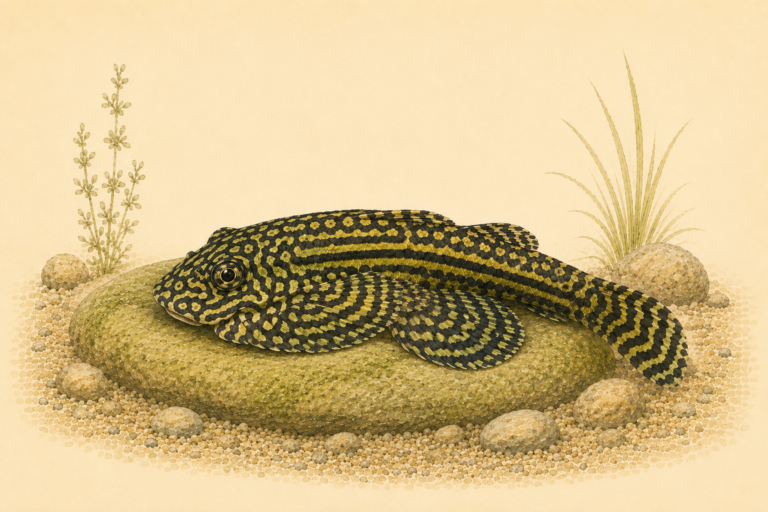
The Harlequin Shark is named for its distinctive, irregularly mottled colour pattern. The body is typically a warm brown, tan, or golden-brown base overlaid with darker brown to near-black blotches, spots, and bands. This variegated patterning is somewhat reminiscent of a harlequin costume, hence the common name. The intensity and exact arrangement of markings can vary considerably between individuals, making each fish visually unique.
The body shape is elongated and somewhat cylindrical, tapering towards the caudal peduncle. The ventral profile is flattened, befitting a species that spends much of its time on or near the substrate. The head is slightly rounded with a subterminal mouth – positioned on the underside of the snout – which is ideally adapted for grazing on algae and biofilm from rocks, wood, and other hard surfaces. The lips are thick and fleshy, equipped with small papillae that aid in scraping food from surfaces. Two pairs of barbels are present around the mouth, though they can be inconspicuous.
The dorsal fin is tall and prominently erect, contributing to the shark-like impression. All fins generally display the same mottled patterning seen on the body, though the fin membranes may appear somewhat translucent between the darker markings. The caudal fin is forked, reflecting the species’ preference for flowing water where efficient swimming is advantageous.
Juveniles tend to show more contrast in their patterning, with sharply defined dark and light patches. As the fish matures, the overall coloration may darken slightly and the blotches may become less distinct, though this varies. A healthy, well-kept specimen will display rich, warm tones; faded or washed-out coloration is often a sign of stress, poor water quality, or nutritional deficiency. There is no reliable external sexual dimorphism, making it difficult to distinguish males from females by appearance alone. Mature females may appear slightly fuller-bodied when in breeding condition, but this is not a consistent or dependable indicator.
Natural Habitat
Labeo cyclorhynchus is native to the Congo River basin in Central Africa, one of the most biodiverse freshwater systems on the planet. Within this vast drainage, the species occupies a range of riverine environments, from main river channels to tributaries and associated floodplain habitats. It is most commonly found in areas with moderate to strong current, where the water is well-oxygenated and the substrate is composed of rocks, gravel, and sand.
The Congo basin is characterised by warm, slightly acidic to neutral waters, though conditions can vary depending on the specific locality and season. In many of its habitats, the Harlequin Shark is found among rocky outcrops and submerged wood, where it grazes on the aufwuchs – the layer of algae, microorganisms, and detritus that accumulates on hard surfaces. Riparian vegetation and overhanging trees provide shaded areas, and the fish often occupies these dimmer zones rather than exposed, brightly lit stretches of river.
The Congo River system supports an extraordinary diversity of fish species, many of which are endemic. In the wild, the Harlequin Shark coexists with a wide variety of cichlids, characins, catfishes, and other cyprinids. Its territorial nature is likely an adaptation to secure access to prime feeding territories on algae-rich rocks – a limited resource that directly affects growth and reproductive success. Understanding this ecological context helps explain why the species can be so assertive in the confined space of an aquarium.
Seasonal flooding in the Congo basin can alter water levels, flow rates, and chemistry significantly. During the wet season, fish may disperse into flooded forest and marginal habitats, while the dry season concentrates populations in the remaining watercourses. These natural fluctuations may play a role in triggering reproductive behaviour, which is one reason why breeding this species in captivity has proven exceptionally challenging.
Tank Size and Setup
A minimum tank size of 300 litres is recommended for a single Harlequin Shark. This is a sizable fish that can reach 15-18 cm in length and is highly territorial. Keeping it in a cramped environment will exacerbate aggression and lead to chronic stress, both for the Labeo itself and for any tank mates. If you intend to house the Harlequin Shark with other robust species – which is generally the recommended approach to diffuse aggression – a tank of 400-500 litres or larger is preferable.
The aquarium should be set up to reflect the rocky, flowing-water habitats the species inhabits in the wild. Use a substrate of sand or fine gravel, which is gentle on the fish’s ventral surface and barbels. Arrange a generous quantity of rocks, cobbles, and driftwood to create a complex landscape with multiple caves, overhangs, and visual barriers. These structures serve two important purposes: they provide grazing surfaces for the fish, and they break up sight lines, which is crucial for managing territorial behaviour. When a dominant fish cannot see every corner of the tank simultaneously, subordinate fish and other species have the opportunity to retreat out of view.
Live plants can be included, but choose robust, hard-leaved species that can tolerate moderate current and are less likely to be uprooted or damaged. Anubias species attached to rocks or wood, Java Fern, and Bolbitis heudelotii (another Central African native) are all excellent choices. Avoid delicate stem plants in the main swimming areas, as the Harlequin Shark’s bottom-dwelling activities may disturb them.
Adequate current is important. Position the filter outlet or an additional circulation pump so that there is noticeable flow along the length of the tank, particularly near the substrate. This replicates the riverine conditions the species is adapted to and helps maintain high dissolved oxygen levels. However, ensure there are also some calmer zones behind decor or in corners where the fish can rest without fighting the current constantly.
Lighting should be moderate rather than intense. The Harlequin Shark is not a sun-loving species and tends to be more active and less stressed under subdued lighting. Floating plants or the shade provided by overhanging hardscape can help create the dappled, shaded environment the fish prefers. A tight-fitting lid or cover glass is advisable, as Labeo species are known to jump, particularly when startled or when newly introduced to a tank.
Water Parameters
The Harlequin Shark is reasonably adaptable with regard to water chemistry, but it thrives best when conditions approximate those of its native Congo basin habitat. Stability is more important than hitting an exact number – avoid sudden fluctuations in temperature, pH, or hardness, as these will stress the fish and leave it vulnerable to disease.
| Temperature | 23-27 °C |
| pH | 6.0-7.5 |
| General hardness (GH) | 4-15 dGH |
| Carbonate hardness (KH) | 3-10 dKH |
| Ammonia | 0 ppm |
| Nitrite | 0 ppm |
| Nitrate | Below 20 ppm |
Regular water changes of 25-30% weekly are recommended to keep nitrate levels in check and maintain overall water quality. The species is sensitive to poor water conditions, particularly elevated nitrate and low oxygen levels. Using dechlorinated, temperature-matched water for changes is standard practice. If your tap water is particularly hard or alkaline, you may wish to blend it with reverse osmosis (RO) water to bring the hardness and pH into the preferred range, though many Harlequin Sharks will adapt to moderately hard, neutral water without issue.
Ensure that the aquarium is fully cycled before introducing a Harlequin Shark. This species does not tolerate ammonia or nitrite at any level, and exposure to these compounds can cause gill damage, fin erosion, and increased susceptibility to infection.
Filtration and Equipment
Given the Harlequin Shark’s preference for well-oxygenated, flowing water, robust filtration is a non-negotiable part of any suitable setup. A high-quality external canister filter rated for the tank’s volume – or ideally slightly above it – is the best choice. Canister filters provide excellent mechanical, biological, and chemical filtration capacity, and their adjustable outlets can be directed to create the current the fish needs.
For tanks of 300 litres or more, consider running two filters or supplementing the main filter with a powerhead or wavemaker positioned to ensure water movement reaches all areas of the tank, particularly along the bottom where the Harlequin Shark spends most of its time. Stagnant pockets in a large, heavily decorated tank can lead to localised drops in oxygen and the accumulation of detritus, both of which are detrimental to the fish’s health.
Filtration media should include a combination of mechanical media (sponge, filter floss) to trap particulate waste, and biological media (ceramic rings, sintered glass, or bio-balls) to support the nitrifying bacteria that convert ammonia to nitrite and nitrite to nitrate. Chemical media such as activated carbon can be used periodically to polish water and remove dissolved organic compounds, but it is not strictly necessary on a permanent basis if water changes are performed regularly.
A reliable heater with a thermostat is essential to maintain a stable temperature within the 23-27 °C range. In larger tanks, two heaters placed at opposite ends provide more even heating and offer a safety net in case one fails. An accurate thermometer – digital or glass – should be used to monitor the temperature daily.
An air pump with an airstone is a worthwhile addition, particularly in warmer weather when dissolved oxygen levels naturally decrease. While the filter outlet should generate sufficient surface agitation for gas exchange under normal circumstances, an airstone provides additional insurance and creates a visually appealing curtain of bubbles that many Labeo species seem to enjoy swimming through.
Diet and Feeding
In the wild, the Harlequin Shark is primarily an aufwuchs grazer, feeding on algae, biofilm, small invertebrates, and organic detritus that it scrapes from rocks and submerged wood. In captivity, it is an omnivore that readily accepts a wide range of foods, but its diet should lean towards the vegetable-heavy side to reflect its natural feeding ecology.
A high-quality sinking pellet or wafer designed for bottom-feeding herbivorous fish should form the staple of the diet. Spirulina-based wafers and algae tablets are excellent choices and are widely available. Supplement these with blanched vegetables such as courgette (zucchini), cucumber, spinach, peas (shelled), and lettuce. These should be weighted down or clipped to the side of the tank so that they sink to the bottom where the fish can graze on them at leisure. Remove any uneaten vegetable matter after 12-24 hours to prevent it from decomposing and fouling the water.
While the species is largely herbivorous, it does benefit from occasional protein-rich foods. Frozen or freeze-dried bloodworms, brine shrimp, daphnia, and tubifex worms can be offered once or twice a week. These provide essential amino acids and help keep the fish in peak condition, particularly if you are attempting to condition a pair for breeding. Avoid making protein the mainstay of the diet, however, as an excessively meaty diet can lead to digestive issues and may contribute to obesity.
Feed once or twice daily, offering only as much food as the fish can consume within a few minutes. The Harlequin Shark is not a fussy eater and will often graze continuously on the biofilm and algae that develop naturally in a well-maintained aquarium. Encouraging the growth of some algae on rocks and decor – by allowing moderate light exposure to certain surfaces – provides a supplementary, natural food source that keeps the fish occupied and contributes to its nutritional intake.
Do not rely solely on algae growth in the tank to feed this species. While the fish will graze on available algae, a captive aquarium rarely produces enough to sustain a fish of this size. Supplemental feeding is always necessary.
Behaviour and Temperament
The Harlequin Shark is a territorial and often assertive fish, particularly towards conspecifics and other bottom-dwelling species. This is perhaps the single most important aspect of its care that prospective keepers must understand. In the wild, individuals establish and defend feeding territories on algae-rich rocks, and this behaviour translates directly into the aquarium environment. A dominant Harlequin Shark will claim a particular cave, rock formation, or section of the tank as its own and will chase away intruders with vigour.
Aggression is most intense towards other Labeo species and fish with a similar body shape, which are perceived as direct competitors. Keeping two Harlequin Sharks in the same tank is generally inadvisable unless the tank is very large – 500 litres or more – and furnished with enough hardscape to create distinct, visually isolated territories. Even then, conflict is likely, and one fish may become persistently subordinate, suffering chronic stress as a result.
Towards dissimilar species, the Harlequin Shark is usually less aggressive, though it may still chase fish that venture into its territory. Mid-water and upper-level swimmers are typically ignored, which is why choosing tank mates that occupy different vertical zones is an effective strategy for peaceful coexistence. The fish is predominantly nocturnal or crepuscular in the wild but adapts to daytime activity in captivity, especially around feeding times. New specimens may hide extensively for the first few days or weeks, emerging only after dark; this is normal behaviour that usually subsides as the fish acclimatises.
Despite its territorial nature, the Harlequin Shark can be a fascinating fish to observe. It is an active grazer that moves methodically across surfaces, scraping with its specialised mouth. It will investigate every rock, piece of wood, and even the glass panels of the aquarium. Watching this behaviour in a well-set-up tank is one of the genuine pleasures of keeping the species.
Tank Mates
Selecting appropriate tank mates for the Harlequin Shark requires careful consideration of the species’ territorial nature and the spatial dynamics of the aquarium. The guiding principles are: choose fish that are too large to be bullied, that occupy different areas of the water column, and that are not so similar in appearance or ecological niche that they provoke territorial aggression. Avoid other Labeo species, other bottom-dwelling “sharks,” and small, timid fish that would be stressed by the Harlequin Shark’s assertive behaviour. Robust mid-water and upper-water species tend to be the best companions.
Good tank mates
- Congo Tetra – A mid-water schooling fish from the same geographic region that is large and active enough to coexist peacefully with the Harlequin Shark.
- African Butterfly Cichlid – A relatively peaceful West African cichlid that occupies mid-water and is generally ignored by bottom-dwelling Labeo species.
- Synodontis eupterus – A robust African catfish that can hold its own and tends to avoid direct confrontation by occupying different hiding spots.
- Ropefish – A peaceful, elongated species that occupies the bottom but is generally too dissimilar in shape and behaviour to provoke territorial aggression.
- African Red Eye Tetra – A hardy, active schooling tetra that stays in the mid-to-upper water column and is fast enough to evade any occasional chasing.
- Leopard Ctenopoma – A calm, medium-sized African anabantoid that tends to keep to itself and is robust enough to tolerate a territorial tank mate.
- Giant Danio – An active, fast-swimming upper-water species that is too quick and too different in habit to be targeted by the Harlequin Shark.
- Bristlenose Pleco – A well-armoured catfish that can generally coexist with Labeo species, provided there is sufficient space and multiple hiding spots.
Fish to avoid
- Red-Tailed Black Shark – Another Labeo species that will be perceived as a direct competitor, leading to intense and potentially injurious territorial conflict.
- Rainbow Shark – A closely related Labeo species with an overlapping ecological niche, making persistent aggression virtually guaranteed.
- Chinese Algae Eater – A territorial bottom dweller with a similar grazing habit that is likely to provoke confrontation.
- Siamese Algae Eater – Occupies a similar niche and body plan, making it a target for territorial aggression from the Harlequin Shark.
- Neon Tetra – Far too small and timid to thrive alongside a large, assertive Labeo; will likely be stressed and may be harassed.
- Guppy – Small, slow-moving, and vulnerable; entirely unsuitable for a tank with a territorial bottom dweller of this size.
- Corydoras Catfish – Peaceful, small bottom dwellers that would be relentlessly chased from the Harlequin Shark’s territory.
- Otocinclus – Tiny, delicate algae grazers that occupy the same feeding niche and would be completely overwhelmed by a dominant Labeo.
Breeding
Breeding the Harlequin Shark in captivity is extraordinarily difficult, and verified reports of successful home aquarium spawnings are essentially non-existent. This places the species firmly in the “expert” category for breeding difficulty. The vast majority of specimens available in the aquarium trade are wild-caught, and any captive-bred fish that do appear on the market have almost certainly been produced through hormonal induction at commercial breeding facilities in Asia or Eastern Europe.
In the wild, Labeo cyclorhynchus is believed to be a seasonal spawner, with reproduction linked to the onset of the wet season and the associated changes in water chemistry, temperature, flow rate, and food availability. These environmental triggers are extremely difficult to replicate convincingly in a home aquarium, which likely accounts for the near-total absence of captive breeding success.
Sexing the species is problematic, as there are no reliably distinguishing external features. Mature females may be slightly rounder in the abdomen when gravid, but this is subtle and cannot be confirmed without dissection or experienced observation of behaviour. Males are sometimes reported to be slightly more slender and to develop more intense coloration during the breeding season, but these differences are inconsistent.
If breeding were to be attempted, the approach would involve maintaining a group of fish in a very large tank – 600 litres or more – with excellent water quality, a varied and nutritious diet rich in live and frozen foods, and simulated seasonal changes. Gradually lowering the water level and then performing a series of large, slightly cooler water changes to mimic the onset of rains might theoretically trigger spawning behaviour. The substrate should include smooth rocks and gravel, as Labeo species are generally egg scatterers that deposit their eggs over rocky substrates in flowing water.
Eggs, if produced, would likely be semi-adhesive and scattered among rocks and gravel. The parents offer no parental care and would readily consume their own eggs if given the opportunity, so removing the adults after spawning would be necessary. The eggs would be expected to hatch within 24-48 hours at tropical temperatures, with the fry becoming free-swimming a few days later. Initial fry food would likely need to be infusoria or commercially available liquid fry food, graduating to newly hatched brine shrimp as the fry grow.
For the overwhelming majority of hobbyists, breeding this species is not a realistic goal. Enjoying the Harlequin Shark for its appearance, behaviour, and personality is a more pragmatic approach.
Common Diseases
The Harlequin Shark is a generally hardy species when maintained in appropriate conditions, but it is not immune to the common ailments that affect freshwater aquarium fish. Prevention through good husbandry – stable water parameters, regular water changes, a balanced diet, and low stress – is always more effective than treatment.
Ich (White Spot Disease) is one of the most common afflictions seen in aquarium fish, including the Harlequin Shark. It is caused by the protozoan parasite Ichthyophthirius multifiliis and manifests as small white spots on the body, fins, and gills. Affected fish may flash (rub against surfaces), become lethargic, and lose appetite. Treatment involves raising the temperature gradually to 28-30 °C and administering a commercial ich medication. The Harlequin Shark generally tolerates standard ich treatments well, but always follow dosing instructions carefully and remove activated carbon from the filter during treatment.
Fungal infections can occur, particularly on fish that have sustained injuries – for example, from fighting with tank mates or scraping against rough decor. Fungal growths appear as white, cotton-like tufts on the affected area. Treatment with a broad-spectrum antifungal medication is usually effective, but addressing the underlying cause of the injury is equally important to prevent recurrence.
Bacterial infections, including fin rot and ulcerations, can develop in fish kept in suboptimal water conditions or those experiencing chronic stress. Symptoms include fraying or reddening of the fins, open sores on the body, and lethargy. Improving water quality is the first and most important step in treatment; in severe cases, antibacterial medications may be necessary.
Internal parasites are a particular concern with wild-caught specimens, which constitute the majority of Harlequin Sharks in the trade. Symptoms may include weight loss despite normal feeding, a hollow or sunken belly, and pale or stringy faeces. If internal parasites are suspected, treatment with an appropriate antiparasitic medication – such as one containing praziquantel or levamisole – is advisable. Some experienced keepers routinely treat newly acquired wild-caught fish with a prophylactic antiparasitic course during quarantine.
Quarantining all new fish for a minimum of two to four weeks before introducing them to the main display tank is strongly recommended. This allows you to observe the fish for signs of disease, treat any issues without exposing your established fish, and acclimatise the newcomer gradually.
FAQs
Can I keep more than one Harlequin Shark in the same tank?
It is generally not recommended unless you have a very large aquarium of 500 litres or more, with extensive rockwork and decor to break up sight lines and create multiple distinct territories. Even in large tanks, there is no guarantee of peaceful coexistence, and one individual may dominate and persistently harass the other. If you wish to attempt keeping multiple specimens, introduce them simultaneously and provide as many hiding spots and caves as possible. Monitor their behaviour closely, and be prepared to separate them if aggression becomes severe.
Is the Harlequin Shark suitable for a community tank?
It can be kept in a community setting, but only with carefully chosen tank mates. The best companions are robust, mid-water to upper-water species that are large enough not to be bullied and different enough in appearance and behaviour that they do not provoke territorial aggression. Small, timid, or bottom-dwelling species should be avoided. A spacious tank with plenty of hiding spots is essential for any community arrangement involving a Harlequin Shark.
Does the Harlequin Shark eat algae effectively?
The Harlequin Shark does graze on algae and biofilm, and it can make a noticeable dent in algae growth on rocks, wood, and glass. However, it should not be acquired solely as an algae cleaner. Its dietary needs extend beyond algae, and it requires a varied diet including sinking pellets, vegetables, and occasional protein-rich foods. Additionally, its territorial temperament makes it a poor choice if the primary goal is simply algae control – there are more peaceful and effective algae-eating species available.
How can I reduce aggression in my Harlequin Shark?
The most effective strategies are providing a large tank, creating a complex layout with numerous caves, overhangs, and visual barriers, and choosing tank mates that occupy different areas of the water column. Rearranging the decor when introducing new fish can also help by disrupting established territories and forcing the Harlequin Shark to re-establish its domain, temporarily reducing its aggression. Ensuring the fish is well-fed also helps, as competition for food can exacerbate territorial behaviour.
How long does a Harlequin Shark live in captivity?
With proper care, a Harlequin Shark can live for 8 to 12 years in captivity, and some specimens have been reported to exceed this range. Longevity is closely linked to water quality, diet, and the overall stress level the fish experiences. Providing a stable, well-maintained environment with appropriate tank mates and a balanced diet gives the fish the best chance of reaching its full lifespan potential.
Related Guides
- Red-Tailed Black Shark – A closely related and more widely available Labeo species with similar care requirements and territorial behaviour.
- Rainbow Shark – Another popular aquarium Labeo species that shares many husbandry considerations with the Harlequin Shark.
- Congo Tetra – An excellent tank mate option and a stunning African species that complements the Harlequin Shark in a biotope-style setup.
- Synodontis eupterus – A robust African catfish that pairs well with the Harlequin Shark and shares overlapping water parameter requirements.
- Bristlenose Pleco – A popular bottom-dwelling algae eater that can coexist with Labeo species in a suitably spacious and well-decorated tank.