Quick summary
The L28 Blue Phantom Pleco suits intermediate to advanced aquarists who can provide a spacious 200+ litre tank with strong water flow, high oxygenation, and stable, pristine water quality, rather than complete beginners. It is not a reliable algae eater, needs a protein-rich diet, and is best avoided if you can’t commit to careful water parameter maintenance and regular monitoring.
🐠 Build a tank around this species
In this guide:
- Introduction
- Quick Stats
- Appearance
- Natural Habitat
- Tank Size and Setup
- Water Parameters
- Filtration and Equipment
- Diet and Feeding
- Behaviour and Temperament
- Tank Mates
- Breeding
- Common Diseases
- FAQs
Introduction
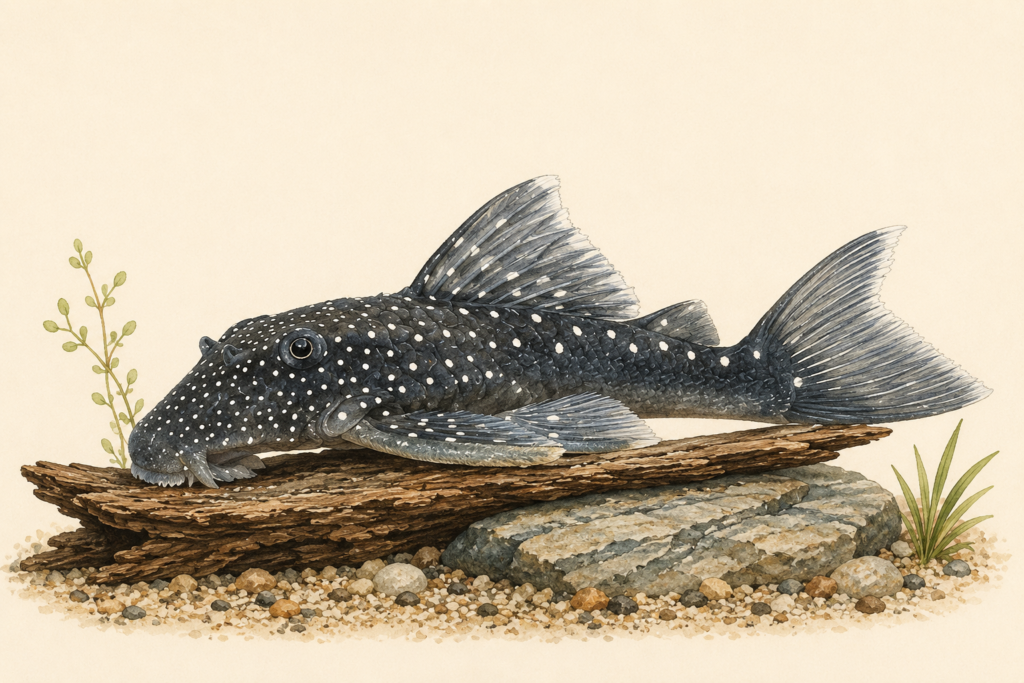
The L28 Blue Phantom Pleco is one of the most visually striking members of the loricariid catfish family available to freshwater aquarists. Known scientifically as Hemiancistrus sp. (L28), this species remains formally undescribed by ichthyologists, yet it has earned a devoted following among pleco enthusiasts and serious aquarists worldwide. Its common name derives from the ethereal blue-grey body colouration adorned with pale white or light blue spots, which gives the fish an almost ghostly, phantom-like appearance when viewed under subdued lighting.
Originating from the fast-flowing, oxygen-rich waters of the Rio Orinoco drainage in Venezuela, the L28 Blue Phantom Pleco is a collector species that commands a higher price than many of the more commonly traded pleco varieties. It should not be confused with the L200 Green Phantom Pleco (Hemiancistrus subviridis), which shares the same genus but displays a distinctly green base colouration. The L-number classification system, developed by the German aquarium magazine DATZ, provides hobbyists with a practical way to identify and discuss undescribed pleco species, and the L28 designation has been in use since the early 1990s.
While not the most demanding pleco to keep, the L28 Blue Phantom Pleco does require careful attention to water quality, oxygenation, and tank setup. It is best suited to intermediate to advanced aquarists who are willing to replicate the conditions of its native riverine habitat. This guide covers everything you need to know to successfully keep and care for this remarkable catfish, from tank setup and diet through to breeding and disease prevention.
Quick Stats
| Scientific name | Hemiancistrus sp. (L28) |
|---|---|
| Common names | L28 Blue Phantom Pleco, Blue Phantom Pleco |
| Family | Loricariidae |
| Origin | Rio Orinoco drainage, Venezuela |
| Adult size | 17 cm |
| Lifespan | 10–15 years |
| Difficulty | Intermediate |
| Breeding difficulty | Advanced |
| Temperature | 26–30 °C |
| pH | 6–7.2 |
| GH | 2–12 dGH |
| KH | 1–6 dKH |
| Minimum tank size | 200 L |
| Conservation status | Not evaluated |
Appearance
The L28 Blue Phantom Pleco is a genuinely beautiful fish that draws the eye even in well-stocked display aquaria. The body is typical of the loricariid form – dorsoventrally flattened with a broad, armour-plated head and a ventral suckermouth. The overall body shape is somewhat elongated compared to some of the more rotund pleco species, with a streamlined profile that hints at its preference for life in fast-flowing water.
The base body colour ranges from a deep slate blue to a blue-grey, and this colouration extends across the head, body, and fins. Scattered across this base colour are numerous pale spots, which can range from pure white to a light sky blue depending on the individual specimen, its mood, and the ambient lighting conditions. The spots tend to be relatively uniform in size across the body but may become slightly larger or more elongated on the fins. The dorsal fin is tall and sail-like when fully erect, and the caudal fin is broad and moderately forked, both displaying the same spotted patterning as the body.
The ventral surface is typically paler than the dorsal side, often displaying a lighter grey or off-white tone. The eyes are relatively small and set high on the head, a feature common among species adapted to benthic life in strong currents. The interopercular odontodes (small spines on the gill covers) are present but not especially prominent in this species, though they become more noticeable in mature males.
Sexual dimorphism is subtle but observable in mature specimens. Males tend to develop a slightly broader head and more pronounced odontodal growth on the pectoral fin spines and along the leading edges of the gill covers. Males may also display slightly more vivid colouration and larger spotting, though this varies considerably between individuals. Females are generally slightly plumper when viewed from above, particularly when carrying eggs.
Juveniles display the same general colouration as adults, though the spots may be slightly less defined and the base colour can appear somewhat paler. As the fish matures, the contrast between the blue-grey base and the pale spots typically intensifies, making adult specimens particularly impressive.
Natural Habitat
The L28 Blue Phantom Pleco is native to the Rio Orinoco drainage system in Venezuela, one of South America’s largest and most biodiverse river systems. Within this drainage, it is primarily found in areas of moderate to strong current, typically in the main river channels and larger tributaries where the water flows rapidly over rocky substrates.
In its natural environment, this species inhabits areas characterised by large boulders, rocky outcrops, and submerged rock formations that provide both shelter and foraging surfaces. The substrate in these regions is predominantly composed of gravel, cobbles, and smooth stones, with relatively little fine sand or organic detritus. The water in these habitats is typically clear to slightly tannin-stained, well-oxygenated due to the turbulent flow, and maintained at warm tropical temperatures throughout the year.
The Rio Orinoco and its tributaries experience seasonal fluctuations in water level and flow rate, with a pronounced wet season that can dramatically alter the landscape. During the dry season, water levels drop and current speeds may increase in narrower channels, concentrating fish populations around remaining deep pools and rocky refuges. The L28 Blue Phantom Pleco is well adapted to these dynamic conditions, using its powerful suckermouth to anchor itself to rocks even in strong currents.
Water chemistry in the native habitat tends towards the soft and slightly acidic end of the spectrum, with low mineral content and relatively low levels of dissolved organic compounds. The warm water temperatures, typically ranging from 26 to 30 degrees Celsius, are consistent year-round due to the equatorial location. Understanding these natural conditions is essential for replicating them in the home aquarium, as this species does not adapt well to conditions that deviate significantly from its evolutionary niche.
Tank Size and Setup
A minimum tank size of 200 litres is recommended for a single L28 Blue Phantom Pleco, though larger aquaria of 300 litres or more are preferable, particularly if you intend to keep multiple specimens or house them alongside other species. These fish are not especially active swimmers in terms of horizontal distance covered, but they do require a well-structured environment with ample hiding places and sufficient territory for each individual.
The aquascape should prioritise rocky structures above all else. Use a combination of smooth river stones, slate pieces, and purpose-built pleco caves to create a network of hiding spots and territorial boundaries. Each pleco should have access to at least two or three potential hiding places to reduce stress and territorial disputes. Caves can be constructed from stacked rocks, sections of PVC pipe, or commercially available ceramic pleco caves. Ensure that any rock structures are stable and cannot collapse, as a shifting pile of stones could injure or trap the fish.
The substrate should ideally consist of fine to medium gravel or smooth sand. Avoid sharp-edged substrates that could damage the fish’s ventral surface as it moves about the tank floor. A layer of smooth river pebbles scattered over the main substrate adds visual interest and provides additional foraging surfaces.
Driftwood can be included in the setup but is not as critical for this species as it is for some other plecos, such as Panaque species that rely on wood as a dietary component. However, driftwood does provide additional hiding spots and surfaces for biofilm growth, which the L28 will graze upon. If using driftwood, select pieces that have been properly waterlogged to prevent them from floating and to minimise excessive tannin leaching, though a mild tannin tint to the water is not harmful and may even be beneficial.
Live plants can be incorporated, but the strong current and warm temperatures preferred by this species can limit plant choices. Hardy species such as Anubias, Java Fern (Microsorum pteropus), and Bolbitis heudelotii are good options, as they can be attached to rocks and driftwood and tolerate the conditions well. Avoid delicate stem plants that may be uprooted by the pleco’s movements or damaged by the water flow.
Lighting should be subdued. The L28 Blue Phantom Pleco is most active during twilight and nighttime hours and can become stressed under intense illumination. Use floating plants or position hardscape to create shaded areas within the tank. If brighter lighting is needed for plant growth, ensure that there are plenty of sheltered retreats where the pleco can escape the light during the day.
Water Parameters
Maintaining stable, high-quality water is arguably the single most important factor in successfully keeping the L28 Blue Phantom Pleco. This species originates from pristine, well-oxygenated river habitats and has a relatively low tolerance for poor water quality. The following parameters should be targeted and maintained consistently.
| Temperature | 26-30 °C |
| pH | 6.0-7.2 |
| General hardness (GH) | 2-12 dGH |
| Carbonate hardness (KH) | 1-6 dKH |
| Ammonia | 0 ppm |
| Nitrite | 0 ppm |
| Nitrate | Below 20 ppm |
Ammonia and nitrite must be maintained at 0 ppm at all times. Even brief spikes can cause significant stress and potentially fatal outcomes for this sensitive species. Nitrate levels should be kept as low as possible, ideally below 20 ppm, through regular water changes and efficient biological filtration.
Temperature stability is particularly important. While the L28 tolerates a range of 26 to 30 degrees Celsius, sudden fluctuations of more than 1 to 2 degrees within a short period can cause stress. Use a reliable heater with an accurate thermostat and monitor temperature regularly. Many experienced keepers of this species favour the warmer end of the range, around 28 to 29 degrees Celsius, as this more closely replicates the conditions in its native Orinoco tributaries.
The slightly acidic to neutral pH range of 6.0 to 7.2 should be achievable in most setups, particularly if soft water is available. If your tap water is significantly harder or more alkaline than the recommended range, consider using a reverse osmosis (RO) unit to produce softer water, which can then be remineralised to the desired parameters. Peat filtration or the addition of Indian almond leaves can also help to gently lower pH and soften the water, though these methods should be used cautiously to avoid excessive or unpredictable changes.
Weekly water changes of 25 to 30 per cent are recommended as a baseline, though more frequent or larger changes may be necessary in smaller tanks or those with higher stocking levels. Always ensure that replacement water is temperature-matched and dechlorinated before adding it to the aquarium.
Filtration and Equipment
Given the L28 Blue Phantom Pleco’s natural preference for fast-flowing, highly oxygenated water, filtration and water movement are critical aspects of the aquarium setup. A high-quality canister filter rated for at least 1.5 to 2 times the volume of your tank is strongly recommended. This provides both the biological filtration capacity needed to maintain pristine water quality and the flow rate necessary to simulate the riverine conditions this species prefers.
Supplementary powerheads or wave makers can be used to increase water circulation and create areas of strong current within the tank. Position these to generate a directional flow across the main swimming and resting areas, simulating the effect of a flowing river. The L28 will often be observed anchoring itself to rocks directly in the path of the current, demonstrating its natural affinity for fast-moving water. However, ensure that there are also calmer zones within the tank where the fish can rest without fighting the current constantly.
Oxygenation is paramount. In addition to the surface agitation provided by the filter output, consider adding an air pump with a fine airstone to supplement dissolved oxygen levels. This is especially important during the warmer summer months when higher water temperatures reduce the water’s capacity to hold dissolved oxygen. A well-oxygenated tank is essential not just for the pleco’s respiratory needs but also for maintaining the aerobic bacterial colonies that drive biological filtration.
Filter media should include a combination of mechanical, biological, and chemical components. High-quality biological media such as sintered glass or ceramic rings provide extensive surface area for beneficial bacteria. Mechanical filtration, including coarse and fine sponges, helps to trap particulate waste. Activated carbon can be used periodically to polish the water and remove dissolved organic compounds, but it is not strictly necessary on a permanent basis.
A reliable heater with a thermostat accurate to within 0.5 degrees Celsius is essential. In larger tanks, consider using two smaller heaters rather than one large unit – this provides redundancy in case one heater fails and distributes heat more evenly throughout the aquarium. A digital thermometer placed away from the heater provides the most accurate ongoing temperature monitoring.
Lighting should be moderate to low intensity. LED fixtures with adjustable brightness and colour temperature are ideal, allowing you to create a natural dawn-dusk cycle that encourages the pleco to emerge and feed during the dimmer periods. A timer is recommended to ensure consistent photoperiods, typically 8 to 10 hours of light per day.
Diet and Feeding
The L28 Blue Phantom Pleco is an omnivore with a strong leaning towards a protein-rich diet, distinguishing it from many other pleco species that are primarily herbivorous or wood-eating. In the wild, it feeds on a combination of biofilm, algae, small invertebrates, insect larvae, and organic detritus that it scrapes from rock surfaces with its specialised suckermouth.
In captivity, the diet should reflect this omnivorous nature. High-quality sinking pellets or wafers formulated for carnivorous or omnivorous bottom-dwellers should form the staple diet. Look for products with whole fish meal, shrimp, or insect larvae as primary ingredients rather than those dominated by plant-based fillers. Supplement this with regular offerings of frozen or live foods such as bloodworms, brine shrimp, daphnia, and mosquito larvae. These protein-rich foods are readily accepted and help to maintain the fish’s condition and colouration.
Vegetable matter should also be offered regularly, even though the L28 is not a strict herbivore. Blanched courgette (zucchini), cucumber, spinach, and shelled peas are all good options. These can be weighted down with a vegetable clip or a stainless steel fork and left in the tank for 12 to 24 hours before being removed to prevent water quality issues. Some keepers also offer small pieces of blanched sweet potato or butternut squash, which are typically well received.
Algae wafers can be offered occasionally but should not form the primary diet, as they do not provide sufficient protein for this species. Similarly, while the L28 will graze on any algae growing naturally within the tank, it should not be expected to serve as an effective algae-control solution – its dietary needs are more complex than simple algal grazing.
Feed primarily in the evening or after lights-out, as this aligns with the species’ naturally crepuscular and nocturnal feeding habits. This ensures the pleco has access to food before more active daytime tank mates consume it. Observe the fish’s body condition regularly – a healthy L28 should have a gently rounded belly and a full, unfurrowed appearance along the flanks. A sunken or concave belly is a sign of inadequate nutrition and requires immediate attention to the feeding regime.
Variety is key to long-term health. Rotate between different food types throughout the week to ensure a broad nutritional profile. A sample weekly feeding schedule might include sinking pellets three times per week, frozen bloodworms or brine shrimp twice per week, and blanched vegetables twice per week.
Behaviour and Temperament
The L28 Blue Phantom Pleco is a generally peaceful species that spends much of the daytime hidden within its chosen cave or shelter. Activity levels increase significantly during the evening and nighttime hours, when the fish emerges to forage across rock surfaces and the substrate. This crepuscular to nocturnal activity pattern is entirely normal and should not be a cause for concern – a pleco that hides during the day is not necessarily stressed, simply behaving according to its natural instincts.
Territorial behaviour is the most notable aspect of this species’ temperament. Male L28 Blue Phantom Plecos in particular can be strongly territorial, defending their chosen cave or hiding spot from conspecifics and, occasionally, from other bottom-dwelling species. This territoriality is most pronounced when space is limited or when multiple plecos are competing for a small number of suitable caves. In a well-structured tank with ample hiding places, territorial aggression is typically manageable and rarely results in physical harm.
When two males encounter each other, the dispute usually takes the form of flared gill covers, body posturing, and occasionally brief physical contact involving the interopercular odontodes. These confrontations are generally brief and rarely escalate to the point of causing injury, provided the subordinate fish has a retreat available. In tanks where multiple L28 specimens are kept, providing at least two caves per individual is strongly advised to minimise conflict.
Towards other species, the L28 Blue Phantom Pleco is typically indifferent. It largely ignores mid-water and surface-dwelling fish, focusing its attention on the substrate and lower reaches of the tank. It may occasionally display mild territorial behaviour towards other bottom-dwellers that venture too close to its cave, but this is usually limited to posturing rather than active aggression.
This species is not a shoaling fish, and while it can tolerate the presence of conspecifics in a sufficiently large tank, it does not require or benefit from being kept in groups. A single specimen will do perfectly well on its own, provided its environmental and dietary needs are met.
Tank Mates
The L28 Blue Phantom Pleco is compatible with a wide range of peaceful to moderately active freshwater species. The ideal tank mates are those that occupy different zones of the water column, tolerate similar water parameters, and are not so large or aggressive as to threaten or outcompete the pleco. Avoid housing the L28 with other large, territorial bottom-dwellers unless the tank is spacious enough to provide distinct territories for each species. Similarly, avoid very small fish that could potentially be bothered during the pleco’s nocturnal foraging activities, though predation on tank mates is not a typical behaviour for this species.
Good tank mates
- Cardinal Tetra – A peaceful, mid-water schooling fish that thrives in the same warm, soft, acidic water conditions preferred by the L28.
- Rummy-Nose Tetra – Another excellent schooling tetra that appreciates warm temperatures and good water quality, occupying the mid-water column and leaving the bottom undisturbed.
- German Blue Ram – A small, peaceful cichlid from the same Orinoco region that shares a preference for warm, soft water and generally coexists well with plecos.
- Corydoras sterbai – One of the more heat-tolerant Corydoras species, making it a suitable bottom-dwelling companion that is unlikely to provoke territorial disputes with the pleco.
- Marbled Hatchetfish – A surface-dwelling species that occupies a completely different zone of the tank and tolerates similar water parameters.
- Bristlenose Pleco – A smaller pleco species that can coexist with the L28 provided there are sufficient caves and territories for both.
- Emperor Tetra – A robust and attractive mid-water tetra that is peaceful enough to coexist without issue.
- Apistogramma cacatuoides – A small, generally peaceful dwarf cichlid that occupies the lower-mid water column and tolerates soft, warm water well.
Fish to avoid
- Common Pleco – Grows far too large and will likely dominate the tank, outcompeting the L28 for territory and food.
- Oscar – A large, aggressive cichlid that could injure or stress the pleco and requires different water management approaches.
- Red Tail Catfish – A massive predatory catfish entirely unsuitable for cohabitation with species of this size.
- Jaguar Cichlid – A highly aggressive and territorial cichlid that poses a direct threat to bottom-dwelling species.
- Chinese Algae Eater – Known to become aggressive and harass flat-bodied fish by latching onto their sides as they mature.
- Green Terror – An aggressive cichlid that will claim territory aggressively and could injure or kill the pleco.
- Red Devil Cichlid – Extremely territorial and aggressive, entirely incompatible with peaceful bottom-dwellers.
- Goldfish – Requires significantly cooler water and different water chemistry, making it fundamentally incompatible.
Breeding
Breeding the L28 Blue Phantom Pleco in captivity is achievable but challenging, and successful spawnings remain relatively uncommon in the hobby. This difficulty is reflected in the species’ continued reliance on wild-caught imports for the majority of specimens available in the trade. However, dedicated aquarists who can provide the right conditions have reported successful breeding, and understanding the species’ reproductive biology is the first step towards achieving this.
As with most loricariid catfishes, the L28 is a cave spawner. The male selects and defends a suitable cave, which he cleans and prepares to attract a female. In the aquarium, purpose-built pleco caves made from clay or ceramic are ideal, as they can be sized appropriately and positioned to allow observation. The cave opening should be slightly wider than the male’s body, allowing him to wedge himself inside while blocking the entrance. Caves approximately 15 to 20 centimetres long with a single opening tend to be preferred.
To condition breeding pairs, focus on providing an enriched, protein-heavy diet for several weeks prior to the anticipated spawning period. Increase the frequency of high-quality frozen foods such as bloodworms and brine shrimp. Simultaneously, perform slightly larger and more frequent water changes using water that is a degree or two cooler than the tank temperature. This simulates the onset of the rainy season in the Orinoco basin and can serve as a spawning trigger.
When the female is gravid (carrying eggs), she will appear noticeably fuller when viewed from above. The male will intensify his cave-guarding behaviour, spending extended periods inside his chosen cave and displaying to passing females. If the female is receptive, she will enter the cave and deposit a clutch of large, adhesive eggs on the cave ceiling or walls. Clutch sizes for this species are typically modest, ranging from 15 to 40 eggs depending on the female’s size and condition.
Following egg deposition, the male assumes sole responsibility for guarding and fanning the eggs, a process that typically lasts 5 to 7 days before hatching occurs. During this period, do not disturb the male or attempt to inspect the eggs, as stress may cause him to abandon or consume the clutch. The male will not feed during the incubation period, relying instead on stored energy reserves.
The newly hatched fry are relatively large by pleco standards and carry a substantial yolk sac that sustains them for the first few days. Once the yolk sac is absorbed, the fry begin to forage on biofilm and microorganisms within the tank. Suitable first foods include crushed high-quality flake food, powdered spirulina, and freshly hatched brine shrimp nauplii. Growth is slow compared to many other aquarium species, and the fry may take 12 to 18 months to reach a saleable size.
Common Diseases
The L28 Blue Phantom Pleco is generally a hardy species when kept in appropriate conditions, but it is susceptible to several common freshwater fish diseases, particularly when water quality is compromised or the fish is subjected to chronic stress.
Ich (white spot disease), caused by the protozoan parasite Ichthyophthirius multifiliis, is one of the most frequently encountered illnesses in freshwater aquaria. The L28 can contract ich, though its armoured body plates may make the characteristic white spots less immediately obvious than on scaled fish. Treatment involves gradually raising the water temperature to 30 degrees Celsius (if not already at this level) and adding aquarium salt at a concentration of 1 to 2 grams per litre. Be cautious with medication, as plecos and other scaleless or armour-plated catfish can be sensitive to many commercial ich treatments, particularly those containing copper or malachite green. If medication is necessary, use it at half the recommended dose and monitor the fish closely.
Bacterial infections, often presenting as fin rot, body sores, or cloudy patches on the skin, can occur when water quality deteriorates or when the fish sustains physical injuries from sharp decor or aggressive tank mates. Treatment typically involves improving water quality through increased water changes and, if necessary, the use of antibacterial medications appropriate for catfish. Maintaining pristine water conditions is the single best preventative measure against bacterial disease.
Fungal infections may develop on wounds or areas of damaged skin, appearing as white, cotton-like growths. These are usually secondary to an existing injury or bacterial infection and can be treated with antifungal medications. Again, ensure compatibility with catfish species before applying any treatment.
Internal parasites can be an issue, particularly in wild-caught specimens that have not been properly quarantined. Symptoms may include weight loss despite a healthy appetite, white or stringy faeces, and a generally emaciated appearance. Antiparasitic treatments containing praziquantel or levamisole are generally effective and well-tolerated by loricariids.
Starvation is an often-overlooked cause of mortality in plecos. Because the L28 feeds primarily at night, it is easy for keepers to assume the fish is eating when it is, in fact, being outcompeted by more active tank mates. Regularly inspect the fish’s body condition and ensure that sufficient food is reaching the bottom of the tank during the evening hours.
A quarantine period of at least two to four weeks is strongly recommended for all new L28 specimens before introduction to the main display tank. This allows for observation and treatment of any diseases or parasites without risking the health of existing tank inhabitants.
FAQs
Is the L28 Blue Phantom Pleco a good algae eater?
While the L28 will graze on biofilm and soft algae growing on surfaces within the tank, it is not an effective algae-control solution. Its diet is primarily omnivorous with a significant protein component, and it should not be purchased solely for the purpose of controlling algae growth. If algae management is your primary concern, species such as the Bristlenose Pleco or Otocinclus catfish are more suitable choices.
Can I keep more than one L28 Blue Phantom Pleco in the same tank?
Yes, multiple L28 specimens can be kept together provided the tank is sufficiently large and well-structured with numerous caves and hiding places. As a general guideline, allow at least 100 additional litres per extra pleco beyond the first, and provide at least two to three caves per individual. Males are more territorial than females, so keeping a single male with one or more females tends to result in fewer conflicts than housing multiple males together in a small space.
What is the difference between the L28 Blue Phantom and the L200 Green Phantom Pleco?
Both species belong to the genus Hemiancistrus and share a similar body shape and spotted patterning, but they differ significantly in base colouration. The L28 displays a blue-grey base with white or pale blue spots, while the L200 (Hemiancistrus subviridis) has a green to olive-green base with yellowish spots. They also originate from different river systems within the broader Orinoco drainage and have slightly different care requirements, though there is considerable overlap.
Does the L28 Blue Phantom Pleco need driftwood in its tank?
Unlike wood-eating pleco species such as those in the genus Panaque, the L28 does not require driftwood as a dietary component. However, driftwood can be a beneficial addition to the tank as it provides additional hiding spots, surfaces for biofilm growth, and helps to create a more natural-looking environment. It is not essential, and the species can thrive in a setup composed primarily of rocks and caves.
How can I tell if my L28 Blue Phantom Pleco is healthy?
A healthy L28 should display vibrant blue-grey colouration with clearly defined pale spots. The body should appear well-rounded rather than sunken or emaciated, and the fins should be intact without fraying or discolouration. The fish should be active during the evening and nighttime hours, emerging from its hiding place to forage. Clear eyes, regular feeding behaviour, and normal faeces are all positive indicators. Faded colouration, clamped fins, lethargy, or refusal to eat are warning signs that warrant investigation into water quality and potential disease.
Related Guides
- L200 Green Phantom Pleco – A closely related Hemiancistrus species with similar care requirements but distinct green colouration, useful for comparison.
- Bristlenose Pleco – One of the most popular and hardy pleco species, an excellent beginner alternative for those not yet ready for the L28’s more specific requirements.
- German Blue Ram – A stunning dwarf cichlid from the same Orinoco region that makes an excellent tank mate and shares similar water parameter preferences.
- Corydoras sterbai – A heat-tolerant bottom-dwelling catfish that pairs well with the L28 in warm, soft-water community setups.