Quick summary
The White Polli Synodontis is a hardy, peaceful but mostly nocturnal catfish best suited to intermediate to experienced keepers who can provide a 200+ litre tank with plenty of rocky hiding spots and stable water quality. It’s a poor fit for those wanting a bold daytime display fish, a small community setup, or anyone hoping to breed it easily, as breeding is considered difficult and rarely achieved in captivity.
🐠 Build a tank around this fish
In this guide:
- Introduction
- Quick Stats
- Appearance
- Natural Habitat
- Tank Size and Setup
- Water Parameters
- Filtration and Equipment
- Diet and Feeding
- Behaviour and Temperament
- Tank Mates
- Breeding
- Common Diseases
- FAQs
Introduction
The White Polli Synodontis, traded under the designation Synodontis sp. “Polli White”, is a striking and somewhat enigmatic catfish originating from the river systems of Central Africa. It belongs to the broader Synodontis polli species complex, a group of closely related catfishes whose taxonomy remains formally unresolved. The “Polli White” trade name refers to a pale or whitish colour form that appears periodically in specialist imports, distinguishing it from the more commonly encountered darker forms within the complex. Because this variant has not been formally described as a distinct species, aquarists should regard the trade name as a commercial designation rather than an established scientific identity.
Despite the taxonomic ambiguity, the White Polli Synodontis has earned a devoted following among catfish enthusiasts and keepers of African biotope aquaria. Its attractive pale colouration, relatively manageable adult size, and generally peaceful disposition make it a rewarding species for intermediate to experienced fishkeepers. Like other members of the genus Synodontis, it is a robust and long-lived catfish that can become a true centrepiece in an appropriately designed aquarium. This guide covers everything you need to know to keep this unusual catfish healthy and thriving in captivity, from tank setup and water chemistry through to diet, behaviour, and potential breeding.
Quick Stats
| Scientific name | Synodontis sp. “Polli White” (undescribed trade variant within the S. polli complex) |
|---|---|
| Common names | White Polli Synodontis, Polli White Catfish, White Polli Cat |
| Family | Mochokidae |
| Origin | Congo River basin, Democratic Republic of the Congo |
| Adult size | 20 cm |
| Lifespan | 10–15 years |
| Difficulty | Intermediate |
| Breeding difficulty | Advanced |
| Temperature | 23–27 °C |
| pH | 6–7.5 |
| GH | 4–15 dGH |
| KH | 3–10 dKH |
| Minimum tank size | 200 L |
| Conservation status | Not evaluated |
Appearance
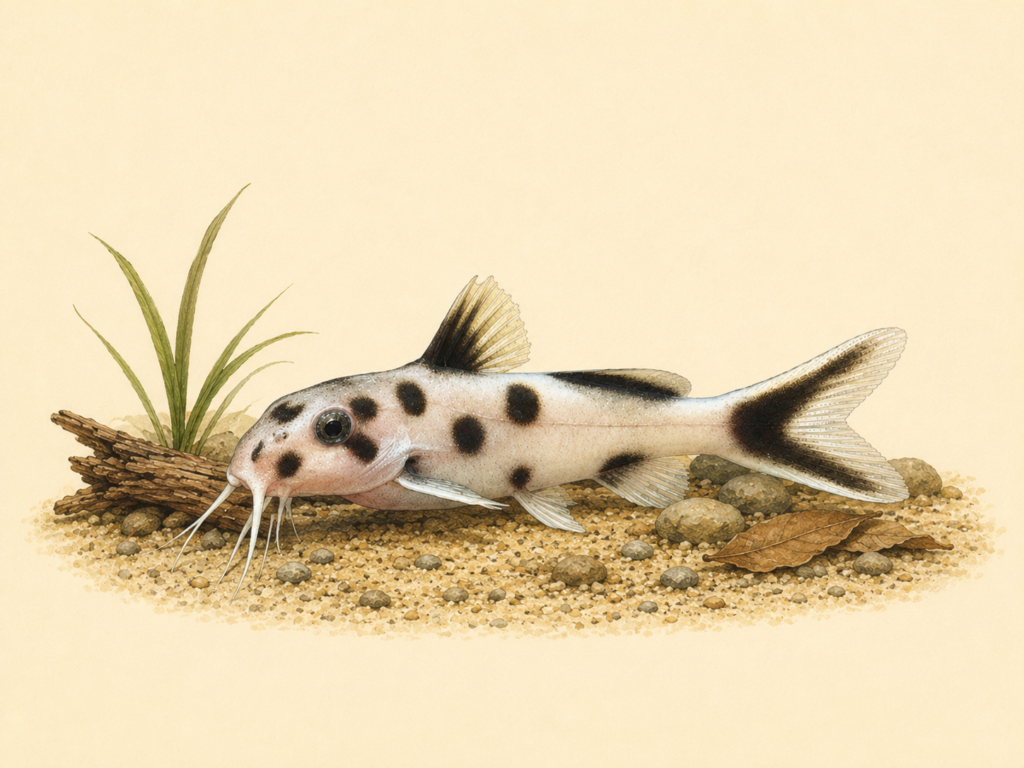
The most immediately distinctive feature of the White Polli Synodontis is its pale, almost cream-to-white base colouration. This sets it apart from typical Synodontis polli complex members, which tend to exhibit darker grey, brown, or charcoal tones. The body is covered in a subtle scattering of fine darker spots or speckles in some individuals, though the degree of patterning varies considerably. In certain specimens, the pale coloration is nearly uniform, while others display a light mottled or marbled effect, particularly along the flanks and dorsal surface.
The body shape is classically Synodontis – laterally compressed with a deep, somewhat triangular profile when viewed from the front, tapering to a forked caudal fin. The head is broad and slightly flattened, housing a subterminal mouth equipped with three pairs of barbels. The mandibular barbels are typically branched or feathered, a characteristic trait shared with many members of the Synodontis polli complex. These branched barbels are an important identification feature and help distinguish the fish from superficially similar Synodontis species.
The dorsal fin is prominent, with a strong, serrated leading spine that the fish can lock into an erect position as a defensive mechanism. The pectoral fins likewise possess robust, locking spines. These spines are worth noting because they can easily become entangled in fine-mesh nets, so aquarists should always use coarse-mesh or solid-container methods when moving the fish. The adipose fin is well developed, as is typical for the genus. Fins are generally translucent to pale, sometimes with faint darker banding or spotting near the margins.
Adults typically reach between 15 and 20 cm in total length in aquarium conditions, though occasional specimens may grow slightly larger given optimal conditions and space. Sexual dimorphism is subtle: mature females tend to be slightly fuller-bodied when viewed from above, particularly when gravid, while males may appear somewhat slimmer and occasionally develop a slightly more elongated genital papilla, though this is difficult to observe without close inspection.
Natural Habitat
The White Polli Synodontis originates from the Congo River basin in Central Africa, one of the most biodiverse freshwater systems on the planet. The broader Synodontis polli complex is associated with the main Congo River channel and its major tributaries, where these catfish inhabit rocky substrates, submerged boulder fields, and areas of strong to moderate current. The Congo basin is characterised by warm, relatively soft to moderately hard water with a slightly acidic to neutral pH.
In their natural environment, these catfish are typically found in association with rocky cover, sheltering in crevices, beneath overhangs, and among tumbled stones during daylight hours. They emerge at dusk and during the night to forage along the substrate and rocky surfaces for invertebrates, algae, and organic detritus. The Congo River is notable for its powerful currents in many stretches, and Synodontis species from this system are generally well adapted to life in flowing water, possessing strong pectoral and ventral fins that allow them to brace against current and navigate turbulent conditions.
The specific collection localities for the “Polli White” form are not always clearly documented in the trade, contributing to the taxonomic uncertainty surrounding this variant. It is possible that the pale colouration represents a localised population variant, a response to specific substrate or water conditions, or a genuinely distinct lineage within the complex. Until formal ichthyological work resolves the taxonomy, the precise natural range of this colour form remains somewhat speculative.
The Congo basin faces various environmental pressures including habitat degradation, mining activity, and changes in water quality, though the specific conservation status of this undescribed variant is unknown. Responsible sourcing and captive husbandry are therefore particularly valuable for maintaining this fish in the hobby.
Tank Size and Setup
A minimum tank size of 200 litres is recommended for a single White Polli Synodontis or a small group. If you intend to keep a group of three or more – which is generally advisable for social reasons – a tank of 300 litres or larger is more appropriate. These catfish are moderately active, particularly at night, and benefit from having sufficient floor space and horizontal swimming room. Tanks measuring at least 120 cm in length are ideal, as this provides adequate territory for multiple individuals to establish their own shelters without excessive conflict.
The aquascape should prioritise rocky structures and cave-like hiding spots. Use a combination of smooth river rocks, slate pieces, ceramic caves, and sections of bogwood to create numerous sheltered retreats. Each fish should have access to at least one dedicated hiding spot, and providing more shelters than fish helps reduce territorial disputes. Arrange rocks securely, ideally resting directly on the base glass or supported by egg crate beneath the substrate, to prevent collapse if the catfish burrow beneath them.
The substrate should be smooth sand or fine rounded gravel. Avoid sharp or coarse substrates, as Synodontis catfish spend considerable time resting on and foraging through the bottom material, and rough substrates can damage their barbels and ventral surfaces. A sandy substrate also allows natural foraging behaviours, as the fish will sift through sand in search of food particles.
Planting is optional and not a primary requirement, though hardy species such as Anubias, Java fern (Microsorum pteropus), and Bolbitis heudelotii (the African water fern) can be attached to rocks and wood to add visual interest and provide additional cover. These plants are also appropriate for a Congo biotope theme. Avoid delicate, fine-leaved plants that the catfish may uproot during their nocturnal activities.
Lighting should be moderate to subdued. As a predominantly nocturnal species, the White Polli Synodontis will be more active and visible under dimmer lighting conditions. Floating plants or shaded areas created by overhanging decor can help reduce light intensity at the substrate level, encouraging the fish to emerge earlier in the evening and feel more secure overall.
A secure, well-fitted lid is essential. Synodontis catfish are capable of jumping, particularly when startled or during the initial settling-in period, and an uncovered tank poses a genuine risk of escape.
Water Parameters
| Temperature | 23-27 °C |
| pH | 6.0-7.5 |
| General hardness (GH) | 4-15 dGH |
| Carbonate hardness (KH) | 3-10 dKH |
| Ammonia | 0 ppm |
| Nitrite | 0 ppm |
| Nitrate | Below 30 ppm |
The White Polli Synodontis is reasonably adaptable with respect to water chemistry, tolerating a range from slightly acidic to neutral conditions. A pH between 6.5 and 7.2 represents the ideal sweet spot for long-term health, though the species will generally do well across the broader range listed above. Water should be soft to moderately hard, reflecting the conditions found in the Congo basin tributaries.
Ammonia and nitrite must always remain at zero. Like all catfish, Synodontis species are sensitive to deteriorating water quality, and elevated levels of dissolved waste compounds can quickly lead to stress, barbel erosion, and secondary infections. Regular water changes of 25-30% weekly are strongly recommended to keep nitrate levels comfortably below 30 ppm. Consistency is more important than hitting a precise number – avoid sudden swings in temperature, pH, or hardness, as these are more stressful than slightly suboptimal but stable conditions.
If your tap water is particularly hard or alkaline, mixing it with reverse osmosis (RO) water can help achieve softer, more acidic conditions. However, many hobbyists successfully maintain this species in moderately hard tap water without issues, provided other husbandry factors are well managed. Use a reliable liquid test kit to monitor parameters regularly, particularly during the first few months of keeping this species.
Filtration and Equipment
Robust filtration is essential for the White Polli Synodontis. These catfish are messy eaters and produce a moderate bioload, so the filter system should be capable of handling a well-stocked tank with ease. An external canister filter rated for at least 1.5 times the tank volume per hour is a good baseline. For larger setups housing multiple specimens, consider running two filters or supplementing a canister with an internal powerhead for additional mechanical filtration and water movement.
Water flow is an important consideration. As a species originating from the Congo River system, the White Polli Synodontis appreciates moderate to strong water movement. Position filter outlets, spray bars, or supplementary powerheads to create a current across the length of the tank, ideally with some calmer zones behind rocks and decor where the fish can rest out of the flow. This combination of current and shelter closely replicates the natural habitat and encourages natural behaviour.
Filtration media should include a combination of mechanical media (sponges and filter floss) for particulate removal, biological media (ceramic rings, sintered glass, or similar high-surface-area media) for nitrification, and optionally chemical media such as activated carbon for polishing. Clean mechanical media regularly to prevent clogging, but avoid replacing all biological media at once to preserve the colony of beneficial bacteria.
A reliable heater with a thermostat is necessary to maintain stable temperatures within the 23-27 °C range. In tanks of 200 litres or more, using two smaller heaters rather than one large unit provides redundancy and more even heat distribution. An air pump is not strictly necessary if water movement from the filter is adequate, but supplementary aeration can be beneficial, particularly in warmer conditions where dissolved oxygen levels may drop.
A timer-controlled lighting system on a consistent photoperiod of 8-10 hours helps regulate the fish’s circadian rhythm and encourages predictable activity patterns. Consider incorporating a gradual dawn/dusk dimming function or moonlight LEDs if available, as this can encourage the catfish to begin emerging before the main lights are fully extinguished, providing more viewing opportunities.
Diet and Feeding
The White Polli Synodontis is an omnivore with a strong leaning towards invertebrate prey and meaty foods, though it will also consume plant-based material and algae. In the wild, its diet likely consists of aquatic insect larvae, small crustaceans, worms, organic detritus, and biofilm scraped from rock surfaces. In captivity, it readily accepts a wide range of prepared and fresh foods.
A high-quality sinking pellet or tablet designed for catfish or bottom-dwelling omnivores should form the staple diet. Look for products with whole fish meal, shrimp meal, or insect-based protein listed among the primary ingredients. Supplement this with regular offerings of frozen or live foods such as bloodworm, brine shrimp, daphnia, mysis shrimp, and chopped earthworms. These protein-rich foods promote good health, vibrant colouration, and natural foraging behaviour.
Vegetable matter should not be neglected. Blanched courgette (zucchini), cucumber, shelled peas, and spirulina-based wafers or flakes provide important fibre and micronutrients. Offering a varied diet that includes both animal and plant components closely mirrors the omnivorous feeding habits observed in the wild and helps maintain robust immune function.
Feed once daily in the evening or shortly after lights-out, as this aligns with the species’ naturally crepuscular and nocturnal activity patterns. Offer only as much food as the fish can consume within a few minutes – uneaten food should be removed promptly to prevent water quality issues. If keeping the White Polli Synodontis in a community tank with daytime-active species, ensure that sufficient food reaches the bottom during the evening feed, as competition from faster, surface-dwelling tankmates can leave shy catfish underfed.
Occasional fasting days (one day per week without food) can be beneficial for digestive health and help prevent obesity, which can be a concern in well-fed captive catfish. Monitor body condition regularly – a healthy specimen should appear solid and muscular without being visibly bloated or sunken.
Behaviour and Temperament
The White Polli Synodontis is generally a peaceful and somewhat retiring catfish. During daylight hours, it typically remains hidden in caves, beneath rocks, or wedged into crevices, often resting upside down against the underside of a rocky overhang – a behaviour characteristic of many Synodontis species. This inverted resting posture is entirely normal and should not cause concern.
Activity increases significantly at dusk and through the night, when the fish emerges to explore the tank, forage through the substrate, and interact with conspecifics. In well-established tanks with subdued lighting, individuals may become bolder over time and begin appearing during daylight hours, particularly at feeding time. Patience is key during the settling-in period, as newly introduced specimens can be extremely shy for several weeks.
While not a schooling species in the strict sense, the White Polli Synodontis is generally more settled and displays more natural behaviour when kept in small groups of three or more. Solitary individuals are more likely to remain permanently hidden and may show signs of chronic stress. Within groups, a loose hierarchy may develop, with occasional chasing and jostling for preferred hiding spots, but serious aggression is uncommon provided there is sufficient space and shelter for all individuals.
This species is not typically aggressive towards other fish, though it may consume very small tankmates such as tiny fry or dwarf shrimp if the opportunity arises. Its robust, spiny body structure means it is rarely the target of bullying from other species, but it should not be housed with overly aggressive or territorial cichlids that may persistently harass it.
The locking dorsal and pectoral spines deserve special mention from a handling perspective. When stressed or netted, the fish will erect these spines, making it extremely difficult to remove from a net and posing a risk of injury to both the fish and the handler. Always use a solid container or plastic bag rather than a net when moving this species.
Tank Mates
The White Polli Synodontis is a versatile community fish that coexists well with a wide range of similarly sized, non-aggressive species. The best tankmates are those that occupy different areas of the water column, are too large to be considered prey, and will not compete excessively for the same hiding spots. African species make natural companions for a biotope approach, but the fish’s adaptable temperament allows it to thrive alongside species from other continents as well. Avoid pairing with very small fish that could be swallowed, extremely boisterous species that would outcompete the catfish for food, or aggressive territorial fish that would deny it access to shelter.
Good tank mates
- Congo Tetra – A classic mid-water schooling fish from the same geographic region, too large to be eaten and peacefully coexistent with bottom dwellers.
- African Butterfly Cichlid (Anomalochromis thomasi) – A small, peaceful West African cichlid that occupies the lower to mid water column without causing territorial conflicts.
- Bristlenose Pleco – A hardy algae-eating catfish that occupies similar tank zones but is peaceful and rarely competes aggressively for shelter.
- Kribensis – A widely available dwarf cichlid that generally coexists well with Synodontis, provided both have their own caves.
- African Red-Eyed Tetra (Arnoldichthys spilopterus) – A robust, active schooling tetra from West Africa that stays in the mid to upper water column.
- Pearl Gourami – A calm, mid-water dwelling labyrinth fish that poses no threat and tolerates similar water conditions.
- Boesemani Rainbowfish – An active, colourful mid-water swimmer that is too large to be eaten and does not compete for bottom territory.
- Synodontis eupterus (Featherfin Squeaker) – A closely related Synodontis species with similar care requirements, generally cohabiting peacefully in spacious tanks.
Fish to avoid
- Oscar – A large, predatory cichlid that may bully or attempt to eat smaller Synodontis, and produces a very heavy bioload.
- Jaguar Cichlid – Highly aggressive and territorial, this large Central American cichlid poses a serious predation and harassment risk.
- Neon Tetra – Too small and easily swallowed by a mature White Polli Synodontis, particularly during nocturnal foraging.
- Celestial Pearl Danio – A tiny nano species that would be at risk of predation from the catfish.
- Red Devil Cichlid – An extremely aggressive and territorial cichlid that would relentlessly harass a peaceful Synodontis.
- Flowerhorn – An aggressive hybrid cichlid that dominates tank space and frequently attacks tankmates of all sizes.
- Cherry Shrimp – Dwarf shrimp are easily consumed by Synodontis catfish and should not be housed together.
- African Pike Cichlid (Crenicichla-like Haplochromines) – Predatory species that may target the catfish or create excessive territorial stress.
Breeding
Breeding the White Polli Synodontis in captivity is a challenging undertaking that has been accomplished only rarely by dedicated hobbyists and specialist breeders. Like many Synodontis species from the Congo basin, reproductive behaviour in aquaria is poorly documented, and success often requires a combination of careful conditioning, environmental triggers, and a degree of good fortune.
Sexing this species is difficult outside of the breeding season. Mature females tend to be rounder and fuller-bodied than males when viewed from above, particularly when developing eggs. Males may exhibit a slightly longer or more pointed genital papilla, though this is not a reliable external characteristic in all cases. Keeping a group of at least five or six individuals increases the likelihood of having both sexes represented.
Conditioning for breeding involves feeding a rich, varied diet heavy in high-protein foods such as live or frozen bloodworm, brine shrimp, and chopped earthworms over a period of several weeks. Some breeders report that simulating seasonal changes – such as gradually lowering the water temperature by 2-3 °C over a few days, then performing large, slightly cooler water changes to mimic the onset of the rainy season – can serve as a spawning trigger.
In the wild, many Synodontis species are egg scatterers or cave spawners. The White Polli Synodontis likely follows a similar pattern, with eggs deposited in rocky crevices or on smooth surfaces within sheltered areas. If spawning occurs, the eggs are typically small, adhesive, and may be scattered among rocks. Parental care is minimal to non-existent – the adults may consume eggs and fry if given the opportunity, so removing eggs to a separate rearing tank is advisable if spawning is observed.
Eggs generally hatch within 3-5 days at typical tropical temperatures. The resulting fry are tiny and require extremely small first foods such as infusoria, liquid fry food, or commercially available powdered fry diets. As they grow, they can be transitioned to freshly hatched brine shrimp nauplii and then to crushed flake and micro-pellets. Growth is relatively slow, and it may take 12-18 months for juveniles to reach a size suitable for introduction to a community tank.
Due to the scarcity of captive breeding records, much of what is known about the reproductive biology of this variant is extrapolated from closely related, better-studied Synodontis species. Aquarists who succeed in breeding this fish are encouraged to document and share their experiences with the broader catfish-keeping community.
Common Diseases
The White Polli Synodontis is a hardy species that, when maintained in clean, stable conditions, is not particularly prone to disease. However, like all freshwater fish, it can be affected by a range of common ailments, particularly when stressed by poor water quality, overcrowding, or sudden environmental changes.
Ich (white spot disease), caused by the protozoan Ichthyophthirius multifiliis, is one of the most frequently encountered diseases in the aquarium hobby. It presents as small white cysts on the body, fins, and gills, and is typically triggered by temperature fluctuations or the introduction of infected fish. When treating ich in a tank containing Synodontis, exercise caution with medication dosages. Scaleless and lightly-scaled catfish are more sensitive to many common medications, particularly those containing copper or malachite green. Half-dosing is often recommended, and raising the temperature to 28-30 °C while increasing aeration can be an effective adjunct or alternative treatment.
Bacterial infections can arise secondary to physical injury (e.g., abrasions from rough substrates or aggressive tankmates) or as a consequence of chronically poor water quality. Symptoms may include reddened patches on the skin, frayed fins, ulceration, or cloudy eyes. Maintaining pristine water conditions through regular water changes is the single most effective preventative measure. If bacterial infection is suspected, broad-spectrum antibacterial treatments designed for use with catfish should be employed, following the manufacturer’s guidance on dosing for sensitive species.
Barbel erosion is a condition that specifically affects catfish and is almost always linked to husbandry problems – typically sharp or dirty substrates, elevated nitrate levels, or a combination of both. Affected fish show shortened, blunted, or reddened barbels, which can impair their ability to forage effectively. Prevention involves using smooth sand substrates and maintaining excellent water quality. In most cases, barbels will regenerate once the underlying cause is corrected.
Fungal infections, recognisable by cotton-wool-like growths on the body or fins, may occur on stressed or injured fish. These are generally secondary infections and respond well to antifungal treatments, again at reduced dosages for catfish species. Quarantining new arrivals for two to four weeks before introducing them to the main tank is a prudent measure that helps prevent the introduction of pathogens.
Internal parasites can occasionally affect wild-caught specimens. Signs may include weight loss despite a good appetite, sunken bellies, or pale, stringy faeces. Appropriate anti-parasitic treatments are available from aquatic veterinary suppliers, but diagnosis and treatment should be approached carefully, ideally with veterinary guidance if possible.
FAQs
Is the White Polli Synodontis a true species or just a colour variant?
The taxonomy of this fish is currently unresolved. It is traded under the designation Synodontis sp. “Polli White” and falls within the broader Synodontis polli species complex, but it has not been formally described as a distinct species. Whether it represents a localised colour morph, a population variant, or a separate species awaiting formal description remains an open question among ichthyologists. For practical purposes, its care requirements are consistent with other members of the complex.
Why does my White Polli Synodontis always hide and only come out at night?
This is completely normal behaviour for this species and for Synodontis catfish in general. They are naturally nocturnal or crepuscular, meaning they are most active during dusk, dawn, and the nighttime hours. During the day, they seek out sheltered hiding spots among rocks and caves. Over time, and particularly if kept in a group with subdued lighting, individuals often become bolder and may begin emerging during daylight hours, especially around feeding time. Providing numerous hiding places actually helps the fish feel more secure and paradoxically makes it more likely to come out into the open.
Can I keep a White Polli Synodontis in a planted tank?
Yes, though with some caveats. This species can coexist with robust, well-anchored plants such as Anubias, Java fern, and Bolbitis that are attached to rocks or wood. However, delicate rooted plants may be uprooted during the catfish’s nocturnal foraging activities. Avoid species with fine, fragile root systems planted directly in the substrate. A combination of epiphytic plants on hardscape with open sandy foraging areas works well for a setup housing this catfish.
How many White Polli Synodontis should I keep together?
While a single specimen can survive perfectly well in physical terms, a group of three or more is recommended for optimal behavioural welfare. Group-kept individuals tend to be more confident, display more natural social interactions, and are more likely to emerge from hiding during the evening. Ensure the tank is large enough to provide each fish with its own shelter, as competition for hiding spots can cause stress in cramped conditions. A 300-litre or larger tank is advisable for groups.
Is the White Polli Synodontis safe to keep with shrimp?
No, not with small ornamental shrimp species. The White Polli Synodontis is an opportunistic omnivore and will readily consume dwarf shrimp such as cherry shrimp, Amano shrimp, and similar small invertebrates, particularly during its active nighttime foraging periods. Larger freshwater crayfish might coexist with the catfish but introduce their own set of compatibility risks. If you wish to keep a shrimp colony, it is best maintained in a separate aquarium.
Related Guides
- Synodontis petricola – A popular smaller Synodontis species from Lake Tanganyika with similar care needs, useful for comparison if considering different Synodontis options.
- Synodontis eupterus (Featherfin Squeaker) – One of the most commonly kept Synodontis species, sharing many husbandry requirements and compatible as a tankmate.
- Congo Tetra – An ideal companion species from the same geographic region, covered in detail for those building a Congo biotope.
- Bristlenose Pleco – Another popular bottom-dwelling catfish with overlapping care requirements, helpful for understanding general catfish husbandry.
- Kribensis – A peaceful West African dwarf cichlid that pairs well with Synodontis and is covered in its own dedicated guide.