Sharktail Distichodus Care Guide – Tank Setup, Feeding and Breeding
Quick summary
The Sharktail Distichodus is a large, hardy Congo River characin that can grow over 60 cm, so it needs a minimum 1000 litre tank and heavy-duty filtration, making it an advanced fish unsuited to beginners or community tanks. It is almost entirely herbivorous, will destroy live plants, and is best kept in groups of five or more in a very spacious setup rather than as a small tank centrepiece.
🐠 Build a tank around this fish
In this guide:
- Introduction
- Quick Stats
- Appearance
- Natural Habitat
- Tank Size and Setup
- Water Parameters
- Filtration and Equipment
- Diet and Feeding
- Behaviour and Temperament
- Tank Mates
- Breeding
- Common Diseases
- FAQs
Introduction
The Sharktail Distichodus (Distichodus fasciolatus) is a large, striking African characin native to the Congo River basin. First described by the Belgian-British zoologist George Albert Boulenger in 1898, this species takes its common name from the distinctive shape of its caudal fin, which bears a superficial resemblance to that of a shark. It is a member of the family Distichodontidae, a group of African characins known for their robust bodies, herbivorous tendencies, and often impressive adult sizes.
In the aquarium hobby, Distichodus fasciolatus is a species that commands attention. Juveniles are frequently offered for sale at modest sizes, their attractively barred flanks making them appealing impulse purchases. However, prospective keepers must understand that this is a fish that grows very large – potentially exceeding 60 cm in total length – and requires a correspondingly spacious aquarium. It is not a beginner’s fish, nor is it suitable for the average community tank. When housed correctly, though, it can be a magnificent centrepiece species, bringing a slice of the mighty Congo into the home aquarium.
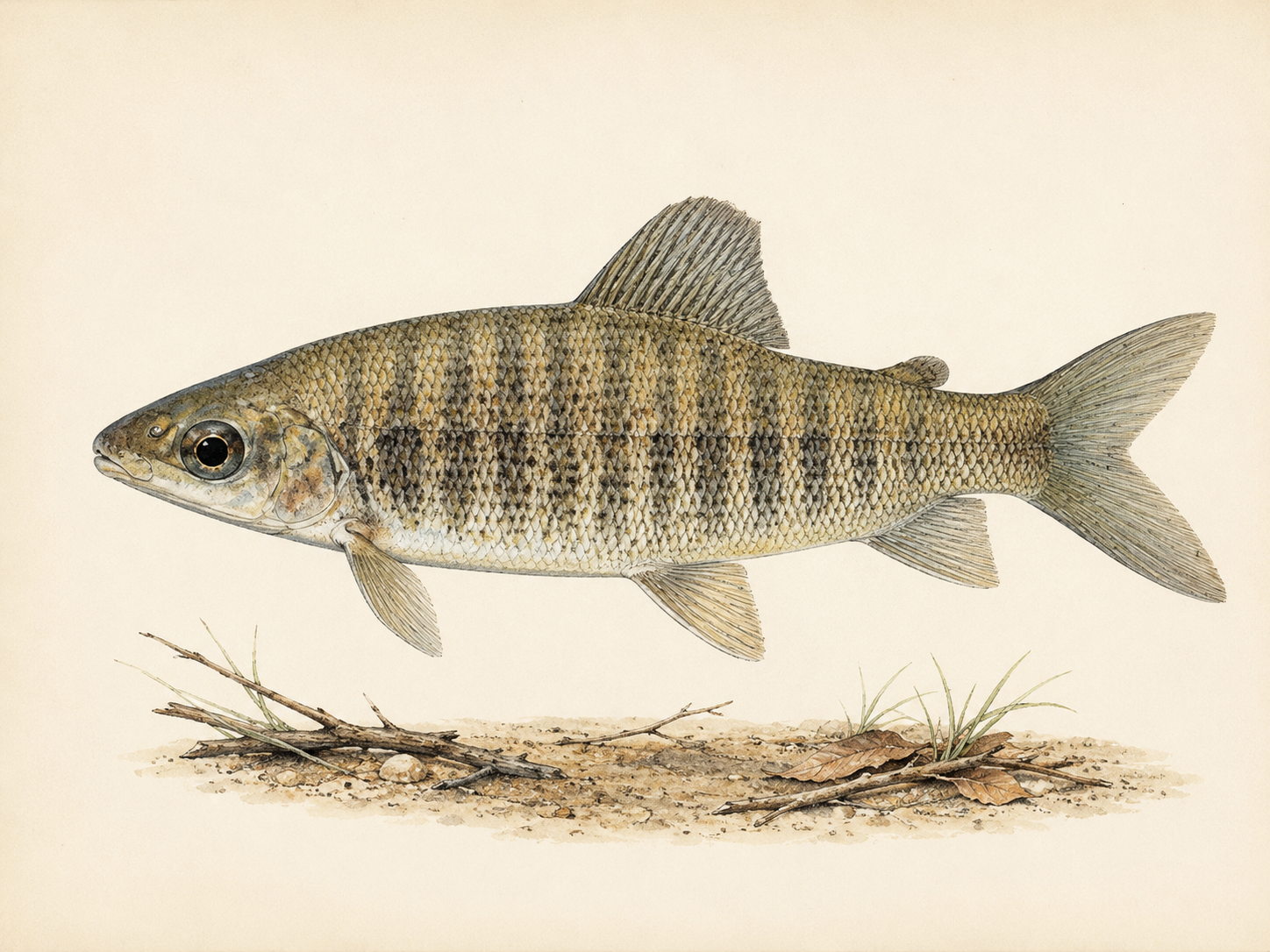
One of the most useful identification features of D. fasciolatus is its body patterning. The species displays between 18 and 20 fine, dark vertical bars running across its flanks. This is a key distinction from its more commonly encountered relative, Distichodus sexfasciatus (the Six-barred Distichodus), which bears only six bold, broad bands on a more intensely coloured body. The finer, more numerous barring of D. fasciolatus gives it a more delicate, subtly elegant appearance by comparison and is the most reliable way to tell the two species apart at a glance, particularly when both are encountered as juveniles in the trade.
This care guide provides comprehensive information on keeping D. fasciolatus in captivity, covering everything from tank requirements and water parameters to diet, behaviour, and breeding. Given the significant commitment this species represents, thorough research before acquisition is essential.
Quick Stats
| Scientific name | Distichodus fasciolatus |
| Common names | Sharktail Distichodus, Shark-tailed Distichodus |
| Family | Distichodontidae |
| Origin | Congo River basin, Central Africa |
| Adult size | 60-65 cm |
| Lifespan | 10-15 years |
| Difficulty | Advanced |
| Breeding difficulty | Expert |
| Temperature | 23-27 °C |
| pH range | 6.0-7.5 |
| General hardness (GH) | 4-15 dGH |
| Carbonate hardness (KH) | 3-10 dKH |
| Minimum tank size | 1000 litres |
| Conservation status | Least Concern |
Appearance
Distichodus fasciolatus is a large-bodied, somewhat elongated characin with a moderately deep, laterally compressed profile. The overall body shape is robust and powerful, reflecting its life in the strong currents of the Congo River system. The head is relatively blunt, with a subterminal mouth well-suited to its primarily herbivorous feeding habits. The jaws contain rows of flattened, spatulate teeth designed for cropping and scraping plant material – a characteristic feature of the Distichodontidae family.
The most immediately recognisable feature of D. fasciolatus is the pattern of 18 to 20 fine, dark vertical bars that run along the flanks from behind the gill cover to the caudal peduncle. These bars are narrow and relatively evenly spaced, creating a distinctive striped appearance. This fine barring is the single most reliable way to distinguish D. fasciolatus from D. sexfasciatus, which possesses only six bold, broad vertical bands. The confusion between these two species in the trade is not uncommon, and buyers should count the bars carefully before purchase.
The base body colour is typically silvery to grey-brown, sometimes with a subtle golden or olive wash, particularly in well-maintained specimens. The fins are generally greyish to dusky, and the caudal fin is notably forked with pointed lobes, giving the species its “sharktail” common name. The dorsal fin is positioned centrally on the back and is moderately tall, while the adipose fin – a hallmark of the characin order – is present but relatively small.
Juveniles tend to show more contrast in their barring, with the dark lines standing out more starkly against a lighter body. As the fish matures and grows, the overall colouration may become somewhat more muted, though the vertical bars typically remain visible throughout life. Sexual dimorphism is minimal and not easily distinguished externally, making it difficult to sex individuals visually.
Natural Habitat
Distichodus fasciolatus is endemic to the Congo River basin in Central Africa, one of the most biodiverse freshwater ecosystems on the planet. The Congo is the world’s second largest river by discharge volume and the deepest river on Earth, creating a vast array of ecological niches across its enormous drainage area. D. fasciolatus inhabits the main river channels, large tributaries, and associated floodplain habitats within this system.
In the wild, this species is typically found in areas with moderate to strong current, over substrates ranging from sandy to rocky. The waters of the Congo basin vary considerably depending on location, but many areas where Distichodus species are found feature slightly acidic to neutral water with moderate hardness. Water temperatures in the tropical heart of the Congo basin remain fairly stable throughout the year, generally ranging from 24 to 27 degrees Celsius.
The riparian vegetation along the Congo and its tributaries is lush and diverse, providing abundant food sources for the herbivorous D. fasciolatus. In its natural habitat, this species feeds on aquatic and semi-aquatic plants, algae, fallen fruits, and other vegetable matter. It may also consume small invertebrates opportunistically. The floodplain areas, which are seasonally inundated, provide particularly rich foraging grounds during the wet season.
D. fasciolatus shares its habitat with a remarkably diverse community of fish species, including other Distichodus species, various African tetras, mormyrids (elephantnose fishes), Synodontis catfishes, and numerous cichlid species. The ecological richness of the Congo basin means that D. fasciolatus has evolved as part of a complex food web, and its behaviour and requirements are shaped by this environment.
Tank Size and Setup
A minimum tank size of 1000 litres is recommended for an adult Distichodus fasciolatus, though larger is always better. This is a species that can reach 60 cm or more in length, and it is an active, powerful swimmer. Keeping it in an undersized aquarium will lead to stress, stunted growth, and a shortened lifespan. For a group of these fish, or for a community setup incorporating other large species, tanks of 1500 litres or more should be considered.
The tank should be as long as possible. A minimum length of 240 cm is advisable for adult specimens, as this gives the fish adequate swimming room. Depth and height are secondary to length, though a reasonable depth (front to back) of at least 60 cm helps the fish turn comfortably. Sturdy construction and a secure, well-fitting lid are essential. Distichodus species are known to be capable jumpers, particularly when startled, and a large, powerful fish launching itself out of an open-topped aquarium can injure both itself and cause significant water damage.
Decor choices for a D. fasciolatus tank must account for the species’ herbivorous nature and considerable strength. Live plants are generally not viable – the fish will consume or uproot virtually all plant species with enthusiasm. Artificial plants made from robust materials may be used for aesthetic purposes, but many keepers opt for a hardscape-focused design. Large pieces of driftwood, smooth river rocks, and cobbles can create an attractive and naturalistic layout that echoes the species’ Congo River origins. Ensure all decor is securely positioned, as large Distichodus can dislodge poorly placed rocks or wood.
The substrate can be sand or smooth gravel. Fine to medium sand is arguably the most natural choice and allows the fish to forage naturally without risk of injury. Avoid sharp-edged substrates. Lighting requirements are not demanding – moderate lighting is sufficient, and if no live plants are being maintained, lower light levels may help reduce algal growth on surfaces while keeping the fish comfortable.
Adequate open swimming space is critical. While some cover in the form of driftwood or rock structures is appreciated, the majority of the tank footprint should be left as open water. This species needs room to patrol and exercise, and a cluttered environment will cause stress.
Water Parameters
| Temperature | 23-27 °C |
| pH | 6.0-7.5 |
| General hardness (GH) | 4-15 dGH |
| Carbonate hardness (KH) | 3-10 dKH |
| Ammonia | 0 ppm |
| Nitrite | 0 ppm |
| Nitrate | Below 30 ppm |
Distichodus fasciolatus is reasonably adaptable with regard to water chemistry, but maintaining stable, clean conditions is paramount given the large bioload this species produces. The ideal temperature range of 23-27 degrees Celsius reflects the warm tropical waters of the Congo basin. A target of around 25 degrees Celsius is a good median to aim for in most setups.
The pH can range from slightly acidic to slightly alkaline, with a slightly acidic to neutral range of 6.5-7.0 being arguably optimal. Moderate hardness is tolerated well, and this species is less demanding regarding precise hardness levels than some other Congo basin inhabitants. That said, extremely hard or extremely soft water should be avoided.
Ammonia and nitrite must be maintained at zero at all times. Given the size and metabolic output of this fish, a fully matured biological filter is non-negotiable before introducing the species. Nitrate levels should be kept below 30 ppm through a regime of regular, generous water changes. Weekly water changes of 30-50% are recommended for most setups, though the exact frequency and volume will depend on stocking levels and filtration capacity.
Consistency is key. Sudden fluctuations in temperature, pH, or hardness can stress the fish and make it more susceptible to disease. When performing water changes, ensure the replacement water is of a similar temperature and chemistry to the tank water. Using a reliable heater with a thermostat rated for the tank volume – or better yet, two heaters for redundancy in very large systems – will help maintain thermal stability.
Filtration and Equipment
Filtration is one of the most critical aspects of keeping Distichodus fasciolatus successfully. This is a large, herbivorous fish that produces a substantial amount of waste, and the filtration system must be capable of handling this bioload efficiently. Over-filtration is strongly recommended – aim for a total turnover rate of at least 8-10 times the tank volume per hour.
External canister filters are the most practical choice for tanks of this size, and most keepers will need to run two or more large canister filters in parallel to achieve adequate flow and biological filtration capacity. Sump filtration is an excellent alternative, offering greater water volume, easier maintenance, and the ability to house additional media. For very large installations, purpose-built sumps with multiple compartments for mechanical, biological, and chemical filtration stages are ideal.
Mechanical filtration should be robust, as the plant-heavy diet of D. fasciolatus generates considerable particulate waste. Coarse and fine filter foams, combined with filter floss for polishing, will help maintain water clarity. Biological filtration media – such as ceramic rings, sintered glass, or similar high-surface-area materials – should be present in generous quantities to support the bacterial colonies needed to process ammonia and nitrite.
Water movement in the tank should be moderate to strong, replicating the riverine conditions of the species’ natural habitat. Powerheads or wavemakers can supplement the flow from the filtration system if needed. Ensure that there are no dead spots where detritus can accumulate.
Heating should be provided by one or more high-quality aquarium heaters rated for the tank volume. In tanks above 1000 litres, using two heaters placed at opposite ends of the tank ensures even heat distribution and provides a safety net if one unit fails. An inline heater connected to the filtration system is another effective option for large setups.
An air pump is not strictly necessary if surface agitation from the filter outlets is sufficient to maintain good oxygen levels, but in heavily stocked or warm tanks, supplementary aeration can be beneficial. A reliable thermometer – ideally a digital one for accuracy – should be placed where it can be easily read. Test kits for ammonia, nitrite, nitrate, and pH are essential for monitoring water quality, particularly in the weeks and months after the tank is first stocked.
Diet and Feeding
In the wild, Distichodus fasciolatus is primarily herbivorous, feeding on aquatic plants, algae, fallen fruits, seeds, and other vegetable matter. In captivity, this dietary preference should be respected, with the bulk of the diet consisting of plant-based foods. A well-fed D. fasciolatus with a varied, vegetable-rich diet will display better colouration, greater vitality, and a longer lifespan than one fed predominantly on animal protein.
The staple diet can be built around high-quality vegetable-based pellets or wafers designed for large herbivorous fish. Spirulina-based foods are an excellent choice and are readily accepted. These can be supplemented with a wide range of fresh vegetables. Blanched courgette (zucchini), cucumber, peas (shelled), spinach, lettuce, kale, and sweet potato are all suitable options. Many keepers find that their Distichodus quickly develop preferences for particular vegetables, and offering a rotation keeps the fish interested and ensures nutritional variety.
Fresh or dried aquatic plants can also be offered. Duckweed, if available, is often consumed with gusto and can serve as a useful supplementary food. Some keepers cultivate duckweed or other fast-growing floating plants in a separate container specifically to use as food for their Distichodus.
While D. fasciolatus is primarily herbivorous, it will also accept and benefit from occasional offerings of protein-rich foods. Frozen or live foods such as bloodworms, brine shrimp, and earthworms can be offered once or twice a week as a supplement. Avoid making high-protein foods a major part of the diet, as this does not reflect the species’ natural feeding ecology and may contribute to digestive issues or excess waste over time.
Feed adult specimens once or twice daily, offering only as much food as can be consumed within a few minutes. Uneaten food, particularly fresh vegetables, should be removed before it decomposes and impacts water quality. Juveniles may benefit from more frequent, smaller feedings – three times per day – to support their rapid growth rate. Be mindful that the herbivorous appetite of D. fasciolatus is voracious; any live plants placed in the aquarium for decorative purposes will almost certainly be eaten.
Behaviour and Temperament
Distichodus fasciolatus is a generally robust and active species that spends much of its time patrolling the mid-water and lower regions of the aquarium. It is a powerful swimmer that appreciates strong current and open space, and watching a large specimen cruise through its territory can be genuinely impressive. The species is diurnal, being most active during daylight hours.
In terms of temperament, D. fasciolatus is somewhat variable. Juveniles are often quite sociable and do well in groups, forming loose shoals that move through the tank together. As the fish mature and reach larger sizes, they can become more assertive and occasionally territorial, particularly towards conspecifics. In tanks that are too small, aggression among group members can become a significant issue. Keeping D. fasciolatus in a group of five or more, in an appropriately large tank, helps to diffuse aggression by spreading it across multiple individuals rather than concentrating it on a single target.
Towards other species, D. fasciolatus is generally not predatory, owing to its largely herbivorous diet. It will typically ignore fish that are too large to fit in its mouth. However, very small tank mates may be at risk, particularly as the Distichodus grows. The species can also be somewhat boisterous, and its large size and active swimming style may intimidate or stress smaller, more timid species simply through its presence and movement.
D. fasciolatus has a notable tendency to rearrange its environment. Tank decor that is not securely anchored may be displaced, and the species’ habit of grazing on surfaces means that any algae growth on rocks and wood will be kept in check – though this also extends to any live plants the keeper might have hoped to maintain. This destructive relationship with aquarium plants is one of the defining behavioural traits of the Distichodus genus.
When startled, D. fasciolatus can react with sudden, powerful bursts of speed. This makes a secure lid absolutely essential, as the fish is quite capable of launching itself out of an uncovered tank. Placing the aquarium in a relatively calm area of the home, away from doors that slam or areas of heavy foot traffic, can help reduce stress-induced flight responses.
Tank Mates
Selecting appropriate tank mates for Distichodus fasciolatus requires careful consideration of the species’ large adult size, active swimming behaviour, and occasionally boisterous temperament. The best companions are other large, robust fish that can hold their own without being aggressive enough to cause harm. Tank mates should ideally occupy different ecological niches to minimise direct competition. Very small or delicate species should be avoided, as they may be stressed, outcompeted for food, or occasionally consumed.
Good tank mates
- Six-barred Distichodus (Distichodus sexfasciatus) – A closely related species of similar size and temperament that generally coexists well in large tanks.
- Featherfin Squeaker (Synodontis eupterus) – A robust and adaptable African catfish that is large enough to avoid being bothered and occupies the lower water column.
- Decorated Synodontis (Synodontis decorus) – Another hardy Congo basin catfish that complements D. fasciolatus well and shares similar water parameter requirements.
- Senegal Bichir (Polypterus senegalus) – A tough, bottom-dwelling species that is generally indifferent to the activity of large midwater swimmers.
- African Butterfly Peacock (Aulonocara jacobfreibergi) – A larger cichlid that can hold its own, though tank size must be generous to accommodate both species.
- Oscar (Astronotus ocellatus) – A robust, large-bodied cichlid that is sturdy enough to coexist, provided the tank is very spacious.
- Tinfoil Barb (Barbonymus schwanenfeldii) – A large, active schooling fish that matches the Distichodus in energy level and occupies similar water column space without conflict.
- Clown Loach (Chromobotia macracanthus) – A sociable, large-growing loach that is generally peaceful and robust enough to share space with large characins.
Fish to avoid
- Neon Tetra (Paracheirodon innesi) – Far too small and delicate; likely to be eaten or severely stressed by a large Distichodus.
- Guppy (Poecilia reticulata) – Much too small and slow to be safe with a fish of this size and activity level.
- Discus (Symphysodon spp.) – A sensitive, slow-moving species that would be stressed and outcompeted by the boisterous Distichodus.
- Celestial Pearl Danio (Danio margaritatus) – Tiny and fragile, completely unsuitable as a companion for a large predatory-sized fish.
- Flowerhorn Cichlid – Highly territorial and aggressive; likely to attack and injure the Distichodus, particularly in confined spaces.
- Red-bellied Piranha (Pygocentrus nattereri) – An aggressive, biting species that poses a direct physical threat, particularly in groups.
Breeding
Breeding Distichodus fasciolatus in captivity is extremely challenging and has rarely, if ever, been reliably achieved in home aquaria. The vast majority of specimens available in the trade are wild-caught. The difficulties are numerous: the species grows very large, making it impractical to house a breeding group in all but the most spacious facilities; sexual dimorphism is minimal, making it difficult to identify and pair males and females; and the environmental triggers that stimulate spawning in the wild – likely involving seasonal flooding, changes in water chemistry, and hormonal cues from the surrounding ecosystem – are extremely difficult to replicate in captivity.
In the wild, Distichodus species are believed to be seasonal spawners, with reproduction linked to the flood cycles of the Congo basin. Rising water levels, increased turbidity, and changes in temperature and water chemistry likely trigger spawning migrations and reproductive behaviour. The fish are thought to scatter their eggs in flooded vegetation or over suitable substrates in floodplain areas, with no parental care provided after spawning.
For the ambitious keeper wishing to attempt breeding, a very large, dedicated breeding tank would be required – likely in excess of 2000 litres to house a group of adults comfortably. Simulating seasonal changes by gradually lowering the water temperature, then raising it while simultaneously increasing the water level and softening the water chemistry, might help trigger spawning behaviour. The addition of tannin-rich water (via peat or Indian almond leaves) and a period of increased feeding with high-quality foods could also be beneficial.
If spawning were achieved, the eggs would likely be small and scattered, requiring careful removal to a separate rearing tank to avoid predation by the adults. Hatching times and fry care protocols are not well documented for this species. Fry would likely require very small foods initially, such as infusoria or commercially available liquid fry food, progressing to newly hatched brine shrimp as they grow.
Given the current state of knowledge, breeding D. fasciolatus should be considered a project for specialist breeders or public aquaria with the resources and space to dedicate to the endeavour. For the typical advanced hobbyist, enjoying the species in a well-maintained display tank is the more realistic and rewarding goal.
Common Diseases
Distichodus fasciolatus is a generally hardy species that, when kept in appropriate conditions, is not particularly prone to disease. However, like all aquarium fish, it can be affected by a range of common ailments, particularly when water quality is poor, the fish is stressed, or new arrivals are introduced without proper quarantine.
White spot disease (ichthyophthirius, or “ich”) is one of the most common afflictions encountered in freshwater aquaria and can affect D. fasciolatus. Symptoms include small white cysts on the skin and fins, flashing (rubbing against surfaces), and increased respiratory rate. Treatment involves raising the water temperature gradually to around 30 degrees Celsius and administering a proprietary white spot remedy. Given the sensitivity of some scaleless or large-scaled fish to certain medications, always follow dosage instructions carefully and consider using half-strength treatments initially if in doubt.
Bacterial infections, including fin rot and ulcer disease, can occur when water quality deteriorates or the fish sustains physical injuries – the latter being a risk with large, active species that may collide with decor during flight responses. Maintaining pristine water conditions is the best preventive measure. Affected fish may be treated with broad-spectrum antibacterial medications, and improving water quality should always accompany any chemical treatment.
Internal parasites, particularly intestinal worms, can be a concern with wild-caught specimens. Signs may include weight loss despite a good appetite, pale or stringy faeces, and a general loss of condition. Anti-parasitic medications designed for internal parasites can be administered via medicated food. Quarantining all new arrivals for a minimum of two to four weeks is strongly recommended, allowing the keeper to observe for signs of parasitic infection or other disease before introducing the fish to the main display.
Hole-in-the-head disease (HITH) or head and lateral line erosion (HLLE) has been reported in large characins and cichlids, and while not common in Distichodus, it is worth being aware of. This condition, characterised by pitting and erosion of the skin on the head, is often linked to poor water quality, inadequate diet (particularly a lack of vitamins and minerals), and the use of activated carbon in filtration. Ensuring a varied, vitamin-rich diet and maintaining excellent water quality are the best preventive strategies.
Preventing disease is always preferable to treating it. Regular water changes, a well-maintained filtration system, a balanced diet, and a stress-free environment are the cornerstones of good fish health. Quarantining all new additions and avoiding the introduction of potentially contaminated plants, decor, or water are also important biosecurity measures.
FAQs
How can I tell Distichodus fasciolatus apart from Distichodus sexfasciatus?
The most reliable distinguishing feature is the number and width of the vertical bars on the body. D. fasciolatus displays 18 to 20 fine, narrow dark bars across its flanks, whereas D. sexfasciatus has only six bold, broad bands. D. sexfasciatus also tends to be more vividly coloured, often displaying brighter reds and oranges in the fins, particularly as a juvenile. Counting the bars is the quickest and most accurate method of identification, even in young fish.
Can I keep live plants with Distichodus fasciolatus?
In practice, no. D. fasciolatus is a voracious herbivore that will consume, uproot, or destroy virtually all live aquarium plants. Even robust, supposedly “fish-proof” species such as Anubias and Java Fern are unlikely to survive long term. If you wish to have a planted aquarium, this is not the species for you. Artificial plants or a hardscape-only design are the most practical options for a D. fasciolatus tank.
How many Distichodus fasciolatus should I keep together?
If keeping a group, a minimum of five individuals is recommended to help disperse any intraspecific aggression. Keeping a pair or trio can lead to one individual being persistently bullied. A single specimen can also be kept successfully if the tank is large enough, though solitary fish may be more skittish. Bear in mind that a group of five or more adults will require a very large tank – 1500 litres or more.
Is Distichodus fasciolatus aggressive towards other fish?
D. fasciolatus is not typically aggressive towards other species, particularly those that are too large to be considered food. However, it can be boisterous and its sheer size and activity level may stress smaller or more timid tank mates. Intraspecific aggression can occur, especially in undersized tanks or in small groups where a pecking order becomes concentrated on one or two individuals. Choosing robust, similarly sized tank mates and providing ample space are the keys to a harmonious community.
How fast does Distichodus fasciolatus grow?
Growth rate depends heavily on diet, water quality, and tank size, but D. fasciolatus is a relatively fast grower when conditions are favourable. Juveniles purchased at 8-10 cm can reach 20-25 cm within the first year, and may approach or exceed 40 cm within two to three years. Growth slows as the fish matures, but keepers should plan for the eventual adult size of 60 cm or more from the outset, rather than hoping to upgrade the tank later.
Related Guides
- Six-barred Distichodus (Distichodus sexfasciatus) Care Guide – A closely related and commonly confused species that shares many care requirements but differs in appearance and temperament.
- Featherfin Squeaker (Synodontis eupterus) Care Guide – A popular African catfish that makes an excellent companion for large Congo basin species.
- Tinfoil Barb (Barbonymus schwanenfeldii) Care Guide – Another large, active herbivorous fish with similar care considerations regarding tank size and diet.
- Senegal Bichir (Polypterus senegalus) Care Guide – A hardy bottom-dwelling African species often kept alongside large characins in spacious setups.
- Long-nosed Distichodus (Distichodus lusosso) Care Guide – Another large Distichodus species from the Congo basin, useful for comparison when selecting the right species for your tank.