Quick Summary
The Onesided Livebearer is a hardy subtropical livebearer that thrives in cooler water and breeds readily in captivity – an excellent choice for beginners who want an unusual, low-maintenance fish with fascinating reproductive biology.
🐠 Build a tank around this species
In this guide:
- Introduction
- Quick Stats
- Appearance
- Natural Habitat
- Tank Size and Setup
- Water Parameters
- Diet and Feeding
- Behaviour and Temperament
Introduction
Jenynsia lineata, commonly known as the Onesided Livebearer, is one of the more unusual livebearing fish available in the freshwater hobby. A member of the family Anablepidae – the same family that includes the remarkable four-eyed fish (Anableps) – this small South American species was first described scientifically by Leonard Jenyns in 1842.
The common name “Onesided Livebearer” refers to the gonopodium of the male (modified anal fin used for internal fertilisation), which is asymmetric, bending either to the left or to the right rather than sitting centrally as in other livebearers. Correspondingly, females have a genital opening that is partially covered by a scale flap, also offset to one side. This means that a “left-handed” male can only mate with a “right-handed” female, and vice versa. This extraordinary anatomical quirk makes Jenynsia lineata a genuinely fascinating species to observe and breed.
Despite its interesting biology, the Onesided Livebearer has never achieved mainstream popularity in the way that guppies, mollies, or swordtails have. This is partly because its colouration is relatively subdued, and partly because it has historically been overshadowed by flashier species. Nevertheless, it is an exceptionally hardy fish, tolerant of a wide range of water conditions including cooler subtropical temperatures, and it breeds readily in captivity. For aquarists looking for something different – a fish with genuine biological intrigue and minimal care requirements – the Onesided Livebearer is well worth considering.
Quick Stats
| Scientific name | Jenynsia lineata |
|---|---|
| Common names | Onesided Livebearer, One-sided Livebearer, Jenynsia |
| Family | Anablepidae |
| Origin | Argentina, Uruguay, southern Brazil |
| Adult size | 8 cm |
| Difficulty | Easy |
| Breeding difficulty | Easy |
| Temperature | 18–25 °C |
| pH | 7–8 |
| GH | 10–20 dGH |
| Minimum tank size | 60 L |
| Conservation status | Least Concern (IUCN, assessed 2020) |
Appearance
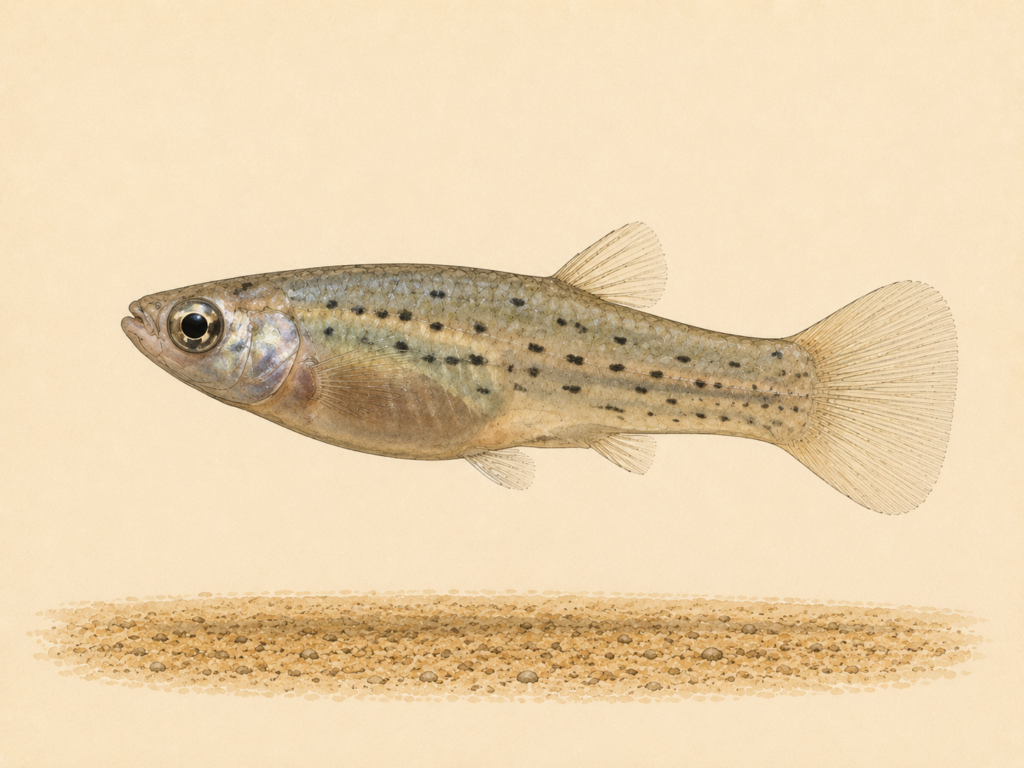
The Onesided Livebearer is not a showy fish by conventional aquarium standards, but it possesses a subtle, understated charm. The body shape is elongated and somewhat cylindrical, reminiscent of a small killifish or a slender molly. The base body colour is silvery-grey to olive, with a series of dark horizontal stripes running along the flanks. These stripes can vary in prominence depending on the fish’s mood, health, and the lighting conditions in the aquarium. In good conditions and under appropriate lighting, the flanks may display a faint iridescent sheen.
One of the most immediately obvious features is the marked sexual dimorphism. Females are considerably larger than males, reaching 6 to 8 centimetres in total length, while males typically remain at 3 to 4 centimetres. Females have a rounder, deeper body, particularly when gravid (carrying developing young). Males are noticeably slimmer and possess the species’ defining feature: the asymmetric gonopodium. This modified anal fin is clearly visible in mature males and bends distinctly to either the left or the right side of the body. This lateralisation is fixed – a male that is “left-handed” will remain so throughout its life.
The fins are generally transparent to lightly tinted with a yellowish or greyish hue. The dorsal fin is set fairly far back on the body, and the caudal fin is rounded to slightly truncate. The mouth is slightly upturned, reflecting the species’ tendency to feed at or near the water surface. Overall, the Onesided Livebearer has an appealing, natural look that suits biotope-style setups and planted aquaria very well.
Natural Habitat
Jenynsia lineata is native to southern South America, with a range covering Argentina, Uruguay and southern Brazil.
In the wild, the Onesided Livebearer is found in rivers and lagoons of coastal basins, in both fresh and brackish water. It shows a strong preference for shallow, well-vegetated areas where it can find both food and shelter from predators. Aquatic vegetation, submerged roots, and overhanging riparian plants are typical features of its natural habitat.
The climate across much of this species’ range is subtropical to temperate, with significant seasonal temperature variation. Water temperatures in its native habitats can drop to as low as 10 C in winter and rise to 28 C or above in the height of summer.
Jenynsia lineata is found in both freshwater and brackish water, so it tolerates some salinity.
Tank Size and Setup
A group of Onesided Livebearers can be comfortably housed in an aquarium of 60 litres or more. While a single pair might survive in a smaller tank, a group of six to eight individuals – with more females than males – is strongly recommended for best behaviour and breeding success. For a group of this size, 75 to 100 litres is ideal. Larger tanks are always preferable, as they provide more stable water conditions and give the fish room to establish natural social dynamics.
The aquarium should be well planted, as vegetation serves multiple purposes for this species. Dense planting provides cover for females harassed by overly attentive males, offers refuge for newborn fry, and creates a more natural-feeling environment that encourages the fish to display their most relaxed behaviour. Good plant choices include Vallisneria, Sagittaria, Java Fern, Hornwort, and Cabomba. Floating plants such as Water Lettuce or Salvinia are also excellent additions, as the Onesided Livebearer appreciates some shade at the surface.
Substrate choice is not critical. Fine gravel or sand both work well. If you are aiming for a biotope-style setup mimicking a South American stream or lagoon, a sandy substrate with scattered smooth pebbles and some driftwood would be appropriate. The species does not dig or disturb the substrate significantly.
A secure lid is advisable. While Jenynsia lineata is not a prolific jumper compared to some killifish, it is a surface-oriented species and may leap if startled or if water quality deteriorates. A well-fitted cover with minimal gaps is a sensible precaution.
Lighting can be moderate. The fish does not have strong lighting preferences, but if you are growing live plants, ensure the lighting is adequate for healthy plant growth. A standard LED aquarium light on a timer set for 8 to 10 hours per day is perfectly suitable.
Water Parameters
One of the Onesided Livebearer’s greatest advantages is its remarkable tolerance for a wide range of water conditions. This is a species that can adapt to almost any reasonable freshwater setup, making it exceptionally forgiving for beginners. That said, providing stable conditions within its preferred range will result in the healthiest, most colourful, and most active fish.
| Temperature | 18-25 C |
| pH | 7.0-8.0 |
| General hardness (GH) | 10-20 dGH |
| Ammonia | 0 ppm |
| Nitrite | 0 ppm |
| Nitrate | Below 40 ppm |
The temperature range for this species is notably broad. Unlike most tropical livebearers, Jenynsia lineata is genuinely comfortable in cooler water and does not require a heater in rooms that stay above 18 C. Prolonged exposure to temperatures above 25 C should be avoided, as this can cause stress and reduce lifespan.
The species shows a preference for moderately hard, slightly alkaline water, but it will adapt to softer or harder conditions without difficulty. If your tap water is on the harder side, the Onesided Livebearer will likely thrive in it straight from the tap (after dechlorination, of course). The species tolerates some salinity (it is found in both brackish and fresh water), but salt is not necessary for routine care.
Weekly water changes of 20 to 30 per cent are recommended to keep nitrate levels in check and maintain overall water quality. Consistency is more important than hitting a specific number – avoid sudden swings in temperature, pH, or hardness.
Filtration and Equipment
The Onesided Livebearer does not have demanding filtration requirements. A standard hang-on-back filter or internal power filter rated for the aquarium’s volume will provide adequate mechanical and biological filtration. Sponge filters are also an excellent choice, particularly in breeding setups, as they provide gentle flow and pose no risk to newborn fry.
Flow rate should be moderate. Jenynsia lineata naturally inhabits slow-moving or still waters, so a gentle current is more appropriate than a strong flow. If your filter produces excessive current, use a spray bar or baffle to diffuse it. The fish should be able to swim comfortably without being buffeted around the tank.
As noted above, a heater is often unnecessary for this species, particularly if the room temperature remains above 18 C year-round. However, if you live in a region with cold winters and the room temperature might drop below this threshold, a low-wattage heater set to around 20 C provides a useful safety net. An adjustable heater is preferable, as it allows you to fine-tune the temperature.
An air pump and airstone can be beneficial, particularly in warmer weather when dissolved oxygen levels may drop. This is a surface-dwelling species that appreciates well-oxygenated water. Good surface agitation from your filter’s outflow is usually sufficient, but supplementary aeration does no harm and can be useful during hot spells.
A thermometer is essential for monitoring conditions, even if you are not using a heater. Digital thermometers or glass stick-on types are both perfectly adequate.
Diet and Feeding
In captivity, Jenynsia lineata is an enthusiastic and undemanding eater that will accept most foods offered.
A good-quality flake or micro-pellet food should form the staple diet. Choose a product designed for small tropical or subtropical fish, ideally one with a reasonable protein content (40 per cent or above). Supplement this regularly with live or frozen foods such as daphnia, brine shrimp (Artemia), bloodworms, and mosquito larvae. These protein-rich foods are particularly important for conditioning females for breeding and for promoting healthy growth in young fish.
Vegetable matter should also feature in the diet. Blanched spinach, spirulina-based foods, and algae wafers (broken into small pieces) all provide useful plant-based nutrition. The species will also graze on soft algae growing on tank surfaces and decor, which is a helpful behaviour in planted aquaria.
Feed once or twice daily, offering only as much food as the fish can consume within two to three minutes. Overfeeding is a common pitfall with livebearers generally, as they are always eager to eat. Excess food leads to poor water quality and can contribute to health problems. A once-weekly fast day is a good practice to allow the digestive system to clear.
Fry can be fed on crushed flake, powdered fry food, or newly hatched brine shrimp from birth.
Behaviour and Temperament
The Onesided Livebearer is an active fish that spends much of its time in the upper half of the water column. It is a sociable species that does best in groups. A ratio of two or three females to every male is advisable, as males can be persistent in their mating attempts, and spreading their attention across multiple females prevents any single female from becoming overly stressed.
Males are the more active sex, frequently displaying to females and chasing them around the tank. This courtship behaviour is generally harmless in a well-planted tank with adequate space, but in a bare or overcrowded setup, persistent males can cause stress. Providing plenty of plant cover and visual barriers helps females escape unwanted attention.
One aquarium reference reports that Jenynsia lineata can be aggressive and recommends keeping it in a species tank. This comes from a single source, so watch how your fish behave with any tank mates.
The species is curious and relatively bold. It will quickly learn to associate the aquarist’s presence with feeding and will come to the front of the tank in anticipation. This makes it an engaging fish to keep, despite its modest colouration.
Tank Mates
The Onesided Livebearer should ideally be kept in a species tank. If you do add tank mates, choose similarly sized species that are comfortable at 18 to 25 C, and avoid tropical fish that need warmer water. Avoid very small species that might be harassed, and avoid large or aggressive fish that could intimidate or prey upon Jenynsia.
Good tank mates
- White Cloud Mountain Minnow – A classic subtropical species that thrives in the same cooler temperature range and is equally peaceful.
- Zebra Danio – Hardy and active, this adaptable species tolerates a wide temperature range and makes an energetic companion.
- Peppered Corydoras – A bottom-dwelling catfish from a similar South American temperate range, perfectly suited to cooler setups.
- Bronze Corydoras – Another subtropical Corydoras species that complements Jenynsia well and occupies a different tank level.
- Platy – A fellow livebearer that adapts to moderately cool conditions and shares similar water chemistry preferences.
- Rosy Barb – A subtropical barb that thrives in cooler water and is large enough not to be bothered by Jenynsia.
- Bristlenose Pleco – An algae eater that occupies the bottom of the tank and suits the upper end of this range.
Fish to avoid
- Oscar – Far too large and predatory; would readily consume Onesided Livebearers.
- Convict Cichlid – Territorial and aggressive, especially when breeding, and likely to harass or kill smaller tank mates.
- Betta – Bettas need warmer water than the Onesided Livebearer prefers.
- Angelfish – Requires warmer temperatures and may prey on smaller Jenynsia.
- Red-bellied Piranha – An obvious mismatch; predatory and dangerous to any small fish.
- African Cichlids – Most Rift Lake cichlids are too aggressive and territorial for peaceful livebearers, despite similar hardness preferences.
Breeding
Breeding the Onesided Livebearer is straightforward and will often occur without any special effort from the aquarist. If you keep a mixed-sex group in reasonable conditions, breeding is virtually inevitable. The species is viviparous – females give birth to fully formed, free-swimming young rather than laying eggs.
The most fascinating aspect of breeding this species is the lateralised reproductive anatomy. Males have a gonopodium that bends either to the left or the right, and females have a corresponding genital opening offset to one side. A left-bending male can only successfully mate with a right-sided female, and vice versa. In a sufficiently large group, both “handedness” types will typically be represented, ensuring successful mating. If you acquire only a small number of fish, there is a chance that all individuals may be of the same lateralisation, preventing breeding. Obtaining a group of at least six to eight fish minimises this risk.
The gestation period is about six weeks. Females typically produce 10 to 20 fry per brood, rarely up to 40.
Fry are fully capable of feeding and swimming independently from birth and can take crushed flake food and newly hatched brine shrimp. Dense plant cover, particularly floating plants, greatly improves fry survival in a community setting, as it provides essential hiding places. Adults may eat fry that they encounter in open water.
For maximum fry survival, a dedicated breeding tank with dense vegetation and a sponge filter is ideal. Remove the female to the breeding tank when she appears heavily gravid (swollen abdomen, dark gravid spot near the anal vent), and return her to the main tank after she has given birth. Alternatively, simply allow the fish to breed in the main tank and rely on plant cover to protect enough fry to maintain the population.
Common Diseases
Jenynsia lineata is a robust species with no particular susceptibility to disease beyond the common ailments that affect freshwater fish generally. Good water quality, a balanced diet, and appropriate stocking levels are the best preventive measures against illness.
White spot disease (Ichthyophthirius multifiliis), commonly known as ich, is the most frequently encountered ailment. It presents as small white cysts on the body and fins. Treatment is with a proprietary ich medication, following the product instructions. If you raise the temperature, do so gradually and keep it no higher than 25 C. Caught early, ich is highly treatable.
Fin rot, caused by bacterial infection, can occur in fish kept in poor water conditions. Symptoms include frayed, ragged, or discoloured fin edges. Improving water quality through frequent water changes is often sufficient to resolve mild cases. More severe infections may require treatment with an antibacterial medication.
Internal parasites can occasionally affect wild-caught or poorly maintained fish. Symptoms include weight loss despite normal feeding, white stringy faeces, and lethargy. Anti-parasitic foods or medications dosed to the tank can address these issues.
Livebearers in general can be prone to shimmying – a condition where the fish rocks from side to side without making forward progress. This is often linked to osmotic stress caused by water that is too soft for the species. Increasing the general hardness usually resolves the problem.
Quarantine all new fish for at least two weeks before adding them to an established tank. This simple precaution can prevent the introduction of diseases and parasites to your existing stock.
FAQs
Do Onesided Livebearers need a heater?
In most cases, no. Jenynsia lineata is comfortable between 18 and 25 C, which is typical room temperature in many households. A heater is only necessary if the room temperature regularly drops below 18 C, such as in unheated rooms during cold winters. If in doubt, use a thermometer to monitor the tank temperature over a week before deciding.
What does “onesided” mean in relation to this fish?
The name refers to the male’s gonopodium (modified anal fin used for mating), which bends to either the left or the right rather than being centrally positioned. The female’s genital opening is correspondingly offset. This means males and females must be of complementary “handedness” to mate successfully – a left-bending male with a right-sided female, or vice versa.
How can I tell males from females?
Sexing is straightforward in mature fish. Males are significantly smaller (3-4 cm versus 6-8 cm for females), slimmer in body shape, and possess a visible gonopodium – the modified anal fin that is clearly elongated and bent to one side. Females are larger, have a rounder body (especially when gravid), and have a standard fan-shaped anal fin. Sex differences become apparent from around 6 to 8 weeks of age.
Are Onesided Livebearers suitable for a community tank?
It depends. They are best kept in a species tank, as one aquarium reference reports that the species can be aggressive. If you keep them with other fish, choose similarly sized, non-aggressive species that are comfortable at 18 to 25 C, and avoid tropical fish that need water above 25 C.
Related Guides
- Four-eyed Fish (Anableps anableps) – A close relative in the family Anablepidae, offering insight into the fascinating biology shared by these unusual livebearers.
- White Cloud Mountain Minnow – One of the best subtropical tank mates for the Onesided Livebearer, ideal for unheated aquaria.
- Peppered Corydoras – Another excellent subtropical companion from South America that shares similar temperature and water chemistry preferences.
- Guppy – The world’s most popular livebearer, useful for comparison with the less well-known Jenynsia in terms of care requirements and breeding behaviour.
- Platy – A widely kept livebearer that adapts to similar conditions and provides a useful reference point for livebearer husbandry in general.