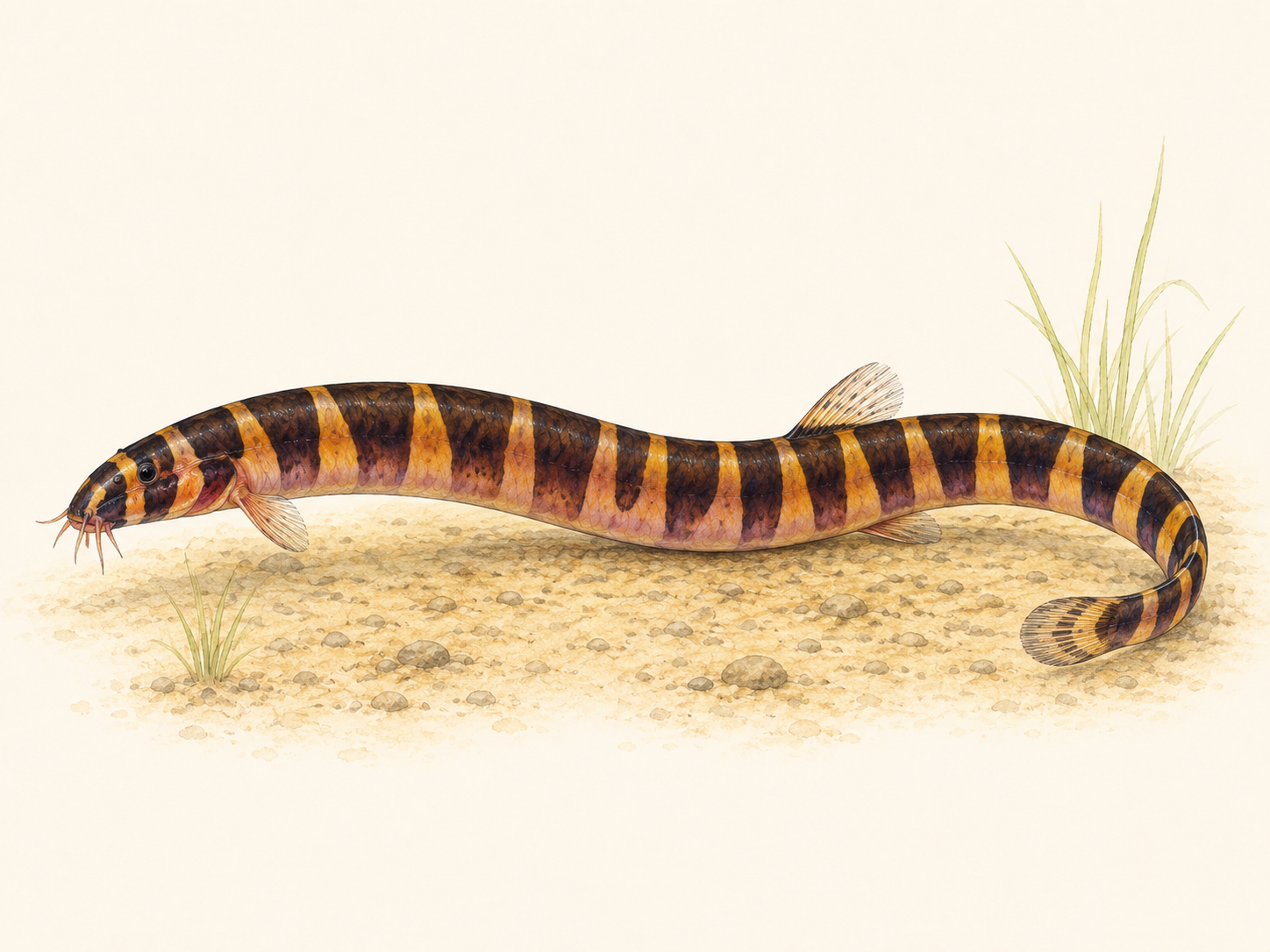
Kuhli Loach Care Guide — Tank Setup, Feeding and Breeding
Introduction
The Kuhli Loach is one of the most endearing and unusual fish available to freshwater aquarists. With its elongated, eel-like body and distinctive dark bands, this small bottom-dweller has charmed hobbyists for decades. Native to the slow-moving streams and rivers of Southeast Asia, Pangio kuhlii brings a unique character to the home aquarium that few other species can match. Despite its somewhat secretive nature, a well-kept group of Kuhli Loaches will reward patient keepers with fascinating behaviours, from wriggling through the substrate in search of morsels to forming communal “loach piles” in their favourite hiding spots.
Often recommended as a beginner-friendly oddball, the Kuhli Loach is generally hardy once established in a mature aquarium. However, its scaleless skin, nocturnal tendencies, and specific habitat requirements mean that a little extra consideration is needed compared to more robust community fish. This comprehensive care guide covers everything you need to know to keep Kuhli Loaches thriving, from tank setup and water parameters to diet, breeding, and suitable tank mates.
Quick Stats
| Scientific name | Pangio kuhlii |
| Common names | Kuhli Loach, Coolie Loach, Leopard Loach, Striped Loach, Prickle Eye |
| Family | Cobitidae |
| Origin | Southeast Asia — Indonesia (Sumatra, Java, Borneo), Malaysia, Thailand |
| Adult size | 8–10 cm (3–4 inches) |
| Lifespan | 10–14 years |
| Difficulty | Easy |
| Breeding difficulty | Difficult |
| Temperature | 24–28 °C |
| pH range | 5.5–7.0 |
| General hardness (GH) | 0–5 dGH |
| Carbonate hardness (KH) | 0–3 dKH |
| Minimum tank size | 75 litres |
| Conservation status | Least Concern (IUCN) |
Appearance
The Kuhli Loach possesses one of the most recognisable body shapes in the aquarium hobby. Its elongated, serpentine form is often compared to that of a small eel, and its smooth, sinuous movements reinforce the resemblance. Adults typically reach between eight and ten centimetres in length, though some individuals may grow marginally larger under optimal conditions. The body is laterally compressed and covered in very fine, almost imperceptible scales, which gives the fish a smooth, slightly slimy appearance and contributes to its heightened sensitivity to water quality and medications.
The base colour ranges from a warm salmon-pink to a pale yellowish-orange, overlaid with a series of dark brown to chocolate-coloured vertical bands that encircle or partially encircle the body. These bands vary in width, number, and regularity between individuals, making each Kuhli Loach visually unique. The belly is typically a lighter, almost translucent cream or pinkish tone. Four pairs of delicate barbels surround the small, downward-facing mouth, which is perfectly adapted for sifting through fine substrate in search of food. The eyes are relatively small and are partially covered by a transparent patch of skin, beneath which lies a small, sharp suborbital spine — a defensive feature shared by many cobitid loaches. The dorsal fin is set well back towards the posterior of the body, and all fins are small and largely transparent.
It is worth noting that many fish sold under the common name “Kuhli Loach” in the aquarium trade may in fact belong to closely related species within the Pangio genus, such as Pangio semicincta, which features bands that do not fully encircle the body. True Pangio kuhlii has bands that typically extend fully around the belly, though positive identification can be challenging even for experienced aquarists. Regardless of the exact species, care requirements across the commonly traded Pangio species are essentially identical.
Natural Habitat
Pangio kuhlii is found across a broad range of lowland habitats in Southeast Asia, including parts of the Malay Peninsula, Sumatra, Java, and Borneo. These fish inhabit slow-moving streams, shallow rivers, and the still, shaded margins of forest waterways, where the water is typically soft, acidic, and stained a warm amber colour by tannins leaching from decaying leaf litter and fallen wood. The substrate in these environments is usually composed of fine sand, mud, or a mixture of both, often buried beneath a thick layer of decomposing leaves, root tangles, and fallen branches.
The waters in which Kuhli Loaches are found are generally shallow and heavily shaded by the tropical forest canopy above, resulting in subdued lighting conditions. The dense layer of organic debris on the stream bed provides an abundance of microorganisms, insect larvae, and other invertebrates that form the bulk of the Kuhli Loach’s natural diet. These habitats also offer innumerable crevices, gaps, and tunnels within root systems and leaf litter where the loaches shelter during the day, emerging primarily at dusk and during the night to forage. Understanding this natural environment is crucial for replicating conditions in the home aquarium that will allow Kuhli Loaches to feel secure and display their natural behaviours.
Tank Size and Setup
A minimum tank size of 75 litres is recommended for a small group of Kuhli Loaches. Because these fish are social and thrive in groups, keeping at least five or six individuals together is strongly advisable, and for a group of this size or larger, a tank with a generous footprint is more important than height. A standard 80- to 100-litre aquarium with a length of 60 centimetres or more provides a good starting point, with larger tanks being preferable if you intend to keep a larger group or house them alongside other community species.
Substrate choice is one of the most critical aspects of the Kuhli Loach setup. These fish spend the vast majority of their time on or within the substrate, frequently burrowing and sifting through it with their sensitive barbels. A fine, smooth-grained sand is the ideal choice, as it allows the loaches to burrow naturally without risk of damage to their delicate skin and barbels. Coarse gravel, sharp-edged substrates, or substrates with rough textures should be avoided, as they can cause abrasions and lead to bacterial infections. Some aquarists use a fine, rounded gravel with success, but sand remains the gold standard for this species.
Providing ample hiding places is absolutely essential. Kuhli Loaches are naturally secretive, and without sufficient cover, they will remain perpetually stressed, spending all their time hidden and rarely venturing out to feed. Excellent hiding options include pieces of driftwood with crevices and hollows, smooth river stones stacked to create caves, lengths of PVC pipe or ceramic tubes, coconut shell hides, and dense plantings. Live plants such as Java Fern, Anubias, Cryptocorynes, and various mosses serve the dual purpose of providing cover and helping to maintain water quality. A scattering of dried Indian almond leaves or oak leaves on the substrate mimics the natural leaf litter habitat and releases beneficial tannins that slightly lower pH and possess mild antifungal properties.
Because Kuhli Loaches are adept escape artists, it is important to ensure that the tank has a well-fitted lid with no gaps large enough for a slender loach to squeeze through. They are also known to find their way into filter intakes and impeller housings, so filter intake guards or pre-filter sponges are a necessary precaution. Lighting should ideally be kept subdued, or at the very least, sufficient shaded areas should be created through floating plants, overhanging wood, or dense vegetation so that the loaches have dimly lit retreats available during the day.
Water Parameters
Kuhli Loaches originate from soft, acidic waters and will thrive when these conditions are approximated in the aquarium. While they are reasonably adaptable once acclimated, maintaining stable parameters within their preferred range will support long-term health and encourage natural behaviour. Consistency is more important than hitting a precise number, and sudden shifts in temperature, pH, or hardness should be avoided at all costs — particularly given the species’ sensitivity resulting from its reduced scalation.
| Temperature | 24–28 °C |
| pH | 5.5–7.0 |
| General hardness (GH) | 0–5 dGH |
| Carbonate hardness (KH) | 0–3 dKH |
| Ammonia | 0 ppm |
| Nitrite | 0 ppm |
| Nitrate | Below 20 ppm |
Kuhli Loaches should never be introduced to a newly set-up or uncycled aquarium. Their lack of robust scales means they are among the first fish in a community to show signs of stress from poor water quality, particularly elevated ammonia or nitrite levels. A fully cycled, mature tank with an established biological filter is a prerequisite. Regular water changes of around 20 to 25 per cent weekly will help maintain low nitrate levels and overall water quality. When performing water changes, ensure that the replacement water is temperature-matched and treated with a dechlorinator to prevent thermal or chemical shock.
Filtration and Equipment
A reliable filter that provides gentle to moderate flow is ideal for the Kuhli Loach. In their natural habitat, these fish are found in slow-moving or still waters, and excessive current can stress them. Hang-on-back filters, internal power filters, and canister filters can all be used effectively, provided the flow rate is appropriate for the tank size and can be diffused if necessary. Sponge filters are an excellent choice for Kuhli Loach tanks, as they provide effective biological filtration with minimal current and pose no risk of trapping the fish — a concern that is very real with other filter types.
If using a hang-on-back filter or canister filter, fitting a pre-filter sponge or fine mesh guard over the intake tube is strongly recommended. Kuhli Loaches are extremely slender and surprisingly flexible, and reports of these fish being drawn into filter intakes or finding their way into filter chambers are common within the hobby. A pre-filter sponge eliminates this risk while also providing additional surface area for beneficial bacteria to colonise.
A heater is necessary to maintain a stable tropical temperature within the 24–28 °C range. An adjustable submersible heater with a reliable thermostat is the best option, and placing a heater guard over the unit will prevent the loaches from resting against the glass element and sustaining burns. Thermometers should be used to verify the water temperature independently of the heater’s built-in dial. As noted above, a tight-fitting lid is essential to prevent escapes, and subdued lighting — whether achieved through low-output LED fixtures, floating plants, or a combination of both — will encourage the loaches to emerge from hiding more readily.
Diet and Feeding
Kuhli Loaches are omnivorous bottom feeders with a diet that, in the wild, consists primarily of small invertebrates, insect larvae, worms, and organic detritus sifted from the substrate. In captivity, they are generally unfussy eaters, but their nocturnal feeding habits and tendency to be outcompeted by faster, bolder tank mates mean that some thought must be given to ensuring they receive adequate nutrition.
A high-quality sinking pellet or wafer should form the staple diet. Sinking foods designed for bottom-dwellers, such as shrimp pellets, catfish wafers, or micro sinking granules, are well-suited. These should be supplemented regularly with live or frozen foods, which Kuhli Loaches will accept with particular enthusiasm. Bloodworm, daphnia, brine shrimp, tubifex, and grindal worms are all excellent choices and will help maintain condition and bring out the best colouration. Freeze-dried alternatives can be used occasionally but should not replace fresh or frozen options as the primary source of protein-rich food.
Feeding is best carried out in the evening or shortly after lights-out, when the loaches are most active and confident. Dropping food near their preferred hiding spots can also help ensure they find it before diurnal tank mates consume everything. It is not unusual for newly introduced Kuhli Loaches to be reluctant feeders for the first few days as they acclimate to their new surroundings; patience is required, and offering food after dark will usually tempt them out. While these fish do an excellent job of scavenging leftover food and organic debris from the substrate, they should never be relied upon as a “clean-up crew” and must be offered targeted feedings to ensure proper nutrition.
Behaviour and Temperament
The Kuhli Loach is a peaceful, non-aggressive species that poses no threat to any other fish in the aquarium. Its temperament is shy and retiring, particularly when kept singly or in very small numbers. In groups of fewer than five, Kuhli Loaches tend to remain hidden almost permanently, emerging only briefly and reluctantly to feed. However, when kept in larger groups of six or more, their confidence increases markedly, and they become significantly more visible and active, often exploring the tank well before lights-out.
One of the most charming behaviours exhibited by Kuhli Loaches is their tendency to form communal resting groups, commonly known as “loach piles,” where several individuals will wedge themselves into a favourite hiding spot, intertwining their bodies in a seemingly random tangle. This is entirely normal social behaviour and a sign that the fish are comfortable in their environment. They are also known to burrow into fine sand substrate, sometimes disappearing entirely beneath the surface with only their barbels or the tips of their heads visible.
Kuhli Loaches are primarily nocturnal or crepuscular, meaning they are most active during the twilight hours of dawn and dusk. In a well-established tank with plenty of cover, dim lighting, and a peaceful community, they will gradually become bolder and may be observed foraging during daylight hours, particularly at feeding time. They are not territorial and will coexist peacefully with conspecifics and other species alike. Despite their docile nature, they can be surprisingly quick when startled, darting back to cover with a rapid, undulating motion.
Tank Mates
The Kuhli Loach’s peaceful nature makes it compatible with a wide range of similarly gentle, small to medium-sized community fish. The ideal tank mates are species that occupy the middle and upper water columns, leaving the bottom of the tank largely to the loaches. Overly boisterous, aggressive, or large predatory fish should be avoided, as they will intimidate the loaches into permanent hiding and may even view them as prey due to their worm-like shape.
Good tank mates
- Harlequin Rasbora — A peaceful, mid-water schooling fish from the same geographic region that shares similar water parameter preferences.
- Ember Tetra — A tiny, gentle tetra that stays in the middle and upper portions of the water column and will not bother bottom-dwelling loaches.
- Cherry Barb — A calm, undemanding barb species that coexists peacefully and appreciates similar planted setups.
- Celestial Pearl Danio — A small, placid microfish that occupies different areas of the tank and poses no competitive threat.
- Otocinclus Catfish — A fellow peaceful bottom-dweller that feeds on algae rather than competing directly for the same foods.
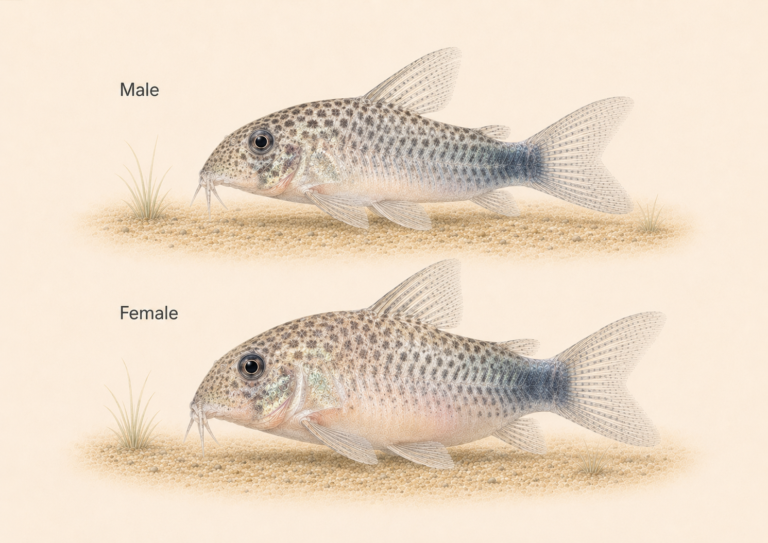
- Corydoras Catfish — Another gentle bottom-dwelling species that cohabits well, though both groups should have ample floor space and hiding spots.
- Honey Gourami — A calm, slow-moving gourami that inhabits the upper water column and thrives in the same soft, slightly acidic conditions.
- Amano Shrimp — Large enough to avoid predation and a useful algae-eating addition that shares the same peaceful temperament.
- Neon Tetra — A classic community tetra that schools in the mid-water and will not disturb loaches resting on the substrate.
- Sparkling Gourami — A diminutive, tranquil surface-dweller well suited to the soft, planted tanks that Kuhli Loaches prefer.
Fish to avoid
- Oscar — A large, predatory cichlid that would readily consume a Kuhli Loach given the opportunity.
- Red-Tail Catfish — A massive predatory catfish that is wholly unsuitable for community tanks and would eat any loach it could catch.
- Tiger Barb — A notoriously nippy species whose boisterous behaviour can cause significant stress to shy bottom-dwellers.
- Jack Dempsey Cichlid — An aggressive, territorial cichlid that would harass or injure Kuhli Loaches sharing its territory.
- Green Terror — A large, aggressive South American cichlid that dominates the bottom of the tank and would view loaches as food.
- Convict Cichlid — A highly territorial cichlid, especially when breeding, that would relentlessly chase and harm timid loaches.
- African Cichlids (Mbuna) — Require hard, alkaline water and exhibit aggressive, territorial behaviour incompatible with Kuhli Loaches in every respect.
- Flowerhorn Cichlid — An extremely aggressive hybrid cichlid that should generally be kept alone and would kill or eat a Kuhli Loach.
Breeding
Breeding Kuhli Loaches in captivity is notoriously challenging and remains relatively rare, though it is not impossible. The difficulty lies not in any particular complexity of their reproductive biology, but rather in the specific conditions required to trigger spawning and the subtlety of the signs leading up to it. Most successful spawning events in the home aquarium appear to occur spontaneously in well-established, densely planted tanks with stable water conditions and a large, well-conditioned group of adults.
Sexing Kuhli Loaches is difficult outside of spawning condition. Mature females are generally slightly larger and noticeably plumper than males, particularly when viewed from above. When a female is gravid, greenish eggs may sometimes be visible through the translucent skin of her belly. Males tend to be slimmer, and their pectoral fins may be slightly larger and more paddle-shaped, with a thickened first ray, though these differences are subtle and unreliable in isolation.
To encourage spawning, maintaining a large group of at least ten or more individuals increases the likelihood of having both sexes well represented and allows for natural pair formation. The fish should be heavily conditioned with frequent offerings of high-quality live and frozen foods such as bloodworm, tubifex, and daphnia. Lowering the water level slightly and then performing a large water change with slightly cooler, soft water can sometimes simulate the onset of the rainy season and trigger spawning activity. Reducing the water hardness and lowering the pH to around 5.5–6.0 may also help.
When spawning occurs, the fish typically become more active than usual, and pairs may be observed swimming together near the surface or among floating plants. The female releases adhesive green eggs, which are often scattered among floating plant roots, fine-leaved plants, or the underside of broad leaves near the water surface. The eggs are small and relatively few in number. The adults do not provide any parental care and may consume the eggs if given the opportunity, so removing the adults or the eggs to a separate rearing tank is advisable.
The eggs hatch within approximately 24 to 48 hours, depending on temperature. The tiny fry are initially translucent and extremely small, requiring infusoria, liquid fry food, or newly hatched brine shrimp nauplii as their first foods. Raising the fry is a delicate process that demands meticulous attention to water quality and the provision of appropriately sized food. Growth is slow, and it may take several months before the young loaches begin to resemble miniature versions of the adults.
Common Diseases
Kuhli Loaches are generally hardy fish when maintained in clean, stable conditions, but their reduced scalation makes them more susceptible to certain ailments than fully scaled species. Their skin absorbs substances from the water more readily, which means they are highly sensitive to ammonia, nitrite, and many common aquarium medications. This is one of the most important considerations when treating disease in a tank containing Kuhli Loaches.
Ich, or white spot disease, is the most frequently encountered illness in Kuhli Loaches and manifests as small, white, salt-grain-like cysts on the body and fins. Because of their sensitivity, treatments containing copper or malachite green should be used at half the standard dose, or alternative ich treatments specifically labelled as safe for scaleless fish should be selected. Raising the water temperature gradually to 28–30 °C over a day or two can accelerate the parasite’s life cycle and improve the efficacy of treatment.
Bacterial infections, including fin rot and skin ulcers, can occur if the fish sustain abrasions from rough substrate or sharp décor, or if water quality deteriorates. Maintaining a smooth, fine-grained substrate and keeping ammonia and nitrite at zero are the best preventative measures. Skinny disease, a condition in which the fish wastes away despite eating, can be caused by internal parasites and is sometimes seen in wild-caught specimens. Treatment with an appropriate anti-parasitic medication may be necessary, again at a reduced dose suitable for scaleless species.
Fungal infections are another potential issue, particularly on any wounds or damaged areas of skin. These typically appear as white, cottony growths and can be treated with aquarium-safe antifungal medications. In all cases, prevention through excellent husbandry, a fully cycled tank, regular water changes, and a nutritious diet is far preferable to treatment. Quarantining new arrivals for two to four weeks before introducing them to the main display tank is highly recommended to prevent the introduction of pathogens.
FAQs
How many Kuhli Loaches should I keep together?
Kuhli Loaches are social fish that fare best in groups. A minimum of five or six individuals is recommended, though groups of eight or more will result in bolder, more natural behaviour. When kept alone or in pairs, they tend to hide constantly and may become stressed, leading to a weakened immune system and reduced lifespan. A larger group encourages the loaches to explore more openly and engage in their endearing communal resting behaviour.
Why do my Kuhli Loaches hide all the time?
Hiding is a natural instinct for Kuhli Loaches, particularly during daylight hours, as they are primarily nocturnal. However, if they are never seen at all, it usually indicates that the group is too small, there are insufficient hiding spots causing the fish to feel exposed and insecure, the lighting is too bright, or tank mates are too boisterous. Increasing the group size, adding more cover, dimming the lights with floating plants, and feeding after dark will typically encourage them to become more visible over time.
Can Kuhli Loaches live with shrimp?
Kuhli Loaches are generally safe with adult shrimp species such as Amano Shrimp and larger Cherry Shrimp. However, they are opportunistic feeders and may consume very small shrimp fry or freshly moulted shrimp if given the chance. If you are breeding dwarf shrimp such as Neocaridina or Caridina species in the same tank, some predation on shrimplets is likely, though heavily planted tanks with dense moss and leaf litter will provide enough cover for a portion of the shrimp young to survive.
Do Kuhli Loaches need sand substrate?
While Kuhli Loaches can survive on other substrates, a fine, smooth sand is strongly recommended and considered the ideal choice. Sand allows them to exhibit their natural burrowing behaviour, protects their delicate barbels from damage, and supports their method of sifting through the substrate for food. Coarse or sharp-edged gravel can cause abrasions to their scaleless skin and erode their barbels over time, potentially leading to infections.
Are Kuhli Loaches difficult to keep?
Kuhli Loaches are not inherently difficult to keep and are suitable for fishkeepers with some basic experience. The main considerations are ensuring the tank is fully cycled before introducing them, using appropriate fine substrate, providing plenty of hiding places, and being cautious with medications due to their scaleless nature. Once established in a stable, well-maintained aquarium, they are remarkably resilient and long-lived, with individuals regularly reaching ten years or more in captivity.
Related Guides
- Java Loach (Pangio oblonga) — A closely related species with similar care requirements and a solid dark brown coloration, offering an interesting alternative or companion to the banded Kuhli Loach.
- Corydoras Catfish Care Guide — Another popular group of peaceful bottom-dwelling fish that thrive under similar conditions and make excellent tank mates for Kuhli Loaches.
- Zebra Loach (Botia striata) — A small, attractive loach species with comparable requirements, useful for those interested in exploring other members of the loach family.
- Indian Almond Leaves in the Aquarium — A guide to using botanical additives that benefit Kuhli Loaches by replicating their natural tannin-rich habitat conditions.
- Dwarf Chain Loach (Ambastaia sidthimunki) — A lively, social loach that shares many husbandry principles and can coexist peacefully in larger community setups.