Dwarf Chain Loach Care Guide — Tank Setup, Feeding and Breeding
Introduction
The Dwarf Chain Loach is one of the most charming and sociable bottom-dwelling fish available to freshwater aquarists. Known scientifically as Ambastaia sidthimunki (formerly classified under Yasuhikotakia and Botia), this diminutive loach hails from the river systems of Southeast Asia and has earned a devoted following among fishkeepers for its lively personality, attractive patterning, and relatively peaceful disposition. Unlike many of its larger loach relatives, the Dwarf Chain Loach remains small enough to be housed in modestly sized aquaria, making it accessible to a broad range of hobbyists.
What truly sets this species apart is its behaviour. Where many loaches are nocturnal and reclusive, the Dwarf Chain Loach is remarkably active during daylight hours, spending much of its time darting between hiding spots, investigating every crevice and surface, and interacting with its conspecifics in endlessly entertaining fashion. It is a genuinely social fish that must be kept in groups, and when maintained correctly, a shoal of these loaches becomes one of the most engaging features of any community aquarium. Their propensity for perching on leaves, resting in unusual positions, and playfully chasing one another gives them a character that belies their small size.
Despite their appeal, Dwarf Chain Loaches are not without their requirements. They are sensitive to poor water quality, need a well-structured environment with plenty of cover, and can be somewhat particular about diet. Their conservation status also warrants attention, as wild populations have suffered from habitat loss. This guide covers everything you need to know to provide excellent care for these delightful fish, from tank setup and water parameters to diet, breeding, and disease prevention.
Quick Stats
| Scientific name | Ambastaia sidthimunki |
| Common names | Dwarf Chain Loach, Chain Loach, Dwarf Botia, Ladderback Loach, Sid the Monkey Loach |
| Family | Botiidae |
| Origin | Thailand (Mae Klong and Chao Phraya river basins); historically also reported from parts of Myanmar and Laos |
| Adult size | 5–6 cm (2–2.5 inches) |
| Lifespan | 8–12 years |
| Difficulty | Moderate |
| Breeding difficulty | Difficult |
| Temperature | 24–28 °C |
| pH range | 6.0–7.5 |
| General hardness (GH) | 2–12 dGH |
| Carbonate hardness (KH) | 1–8 dKH |
| Minimum tank size | 75 litres |
| Conservation status | Least Concern (IUCN) |
Appearance
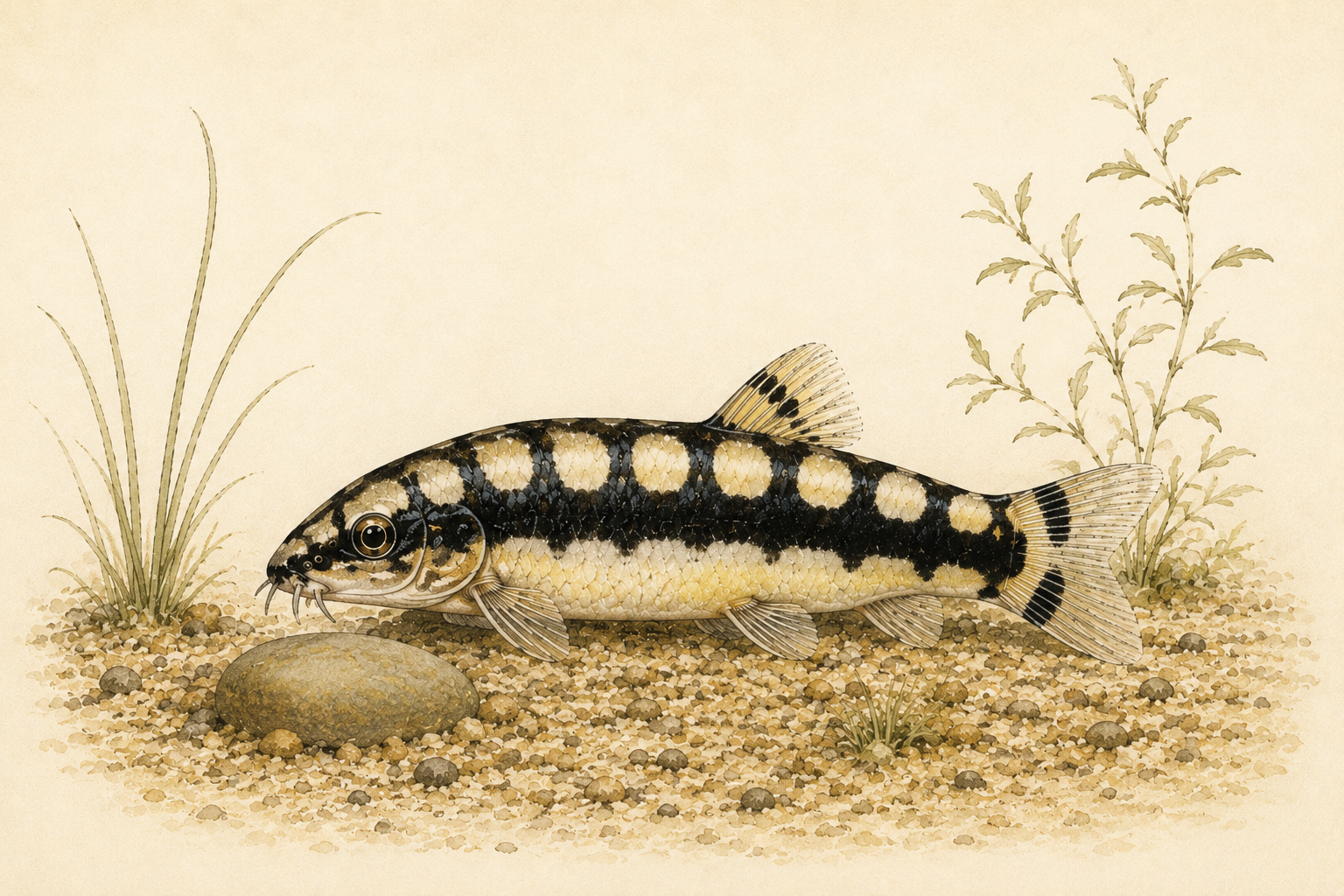
The Dwarf Chain Loach is an undeniably attractive fish, bearing a striking pattern that immediately catches the eye. Its body is elongated and somewhat laterally compressed, typical of the botiid loaches, though its proportions are more slender and streamlined than those of bulkier relatives such as the Clown Loach. The base body colour is a warm golden-yellow to pale cream, overlaid with a bold series of dark brown to black markings that form a chain-like or ladder-like pattern along the flanks. These dark bands extend from the dorsal surface partway down the body, often linking together along the lateral line to create the characteristic chain effect from which the common name derives.
The intensity and precise arrangement of the markings can vary between individuals and may shift subtly with the fish’s mood, health, and environment. When stressed or recently introduced to a new tank, the patterning may appear faded or washed out, but in settled, healthy specimens the contrast between the golden ground colour and the dark markings is vivid and appealing. The fins are generally translucent to pale yellow, sometimes showing faint banding, particularly on the caudal fin. The ventral surface is lighter, typically a clean cream or white.
Like all botiid loaches, Ambastaia sidthimunki possesses a suborbital spine beneath each eye, which can be erected as a defensive mechanism. This spine is small but sharp, and keepers should be aware of it when netting the fish, as it can become entangled in fine mesh. The mouth is subterminal and flanked by several pairs of short barbels, which the loach uses to probe the substrate for food. The eyes are relatively large for the body size, giving the fish an alert and inquisitive appearance that contributes greatly to its charm.
Sexing Dwarf Chain Loaches visually is challenging, particularly in juveniles. Mature females tend to be slightly fuller-bodied than males, especially when viewed from above, and gravid females may appear noticeably plumper around the belly. Males are often marginally more slender and may display slightly more intense colouration, though these differences are subtle and unreliable without direct comparison of several mature specimens.
Natural Habitat
Ambastaia sidthimunki is native to Southeast Asia, with its primary known range centred on the river basins of western and central Thailand, specifically the Mae Klong and upper Chao Phraya systems. Historical records also suggest a presence in parts of Laos and possibly Myanmar, though the extent of its distribution in these regions remains poorly documented. The species inhabits clear to slightly turbid streams and rivers with moderate flow, often in areas with substrates composed of sand, fine gravel, and smooth cobbles interspersed with submerged roots, fallen leaves, and aquatic vegetation.
In the wild, Dwarf Chain Loaches are typically found in relatively shallow waters where current is present but not torrential. They favour areas with abundant cover, including rocky crevices, tangles of driftwood, and root systems along riverbanks. The water in their native habitats is generally soft to moderately hard and slightly acidic to neutral in pH, with temperatures reflecting the tropical climate of the region. During the monsoon season, water levels rise significantly, and the fish may move into flooded marginal zones to take advantage of increased food availability and spawning opportunities.
The species faced significant population declines in Thailand during the latter decades of the twentieth century, primarily due to dam construction, agricultural development, and habitat degradation. At one point, it was considered extremely rare in the wild, and concern for its conservation status prompted efforts to breed it commercially. Fortunately, captive-breeding programmes, particularly in Thailand and other parts of Southeast Asia, have been successful, and the vast majority of specimens now available in the aquarium trade are captive-bred rather than wild-caught. This is a positive development both for the species’ conservation and for the hobbyist, as captive-bred fish tend to be hardier and more adaptable to aquarium conditions.
Tank Size and Setup
A minimum tank size of 75 litres is recommended for a small group of Dwarf Chain Loaches, though a larger aquarium of 100 litres or more is preferable and will allow the fish to exhibit a fuller range of natural behaviours. Because this species is highly social and must be kept in groups of at least six individuals—ideally eight to twelve or more—the tank should provide sufficient floor space and swimming room to accommodate the shoal comfortably. Longer tanks are generally better suited than tall or cube-shaped designs, as the loaches spend much of their time in the lower and middle portions of the water column and benefit from horizontal swimming space.
The substrate should be soft and smooth, as Dwarf Chain Loaches frequently forage by sifting through the bottom material with their sensitive barbels. Fine sand is the ideal choice, though smooth, rounded gravel of a small grain size is also acceptable. Avoid sharp or jagged substrates, which can damage the barbels and lead to infection. A natural-looking setup with a sand base scattered with smooth pebbles and cobbles will replicate the riverbed conditions the fish encounter in the wild.
Providing ample cover is essential. Driftwood, smooth rocks arranged to form caves and crevices, and dense plantings all serve to create the kind of complex environment in which these loaches thrive. They are particularly fond of squeezing into narrow gaps and resting in unexpected places, so a variety of hiding spots of different sizes is beneficial. Live plants are recommended, both for their aesthetic contribution and for the additional surfaces they provide for biofilm growth, which the loaches will graze upon. Hardy species such as Java Fern, Anubias, and Cryptocoryne are excellent choices, as they tolerate the water parameters that suit the loaches and are less likely to be uprooted. Floating plants can also be used to diffuse lighting, which the loaches appreciate, as excessively bright conditions may make them less willing to venture into the open.
A secure, well-fitting lid is advisable. While Dwarf Chain Loaches are not as notorious for jumping as some other loach species, they are agile and occasionally startle, particularly during the settling-in period or if water quality declines. Ensuring that there are no gaps around filter inlets, overflow pipes, or cable entries is a sensible precaution.
Water Parameters
Dwarf Chain Loaches are not the most demanding fish in terms of water chemistry, but they do require clean, stable conditions and are less tolerant of neglect than many commonly kept community species. They are sensitive to elevated nitrogenous waste, particularly ammonia and nitrite, and should only be introduced to a fully cycled aquarium. Consistency is key; sudden swings in temperature, pH, or hardness can cause stress and increase susceptibility to disease.
| Temperature | 24–28 °C |
| pH | 6.0–7.5 |
| General hardness (GH) | 2–12 dGH |
| Carbonate hardness (KH) | 1–8 dKH |
| Ammonia | 0 ppm |
| Nitrite | 0 ppm |
| Nitrate | Below 20 ppm |
Regular partial water changes of 20–30% per week are strongly recommended to maintain water quality and keep nitrate levels in check. When performing water changes, it is important to match the temperature and chemistry of the replacement water as closely as possible to the tank water to avoid shocking the fish. If your tap water is treated with chloramine rather than chlorine, ensure that an appropriate dechlorinator is used, as chloramine breakdown products include ammonia, which is directly harmful to loaches. Testing water parameters regularly, especially in the weeks following any changes to stocking or filtration, will help you catch potential problems before they affect the health of your fish.
Filtration and Equipment
Good filtration is a non-negotiable requirement for keeping Dwarf Chain Loaches in good health. These fish naturally inhabit flowing waters, so a filter that provides gentle to moderate current is both beneficial and appreciated. An external canister filter is an excellent choice for most setups, offering strong biological and mechanical filtration capacity along with adjustable flow rates. For smaller tanks, a high-quality hang-on-back filter or internal power filter can also work well, provided it is rated for the tank’s volume and maintained regularly.
Biological filtration capacity should be the primary consideration. Dwarf Chain Loaches are more sensitive to ammonia and nitrite than many commonly kept tropical fish, and a mature, well-colonised filter is the first line of defence against water quality issues. Supplementing the main filter with additional biological media, such as ceramic rings or sintered glass, housed in a secondary filter or a media reactor, can provide useful insurance in heavily stocked tanks. Pre-filter sponges fitted over filter inlets are recommended, as they prevent the small loaches—or any fry, should breeding occur—from being drawn into the filtration system, and they also provide an additional surface for beneficial bacteria and a grazing area for the fish themselves.
A reliable heater with a thermostat capable of maintaining a stable temperature within the recommended range is essential. Heater guards are a sensible addition, as loaches have been known to rest against heaters and may sustain burns if the glass is exposed. Lighting should be moderate; the fish are not demanding in this regard, but overly intense illumination without shaded areas can make them skittish. A standard LED aquarium light on a timer set for eight to ten hours per day, combined with floating plants or overhanging decor to create dappled shade, will produce a natural and comfortable environment.
An air pump and airstone, while not strictly necessary if filtration provides adequate surface agitation, can be useful for ensuring good oxygenation, particularly in warmer tanks where dissolved oxygen levels naturally decrease. Dwarf Chain Loaches appreciate well-oxygenated water, and a gentle stream of bubbles also adds visual interest and a subtle current for the fish to play in.
Diet and Feeding
Dwarf Chain Loaches are omnivorous and opportunistic feeders in the wild, consuming a varied diet of small invertebrates, insect larvae, worms, biofilm, algae, and organic detritus. In the aquarium, they should be offered a similarly diverse diet to ensure they receive all the nutrients necessary for good health and vibrant colouration. A high-quality sinking pellet or wafer designed for small bottom feeders makes an excellent staple, providing a balanced nutritional foundation.
This staple should be supplemented regularly with live or frozen foods such as bloodworm, daphnia, brine shrimp, tubifex, and mosquito larvae. These protein-rich items are eagerly accepted and help to condition the fish, promote healthy growth, and enhance colouration. Dwarf Chain Loaches are also well known for their appetite for small snails, and many keepers introduce them specifically as a biological control for pest snail populations. They will readily consume small Ramshorn snails, Malaysian Trumpet Snails, and bladder snails, crushing the shells with the pharyngeal teeth located in their throat. However, snails alone should not be relied upon as a primary food source.
Vegetable matter should also form a component of the diet. Blanched courgette, cucumber, spinach, and shelled peas are all accepted, though with varying enthusiasm depending on the individual fish. Algae wafers can also be offered occasionally. Feeding should take place once or twice daily, in quantities the fish can consume within a few minutes. It is important to ensure that food reaches the bottom of the tank, as more vigorous midwater feeders in a community setup can intercept sinking foods before the loaches have a chance to eat. Feeding just before or after lights-out can help ensure the loaches get their share, particularly in competitive community aquaria.
Behaviour and Temperament
The Dwarf Chain Loach is one of the most behaviourally engaging small fish available to aquarists. It is genuinely social and exhibits a complex repertoire of interactions with its conspecifics, ranging from playful chasing and gentle sparring to synchronised resting in tightly packed groups within favourite hiding spots. This is a species that absolutely must be kept in a group; solitary individuals or pairs often become withdrawn, stressed, and prone to illness. A minimum group of six is the accepted standard, but larger groups of eight, ten, or more are strongly encouraged, as the fish become noticeably more confident and display a wider range of natural behaviours when kept in greater numbers.
Within the group, a loose hierarchy will establish itself, and it is common to observe occasional bouts of chasing and posturing as individuals assert or maintain their position. This is entirely normal and rarely results in any harm, provided the group is large enough to diffuse aggression and the tank offers sufficient space and cover. A phenomenon sometimes described as “loach dancing” involves several individuals swimming together in rapid, spiralling patterns, often near the surface or along the tank glass. The precise function of this behaviour is not fully understood, but it appears to serve a social bonding or excitement-related purpose and is a sign of healthy, settled fish.
Unlike many loaches that are strictly crepuscular or nocturnal, the Dwarf Chain Loach is active throughout the day, making it a far more visible and rewarding aquarium inhabitant than some of its relatives. It is an inquisitive fish that will investigate every corner of the tank, perch on broad-leaved plants, wedge itself into narrow crevices, and occasionally rest in seemingly uncomfortable positions—lying on its side or even upside down, which can alarm new keepers but is perfectly normal behaviour for this species.
Towards other species, the Dwarf Chain Loach is generally peaceful and makes an excellent community fish. It may occasionally show mild interest in the fins of slow-moving, long-finned tank mates, but this is rarely a serious problem and is far less pronounced than in some of the larger botiid species. The loaches largely keep to themselves and their own social group, coexisting happily with a wide range of similarly sized, peaceful fish.
Tank Mates
The Dwarf Chain Loach’s peaceful nature and modest size make it compatible with a broad selection of community fish. The best tank mates are species that share similar water parameter requirements, are not aggressive or overly boisterous, and occupy different niches in the aquarium to minimise competition. Avoid housing them with large, predatory, or highly territorial species that may intimidate or harm the loaches.
Good tank mates
- Harlequin Rasbora — A gentle, shoaling species that occupies the middle water column and thrives in the same soft, slightly acidic conditions favoured by Dwarf Chain Loaches.
- Cherry Barb — A peaceful, colourful barb that is neither nippy nor competitive, making it an ideal midwater companion.
- Cardinal Tetra — A classic community fish with overlapping water parameter preferences and a calm temperament that complements the active loaches.
- Kuhli Loach — Another small, peaceful loach species that shares the bottom of the tank without conflict, adding diversity to the lower strata.
- Bristlenose Pleco — A placid algae eater that minds its own business and occupies a different feeding niche, making territorial disputes unlikely.
- Honey Gourami — A quiet, unassuming surface dweller that adds colour and interest to the upper levels without disturbing the loaches.
- Otocinclus — A small, inoffensive algae grazer that coexists peacefully and appreciates similar water quality standards.
- Corydoras sterbai — A robust, sociable bottom dweller that shares the loaches’ preference for a sandy substrate and gets along well in mixed groups.
- Ember Tetra — A tiny, peaceful tetra whose small size and gentle nature make it a safe and attractive companion.
- Amano Shrimp — Large enough to avoid predation by the loaches and an excellent clean-up crew member for planted community tanks.
Fish to avoid
- Oscar — A large, predatory cichlid that would view Dwarf Chain Loaches as food and requires vastly different tank conditions.
- Tiger Barb — A notoriously nippy species whose boisterous behaviour can stress the loaches, particularly at feeding time.
- Red Tail Black Shark — Highly territorial towards bottom-dwelling species and likely to bully or chase the loaches relentlessly.
- Jack Dempsey — An aggressive cichlid far too large and territorial to share space safely with small loaches.
- Green Terror — Another large, aggressive cichlid that poses a serious predation and aggression risk.
- Common Pleco — While not aggressive, it grows far too large for the tank sizes appropriate for Dwarf Chain Loaches and produces excessive waste.
- Chinese Algae Eater — Becomes increasingly aggressive and territorial with age and has been known to harass smaller tank mates.
- Flowerhorn — An extremely aggressive and territorial hybrid cichlid completely unsuitable for any community aquarium containing small species.
Breeding
Breeding Dwarf Chain Loaches in captivity is a challenging undertaking and remains relatively uncommon among hobbyists. The species is bred commercially, primarily in Southeast Asian fish farms, but the techniques used often involve hormonal induction, which is not easily replicated in the home aquarium. Nonetheless, understanding the basics of their reproductive biology is valuable for any keeper who wishes to attempt it or simply to appreciate the species more fully.
In the wild, spawning is thought to coincide with the onset of the monsoon season, when rising water levels, increased flow, cooler temperatures, and an influx of fresh, oxygen-rich water provide the cues that trigger reproductive behaviour. In captivity, simulating these conditions through large, cool water changes, increased current, and a period of reduced feeding followed by generous offerings of high-protein live foods may encourage spawning behaviour in well-conditioned adults. Maintaining a large group of healthy, mature specimens—ideally in a species-only setup or a dedicated breeding tank—improves the likelihood of natural spawning occurring.
When spawning does take place, the eggs are typically scattered over plants, rocks, or the substrate with little parental care. The adults are egg scatterers and will consume eggs and fry if given the opportunity, so removing the adults or the eggs promptly after spawning is essential. The eggs are small and adhesive, hatching within approximately 24 to 48 hours depending on temperature. The fry are tiny and will initially feed on their yolk sacs before requiring infusoria or similar microscopic food. As they grow, they can be transitioned to freshly hatched brine shrimp nauplii and finely crushed dry foods.
Given the difficulty of breeding this species without hormonal assistance, most hobbyists are content to enjoy their Dwarf Chain Loaches without expecting to produce offspring. For those determined to try, patience, meticulous attention to water quality, and a deep understanding of the species’ natural breeding triggers are prerequisites. Joining specialist loach forums and connecting with experienced breeders can provide invaluable guidance.
Common Diseases
Dwarf Chain Loaches are generally hardy when maintained in good conditions, but they do have some vulnerabilities that keepers should be aware of. Like all loaches, they are particularly susceptible to ich (white spot disease), caused by the protozoan parasite Ichthyophthirius multifiliis. This condition presents as small white cysts on the body, fins, and gills and can spread rapidly in an aquarium. The loaches’ lack of prominent scales means that they absorb medications more readily than fully scaled fish, so treatments should typically be applied at half the recommended dosage. Raising the water temperature gradually to around 30 °C and using a half-strength treatment of a copper-free ich remedy is the standard approach. Always read medication labels carefully and avoid any products containing copper, malachite green at full strength, or potassium permanganate, as loaches are highly sensitive to these substances.
Skinny disease, sometimes associated with internal parasites or bacterial infections, can occur in newly imported or poorly maintained specimens. Affected fish appear emaciated despite eating normally and may become lethargic. Treatment typically involves offering medicated food containing anti-parasitic or antibiotic agents, though a veterinary diagnosis is advisable to determine the specific cause. Quarantining all new fish for a minimum of two to four weeks before adding them to an established aquarium is the single most effective measure for preventing the introduction of disease.
Bacterial infections, including fin rot and skin ulcers, are usually secondary to poor water quality, physical injury, or stress. Maintaining excellent water parameters and providing a stress-free environment with adequate cover and appropriate social groupings is the best preventative strategy. Should an infection occur, improving water quality through increased water changes is always the first step, with antibiotic treatment reserved for cases that do not resolve on their own.
Loaches are also susceptible to an often-fatal condition sometimes called loach disease or skinny wasting disease, which may be linked to Mycobacterium infections. This is difficult to treat and highlights the importance of sourcing fish from reputable suppliers and quarantining new arrivals rigorously.
FAQs
How many Dwarf Chain Loaches should I keep together?
A minimum of six is recommended, but keeping eight to twelve or more is strongly encouraged. Dwarf Chain Loaches are highly social fish that derive a great deal of their confidence and well-being from group interactions. In small numbers, they tend to become shy, stressed, and more prone to health problems. Larger groups distribute any social tension more evenly and result in bolder, more active, and more visually engaging behaviour.
Will Dwarf Chain Loaches eat pest snails in my aquarium?
Yes, they are effective predators of small pest snails such as bladder snails, small Ramshorn snails, and Malaysian Trumpet Snails. They use their pharyngeal teeth to crush the shells and extract the soft body within. However, they should not be relied upon as the sole method of snail control in heavily infested tanks, and their diet should always be supplemented with other foods to ensure balanced nutrition. They are unlikely to tackle larger, harder-shelled snails such as adult Nerite snails or Mystery Snails.
Are Dwarf Chain Loaches safe to keep with shrimp?
This depends on the size of the shrimp. Larger species such as Amano Shrimp are generally safe, as they are too big for the loaches to predate upon. However, smaller shrimp species, including juvenile Cherry Shrimp and Neocaridina varieties, may be at risk, particularly small individuals and shrimplets. If you wish to maintain a breeding colony of small shrimp alongside Dwarf Chain Loaches, providing abundant plant cover and hiding spots for the shrimp is essential, though some losses should be expected.
Why is my Dwarf Chain Loach lying on its side?
Resting in unusual positions—on their sides, upside down, or wedged into tight spaces—is entirely normal behaviour for Dwarf Chain Loaches and many other botiid species. This can be alarming for new keepers who understandably assume the fish is unwell. As long as the loach is responsive when disturbed, eating normally, and showing no other signs of illness such as clamped fins, discolouration, or laboured breathing, this quirky resting posture is nothing to worry about and is simply part of the species’ charming personality.
Can Dwarf Chain Loaches be kept in a planted aquarium?
Absolutely. They are excellent inhabitants of planted tanks. Unlike some larger loach species that may uproot or damage plants, Dwarf Chain Loaches are small and gentle enough to coexist well with most aquatic plants. They will graze on biofilm that forms on plant surfaces, which can actually benefit plant health, and they appreciate the cover and shade that a well-planted aquarium provides. Hardy, well-rooted species such as Java Fern, Anubias, Vallisneria, and Cryptocoryne are particularly good choices for a Dwarf Chain Loach aquarium.
Related Guides
- Clown Loach Care Guide — A comprehensive guide to the Dwarf Chain Loach’s much larger and equally popular botiid relative, useful for understanding shared family traits and care considerations.
- Kuhli Loach Care Guide — Another small, peaceful loach species with similar care requirements that makes an excellent companion in community setups.
- Yoyo Loach Care Guide — A guide to a medium-sized botiid loach with overlapping habitat preferences and a similarly engaging personality.
- Corydoras sterbai Care Guide — A popular bottom-dwelling alternative with comparable tank requirements, helpful for those considering community options.
- Freshwater Aquarium Cycling Guide — Essential reading for any keeper preparing a tank for sensitive species like Dwarf Chain Loaches, covering the nitrogen cycle and safe stocking practices.