Rusty Cichlid Care Guide — Tank Setup, Feeding and Breeding
Introduction
The Rusty Cichlid, known scientifically as Iodotropheus sprengerae, is one of the most endearing and manageable mbuna species available in the freshwater aquarium hobby. First described by Oliver and Loiselle in 1972, this compact cichlid hails from the rocky shorelines of Lake Malawi in East Africa, where it inhabits the shallow, sediment-rich zones amongst boulders and rubble. Its common name derives from the distinctive rusty-brown to lavender-brown colouration that sets it apart from the more garishly coloured mbuna species, lending it a subtle, understated beauty that many aquarists find deeply appealing.
What makes the Rusty Cichlid particularly attractive to hobbyists is its relatively peaceful disposition compared to many of its mbuna cousins. While it is by no means a pushover, it lacks the intense aggression that characterises species such as Melanochromis auratus or Metriaclima lombardoi, making it an excellent entry point for aquarists venturing into the world of African Rift Lake cichlids for the first time. Its hardiness, willingness to breed in captivity, and modest space requirements further cement its reputation as one of the most beginner-friendly mbuna available.
Despite its relative ease of care, the Rusty Cichlid still demands respect in terms of water quality, diet, and social dynamics. Understanding its natural ecology and behavioural tendencies is essential for providing a captive environment in which it can truly thrive. This guide covers everything you need to know to keep Iodotropheus sprengerae healthy, content, and displaying its best colours in your home aquarium.
Quick Stats
| Scientific name | Iodotropheus sprengerae |
| Common names | Rusty Cichlid, Lavender Mbuna, Lavender Cichlid |
| Family | Cichlidae |
| Origin | Lake Malawi, East Africa (Boadzulu Island, Chinyankwazi Island, Chinyamwezi Island) |
| Adult size | 8–10 cm (3–4 inches) |
| Lifespan | 5–8 years |
| Difficulty | Easy |
| Breeding difficulty | Easy |
| Temperature | 24–28 °C |
| pH range | 7.5–8.6 |
| General hardness (GH) | 10–20 dGH |
| Carbonate hardness (KH) | 6–12 dKH |
| Minimum tank size | 150 litres |
| Conservation status | Least Concern (IUCN) |
Appearance
The Rusty Cichlid possesses a compact, moderately elongated body shape typical of the mbuna group. Adults generally reach between 8 and 10 centimetres in total length, with males tending to be slightly larger and more robust than females. The body is laterally compressed, with a rounded head profile and a terminal mouth equipped with small, closely spaced teeth adapted for scraping biofilm and algae from rocky surfaces.
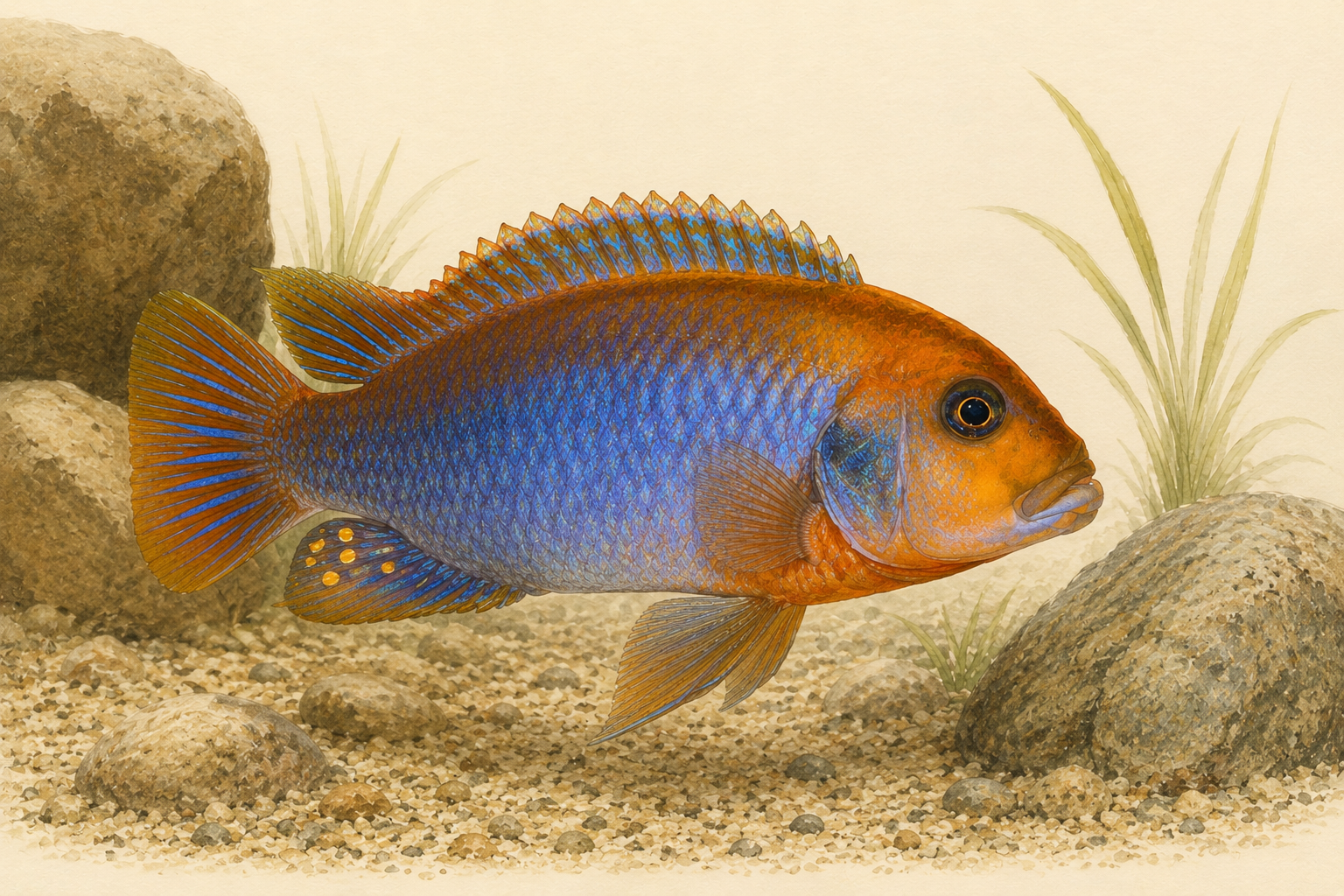
The hallmark of this species is its distinctive colouration, which ranges from a warm rusty brown to a rich lavender-brown across the flanks and body. The base colour is overlaid with a subtle purple or violet sheen, particularly noticeable under good aquarium lighting. Juvenile and subdominant fish often display a more muted, brownish tone, while dominant males develop a deeper, more saturated hue with enhanced purple iridescence. A series of faint vertical bars may be visible along the flanks, though these tend to appear and fade depending on the fish’s mood and social standing.
The dorsal fin is long and continuous, stretching from just behind the head to the caudal peduncle, and is edged with a thin line of pale blue or white in well-conditioned specimens. The anal fin of mature males typically displays one or more egg spots (ocelli), which play a role in the species’ mouthbrooding reproductive strategy. The pelvic and pectoral fins are generally translucent to lightly pigmented, and the caudal fin is rounded, contributing to the fish’s agile manoeuvrability among rocks.
Sexual dimorphism in this species is subtle compared to many other mbuna. Males tend to be marginally larger, exhibit slightly more intense colouration, and possess more prominent egg spots on the anal fin. However, the differences are not always immediately obvious, and venting remains the most reliable method of sexing Rusty Cichlids with certainty. Both sexes share the same general colour palette, which is unusual among mbuna, where males and females often look strikingly different.
Natural Habitat
Iodotropheus sprengerae is endemic to Lake Malawi, the ninth-largest lake in the world and one of the great African Rift Valley lakes. Its distribution within the lake is remarkably restricted, with populations centred around Boadzulu Island, Chinyankwazi Island, and Chinyamwezi Island in the southern portion of the lake, all within Mozambican and Malawian waters. This limited range is characteristic of many mbuna species, which tend to be highly localised due to their strong site fidelity and reluctance to cross open water.
In its natural environment, the Rusty Cichlid inhabits the upper reaches of the rocky littoral zone, typically at depths of between 1 and 15 metres. It favours areas where large boulders and rocky rubble meet patches of sediment, creating a complex three-dimensional habitat rich in biofilm, algae, and small invertebrates. Unlike some mbuna that are strictly bound to the rocky biotope, the Rusty Cichlid shows a degree of flexibility and can also be found in transitional zones where rock gives way to sand, foraging across a wider range of microhabitats.
Lake Malawi’s water is characteristically hard and alkaline, with a stable pH generally ranging between 7.7 and 8.6. The lake’s vast volume ensures remarkable temperature stability, typically hovering between 24 and 28 °C depending on depth and season. The water is exceptionally clear with minimal dissolved organic compounds, a condition that the Rusty Cichlid has evolved to expect and one that aquarists must strive to replicate. The lake’s mineral-rich waters provide the high levels of dissolved calcium and magnesium that are essential for the long-term health of all Malawi cichlids.
Tank Size and Setup
A minimum tank size of 150 litres is recommended for a small group of Rusty Cichlids, though a larger aquarium of 200 litres or more is preferable, particularly if you intend to keep them alongside other mbuna species. While the Rusty Cichlid is one of the smaller and more peaceful mbuna, it is still a territorial cichlid that requires adequate space to establish its own patch of the aquarium. Overstocking is a strategy commonly employed in mbuna tanks to spread aggression, but this approach demands a correspondingly larger tank and robust filtration to manage the increased bioload.
The ideal aquascape for Rusty Cichlids mimics the rocky biotope of Lake Malawi’s littoral zone. Stacked rocks, limestone, and ocean rock arranged to create an abundance of caves, crevices, and overhangs form the backbone of the setup. Each fish should have access to multiple hiding spots, as visual barriers play a crucial role in diffusing territorial disputes. Ensure that rock structures are stable and securely positioned, ideally resting on the tank base rather than on the substrate, to prevent collapse as the fish excavate around them.
A substrate of fine sand, ideally coral sand or aragonite, serves both an aesthetic and functional purpose. It replicates the natural lake bed, allows the cichlids to engage in their instinctive digging behaviours, and helps to buffer the water towards the alkaline pH range that these fish require. Live plants are generally not compatible with mbuna setups, as most species will uproot or consume them. However, hardy species such as Anubias or Java Fern attached to rocks may survive if the fish are well fed, though they are by no means necessary for the wellbeing of the fish.
Lighting can be moderate to strong. Good lighting encourages the growth of aufwuchs (the biofilm and algae coating on rocks), which provides a supplementary food source and enriches the environment. A secure, well-fitting lid is essential, as mbuna can be surprisingly athletic jumpers when startled or during moments of heightened aggression.
Water Parameters
Maintaining stable, appropriate water chemistry is fundamental to the long-term health of the Rusty Cichlid. Lake Malawi’s waters are hard and alkaline, and replicating these conditions in the aquarium is not optional but essential. Fortunately, many areas of the United Kingdom have naturally hard, alkaline tap water that requires minimal adjustment, making Malawi cichlids an excellent choice for hobbyists in these regions.
| Temperature | 24–28 °C |
| pH | 7.5–8.6 |
| General hardness (GH) | 10–20 dGH |
| Carbonate hardness (KH) | 6–12 dKH |
| Ammonia | 0 ppm |
| Nitrite | 0 ppm |
| Nitrate | Below 20 ppm |
Consistency is more important than hitting a precise number within these ranges. Sudden fluctuations in pH, temperature, or hardness are far more damaging than slightly suboptimal but stable conditions. Regular partial water changes of 25–30% per week are the single most effective tool for maintaining water quality and stability. If your local water supply is soft or acidic, the use of a Malawi salt mix or Rift Lake buffer is advisable to achieve and maintain the correct mineral content and pH.
Nitrate management deserves particular attention in mbuna tanks, which tend to be heavily stocked. While Rusty Cichlids are reasonably tolerant, chronic exposure to elevated nitrate levels above 40 ppm can lead to reduced immune function, poor colouration, and increased susceptibility to disease. A combination of regular water changes, adequate filtration, and careful feeding will keep nitrate levels well within safe limits.
Filtration and Equipment
Robust filtration is non-negotiable for any mbuna aquarium, and the Rusty Cichlid’s tank is no exception. A canister filter rated for at least 8 to 10 times the tank volume per hour provides the combination of mechanical, biological, and chemical filtration necessary to cope with the bioload of a well-stocked cichlid community. For a 200-litre tank, this means a filter with a turnover rate of approximately 1,600 to 2,000 litres per hour. Many experienced keepers supplement the main canister filter with an additional internal filter or sponge filter to provide extra biological filtration and a safety margin should the primary filter require servicing.
Adequate water movement is important, as Lake Malawi is a well-oxygenated body of water with gentle currents. The filter output, potentially supplemented by a powerhead or wavemaker, should create moderate flow throughout the tank without producing excessively turbulent conditions. Good surface agitation promotes gas exchange, ensuring high dissolved oxygen levels that these active fish demand.
A reliable heater with a thermostat is essential to maintain the temperature within the recommended range. In the United Kingdom, where ambient room temperatures can fluctuate considerably with the seasons, an appropriately rated heater ensures that the tank remains stable year-round. A heater guard is a wise investment, as mbuna are inquisitive and occasionally aggressive towards equipment, and direct contact with a hot heater element can cause burns.
An aquarium thermometer, ideally a digital model with a probe for accuracy, should be used to monitor temperature continuously. Regular testing of water parameters with a reliable liquid test kit is also recommended, particularly during the first few months after setup and following any changes to the tank’s inhabitants or maintenance routine.
Diet and Feeding
In the wild, the Rusty Cichlid is primarily an aufwuchs feeder, grazing on the biofilm of algae, diatoms, and tiny invertebrates that coats rocky surfaces. It also consumes small crustaceans, insect larvae, and other microorganisms found within the aufwuchs matrix. This diet places it in the omnivorous category, with a strong herbivorous leaning, an important distinction that must inform its captive diet.
A high-quality spirulina-based cichlid pellet or flake should form the staple of the Rusty Cichlid’s diet. Products specifically formulated for mbuna or herbivorous African cichlids are ideal, as they contain the appropriate balance of plant-based ingredients with moderate protein levels. Unlike some predatory or piscivorous cichlids, mbuna have relatively long intestinal tracts adapted for processing vegetable matter, and a diet excessively high in animal protein can lead to a dangerous condition known as Malawi bloat, which is discussed further in the Common Diseases section.
Supplementary foods can include blanched vegetables such as courgette, spinach, and peas, as well as occasional treats of frozen or live daphnia, brine shrimp, and cyclops. These protein-rich foods should be offered sparingly, perhaps once or twice a week, rather than as a daily staple. Avoid feeding mammalian-derived foods such as beefheart, as these contain fats that mbuna are poorly equipped to metabolise.
Feed small amounts two to three times per day rather than a single large feeding. Each feeding session should provide only as much food as the fish can consume within two to three minutes. This approach reduces waste, helps maintain water quality, and more closely mirrors the natural grazing behaviour of the species. Periodic fasting days, perhaps once per week, can also be beneficial and help to prevent the digestive issues to which mbuna are prone.
Behaviour and Temperament
The Rusty Cichlid is widely regarded as one of the more peaceable mbuna species, and this reputation is well deserved when compared to notoriously aggressive species such as Melanochromis chipokae or Pseudotropheus crabro. However, it is crucial to understand that “peaceful for a mbuna” does not equate to “peaceful” in the broader context of freshwater fishkeeping. The Rusty Cichlid is still a territorial cichlid that will defend its chosen patch of rockwork, chase subordinate individuals, and engage in occasional sparring matches. It simply does so with less intensity and persistence than many of its relatives.
Males establish and defend small territories among the rocks, using displays of flared fins, lateral posturing, and short chases to assert dominance. These interactions are generally ritualised rather than genuinely harmful, and injuries are uncommon in a well-designed tank with sufficient hiding places and visual barriers. Females and subordinate males form loose hierarchies and tend to occupy the spaces between and around dominant males’ territories.
Keeping Rusty Cichlids in a ratio of one male to two or three females is advisable, as this distributes the male’s courtship attention and reduces stress on any single female. In larger tanks, multiple males can coexist provided there are enough territories and females to go around. The practice of moderate overstocking, common in mbuna husbandry, helps to prevent any one individual from being singled out for persistent harassment, as aggression is diluted across a larger group.
The Rusty Cichlid is an active swimmer that spends much of its time foraging across rock surfaces, investigating crevices, and engaging in low-level social interactions with its tankmates. It is not a shy species and quickly becomes accustomed to the presence of its keeper, often approaching the front glass at feeding time. This bold, interactive nature is one of the qualities that makes mbuna in general, and the Rusty Cichlid in particular, so rewarding to keep.
Tank Mates
Selecting appropriate tank mates for the Rusty Cichlid requires an understanding of mbuna social dynamics. The best companions are other mbuna species of similar size and temperament that do not closely resemble the Rusty Cichlid in colour or pattern, as visual similarity can trigger heightened aggression. Mixing species that occupy slightly different ecological niches or microhabitats within the tank also helps to reduce direct competition and territorial conflict.
Good tank mates
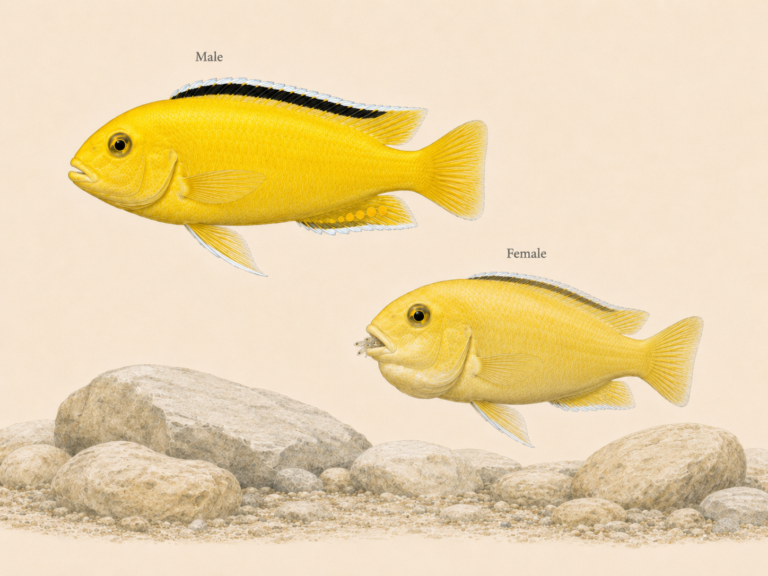
- Yellow Lab Cichlid (Labidochromis caeruleus) — One of the most peaceful mbuna, its bright yellow colouration contrasts with the Rusty Cichlid, reducing the likelihood of interspecific aggression.
- Acei Cichlid (Pseudotropheus acei) — A relatively docile, open-water mbuna that tends to occupy different areas of the tank and rarely competes directly for territory with rock-dwelling species.
- Red Zebra Cichlid (Maylandia estherae) — A moderately aggressive mbuna whose orange-red colour provides clear visual distinction, making peaceful coexistence more achievable.
- Bristlenose Pleco (Ancistrus sp.) — A hardy, armoured catfish that occupies a different ecological niche and is generally left alone by mbuna due to its tough exterior and nocturnal habits.
- Synodontis multipunctatus — A Lake Tanganyika catfish that adapts well to Malawi water parameters and adds interest to the lower levels of the tank without competing with mbuna for territory.
- Demasoni Cichlid (Pseudotropheus demasoni) — Although aggressive within its own species, its small size and distinctive blue-black barring mean it rarely conflicts with Rusty Cichlids when kept in adequate numbers.
- Cobalt Blue Zebra (Maylandia callainos) — Its solid blue colouration is visually distinct from the Rusty Cichlid, and it occupies a similar niche without typically causing excessive aggression.
- Lemon Jake Peacock (Aulonocara baenschi) — A mildly tempered Peacock cichlid that can coexist with less aggressive mbuna provided the tank is large enough and has open sandy areas.
Fish to avoid
- Auratus Cichlid (Melanochromis auratus) — Exceptionally aggressive, particularly dominant males, which will relentlessly bully and potentially kill the more placid Rusty Cichlid.
- Kenyi Cichlid (Metriaclima lombardoi) — A highly aggressive and dominant mbuna that will outcompete and harass Rusty Cichlids in most tank setups.
- Neon Tetra (Paracheirodon innesi) — A small, soft-water species completely incompatible with mbuna in terms of water parameters, temperament, and size, and would quickly be consumed or stressed to death.
- Oscar (Astronotus ocellatus) — A large, predatory South American cichlid requiring entirely different water chemistry and capable of eating smaller mbuna.
- Guppy (Poecilia reticulata) — Far too small and delicate to survive in an mbuna tank, where it would be subject to constant harassment and predation.
- Chipokae Cichlid (Melanochromis chipokae) — One of the most aggressive mbuna in the hobby, notorious for terrorising and killing tankmates, including peaceful species like the Rusty Cichlid.
- Discus (Symphysodon spp.) — Requires soft, acidic, warm water and a stress-free environment, making it wholly incompatible with the hard, alkaline, boisterous conditions of a mbuna tank.
- Bumblebee Cichlid (Pseudotropheus crabro) — A large and aggressive mbuna that can become highly territorial and will likely dominate or injure the smaller, gentler Rusty Cichlid.
Breeding
The Rusty Cichlid is a maternal mouthbrooder, and breeding in captivity is remarkably straightforward given appropriate conditions. In fact, many hobbyists find that their Rusty Cichlids breed without any deliberate intervention, a testament to the species’ adaptability and reproductive vigour. For those who wish to actively encourage breeding, providing optimal water quality, a varied diet, and a well-structured environment is usually all that is required.
Courtship begins with the dominant male intensifying his colouration and performing vigorous displays near his chosen spawning site, typically a flat rock surface or a shallow depression in the substrate. He will shake his body, spread his fins, and attempt to guide a receptive female to the spawning area. The female, once sufficiently enticed, deposits a small number of eggs on the substrate, immediately turning to collect them in her mouth. The male then presents his anal fin, adorned with egg spots, and as the female mouths at these spots, she takes in the male’s milt, fertilising the eggs within her buccal cavity.
A typical clutch consists of 10 to 30 eggs, though larger, more mature females may produce higher numbers. The female carries the developing eggs and fry in her mouth for approximately 18 to 21 days, during which time she does not eat. Her buccal cavity swells visibly, and she may appear withdrawn, spending more time in sheltered areas of the tank. It is important not to disturb or stress a holding female, as this may cause her to prematurely release or swallow the brood.
Once the fry are released, they are fully formed miniatures of the adults, typically measuring around 8 to 10 millimetres in length. They are immediately capable of feeding on finely crushed flake food, powdered spirulina, or commercially available fry food. In a community tank, fry survival rates are low due to predation by other inhabitants, so hobbyists aiming to raise significant numbers of young fish should either strip the eggs from the holding female after approximately two weeks or move the female to a separate breeding tank where she can release the fry in safety.
Growing out the fry is straightforward. They develop quickly when provided with clean water, frequent small feedings, and adequate space. Juvenile Rusty Cichlids begin to show their characteristic colouration within a few weeks and can reach sellable or rehomeable size within three to four months.
Common Diseases
The Rusty Cichlid is a generally robust species, but like all aquarium fish, it is susceptible to a range of health issues, many of which are directly related to suboptimal husbandry. Maintaining excellent water quality, providing an appropriate diet, and minimising stress through thoughtful tank design are the most effective preventative measures available.
Malawi bloat is perhaps the most significant disease concern for mbuna keepers. This condition, which manifests as severe abdominal swelling, lethargy, loss of appetite, and rapid breathing, is believed to be triggered by dietary factors, particularly the over-feeding of high-protein or fatty foods. It may involve an overgrowth of intestinal parasites or bacteria, and once symptoms become pronounced, it is often fatal. Prevention through proper diet is far more effective than any available treatment, though metronidazole administered in food or dissolved in water has shown some success in early-stage cases.
Ich (white spot disease), caused by the protozoan parasite Ichthyophthirius multifiliis, is another common ailment. It presents as small white spots on the body and fins, accompanied by flashing (rubbing against surfaces) and clamped fins. Treatment typically involves raising the water temperature to 28–30 °C and administering a copper-based or formalin-based medication, though care must be taken with dosing in hard, alkaline water. The Rusty Cichlid’s warm-water preferences mean that a slight temperature increase is well tolerated.
Fin rot, usually caused by bacterial infection following physical damage or stress, can occur in mbuna tanks where aggression leads to torn or bitten fins. Maintaining pristine water quality is often sufficient to resolve minor cases, but more severe infections may require treatment with a broad-spectrum antibacterial medication. Addressing the underlying cause of the aggression, whether it be overcrowding, insufficient hiding places, or an incompatible tankmate, is equally important.
Swim bladder disorders, while less common, can occasionally affect Rusty Cichlids. Affected fish may swim erratically, float at the surface, or sink to the bottom. Causes range from dietary issues (constipation, swallowed air) to bacterial infections. Fasting the affected fish for 24 to 48 hours and then offering easily digestible food such as blanched deshelled peas can help resolve diet-related cases.
FAQs
How many Rusty Cichlids should I keep together?
A group of at least six individuals is recommended, ideally comprising one or two males and the remainder females. This ratio reduces male-on-female harassment and ensures aggression is spread across the group. In tanks of 200 litres or more, larger groups of eight to twelve fish create a more natural, dynamic social environment and further dilute aggressive tendencies. Keeping a single specimen or a pair is not advisable, as isolated individuals or pairs tend to display more stressed and unnatural behaviours.
Can Rusty Cichlids be kept with Peacock Cichlids?
Yes, Rusty Cichlids can coexist with many Peacock Cichlid (Aulonocara) species, provided the tank is sufficiently large and well-structured. The Rusty Cichlid’s relatively mild temperament makes it one of the more suitable mbuna for mixed mbuna-Peacock setups. However, it is important to choose Peacock species that are not excessively timid and to ensure the tank includes both open sandy areas favoured by Peacocks and rocky zones preferred by the Rusty Cichlid. A tank of at least 300 litres is recommended for such mixed communities.
Do Rusty Cichlids need a sandy substrate?
While a sandy substrate is not strictly essential, it is strongly recommended. Sand allows the Rusty Cichlid to engage in natural digging and sifting behaviours, and coral sand or aragonite substrate has the added benefit of buffering the water towards the alkaline pH that these fish require. Gravel can be used but poses a risk of trapping debris and may lead to localised water quality issues if not maintained diligently. Bare-bottom tanks are functional but aesthetically unappealing and do not provide the same opportunities for natural behaviour.
Why is my Rusty Cichlid not eating?
Loss of appetite in Rusty Cichlids can have several causes. Females holding eggs or fry in their mouths will not eat for up to three weeks, and this is entirely normal. Stress from aggressive tankmates, recent introduction to a new tank, or poor water quality can also suppress appetite. If a non-holding fish refuses food for more than a few days, test your water parameters immediately and observe the fish carefully for signs of illness such as bloating, rapid breathing, or unusual behaviour. Early intervention is critical if disease is suspected.
How can I tell if my Rusty Cichlid is male or female?
Sexing Rusty Cichlids by external appearance alone is challenging, as both sexes share very similar colouration. Males tend to be marginally larger, may display slightly more intense colour saturation, and typically show more prominent egg spots on the anal fin. However, these differences are subtle and unreliable in younger fish. The most definitive method is venting, which involves gently examining the genital papilla. Males have two small openings of similar size, while females have one smaller opening and one larger, more rounded opening. If you are unfamiliar with this technique, seek guidance from an experienced aquarist to avoid stressing or injuring the fish.
Related Guides
- Yellow Lab Cichlid (Labidochromis caeruleus) Care Guide — Another peaceful mbuna species that makes an excellent companion for the Rusty Cichlid and a superb choice for beginners to Malawi cichlid keeping.
- Acei Cichlid (Pseudotropheus acei) Care Guide — A mid-water mbuna with a gentle disposition that pairs well with Rusty Cichlids in community setups.
- Lake Malawi Cichlid Tank Setup Guide — A comprehensive guide to designing and equipping the perfect Malawi biotope aquarium for mbuna and other Rift Lake species.
- Demasoni Cichlid (Pseudotropheus demasoni) Care Guide — A strikingly coloured dwarf mbuna that can coexist with Rusty Cichlids in appropriately sized and stocked aquaria.
- Malawi Bloat Prevention and Treatment Guide — Essential reading for any mbuna keeper, covering the dietary and environmental factors that contribute to this serious condition.