Elephantnose Fish Care Guide — Tank Setup, Feeding and Breeding
Introduction
The Elephantnose Fish, known scientifically as Gnathonemus petersii, is one of the most extraordinary freshwater species available to the home aquarist. Instantly recognisable by its elongated, trunk-like chin appendage — technically called a Schnauzenorgan — this West African native belongs to the family Mormyridae, a group of weakly electric fish that navigate and communicate using self-generated electric fields. Watching an Elephantnose probe the substrate with its sensitive “nose” in search of buried food is a genuinely captivating experience, and it is this unique behaviour that has cemented the species’ popularity in the aquarium hobby for decades.
Despite its enduring appeal, the Elephantnose Fish is not a beginner’s species. It demands excellent water quality, a carefully structured environment, and a diet that caters to its specialised feeding habits. Its electric organ discharge, used both for electrolocation and social signalling, adds an additional layer of complexity when it comes to choosing tank mates and managing group dynamics. However, for the experienced aquarist willing to meet its requirements, Gnathonemus petersii rewards with fascinating behaviour, a calm and inquisitive personality, and a presence unlike anything else in a freshwater aquarium. This guide covers everything you need to know to provide outstanding care for this remarkable fish.
Quick Stats
| Scientific name | Gnathonemus petersii |
| Common names | Elephantnose Fish, Peter’s Elephantnose Fish, Long-nosed Elephant Fish, Elephant Fish |
| Family | Mormyridae |
| Origin | West and Central Africa — Nigeria, Cameroon, Democratic Republic of the Congo, and surrounding river systems |
| Adult size | 20–25 cm (8–10 inches) |
| Lifespan | 7–10 years (occasionally longer in optimal conditions) |
| Difficulty | Difficult |
| Breeding difficulty | Expert |
| Temperature | 24–28 °C |
| pH range | 6.0–7.5 |
| General hardness (GH) | 5–15 dGH |
| Carbonate hardness (KH) | 2–10 dKH |
| Minimum tank size | 200 litres |
| Conservation status | Least Concern (IUCN) |
Appearance
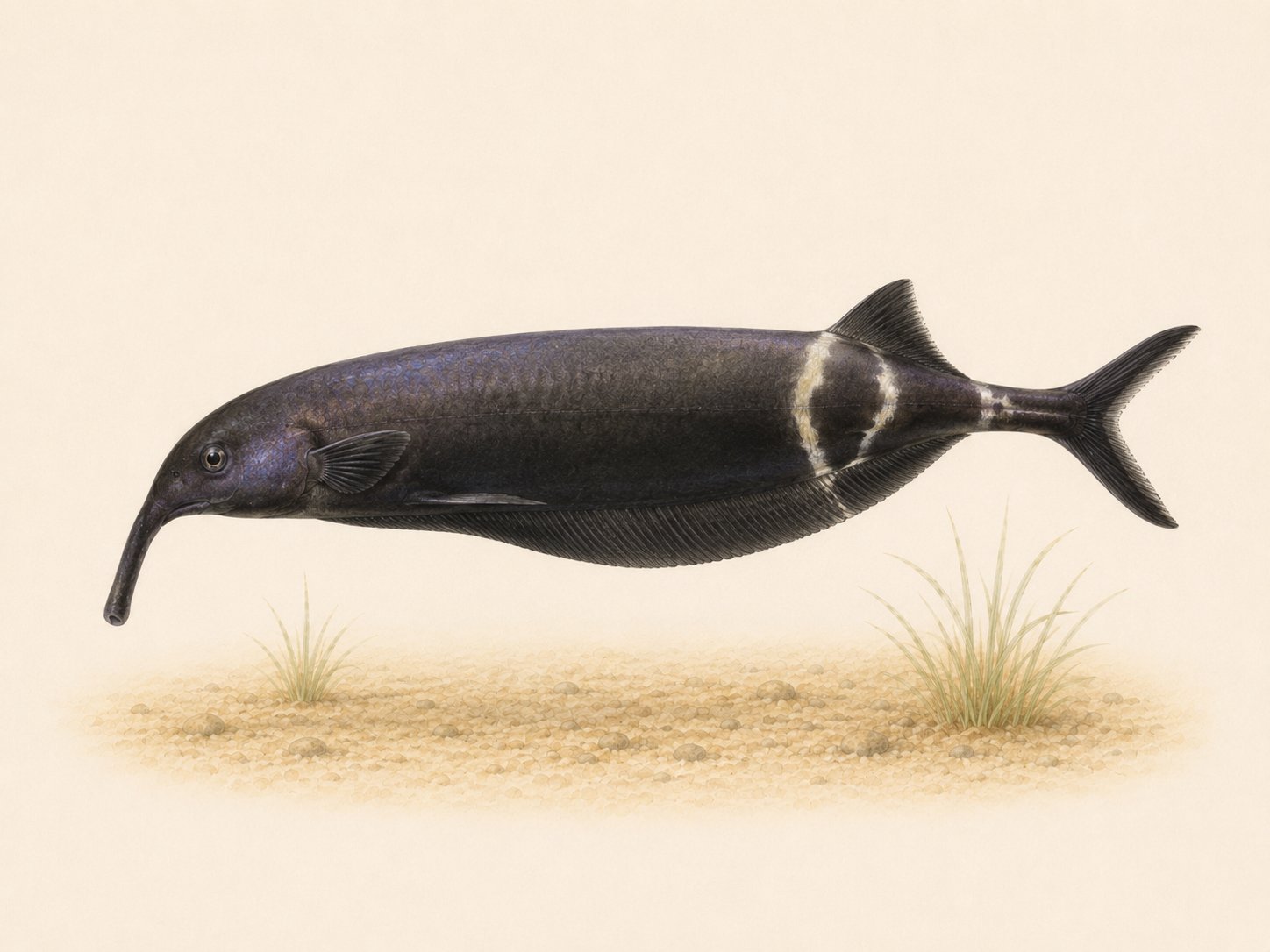
The most striking feature of Gnathonemus petersii is, of course, the elongated chin extension from which its common name derives. This fleshy, finger-like appendage is densely packed with electroreceptors and is used to probe the substrate in search of insect larvae and other small invertebrates. It is not actually a nose or a trunk in the mammalian sense but rather a modified lower jaw structure, and it gives the fish a profile quite unlike any other freshwater species.
The body itself is laterally compressed and somewhat torpedo-shaped, tapering toward a narrow caudal peduncle before flaring into a distinctly forked tail. The dorsal and anal fins are positioned far back on the body, sitting almost symmetrically opposite one another, and both are used in a rippling, undulating motion that allows the fish to hover and manoeuvre with remarkable precision. This fin arrangement is characteristic of the Mormyridae and contributes to the species’ unusually agile swimming style, including the ability to swim backwards with ease.
In terms of colouration, the Elephantnose is understated but elegant. The body is a uniform dark brown to charcoal grey, often appearing almost black under subdued lighting. Two pale, cream-coloured vertical bands run between the dorsal and anal fins, creating a subtle but attractive contrast. The skin has a velvety, almost matte texture, and the small eyes can be surprisingly reflective when light catches them. Adults typically reach 20 to 25 centimetres in the aquarium, though wild specimens have been recorded slightly larger. There is no reliable external method for distinguishing males from females, which is one of several factors that makes breeding so challenging.
Natural Habitat
In the wild, Gnathonemus petersii inhabits slow-moving rivers, tributaries, and floodplain pools across a broad swathe of West and Central Africa. Its range extends from the Niger and Cross River basins in Nigeria and Cameroon through to the Ogun River and into parts of the Congo River system in the Democratic Republic of the Congo. These waterways are typically characterised by turbid, dark-stained water, soft substrates of mud and fine sand, and dense accumulations of submerged wood, fallen branches, and leaf litter.
The murky conditions in these habitats are central to understanding the Elephantnose’s biology. With visibility often extremely limited, the species relies not on sight but on its weakly electric organ — located near the caudal peduncle — to build a detailed electrosensory picture of its surroundings. The electric organ discharge creates a field around the fish’s body, and distortions in this field caused by nearby objects, other fish, or prey items are detected by the electroreceptors concentrated in the Schnauzenorgan. This system is exquisitely sensitive and allows the fish to feed, navigate complex root tangles, and communicate with conspecifics even in total darkness.
The water in these habitats tends to be warm, slightly acidic to neutral, and soft to moderately hard. Dissolved tannins from decaying organic matter stain the water brown and further reduce light penetration. The Elephantnose is primarily nocturnal or crepuscular, becoming most active during dusk and dawn, and spends daylight hours sheltering in dense cover. Replicating these conditions as closely as possible in the aquarium is the foundation of good Elephantnose care.
Tank Size and Setup
A single Elephantnose Fish requires a tank of at least 200 litres, though 250 litres or more is strongly recommended. If you intend to keep a small group — which can work well but requires careful management — you should be looking at 400 litres as a minimum, with additional volume for each extra individual. These are active fish that need room to establish territories and forage naturally, and cramped conditions will lead to stress, aggression, and ultimately poor health.
The aquascape should prioritise cover above all else. Elephantnose Fish are shy, nocturnal animals that spend much of their time hidden, and they will be visibly stressed in a sparsely decorated tank. Use a combination of driftwood, bogwood, smooth rocks, and dense plantings to create numerous hiding spots, tunnels, and visual barriers. PVC pipes and ceramic tubes are widely used by experienced keepers as supplementary shelters and are readily accepted by the fish. Each individual should have access to at least one dedicated retreat that it can call its own, as territorial disputes over hiding places are a common source of conflict.
The substrate is particularly important for this species. The Schnauzenorgan is a delicate structure, and coarse gravel or sharp-edged substrates can cause damage and abrasion. Fine, smooth sand — such as play sand or purpose-made aquarium sand — is the ideal choice. The fish will spend considerable time probing and sifting through the substrate in search of food, and watching this natural behaviour is one of the great pleasures of keeping the species.
Lighting should be kept subdued. The Elephantnose is naturally adapted to dark, turbid waters, and bright illumination will cause it to hide constantly and may suppress feeding. Floating plants such as Salvinia, Pistia, or Amazon frogbit are excellent for diffusing light from above. If your tank’s planted inhabitants require stronger lighting, ensure there are deeply shaded areas where the Elephantnose can retreat. Many keepers find that the addition of Indian almond leaves or other botanical materials, which release tannins and tint the water a natural amber-brown, helps to replicate the fish’s native conditions and encourages bolder behaviour.
Water Parameters
Maintaining stable, high-quality water is non-negotiable with Gnathonemus petersii. This species is notably sensitive to dissolved waste products and fluctuations in water chemistry, and it is often one of the first inhabitants in a tank to show signs of stress when conditions deteriorate. The table below outlines the target ranges.
| Temperature | 24–28 °C |
| pH | 6.0–7.5 |
| General hardness (GH) | 5–15 dGH |
| Carbonate hardness (KH) | 2–10 dKH |
| Ammonia | 0 ppm |
| Nitrite | 0 ppm |
| Nitrate | Below 20 ppm |
The Elephantnose Fish is often described as a “canary in the coal mine” for water quality, and this reputation is well earned. Even modest spikes in ammonia or nitrite can provoke a stress response, and chronically elevated nitrate levels will weaken the fish’s immune system and leave it vulnerable to opportunistic infections. Aim to keep nitrate below 20 ppm at all times through regular partial water changes — typically 25 to 30 per cent weekly — and ensure that new water is dechlorinated and matched closely in temperature and chemistry to the tank water. Sudden changes in pH or hardness can be just as damaging as poor water quality itself.
A slightly acidic to neutral pH in the range of 6.5 to 7.0 tends to produce the best results, though the species will tolerate mildly alkaline conditions provided they remain stable. Soft to moderately hard water is preferred, and the use of tannin-releasing botanicals can help to naturally buffer the pH toward the lower end of the range while also providing a more authentic environment.
Filtration and Equipment
Given the Elephantnose’s sensitivity to water quality, robust filtration is essential. A high-quality canister filter rated for at least one and a half times the total tank volume is a sensible starting point, and many experienced keepers pair a canister with a secondary sponge filter for redundancy and additional biological capacity. The filter should provide thorough mechanical, biological, and — optionally — chemical filtration, with media such as ceramic rings, sintered glass, and filter floss forming the core of the system.
Flow rate is something to consider carefully. While Gnathonemus petersii does not inhabit torrential rapids, it does appreciate a gentle to moderate current that ensures good oxygenation and prevents dead spots where waste can accumulate. Avoid directing strong flow across the fish’s preferred resting areas, as this will discourage it from using its shelters and increase stress. Adjustable spray bars or lily pipes can help to distribute flow evenly without creating excessive turbulence.
An important note regarding the Elephantnose’s electric organ: the species is sensitive to stray electrical currents in the water. Faulty or poorly earthed equipment can generate low-level electrical fields that interfere with the fish’s electrolocation system, causing chronic stress and erratic behaviour. Always ensure that heaters, powerheads, and other submersible equipment are in good working order and properly grounded. Some keepers use an aquarium earth probe as an additional precaution, though this is not strictly necessary if equipment is well maintained.
A reliable, adjustable heater capable of maintaining the temperature within the recommended range is obviously essential. In larger tanks, two smaller heaters positioned at opposite ends of the aquarium provide more even heat distribution and offer a safety net in the event of a failure. A thermometer — ideally a digital model — should be used to verify the temperature regularly.
Diet and Feeding
Feeding is one of the most critical aspects of Elephantnose care and one of the areas where novice keepers most commonly encounter difficulty. Gnathonemus petersii is primarily an insectivore and benthic feeder in the wild, using its Schnauzenorgan to detect and extract chironomid larvae (bloodworm), small worms, and other invertebrates from the substrate. In captivity, it can be reluctant to accept dried or processed foods, and a varied diet of high-quality live and frozen offerings should be considered a requirement rather than a luxury.
Frozen bloodworm is the staple food for most captive Elephantnose Fish and is usually accepted readily. This should be supplemented with frozen or live tubifex worms, blackworms, daphnia, brine shrimp, and mosquito larvae to provide nutritional variety. Live blackworms in particular are an outstanding food item, as they burrow into the sand substrate and allow the fish to exhibit its natural foraging behaviour — rooting through the sand with its Schnauzenorgan and plucking out individual worms. This enrichment is highly beneficial for the fish’s physical and psychological well-being.
Some individuals can eventually be trained to accept high-quality sinking pellets or granules, particularly those designed for bottom-feeding carnivores, but this should never be relied upon as the sole diet. The transition to prepared foods requires patience, often taking weeks of gradual introduction alongside preferred live and frozen items. Even fish that do accept pellets should continue to receive regular servings of frozen or live invertebrates.
Feeding should ideally take place in the evening or shortly after lights-out, aligning with the fish’s naturally crepuscular to nocturnal activity pattern. In community tanks, it is essential to ensure that the Elephantnose is actually getting its share of food, as its slow, methodical feeding style means it can easily be outcompeted by faster, more aggressive feeders. Using a feeding dish or target-feeding with a pipette or turkey baster can help to ensure adequate food intake.
Behaviour and Temperament
The Elephantnose Fish is a gentle, intelligent, and endlessly fascinating species to observe. It is predominantly nocturnal, spending daylight hours tucked away in its chosen hiding spot and emerging at dusk to forage across the substrate. Once settled into a tank and confident in its environment, however, many individuals become bolder over time and may venture out during the day, particularly at feeding time. This is a species that develops genuine trust with its keeper, and long-term owners frequently report that their Elephantnose recognises them and responds to their presence near the tank.
The electric organ discharge is central to the Elephantnose’s behavioural repertoire. The fish produces a continuous stream of weak electrical pulses, and variations in the rate, pattern, and intensity of these pulses convey information about the individual’s identity, mood, and intent. In a group setting, this electrical communication becomes particularly complex, and it is possible to monitor these signals using specialised equipment — a hobby within a hobby for some dedicated enthusiasts.
Conspecific aggression is the primary behavioural challenge with this species. In the wild, Elephantnose Fish are loosely social but maintain individual territories, and this tendency carries over into the aquarium. Keeping a single specimen is the simplest approach and avoids territorial conflicts entirely. Groups can work, but the dynamics are unpredictable. A pair is generally the worst configuration, as a dominant individual will often relentlessly harass the subordinate. Groups of five or more, in a suitably large and well-structured tank, tend to diffuse aggression more effectively, as no single individual bears the brunt of territorial behaviour. Regardless of group size, providing abundant hiding places and visual barriers is absolutely essential.
Toward other species, the Elephantnose is overwhelmingly peaceful. It is not predatory in any meaningful sense — its tiny mouth limits it to very small food items — and it will rarely initiate conflict with tank mates. Its main vulnerability is that its gentle, slow-feeding nature makes it susceptible to being bullied or outcompeted by more boisterous species.
Tank Mates
Choosing tank mates for the Elephantnose Fish requires careful thought. The ideal companions are peaceful, similarly sized species that will not outcompete the Elephantnose for food or harass it, and that thrive in the same warm, soft, dimly lit conditions. Avoid housing Gnathonemus petersii with other mormyrids unless the tank is very large and extensively structured, as electric signal interference and territorial competition between related species can cause significant stress.
Good tank mates
- Congo Tetra — A peaceful, mid-water schooling fish from the same geographical region that thrives in identical water conditions and does not compete for food at the substrate level.
- Kribensis — A calm West African cichlid that generally occupies different areas of the tank and coexists well, provided it is not actively breeding and defending a cave.
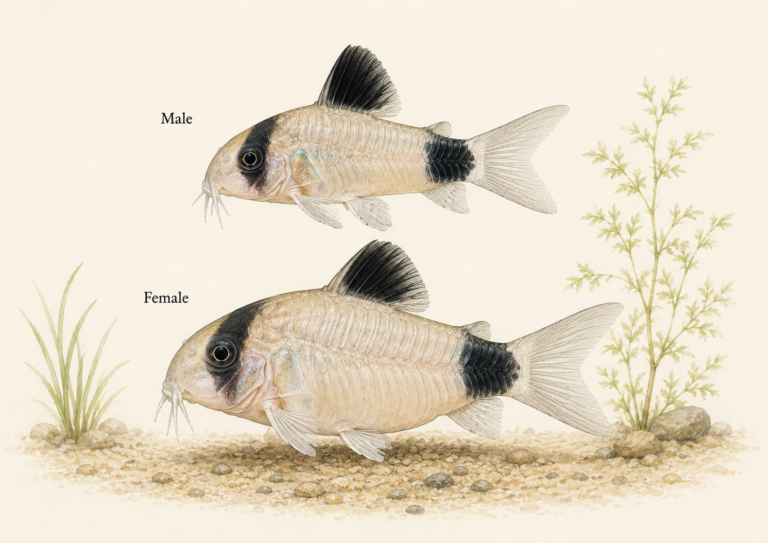
- Corydoras Catfish — Gentle bottom dwellers that share the Elephantnose’s preference for soft sand substrate and are too peaceful to cause any conflict.
- Bristlenose Pleco — A quiet, algae-grazing catfish that stays out of the Elephantnose’s way and poses no competitive or territorial threat.
- Hatchetfish — Strict surface dwellers that occupy a completely different zone of the aquarium and thrive in the same warm, soft water.
- Rummy-nose Tetra — A peaceable schooling species that prefers warm, soft water and is too small and mid-water-focused to interfere with the Elephantnose.
- Pearl Gourami — A calm, elegant labyrinth fish that tolerates subdued lighting and shares a preference for well-planted tanks with gentle flow.
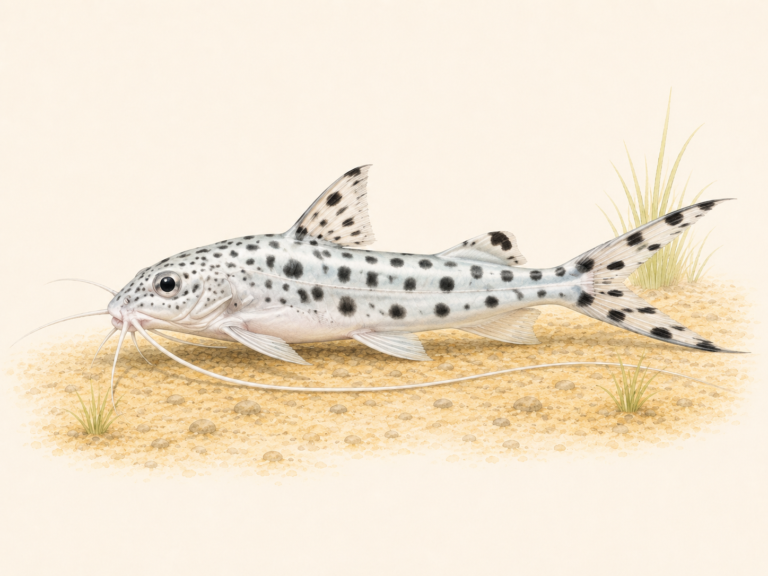
- Synodontis Catfish — Many species of Synodontis are compatible, being peaceful African catfish that coexist well in large, well-decorated tanks.
Fish to avoid
- Tiger Barb — A notorious fin nipper that will harass the slow-moving Elephantnose and cause chronic stress and physical damage.
- Oscar — A large, aggressive predatory cichlid that will bully, injure, or potentially consume the Elephantnose.
- Chinese Algae Eater — Becomes increasingly territorial and aggressive with age and may latch onto the Elephantnose’s body, damaging its delicate skin.
- Betta — Although not aggressive toward tank mates in all cases, the slow current and warm water overlap can lead to competition, and the Betta’s territorial nature is a risk in smaller setups.
- African Rift Lake Cichlids — These species require hard, alkaline water and exhibit high levels of aggression, making them wholly incompatible in both temperament and water chemistry.
- Red-tail Shark — A territorial bottom dweller that will aggressively defend its domain and may persistently chase the Elephantnose away from feeding areas.
- Jack Dempsey — A large, pugnacious cichlid whose aggression and size make it a dangerous companion for the timid Elephantnose.
- Baby Whale Fish — Another mormyrid species whose electric field overlaps and interferes with that of the Elephantnose, causing stress and aggression in confined spaces.
Breeding
Breeding Gnathonemus petersii in captivity is extraordinarily rare and has been achieved only a handful of times under controlled conditions, typically in public aquaria or dedicated research facilities rather than home aquariums. The species is classified as expert-level in terms of breeding difficulty, and the vast majority of specimens in the trade are wild-caught.
One of the fundamental obstacles is the absence of reliable sexual dimorphism. Males and females are virtually indistinguishable by external appearance, and even subtle differences in body shape or anal fin morphology reported in some literature are not consistent enough to serve as dependable indicators. Obtaining a breeding pair therefore requires either a large group from which natural pairing can occur, or the use of advanced techniques such as analysing the characteristics of each individual’s electric organ discharge, which differs subtly between sexes.
In the few documented successful spawnings, the fish were maintained in very large, dimly lit aquaria with soft, acidic water and an abundance of fine-leaved vegetation or spawning mops. Water temperature was raised slightly, and heavy feeding with live foods preceded spawning activity. The eggs are small, semi-buoyant, and were scattered among vegetation. Parental care is absent, and the eggs and fry are extremely delicate, requiring pristine water quality and microscopic live foods such as infusoria and newly hatched brine shrimp nauplii in their earliest stages.
For the home aquarist, the realistic expectation is that breeding will not occur. This is not a reflection of poor husbandry but simply a recognition of the species’ reproductive biology, which appears to require environmental cues — perhaps related to seasonal flooding, water chemistry changes, or other factors — that are exceptionally difficult to replicate in captivity. Efforts should instead be focused on providing the best possible quality of life for the fish you keep.
Common Diseases
The Elephantnose Fish is, unfortunately, more susceptible to certain diseases than many of its potential tank mates, owing largely to its lack of scales and its exceptional sensitivity to environmental stressors. Prevention through excellent water quality and a nutritious diet is always vastly preferable to treatment, as the species tolerates many common aquarium medications poorly.
White spot disease, caused by the parasite Ichthyophthirius multifiliis, is one of the most frequently encountered illnesses. The Elephantnose’s scaleless skin makes it particularly vulnerable to infestation, and the early signs — tiny white spots resembling grains of salt, along with flashing, rubbing against surfaces, and lethargy — should be acted upon immediately. Treatment is complicated by the fact that many commercial ich medications contain copper or malachite green, both of which are toxic to scaleless fish at standard doses. Half-dose treatments, or the use of heat therapy (gradually raising the temperature to 30 °C over 48 hours while increasing aeration), are generally safer approaches. Always consult species-specific treatment guidelines before medicating.
Skin infections — both bacterial and fungal — are another common concern. The delicate, scaleless skin is easily damaged by rough substrates, aggressive tank mates, or poor handling during transport, and any wound can quickly become a site for secondary infection. Maintaining pristine water quality and a smooth sand substrate goes a long way toward preventing these problems. If a skin infection does develop, broad-spectrum antibacterial treatments that are safe for scaleless fish should be used, and the affected individual may benefit from isolation in a hospital tank to allow closer monitoring and more targeted care.
Internal parasites can be an issue, particularly in newly imported wild-caught specimens. Symptoms such as weight loss despite apparently normal feeding, hollow belly, or stringy white faeces may indicate a parasitic infestation. Quarantining new arrivals for a minimum of two to four weeks is strongly advisable, and prophylactic treatment with an anti-parasitic food or medication during this period is common practice among experienced keepers.
Stress-related conditions are arguably the most pervasive health concern with this species. An Elephantnose that is kept in overly bright conditions, harassed by tank mates, unable to find adequate hiding spots, or subjected to fluctuating water parameters will be chronically stressed. Chronic stress suppresses the immune system and opens the door to all of the diseases described above. The best medicine for the Elephantnose Fish is a well-maintained, thoughtfully designed aquarium that caters to its specific needs.
FAQs
Can I keep an Elephantnose Fish in a community tank?
Yes, the Elephantnose Fish can be kept in a community aquarium, but the community must be chosen with care. Tank mates should be peaceful, not overly boisterous at feeding time, and comfortable in the same warm, soft, dimly lit conditions that the Elephantnose requires. Avoid fin nippers, large aggressive cichlids, and other mormyrid species. Ensure the tank is large enough to accommodate all inhabitants comfortably and that the Elephantnose has dedicated hiding places where it can retreat undisturbed.
Why does my Elephantnose Fish hide all day?
This is entirely normal behaviour for a crepuscular to nocturnal species. In the wild, the Elephantnose spends daylight hours concealed among roots and leaf litter, emerging to forage at dusk. If your fish is hiding consistently and refusing to come out even at feeding time, it may be excessively stressed — check that the lighting is not too bright, that hiding places are plentiful, and that no tank mates are causing intimidation. Over time, many individuals become bolder, particularly if they associate your presence with food.
Do Elephantnose Fish produce an electric shock?
No. The Elephantnose Fish generates only very weak electrical pulses — typically less than one volt — that are used for navigation, detecting prey, and communicating with other individuals. These pulses are far too feeble to be felt by a human hand in the water. The species is classified as a weakly electric fish and is in no way dangerous to its keeper or to other tank inhabitants.
How do I know if my Elephantnose Fish is eating enough?
A healthy, well-fed Elephantnose should have a gently rounded belly and maintain its body condition over time. A sunken or concave belly is a clear sign of underfeeding or internal parasites and should be addressed promptly. Because these fish feed slowly and methodically, they are easily outcompeted in busy community tanks. Feeding after lights-out, using a feeding dish placed near the fish’s shelter, or target-feeding with a pipette are effective strategies for ensuring adequate food intake.
Can I keep more than one Elephantnose Fish together?
Keeping multiple Elephantnose Fish is possible but requires a large, well-structured tank with numerous hiding places and visual barriers. Pairs should generally be avoided, as a dominant individual will often harass the subordinate relentlessly. Groups of five or more in a tank of 400 litres or larger tend to work better, as aggression is distributed more evenly and no single fish is singled out. Monitor the group carefully, especially in the weeks following introduction, and be prepared to separate individuals if persistent bullying occurs.
Related Guides
- Congo Tetra Care Guide — An ideal mid-water companion from the same West African habitat, sharing similar water parameter requirements.
- Kribensis Care Guide — A popular West African cichlid that pairs well with the Elephantnose in appropriately sized community tanks.
- Bristlenose Pleco Care Guide — A peaceful bottom-dwelling catfish that makes an excellent tank mate and thrives in similar conditions.
- Blackwater Aquarium Setup Guide — A comprehensive guide to creating the tannin-rich, dimly lit environments that best suit the Elephantnose and other soft-water species.
- Corydoras Catfish Care Guide — Another gentle bottom feeder that shares the Elephantnose’s love of fine sand substrates and peaceful communities.