Golden Nigrita Catfish Care Guide — Tank Setup, Feeding and Breeding
Quick summary
The Golden Nigrita Catfish is a hardy, adaptable species well suited to intermediate keepers with a 200+ litre community tank, tolerating a wide range of water conditions but needing plenty of hiding spots and calm tank mates at least 5cm long. It’s nocturnal and shy, so it suits keepers who don’t mind a fish that hides by day and becomes active after dark, rather than those wanting a constantly visible centrepiece.
🐠 Build a tank around this fish
In this guide:
- Introduction
- Quick Stats
- Appearance
- Natural Habitat
- Tank Size and Setup
- Water Parameters
- Filtration and Equipment
- Diet and Feeding
- Behaviour and Temperament
- Tank Mates
- Breeding
- Common Diseases
- FAQs
Introduction
The Golden Nigrita Catfish, known scientifically as Synodontis nigrita, is one of the more widely distributed members of the genus Synodontis and has earned a loyal following among catfish enthusiasts for its hardiness, attractive patterning, and manageable adult size. First described by Valenciennes in 1840, this species has been a staple of the West African catfish trade for decades, though it is frequently confused with several closely related species, most notably Synodontis ocellifer and Synodontis sorex.
Native to a vast swathe of West and Central Africa, S. nigrita occupies a range of freshwater habitats from slow-moving rivers to seasonal floodplains. In the aquarium, it proves itself an adaptable and rewarding fish, tolerating a broad range of water conditions and settling comfortably into community life provided its basic needs are met. Its nocturnal habits and tendency to hide during the day may frustrate keepers who want a constantly visible centrepiece fish, but those who appreciate the charm of a well-decorated tank coming alive after dark will find the Golden Nigrita Catfish an excellent addition.
This care guide covers everything you need to know to keep Synodontis nigrita successfully in the home aquarium, from tank setup and water parameters to diet, behaviour, breeding, and compatible tank mates.
Quick Stats
| Scientific name | Synodontis nigrita |
| Common names | Golden Nigrita Catfish, False Upside-Down Catfish, Nigerite Catfish, Nigrita Synodontis |
| Family | Mochokidae |
| Origin | West and Central Africa, Niger, Volta, Senegal, Gambia, Chad, and Cross River basins |
| Adult size | 18–23 cm (7–9 inches) |
| Lifespan | 10–15 years |
| Difficulty | Moderate |
| Breeding difficulty | Difficult |
| Temperature | 22–28 °C |
| pH range | 6.0–7.8 |
| General hardness (GH) | 4–20 dGH |
| Carbonate hardness (KH) | 3–15 dKH |
| Minimum tank size | 200 litres |
| Conservation status | Least Concern (IUCN) |
Appearance
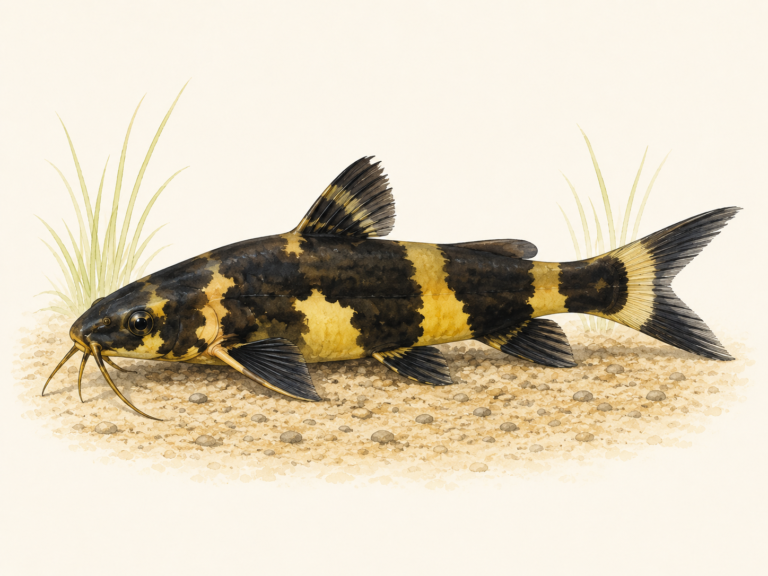
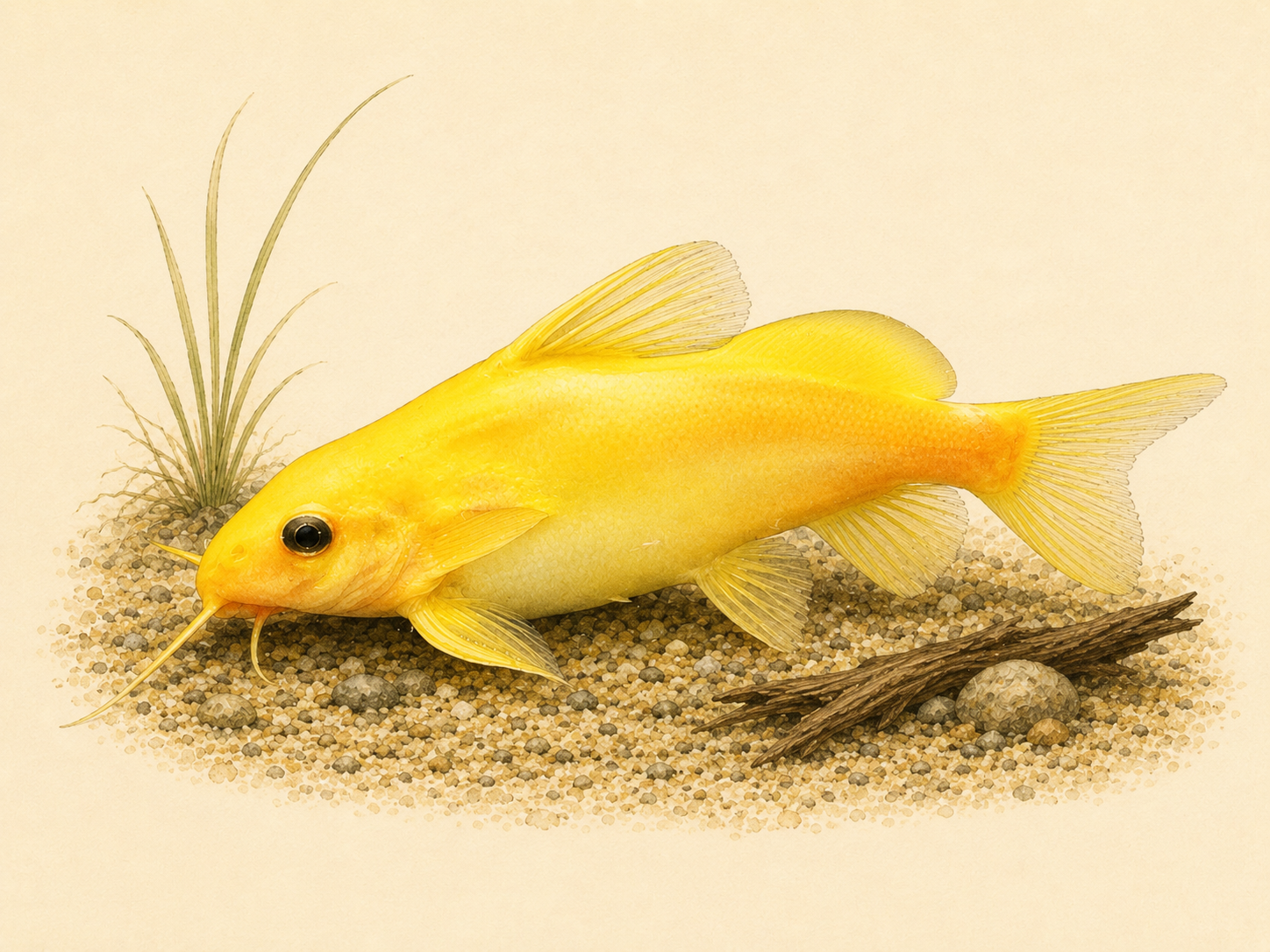
Synodontis nigrita is a robust, laterally compressed catfish with a body shape typical of the genus, a broad, somewhat flattened head tapering to a moderately forked caudal fin. The body is covered in a tough, slightly rough skin rather than true scales, and three pairs of barbels extend from the mouth area: one pair of maxillary barbels, which are often branched or feathered in mature specimens, and two pairs of mandibular barbels used for navigating and foraging along the substrate.
The base colouration varies considerably depending on the individual’s origin and age, but it is typically a warm grey-brown to olive-brown, overlaid with a scattering of dark brown or black spots that may be round, elongated, or somewhat irregular. Juveniles tend to display bolder, more clearly defined spots, which may merge into a more mottled or marbled pattern as the fish matures. The ventral surface is generally paler, ranging from cream to light grey. The dorsal fin is tall and bears a strong, serrated leading spine, a hallmark of the Synodontis genus and something to bear in mind when netting or handling the fish, as it can easily become entangled in fine mesh nets and can inflict a painful prick.
The adipose fin is well developed and prominent, a feature that helps distinguish the Mochokidae family. The pectoral fins also possess hardened leading spines that the fish can lock into position as a defensive mechanism. In overall silhouette, S. nigrita is a handsome and solidly built catfish that, while not as flamboyantly patterned as some of its congeners, possesses a subtle, earthy beauty that grows on the keeper over time.
Sexual dimorphism is subtle. Mature females tend to be slightly fuller-bodied when viewed from above, particularly when gravid, whilst males may be marginally more slender and, in some populations, develop slightly longer maxillary barbels. These differences are not always reliable, however, and sexing with certainty outside of breeding condition can be challenging.
Natural Habitat
Synodontis nigrita is one of the most geographically widespread Synodontis species, occurring across a vast range in West and Central Africa. It has been documented from the Senegal, Gambia, Volta, Niger, Benue, Chad, and Cross River basins, spanning countries including Senegal, Mali, Guinea, Ghana, Nigeria, Cameroon, and Chad. This extensive distribution means that the species occupies a considerable variety of freshwater habitats and demonstrates impressive ecological flexibility.
In the wild, S. nigrita is typically found in the main channels and floodplains of large rivers, where it favours areas with moderate to slow current and an abundance of submerged structure. Rocky outcrops, submerged logs, tangled root systems, and overhanging vegetation all provide the sheltered daytime retreats that this nocturnal species requires. During the wet season, many populations move onto seasonally flooded plains to feed on the bounty of invertebrates, seeds, and organic detritus that becomes available as water levels rise.
The substrates in its natural habitats range from sandy to muddy, often with a covering of leaf litter and decomposing plant matter. Water conditions across its range are variable: pH can range from mildly acidic in forested tributaries to neutral or mildly alkaline in more open, mineral-rich rivers. Water hardness similarly spans a broad spectrum. This adaptability in the wild translates directly into the species’ reputation as a tolerant and forgiving aquarium inhabitant, though providing conditions that reflect the moderate midpoint of its natural range will always yield the best results.
The species shares its habitat with a wealth of other African fish, including various cichlid species, other Synodontis, mormyrids, and characins. Understanding these natural associations can be helpful when planning a biotope-inspired community aquarium.
Tank Size and Setup
A single Synodontis nigrita can be housed in a tank of at least 200 litres, but given that this species is sociable and benefits from the company of conspecifics, a tank of 300 litres or more is preferable if you plan to keep a small group of three to five individuals. Larger tanks also provide more opportunity to create the varied landscape of hiding spots and open swimming areas that allows the fish to express natural behaviour.
The aquascape should prioritise shelter. Provide a generous selection of caves, whether formed from stacked rocks, PVC pipes, terracotta pots, or purpose-made ceramic caves. Bogwood and driftwood are excellent additions, as they create natural-looking crevices and overhangs while also contributing tannins to the water, which many West African species appreciate. Ensure that any rockwork is securely positioned, as Synodontis catfish are surprisingly strong and can dislodge poorly stacked décor during their nocturnal explorations.
The substrate should ideally be smooth sand or fine, rounded gravel. Synodontis nigrita frequently sifts through the substrate with its barbels when searching for food, and sharp or coarse substrates can cause abrasion and damage to these sensitive structures. A layer of dried leaf litter, such as Indian almond or oak leaves, can add a naturalistic touch and provides additional surface area for biofilm growth, which the catfish will graze on.
Planting is optional but beneficial. Hardy species such as Anubias, Java Fern, and Bolbitis are well suited, as they can be attached to wood and rock rather than rooted in the substrate, reducing the risk of being uprooted by the catfish’s foraging activity. Floating plants can help dim the lighting, which will encourage the fish to venture out during the day more frequently.
Lighting should be moderate to subdued. Synodontis nigrita is primarily nocturnal and will be more active and visible under lower light conditions. If you wish to observe the fish at night, consider installing a dedicated moonlight or blue LED strip, which allows you to watch their natural behaviour without disturbing them.
Water Parameters
One of the key advantages of keeping Synodontis nigrita is its tolerance of a relatively wide range of water conditions, reflecting the diversity of habitats it occupies in the wild. Nevertheless, aiming for stable conditions within the following ranges will promote the best health, colouration, and longevity.
| Temperature | 22–28 °C |
| pH | 6.0–7.8 |
| General hardness (GH) | 4–20 dGH |
| Carbonate hardness (KH) | 3–15 dKH |
| Ammonia | 0 ppm |
| Nitrite | 0 ppm |
| Nitrate | Below 30 ppm |
Stability is more important than hitting a specific number within these ranges. Rapid fluctuations in temperature or pH are far more stressful to the fish than being kept at, say, the higher end of the pH range on a consistent basis. When performing water changes, ensure that replacement water is temperature-matched and dechlorinated. Aim for weekly water changes of 20–30 per cent to keep nitrate levels in check and maintain overall water quality.
Synodontis nigrita is not particularly sensitive to moderately hard water, which makes it a suitable choice for fishkeepers in areas with naturally harder tap water where many soft-water species would struggle. That said, extremely hard or alkaline conditions should be avoided, as they fall outside the species’ natural tolerance.
Filtration and Equipment
Robust filtration is essential for any tank housing Synodontis catfish. These are messy feeders that produce a significant bioload relative to their size, particularly when kept in groups. An external canister filter rated for at least 1.5 times the tank’s volume per hour is a sensible minimum. For larger setups or heavily stocked tanks, supplementing with an additional internal filter or a sump system will provide extra biological and mechanical capacity.
Synodontis nigrita does not require strong current, but it does appreciate well-oxygenated water. Position the filter outlet to create gentle surface agitation, which aids gas exchange. An additional air stone or powerhead can be used if oxygen levels need a boost, particularly during warmer months when dissolved oxygen naturally decreases.
A reliable heater with a thermostat is necessary to maintain stable tropical temperatures. In larger tanks, using two smaller heaters rather than one large unit provides redundancy in case of failure and ensures more even heat distribution. A thermometer, preferably a digital one positioned where it can be easily read, allows you to monitor temperature at a glance.
A tight-fitting lid or cover glasses are recommended. While Synodontis nigrita is not a habitual jumper, startled catfish can and do leap, particularly during the initial settling-in period or if water quality deteriorates. Ensuring the tank is well covered prevents unfortunate losses.
Diet and Feeding
In the wild, Synodontis nigrita is an omnivore with a broad and opportunistic diet. Gut content analyses of wild-caught specimens have revealed a mixture of aquatic insect larvae, small crustaceans, plant matter, seeds, algae, and organic detritus. This dietary flexibility makes it straightforward to feed in captivity, though a varied diet is essential for long-term health and vibrant colouration.
A high-quality sinking pellet or tablet should form the staple of the diet. Choose a formula designed for omnivorous bottom-feeders, as these tend to offer a balanced profile of protein, fats, and vegetable matter. Sinking wafers based on spirulina or algae are a valuable supplement, providing plant-based nutrition that mirrors the fish’s natural intake of algal material.
Frozen and live foods should be offered regularly, ideally two to three times per week, to provide enrichment and ensure a complete nutritional profile. Bloodworm, brine shrimp, daphnia, mosquito larvae, and chopped earthworms are all eagerly accepted. Blanched vegetables such as courgette, cucumber, peas, and spinach can be offered occasionally and provide beneficial fibre and micronutrients.
Feed primarily in the evening or just after lights-out to coincide with the fish’s natural activity period. This ensures that the catfish receive their share of food before diurnal tank mates consume everything during the day. It is easy to underfeed nocturnal catfish in a busy community, so observe their body condition regularly. A healthy Synodontis nigrita should have a gently rounded abdomen without being visibly bloated. Sunken flanks or a concave belly profile indicate that the fish is not receiving enough food.
Behaviour and Temperament
Synodontis nigrita is generally a peaceful and retiring species that spends the majority of the daytime hidden within caves, under driftwood, or wedged into crevices. As dusk falls, it becomes markedly more active, emerging to patrol the tank and forage across the substrate and décor surfaces. This crepuscular-to-nocturnal activity pattern is consistent with most members of the genus and should be considered entirely normal rather than a sign of stress.
When kept singly, S. nigrita tends to be shy and may rarely be seen during daylight hours. Keeping a small group of three or more individuals often increases confidence, and it is not uncommon for groups to establish a loose hierarchy that results in occasional, usually harmless, squabbling over preferred hiding spots. These interactions are characterised by chasing, posturing, and the occasional audible grunt or squeak, Synodontis catfish are well known for their ability to produce stridulatory sounds using their pectoral fin spines, a behaviour thought to serve both defensive and social functions.
Aggression towards other species is rare, though very small fish may occasionally be consumed, particularly if they are slow-moving and present themselves as an easy meal after dark. This is more a case of opportunistic predation than true aggression and can largely be avoided by choosing tank mates of an appropriate size. Synodontis nigrita is not territorial in the manner of many cichlids and will generally coexist peacefully with a wide range of community fish.
It is worth noting that this species does not habitually swim inverted like its more famous relative Synodontis nigriventris, the true Upside-Down Catfish. However, it may occasionally be observed resting or feeding in an inverted position under overhanging surfaces, a behaviour shared by many Synodontis species to varying degrees.
Tank Mates
Synodontis nigrita is well suited to life in a mixed community aquarium, provided that tank mates are chosen with some thought. Ideal companions are medium-sized, peaceful to moderately boisterous species that occupy different areas of the water column, reducing competition for space and resources. Very small fish, particularly slow-moving species or tiny fry, may be at risk of predation during the night, so it is best to select tank mates that are at least 5 centimetres in adult length. Highly aggressive or territorial species that would harass the catfish during its inactive daytime periods should also be avoided.
Good tank mates
- Congo Tetra, a similarly sized, peaceful West African schooling fish that occupies the mid-water column and complements the catfish beautifully in a biotope setup.
- African Butterfly Cichlid (Anomalochromis thomasi), a gentle, small West African cichlid that rarely bothers bottom-dwelling species and thrives in similar water conditions.
- Kribensis (Pelvicachromis pulcher), a hardy dwarf cichlid from West Africa that coexists well with Synodontis provided the tank offers sufficient hiding spots for both species.
- African Red-Eye Tetra (Arnoldichthys spilopterus), an active, mid-water schooling species from Nigeria that shares the same native range and water requirements.
- Rope Fish (Erpetoichthys calabaricus), a peaceful, elongate species that occupies the bottom of the tank but is generally too large and indifferent to conflict with Synodontis.
- Bristlenose Pleco (Ancistrus sp.), a hardy algae-eating catfish that occupies a slightly different ecological niche and rarely competes directly with Synodontis.
- Boesemani Rainbowfish, a colourful, active mid-water species that adds visual contrast and does not interfere with bottom-dwelling catfish.
- Leopard Ctenopoma (Ctenopoma acutirostre), a West African climbing perch that is generally peaceful, occupies the middle and lower water column, and tolerates similar water parameters.
Fish to avoid
- Oscar (Astronotus ocellatus), far too large and aggressive as an adult; likely to bully or even consume a Synodontis nigrita.
- Jack Dempsey (Rocio octofasciata), a highly territorial cichlid whose aggressive behaviour would stress or injure the catfish.
- Neon Tetra, too small as an adult and likely to be eaten by the catfish during nocturnal foraging.
- Celestial Pearl Danio, an extremely small species that would be at significant predation risk in a tank with a medium-sized Synodontis.
- Red Devil Cichlid (Amphilophus labiatus), a highly aggressive Central American cichlid wholly unsuitable for cohabitation with peaceful catfish.
- Flowerhorn, a large, belligerent hybrid cichlid that should be kept alone or with similarly robust species.
- Endler’s Livebearer, too small and would almost certainly be preyed upon by the catfish at night.
- Betta (Siamese Fighting Fish), too slow, too small, and too delicate in finnage to coexist safely with a medium-sized Synodontis in most setups.
Breeding
Breeding Synodontis nigrita in the home aquarium is a challenging undertaking that has been achieved only rarely outside of commercial facilities, where hormonal induction is often employed. In the wild, spawning is closely tied to the onset of the rainy season, when rising water levels, increased current, changes in water chemistry, and an abundance of food trigger reproductive behaviour. Replicating these cues in captivity requires careful planning and often a degree of luck.
Sexing adult fish is the first hurdle. As noted earlier, females tend to be fuller-bodied than males, and males may exhibit slightly longer or more branched maxillary barbels, but these differences are subtle and unreliable outside of breeding condition. Keeping a group of five or more individuals increases the likelihood of having both sexes represented.
To attempt natural spawning, begin by conditioning the group heavily with high-quality live and frozen foods for several weeks. Gradually lower the water level in the tank to around 50–60 per cent of its normal depth, simulating dry season conditions. After a period of two to three weeks at this reduced level, perform a large water change of 50–70 per cent using slightly cooler, softer water to simulate the influx of rainwater that triggers spawning in the wild. Increasing the flow rate from the filter can further replicate the effect of rising rivers.
If spawning occurs, the eggs are typically scattered over the substrate or on flat surfaces. Synodontis nigrita is not known to exhibit parental care, and the adults will readily consume the eggs if given the opportunity, so removing either the adults or the eggs to a separate rearing tank is advisable. The eggs are small, adhesive, and hatch within approximately 48–72 hours at tropical temperatures. The fry are tiny and require infusoria or commercially prepared liquid fry food for the first few days before graduating to newly hatched brine shrimp nauplii.
It is worth noting that some Synodontis species are known brood parasites, depositing their eggs among those of mouthbrooding cichlids, which then incubate the catfish fry alongside their own. While this behaviour has been most famously documented in Synodontis multipunctatus from Lake Tanganyika, there is limited evidence of similar strategies in some West African Synodontis. Whether S. nigrita engages in this behaviour in the wild remains uncertain, but it is an intriguing area of ongoing research.
Common Diseases
Synodontis nigrita is a hardy species that, when kept in appropriate conditions, is relatively resistant to disease. However, like all aquarium fish, it is not immune to illness, and certain conditions are worth being aware of.
White spot disease, caused by the protozoan parasite Ichthyophthirius multifiliis, is perhaps the most commonly encountered ailment. It presents as small, white, salt-grain-like cysts on the skin, fins, and gills. Treatment involves raising the water temperature gradually to 28–30 °C and administering a copper-free white spot remedy, as Synodontis catfish, like most scaleless and armoured catfish, can be sensitive to copper-based medications and malachite green at full strength. Always dose at half the recommended rate when treating tanks containing Synodontis and monitor the fish closely for signs of distress.
Bacterial infections, including fin rot and skin ulcers, can occur when water quality deteriorates or after physical injury. Maintaining pristine water conditions through regular water changes and effective filtration is the best preventative measure. If bacterial infection is suspected, a broad-spectrum antibacterial treatment suitable for scaleless fish should be used, and the underlying cause, typically poor water quality, addressed immediately.
Fungal infections, recognisable as cotton-wool-like growths on the skin or fins, are another potential issue, often secondary to wounds or abrasions. These can be treated with antifungal medications, again taking care to select products safe for use with catfish.
Barbel erosion is a condition specific to bottom-dwelling fish and is almost always caused by being kept on sharp or abrasive substrates, or in tanks with chronically poor water quality. Affected fish will show shortened, damaged, or completely eroded barbels, which impairs their ability to forage and navigate. Prevention is straightforward: use smooth sand or fine gravel and maintain excellent water quality. Barbels can regenerate to some extent if the underlying cause is corrected, though severe erosion may result in permanent damage.
Internal parasites, including nematodes and cestodes, can occasionally affect wild-caught specimens. Newly acquired wild-caught fish should ideally be quarantined for a minimum of four weeks and treated prophylactically with an appropriate anti-parasitic medication if internal parasites are suspected. Symptoms may include weight loss despite a healthy appetite, white or stringy faeces, and a generally listless demeanour.
FAQs
Is Synodontis nigrita the same as Synodontis ocellifer?
No, although the two species are frequently confused in the aquarium trade and do share a similar range and overlapping appearance. Synodontis ocellifer tends to have larger, more distinctly defined spots and can grow somewhat larger than S. nigrita. The most reliable way to distinguish them involves examining the morphology of the maxillary barbels and the humeral process, but in practice, mislabelling is extremely common. If precise species identification matters to you, purchasing from a reputable specialist dealer or obtaining wild-caught specimens with accurate collection locality data is advisable.
Can Synodontis nigrita be kept alone?
Yes, a single specimen will survive perfectly well on its own, but it is likely to be significantly shyer and less visible than one kept in a small group. Ideally, keep three or more individuals together. The social dynamics within a group tend to increase confidence, and you will see more natural behaviour, including the charming vocal sounds that Synodontis catfish produce during interactions.
Does Synodontis nigrita eat algae?
While S. nigrita will graze on biofilm and soft algae to some extent, it should not be considered a dedicated algae-control species. Its diet in the wild and in captivity is predominantly omnivorous, and it will not make a significant dent in a serious algae problem. Dedicated algae eaters such as Bristlenose Plecos or Otocinclus catfish are better choices if algae management is your primary concern.
How can I see my Synodontis nigrita more often during the day?
Reducing ambient light levels in the tank is the single most effective strategy. Using floating plants, dimmer lighting, or tannin-stained water will all encourage the fish to emerge during daylight hours. Keeping a group rather than a single specimen also increases daytime activity, as the fish draw confidence from one another. Over time, established individuals in a calm, well-maintained aquarium often become bolder and may learn to associate the keeper’s presence with feeding, further increasing visibility.
Is Synodontis nigrita safe with live plants?
Generally, yes. Synodontis nigrita is not a dedicated herbivore and does not typically damage robust plant species. However, its foraging behaviour can uproot delicate or poorly anchored plants, particularly those planted directly into the substrate. Attaching plants such as Anubias, Java Fern, and Bolbitis to hardscape rather than planting them in the substrate is the best approach. Floating plants are entirely safe and offer the added benefit of reducing light levels.
Related Guides
- Synodontis eupterus (Featherfin Squeaker) Care Guide, a closely related and popular Synodontis species with similar care requirements but a more dramatic dorsal fin.
- Synodontis multipunctatus Care Guide, the famous cuckoo catfish of Lake Tanganyika, offering an interesting comparison in behaviour and breeding strategy.
- Upside-Down Catfish, a smaller, more commonly available Synodontis that shares some behavioural traits but stays considerably smaller.
- West African Biotope Aquarium Guide, a comprehensive guide to creating an authentic West African community tank featuring species from the same native habitats as S. nigrita.
- Bristlenose Pleco Care Guide, a popular bottom-dwelling companion that complements Synodontis catfish in community setups.