Quick summary
The Green Dwarf Distichodus is a tiny, peaceful shoaling characin, but it’s not for beginners since it demands strongly acidic, very soft blackwater conditions (pH 4.0-5.5) that require RO water, peat, and careful monitoring to maintain. If you’re an experienced keeper willing to manage demanding water chemistry, this 5.7 cm fish is a genuinely rewarding and unusual addition to a soft-water community tank.
🐠 Build a tank around this species
In this guide:
- Introduction
- Quick Stats
- Appearance
- Natural Habitat
- Tank Size and Setup
- Water Parameters
- Filtration and Equipment
- Diet and Feeding
- Behaviour and Temperament
- Tank Mates
- Breeding
- Common Diseases
- FAQs
Introduction
The Green Dwarf Distichodus (Distichodus teugelsi) is a remarkable little characin that defies virtually every expectation aquarists might have of its genus. While the name Distichodus typically conjures images of robust, often enormous African fish that can reach 80 cm or more, this diminutive species maxes out at roughly 5.7 cm – making it one of the smallest members of the entire genus and a genuinely viable candidate for modestly sized aquaria. Described relatively recently by Mamonekene and Vreven in 2008, D. teugelsi hails from the Lefini and Alima river basins in the Republic of Congo and from portions of the middle Congo River system in the Democratic Republic of Congo.
This species remains uncommon in the aquarium hobby, and when it does appear in specialist importers’ stock lists, it generates considerable excitement among keepers of rare African fish. Its appeal lies not only in its manageable size but also in its attractive olive-green to golden-green colouration, its lively shoaling behaviour, and the sheer novelty of keeping a Distichodus that will not outgrow anything short of a public aquarium. However, the Green Dwarf Distichodus is not a beginner’s fish. It demands strongly acidic, soft water conditions that replicate its natural blackwater habitat – parameters that can be challenging to achieve and maintain. Prospective keepers should be prepared to invest in reverse osmosis filtration, botanical additives, and careful water chemistry management to provide this species with the environment it needs to thrive.
Despite its relative rarity, the Green Dwarf Distichodus is gradually becoming better understood among dedicated hobbyists. This guide aims to consolidate the available knowledge on its care, covering everything from tank setup and water parameters to diet, behaviour, breeding, and compatible tank mates. Whether you are an experienced keeper of African characins looking to add something genuinely unusual to your collection, or simply an aquarist fascinated by the diversity of the Congo Basin’s ichthyofauna, the Green Dwarf Distichodus is a species well worth learning about.
Quick Stats
| Scientific name | Distichodus teugelsi |
|---|---|
| Common names | Green Dwarf Distichodus, Teugels' Distichodus |
| Family | Distichodontidae |
| Origin | Lefini and Alima river basins, Republic of Congo; middle Congo River, DR Congo |
| Adult size | 6.8 cm |
| Difficulty | Advanced |
| Breeding difficulty | Advanced |
| Temperature | 24–28 °C |
| pH | 4–5.5 |
| GH | 0–4 dGH |
| Minimum tank size | 80 L |
| Conservation status | Not evaluated |
Appearance
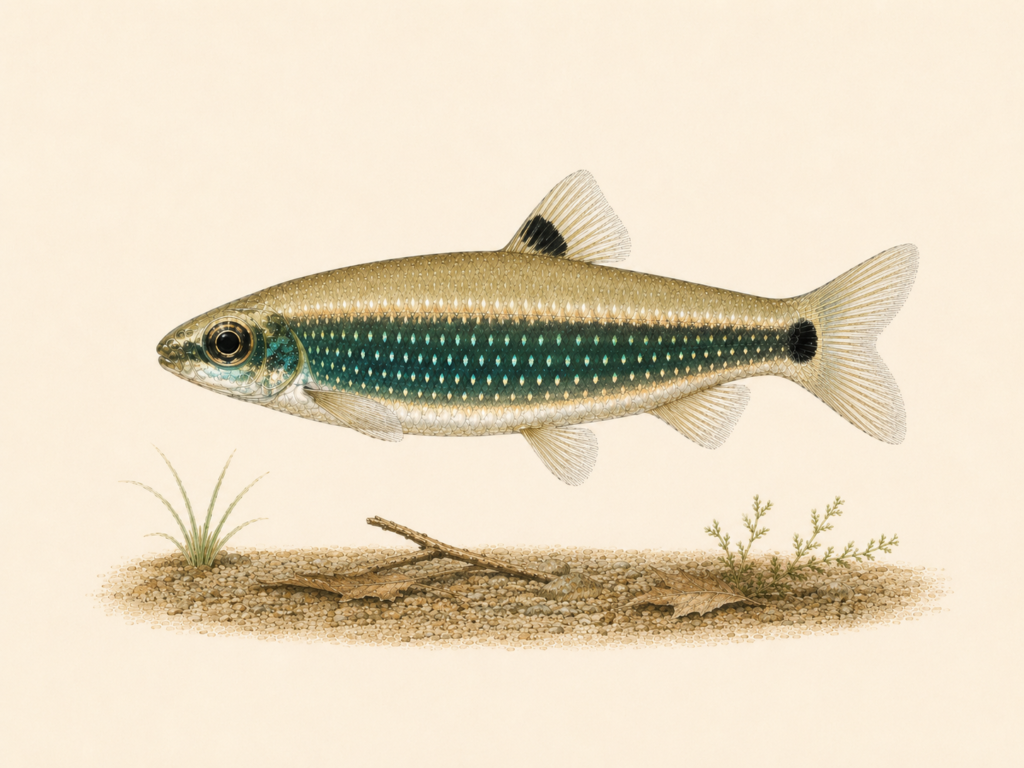
Distichodus teugelsi is a compact, laterally compressed characin with a body shape that is broadly typical of smaller Distichodus species – somewhat deep-bodied relative to its length, with a slightly rounded dorsal profile and a gently sloping ventral contour. The overall impression is of a sturdy, well-proportioned little fish, more robust than many similarly sized African tetras but far more delicate in build than its larger congeners.
The base body colour ranges from olive-green to a warm golden-green, depending on the lighting conditions and the fish’s mood. Under subdued, tannin-stained lighting that mimics its natural blackwater habitat, the green tones become particularly vivid, giving the fish a subtle but attractive iridescence. The flanks may show a faint golden or brassy sheen, especially in well-conditioned specimens. The scales are relatively large and well-defined for a fish of this size, each one edged in a slightly darker tone that creates a delicate reticulated pattern across the body.
The fins are generally translucent to lightly tinted, with the dorsal and caudal fins sometimes showing a faint wash of colour. The caudal fin is forked, as is typical for the genus. The mouth is relatively small and subterminal, equipped with the bicuspid teeth characteristic of the genus Distichodus – a feature that reflects the species’ herbivorous to omnivorous feeding habits. The eyes are proportionally large, giving the fish an alert and engaging expression.
Sexual dimorphism in Distichodus teugelsi is subtle and not always easy to discern outside of breeding condition. Mature females tend to be slightly fuller-bodied than males, particularly when gravid with eggs. Males may display marginally more intense colouration during courtship, but these differences are minor and unreliable as the sole means of sexing the fish. Overall, the Green Dwarf Distichodus is an understated but genuinely attractive species that rewards close observation – its beauty lies in subtlety and form rather than in gaudy pigmentation.
Natural Habitat
The Green Dwarf Distichodus is found in the Lefini and Alima river basins within the Republic of Congo, as well as in sections of the middle Congo River in the Democratic Republic of Congo. These waterways are part of the vast Congo River system, the second largest river basin in the world by discharge volume and one of the most biodiverse freshwater ecosystems on the planet. The specific habitats where D. teugelsi has been collected are characterised by soft, highly acidic blackwater conditions – a product of the dense tropical forest through which many of these tributaries flow.
In its native environment, this species inhabits slow-moving to moderately flowing sections of streams and smaller rivers where the water is heavily stained with tannins and humic acids leached from decomposing leaf litter, fallen branches, and other organic material on the forest floor. The pH in these habitats is remarkably low, typically in the range of 4.2 to 4.5, and the water is exceptionally soft, with negligible mineral content. Conductivity readings in such environments are often extremely low, sometimes below 20 microsiemens per centimetre.
The substrate in these habitats is typically composed of sand, fine gravel, and a deep layer of decomposing leaves and woody debris. Aquatic vegetation may be sparse due to the low light levels created by the forest canopy overhead and the deeply tinted water column, but marginal vegetation and overhanging roots are common features. The fish likely shelters among submerged root tangles, leaf litter, and fallen branches, foraging on algae, biofilm, small invertebrates, and plant matter.
Water temperatures in the Congo Basin are relatively stable year-round due to the equatorial climate, typically ranging from 24 to 28 degrees Celsius. Seasonal variations in water level and flow rate occur with the rains, and these fluctuations likely play a role in triggering breeding activity. The low pH and soft water conditions of this habitat are crucial to understand, as they fundamentally shape the care requirements for this species in captivity. Attempting to keep D. teugelsi in neutral or alkaline water is likely to result in chronic stress and poor health outcomes.
Tank Size and Setup
Despite its small adult size, the Green Dwarf Distichodus benefits from a reasonably spacious aquarium. A minimum tank size of 80 litres is recommended for a small group, though 100 litres or more is preferable. This species is a shoaling fish and should be kept in groups of at least six individuals – a larger group of eight to twelve will produce more natural behaviour, reduce individual stress, and create a more visually engaging display. A longer tank footprint is more useful than a tall one, as this provides greater horizontal swimming space.
The aquascape should aim to replicate the species’ natural blackwater forest stream habitat. Begin with a substrate of fine, dark sand – this will showcase the fish’s colouration and create a naturalistic appearance. Add a generous quantity of dried leaf litter, such as Indian almond leaves, oak leaves, or beech leaves, which will gradually decompose and release tannins into the water. This serves the dual purpose of acidifying the water and providing a natural foraging substrate rich in biofilm and microorganisms.
Driftwood should feature prominently in the setup. Use a variety of pieces – twisted roots, branching mopani wood, and smaller twigs – to create a complex structure that offers shelter, visual barriers, and territories. The fish will appreciate being able to weave through and around these structures. Botanicals such as alder cones, seed pods, and additional dried leaves can be scattered throughout to enhance the blackwater aesthetic and contribute to water chemistry.
Live plants can be included but are not essential, and the choice of species should reflect the low pH and low light conditions of the tank. Hardy, acid-tolerant plants such as Anubias species, Java fern (Microsorum pteropus), and various mosses (e.g. Java moss, Christmas moss) are good options, as they do not require planting in substrate and can be attached to driftwood. Floating plants such as Amazon frogbit or Salvinia can be used to diffuse lighting further, creating the subdued, shaded conditions that the Green Dwarf Distichodus prefers.
Lighting should be kept dim to moderate. The deeply tinted water column will naturally reduce light penetration, but if you are using a powerful light for plant growth, consider using floating plants or adjusting the photoperiod to avoid overly bright conditions. A secure lid or cover glass is advisable, as small characins can be prone to jumping, particularly when startled or during acclimation.
Water Parameters
Water chemistry is arguably the single most critical aspect of Green Dwarf Distichodus husbandry, and it is the factor most likely to determine success or failure with this species. Distichodus teugelsi comes from an extreme blackwater environment, and it requires strongly acidic, very soft water to thrive. This is not a species that can be kept in typical tapwater conditions in most regions. Prospective keepers should be prepared to use reverse osmosis (RO) or deionised water, remineralised only minimally if at all, and acidified using natural or chemical methods.
| Temperature | 24-28 °C |
| pH | 4.0-5.5 |
| General hardness (GH) | 0-4 dGH |
| Ammonia | 0 ppm |
| Nitrite | 0 ppm |
| Nitrate | Below 20 ppm |
The ideal pH for this species sits in the range of 4.0 to 5.5, with wild-caught specimens likely most comfortable at the lower end of this range, around 4.2 to 4.5. Achieving and maintaining such low pH values requires careful attention. The use of peat filtration, large quantities of leaf litter and driftwood, and commercially available blackwater extracts can all help to lower pH naturally. In very soft water with negligible KH, the pH will be more responsive to these inputs, but it can also be less stable – monitoring with a reliable digital pH meter is essential.
General hardness should be kept as low as possible, ideally below 4 dGH and preferably near zero. Carbonate hardness should similarly be minimal – 0 to 2 dKH at most. These values are achievable with pure RO water or with RO water very lightly remineralised using a product designed for soft water species. Avoid using tap water unless your local supply happens to be exceptionally soft and acidic, which is uncommon.
Temperature should be maintained between 24 and 28 degrees Celsius, with 25 to 27 degrees being a comfortable target range. Consistency is more important than hitting a precise number – avoid rapid temperature swings, which can stress the fish and compromise their immune function. Regular water changes of 10 to 20 per cent weekly are recommended, using pre-prepared water that matches the tank’s parameters as closely as possible. In a low-KH, low-pH system, even small additions of mineralised water can cause significant parameter shifts, so consistency in water preparation is paramount.
Filtration and Equipment
Filtration for a Green Dwarf Distichodus tank requires some careful thought, primarily because the extreme water chemistry involved can interact with certain filter media and equipment in unexpected ways. A gentle to moderate flow rate is appropriate – this species comes from slow-moving to moderately flowing waters, and excessive current will cause stress. Sponge filters are an excellent choice for smaller setups, providing effective biological filtration with minimal flow disturbance. For larger tanks, a small external canister filter with an adjustable flow rate, or with a spray bar to diffuse the output, works well.
Biological filtration is the primary concern, as the tank must be fully cycled and capable of processing ammonia and nitrite efficiently. It is worth noting that the nitrifying bacteria responsible for the nitrogen cycle function less efficiently at very low pH values – below approximately pH 6.0, their activity can be significantly reduced. In tanks running at pH 4.0 to 5.0, conventional biological filtration may be compromised. This makes it all the more important to keep stocking levels conservative, feed sparingly, and perform regular water changes to manage waste. Some experienced keepers of extreme blackwater tanks rely more heavily on botanical filtration – the decomposition of leaf litter and the activity of beneficial fungi and microorganisms within the leaf litter bed – as a supplementary form of biological processing.
Peat filtration is highly recommended for this species. Aquarium-grade peat can be placed in a filter media bag within the canister filter or hung in the flow path of the tank. It will release tannins and humic acids that naturally lower pH and soften the water. Replace peat media periodically as its buffering capacity becomes exhausted. Activated carbon should generally be avoided, as it will remove the tannins and humic substances that are beneficial – indeed essential – for this species’ wellbeing.
A reliable, adjustable aquarium heater is necessary to maintain stable temperatures. In very soft, acidic water, it is wise to invest in a heater with a good thermostat and to use an independent thermometer to verify accuracy. An air pump and airstone can be useful to ensure adequate oxygenation, particularly if the tank is densely packed with leaf litter and the water surface is covered with floating plants, both of which can reduce gas exchange.
A digital pH meter is strongly recommended over liquid test kits for monitoring the acidic water conditions this species requires. Liquid pH test kits, particularly those designed for the standard aquarium pH range of 6.0 to 7.6, will simply read “off the scale” in a tank running at pH 4.5. A dedicated low-range pH meter or a broad-range digital meter will provide far more useful and accurate readings.
Diet and Feeding
In the wild, Distichodus species are broadly herbivorous to omnivorous, and D. teugelsi follows this pattern. Its natural diet likely consists of algae, biofilm, small amounts of plant matter, detritus, and the tiny invertebrates and microorganisms associated with decomposing leaf litter and submerged organic material. In captivity, it should be offered a varied diet that reflects this omnivorous but plant-leaning feeding ecology.
A high-quality micropellet or small granule food designed for small omnivorous or herbivorous tropical fish can serve as a staple diet. Look for products with a significant plant-based component, including spirulina, algae meal, or vegetable matter, rather than those dominated by fish meal or animal protein. Supplement this staple with blanched vegetables such as courgette (zucchini), spinach, shelled peas, and cucumber – cut into small pieces appropriate for the fish’s tiny mouth. Algae wafers, broken into small fragments, can also be offered.
Live and frozen foods should be provided regularly as a protein supplement and to encourage natural foraging behaviour. Suitable options include baby brine shrimp (Artemia nauplii), daphnia, cyclops, micro worms, and grindal worms. These are small enough for the fish to consume easily and provide excellent nutritional variety. Frozen bloodworms can be offered occasionally but should not form a major part of the diet, as they are relatively rich and can contribute to digestive issues if fed excessively.
The leaf litter bed in a well-established blackwater tank will naturally harbour biofilm, infusoria, and small invertebrates, providing the fish with opportunities for continuous grazing between formal feedings. This is one of the significant benefits of the botanical-style setup – it creates a living environment that supports the fish’s natural feeding behaviour around the clock.
Feed small amounts two to three times daily rather than one large feed. This approach better mimics natural grazing patterns and reduces the risk of uneaten food decomposing and degrading water quality – a particular concern in the low-pH, low-buffering-capacity water required by this species. Remove any uneaten food promptly.
Behaviour and Temperament
The Green Dwarf Distichodus is a generally peaceful, sociable species that is best kept in a group. In its natural habitat, it is likely found in loose aggregations, foraging together through leaf litter and along submerged surfaces. In captivity, keeping a group of six or more individuals will allow the fish to exhibit natural shoaling behaviour, which is both visually appealing and beneficial for their psychological wellbeing. Solitary specimens or those kept in pairs or trios are likely to be shy, withdrawn, and chronically stressed.
Within the group, there may be occasional minor squabbles and chasing, particularly among males establishing a loose dominance hierarchy. This behaviour is normal and rarely results in injury, provided the tank offers sufficient space and visual barriers (driftwood, plants, and leaf litter) to allow subordinate individuals to retreat. The interactions are generally low-intensity – brief chases and fin flares rather than sustained aggression.
This species is moderately active, spending much of its time foraging along the substrate, picking at leaf litter, and grazing on surfaces. It is not a restless, open-water swimmer in the manner of many African tetras; instead, it tends to stay in the lower to middle portions of the water column, closely associated with the tank decor and substrate. It can be somewhat timid, particularly in brightly lit tanks or in the absence of adequate cover. Under subdued lighting with plenty of shelter, the fish will be noticeably bolder and more likely to display in the open.
Like many Distichodus species, D. teugelsi may have a tendency to nibble on soft-leaved aquatic plants. This is a natural expression of its herbivorous dietary component. Hardy, tough-leaved plants such as Anubias and Java fern are generally left alone, but delicate stem plants and fine-leaved species may sustain damage. This is worth considering when planning the aquascape.
Tank Mates
Selecting tank mates for the Green Dwarf Distichodus requires careful consideration of its highly specific water chemistry requirements. Any potential companion species must be able to tolerate – and ideally thrive in – very soft, strongly acidic water with a pH in the range of 4.0 to 5.5. This immediately eliminates the vast majority of commonly available aquarium fish, which prefer neutral to slightly acidic conditions. The best candidates are other species from acidic blackwater habitats, particularly those from the Congo Basin, the Amazon Basin, or Southeast Asian peat swamp environments. The Green Dwarf Distichodus is peaceful and small enough that aggression is rarely a concern; the primary compatibility criterion is shared water chemistry tolerance.
Good tank mates
- Cardinal Tetra – Naturally found in acidic blackwater habitats and thrives at low pH values, making it an excellent companion in terms of water chemistry and temperament.
- Green Neon Tetra – A small, peaceful species from blackwater environments in South America that does well in very soft, acidic conditions.
- Chocolate Gourami – A Southeast Asian species that requires similarly acidic, soft water and shares the Green Dwarf Distichodus’s preference for subdued lighting and botanical-rich environments.
- Liquorice Gourami – Another small, peaceful gourami from peat swamp habitats that thrives in extremely soft, acidic water.
- Pygmy Corydoras – A tiny, peaceful bottom-dweller that can tolerate softer and more acidic water than many other Corydoras species.
- Marbled Hatchetfish – An upper-water-column species from blackwater habitats that complements the Green Dwarf Distichodus’s preference for the lower and middle zones.
- Sparkling Gourami – A small, undemanding labyrinth fish that can adapt to acidic conditions and occupies a different niche in the tank.
- Clown Killifish – A surface-dwelling species from West Africa that can tolerate soft, acidic water and adds visual interest to the upper water column.
Fish to avoid
- African Rift Lake Cichlids – Require hard, alkaline water that is fundamentally incompatible with the conditions needed by D. teugelsi.
- Common Pleco – Grows far too large for the recommended tank size and prefers neutral to slightly alkaline water.
- Tiger Barb – An active, nippy species that may harass the more reserved Green Dwarf Distichodus and prefers harder water.
- Guppy – Requires harder, more alkaline water and would not tolerate the extreme acidity needed by this species.
- Convict Cichlid – Far too aggressive and territorial for a community with small, peaceful characins, and prefers different water chemistry.
- Oscar – A large, predatory cichlid that would readily consume the Green Dwarf Distichodus and requires a vastly larger tank.
- Rainbow Shark – A territorial bottom-dweller that can be aggressive toward smaller species and prefers neutral to slightly alkaline water.
Breeding
Breeding Distichodus teugelsi in captivity has rarely been documented, and detailed information on its reproductive biology remains limited. What is known about the breeding habits of other small Distichodus species, combined with the few anecdotal reports from experienced keepers, provides some guidance, but prospective breeders should approach this as a challenging and somewhat experimental endeavour.
Distichodus species are generally egg scatterers, releasing eggs over the substrate or among vegetation and leaf litter without providing parental care. It is reasonable to assume that D. teugelsi follows a similar reproductive strategy. To encourage breeding, start by ensuring that you have a group of healthy, well-conditioned adults of both sexes. Since sexual dimorphism is subtle, keeping a group of eight or more individuals increases the likelihood of having both males and females present.
Conditioning should involve several weeks of high-quality, varied feeding with an emphasis on live and frozen foods. Gradually adjusting water parameters to simulate seasonal changes – slight increases in temperature, perhaps from 25 to 28 degrees Celsius, and minor fluctuations in water level or flow rate – may help to trigger spawning activity. In the wild, breeding likely coincides with the onset of the rainy season, when water levels rise and fresh, slightly cooler water enters the rivers. Simulating a large, cool water change may serve as a spawning trigger.
A dedicated breeding tank is advisable. This should be set up with very soft, acidic water matching the species’ requirements, a thin layer of fine sand or bare bottom for easy egg retrieval, and clumps of fine-leaved moss or spawning mops to receive the eggs. Dim lighting and abundant leaf litter will help to create a comfortable environment. After spawning, the adults should be removed promptly, as they are likely to consume their own eggs if given the opportunity.
Eggs, if successfully obtained, should be incubated in clean, acidic water with gentle aeration. Anti-fungal treatment using a mild methylene blue solution may help to prevent fungal attack on unfertilised or developing eggs. Hatching time and fry development are not well documented for this species, but by analogy with related characins, hatching likely occurs within 48 to 72 hours at tropical temperatures, with the fry becoming free-swimming a few days later. First foods for fry would likely need to be infusoria, paramecium, or commercially available liquid fry food, graduating to baby brine shrimp nauplii as the fry grow.
Given the scarcity of captive breeding records, anyone who successfully breeds this species would make a valuable contribution to the hobby’s collective knowledge. Documenting the process in detail and sharing the results with specialist forums and aquarist communities is strongly encouraged.
Common Diseases
The Green Dwarf Distichodus does not appear to be unusually susceptible to any species-specific diseases, but it is vulnerable to the same range of ailments that affect most small tropical freshwater fish. The primary health concerns relate to the challenges of maintaining the extreme water chemistry this species requires – any significant deviation from optimal parameters is likely to cause stress, which in turn compromises the immune system and opens the door to opportunistic infections.
Ich (white spot disease), caused by the protozoan parasite Ichthyophthirius multifiliis, is a common concern for all freshwater fish. It presents as small white spots on the body and fins, accompanied by flashing (rubbing against surfaces) and lethargy. Ich is often triggered by temperature fluctuations or stress. Treatment can be complicated in very soft, acidic water, as some common medications are more potent or behave differently at low pH. Raising the temperature gradually to 30 degrees Celsius over a few days, combined with increased aeration, is a medication-free approach that can be effective. If chemical treatment is necessary, use a half-dose of a malachite green or formalin-based product and monitor the fish closely for adverse reactions.
Bacterial infections, including fin rot, body ulcers, and internal infections, can occur in stressed or immunocompromised individuals. Maintaining pristine water quality is the best prevention. If treatment is required, broad-spectrum antibacterial medications can be used, but again, dose carefully in very soft, acidic water and monitor for adverse effects.
Fungal infections, often appearing as cotton-like growths on the body or fins, are another possibility, particularly in fish with existing wounds or compromised skin. Methylene blue is generally well tolerated and effective as a treatment.
The single most important disease prevention measure for this species is maintaining stable, appropriate water chemistry. Fluctuations in pH, hardness, or temperature – even relatively minor ones – can be deeply stressful for a fish adapted to such extreme and stable conditions. Consistent water preparation, regular small water changes using pre-matched water, and careful monitoring with reliable test equipment are the cornerstones of keeping this species healthy.
Quarantining new fish before introducing them to an established tank is always advisable. This allows you to observe newcomers for signs of illness and to treat any problems before they can spread to the rest of the group.
FAQs
Is the Green Dwarf Distichodus suitable for a beginner?
No, this species is not recommended for beginners. Its requirement for extremely soft, acidic water with a pH in the range of 4.0 to 5.5 places it firmly in the realm of experienced fishkeepers. Maintaining these parameters requires reverse osmosis water, careful buffering (or deliberate lack thereof), and consistent monitoring with accurate equipment. Beginners are better served by starting with hardier species and gaining experience with water chemistry management before attempting to keep D. teugelsi.
How many Green Dwarf Distichodus should I keep together?
A minimum group of six is recommended, with eight to twelve being ideal if your tank size permits. This is a shoaling species that feels more secure and displays more natural behaviour in the company of its own kind. Keeping fewer than six individuals is likely to result in shy, stressed fish that spend most of their time hiding. A larger group distributes any minor aggression more evenly and creates a far more engaging display.
Will the Green Dwarf Distichodus eat my aquarium plants?
It may nibble on soft-leaved aquatic plants, as the Distichodus genus has a strong herbivorous component to its diet. Hardy species such as Anubias, Java fern, and aquatic mosses are generally left alone due to their tough, unpalatable leaves. If you want to maintain delicate stem plants or fine-leaved species, be aware that some damage is possible. Providing plenty of vegetable matter in the diet may reduce the fish’s inclination to graze on ornamental plants.
Can I keep the Green Dwarf Distichodus with other Distichodus species?
In theory, other small, peaceful Distichodus species that share similar water chemistry requirements could be compatible. However, most other Distichodus species commonly available in the hobby grow significantly larger and may not tolerate the extreme acidity that D. teugelsi requires. In practice, finding another Distichodus species that is both small enough for the same tank and tolerant of pH 4.0 to 5.0 water is challenging. Research any potential congener thoroughly before attempting to combine them.
How do I achieve and maintain a pH of 4.0 to 5.0 in an aquarium?
Start with pure reverse osmosis (RO) or deionised water, which has negligible mineral content and virtually no buffering capacity. Add peat filtration, generous quantities of dried leaf litter (Indian almond leaves, oak leaves), driftwood, and other botanicals – all of which release tannins and humic acids that naturally lower pH. In water with near-zero KH, the pH will drop readily in response to these inputs. Commercial blackwater extracts can also be used to supplement. Monitor pH daily with a reliable digital meter until you are confident in the stability of your system. Avoid any decor, substrates, or filter media that contain calcium carbonate, as these will raise pH and hardness.
Related Guides
- Cardinal Tetra Care Guide – A classic blackwater species that shares similar water chemistry preferences and makes an excellent tank mate for the Green Dwarf Distichodus.
- Chocolate Gourami Care Guide – Another species that demands very soft, acidic water, with overlapping care requirements and compatible temperament.
- Congo Tetra Care Guide – A larger African characin from the Congo Basin, useful for understanding the broader ecology of Congolese freshwater habitats.
- Clown Killifish Care Guide – A small West African species suited to soft, acidic conditions that compl