Leopard Synodontis Care Guide — Tank Setup, Feeding and Breeding
Quick summary
The Leopard Synodontis is a hardy, nocturnal catfish best suited to aquarists with some prior experience, needing a spacious 200+ litre tank with plenty of caves, stable water quality, and medium to large peaceful tank mates. It’s not ideal for complete beginners or for tanks with very small fish or shrimp, and breeding it at home is very difficult.
🐠 Build a tank around this fish
In this guide:
- Introduction
- Quick Stats
- Appearance
- Natural Habitat
- Tank Size and Setup
- Water Parameters
- Filtration and Equipment
- Diet and Feeding
- Behaviour and Temperament
- Tank Mates
- Breeding
- Common Diseases
- FAQs
Introduction
The Leopard Synodontis, known scientifically as Synodontis pardalis, is a beautifully patterned catfish from the rivers and tributaries of West Africa. Its striking spotted coat, reminiscent of its big-cat namesake, has made it a sought-after addition to medium and large community aquariums. Like many members of the Synodontis genus, this species is primarily nocturnal, spending much of the daylight hours tucked away in caves and crevices before emerging at dusk to forage along the substrate.
Despite being less commonly encountered in the trade than some of its relatives such as the Synodontis eupterus or Synodontis nigriventris, the Leopard Synodontis rewards patient aquarists with a fascinating combination of personality and visual appeal. It is a reasonably hardy fish once established, though it does require clean, well-oxygenated water and a thoughtfully arranged tank to truly thrive. This guide provides everything you need to know about keeping Synodontis pardalis successfully, from tank setup and water parameters to diet, breeding, and suitable companions.
Quick Stats
| Scientific name | Synodontis pardalis |
| Common names | Leopard Synodontis, Leopard Squeaker Catfish, Pardalis Catfish |
| Family | Mochokidae |
| Origin | West Africa, Nigeria, Cameroon (Niger River basin, Cross River basin) |
| Adult size | 15–20 cm (6–8 inches) |
| Lifespan | 10–15 years |
| Difficulty | Moderate |
| Breeding difficulty | Difficult |
| Temperature | 22–27 °C |
| pH range | 6.0–7.5 |
| General hardness (GH) | 4–15 dGH |
| Carbonate hardness (KH) | 3–10 dKH |
| Minimum tank size | 200 litres |
| Conservation status | Least Concern (IUCN) |
Appearance
Synodontis pardalis is an undeniably attractive catfish. The body is robust and somewhat laterally compressed, tapering towards the caudal peduncle in a shape characteristic of the Synodontis genus. The base body colour ranges from a warm beige or golden-tan through to pale grey, and this is overlaid with an array of dark brown to black spots and blotches that vary in size and density between individuals. In well-maintained conditions, the contrast between the spots and the base colour is particularly vivid, giving the fish its distinctive leopard-like appearance.
The head is broad and slightly flattened, equipped with three pairs of barbels, one pair of maxillary barbels that are notably long and often branched, and two pairs of mandibular barbels that are shorter and feathered. The maxillary barbels are a hallmark of the Mochokidae family and serve as important sensory organs for navigating murky environments and locating food in low-light conditions. The eyes are moderately large and positioned laterally, giving the fish good peripheral awareness.
The dorsal fin features a strong, serrated leading spine, which the fish can lock into an erect position as a defensive mechanism. This spine, along with similar structures on the pectoral fins, makes handling this catfish a matter requiring some care; a careless net entanglement can result in injury to the fish or a painful prick for the aquarist. The adipose fin is well developed, as is typical for Synodontis species, and the caudal fin is forked. The patterning extends across all fins, often presenting as rows of smaller spots or bands that add further visual interest.
Juvenile specimens tend to display higher-contrast patterning, with bolder spots on a lighter background. As the fish matures, the spots may merge slightly or the base colour may darken, though the overall leopard pattern remains evident throughout the fish’s life. There is limited sexual dimorphism; females tend to be slightly more robust and fuller-bodied when viewed from above, particularly when gravid, while males are often a touch more slender. However, sexing this species externally with any certainty is challenging outside of the breeding season.
Natural Habitat
Synodontis pardalis is native to the river systems of West Africa, with its range centred primarily on the Niger River basin and the Cross River basin in Nigeria and Cameroon. It inhabits a variety of freshwater environments within these systems, from main river channels with moderate current to slower-moving tributaries, floodplain pools, and forested streams. The substrate in these habitats is typically composed of sand, gravel, mud, or a combination thereof, often strewn with submerged rocks, driftwood, and leaf litter that provide cover.
The waters in its native range tend to be warm, slightly acidic to neutral, and moderately soft. During the rainy season, the rivers swell and flood into surrounding forests and grasslands, providing the fish with access to a wider foraging area and a seasonal abundance of insect larvae, crustaceans, and organic debris. Water clarity can vary considerably depending on the season, ranging from relatively clear during drier periods to heavily turbid following rains. The species is well adapted to low-visibility environments, relying heavily on its sensitive barbels and lateral line system to detect food and navigate obstacles.
Synodontis pardalis is a benthic species, spending most of its time on or near the substrate and frequently retreating into crevices among rocks and tangled root systems during daylight hours. Understanding this natural behaviour is key to creating a suitable captive environment. In the wild, these fish are often found alongside other catfish species as well as cichlids, barbs, and various characins, reflecting their adaptable and generally peaceful nature within a diverse aquatic community.
Tank Size and Setup
A minimum tank size of 200 litres is recommended for a single adult Leopard Synodontis, though a larger aquarium of 300 litres or more is preferable, particularly if you intend to keep a small group or house the fish in a community setting. Synodontis pardalis is an active swimmer during the evening and night hours, and a spacious tank with a generous footprint allows it to patrol and forage comfortably. A tank measuring at least 120 cm in length is ideal for providing adequate swimming space.
The aquascape should be designed with this species’ habits firmly in mind. As a nocturnal catfish that spends much of the day hidden, an abundance of shelters is essential. Caves formed from stacked rocks, sections of PVC pipe, coconut shells, and overturned flowerpots all work well, as do pieces of bogwood and driftwood arranged to create arches and hollows. Each fish should ideally have access to at least one or two dedicated hiding spots to reduce territorial squabbles. Dense planting or floating plants can also help subdue the lighting, which encourages the fish to emerge earlier in the evening.
The substrate should be smooth sand or fine gravel. Synodontis pardalis regularly sifts through the substrate using its barbels to find food particles, and coarse or sharp-edged gravel can damage these delicate sensory organs over time. A natural sand substrate in a warm tan or brown shade mimics the riverbeds of its West African homeland and presents the fish’s patterning beautifully against a complementary backdrop.
Lighting should be moderate to subdued. If your setup includes live plants that require higher light levels, consider incorporating floating plants such as Amazon frogbit or water lettuce to create shaded areas where the catfish can feel secure. A day-night lighting cycle with a gradual dimming period, or a separate moonlight LED phase, is worthwhile as it allows you to observe the fish’s more active nocturnal behaviour without startling it.
Water Parameters
Maintaining stable, high-quality water is one of the most important aspects of keeping Synodontis pardalis healthy in captivity. While this species is reasonably tolerant of a range of conditions once acclimatised, it does not cope well with sudden fluctuations or prolonged exposure to poor water quality. The table below summarises the ideal ranges to aim for.
| Temperature | 22–27 °C |
| pH | 6.0–7.5 |
| General hardness (GH) | 4–15 dGH |
| Carbonate hardness (KH) | 3–10 dKH |
| Ammonia | 0 ppm |
| Nitrite | 0 ppm |
| Nitrate | Below 30 ppm |
A temperature in the middle of the stated range, around 24–26 °C, works well in most community setups. A slightly acidic to neutral pH is preferred, and extremely alkaline or very hard water should be avoided. Ammonia and nitrite must be kept at undetectable levels at all times. Nitrates should be kept as low as possible, ideally below 20 ppm, and certainly no higher than 30 ppm. Regular weekly water changes of 25–30% are strongly recommended to maintain these parameters and remove dissolved organic compounds.
When performing water changes, ensure the replacement water is closely matched in temperature and chemistry to avoid stressing the fish. Synodontis catfish, including S. pardalis, can be sensitive to large, abrupt shifts in water conditions, particularly pH and temperature. Slow, consistent maintenance is always preferable to infrequent, drastic interventions.
Filtration and Equipment
Effective filtration is critical for any aquarium housing Synodontis pardalis. These catfish are messy eaters and produce a moderate bioload, so the filter should be rated for at least the total volume of the tank, and ideally somewhat above it. An external canister filter is the best choice for tanks of 200 litres and above, as it provides excellent mechanical, biological, and chemical filtration while keeping the tank interior uncluttered. Models from reputable manufacturers such as Fluval, Eheim, or Oase are reliable options.
The filter should generate a moderate level of water movement. In the wild, Synodontis pardalis encounters currents of varying strength, and a gentle to moderate flow in the aquarium is both tolerable and beneficial for oxygenation. Positioning the filter outlet to create a directional current across the tank, with calmer areas behind décor, provides the fish with a choice of flow zones. Supplementary oxygenation via an air stone or spray bar is worthwhile, particularly in warmer weather when dissolved oxygen levels naturally decline.
A reliable heater with a thermostat is essential to maintain a stable temperature. For a 200-litre tank, a 200-watt heater is generally sufficient, though in larger setups or cooler rooms, two smaller heaters placed at opposite ends provide more even heat distribution and a degree of redundancy should one fail. A heater guard is advisable to prevent the catfish from resting against the element and sustaining burns, which is a surprisingly common issue with bottom-dwelling species.
A tight-fitting lid or cover glass is recommended. While Synodontis pardalis is not typically a jumper, sudden disturbances or fright can trigger escape attempts, and a secure cover also reduces evaporation and helps maintain a stable temperature. If you use a sump-style filtration system, ensure all overflow inlets are properly screened, as curious catfish can find their way into pipe openings.
Diet and Feeding
Synodontis pardalis is an omnivore with a healthy appetite and a refreshingly unfussy approach to food. In the wild, its diet consists of insect larvae, small crustaceans, algae, plant matter, detritus, and organic debris foraged from the substrate and rocky surfaces. In captivity, it accepts a wide variety of prepared, frozen, and live foods, making it one of the easier catfish to feed well.
A high-quality sinking pellet or wafer should form the dietary foundation. Products specifically formulated for catfish or bottom feeders, such as those from Hikari, New Life Spectrum, or Tetra, are excellent choices and provide a balanced nutritional profile. These should be supplemented regularly with frozen or live foods to add variety and encourage natural foraging behaviour. Bloodworm, brine shrimp, daphnia, tubifex, and mosquito larvae are all eagerly consumed. Blanched vegetables such as courgette, cucumber, spinach, and shelled peas provide valuable fibre and micronutrients and should be offered once or twice a week.
Feeding is best carried out in the evening or shortly after lights out, as this aligns with the species’ naturally crepuscular and nocturnal activity patterns. Dropping food in during broad daylight may result in the catfish missing out, particularly in a busy community tank where diurnal species are quicker to intercept offerings. If you notice the catfish not getting enough food, consider using a feeding tube or placing food directly near its preferred hiding spot.
Avoid overfeeding, as uneaten food will quickly foul the water and contribute to elevated nitrate levels. A good rule of thumb is to offer only as much food as can be consumed within a few minutes, removing any leftovers the following morning. Feeding once daily is sufficient for adults, while juveniles benefit from two smaller meals per day to support their growth.
Behaviour and Temperament
Synodontis pardalis is a generally peaceful and reclusive species, though it is not without its quirks. During the day, it is typically inactive, wedged into a favourite cave or pressed against the underside of a piece of bogwood. It is not uncommon to find the fish resting at unusual angles or even upside down, a behaviour shared by several members of the Synodontis genus and one that can be alarming to keepers encountering it for the first time. Rest assured, this is entirely normal.
As evening approaches and the aquarium lights dim, the Leopard Synodontis becomes noticeably more active, venturing out to explore the tank, sift through the substrate, and investigate potential food sources. It uses its long, sensitive barbels to feel its way through the environment, and watching it methodically search every crevice and surface is one of the great pleasures of keeping this species.
While generally tolerant of tank mates, Synodontis pardalis can be mildly territorial towards conspecifics and other bottom-dwelling catfish, particularly if hiding spots are limited. This behaviour rarely escalates beyond brief chases and posturing, but it underscores the importance of providing ample cover. Keeping a single specimen or a group of three or more tends to work better than keeping just a pair, as a group dynamic distributes any low-level aggression more evenly. In sufficiently large tanks with plenty of shelter, multiple Leopard Synodontis can coexist with minimal friction.
Like other members of the Mochokidae family, Synodontis pardalis possesses the ability to produce an audible squeaking or grunting sound by locking and vibrating its pectoral fin spines. This vocalisation is most commonly heard when the fish is being netted, handled, or otherwise stressed, and it serves as a warning signal. It is one of the reasons these catfish are colloquially known as “squeakers.” While the sound is harmless, it is a good indicator that the fish is unhappy, so minimise handling wherever possible.
Tank Mates
Synodontis pardalis is well suited to life in a community aquarium, provided its companions are chosen with some care. It coexists well with a wide range of medium to large peaceful and semi-aggressive fish. Very small species may be at risk of predation, particularly at night when the catfish is active and tiny fish are resting, so it is best to select tank mates that are too large to be considered food, generally anything above 5 cm as a minimum. Similarly, highly aggressive or territorial cichlids that actively patrol the lower levels of the tank may bully or stress the catfish. The ideal companions are robust, moderately sized fish that occupy the mid-water and upper regions of the aquarium, leaving the bottom largely to the Synodontis.
Good tank mates
- Congo Tetra, a fellow West African species that occupies the mid-water column and adds brilliant colour without competing for territory.
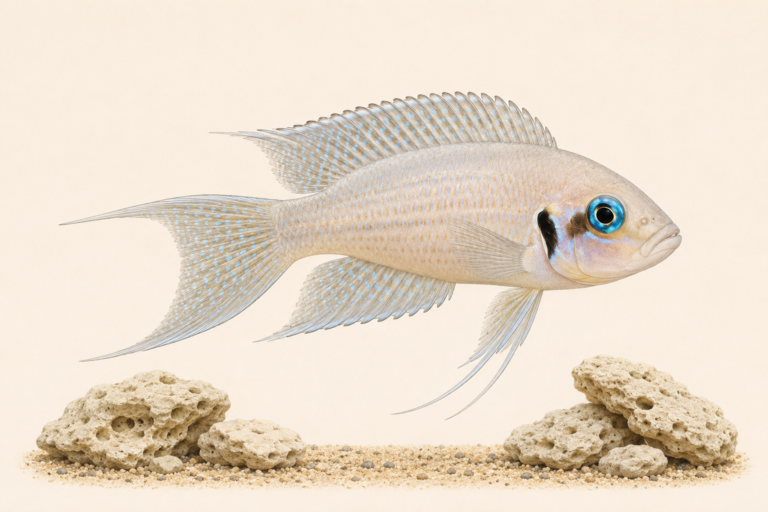
- Kribensis Cichlid, a relatively peaceful West African cichlid that typically coexists well with Synodontis, especially in a spacious tank with ample caves.
- African Butterfly Cichlid, another calm-natured West African cichlid that shares similar water parameter preferences.
- Bristlenose Pleco, a hardy algae-eating catfish that generally ignores Synodontis and occupies slightly different microhabitats.
- Rainbowfish, Active mid-water swimmers that are too large to be prey and too fast to cause bottom-dwelling conflicts.
- African Red-Eye Tetra, a robust and active shoaling species from similar habitats that adds movement to the upper tank levels.
- Rope Fish, a peaceful, nocturnal West African oddball that shares a similar temperament and activity schedule.
- Clown Loach, a sociable bottom-dweller that, while Asian in origin, matches well in terms of size and temperament in large community tanks.
Fish to avoid
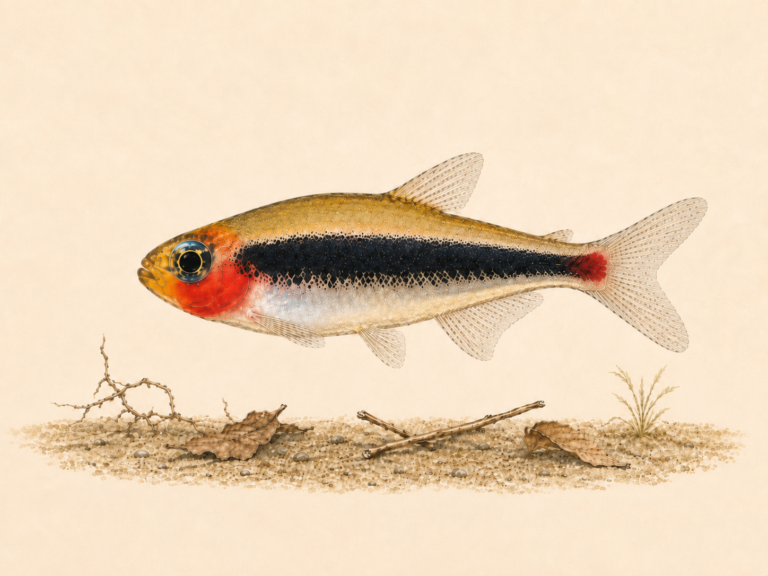
- Neon Tetra, far too small and may be consumed by the catfish during nocturnal foraging.
- Endler’s Livebearer, Tiny size makes them vulnerable to predation, especially overnight.
- Oscar, Large, aggressive, and territorial; likely to harass or even attack the Synodontis.
- Jaguar Cichlid, a highly aggressive predatory cichlid that would pose a serious threat to the catfish.
- Red Devil Cichlid, Extremely territorial and aggressive, particularly towards bottom-dwelling species.
- Celestial Pearl Danio, a micro-species that is far too small to be housed safely with a medium-sized catfish.
- Flowerhorn Cichlid, Aggressive and dominant; would almost certainly bully or injure the catfish.
- Freshwater Pufferfish, Nippy and often aggressive, with the potential to damage the catfish’s fins and barbels.
Breeding
Breeding Synodontis pardalis in captivity is a challenging undertaking and has been achieved only rarely by hobbyists. The species does not breed readily in home aquariums, and most specimens available in the trade are wild-caught. Much of what is known about the reproductive biology of Synodontis catfish comes from studies on closely related species, and some of these insights can be cautiously applied to S. pardalis.
In the wild, breeding is thought to be triggered by seasonal changes associated with the onset of the rainy season, specifically, a combination of falling water temperature, reduced hardness, increased water flow, and a rise in water level. Replicating these cues in captivity may improve the chances of spawning. Some aquarists have had success with Synodontis species by performing large, slightly cooler water changes (dropping the temperature by 2–3 °C), softening the water, and increasing current using a powerhead to simulate flood conditions. Conditioning the fish with a rich diet of live and frozen foods in the weeks preceding these changes is also advisable.
Synodontis pardalis is an egg scatterer. The female releases eggs, which are fertilised by the male and then left to drift or settle among rocks and substrate without any parental care. In the closely related species within the genus, eggs typically hatch within 48–72 hours, and the fry become free-swimming a few days later. The fry are very small and require infusoria or commercially available liquid fry food initially, graduating to newly hatched brine shrimp and microworms as they grow.
Separating the eggs from the adults is essential, as Synodontis pardalis, like most catfish, will readily consume its own eggs and fry if given the opportunity. If spawning is observed, removing the adults or transferring the eggs to a separate rearing tank with gentle aeration and matching water parameters gives the fry the best chance of survival. Given the difficulty involved, breeding this species is generally considered a project for experienced aquarists with dedicated breeding setups rather than a realistic expectation for the average community tank.
Common Diseases
Synodontis pardalis is a reasonably robust species, but like all freshwater fish, it is susceptible to a number of common ailments, particularly when water quality is poor or the fish is under stress from overcrowding, inadequate hiding places, or aggressive tank mates.
White spot disease, caused by the protozoan parasite Ichthyophthirius multifiliis, is one of the most frequently encountered problems. It presents as small white cysts on the skin, fins, and gills and is highly contagious. Treatment involves raising the water temperature gradually to 28–30 °C and administering a white spot remedy. However, it is crucial to note that Synodontis catfish, like many scaleless and small-scaled fish, can be sensitive to certain medications, particularly those containing copper or malachite green at full strength. Always use treatments at half dose initially or select formulations specifically labelled as safe for scaleless fish, and monitor the catfish closely during treatment.
Bacterial infections, including fin rot and skin ulcers, can occur in tanks with elevated nitrate levels or where the substrate is heavily contaminated. These conditions are best prevented through diligent maintenance, regular water changes, thorough gravel vacuuming, and prompt removal of uneaten food. Should a bacterial infection develop, a broad-spectrum antibacterial treatment such as those containing phenoxyethanol or acriflavine is typically effective, again used cautiously with catfish.
Barbel erosion is a condition that affects many bottom-dwelling catfish kept on rough or contaminated substrates. The barbels, which are vital sensory organs, become shortened, frayed, or worn down, impairing the fish’s ability to locate food. Prevention is straightforward: use a smooth sand or fine gravel substrate and keep it clean. If barbel damage is observed, improving substrate and water quality usually allows the barbels to regenerate over several weeks.
Internal parasites can be present in wild-caught specimens, manifesting as weight loss, sunken belly, or white, stringy faeces despite normal feeding. Antiparasitic treatments containing praziquantel or levamisole are effective against a range of internal worms and should be administered in a quarantine tank. Quarantining all new arrivals for two to four weeks before introducing them to an established community is a sensible precaution that can prevent the spread of both parasites and infectious diseases.
FAQs
Is Synodontis pardalis suitable for beginners?
Synodontis pardalis is best suited to aquarists with at least some prior experience in keeping tropical freshwater fish. While it is not especially demanding once established, it does require stable water quality, a well-planned aquascape with adequate hiding spots, and a certain degree of awareness regarding medication sensitivity. A complete beginner would benefit from starting with hardier species and moving on to Synodontis once they are comfortable with the fundamentals of aquarium maintenance.
Can I keep Synodontis pardalis in a planted tank?
Yes, Synodontis pardalis can be kept in a planted aquarium, though robust plant species are preferable. The catfish may occasionally uproot delicate or newly planted specimens while foraging through the substrate. Hardy plants such as Anubias, Java Fern, and Bolbitis, which can be attached to rocks and driftwood rather than rooted in the substrate, are excellent choices. Floating plants are also beneficial as they help diffuse light and create the shaded conditions the catfish prefers.
How many Leopard Synodontis can I keep together?
A single specimen can be kept perfectly happily, but if you wish to keep multiples, aim for a group of three or more to diffuse any territorial behaviour. Each fish should have access to its own shelter. For a group of three, a tank of at least 300 litres with an extensive array of caves and hiding spots is recommended. In smaller tanks or setups with insufficient cover, conspecific aggression can become problematic.
Why does my Leopard Synodontis swim upside down?
Resting or swimming in an inverted position is a well-documented behaviour among several Synodontis species and is not a cause for concern. The fish may hang upside down beneath driftwood, rocks, or the underside of broad-leaved plants. This behaviour is thought to be related to feeding on algae and biofilm from the undersides of surfaces, and it appears to be a comfortable resting posture for many individuals. If the fish is otherwise healthy, eating well, and active at night, inverted resting is entirely normal.
Will Synodontis pardalis eat snails or shrimp?
Synodontis pardalis is an opportunistic omnivore and will readily consume small invertebrates if the opportunity arises. Small snails such as Malaysian trumpet snails or bladder snails may be eaten, which can actually be beneficial for controlling pest snail populations. Ornamental shrimp, including cherry shrimp and Amano shrimp, are likely to be seen as food, particularly at night. If you value your shrimp colony, it is best not to house them with this catfish. Larger snails such as mystery snails or nerite snails are generally safe.
Related Guides
- Synodontis eupterus (Featherfin Squeaker), a closely related and widely available Synodontis species with similar care requirements and a spectacular dorsal fin.
- Upside-Down Catfish, a smaller Synodontis species famous for its inverted swimming habit, offering a comparison in size and behaviour.
- Synodontis multipunctatus (Cuckoo Catfish), a striking East African Synodontis known for its unique brood-parasitic breeding strategy.
- West African Biotope Aquarium Guide, a detailed guide to creating an authentic West African biotope, ideal for showcasing Synodontis pardalis alongside compatible regional species.
- Bristlenose Pleco Care Guide, a popular bottom-dwelling catfish that makes an excellent companion for Synodontis in community setups.