Quick summary
The Chocolate Gourami is a stunning but demanding fish best suited to experienced aquarists, as it requires very soft, acidic blackwater conditions and pristine water quality to thrive. If you’re not prepared to use RO water and monitor parameters closely, consider a hardier alternative like the Honey Gourami or Sparkling Gourami instead.
🐠 Build a tank around this species
In this guide:
- Introduction
- Quick Stats
- Appearance
- Natural Habitat
- Tank Size and Setup
- Water Parameters
- Filtration and Equipment
- Diet and Feeding
- Behaviour and Temperament
- Tank Mates
- Breeding
- Common Diseases
- FAQs
Introduction
The Chocolate Gourami (Sphaerichthys osphromenoides) is one of the most beautiful and enigmatic freshwater fish available in the aquarium hobby. With its rich, deep brown body crossed by pale vertical bands, this small labyrinth fish has captivated fishkeepers for decades. However, its reputation as one of the most demanding gouramis to maintain is well earned. Unlike many of its hardier relatives in the gourami family, the Chocolate Gourami is notoriously sensitive to water quality, requires very specific water chemistry, and is prone to disease if conditions are not meticulously maintained.
Native to the peat swamp forests and blackwater streams of Southeast Asia, particularly Peninsular Malaysia, Sumatra, and Borneo, this species has evolved in some of the most chemically extreme freshwater environments on earth. The waters it inhabits are extremely soft, highly acidic, and stained a deep tea-brown colour by tannins leached from decaying vegetation. Replicating these conditions in the home aquarium is the central challenge of keeping Chocolate Gouramis successfully, and it is this requirement that places them firmly in the territory of experienced aquarists.
What makes the Chocolate Gourami particularly fascinating from a biological perspective is its reproductive strategy. Unlike many gouramis that build bubble nests, Sphaerichthys osphromenoides is a mouthbrooder – and unusually, it is the female that incubates the eggs in her buccal cavity. This maternal mouthbrooding behaviour is relatively rare among anabantoids and adds another layer of intrigue to an already compelling species. Successfully breeding Chocolate Gouramis in captivity is considered a genuine achievement in the hobby and is a goal that many dedicated fishkeepers aspire to.
This guide provides a comprehensive overview of everything you need to know to keep and care for Chocolate Gouramis, from tank setup and water parameters to diet, behaviour, breeding, and disease prevention. If you are willing to invest the time and effort required, the Chocolate Gourami can be an immensely rewarding species to maintain.
Quick Stats
| Scientific name | Sphaerichthys osphromenoides |
|---|---|
| Common names | Chocolate Gourami |
| Family | Osphronemidae |
| Origin | Peninsular Malaysia, Sumatra, Borneo |
| Adult size | 5.5 cm |
| Lifespan | 5–8 years |
| Difficulty | Advanced |
| Breeding difficulty | Advanced |
| Temperature | 25–30 °C |
| pH | 4–6.5 |
| GH | 0–6 dGH |
| KH | 0–4 dKH |
| Minimum tank size | 40 L |
| Conservation status | Data Deficient (IUCN, assessed 2019) |
Appearance
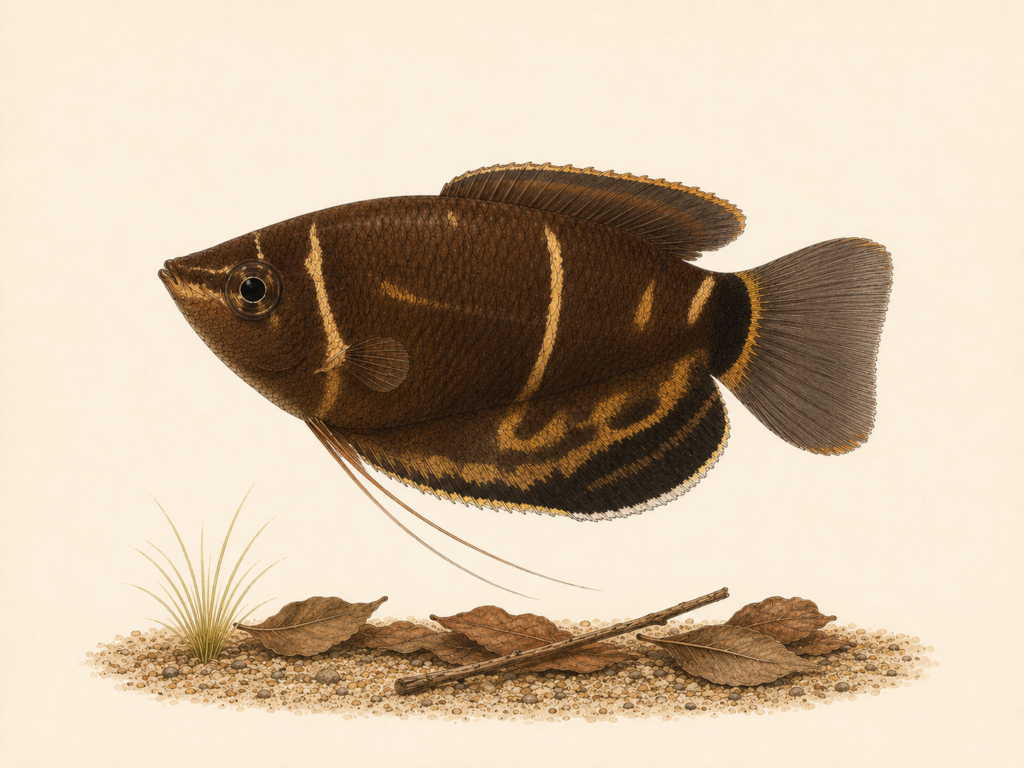
The Chocolate Gourami is a compact, laterally compressed fish that typically reaches an adult size of 5 to 6 centimetres. Its body shape is somewhat oval and rounded, with a relatively small head and a slightly upturned mouth characteristic of surface-feeding labyrinth fish. The overall proportions are elegant and understated compared to larger, showier gourami species.
The defining feature of the Chocolate Gourami is its colouration. The base colour is a rich, deep chocolate brown that can range from a warm reddish-brown to a darker, almost espresso shade depending on the individual’s mood, health, and environmental conditions. This brown colouration covers the entire body and extends into the fins. Superimposed on this base colour are three to five narrow, pale vertical bands that run from the dorsal surface towards the belly. These bands can appear white, cream, or pale gold, and they provide a striking contrast against the dark body. The intensity and visibility of these bands can vary; in stressed or unhealthy specimens, the overall colouration tends to wash out, and the bands become less distinct.
The fins of the Chocolate Gourami are relatively modest in size. The dorsal and anal fins are rounded and of moderate length, while the caudal fin is slightly rounded or truncated. The pelvic fins are elongated and thread-like, a trait common to many gouramis, and these are used as tactile sensory organs to explore the environment. All fins share the brown base colouration, though they may show subtle darker edging.
Sexual dimorphism in Chocolate Gouramis is subtle but discernible to the experienced eye. Males tend to have a more pronounced, straighter lower jaw and may develop a slightly more pointed dorsal fin. The throat region of the male is often more distinctly marked, sometimes showing a yellowish tint. Females, which are the mouthbrooding sex, typically have a slightly more rounded body shape and a more distinctly rounded lower jaw to accommodate egg incubation. When ready to breed, females may display a darker, more intense overall colouration.
Healthy Chocolate Gouramis display vivid, saturated colours with clearly defined banding. A washed-out, pale, or greyish appearance is a reliable indicator of stress, poor water quality, or disease. When kept in optimal blackwater conditions with subdued lighting and a dark substrate, these fish look their absolute best, with the chocolate tones deepening considerably.
Natural Habitat
The Chocolate Gourami is found in the tropical lowland regions of Southeast Asia, with its distribution spanning Peninsular Malaysia, the island of Sumatra in Indonesia, and parts of Borneo. Within these regions, the species inhabits a very specific type of environment: peat swamp forests and the slow-moving blackwater streams and pools that flow through them.
Peat swamp forests are remarkable ecosystems characterised by waterlogged, acidic soils composed of partially decomposed organic matter. The water in these habitats is stained a deep amber or brown colour by humic acids and tannins released from the thick layers of fallen leaves, wood, and other plant debris that blanket the substrate. This creates what aquarists commonly refer to as blackwater – water that is extremely soft, highly acidic, and very low in dissolved minerals.
The water chemistry in these habitats is extreme by aquarium standards. The pH frequently drops below 4.0, general hardness is negligible (often 0 to 1 dGH), and the dissolved organic compounds create a naturally antibacterial environment that suppresses many pathogens. The temperature in these equatorial lowland habitats remains consistently warm, typically between 25 and 30 degrees Celsius, with minimal seasonal variation.
The physical environment is densely shaded by the overhead canopy of the swamp forest, meaning light levels at the water surface are very low. The substrate consists of a thick layer of leaf litter, fallen branches, and decomposing wood. Aquatic vegetation is generally sparse due to the low light and highly acidic conditions, although some specialised plants and marginal vegetation may be present. The water flow is extremely gentle, ranging from completely still in pools to barely perceptible in streams.
Chocolate Gouramis inhabit the shallow margins and quieter pockets of these waterways, where they forage among the leaf litter and submerged wood for small invertebrates and organic matter. They are typically found in small, loose groups rather than large shoals. The combination of tannin-stained water, dim lighting, and dense cover provides both protection from predators and a rich foraging environment.
Understanding this natural habitat is absolutely essential for anyone hoping to keep Chocolate Gouramis successfully. The species has evolved over millennia in these very specific conditions, and its physiology is finely tuned to function optimally in soft, acidic, warm water. Attempting to keep this fish in standard community aquarium conditions – neutral pH, moderate hardness, bright lighting – is a recipe for chronic stress and eventual failure.
Tank Size and Setup
A minimum tank volume of 75 litres is recommended for a small group of Chocolate Gouramis. Since this species is best kept in groups of six or more, a tank in the range of 100 to 150 litres is preferable for a dedicated setup. The tank dimensions should favour length and depth of footprint over height, as Chocolate Gouramis tend to occupy the middle and upper portions of the water column and appreciate horizontal swimming space.
The aquascape for a Chocolate Gourami tank should aim to replicate, as closely as possible, the blackwater peat swamp environment. Begin with a dark substrate – fine, dark sand or specialised aquarium soil works well. A dark substrate helps to reduce reflected light, calms the fish, and enhances their colouration. Avoid bright, pale, or reflective substrates.
Driftwood and bogwood should form the backbone of the hardscape. Use multiple pieces of varying sizes to create a complex, three-dimensional structure with plenty of shaded areas, overhangs, and hiding spots. The wood itself will leach tannins into the water, contributing to the desired blackwater effect. Indian almond leaves (Terminalia catappa), oak leaves, and other dried botanical materials should be added generously to the tank floor. These leaves serve multiple purposes: they release tannins and humic acids that soften and acidify the water, they create a naturalistic leaf litter substrate, and they support the growth of biofilm and microfauna that the gouramis will graze on.
Live plants can be incorporated, but the selection should be limited to species that tolerate very soft, acidic water and low light conditions. Cryptocoryne species are excellent choices, as many originate from similar habitats. Java fern and Java moss, attached to driftwood, also perform well. Floating plants such as Salvinia or Amazon frogbit are highly recommended, as they dim the lighting from above and provide the subdued, shaded atmosphere that Chocolate Gouramis strongly prefer.
Lighting should be kept dim. Bright aquarium lights will stress Chocolate Gouramis and cause them to hide constantly, lose colour, and become susceptible to disease. If your light fixture is too intense, use floating plants, adjust the intensity if possible, or reduce the photoperiod. The goal is a gently illuminated tank with dappled shade, reminiscent of a forest-floor stream.
A tight-fitting lid is essential. Like all labyrinth fish, Chocolate Gouramis breathe atmospheric air at the surface, and the air above the water must be warm and humid to prevent damage to the labyrinth organ. A covered tank traps a layer of warm, moist air above the water surface. Additionally, gouramis are capable of jumping, so a secure lid prevents escape.
Water Parameters
Water chemistry is arguably the single most critical factor in the successful keeping of Chocolate Gouramis. This species is intolerant of the moderate-to-hard, neutral-to-alkaline water conditions found in many parts of the United Kingdom and elsewhere. Getting the water parameters right is not optional – it is the difference between a thriving fish and a chronically ill one.
| Temperature | 25 – 30 °C |
| pH | 4.0 – 6.5 |
| General hardness (GH) | 0 – 6 dGH |
| Carbonate hardness (KH) | 0 – 4 dKH |
| Ammonia | 0 ppm |
| Nitrite | 0 ppm |
| Nitrate | Below 20 ppm |
The ideal pH for Chocolate Gouramis in the home aquarium is between 4.5 and 6.0. While they can tolerate a pH up to 6.5, they will display their best colour, behaviour, and disease resistance at lower pH values. Many successful keepers maintain their Chocolate Gourami tanks at a pH of 5.0 to 5.5. Achieving and maintaining such a low pH requires the use of reverse osmosis (RO) water or very soft tap water, combined with natural acidifiers such as Indian almond leaves, peat, and driftwood.
General hardness should be as low as possible, ideally below 4 dGH. Carbonate hardness should also be minimal, as high KH will buffer the pH upward and make it difficult to achieve the acidic conditions required. In many areas, tap water is far too hard and alkaline for this species, making RO water or rainwater collection a practical necessity. RO water can be remineralised very lightly with a product designed for soft-water species, or used pure if mixed with sufficient botanicals to provide trace minerals.
Temperature should be maintained at the warmer end of the tropical range, ideally between 26 and 28 degrees Celsius. Chocolate Gouramis come from equatorial habitats with minimal temperature fluctuation, so stability is important. Avoid letting the temperature drop below 25 degrees or fluctuate significantly over the course of the day.
Ammonia and nitrite must always read zero. Chocolate Gouramis are exceptionally sensitive to nitrogenous waste products, and even low levels that a hardier species might tolerate can prove fatal. Nitrate should be kept as low as possible, ideally below 20 ppm, through regular water changes and efficient biological filtration. However, water changes must be performed with care – the replacement water must be matched precisely for temperature, pH, and hardness to avoid shocking the fish.
Filtration and Equipment
Filtration for a Chocolate Gourami tank should prioritise gentle water flow and excellent biological filtration capacity. The natural habitat of this species is characterised by virtually still or very slow-moving water, and strong currents will stress these fish considerably. Sponge filters powered by an air pump are an excellent choice, as they provide superb biological filtration with minimal water movement. For slightly larger tanks, a small internal filter or a hang-on-back filter with an adjustable flow rate can be used, but the output should be baffled or directed against the glass to diffuse the current.
External canister filters can also work well, provided the flow rate is appropriate for the tank volume and the outlet is fitted with a spray bar or lily pipe to distribute the flow gently. Avoid powerheads, wavemakers, or any equipment that creates strong directional currents.
A reliable heater is essential to maintain the consistently warm temperatures that Chocolate Gouramis require. Choose a heater rated appropriately for your tank volume and consider using a heater guard to prevent the fish from coming into contact with the heating element. An external thermostat or a heater with a built-in thermostat that holds temperature accurately is advisable. Given the sensitivity of this species, a separate aquarium thermometer should be used to verify the heater’s accuracy.
Peat filtration can be a useful addition to the system. Aquarium-grade peat placed in a filter media bag within the filter housing will leach tannins and humic acids into the water, helping to lower and stabilise the pH. This can be used in conjunction with Indian almond leaves and driftwood to maintain the desired blackwater conditions. Be aware that peat will need to be replaced periodically as it becomes exhausted.
An air pump running a sponge filter serves double duty by providing both filtration and gentle surface agitation. While Chocolate Gouramis are labyrinth fish and can breathe atmospheric air, some degree of surface movement is still beneficial for gas exchange, particularly to prevent the water from becoming stagnant. Just ensure the agitation is gentle rather than vigorous.
Lighting, as discussed in the tank setup section, should be subdued. If using LED lighting, choose a unit with adjustable brightness and colour temperature. A warm-toned light in the 3000 to 4000 Kelvin range will complement the tannin-stained water beautifully and create a naturalistic, warm-hued environment.
Diet and Feeding
Chocolate Gouramis can be somewhat finicky eaters, particularly when newly acquired or kept in suboptimal conditions. In the wild, they feed on small invertebrates, insect larvae, zooplankton, and the biofilm and microfauna that colonise submerged surfaces and leaf litter. Replicating this diet as closely as possible in the aquarium is important for maintaining health and colouration.
Live and frozen foods should form the staple diet. Excellent choices include bloodworms, daphnia, brine shrimp (Artemia), mosquito larvae, Moina, grindal worms, and micro worms. Live foods are particularly valued, as they stimulate natural hunting behaviour and are readily accepted even by finicky individuals. Frozen versions of these foods are a convenient and nutritionally sound alternative and are usually accepted without difficulty once the fish have settled into their tank.
High-quality dried foods such as micro pellets and slow-sinking granules can be offered as a supplement, but do not rely on them as the primary diet. Many Chocolate Gouramis will refuse flake food entirely, and even those that accept dry foods will not thrive on them alone. If offering dried foods, choose products specifically formulated for small tropical fish, with a high protein content and minimal fillers.
The biofilm and microfauna that develop on Indian almond leaves and other botanicals in the tank provide a valuable supplementary food source. Chocolate Gouramis will frequently be observed picking at leaf surfaces and wood, grazing on the tiny organisms and organic material that accumulate there. Maintaining a good supply of decomposing leaves in the tank supports this natural foraging behaviour.
Feed small amounts two to three times daily rather than one large feeding. Chocolate Gouramis have small stomachs and benefit from frequent, modest meals. Uneaten food should be removed promptly to prevent water quality deterioration, which this species is particularly sensitive to. Observe the fish during feeding to ensure all individuals are eating – subordinate or stressed fish may be reluctant to feed in the presence of more dominant tank mates.
Behaviour and Temperament
The Chocolate Gourami is a peaceful, shy, and somewhat retiring species. It is not an active, bold swimmer in the manner of many popular aquarium fish. Instead, it tends to move slowly and deliberately through the aquarium, hovering among plants and driftwood, and frequently pausing to investigate surfaces for food. This calm, unhurried demeanour is part of the species’ charm, but it also means that Chocolate Gouramis can be easily outcompeted for food and intimidated by more boisterous tank mates.
This species is social and should be kept in groups of at least six individuals. In smaller numbers, they tend to be more reclusive and nervous. A group of six or more allows the fish to establish a natural social hierarchy and provides the security of numbers, which encourages bolder behaviour and more natural interactions. Within the group, a loose hierarchy will develop, with occasional gentle sparring between males. These interactions are typically ritualistic and involve lateral displays, fin spreading, and colour intensification rather than physical aggression.
Chocolate Gouramis are most active during the twilight hours of dawn and dusk, reflecting their origins in dimly lit forest habitats. During the brightest part of the day, they may retreat into shaded areas and become less visible. Providing plenty of cover and maintaining subdued lighting will encourage them to remain active and visible throughout the day.
Stress is a significant concern with this species. Signs of stress include persistent pale colouration, loss of appetite, clamped fins, excessive hiding, and rapid breathing. Common stressors include inappropriate water parameters, aggressive or overly active tank mates, bright lighting, insufficient cover, and sudden changes in water chemistry or temperature. A stressed Chocolate Gourami is highly susceptible to disease, so identifying and addressing the source of stress promptly is critical.
As labyrinth fish, Chocolate Gouramis will periodically rise to the surface to gulp atmospheric air. This is normal behaviour and should not be confused with signs of oxygen deprivation. However, if the fish is gasping at the surface continuously, it may indicate a water quality problem.
Tank Mates
Choosing tank mates for Chocolate Gouramis requires careful consideration. The ideal companions are small, peaceful, soft-water species that will not outcompete the gouramis for food or create a stressful environment through aggression or excessive activity. Many fishkeepers choose to maintain Chocolate Gouramis in a species-only setup, which is arguably the best approach for maximising their health, comfort, and breeding potential. However, a carefully curated community tank is possible if the right species are selected.
Good tank mates
- Harlequin Rasbora – A gentle, soft-water shoaling fish from similar Southeast Asian habitats that shares the same water parameter requirements.
- Ember Tetra – A tiny, peaceful tetra that thrives in warm, acidic water and will not compete aggressively for food.
- Pygmy Corydoras – A diminutive bottom-dwelling catfish that is peaceful, unobtrusive, and tolerates soft, acidic conditions.
- Kuhli Loach – A shy, nocturnal bottom-dweller that occupies a different niche in the tank and tolerates acidic water well.
- Chili Rasbora – An extremely small and peaceful micro rasbora ideally suited to the same blackwater conditions.
- Sparkling Gourami – A small, peaceful labyrinth fish from similar habitats that coexists well with Chocolate Gouramis in appropriately sized tanks.
- Lambchop Rasbora – Another gentle rasbora from Southeast Asian blackwater habitats that shares compatible water requirements.
- Otocinclus – A small, peaceful algae-eating catfish that will not bother gouramis and helps keep surfaces clean.
Fish to avoid
- Tiger Barb – A notorious fin-nipper with a boisterous temperament that will harass and stress Chocolate Gouramis relentlessly.
- Convict Cichlid – An aggressive cichlid that requires different water parameters and will bully or attack the gouramis.
- Common Pleco – Grows far too large for the tanks typically used for Chocolate Gouramis and produces excessive waste.
- Betta – May display territorial aggression towards gouramis, which are closely related and can be perceived as rivals.
- Dwarf Gourami – Can be territorial and may harass Chocolate Gouramis; also carries a high risk of Dwarf Gourami Iridovirus.
- Chinese Algae Eater – Becomes aggressive and territorial as it matures and may latch onto the flanks of slow-moving gouramis.
- Buenos Aires Tetra – A large, active, and often nippy tetra that requires different water chemistry and will stress Chocolate Gouramis.
- Rainbow Shark – A highly territorial bottom-dweller that becomes increasingly aggressive with age and is unsuitable for peaceful community tanks.
Breeding
Breeding Chocolate Gouramis in captivity is a challenging but immensely rewarding endeavour. The species is a maternal mouthbrooder, meaning the female incubates the fertilised eggs in her mouth until the fry are ready to be released. This reproductive strategy is unusual among gouramis and anabantoids, most of which are bubble-nest builders.
To encourage breeding, start with a well-established group of six or more individuals in a mature tank with optimal water parameters. The water should be very soft (GH below 2 dGH), very acidic (pH 4.5 to 5.5), and warm (27 to 29 degrees Celsius). Excellent water quality is essential, with ammonia and nitrite at zero and nitrate as low as possible. A diet rich in live and frozen foods will help condition the fish for spawning.
Courtship in Chocolate Gouramis is subtle and can be easy to miss if you are not watching closely. The male will display to the female by intensifying his colouration and spreading his fins. If the female is receptive, the pair will engage in a slow, circling embrace beneath floating plants or in a sheltered area of the tank. During spawning, the female releases a small number of eggs (typically 10 to 40), which are fertilised by the male. The female then collects the eggs in her mouth.
The female will incubate the eggs for approximately two to three weeks. During this period, she will not eat, and her throat will appear visibly distended. It is crucial that she is not disturbed or stressed during incubation, as stressed females may swallow or spit out the eggs prematurely. Maintaining stable water parameters and a calm environment during this period is essential.
When the fry are fully developed, the female will release them. The fry are relatively large compared to those of bubble-nesting gouramis, which gives them a better chance of survival. They can be fed infusoria, vinegar eels, and newly hatched brine shrimp (Artemia nauplii) from the outset. As they grow, they can be transitioned to larger foods such as micro worms and finely crushed dried foods.
Raising the fry requires meticulous attention to water quality. Small, frequent water changes with precisely matched water are essential. The fry are just as sensitive to water chemistry as the adults, if not more so. Growth is slow, and it may take several months before the young fish begin to show adult colouration.
Common Diseases
Chocolate Gouramis are unfortunately prone to a number of diseases, largely due to their sensitivity to water quality and their specific physiological requirements. Prevention through excellent husbandry is always preferable to treatment, as many medications are poorly tolerated by this species.
Velvet disease (Oodinium) is perhaps the most common and dangerous affliction of Chocolate Gouramis. This parasitic disease manifests as a fine, gold or rust-coloured dusting on the skin and fins, often accompanied by lethargy, clamped fins, and rapid breathing. Velvet can spread rapidly and is often fatal if not caught early. Treatment involves raising the temperature slightly, dimming the lights (the parasite is photosynthetic), and using copper-based medications with extreme caution, as Chocolate Gouramis can be sensitive to copper. Some keepers prefer to use formalin or malachite green at reduced doses.
Ich (white spot disease) can also affect Chocolate Gouramis, particularly if they are stressed or kept in suboptimal conditions. The characteristic white spots on the body and fins are easily recognisable. Treatment with heat (raising the temperature to 30 degrees Celsius) and salt is complicated by the fact that Chocolate Gouramis are highly intolerant of salt due to their adaptation to very soft water. Heat treatment alone, combined with improved water quality, is generally the safest approach.
Bacterial infections, including fin rot and columnaris, can occur when water quality deteriorates or the fish are otherwise immunocompromised. Symptoms include frayed or disintegrating fins, white or grey patches on the body, and loss of appetite. Maintaining pristine water quality is the primary defence against bacterial diseases. If treatment is necessary, mild antibacterial medications should be used at reduced dosages.
Fungal infections may develop on wounds or areas of damaged skin. These appear as cotton-like white or grey growths. Antifungal treatments are available, but again, dosing should be conservative for this sensitive species.
Internal parasites can be a concern, particularly in wild-caught specimens. Symptoms may include weight loss despite a good appetite, white or stringy faeces, and a generally emaciated appearance. Antiparasitic treatments containing praziquantel or levamisole can be effective but should be used with care.
The single most effective strategy for preventing disease in Chocolate Gouramis is to maintain impeccable water quality within the correct parameter range. A mature, stable tank with appropriate chemistry, temperature, and biological filtration will go a long way towards keeping these fish healthy. Quarantine all new additions thoroughly before introducing them to an established Chocolate Gourami tank.
FAQs
Can Chocolate Gouramis be kept in hard, alkaline water?
No. Chocolate Gouramis are physiologically adapted to very soft, acidic water and will not thrive in hard, alkaline conditions. Keeping them in water with a pH above 7.0 or a GH above 8 dGH will lead to chronic stress, poor colouration, suppressed immune function, and a significantly shortened lifespan. If your tap water is hard or alkaline, you will need to use reverse osmosis (RO) water or another method to achieve the soft, acidic conditions this species requires.
How many Chocolate Gouramis should I keep together?
Chocolate Gouramis are social fish and should be kept in groups of at least six. Keeping them singly or in pairs tends to result in excessively shy, stressed fish that hide constantly and are more prone to illness. A group of six or more allows them to establish a natural social hierarchy and provides the security that encourages bolder behaviour and better overall wellbeing. In larger tanks, groups of ten or more are even better.
Why has my Chocolate Gourami lost its colour?
Colour loss in Chocolate Gouramis is almost always a sign of stress or illness. The most common causes include inappropriate water parameters (especially pH that is too high or water that is too hard), poor water quality (elevated ammonia, nitrite, or nitrate), bright or harsh lighting, aggressive or overly active tank mates, and insufficient cover or hiding places. Check your water parameters first, then evaluate the tank environment for other potential stressors. Once the underlying cause is addressed, colour should return gradually.
Do Chocolate Gouramis build bubble nests?
No. Unlike many other gourami species, Chocolate Gouramis are mouthbrooders. The female incubates the fertilised eggs in her buccal cavity (mouth) for approximately two to three weeks before releasing fully developed fry. This is a relatively unusual reproductive strategy among anabantoid fish and is one of the features that makes Chocolate Gouramis so fascinating to dedicated fishkeepers.
Are Chocolate Gouramis suitable for beginners?
Chocolate Gouramis are not recommended for beginners. They require very specific water chemistry that can be difficult and costly to achieve and maintain, they are sensitive to water quality fluctuations, they are prone to disease, and they can be challenging to feed. This species is best suited to experienced aquarists who are comfortable working with RO water, monitoring water parameters closely, and providing live and frozen foods. For those new to gouramis, hardier species such as Honey Gouramis or Sparkling Gouramis are much better starting points.