Dwarf Gourami Care Guide — Tank Setup, Feeding and Breeding
Introduction
The Dwarf Gourami is one of those fish that stops people in their tracks at the pet shop. With its vivid stripes of iridescent blue and flame-red, compact body, and calm demeanour, it has earned a reputation as one of the most attractive freshwater fish available to hobbyists. Originally described by Francis Hamilton in 1822, Trichogaster lalius (formerly Colisa lalia) has been a staple in the aquarium hobby for well over a century, and its popularity shows no signs of fading.
People love Dwarf Gouramis for a handful of good reasons. They are small enough to thrive in modestly sized tanks, peaceful enough to live alongside a wide range of community fish, and interesting enough to hold your attention for years. As labyrinth fish, they possess a specialised organ that allows them to breathe atmospheric air directly from the surface, which means you will regularly see them rise to the top of the tank for a quick gulp. This behaviour, combined with their tendency to explore every corner of the aquarium and their endearing habit of “tasting” objects with their modified pelvic fins, gives them a personality that far exceeds their small stature.
Dwarf Gouramis are well suited to beginners who have done their homework and can maintain stable water conditions. They are also a favourite of experienced keepers who want a centrepiece fish for a planted community tank without committing to a massive aquarium. That said, they do come with a caveat that any honest guide should mention upfront: commercially bred Dwarf Gouramis can be prone to a viral disease known as Dwarf Gourami Iridovirus (DGIV), so sourcing healthy stock from a reputable supplier matters more here than with many other species. If you buy well and keep your water clean, these fish will reward you with colour, character, and a genuinely enjoyable fishkeeping experience.
Quick stats
| Scientific name | Trichogaster lalius |
| Family | Osphronemidae |
| Origin | South Asia, India, Bangladesh, Pakistan |
| Adult size | 6–8 cm (2.5–3.5 inches) |
| Lifespan | 4–6 years |
| Difficulty | Beginner |
| Breeding difficulty | Moderate |
| Temperature | 22–28 °C |
| pH range | 6.0–7.5 |
| Minimum tank size | 40 litres (for a single fish; 75+ litres for a pair or community) |
Appearance
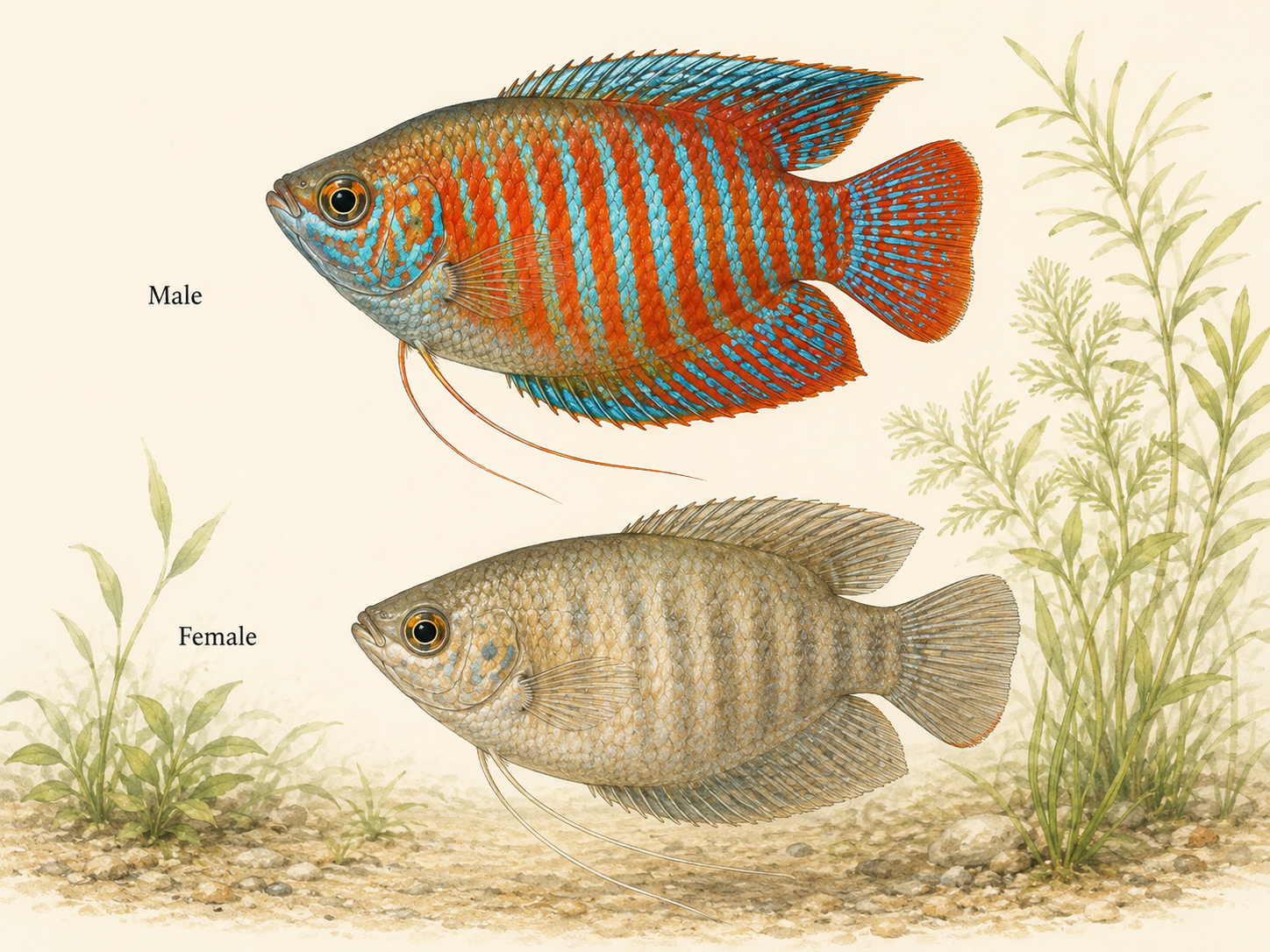
The wild-type Dwarf Gourami is a genuinely stunning fish. Males display alternating diagonal stripes of brilliant turquoise-blue and deep orange-red that run across the body and extend into the fins. The dorsal fin is edged in orange, the anal fin carries the same striped pattern, and the ventral (pelvic) fins are elongated, thread-like, and bright orange. The body is laterally compressed and oval-shaped, giving them a slightly flattened profile when viewed head-on. Selective breeding has produced several colour morphs, including the Flame Dwarf Gourami (almost entirely red-orange with minimal blue), the Powder Blue Dwarf Gourami (predominantly blue with faint red markings), and the Neon Blue Dwarf Gourami (an intensified version of the powder blue). All of these morphs are the same species and require identical care.
Telling males from females is straightforward once you know what to look for. Males are the colourful ones, brighter, more intensely patterned, and slightly larger with a more pointed dorsal fin. Females are considerably more subdued, dressed in a silvery-grey to pale blue body with only faint hints of the striping seen in males. Their dorsal fin is rounded rather than pointed. Females are also slightly smaller and tend to have a rounder belly, especially when carrying eggs. In pet shops, males vastly outnumber females on the sales floor because of their superior colour, so if you want a pair for breeding purposes, you may need to specifically request females or order them in advance.
Natural habitat
Dwarf Gouramis originate from the slow-moving rivers, streams, lakes, and rice paddies of South Asia, with their range spanning northern India, Bangladesh, and parts of Pakistan. These are warm, shallow waters that are often heavily vegetated with both submerged and floating plants. The flow is gentle to negligible, and the substrate is typically soft mud or silt. In many of their native habitats, the water is slightly acidic and stained with tannins from decaying organic matter, giving it a tea-coloured hue. During the monsoon season, their habitats can expand dramatically as floodwaters fill low-lying agricultural fields, providing temporary but rich feeding grounds.
Understanding this natural environment is key to keeping Dwarf Gouramis happy in captivity. They evolved in calm, warm, densely planted water with plenty of cover and access to the surface. A bare tank with strong filtration current and no plants is essentially the opposite of what this fish needs. When you replicate even a rough approximation of their natural conditions, soft water, gentle flow, warm temperatures, and abundant vegetation, you will see the difference in their colour intensity, activity level, and overall health. Their labyrinth organ, which allows them to breathe air, is an adaptation to the oxygen-poor waters they naturally inhabit, so maintaining clear surface access in your aquarium is not optional.
Tank size and setup
A single Dwarf Gourami can be housed in a 40-litre tank, but for a pair or a community setup, you should be thinking in the range of 75 to 100 litres as a minimum. Bigger is always better with this species, not because of their physical size but because they appreciate space to establish a small territory and retreat from tank mates when they want to. A longer, shallower tank is preferable to a tall one, as Dwarf Gouramis spend much of their time in the middle and upper water columns and need easy access to the surface for breathing.
For substrate, a fine-grained option like sand or small smooth gravel works well. Dark substrates such as JBL Manado or CaribSea Eco-Complete tend to make their colours pop compared to pale gravel. Planting is where you can really make this tank sing. Dwarf Gouramis feel most secure in a well-planted environment with a mix of rooted plants and floating cover. For the background and midground, consider species like Vallisneria spiralis, Cryptocoryne wendtii, Hygrophila polysperma, and Java Fern (Microsorum pteropus). Floating plants are particularly important, Amazon Frogbit (Limnobium laevigatum), Salvinia, or even simple Duckweed will diffuse the lighting and provide the shaded surface areas that Dwarf Gouramis actively seek out. If you plan to breed them, floating plants also serve as anchoring points for the male’s bubble nest.
Add a few pieces of driftwood or smooth rock to break up sightlines and provide additional hiding spots. Avoid sharp or rough decorations that could damage their delicate fins. Lighting should be moderate, bright enough to sustain your plants but not so intense that the fish feel exposed. If you are running high-output LED lights, floating plants will naturally help tone things down at the water surface. Keep the flow gentle. Dwarf Gouramis are not strong swimmers and will become stressed in a tank with vigorous water movement. If your filter output is too powerful, baffle it with a sponge, a spray bar, or by directing it against the glass.
Water parameters
| Parameter | Ideal range |
|---|---|
| Temperature | 22–28 °C (24–26 °C is the sweet spot) |
| pH | 6.0–7.5 |
| Hardness (GH) | 4–10 dGH |
| Ammonia | 0 ppm |
| Nitrite | 0 ppm |
| Nitrate | Below 20 ppm |
Dwarf Gouramis are fairly adaptable within these ranges, but stability matters more than hitting a perfect number. Sudden swings in temperature or pH will stress them far more than a reading that sits slightly outside the textbook ideal. Perform regular water changes of around 20–25% weekly to keep nitrates in check and maintain overall water quality. If your tap water is particularly hard or alkaline, mixing in some RO (reverse osmosis) water can help you achieve softer, slightly acidic conditions that this species naturally prefers. Adding Indian Almond Leaves or alder cones to the tank is another easy way to gently lower pH and introduce beneficial tannins that mimic their wild habitat.
Filtration and equipment
A sponge filter is an excellent choice for a Dwarf Gourami tank, especially smaller setups and breeding tanks. It provides gentle biological and mechanical filtration without creating the strong currents these fish dislike. For community tanks in the 75–150 litre range, a small hang-on-back filter or a compact internal canister like the Fluval U2 works well, provided you dial down the flow or fit a spray bar. If you prefer a canister filter for larger setups, models like the Eheim Classic 250 or Fluval 107 offer reliable, quiet performance and allow you to adjust the output easily.
A heater is essential unless you live in a consistently warm climate. An adjustable heater rated appropriately for your tank volume, roughly 1 watt per litre is a common guideline, will keep temperatures stable. Brands like Eheim Jäger and Fluval M-series are well-regarded for their accuracy and reliability. Always pair your heater with a separate thermometer so you can verify the actual water temperature rather than relying solely on the heater dial.
A good water testing kit is non-negotiable. The API Freshwater Master Test Kit is the industry standard for home use and tests for ammonia, nitrite, nitrate, and pH using liquid reagents, which are more accurate than strip tests. Test your water weekly, or more frequently if you notice any changes in your fish’s behaviour or appearance.
Diet and feeding
In the wild, Dwarf Gouramis are omnivores with a slight lean towards insectivory. They feed on small invertebrates, insect larvae, algae, and plant matter at or near the water surface. In captivity, they are not fussy eaters, which is one of the reasons they are recommended for beginners. A high-quality micro-pellet or small flake food should form the base of their diet. Hikari Micro Pellets, Fluval Bug Bites (small tropical formula), and Omega One Small Tropical Pellets are all solid choices that provide balanced nutrition and are sized appropriately for a small mouth.
Supplement this staple with regular offerings of frozen or live foods. Bloodworms, daphnia, brine shrimp, and mosquito larvae are all eagerly accepted and help bring out the best colour and condition. Aim to include these two to three times a week. Blanched vegetables like tiny pieces of courgette or spinach can be offered occasionally, though most Dwarf Gouramis are more enthusiastic about meaty foods. Feed once or twice a day, offering only what they can consume in about two minutes. Overfeeding is one of the most common mistakes in fishkeeping and leads directly to poor water quality, so err on the side of less rather than more.
Behaviour and temperament
Dwarf Gouramis are generally peaceful, somewhat shy fish that spend their days drifting through the middle and upper levels of the tank, exploring plants, investigating surfaces with their sensitive pelvic fin filaments, and making occasional trips to the surface for air. They are not schooling fish, but they are social enough to tolerate the company of their own kind and other peaceful species. A single male makes a perfectly content aquarium resident, and this is often the simplest way to keep them.
Where things can get tricky is when you keep more than one male in the same tank. Male Dwarf Gouramis can be territorial towards each other, especially in smaller enclosures. In a well-planted tank of 100 litres or more, two males may coexist with only occasional flaring and posturing, but in a smaller tank, the dominant male will often harass the subordinate relentlessly. If you want to keep a pair, a single male with one or two females is a safer arrangement, and you should ensure there are plenty of visual barriers and hiding spots. Females are docile and rarely cause any issues.
One quirk worth mentioning is their tendency to become reclusive or skittish in sparse tanks or when kept with boisterous tank mates. If your Dwarf Gourami hides constantly and barely comes out to eat, the environment is the first thing to evaluate. More plants, gentler flow, dimmer lighting, and calmer companions usually solve the problem.
Tank mates
Good tank mates
- Neon Tetras, peaceful, small, and occupy the middle to lower water column, so they rarely cross paths with the gourami.
- Ember Tetras, tiny, calm, and their warm orange colour complements the gourami beautifully.
- Harlequin Rasboras, gentle schooling fish that share similar water parameter preferences.
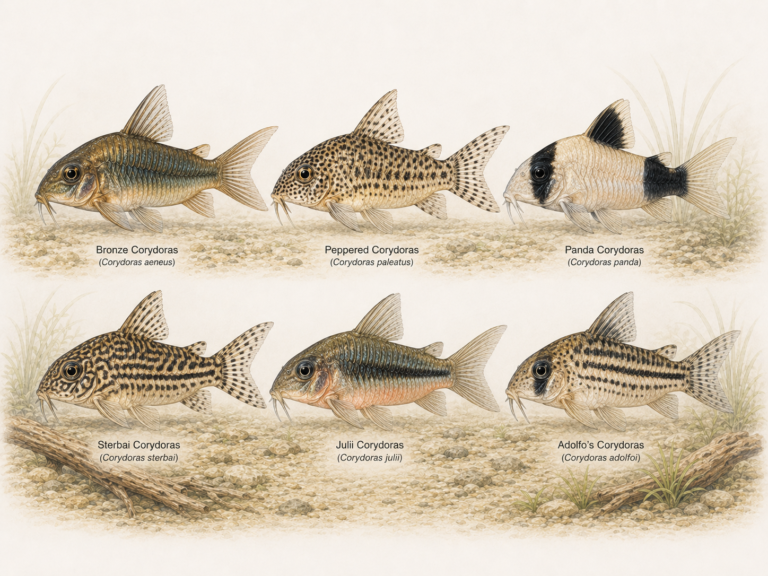
- Corydoras Catfish (most species), bottom-dwellers that stay out of the gourami’s territory entirely.
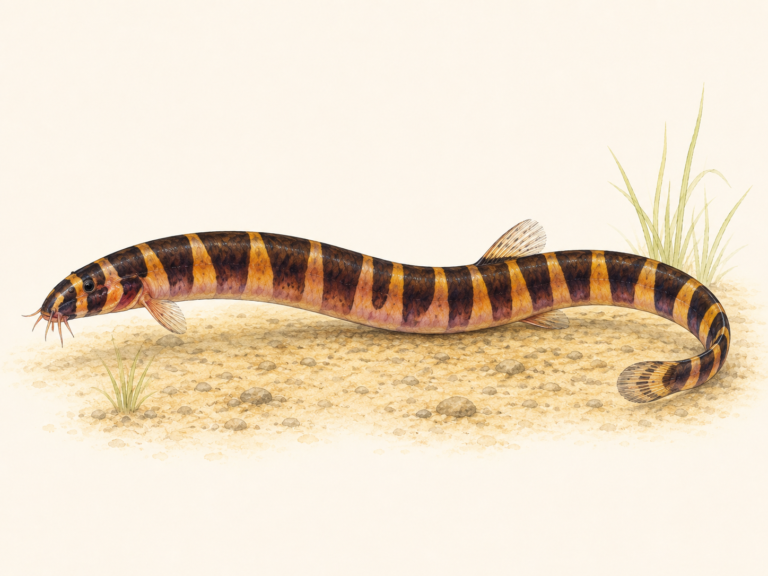
- Kuhli Loaches, nocturnal bottom-dwellers that pose zero threat and add interest to the lower tank levels.
- Cherry Barbs, peaceful barbs that are unlikely to nip fins or cause stress.
- Otocinclus Catfish, small, peaceful algae eaters that make ideal companions in a planted setup.
- Amano Shrimp, large enough to avoid being eaten and useful for algae control.
Fish to avoid
- Tiger Barbs, notorious fin nippers that will target the gourami’s long ventral filaments.
- Male Bettas, another labyrinth fish with similar territory and aggression patterns; almost guaranteed conflict.
- Chinese Algae Eaters, become aggressive and territorial as they mature and may harass the gourami.
- Oscars and other large cichlids, far too large and aggressive; the gourami would be stressed or eaten.
- Paradise Fish, a closely related labyrinth fish that can be highly aggressive towards Dwarf Gouramis.
- Other male Dwarf Gouramis (in small tanks), territorial aggression is common and can be severe in confined spaces.
Breeding
Breeding Dwarf Gouramis is a rewarding project that is achievable for hobbyists with some experience, though it requires a bit more effort than simply putting a pair together and hoping for the best. Start by confirming you have a male and a female. As described earlier, males are brightly coloured with a pointed dorsal fin, while females are silvery-grey with a rounded dorsal. Condition both fish for a week or two with plenty of high-protein foods like frozen bloodworms and live daphnia to bring them into peak spawning condition.
Set up a dedicated breeding tank of at least 40 litres with shallow water, around 15 to 20 cm deep works well. The water should be warm, around 26–28 °C, with a gentle sponge filter and plenty of floating plants or a small piece of bubble wrap at the surface to give the male material for his nest. When the male is ready, he will begin constructing a bubble nest at the surface, incorporating bits of plant matter into a foamy raft. This nest-building can take a day or two and is fascinating to watch.
Once the nest is ready, the male will court the female with displays of colour and fin-spreading. If she is receptive, they will embrace beneath the nest in a series of spawning wraps, during which the female releases eggs and the male fertilises them. The male then gathers the eggs in his mouth and places them into the bubble nest. A single spawning can produce several hundred eggs. After spawning is complete, remove the female, as the male becomes highly protective of the nest and may harass her.
The male tends the nest diligently, replacing bubbles and retrieving any eggs that fall. Eggs hatch in approximately 24 to 36 hours, and the fry become free-swimming about three days after hatching. At this point, remove the male as well. Feed the fry infusoria or liquid fry food for the first few days, then transition to freshly hatched baby brine shrimp and micro-worms as they grow. Fry are tiny and delicate, so maintain pristine water quality and cover the filter intake with a fine sponge to prevent losses.
Common diseases and health
Dwarf Gourami Iridovirus (DGIV)
This is the most significant health concern specific to this species. DGIV is a viral infection that is widespread in commercially bred Dwarf Gouramis, particularly those from mass-production facilities in Southeast Asia. Symptoms include loss of colour, lethargy, loss of appetite, abdominal swelling, and the development of sores or lesions. Unfortunately, there is no cure for DGIV. Infected fish typically decline over weeks to months. The best defence is prevention: buy from reputable breeders or shops that source from quality suppliers, and quarantine all new fish before adding them to your main tank.
Ich (White Spot Disease)
Ich is caused by the parasite Ichthyophthirius multifiliis and presents as small white spots resembling grains of salt on the body and fins. Affected fish may also flash against objects and breathe rapidly. Treatment involves raising the water temperature gradually to 28–30 °C and dosing with a quality ich medication such as Waterlife Protozin or API Super Ick Cure. Caught early, ich is very treatable.
Bacterial infections and fin rot
Poor water quality is the usual trigger for bacterial infections, which can manifest as frayed or disintegrating fins, red streaks on the body, or cloudy eyes. Maintain clean water through regular changes and proper filtration, and treat outbreaks with a broad-spectrum antibacterial medication like eSHa 2000 or API Melafix for milder cases. Severe infections may require a stronger antibiotic treatment in a hospital tank.
A note on quarantining: every new fish you bring home should be quarantined in a separate tank for at least two to three weeks before being introduced to your display aquarium. This is especially important with Dwarf Gouramis given the prevalence of DGIV. A simple quarantine setup, a small tank with a sponge filter, heater, and a hiding spot, is inexpensive and can save you from introducing disease to an established community.
Frequently asked questions
Can I keep a Dwarf Gourami in a 20-litre nano tank?
It is not recommended. While they are small fish, Dwarf Gouramis need enough space to establish a comfortable territory and maintain stable water parameters. A 40-litre tank is the realistic minimum for a single specimen, and 75 litres or more is preferable if you plan on a community setup. Smaller tanks also experience faster swings in temperature and water chemistry, which can stress these fish.
Why is my Dwarf Gourami hiding all the time?
Persistent hiding usually points to stress. Common causes include a tank that lacks sufficient plant cover, aggressive or overly active tank mates, strong water flow, or excessively bright lighting. Adding more plants, especially floating plants, reducing flow, and ensuring compatible tank mates will often bring a shy Dwarf Gourami out of hiding within a few days. New fish may also hide for the first week or so as they settle in, which is normal.
Can I keep two male Dwarf Gouramis together?
You can, but only in a sufficiently large and well-decorated tank. In anything under 100 litres, the dominant male is likely to bully the subordinate constantly, leading to stress, injury, and disease. If you want to keep multiple males, provide a tank of at least 120 litres with dense planting and plenty of visual barriers. Even then, monitor them closely. Keeping a single male is the simplest and safest approach for most hobbyists.
How long do Dwarf Gouramis live?
With good care, Dwarf Gouramis typically live for four to six years. Some individuals may reach seven years in optimal conditions. Lifespan can be shortened significantly by poor water quality, stress, or disease, particularly DGIV. Buying healthy stock from a reputable source and maintaining consistent water parameters gives your fish the best chance at a full lifespan.
Are Dwarf Gouramis safe with shrimp?
Adult Amano Shrimp and larger species are generally safe with Dwarf Gouramis. However, small shrimp like juvenile Cherry Shrimp or Neocaridina may be picked off, especially shrimplets. If you want to maintain a breeding shrimp colony alongside Dwarf Gouramis, provide very dense plant cover, particularly mosses like Java Moss, to give the shrimp plenty of hiding spots. There is always some risk, though, as gouramis are natural micro-predators.