Harlequin Rasbora Care Guide — Tank Setup, Feeding and Breeding
Introduction
The Harlequin Rasbora is one of the most recognisable and beloved freshwater fish in the aquarium hobby. With its warm copper-orange body and striking black triangular patch, this small cyprinid has been a staple of community tanks since it was first imported into Europe in the early twentieth century. Its enduring popularity is well earned: few fish combine such attractive colouring, peaceful temperament, and straightforward care requirements in a single, modestly sized package.
Native to the slow-moving, tannin-stained waters of Southeast Asia, the Harlequin Rasbora thrives in softly lit, well-planted aquaria that echo the shaded forest streams of its homeland. It is a true shoaling species that looks its absolute best when kept in groups, where the synchronised movement of a dozen or more fish through a planted aquascape can be genuinely captivating. Whether you are setting up your first community tank or adding a reliable centrepiece shoal to an established aquarium, the Harlequin Rasbora is an excellent choice that rewards even modest effort with years of vibrant colour and lively behaviour.
Quick Stats
| Scientific name | Trigonostigma heteromorpha |
| Common names | Harlequin Rasbora, Harlequin, Red Rasbora |
| Family | Danionidae (formerly Cyprinidae) |
| Origin | Peninsular Malaysia, Singapore, Sumatra, and southern Thailand |
| Adult size | 4–5 cm (1.6–2 in) |
| Lifespan | 5–8 years |
| Difficulty | Easy |
| Breeding difficulty | Difficult |
| Temperature | 22–28 °C |
| pH range | 5.0–7.0 |
| General hardness (GH) | 1–10 dGH |
| Carbonate hardness (KH) | 1–6 dKH |
| Minimum tank size | 60 litres |
| Conservation status | Least Concern (IUCN) |
Appearance
The Harlequin Rasbora has a deep, laterally compressed body that tapers gently towards the caudal fin. Its base colour ranges from a rosy pink to a rich copper-orange, with the exact intensity depending on the individual’s condition, diet, and the water chemistry of the aquarium. In optimal conditions the colour deepens noticeably, and mature specimens can develop an almost metallic sheen across the flanks.
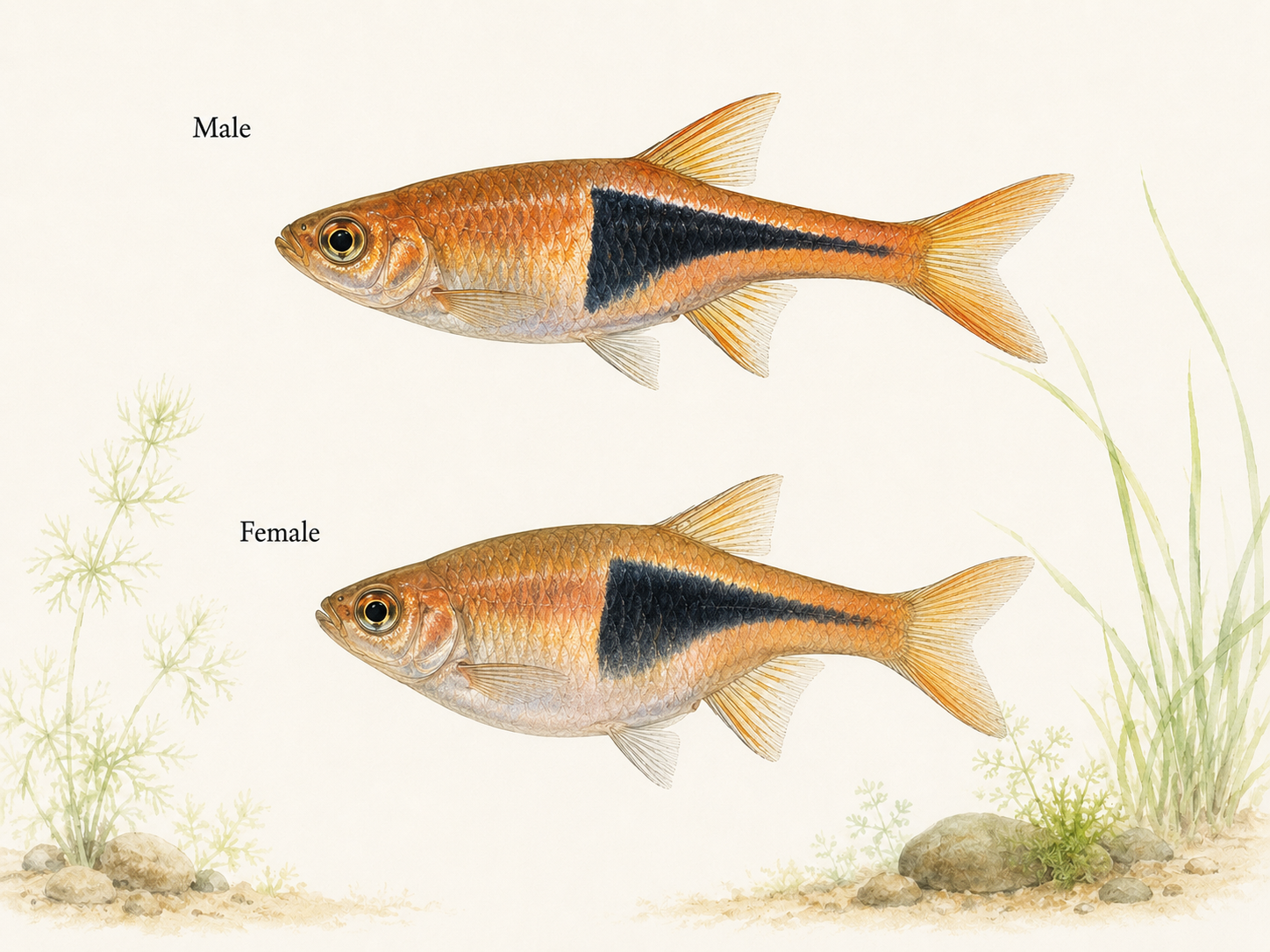
The defining feature of the species is the bold, black triangular marking that begins roughly at the midpoint of the body and narrows to a point near the base of the tail. This distinctive wedge shape is what gives the fish its common name, evoking the diamond patterns of a harlequin costume. The edges of this marking are usually crisp and well defined, and any fading or blurring can be an early indicator of stress or poor health. Males tend to have a slightly more pointed and extended lower edge to the triangle, while in females the marking is often straighter along its lower margin.
Sexual dimorphism is subtle but discernible once you know what to look for. Females are typically a little larger and noticeably deeper-bodied than males, particularly when carrying eggs. Males are generally slimmer and display more vivid colouration, especially during courtship. The fins are largely transparent with a faint warm tint, and the dorsal fin carries a small orange-red flush that is more pronounced in males. Adults rarely exceed five centimetres in total length, making them an ideal size for a wide range of aquarium configurations.
Natural Habitat
Trigonostigma heteromorpha is found across a relatively broad range in Southeast Asia, including Peninsular Malaysia, the southern tip of Thailand, the island of Sumatra in Indonesia, and historically Singapore, though wild populations on the island have declined significantly due to habitat loss. Within this range the species inhabits lowland forest streams, peat swamp forests, and slow-moving tributaries that are heavily shaded by the forest canopy above.
The water in these environments is typically soft and acidic, often stained a deep amber or tea colour by tannins leaching from decomposing leaves, branches, and other organic matter on the substrate. The pH can drop as low as 4.0 in some peat swamp habitats, though more commonly it sits between 5.0 and 6.5. The substrate is usually composed of sand, mud, and a thick layer of leaf litter, and the water column is relatively dim due to the overhead tree cover and the colouration of the water itself.
Aquatic vegetation in these habitats often includes various species of Cryptocoryne, and Harlequin Rasboras have a well-documented association with these plants in the wild, using the broad undersides of their leaves as spawning sites. Fallen branches, root tangles, and submerged vegetation provide ample shelter. Understanding this natural habitat is invaluable for recreating conditions in the aquarium that bring out the best health, colour, and behaviour in captive fish.
Tank Size and Setup
A group of eight to ten Harlequin Rasboras can be comfortably housed in a 60-litre aquarium, though a larger tank of 80 to 120 litres or more will allow you to keep a more impressive shoal and provide greater stability in water parameters. As with all shoaling species, a rectangular tank with a good length of swimming space is preferable to a tall, narrow design. A tank measuring at least 60 centimetres in length should be considered the minimum for a small group.
The aquascape should aim to reflect the shaded, plant-rich environments these fish naturally inhabit. A dark, fine-grained substrate of sand or smooth gravel works well and helps to show off the fish’s warm colouration. Dense planting along the sides and back of the tank provides security and breaks up sightlines, while leaving an open swimming area in the centre or front. Cryptocoryne species are a particularly fitting choice given their association with the fish in the wild, and they thrive in the same soft, slightly acidic water. Other suitable plants include Java Fern, Anubias, and various stem plants that can create a lush backdrop.
The addition of driftwood, twisted roots, and dried leaf litter such as Indian almond leaves or oak leaves is highly recommended. These elements not only create a more naturalistic environment but also release beneficial tannins into the water, gently lowering the pH and imparting the amber tint that Harlequin Rasboras encounter in the wild. The tannins also have mild antifungal and antibacterial properties, which can contribute to overall fish health. Floating plants such as Amazon Frogbit or Salvinia can be used to diffuse overhead lighting, mimicking the dappled shade of a forest stream. Under such conditions, Harlequin Rasboras tend to be bolder, more colourful, and more willing to swim in the open.
A secure, well-fitting lid is advisable. Although Harlequin Rasboras are not known as prolific jumpers, any startled fish can leap from the water, and a cover also helps to reduce evaporation and maintain a stable temperature at the water’s surface.
Water Parameters
Harlequin Rasboras are often described as hardy and adaptable, which is true to a point. They can tolerate a moderate range of conditions, but they truly flourish—and are far more likely to display their best colouration and natural behaviours—when kept in soft, slightly acidic water that mirrors their native habitat. Consistency is just as important as hitting specific numbers; sudden swings in temperature or pH are far more harmful than water that sits slightly outside the textbook ideal.
| Temperature | 22–28 °C |
| pH | 5.0–7.0 |
| General hardness (GH) | 1–10 dGH |
| Carbonate hardness (KH) | 1–6 dKH |
| Ammonia | 0 ppm |
| Nitrite | 0 ppm |
| Nitrate | Below 20 ppm |
Regular partial water changes of around 20 to 25 per cent weekly are the simplest way to maintain water quality and keep nitrate levels low. If you are keeping the fish in very soft, low-KH water, be mindful that such water has limited buffering capacity and pH can drop sharply if organic waste accumulates. Testing your water regularly, especially in the first few months of a new setup, will help you spot and correct any issues before they become problematic.
Filtration and Equipment
Harlequin Rasboras come from slow-moving or near-still waters, so filtration should be efficient without creating excessive flow. A gentle sponge filter is an excellent choice for smaller tanks, providing reliable biological and mechanical filtration with minimal current. For larger setups, a hang-on-back filter or a small canister filter will work well, but it is worth reducing the outflow with a spray bar, lily pipe, or by directing the output against the glass to diffuse the current. If the fish are constantly battling a strong flow or retreating to calmer corners, the filtration is too aggressive.
A reliable heater is essential unless you live in a consistently warm climate where room temperature naturally stays within the species’ preferred range. A heater rated at approximately one watt per litre of tank volume is a reasonable guideline. Place the heater near the filter output to help distribute warm water evenly throughout the tank, and use an accurate thermometer to verify the temperature regularly rather than relying solely on the heater’s built-in thermostat.
Lighting should be moderate to subdued. Harlequin Rasboras are not sun-loving fish, and they will appear washed out and timid under intense illumination. If you are growing live plants that need brighter light, compensate by providing plenty of floating plant cover and shaded areas within the tank. LED lights with adjustable intensity or a dimming function offer useful flexibility. A lighting period of eight to ten hours per day is sufficient for plant growth while maintaining a natural photoperiod for the fish.
Diet and Feeding
In the wild, Harlequin Rasboras are omnivorous micro-predators, feeding on tiny insects, insect larvae, worms, zooplankton, and small amounts of plant matter and algae. In the aquarium they are unfussy eaters that readily accept a wide range of commercially prepared and live foods.
A high-quality micro-pellet or small flake food formulated for tropical community fish should form the staple of the diet. Look for products with whole fish or insect meal listed among the first ingredients, and avoid those padded with excessive fillers and cereal. This staple should be supplemented regularly with frozen or live foods to provide dietary variety and encourage natural foraging behaviour. Daphnia, baby brineshrimp, cyclops, bloodworms (in moderation, as they are rich), and micro-worms are all excellent choices. These protein-rich foods are particularly valuable for conditioning fish for breeding and for enhancing colour intensity.
Feed small amounts once or twice daily, offering only what the shoal can consume within two to three minutes. Harlequin Rasboras have small stomachs relative to their body size, and overfeeding leads not only to obesity but also to excess waste that degrades water quality. An occasional fasting day once a week is perfectly acceptable and can actually benefit digestive health. Varying the diet as much as possible ensures a broad spectrum of nutrients and keeps the fish interested in feeding, which in turn supports their immune system and overall vitality.
Behaviour and Temperament
The Harlequin Rasbora is a peaceful, mid-water-dwelling shoaling fish. In the aquarium it spends the majority of its time in the middle and upper third of the water column, moving in a loose but coordinated group through open areas and among plants. It is not a tight schooling species in the manner of some tetras, but it is distinctly social and will become visibly stressed, shy, and pale if kept in insufficient numbers. A minimum group of eight is recommended, and groups of twelve or more are ideal, as larger shoals encourage bolder behaviour, more vivid colouration, and a far more engaging display.
Within the group, males will occasionally engage in brief, harmless sparring displays, flaring their fins and intensifying their colours in front of rivals. These interactions are a sign of healthy social dynamics and are fascinating to observe. There is no meaningful aggression associated with this behaviour, and no injuries result. The fish are entirely non-aggressive towards other species and can be considered one of the safest choices for a peaceful community aquarium.
Harlequin Rasboras are most active during the daytime and tend to settle into quieter, less mobile behaviour as the lights dim. They are not particularly skittish, but sudden movements or vibrations near the tank can startle them. A well-planted tank with subdued lighting and areas of cover will bring out the most confident and natural behaviour, with the shoal spending more time in the open and displaying the synchronised swimming that makes them so appealing.
Tank Mates
The gentle disposition of the Harlequin Rasbora makes it compatible with a broad range of similarly peaceful community fish. The key considerations are to avoid species that are large enough to view the rasboras as food, species that are highly aggressive or territorial, and species that require dramatically different water parameters. Fast, boisterous feeders can also be problematic, as the relatively polite feeding style of Harlequin Rasboras means they can be outcompeted at mealtimes.
Good tank mates
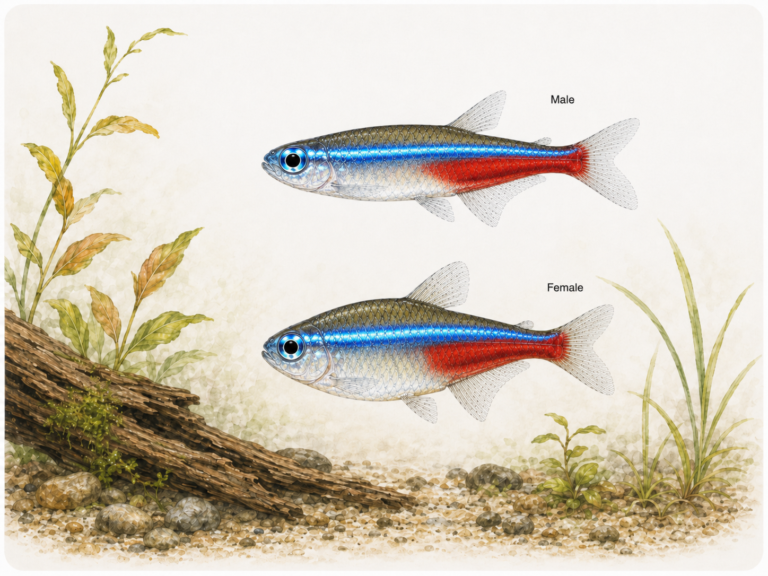
- Ember Tetra — A similarly sized, peaceful nano fish that thrives in the same soft, warm water conditions and creates a lovely colour contrast.
- Cardinal Tetra — Another soft-water-loving shoaling species with a calm temperament that complements the Harlequin’s warm tones beautifully.
- Kuhli Loach — A gentle, bottom-dwelling species that occupies a different zone of the tank and appreciates the same soft, slightly acidic water.
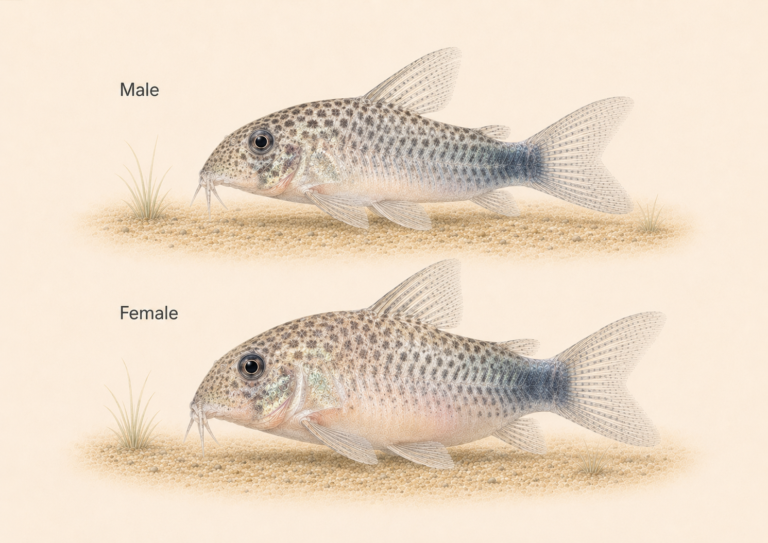
- Pygmy Corydoras — Tiny, sociable catfish that stay out of the rasboras’ way and add activity to the lower levels of the aquarium.
- Otocinclus — Peaceful algae-eating catfish that share the preference for stable, well-maintained water and will not bother mid-water fish.
- Cherry Shrimp — Hardy ornamental shrimp that coexist well with Harlequin Rasboras, as the rasboras rarely prey on adult shrimp.
- Honey Gourami — A calm, small labyrinth fish that makes an excellent centrepiece alongside a Harlequin shoal without causing territorial issues.
- Celestial Pearl Danio — A small, visually striking danio that shares the preference for planted tanks and gentle water flow.
- Chocolate Gourami — A soft-water specialist from similar Southeast Asian habitats, though it requires very stable conditions and experienced care.
- Amano Shrimp — Excellent algae eaters that are too large for Harlequin Rasboras to bother and contribute to a cleaner tank environment.
Fish to avoid
- Oscar — A large, predatory cichlid that would view Harlequin Rasboras as food and requires a vastly larger aquarium.
- Tiger Barb — A notorious fin nipper that can harass and stress smaller, slower-moving shoaling fish.
- Red Tail Black Shark — An aggressive, territorial bottom-dweller that becomes increasingly hostile as it matures and dominates tank space.
- Convict Cichlid — A pugnacious Central American cichlid that is highly territorial, especially during breeding, and prefers harder, more alkaline water.
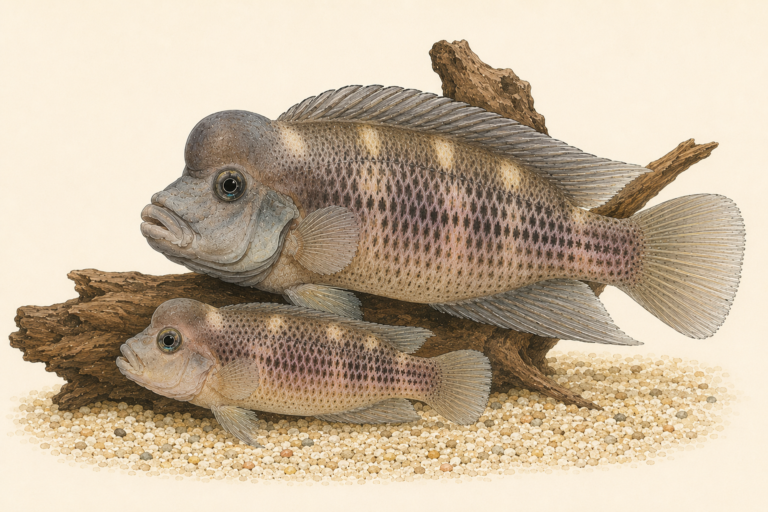
- African Rift Lake Cichlids — Require hard, alkaline water that is entirely unsuitable for Harlequin Rasboras and are often highly aggressive.
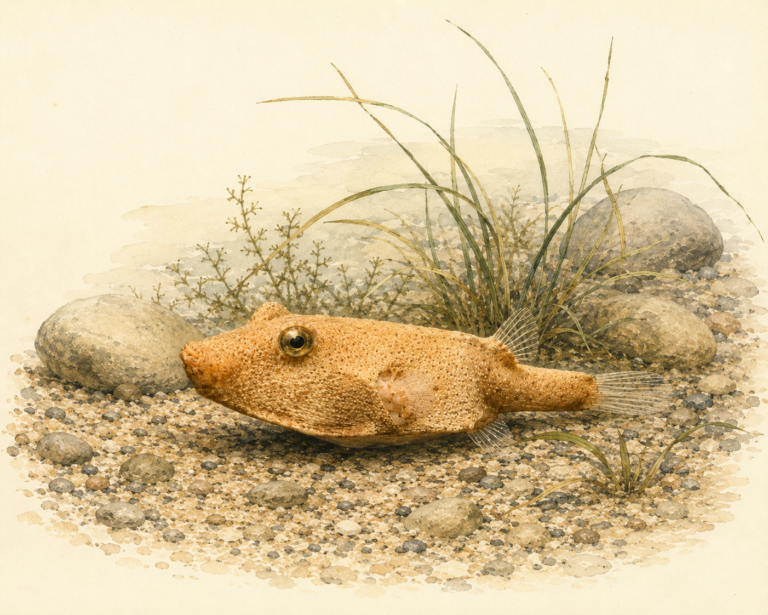
- Green Spotted Puffer — An aggressive fin nipper that requires brackish water and is completely incompatible in temperament and water chemistry.
- Jaguar Cichlid — A large, powerful predator that would consume Harlequin Rasboras without hesitation.
- Bucktooth Tetra — Despite being a tetra, this species is a notorious scale eater that will attack and injure tank mates.
Breeding
Breeding Harlequin Rasboras in captivity is achievable but notably more challenging than keeping them, which is why the breeding difficulty is rated as difficult. The primary obstacle is that the species requires very specific water conditions to trigger spawning and for eggs to develop successfully. Most casual community tanks do not meet these requirements, so a dedicated breeding setup is usually necessary.
To condition a breeding pair or small group, separate the sexes for a week or two and feed them generously with high-quality live and frozen foods such as daphnia, brineshrimp, and mosquito larvae. Females in good condition will appear noticeably rounder when viewed from above. Select the plumpest female and the most colourful, active male for the breeding attempt.
The breeding tank should be relatively small, around 20 to 30 litres, with very soft water at a general hardness of 1 to 3 dGH and a pH of 5.5 to 6.0. The temperature should be raised slightly to around 26 to 28 °C. Peat filtration or the use of reverse osmosis water remineralised to the correct parameters can help achieve the necessary softness. Dim lighting is important, and the tank should contain broad-leaved plants such as Cryptocoryne species, as the fish deposit their eggs on the undersides of leaves. This unusual spawning behaviour, where eggs are attached to the ventral surface of a leaf rather than scattered freely, is one of the species’ most distinctive reproductive traits.
Spawning typically occurs in the morning. The male will court the female with a dancing display, and the pair will eventually move beneath a chosen leaf, where the female turns upside-down to press her adhesive eggs against the underside of the leaf surface. The male simultaneously fertilises the eggs. A single spawning event may produce anywhere from 50 to over 100 eggs, though not all will be fertile.
After spawning, the adults should be removed promptly, as they will eat the eggs if given the opportunity. The eggs are sensitive to light and fungal infection, so keep the tank dimly lit and consider adding a small amount of methylene blue to the water as a preventative antifungal measure. The eggs typically hatch within 24 to 36 hours, and the fry become free-swimming after a further three to five days once they have absorbed their yolk sacs. Initial food should be infusoria or commercially available liquid fry food, graduating to newly hatched brineshrimp nauplii as the fry grow large enough to accept them. Growth is slow, and the fry are delicate in the early weeks, requiring excellent water quality and very gentle filtration, ideally a mature sponge filter.
Common Diseases
Harlequin Rasboras are generally robust fish, and in a well-maintained aquarium with stable water parameters they are not especially prone to disease. However, like all freshwater fish, they can be affected by a number of common ailments, particularly when stressed by poor water quality, overcrowding, sudden changes in conditions, or the introduction of sick fish.
Ichthyophthirius multifiliis, commonly known as white spot disease or ich, is one of the most frequently encountered illnesses. It manifests as small white cysts on the fins and body that resemble grains of salt. Affected fish often flash against hard surfaces and may become lethargic. Ich is highly treatable if caught early, typically by raising the temperature gradually to around 30 °C over a couple of days and treating with a proprietary white spot remedy. The elevated temperature accelerates the parasite’s life cycle, making it vulnerable to medication during its free-swimming stage.
Fin rot, characterised by fraying, discolouration, and erosion of the fin edges, is usually a secondary bacterial infection triggered by poor water quality or physical injury. Improving water conditions through more frequent water changes is often sufficient to halt progression in mild cases, though antibacterial treatments may be needed for more advanced infections. Columnaris, a bacterial disease that can cause white or greyish patches on the body and mouth, is another concern, particularly in warmer water with high organic loads. It progresses rapidly and requires prompt treatment with appropriate antibacterial medication.
Internal parasites can occasionally affect Harlequin Rasboras, particularly wild-caught specimens. Signs include weight loss despite a healthy appetite, white or stringy faeces, and a generally emaciated appearance. Dedicated anti-parasitic foods or treatments are available for such cases. Maintaining a quarantine protocol for all new fish before introducing them to an established tank is the single most effective measure for preventing the spread of disease, and this practice cannot be recommended strongly enough.
FAQs
How many Harlequin Rasboras should I keep together?
A minimum of eight is recommended, though groups of twelve or more are strongly preferred. Harlequin Rasboras are a social, shoaling species, and larger groups produce more natural behaviour, bolder individuals, and a far more visually impressive display. Keeping them in groups of fewer than six often results in shy, stressed fish that spend much of their time hiding and display muted colours.
Can Harlequin Rasboras live in hard water?
Harlequin Rasboras can tolerate moderately hard water up to around 10 to 12 dGH and will generally survive, but they are unlikely to display their best colouration or breed successfully in such conditions. They are fundamentally soft-water fish, and if your tap water is very hard, you may wish to consider using a blend of reverse osmosis water and tap water to bring the hardness down to a more suitable range, particularly if you want to see them at their finest.
Are Harlequin Rasboras safe with shrimp?
Adult Harlequin Rasboras generally coexist well with ornamental shrimp species such as Cherry Shrimp and Amano Shrimp. They may occasionally pick off very small shrimplets, as any small fish might, but they do not actively hunt adult shrimp. If you are trying to breed shrimp in the same tank, providing plenty of moss, dense planting, and hiding places will greatly improve the survival rate of juvenile shrimp.
Why are my Harlequin Rasboras losing their colour?
Colour loss in Harlequin Rasboras is most commonly a sign of stress. Common culprits include poor water quality, inappropriate water parameters (particularly water that is too hard or alkaline), overly bright lighting, an insufficiently sized group, aggressive tank mates, or illness. Review your water test results, ensure the group size is adequate, check that lighting is not too intense, and consider whether anything in the tank environment might be causing chronic stress. A varied diet rich in carotenoid-containing foods like daphnia and quality colour-enhancing pellets can also help restore vibrancy.
What is the difference between the Harlequin Rasbora and the Lambchop Rasbora?
The Lambchop Rasbora, Trigonostigma espei, is a closely related species that is frequently confused with the Harlequin. The key visual difference lies in the black body marking: in the Harlequin Rasbora the marking is a broad, filled-in triangle, whereas in the Lambchop Rasbora it is narrower and shaped more like a pork chop or cleaver, often appearing as a thinner wedge. The Lambchop Rasbora also tends to have a slightly more orange-copper base colour compared to the pinkish-rose tone of many Harlequin populations. Both species have very similar care requirements and can be kept under the same conditions.
Related Guides
- Lambchop Rasbora (Trigonostigma espei) — A close relative with nearly identical care requirements, often confused with the Harlequin and an excellent alternative or companion shoal.
- Glowlight Rasbora (Trigonostigma hengeli) — The third member of the Trigonostigma genus commonly seen in the hobby, smaller and more subtly coloured but equally peaceful.
- Chili Rasbora (Boraras brigittae) — A tiny, jewel-like rasbora ideal for nano tanks and soft-water biotope setups alongside or instead of Harlequins.
- Cherry Barb (Puntius titius) — Another peaceful, colourful cyprinid that makes an excellent community tank companion and shares a preference for planted environments.
- How to Set Up a Southeast Asian Biotope Aquarium — A detailed guide to creating an authentic blackwater or forest-stream biotope that would perfectly suit a Harlequin Rasbora shoal.