Otocinclus Catfish Care Guide — Tank Setup, Feeding and Breeding
Introduction
The Otocinclus catfish is one of those fish that quietly wins you over. Small, unassuming, and endlessly hardworking, this little algae eater has earned a devoted following among planted tank enthusiasts and community aquarium keepers alike. Often called “otos” for short, Otocinclus vittatus belongs to a genus of small suckermouth catfish native to South America, and it has become one of the most popular algae-eating fish in the freshwater hobby. Unlike larger, sometimes aggressive algae eaters, the oto goes about its business with a gentle determination that makes it a joy to watch.
What makes otos so beloved is the combination of genuine utility and charming personality. These fish will methodically graze soft algae from plant leaves, glass, and hardscape without damaging delicate plants, something that can’t be said for every algae-eating species. They’re small enough to reach into tight spaces, light enough that they won’t crush stems or uproot carpeting plants, and peaceful enough to coexist with virtually any non-aggressive tank mate. For anyone running a planted aquarium, a group of otos can feel like having a tiny, dedicated maintenance crew.
That said, Otocinclus catfish aren’t quite the beginner fish they’re sometimes marketed as. They’re sensitive to water quality, don’t tolerate poor conditions well, and can be tricky to feed once they’ve cleaned up the available algae in a tank. They also suffer high mortality rates shortly after purchase, often due to the stress of wild capture and transport. If you’re willing to provide a mature, stable aquarium with clean water and supplemental food, otos will reward you with years of algae-free surfaces and genuinely endearing behaviour. They’re best suited to keepers who have at least a few months of fishkeeping experience under their belt and understand the basics of water chemistry and tank cycling.
Quick stats
| Scientific name | Otocinclus vittatus |
| Family | Loricariidae |
| Origin | South America (Brazil, Paraguay, Bolivia, Argentina) |
| Adult size | 3–5 cm (1.2–2 inches) |
| Lifespan | 3–5 years |
| Difficulty | Intermediate |
| Breeding difficulty | Challenging |
| Temperature | 21–27 °C |
| pH range | 6.0–7.5 |
| Minimum tank size | 60 litres |
Appearance
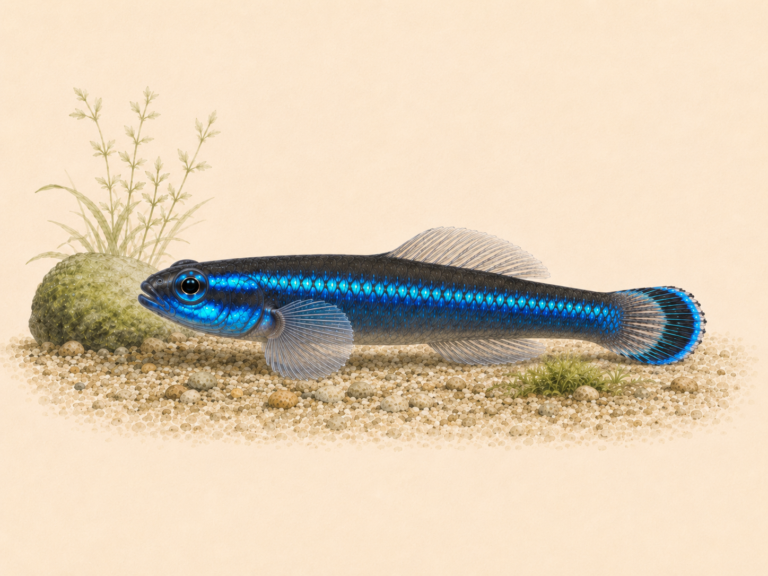
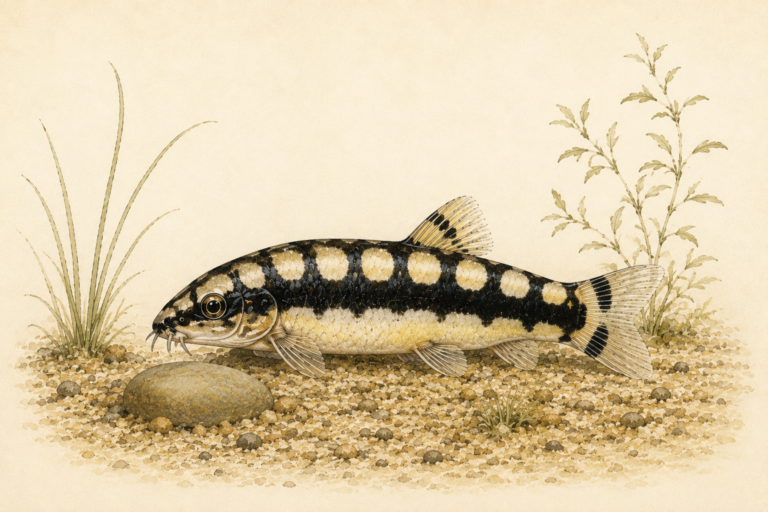
Otocinclus vittatus is a small, streamlined catfish with a flattened ventral profile and a prominent suckermouth adapted for clinging to surfaces and rasping algae. The body is typically olive to greyish-brown along the dorsal side, fading to a pale cream or white belly. A distinctive dark lateral stripe runs from the snout through the eye and along the length of the body to the base of the caudal fin, where it often ends in a noticeable dark spot. The fins are mostly transparent or lightly tinted, and the eyes are proportionally large for the body size, giving otos an alert, somewhat wide-eyed expression. Their underslung mouth is equipped with rows of tiny, comb-like teeth specifically designed for scraping biofilm and algae from surfaces.
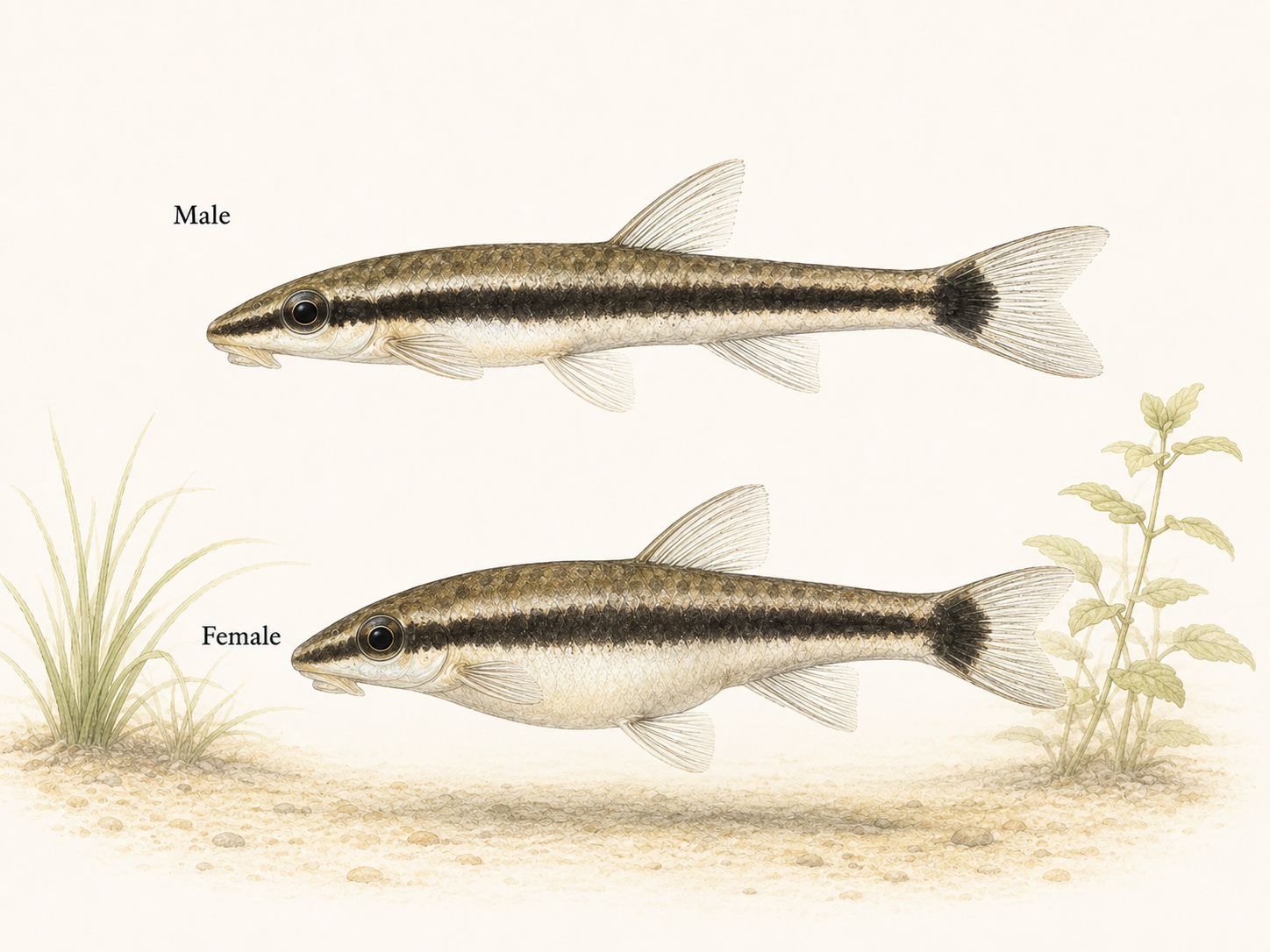
Telling males from females can be tricky, especially with younger fish. Mature females are generally slightly larger and noticeably rounder when viewed from above, particularly when carrying eggs. Males tend to be a touch slimmer and may have a slightly broader head, though this difference is subtle. There isn’t any meaningful colour variation between the sexes. It’s worth noting that several Otocinclus species look very similar to one another, and fish sold under the name “Otocinclus” in shops may actually be O. vittatus, O. macrospilus, O. cocama, or other related species. The care requirements are broadly similar across the genus, but O. vittatus is the species most commonly encountered in the trade.
Natural habitat
Otocinclus vittatus is found across a wide range of South American waterways, including river systems in Brazil, Paraguay, Bolivia, and northern Argentina. These fish typically inhabit shallow, slow-moving streams, tributaries, and marginal areas of larger rivers where dense vegetation grows in and along the water. They’re often found clinging to submerged plant leaves, stems, and roots, grazing on the biofilm and soft algae that coat these surfaces. The water in these habitats tends to be warm, slightly acidic to neutral, and relatively soft, often stained with tannins from decaying plant material. The substrates are usually sandy or muddy with abundant leaf litter.
Understanding this natural environment is genuinely useful when setting up an aquarium for otos. These fish evolved in well-oxygenated waters with plenty of plant cover and biofilm-covered surfaces. They’re accustomed to stable conditions, not the fluctuating parameters of a newly established tank. This is a key reason why otos do poorly in immature aquariums: there simply isn’t enough biofilm or microbial life to sustain them, and the water chemistry tends to swing in ways that stress them. Replicating even a rough approximation of their natural habitat, mature water, lots of plants, gentle flow, and soft substrate, makes a real difference to their long-term health and behaviour.
Tank size and setup
A group of six Otocinclus catfish needs a minimum of 60 litres, though 80 litres or more gives you more room to maintain stable water quality and grow a healthy plant mass. Otos should always be kept in groups of at least six, as they’re a social species that becomes stressed and reclusive when kept alone or in pairs. A larger group in a bigger tank, say, eight to ten in a 100-litre setup, will display more natural behaviour and be more visible throughout the day.
For substrate, fine sand is ideal, as it closely mimics their natural environment and is gentle on their delicate undersides. Pool filter sand, play sand, or aquarium-specific options like JBL Sansibar or ADA La Plata Sand all work well. Avoid sharp-edged gravel or substrates that could irritate their bellies as they rest on the bottom.
Plants are essential, not optional. Otos need surfaces to graze on, and live plants provide exactly that. Broad-leaved species like Anubias barteri, Echinodorus tenellus, and various species of Cryptocoryne give them plenty of grazing area. Fast-growing stem plants such as Hygrophila polysperma, Rotala rotundifolia, and Ludwigia repens help with water quality and provide additional biofilm surfaces. A carpet of Marsilea hirsuta or dwarf Sagittaria subulata rounds out the lower level nicely. Driftwood and smooth river stones add natural-looking surfaces that develop biofilm over time, giving otos even more to feed on.
Lighting should be moderate, enough to sustain healthy plant growth and encourage a thin layer of soft algae on surfaces, but not so intense that you end up with problem algae like blue-green algae or black beard algae, which otos won’t eat. A standard LED light on a timer running for eight to ten hours per day works well. Water flow should be gentle to moderate. Otos aren’t strong swimmers and prefer calmer areas, though they do appreciate some current for oxygen exchange.
Water parameters
| Temperature | 21–27 °C (ideally 24–26 °C) |
| pH | 6.0–7.5 |
| Hardness (GH) | 3–15 dGH |
| Ammonia | 0 ppm |
| Nitrite | 0 ppm |
| Nitrate | Below 20 ppm |
Otocinclus catfish are more sensitive to water quality than many commonly kept community fish. Ammonia and nitrite must be at zero, there’s no wiggle room here. Even modest spikes can cause stress, illness, or death, particularly in recently purchased fish that are already weakened from transport. Nitrates should be kept low, ideally under 20 ppm, through regular water changes and a healthy plant load. This is one of the key reasons otos should only be added to fully cycled, mature tanks. A tank that has been running for at least two to three months will have stable parameters and established biofilm on surfaces, both of which are critical for oto survival. Consistency matters as much as hitting the right numbers, avoid sudden swings in temperature or pH during water changes.
Filtration and equipment
A good quality filter with gentle output is the way to go. Hang-on-back filters like the Seachem Tidal 35 or AquaClear 30 work well for smaller oto tanks, providing reliable biological and mechanical filtration without creating overwhelming flow. For larger setups, a small canister filter like the Oase BioMaster Thermo 250 is an excellent choice and includes a built-in heater, which saves space. Sponge filters are another solid option, especially in breeding setups, as they provide biological filtration and a surface that otos will graze on directly. If using a hang-on-back or canister filter, consider adding a pre-filter sponge to the intake to prevent small otos from getting trapped.
A reliable heater is necessary unless your room temperature stays consistently within the appropriate range year-round. Adjustable heaters from brands like Eheim Jäger or Fluval M Series give you precise control. For water testing, an API Freshwater Master Test Kit is the standard recommendation, it covers ammonia, nitrite, nitrate, and pH, and the liquid-based tests are far more accurate than test strips. Test weekly as a baseline, and more often if anything seems off with your fish or if you’ve recently added new stock.
Diet and feeding
In the wild, Otocinclus catfish feed primarily on biofilm, soft green algae, and the microorganisms found within these films on plant leaves and submerged surfaces. They are true herbivores and aufwuchs grazers, not scavengers, they won’t eat fish waste, leftover flake food, or decomposing matter in any meaningful way.
In captivity, the biggest dietary challenge with otos is what happens after they’ve grazed through the existing algae in your tank. Many otos slowly starve in aquariums that look perfectly clean, because their keepers assume they’re finding enough to eat on their own. Supplemental feeding is essential for long-term health. Blanched vegetables are a staple, zucchini (courgette), cucumber, spinach, and green beans are all readily accepted. Blanch them briefly in boiling water to soften them, let them cool, and weigh them down in the tank with a fork, clip, or veggie weight. Remove any uneaten portions after 24 hours to prevent fouling the water.
Commercially prepared foods designed for herbivorous bottom feeders also work well. Repashy Soilent Green is widely considered one of the best prepared foods for otos, it’s a gel food that can be spread on rocks or wood, mimicking the biofilm they naturally graze on. Hikari Algae Wafers are another good option, though you may need to break them into smaller pieces for otos. Spirulina-based wafers and tablets from brands like Sera or Tropical are worth trying too. Feed supplemental food daily or every other day, adjusting the quantity based on how much natural algae growth is available in the tank. Watch your otos’ bellies, a healthy oto has a gently rounded belly, while a concave or pinched belly is a sign of underfeeding or internal issues.
Behaviour and temperament
Otocinclus catfish are peaceful, non-territorial, and completely harmless to other fish. They spend the vast majority of their time grazing surfaces, you’ll see them suctioned to plant leaves, glass panels, driftwood, and stones, methodically working across a surface before moving on to the next one. They’re active throughout the day, though they may rest more during bright midday hours and become more active in the morning and evening. When resting, they often sit motionless on a leaf or pressed against the glass, which can alarm new keepers who mistake stillness for illness.
Otos are a shoaling species that draw confidence from the presence of others. In a group of six or more, they’ll spread out across the tank while still keeping loose visual contact with one another. You’ll occasionally see them clustered together on a favourite piece of driftwood or a large Anubias leaf, grazing side by side. They don’t squabble over feeding spots and show no aggression toward one another. One of their most charming quirks is their habit of suddenly darting to the surface for a quick gulp of air and then zipping back down, this is normal behaviour related to their ability to breathe atmospheric air through their modified gut, and it’s nothing to worry about unless it becomes constant, which could indicate low oxygen levels in the water.
Tank mates
Good tank mates
- Neon tetras, peaceful, similarly sized, and thrive in the same water conditions
- Ember tetras, small, calm, and won’t compete for the same food sources
- Harlequin rasboras, gentle schooling fish that occupy the mid-water column
- Corydoras catfish, another peaceful bottom dweller, though they feed on different foods and won’t compete directly with otos
- Cherry shrimp, excellent companions that share similar water preferences and add colour to planted tanks
- Amano shrimp, fellow algae grazers that coexist peacefully, though they may compete for food in heavily stocked tanks
- Honey gouramis, calm, slow-moving surface dwellers that leave otos alone entirely
- Celestial pearl danios, tiny, peaceful fish well-suited to the same planted setups otos enjoy
- Kuhli loaches, non-competitive bottom dwellers with a similarly peaceful temperament
Fish to avoid
- Oscars, large, predatory cichlids that will eat otos without hesitation
- Jack Dempsey cichlids, aggressive and territorial, far too rough for small catfish
- Common plecos, grow very large and can bully or outcompete otos for grazing space
- Tiger barbs, nippy and boisterous, likely to harass slow-moving otos
- African cichlids, require different water parameters and are generally too aggressive
- Red-tail catfish, massive predators completely incompatible with small fish
- Green terrors, highly aggressive cichlids that would treat otos as food
Breeding
Breeding Otocinclus catfish in captivity is possible but genuinely challenging. It happens infrequently and often without the keeper’s deliberate intervention, making it difficult to replicate reliably. Success tends to come in well-established, heavily planted tanks with stable water conditions and a well-fed, healthy group of otos.
Sexing otos requires close observation. Mature females are broader and rounder when viewed from above, especially when gravid with eggs. Males are slightly slimmer. The differences are subtle enough that keeping a group of at least six gives you the best chance of having both sexes represented.
Spawning is often triggered by a large water change with slightly cooler, softer water, mimicking the onset of the rainy season in their natural habitat. A 30–40% water change using water that is two to three degrees cooler than the tank can sometimes prompt spawning behaviour. Males will chase females around the tank in a courtship ritual, and the pair eventually adopts a “T-position” similar to that seen in Corydoras breeding, where the female cups eggs in her pelvic fins and deposits them on smooth surfaces, typically plant leaves, the aquarium glass, or smooth stones. A single spawning event may produce 30 to 60 small, adhesive eggs.
The eggs hatch in approximately two to three days at around 25 °C. The fry are tiny and initially feed on their yolk sac before beginning to graze on biofilm and microorganisms. Infusoria, powdered spirulina, and biofilm-covered surfaces are the best first foods. Fry are extremely small and vulnerable, so raising them in a separate, mature tank or a breeding net with established biofilm improves survival rates. Growth is slow, and it takes several weeks before the fry begin to look like miniature versions of the adults.
Common diseases and health
Post-purchase mortality
The single biggest health issue with Otocinclus catfish is the high death rate in the first few weeks after purchase. Most otos in the hobby are wild-caught, and the capture, holding, and shipping process is extremely stressful. Many arrive at shops already weakened, underfed, or carrying parasites. It’s common to lose one or two from a batch even with good care. To improve your odds, buy from shops that have had their otos in stock for at least a week or two, choose active fish with rounded bellies, and avoid any that look lethargic or emaciated.
Starvation
Slow starvation is tragically common in otos. Because they’re sold as “algae eaters,” many keepers assume they’ll find their own food indefinitely. Once the algae in a tank is consumed, otos need supplemental feeding. A starving oto will have a visibly sunken belly and become increasingly listless. By the time the signs are obvious, recovery can be difficult. Prevention is straightforward, offer blanched vegetables and prepared foods like Repashy Soilent Green regularly, and monitor belly shape as part of your routine observation.
Ich (white spot disease)
Like most freshwater fish, otos are susceptible to Ichthyophthirius multifiliis, commonly known as ich. It presents as small white spots on the body and fins, accompanied by flashing (scratching against surfaces) and clamped fins. Otos are sensitive to many medications, so treatment should be approached carefully. Gradually raising the temperature to 28–30 °C over 24 hours and adding aquarium salt at a dose of one teaspoon per 20 litres can be effective for mild cases. For more stubborn infections, a half-dose of a malachite green and formaldehyde-based treatment like Waterlife Protozin is generally tolerated, but always read the label regarding scaleless and sensitive fish. Avoid copper-based medications, as otos and other catfish can react badly to them.
A note on quarantining
Given their sensitivity and the stress of transport, quarantining new otos for two to three weeks in a separate, mature tank before adding them to your main aquarium is strongly recommended. This allows you to monitor for disease, ensure they’re eating, and avoid introducing parasites to your established community. A simple quarantine setup with a sponge filter, some plants or driftwood, and stable water parameters is all you need.
Frequently asked questions
How many Otocinclus should I keep together?
A minimum of six is the standard recommendation, and more is better if your tank can support them. Otos are a social species that feel much more secure and behave more naturally in a group. Keeping fewer than six often results in stressed, hidden fish that you’ll rarely see. In a well-planted 80–100 litre tank, a group of eight to ten is a great number.
Why do my Otocinclus keep dying?
The most common causes are adding them to an immature or uncycled tank, poor water quality, and starvation. Otos need a fully cycled tank that has been running for at least two to three months with established biofilm. They also need supplemental food once they’ve eaten the available algae. High mortality shortly after purchase is unfortunately normal due to the stress of wild capture and shipping, buying healthy-looking fish from a reputable shop helps, as does quarantining.
Will Otocinclus eat all types of algae?
No. Otos primarily eat soft green algae, diatoms (brown algae), and biofilm. They won’t touch black beard algae, staghorn algae, green spot algae, or blue-green algae (cyanobacteria). They’re most effective at grazing the thin film of soft algae and diatoms that forms on plant leaves and glass. If you have a problem with tougher algae types, you’ll need to address the root cause rather than relying on otos to clean it up.
Can I keep Otocinclus in a tank without live plants?
You can, but it’s not ideal. Live plants provide grazing surfaces, help maintain water quality by absorbing nitrates, and create the kind of environment where otos feel secure. A tank without plants can work if you have plenty of driftwood and stones that develop biofilm, but you’ll need to be more diligent about supplemental feeding. Honestly, otos and planted tanks go hand in hand, they’re at their best in a setup with abundant live vegetation.
Are Otocinclus catfish good for beginners?
They’re often recommended for beginners, but they’re better suited to someone with a bit of experience. A true beginner is likely still learning about cycling, water changes, and feeding routines, and otos don’t forgive mistakes easily. They need stable, mature water and consistent supplemental feeding. If you’ve successfully kept a tank running for a few months and understand your water parameters, otos are a reasonable next step. If you’re still figuring out the basics, consider waiting until your tank and your skills are more established.
Related guides
- Otocinclus Catfish breeding guide
- Otocinclus Catfish tank setup and equipment guide
- Otocinclus Catfish diet and feeding guide
- Best tank mates for Otocinclus Catfish
- Otocinclus Catfish diseases and health guide
- Why is my Otocinclus Catfish losing colour?
- Back to the fish species directory
- Beginner’s guide to cycling your tank