Boesemani Rainbowfish Care Guide — Tank Setup, Feeding and Breeding
Introduction
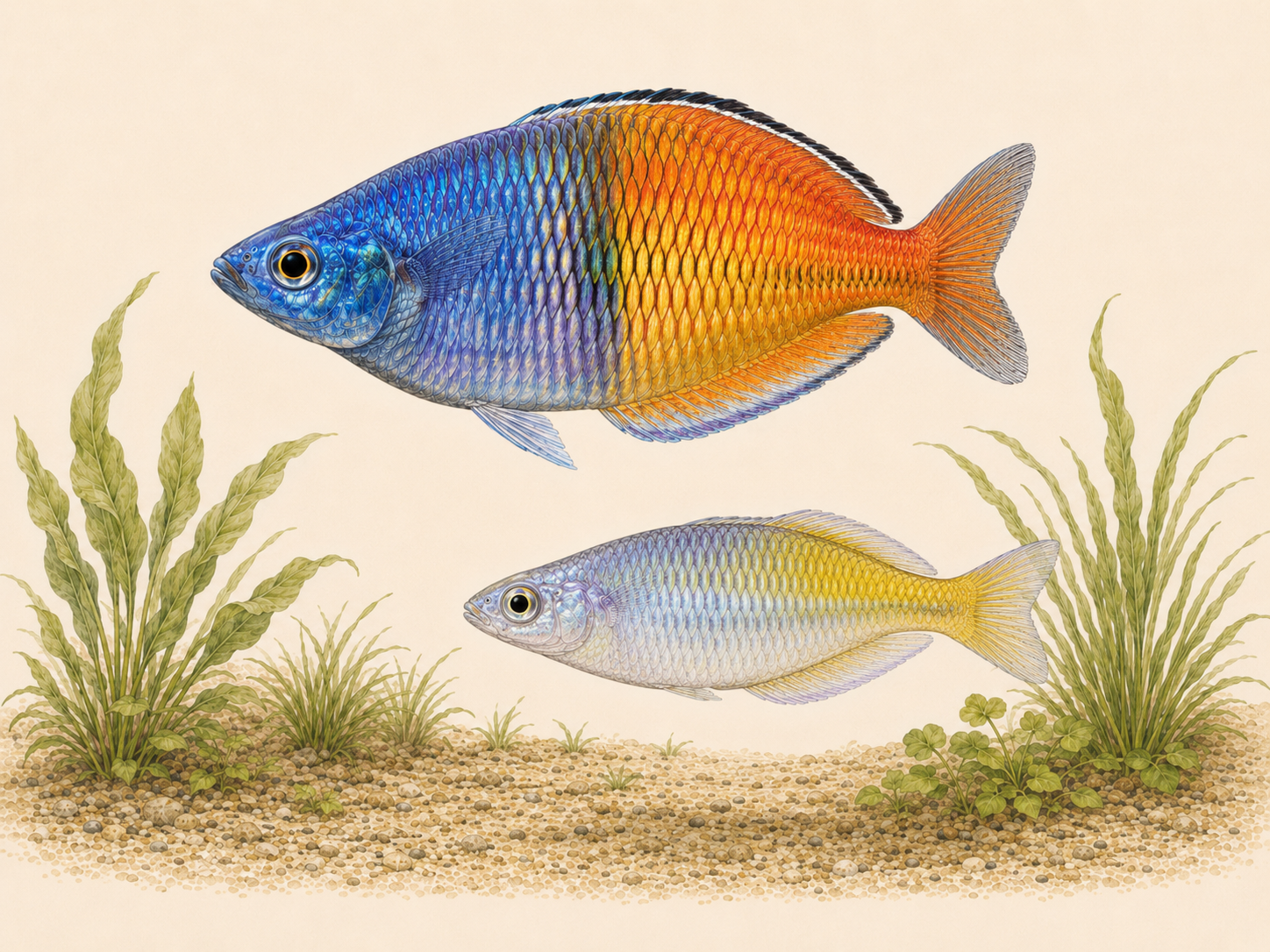
The Boesemani Rainbowfish is widely regarded as one of the most visually striking freshwater fish available to aquarists. With its remarkable two-toned colouration — a steel-blue front half that transitions into a vivid orange-gold posterior — a mature male in good health is genuinely breathtaking. First described scientifically in 1980 by Marinus Boeseman and later formally named by Gerald Allen and Norbert Cross, this species quickly captured the attention of the aquarium hobby and has remained a firm favourite ever since.
Despite its exotic appearance, the Boesemani Rainbowfish is a relatively hardy and adaptable species that suits intermediate fishkeepers and experienced hobbyists alike. It is an active, peaceful schooling fish that thrives in spacious, well-maintained aquariums with stable water conditions. Its popularity in the hobby has, unfortunately, contributed to significant pressure on wild populations, and the species is currently listed as Endangered on the IUCN Red List. The vast majority of specimens available in the trade today are captive-bred, which is both a positive development for conservation and a testament to how readily this species reproduces in aquarium conditions.
This guide covers everything you need to know to keep Boesemani Rainbowfish successfully, from tank setup and water parameters to diet, breeding, and compatible tank mates. Whether you are considering your first group or looking to refine the care of fish you already keep, you will find practical, evidence-based advice throughout.
Quick Stats
| Scientific name | Melanotaenia boesemani |
| Common names | Boesemani Rainbowfish, Boeseman’s Rainbowfish |
| Family | Melanotaeniidae |
| Origin | Ajamaru Lakes region, Vogelkop Peninsula, West Papua, Indonesia |
| Adult size | 10–12 cm |
| Lifespan | 5–8 years |
| Difficulty | Moderate |
| Breeding difficulty | Moderate |
| Temperature | 26–30 °C |
| pH range | 6.5–8.0 |
| General hardness (GH) | 8–20 dGH |
| Carbonate hardness (KH) | 5–12 dKH |
| Minimum tank size | 230 litres |
| Conservation status | Endangered (IUCN) |
Appearance
The Boesemani Rainbowfish possesses one of the most distinctive colour patterns in the freshwater world. The body is laterally compressed and somewhat deep-bodied compared to many other rainbowfish species, giving it a robust, oval profile when viewed from the side. The head and anterior portion of the body display a rich blue-grey to deep blue colouration, while the posterior half transitions into intense shades of orange, yellow, or gold. This two-toned arrangement is the hallmark of the species and makes it instantly recognisable.
Sexual dimorphism is pronounced in mature specimens. Males are considerably more colourful than females, developing deeper, more saturated hues as they age. A dominant male in peak condition will display intensely vivid blues and oranges, often with a noticeable sheen that catches the light as the fish moves through the water. Males also tend to develop a deeper body shape, and their dorsal and anal fins become more extended and rounded. Females are more subdued in colour, typically showing a silvery-olive or greenish hue with less contrast between the front and rear halves of the body. They are also slightly smaller and more slender.
Juvenile Boesemani Rainbowfish can be disappointing in appearance for those unfamiliar with the species. Young fish are often a rather plain silvery colour with only hints of the spectacular adult colouration. It can take six months to a year or more for full colour to develop, and optimal diet, water quality, and the social dynamics of a group all play a role in how vibrant the fish ultimately become. This is an important point for prospective buyers, as many fish sold in shops are juveniles that bear little resemblance to the stunning adults pictured in reference materials.
The fins are generally translucent with subtle hints of blue or yellow. The eyes are relatively large, as is common in the Melanotaeniidae family, and can appear almost luminous. Adult males may also display a slight golden or amber sheen across the upper body during courtship displays.
Natural Habitat
The Boesemani Rainbowfish is endemic to a very small area in the Vogelkop (Bird’s Head) Peninsula of West Papua, Indonesia. Its natural range is essentially restricted to the Ajamaru Lakes system and its associated tributaries, which includes Lakes Ajamaru, Hain, and Aitinjo. This extremely limited distribution is a key reason for the species’ Endangered conservation status, as any localised environmental disruption could have catastrophic consequences for wild populations.
The Ajamaru Lakes are shallow, warm, hard-water lakes fed by subterranean limestone springs. The water is typically very clear with good visibility, and the substrate consists largely of sand, gravel, and limestone rubble. Aquatic vegetation is abundant in many areas, including various species of Vallisneria and other submerged plants, and this dense plant growth provides both shelter and foraging opportunities. The pH of the water in these lakes tends to be neutral to mildly alkaline, and the general hardness is moderate to high owing to the dissolved calcium carbonate from the surrounding limestone geology.
Water temperatures in the Ajamaru region remain warm year-round, typically ranging from 27 to 30 °C. The lakes are situated at a relatively low elevation and experience a tropical climate with consistent warmth and humidity. In the wild, Boesemani Rainbowfish inhabit the margins of the lakes, often around submerged vegetation, fallen wood, and rocky outcrops. They are schooling fish by nature and are typically encountered in groups, swimming actively in the mid-water column.
Threats to wild populations include habitat degradation, the introduction of non-native species, and, historically, overcollection for the aquarium trade. Conservation efforts have focused on habitat protection and the promotion of captive breeding to reduce demand for wild-caught specimens. Aquarists who keep this species can take some comfort in knowing that the overwhelming majority of commercially available Boesemani Rainbowfish are now bred in captivity.
Tank Size and Setup
Given their active swimming behaviour and the fact that they must be kept in groups, Boesemani Rainbowfish require a spacious aquarium. A minimum tank size of 230 litres is recommended for a group of six to eight adults, though larger is always better with this species. A tank measuring at least 120 cm in length is ideal, as the elongated footprint gives the fish ample room to swim back and forth, which is a natural behaviour pattern for rainbowfish. These are not fish for nano tanks or standard community setups based around smaller aquaria.
The aquascape should aim to replicate, at least loosely, the conditions found in the Ajamaru Lakes. A substrate of fine sand or smooth gravel works well and provides a natural-looking base. Dense planting around the sides and rear of the tank is highly beneficial, as it gives the fish a sense of security, helps maintain water quality, and provides visual interest. Hardy plant species such as Vallisneria, Java Fern, Anubias, and Amazon Sword are all suitable choices. Leave the central area of the tank relatively open to provide a clear swimming lane, as Boesemani Rainbowfish are vigorous swimmers and will make full use of available space.
Driftwood and smooth rocks can be used to create additional structure and shelter without cluttering the swimming space. A dark substrate and background tend to bring out the best colour in these fish, as the contrast encourages them to display their full vibrancy. Floating plants can be used to diffuse the light if desired, though moderate lighting levels are generally fine. If you intend to breed the fish, you may wish to include spawning mops or fine-leaved plants such as Java Moss in the setup.
A tight-fitting lid is essential. Rainbowfish are known jumpers, and Boesemani are no exception. They are particularly prone to leaping during feeding time, when startled, or during male sparring displays. A secure cover will prevent unfortunate losses.
Water Parameters
Maintaining stable water conditions is arguably the most important aspect of Boesemani Rainbowfish care. While the species is reasonably adaptable and can tolerate a range of water chemistry, consistency is key. Sudden fluctuations in temperature, pH, or hardness cause stress and can lead to disease outbreaks. The water in the Ajamaru Lakes is warm, moderately hard, and neutral to slightly alkaline, and replicating these conditions in the aquarium will yield the best results.
| Temperature | 26–30 °C |
| pH | 6.5–8.0 |
| General hardness (GH) | 8–20 dGH |
| Carbonate hardness (KH) | 5–12 dKH |
| Ammonia | 0 ppm |
| Nitrite | 0 ppm |
| Nitrate | Below 20 ppm |
The preference for moderately hard, slightly alkaline water makes this species an excellent choice for fishkeepers in areas with naturally hard tap water, where many other popular tropical species struggle. If your water is soft, you may need to use mineral supplements or a remineralisation product to raise the GH and KH to appropriate levels. Regular water changes of 20 to 30 per cent weekly are recommended to keep nitrate levels low and maintain overall water quality. Boesemani Rainbowfish are sensitive to elevated nitrate concentrations, and keeping levels consistently below 20 ppm will promote good health and strong colouration.
Filtration and Equipment
Efficient filtration is a non-negotiable requirement for a Boesemani Rainbowfish aquarium. These fish are active, have a good appetite, and produce a moderate bioload, so the filter must be capable of handling the waste output of a group of medium-sized fish. An external canister filter rated for the volume of the tank — or slightly above — is the best option for most setups. Canister filters provide excellent mechanical, biological, and chemical filtration capacity and can be loaded with a combination of sponge media, ceramic bio-media, and filter floss to ensure thorough water processing.
While Boesemani Rainbowfish appreciate clean, well-oxygenated water, they do not come from fast-flowing habitats. A moderate current is ideal. If your filter output creates too strong a flow, you can diffuse it with a spray bar, lily pipe, or by directing the outlet against the glass. Some gentle water movement is beneficial for gas exchange and helps distribute heat evenly throughout the tank, but avoid creating a torrent that forces the fish to swim against a constant current.
A reliable heater with a built-in thermostat is essential to maintain the warm temperatures this species requires. Given the recommended range of 26 to 30 °C, a heater rated at approximately 1 watt per litre is a sensible guideline. In larger tanks, two heaters placed at opposite ends can help ensure even heat distribution. A good-quality digital thermometer should be used to monitor the water temperature independently of the heater’s thermostat, as thermostat drift is a common cause of unnoticed temperature changes.
Lighting should be moderate. Boesemani Rainbowfish are not particularly fussy about light intensity, but moderate levels tend to bring out their colours best and support healthy plant growth in a planted setup. Full-spectrum LED lights designed for planted aquaria work well. A photoperiod of eight to ten hours per day is appropriate and helps establish a natural day-night cycle.
Diet and Feeding
Boesemani Rainbowfish are omnivores with a good appetite and are generally enthusiastic feeders that accept a wide range of foods. In the wild, their diet consists of small invertebrates, insect larvae, algae, and plant matter. In the aquarium, this should be replicated with a varied diet that includes both high-quality prepared foods and regular offerings of live or frozen treats.
A good-quality flake or micro-pellet food formulated for tropical omnivores can form the staple of the diet. Choose products with a high proportion of whole fish or invertebrate ingredients and avoid those that rely heavily on fillers such as wheat or soy. Supplementing this base diet with frozen or live foods such as bloodworm, brine shrimp, daphnia, and mosquito larvae will promote excellent colour development and overall health. These protein-rich foods are particularly beneficial for conditioning fish for breeding.
Vegetable matter should also feature in the diet. Blanched spinach, shelled peas, spirulina-based flakes, or algae wafers can all be offered periodically. Some keepers find that colour-enhancing foods containing natural pigments such as astaxanthin and carotenoids help intensify the orange and gold tones of the posterior body, though good water quality and a varied diet are the most important factors in colour development.
Feed two to three times daily in small amounts that the fish can consume within two to three minutes. Overfeeding should be avoided, as uneaten food will decompose and degrade water quality. Boesemani Rainbowfish feed primarily in the mid-water column and at the surface, so choose food formats that remain suspended or float rather than sinking rapidly to the bottom.
Behaviour and Temperament
Boesemani Rainbowfish are peaceful, active, and highly social fish. They are a schooling species that must be kept in groups of at least six, though eight or more is preferable. In groups of fewer than six, individuals tend to become stressed, skittish, and pale, and they may hide rather than swim openly. A well-sized group allows the fish to display their full range of natural behaviours, including the flashing and sparring displays that make rainbowfish so enjoyable to observe.
Males will frequently display to one another, flaring their fins and intensifying their colours in a ritualised contest for dominance and female attention. These displays are generally harmless and rarely result in any physical damage, though subordinate males may occasionally be chased briefly. Providing ample swimming space and some visual barriers in the form of plants or decor helps diffuse any tension within the group. The ideal sex ratio is roughly equal numbers of males and females, or slightly more females than males, to spread the attention of the most dominant male and reduce persistent chasing of any single individual.
These fish occupy the mid-water column and upper portions of the tank for the most part. They are active swimmers and will spend much of the day moving around the aquarium, often in loose formation. Their behaviour is diurnal, and they are most active and colourful during daylight hours, particularly in the morning when male display behaviour tends to peak. Dawn and the period shortly after the aquarium lights come on are often when the most impressive colour displays can be observed.
Boesemani Rainbowfish are not aggressive towards other species and can be housed with a wide variety of peaceful to moderately active community fish. They are too large and fast to be bothered by most common community species and generally ignore fish that do not compete directly with them for food or territory. However, their active swimming style and relatively rapid movements can be stressful for very timid or slow-moving species, so tank mate selection should take this into account.
Tank Mates
Selecting appropriate tank mates for Boesemani Rainbowfish is generally straightforward, as these are peaceful, community-oriented fish. The best companions are species of a similar size and temperament that appreciate comparable water conditions. Avoid very small species that may be outcompeted for food, very aggressive or territorial fish, and anything with long, flowing fins that might attract unwanted nipping attention — though Boesemani themselves are not habitual fin nippers.
Good tank mates
- Turquoise Rainbowfish (Melanotaenia lacustris) — A similarly sized and tempered rainbowfish species that thrives in the same water parameters and adds complementary colour to the display.
- Bristlenose Pleco (Ancistrus sp.) — A peaceful bottom-dwelling algae eater that occupies a different zone in the tank and helps keep surfaces clean.
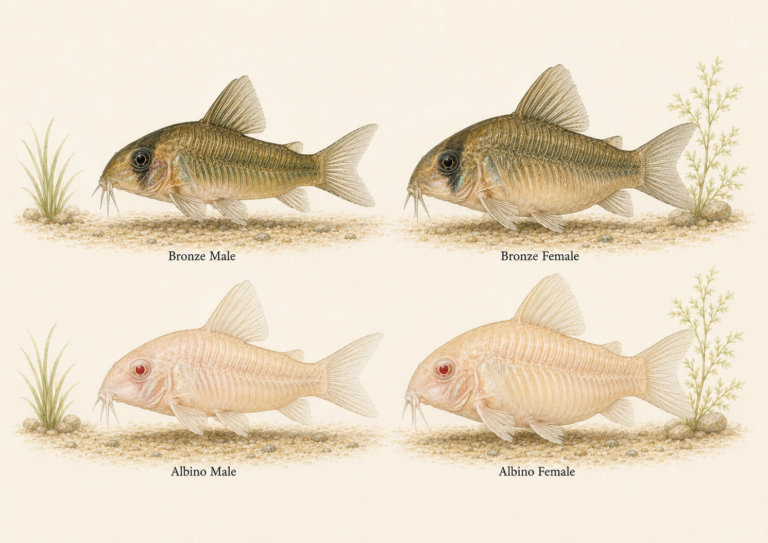
- Sterbai Corydoras (Corydoras sterbai) — A warm-water-tolerant corydoras species that peacefully scavenges the bottom without competing for mid-water food.
- Cherry Barb (Puntius titteya) — A peaceful, colourful barb that is large enough to hold its own without causing any aggression issues.
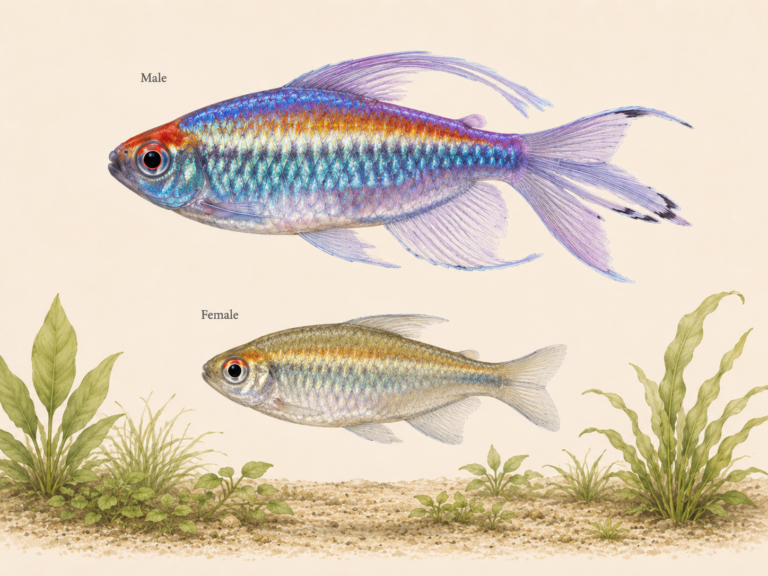
- Congo Tetra (Phenacogrammus interruptus) — A medium-sized, peaceful tetra that matches well in terms of activity level and water parameter preferences.
- Denison Barb (Sahyadria denisonii) — An active, similarly sized schooling fish that adds dynamic movement and appreciates well-oxygenated water.
- Kuhli Loach (Pangio kuhlii) — A peaceful, nocturnal bottom dweller that stays out of the rainbowfish’s way and adds interest to the lower levels of the tank.
- Threadfin Rainbowfish (Iriatherina werneri) — A smaller rainbowfish that can work in large, well-planted tanks where it has ample cover, though monitor to ensure it is not outcompeted for food.
- Pearl Gourami (Trichopodus leerii) — A calm, beautifully marked gourami that tolerates the same temperature range and does not compete aggressively.
- Clown Loach (Chromobotia macracanthus) — A sociable bottom dweller that enjoys similar warm water conditions, though only suitable if the tank is large enough for both species’ long-term needs.
Fish to avoid
- Betta Fish (Betta splendens) — The active, fast-moving nature of Boesemani will stress a Betta, and the Betta’s long fins may attract unwanted attention.
- Oscar (Astronotus ocellatus) — A large, predatory cichlid that will view Boesemani Rainbowfish as potential prey once it reaches adult size.
- Tiger Barb (Puntigrus tetrzona) — Known fin nippers that can harass rainbowfish, particularly during feeding and display behaviour.
- Jack Dempsey (Rocio octofasciata) — A highly territorial and aggressive cichlid that is wholly incompatible with peaceful community fish.
- Neon Tetra (Paracheirodon innesi) — Too small and slow to compete effectively for food, and the significant size difference may cause stress to the tetras.
- Red Tail Shark (Epalzeorhynchos bicolor) — A territorial species that can become increasingly aggressive as it matures, often chasing mid-water swimmers relentlessly.
- Green Terror (Andinoacara rivulatus) — A large, aggressive cichlid that will dominate the tank and may injure or kill rainbowfish.
- Flowerhorn Cichlid — An extremely aggressive hybrid cichlid that is completely unsuitable for community tanks of any kind.
Breeding
Breeding Boesemani Rainbowfish in captivity is achievable for the dedicated hobbyist, though raising the fry can be more challenging than inducing spawning. With good nutrition and stable water conditions, healthy adults will often spawn regularly without much intervention. The key challenge lies in protecting the eggs from being eaten and successfully raising the tiny fry through their first few weeks of life.
Spawning behaviour typically begins at dawn or shortly after the aquarium lights come on. Males will intensify their colours dramatically and display vigorously to females, swimming alongside them with fins flared and bodies trembling. When a female is receptive, the pair will align side by side over a suitable substrate — usually fine-leaved plants, spawning mops, or Java Moss — and release eggs and milt simultaneously. The eggs are small, adhesive, and attached to the spawning medium by fine threads. A single female may deposit anywhere from a handful to several dozen eggs in a single spawning session, and spawning may occur over multiple consecutive days.
If you are serious about raising fry, it is advisable to use removable spawning mops or bunches of Java Moss that can be transferred to a separate rearing tank after eggs have been deposited. The adults will readily consume their own eggs and fry if given the opportunity, so separation is critical. The eggs typically hatch in seven to twelve days, depending on temperature, with warmer water accelerating development. The fry are extremely small upon hatching and will initially feed on their yolk sacs before becoming free-swimming.
First foods for the fry should be appropriately tiny. Infusoria, commercially available liquid fry food, or paramecium cultures are suitable for the first week or so, after which the fry can be transitioned to freshly hatched brine shrimp nauplii and microworms. Growth is slow in the early stages, and maintaining excellent water quality in the rearing tank is paramount — small, frequent water changes using aged water at the same temperature are essential. As the fry grow, they can be gradually introduced to crushed flake food and eventually weaned onto the same diet as the adults. It may take several months before the young fish begin to show recognisable adult colouration.
Common Diseases
Boesemani Rainbowfish are generally robust when kept in appropriate conditions, but they are not immune to the common ailments that affect freshwater tropical fish. The most frequent health issues tend to be linked to poor water quality, stress, or the introduction of pathogens from new tank inhabitants.
Ich, or white spot disease, caused by the protozoan Ichthyophthirius multifiliis, is one of the most common diseases encountered. It presents as small white spots on the body and fins, accompanied by flashing, scratching against objects, and increased respiration. Ich is highly treatable if caught early, and raising the water temperature to 30 °C while administering a proprietary ich treatment is usually effective. Boesemani tolerate the higher end of their temperature range well, which makes thermal treatment a viable option.
Bacterial infections, including fin rot and columnaris, can occur in tanks with suboptimal water quality or where fish have been physically injured. Symptoms include frayed or disintegrating fins, white or greyish patches on the skin, lethargy, and loss of appetite. Treatment typically involves improving water quality as a first step, followed by the use of antibacterial medications if the condition does not resolve on its own. Maintaining consistently clean water through regular water changes is the single most effective preventative measure.
Rainbowfish can also be susceptible to velvet disease, caused by the dinoflagellate Piscinoodinium pillulare. This manifests as a fine, gold or rust-coloured dusting on the skin and fins, often accompanied by rapid gill movement and lethargy. Copper-based treatments are effective against velvet, though care must be taken with dosing in planted tanks or where invertebrates are present.
Internal parasites are occasionally seen, particularly in wild-caught or recently imported specimens. Signs include weight loss despite normal feeding, white or stringy faeces, and a generally thin or wasted appearance. Anti-parasitic foods or dedicated internal parasite treatments can be used to address these issues. Quarantining all new fish for a minimum of two to four weeks before introducing them to an established tank is the best way to prevent the spread of parasites and other pathogens.
Finally, Mycobacterium infections (fish tuberculosis) are occasionally reported in rainbowfish, though they are uncommon. These chronic bacterial infections are difficult to treat and can be transmitted to other fish. Symptoms include progressive wasting, spinal deformities, skin lesions, and lethargy. Prevention through good husbandry and quarantine practices is the best approach, as treatment is rarely successful.
FAQs
Why are my Boesemani Rainbowfish so pale?
Pale colouration in Boesemani Rainbowfish is most commonly caused by stress, poor water quality, an inadequate diet, or keeping the fish in groups that are too small. Young fish will naturally be pale, as full adult colouration can take a year or more to develop. Ensure you are maintaining stable water parameters within the recommended ranges, feeding a varied diet rich in protein and natural colour-enhancing pigments, and keeping a group of at least six individuals. A dark substrate and background can also help the fish feel more secure and encourage bolder colour display. Persistent paleness in mature fish may indicate underlying health issues that warrant further investigation.
How many Boesemani Rainbowfish should I keep together?
A minimum group of six is essential, but eight to twelve is preferable if your tank is large enough to accommodate them. Boesemani Rainbowfish are schooling fish that rely on group dynamics for social stability, stress reduction, and the expression of natural behaviours. Larger groups distribute aggression more evenly, allow subordinate males to avoid persistent harassment, and result in more impressive colour displays as males compete to outshine one another. A group of six adults requires a minimum of 230 litres, with additional volume needed for larger groups.
Can Boesemani Rainbowfish live in soft water?
While captive-bred Boesemani Rainbowfish can tolerate moderately soft water for a time, they originate from hard, alkaline lakes and are best kept in water with a GH of 8 dGH or above. Prolonged exposure to very soft, acidic water can lead to stress, weakened immune function, and reduced longevity. If your tap water is naturally soft, consider using a remineralisation product or adding crushed coral to your filter to raise the hardness and buffering capacity to more suitable levels.
Do Boesemani Rainbowfish jump?
Yes, Boesemani Rainbowfish are capable and sometimes enthusiastic jumpers. They are most likely to jump when startled, during feeding frenzies, or when males are engaged in vigorous display behaviour. A well-fitting aquarium lid or cover glass is essential to prevent losses. Even small gaps around filter inlets, heater cables, or airline tubing should be covered, as a determined rainbowfish can find surprisingly small openings.
How long does it take for Boesemani Rainbowfish to reach full colour?
Most Boesemani Rainbowfish begin to show recognisable adult colouration from around six months of age, but full colour development — particularly in males — can take twelve to eighteen months or even longer. The rate and intensity of colour development depend on several factors, including diet quality, water conditions, genetics, and the social dynamics of the group. Males housed with other males tend to colour up faster due to the competitive pressure to display. Patience is key, as a mature, well-kept male Boesemani at two to three years of age will be far more impressive than a young fish of the same species.
Related Guides
- Turquoise Rainbowfish Care Guide — Another stunning Melanotaenia species with similar care requirements, making it an excellent companion species for the Boesemani.
- Red Rainbowfish (Glossolepis incisus) Care Guide — A larger rainbowfish species from the same region that shares water parameter preferences and offers a dramatic colour contrast.
- Threadfin Rainbowfish Care Guide — A smaller, more delicate rainbowfish species that can coexist with Boesemani in spacious, well-planted aquariums.
- How to Breed Rainbowfish — A comprehensive guide covering spawning techniques, egg care, and fry rearing applicable to most Melanotaenia species.
- Congo Tetra Care Guide — A popular mid-water schooling fish that pairs beautifully with Boesemani Rainbowfish in larger community setups.