Quick summary
Distichodus noboli is a hardy but rarely available herbivorous characin best suited to experienced keepers with a large, 300+ litre tank, as it needs to be kept in groups, will eat most soft plants, and is very difficult to breed in captivity. If you can’t provide plenty of swimming space, a plant-friendly diet plan, and companions that won’t be nipped, this may not be the right fish for you.
🐠 Build a tank around this species
In this guide:
- Introduction
- Quick Stats
- Appearance
- Natural Habitat
- Tank Size and Setup
- Water Parameters
- Filtration and Equipment
- Diet and Feeding
- Behaviour and Temperament
- Tank Mates
- Breeding
- Common Diseases
- FAQs
Introduction
Distichodus noboli is a relatively obscure African characin first described by the Belgian-British zoologist George Albert Boulenger in 1899. Hailing from the Upper Congo River basin in central Africa, this species belongs to the family Distichodontidae, a group of African characins noted for their herbivorous tendencies and often striking patterning. Unlike many species in ichthyology whose specific epithets honour a collector or scientist, the name “noboli” derives from a genuine local name used by communities along the Upper Congo to refer to this fish – a charming etymological detail that ties the species closely to its place of origin.
Growing to approximately 19 cm in captivity, Distichodus noboli occupies a middle ground within its genus. It is considerably smaller than the well-known Distichodus sexfasciatus, which can exceed 60 cm, yet it is large enough to make a meaningful visual impact in a suitably sized aquarium. Despite its interesting natural history and attractive appearance, Distichodus noboli remains uncommon in the aquarium trade. Hobbyists who do encounter it are rewarded with a hardy, characterful fish that brings a slice of the Congo basin’s rich biodiversity into their living room.
This care guide aims to provide comprehensive husbandry information for Distichodus noboli, covering tank requirements, water parameters, diet, breeding, and compatibility. Because published aquarium literature on this particular species is limited, some recommendations draw upon general knowledge of Distichodus species care and the known ecology of Upper Congo riverine habitats. Keepers should always observe their individual fish closely and adjust care accordingly.
Quick Stats
| Scientific name | Distichodus noboli |
|---|---|
| Common names | Distichodus noboli, Noboli Distichodus |
| Family | Distichodontidae |
| Origin | Upper Congo River basin, Democratic Republic of the Congo |
| Adult size | 19 cm |
| Difficulty | Intermediate |
| Breeding difficulty | Advanced |
| Temperature | 22–26 °C |
| pH | 6.5–7 |
| GH | 4–15 dGH |
| Minimum tank size | 300 L |
| Conservation status | Least Concern (IUCN, assessed 2009) |
Appearance
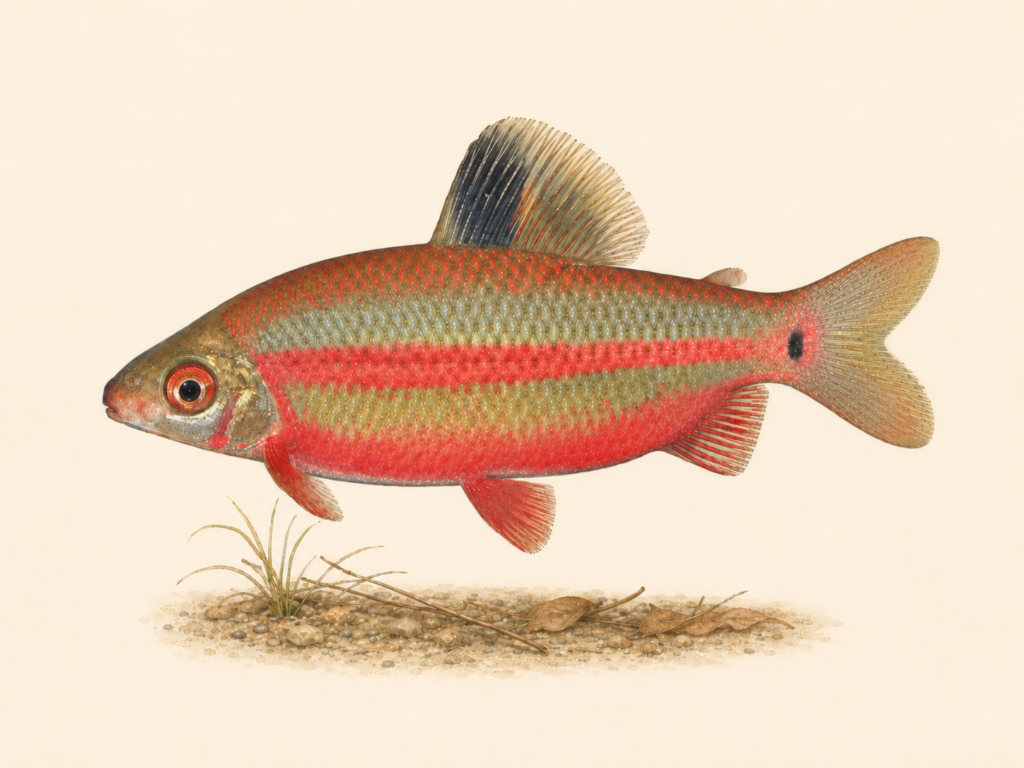
Distichodus noboli possesses the characteristic body plan of its genus: a moderately deep, laterally compressed body with a gently rounded profile and a relatively small, subterminal mouth equipped with spatulate, chisel-like teeth adapted for scraping and cropping plant material. The body shape is robust without being overly bulky, lending the fish an elegant yet sturdy appearance that is typical of many medium-sized Distichodus species.
The colouration of Distichodus noboli is attractive, though not as gaudy as some of its more commercially popular congeners. The base body colour tends towards silvery grey to olive, often with a subtle golden or brassy sheen along the flanks. Several dark vertical bars or bands typically adorn the body, a feature common across Distichodus species. These bars may vary in intensity depending on the fish’s mood, age, and environmental conditions. Younger specimens often display more vivid barring and may show warmer tones, while adults can become somewhat more muted, though they retain a dignified handsomeness.
The fins of Distichodus noboli are generally translucent to lightly pigmented, sometimes with hints of red or orange at the bases, particularly in the caudal and anal fins. The dorsal fin is moderately tall and set centrally along the back. The caudal fin is forked, providing the fish with efficient propulsion in the flowing riverine habitats it calls home. An adipose fin is present, as is standard for characins and their relatives.
Sexual dimorphism in Distichodus noboli is not strongly pronounced, making it difficult to visually sex individuals outside of spawning condition. Mature females may appear slightly fuller in the body when carrying eggs, and males may develop slightly more intense colouration during breeding periods, though these differences are subtle and unreliable for definitive sexing.
At approximately 19 cm in total length, Distichodus noboli is a medium-sized fish that commands attention in an appropriately scaled aquarium without requiring the enormous tanks demanded by its larger relatives. It is worth noting that size can vary somewhat depending on diet, water quality, and tank dimensions, and some individuals may not reach their full potential size in captivity.
Natural Habitat
Distichodus noboli is native to the Upper Congo River basin in the Democratic Republic of the Congo. The Congo system is the second largest river basin in the world by discharge volume and harbours an extraordinary diversity of freshwater fish species, many of which remain poorly studied or even undescribed. The upper reaches of the Congo, where this species is found, encompass a variety of habitat types, from main channel environments with moderate to strong current to quieter backwater areas, tributary streams, and seasonally flooded zones.
In its natural habitat, Distichodus noboli is likely found in areas with moderate water flow over rocky, sandy, or mixed substrates. Like other Distichodus species, it is primarily a herbivore, feeding on algae, aquatic plants, and organic detritus that accumulates on submerged surfaces. The Upper Congo waters tend to be warm, slightly acidic to neutral, and relatively soft, though conditions can vary considerably with the seasons, particularly during the rainy periods when rivers swell and flood adjacent forests and grasslands.
The riparian vegetation along the Upper Congo provides shade, shelter, and a source of allochthonous food material – fallen leaves, fruits, seeds, and terrestrial invertebrates that wash into the water. Submerged and overhanging vegetation, fallen branches, and rocky outcrops provide cover from predators and resting spots. Understanding these natural conditions is essential for replicating a suitable captive environment.
The Congo basin faces ongoing environmental pressures, including deforestation, mining, pollution, and overfishing. While Distichodus noboli has not been formally evaluated by the IUCN, the broader ecological challenges facing Congolese freshwater habitats underscore the importance of responsible aquarium keeping and, where possible, captive breeding efforts for species from this region.
Tank Size and Setup
A minimum tank size of 300 litres is recommended for a small group of Distichodus noboli. This provides adequate swimming space for a fish that reaches nearly 20 cm and is naturally active. Larger tanks of 400-500 litres or more are preferable, particularly if keeping a group of four to six individuals, which is advisable given the social nature of Distichodus species. A longer tank is better than a tall one, as horizontal swimming space is more important than vertical depth for this species.
The substrate should ideally consist of fine to medium-grade sand or smooth gravel, reflecting the sandy and rocky riverbeds of the Upper Congo. Avoid sharp-edged substrates, as Distichodus species may root around the bottom searching for food and could injure themselves on rough materials. A darker substrate can help to bring out the fish’s natural colouration and reduce stress from reflected light.
Aquascaping for Distichodus noboli presents a particular challenge: the species is herbivorous and will readily consume or damage most live aquatic plants. Soft-leaved species such as Cabomba, Hygrophila, and Vallisneria are likely to be decimated within days. If you wish to include live plants, focus on tough, unpalatable species such as Anubias, Java Fern (Microsorum pteropus), and Bolbitis heudelotii, all of which are coincidentally native to African waterways. Attaching these plants to rocks and driftwood rather than planting them in the substrate can help protect their root systems from disturbance.
Driftwood and smooth river rocks should form the backbone of the aquascape, providing hiding spots, territorial boundaries, and visual barriers. Tangles of bogwood or branches replicate the submerged woody debris found in the Congo basin and offer refuge for subordinate individuals. Ensure that all hardscape is securely positioned, as active fish of this size can dislodge poorly placed decorations.
A secure, well-fitting lid is essential. Distichodus species can be powerful jumpers, particularly when startled or during the initial acclimation period. Any gaps around filter inlets, heater cables, or airline tubing should be covered or blocked to prevent escape.
Lighting should be moderate. Overly bright illumination can cause stress and washed-out colouration, while subdued lighting encourages natural behaviour and brings out the fish’s best appearance. If growing Anubias or Java Fern, moderate light levels are perfectly adequate for these low-demand plants. Floating plants, if not consumed, can also help to diffuse overhead light and provide a sense of security.
Water Parameters
| Temperature | 22-26 °C |
| pH | 6.5-7.0 |
| General hardness (GH) | 4-15 dGH |
| Ammonia | 0 ppm |
| Nitrite | 0 ppm |
| Nitrate | Below 30 ppm |
Distichodus noboli originates from warm, tropical waters and should be maintained at a stable temperature between 24 and 28 degrees Celsius. A temperature around 26 degrees Celsius represents a comfortable midpoint for general maintenance. Fluctuations of more than one or two degrees within a 24-hour period should be avoided, as rapid temperature changes can cause stress and compromise immune function.
The pH should be maintained in the slightly acidic to neutral range of 6.0 to 7.5. In practice, a pH of around 6.5 to 7.0 is ideal and closely mirrors the conditions found in many Upper Congo tributaries. The use of driftwood and Indian almond leaves can help to gently lower and buffer pH through the release of tannins, simultaneously tinting the water a natural amber hue that many Congolese species appreciate.
General hardness (GH) of 4-15 dGH and carbonate hardness (KH) of 3-10 dKH provide a workable range. Softer water towards the lower end of these ranges is preferred and more closely approximates natural conditions, but Distichodus noboli appears to be reasonably adaptable and should tolerate moderately hard water without significant issues, provided other parameters are kept stable.
Ammonia and nitrite must always read zero. These compounds are toxic to fish even at low concentrations and indicate inadequate biological filtration or overfeeding. Nitrate, while less immediately harmful, should be kept below 30 ppm through regular water changes and sensible stocking levels. Weekly water changes of 25-30% are a good baseline for maintaining water quality, though the precise frequency and volume may need to be adjusted based on stocking density and bioload.
Filtration and Equipment
Given the size and activity level of Distichodus noboli, robust filtration is essential. A high-quality external canister filter rated for the tank’s volume – or ideally for a tank somewhat larger – is the best choice. Look for a filter that provides a turnover rate of at least four to six times the tank volume per hour. For a 300-litre aquarium, this means a filter rated at 1,200-1,800 litres per hour. Two smaller filters can be used in tandem for redundancy and to ensure even water circulation throughout the tank.
Biological filtration should be prioritised, with ample ceramic media, sintered glass, or similar high-surface-area materials to support the nitrifying bacteria colonies responsible for processing ammonia and nitrite. Mechanical filtration stages using foam pads and filter floss will trap particulate waste. Chemical filtration using activated carbon is optional but can be useful for removing discolouration from tannin-rich setups or for polishing water clarity.
A moderate current is beneficial, reflecting the flowing riverine habitats of the Upper Congo. However, avoid excessively strong flow, as this can cause stress and exhaustion over time. Positioning the filter outlet to create a gentle but discernible current along the length of the tank is ideal. Additional powerheads or circulation pumps can be used if needed but should be adjustable.
A reliable aquarium heater, properly rated for the tank size, is necessary to maintain the tropical temperatures required by this species. Submersible heaters with built-in thermostats are the most practical option. An external or inline heater is an alternative for larger setups and reduces the risk of damage from boisterous fish. Regardless of heater type, use an independent aquarium thermometer to verify temperature accuracy.
Aeration is important, particularly in warmer water, which holds less dissolved oxygen. A gentle airstone or sponge filter running alongside the main filtration system can provide supplementary oxygenation and surface agitation. Ensure that the water surface is not completely still, as gas exchange occurs primarily at the air-water interface.
Diet and Feeding
Distichodus noboli is primarily herbivorous in the wild, feeding on algae, aquatic plants, biofilm, and organic detritus. In captivity, the diet should reflect this natural preference, with a strong emphasis on plant-based foods. Providing a varied herbivorous diet is key to maintaining good health, vibrant colouration, and a robust immune system.
A high-quality spirulina-based flake or pellet food should form the dietary staple. Sinking pellets are particularly useful, as Distichodus species are comfortable feeding at all levels of the water column but often prefer to graze near the bottom or on submerged surfaces. Supplement this base diet with blanched vegetables such as courgette (zucchini), cucumber, spinach, lettuce, shelled peas, and broccoli. These should be lightly blanched to soften them and make them easier to consume, then weighted down in the tank.
Algae wafers designed for herbivorous fish are another excellent food source and are readily accepted. If the tank supports natural algae growth on rocks and glass (in moderation), Distichodus noboli will happily graze on this as well.
While primarily herbivorous, Distichodus species are not exclusively so and will benefit from occasional supplementation with protein-rich foods. Small amounts of frozen or live foods such as bloodworm, daphnia, brine shrimp, or mosquito larvae can be offered once or twice a week. These provide essential amino acids and help to condition fish for breeding. However, protein-rich foods should not form the bulk of the diet, as an overly meaty regime can lead to digestive issues and obesity in herbivorous species.
Feed two to three times daily in amounts that the fish can consume within a few minutes. Remove any uneaten vegetable matter after several hours to prevent it from decomposing and fouling the water. Observe feeding behaviour carefully; if certain individuals are consistently outcompeted, consider spreading food across multiple locations in the tank to ensure all fish receive adequate nutrition.
Behaviour and Temperament
Distichodus noboli is generally a semi-peaceful species, though like many Distichodus, it can exhibit occasional assertiveness, particularly towards conspecifics or similar-looking species. Individual temperament can vary, and some specimens may prove more territorial or nippy than others. Overall, however, this is not an aggressive fish and can be integrated into a community setting with appropriate tank mates.
In the wild, Distichodus species are often found in loose shoals or groups, and captive specimens benefit from being kept in groups of four to six or more. Keeping a solitary individual can lead to stress and may paradoxically increase aggression, as the fish lacks the social structure it needs to feel secure. In a group, hierarchical behaviour will emerge, with a dominant individual asserting itself over subordinates, but this is natural and rarely results in serious harm provided the tank offers sufficient space and visual barriers.
Distichodus noboli is an active swimmer and spends much of its time patrolling the tank, investigating surfaces for food, and interacting with conspecifics. It is generally diurnal, being most active during daylight hours, though it may continue to move about under subdued evening lighting. The species is not particularly shy once acclimated but can be skittish during the initial settling-in period. Avoid sudden movements near the tank and provide adequate cover during acclimatisation.
One behaviour to be aware of is fin nipping. Distichodus species are sometimes reported to nip the fins of slow-moving, long-finned tank mates. While this tendency is not universal and varies by individual, it is worth considering when selecting compatible species. Keeping Distichodus noboli in an appropriate group and ensuring they are well-fed can help to minimise this behaviour.
The species’ herbivorous nature means it will interact extensively with plants and algae in the tank. Keepers should expect any soft-leaved vegetation to be consumed and should plan the aquascape accordingly. This plant-eating behaviour is not destructive in the negative sense – it is simply a reflection of the fish’s natural feeding ecology.
Tank Mates
Selecting appropriate tank mates for Distichodus noboli requires consideration of its size, activity level, semi-peaceful temperament, and occasional tendency to nip fins. Ideal companions are medium-sized, robust species that are neither overly aggressive nor excessively passive. Avoid very small fish that might be intimidated or bullied, and avoid slow-moving, long-finned species that could become targets for fin nipping. Similarly, highly aggressive or predatory fish should be excluded. Many African riverine species make natural companions, though compatible species from other regions can also work well.
Good tank mates
- Congo Tetra – A robust, active African tetra that is large enough to coexist peacefully and shares similar water parameter preferences.
- African Red-Eye Tetra – A hardy, mid-sized tetra from the Congo basin that is fast enough to avoid any nipping and thrives in similar conditions.
- Synodontis eupterus – A peaceful, armoured catfish that occupies the bottom of the tank and is too well-protected to be bothered by Distichodus.
- Synodontis nigriventris – The upside-down catfish is a fascinating, peaceful bottom-dweller that pairs well with medium-sized African community fish.
- African Butterfly Cichlid – Anomalochromis thomasi is a small, peaceful West African cichlid that can coexist in a spacious, well-structured tank.
- Rainbowfish – Robust, active, and fast-swimming species such as Melanotaenia boesemani make excellent dither fish and are unlikely to be harassed.
- Clown Loach – A sociable, bottom-dwelling species that is large and robust enough to hold its own and adds activity to the lower levels of the tank.
- Bristlenose Pleco – A peaceful, algae-eating catfish that stays out of the way of Distichodus and helps to control algae growth.
Fish to avoid
- Betta Fish – Slow-moving and long-finned, bettas would be highly vulnerable to fin nipping from Distichodus noboli.
- Angelfish – Their flowing fins and relatively sedate swimming style make them likely targets for nipping behaviour.
- Guppy – Far too small and slow to be kept with a medium-sized Distichodus; likely to be harassed or consumed.
- Neon Tetra – Much too small to be a suitable companion and would likely be stressed or predated upon.
- Flowerhorn – Highly aggressive and territorial, a flowerhorn would bully or injure Distichodus noboli.
- Oscar – A large, predatory cichlid that would likely view Distichodus noboli as prey or a competitor, leading to aggression and stress.
- Siamese Fighting Fish – Delicate, slow, and long-finned; completely unsuitable for housing with active, nippy species.
Breeding
Breeding Distichodus noboli in captivity is a challenging undertaking, and there are very few, if any, well-documented accounts of successful spawning in home aquaria. This difficulty is shared across the Distichodus genus, many species of which have proven reluctant to breed outside of their natural habitats or specialised commercial breeding facilities. Nevertheless, understanding the likely reproductive biology of the species can help dedicated hobbyists create the best possible conditions for breeding attempts.
In the wild, Distichodus species are believed to be egg scatterers, releasing eggs and sperm into the water column or over suitable substrates during seasonal spawning events. These events are likely triggered by environmental cues such as changes in water temperature, photoperiod, and water chemistry associated with the onset of the rainy season, when rivers rise and flood surrounding areas, providing abundant food and spawning habitat.
To attempt breeding in captivity, start with a well-conditioned group of at least six individuals, which increases the likelihood of having both sexes represented. Condition the fish with a varied, high-quality diet rich in vegetable matter supplemented with protein-rich foods such as bloodworm and brine shrimp. Ensure all fish are in optimal health before attempting to induce spawning.
Simulating rainy season conditions may help to trigger spawning behaviour. This can involve performing large, cooler water changes (dropping the temperature by two to three degrees Celsius), softening the water, and slightly lowering the pH. Increasing the photoperiod to replicate longer daylight hours and using a rain bar or spray bar to simulate rainfall are additional techniques that have been used with some success for other Congo basin species.
A separate breeding tank is advisable, as it allows for greater control over conditions and protects any eggs from predation by other tank inhabitants. The breeding tank should be spacious, well-oxygenated, and furnished with fine-leaved plants or spawning mops to catch scattered eggs. A layer of marbles or a mesh grid over the substrate can also prevent the parents from consuming their own eggs.
If spawning does occur, the eggs are likely to be small and adhesive or semi-buoyant. Hatching times will depend on temperature but can be expected within 48-72 hours at tropical temperatures. Newly hatched fry will initially absorb their yolk sacs before becoming free-swimming, at which point they can be offered infusoria, liquid fry food, or finely powdered spirulina. As they grow, they can be transitioned to baby brine shrimp and crushed flake food.
It should be noted that the difficulty of breeding Distichodus noboli means that most specimens available in the aquarium trade are wild-caught. This underscores the importance of responsible sourcing and careful husbandry to ensure the long-term welfare of these fish in captivity.
Common Diseases
Distichodus noboli is generally a hardy species when provided with appropriate care, clean water, and a balanced diet. However, like all aquarium fish, it is susceptible to a range of common diseases, particularly when stressed by poor water quality, inadequate nutrition, overcrowding, or sudden changes in environmental conditions.
White spot disease (Ichthyophthirius multifiliis), commonly known as ich, is one of the most frequently encountered ailments in freshwater aquaria. It manifests as small white cysts on the fins, body, and gills. Affected fish may flash against hard surfaces in an attempt to relieve irritation. Treatment involves raising the water temperature gradually to 28-30 degrees Celsius to accelerate the parasite’s life cycle and administering a proprietary white spot treatment. Improved water quality and reduced stress are essential for recovery and prevention.
Bacterial infections can affect the skin, fins, and internal organs. Fin rot, characterised by ragged or disintegrating fin edges, is often a secondary infection resulting from physical damage (such as from fin nipping) or poor water conditions. Maintaining pristine water quality is both the best prevention and the first line of treatment. In severe cases, antibacterial medications may be necessary.
Fungal infections, typically presenting as white or greyish cotton-like growths on the body or fins, are another common issue. These usually arise secondary to wounds, abrasions, or compromised immune function. Antifungal treatments are effective, but addressing the underlying cause – whether it is poor water quality, aggression from tank mates, or rough decor – is equally important.
Internal parasites can be a concern, particularly in wild-caught specimens. Signs may include weight loss despite a healthy appetite, bloating, trailing white faeces, or lethargy. Quarantining new arrivals for a minimum of two to four weeks and treating prophylactically with an appropriate anti-parasitic medication is a sensible precaution.
Nutritional deficiencies can arise if the diet is not sufficiently varied or lacks adequate plant-based content. Symptoms may include faded colouration, poor growth, lethargy, and increased susceptibility to infection. Ensuring a diet rich in spirulina, fresh vegetables, and occasional protein supplementation will prevent most nutritional issues.
Prevention is always preferable to treatment. Maintaining stable water parameters, performing regular water changes, quarantining new fish and plants, avoiding overcrowding, and providing a balanced diet are the cornerstones of disease prevention for Distichodus noboli.
FAQs
Is Distichodus noboli suitable for a planted aquarium?
Distichodus noboli is not an ideal choice for a heavily planted tank. As a herbivorous species, it will readily consume or damage most soft-leaved aquatic plants. However, tough, unpalatable species such as Anubias, Java Fern, and Bolbitis heudelotii can often survive alongside Distichodus, particularly if the fish are well-fed with supplementary vegetable matter. A hardscape-dominant aquascape with selective planting is the best approach.
How many Distichodus noboli should I keep together?
It is best to keep Distichodus noboli in a group of at least four to six individuals. This allows natural social hierarchies to form and distributes any intra-species aggression, reducing stress on individual fish. Keeping a single specimen can lead to increased shyness or, paradoxically, heightened aggression towards other tank inhabitants. A larger group requires a proportionally larger tank – aim for 300 litres as a minimum and increase the volume as group size grows.
Can Distichodus noboli be kept with cichlids?
Distichodus noboli can be kept with certain cichlids, provided the cichlid species in question is not overly aggressive, territorial, or predatory. Peaceful to moderately assertive African cichlids of similar size, such as some of the smaller riverine species, can make compatible companions. Avoid highly territorial species like large Mbuna or predatory haplochromines. Always ensure the tank is large enough and well-furnished with hiding spots to minimise territorial disputes.
What is the lifespan of Distichodus noboli in captivity?
With proper care, Distichodus noboli can be expected to live for 8 to 12 years in captivity, and potentially longer in optimal conditions. Longevity is closely linked to water quality, diet, stress levels, and overall husbandry. Regular water changes, a varied herbivorous diet, and a spacious, well-maintained aquarium are the key factors in ensuring a long and healthy life for this species.
Is Distichodus noboli widely available in the aquarium trade?
Distichodus noboli is not commonly available in mainstream aquarium shops and is considered a specialist or rare import. It may occasionally appear in the stock lists of specialist African fish dealers or through importers who source fish directly from the Congo basin. Due to its rarity in the trade, keepers who manage to acquire specimens should prioritise excellent husbandry and, if possible, attempt to breed them to reduce pressure on wild populations. Joining online forums and communities focused on African characins can be a useful way to locate sources.
Related Guides
- Distichodus sexfasciatus – A larger and more commonly kept congener, providing useful comparative husbandry information for Distichodus keepers.
- Congo Tetra – An excellent African companion species that shares similar water parameter requirements and makes a natural tank mate.
- Synodontis eupterus – A popular African catfish that pairs well with medium-sized Distichodus species in a Congo biotope setup.
- Distichodus lusosso – Another Distichodus species from the Congo basin, offering insights into the care of this fascinating genus.
- African Red-Eye Tetra – A hardy Congo basin tetra that complements Distichodus noboli in a community or biotope aquarium.