Quick summary
The Hoplo Catfish is a hardy, easy-care armoured catfish that tolerates a wide range of water conditions, making it a great choice for beginners, though it needs a 150+ litre tank, ideally kept in groups of three or more. It’s a peaceful nocturnal fish that gets along well with most community fish, just avoid very small tank mates and aggressive or predatory species.
🐠 Build a tank around this species
In this guide:
- Introduction
- Quick Stats
- Appearance
- Varieties and Morphs
- Natural Habitat
- Tank Size and Setup
- Water Parameters
- Filtration and Equipment
- Diet and Feeding
- Behaviour and Temperament
- Tank Mates
- Breeding
- Common Diseases
- FAQs
Introduction
The Hoplo Catfish, known scientifically as Megalechis thoracata, is a hardy and characterful armoured catfish native to the slow-moving waters and swamps of South America. Once classified under the genus Hoplosternum, from which its common name derives, this species has long been a favourite among aquarists who appreciate catfish with genuine personality. It belongs to the family Callichthyidae, the same family as the immensely popular Corydoras catfish, yet the Hoplo is a considerably larger and more robust animal, making it a commanding presence in medium to large community aquaria.
What sets the Hoplo Catfish apart from many other bottom-dwelling species is its fascinating combination of traits. It is a bubble-nest builder, a reproductive strategy more commonly associated with labyrinth fish such as gouramis and bettas, yet it is also a tough, adaptable catfish capable of surviving in oxygen-poor environments thanks to its ability to gulp atmospheric air. This dual respiratory capacity means it can thrive in conditions that would stress or kill many other fish, making it exceptionally forgiving for beginners while still being interesting enough for experienced hobbyists.
Hoplo Catfish are sociable creatures that do well in groups and tend to be most active during the evening and night, though they frequently become bold enough to be seen during daylight hours once settled into a well-furnished tank. Their peaceful disposition, manageable adult size, and willingness to accept a broad range of foods have cemented their reputation as one of the more rewarding catfish species available in the freshwater hobby. This guide covers everything you need to know to keep Megalechis thoracata healthy and content in your home aquarium.
Quick Stats
| Scientific name | Megalechis thoracata |
|---|---|
| Common names | Spotted Hoplo, Bubblenest Catfish, Hoplosternum, Port Hoplo |
| Family | Callichthyidae |
| Origin | South America, Amazon and Orinoco basins |
| Adult size | 18 cm |
| Lifespan | 5–8 years |
| Difficulty | Easy |
| Breeding difficulty | Moderate |
| Temperature | 20–28 °C |
| pH | 6–8 |
| GH | 2–20 dGH |
| KH | 2–15 dKH |
| Minimum tank size | 150 L |
| Conservation status | Least Concern (IUCN) |
Appearance
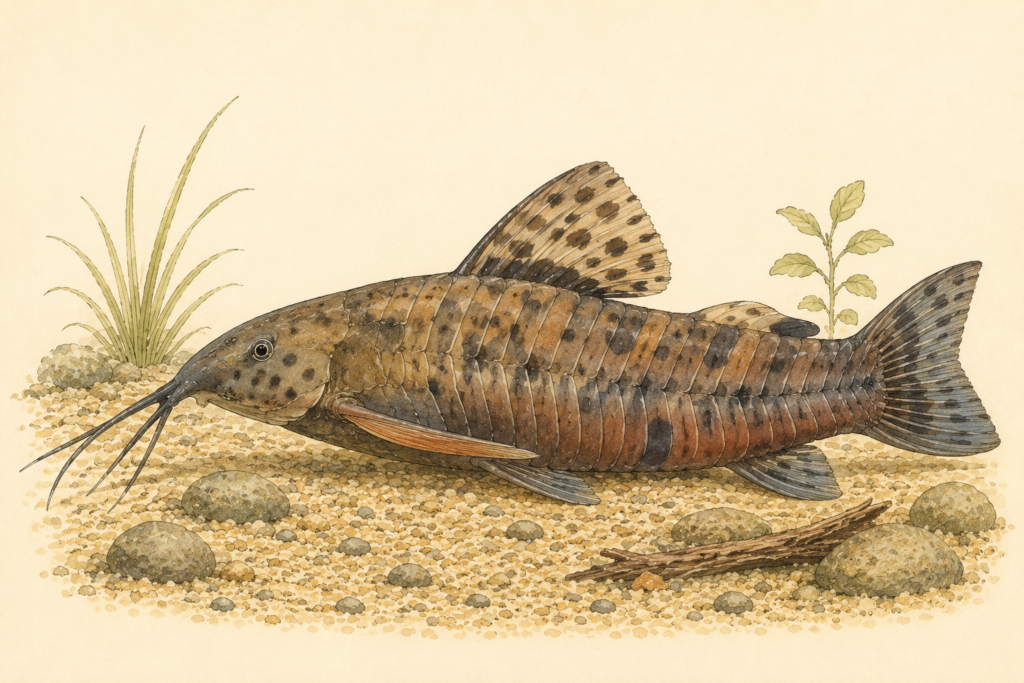
The Hoplo Catfish possesses the classic armoured catfish body plan: a somewhat elongated, laterally compressed body covered in two rows of overlapping bony scutes (plates) that run along each flank from just behind the head to the base of the caudal peduncle. These plates give the fish a subtly ridged texture that is clearly visible when light catches the body at an angle. The overall body shape is robust and slightly wedge-shaped when viewed from above, with a broad, somewhat flattened head that tapers to a rounded snout.
The base colouration of wild-type specimens is typically a dark greyish-brown to olive, densely marked with darker brown or black spots and blotches that can vary in size and intensity between individuals and populations. The belly is usually pale cream to white. The fins are translucent to lightly pigmented, often bearing rows of small dark spots, particularly on the dorsal, caudal, and pectoral fins. Two pairs of barbels extend from the mouth, a longer upper pair and a shorter lower pair, which the fish uses to probe the substrate for food. These barbels are quite sturdy compared to those of smaller callichthyid species.
Sexual dimorphism becomes apparent as fish mature. Males develop notably thickened and enlarged pectoral fin spines that take on a reddish-orange to deep rust coloration during the breeding season. The first ray of the pectoral fin in breeding males becomes heavily ossified and can appear almost club-like. Females tend to be slightly plumper when in breeding condition but lack the dramatically modified pectoral spines. Outside of breeding season, the sexes can be harder to distinguish, though males may still show marginally thicker pectoral spines than females. Adult Hoplos typically reach 15 to 18 centimetres in aquarium conditions, with exceptional individuals occasionally surpassing this.
Varieties and Morphs
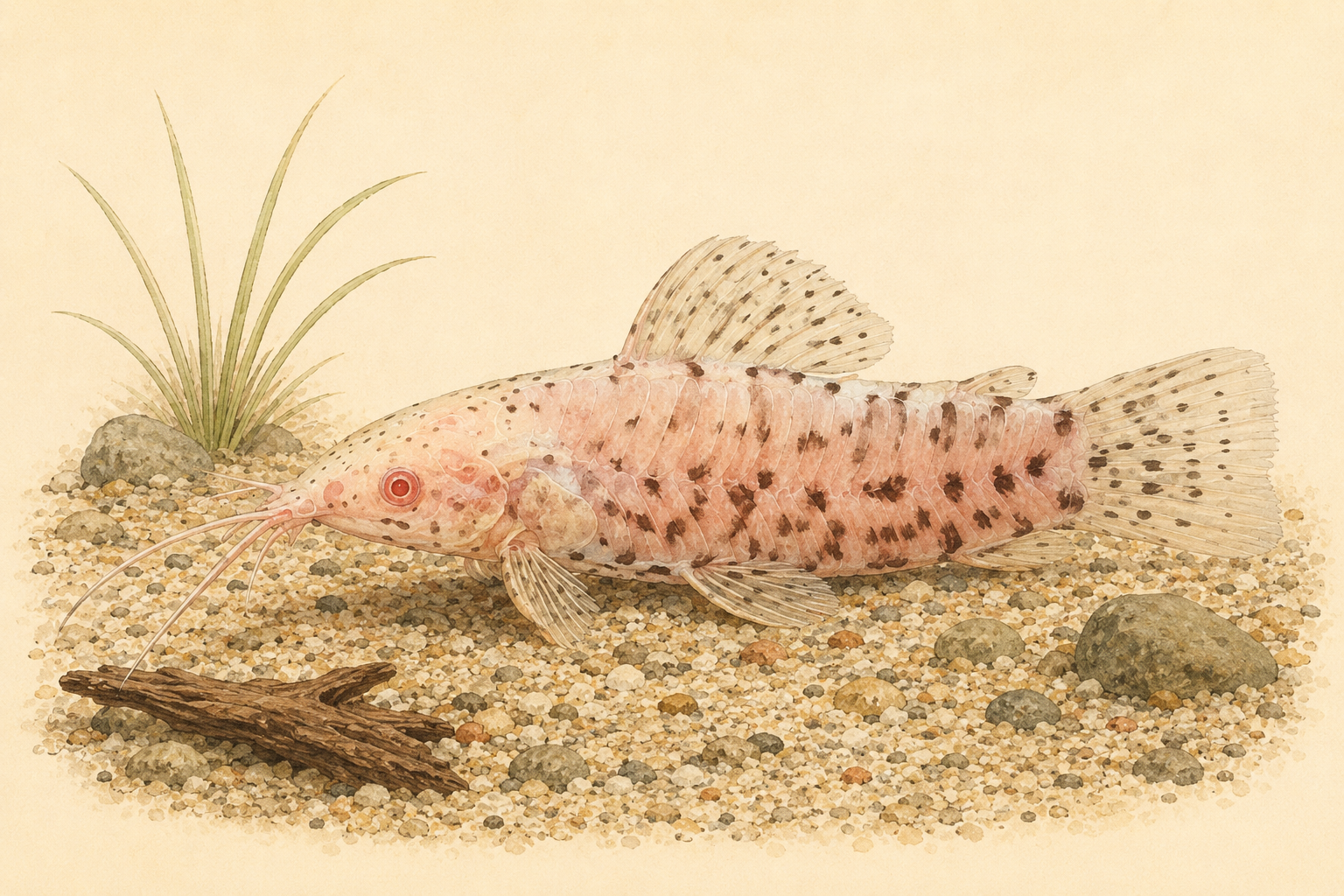
The most widely available captive-bred variant of the Hoplo Catfish is the Albino Hoplo Catfish. This morph exhibits the leucistic or amelanistic phenotype commonly seen across many catfish species bred in commercial facilities. In the Albino Hoplo, the dark melanin pigmentation is absent, resulting in a body that ranges from pale cream to a warm pinkish-white. The overlapping scutes retain their textured appearance but are rendered in shades of ivory to soft gold, giving the fish an almost pearlescent quality under aquarium lighting. The eyes display the characteristic reddish-pink hue typical of albino fish, caused by the visibility of blood vessels through the unpigmented iris. The fins are translucent and may carry a faint yellowish or pinkish tint. During breeding condition, males of the albino morph still develop the enlarged pectoral fin spines, which can take on a distinctive orange or reddish tone that stands out strikingly against the pale body.
The Albino Hoplo Catfish has identical care requirements to the wild-type form and can be housed and bred alongside normally pigmented individuals without any concerns. Some hobbyists report that albino specimens may be marginally less shy than wild-type fish, though this likely varies between individuals rather than being a consistent trait of the morph. The albino form is regularly produced by commercial breeders in Southeast Asia and South America, and it is widely available in the aquarium trade at a price comparable to the standard form.
Natural Habitat
In the wild, Megalechis thoracata occupies a remarkably broad geographic range across South America, from Trinidad in the north to Bolivia and southern Brazil in the south. It is found in the Amazon and Orinoco river basins as well as numerous smaller coastal drainages throughout the Guianas and north-eastern Brazil. This wide distribution reflects the species’ impressive adaptability to a range of aquatic environments.
Hoplo Catfish are most commonly encountered in slow-moving or still waters, including swamps, marshes, floodplain pools, oxbow lakes, and heavily vegetated stream margins. They show a strong preference for shallow, warm waters with soft, muddy substrates and abundant leaf litter or decaying vegetation. These habitats are frequently subject to seasonal fluctuations: during the wet season, the fish spread out across inundated forest floors and floodplains, while during the dry season they may become confined to shrinking pools where dissolved oxygen levels drop significantly.
It is this seasonal drying that has driven the evolution of the Hoplo’s ability to breathe atmospheric air. Like its relatives in the Callichthyidae family, Megalechis thoracata can gulp air at the surface and absorb oxygen through a modified section of the intestine. This adaptation allows it to survive in stagnant, hypoxic waters where many other fish species would perish. The species is also known to traverse short distances over damp land between water bodies during extreme dry conditions, though this behaviour is uncommon in aquarium settings.
The water in many of its native habitats tends to be soft and acidic, stained brown by tannins released from decomposing leaves and wood. However, populations exist across a wide spectrum of water chemistries, which partly explains why the species is so adaptable in captivity. Typical wild habitats have temperatures ranging from around 20 °C in cooler upland streams to well above 28 °C in sun-baked floodplain pools.
Tank Size and Setup
A minimum tank size of 150 litres is recommended for a small group of Hoplo Catfish. While a single specimen could technically survive in a smaller volume, these are social fish that fare best in groups of three or more, and their adult size of 15 to 18 centimetres means they need adequate swimming and foraging space. For a group of four to six individuals, a tank of 200 to 300 litres or larger is preferable. A tank with a generous footprint is more important than height, as Hoplos spend the vast majority of their time on or near the substrate.
Substrate choice should lean towards fine sand or smooth, rounded gravel. The Hoplo Catfish actively sifts through the substrate with its barbels when foraging, and rough or sharp substrates can damage these sensitive appendages over time. A layer of fine play sand or aquarium-grade sand in a natural colour works exceptionally well and allows the fish to exhibit natural feeding behaviour.
Decoration should aim to replicate the cluttered, shaded environment the species occupies in the wild. Provide plenty of hiding spots using driftwood, bogwood, smooth rocks, and ceramic or PVC caves. Large sections of driftwood with crevices and overhangs are particularly appreciated. The addition of dried leaf litter, such as Indian almond leaves or oak leaves, is an excellent touch that not only creates a more naturalistic appearance but also releases beneficial tannins and provides surfaces for microfaunal growth that the catfish will graze on.
Live plants can be included but should be robust species that can tolerate the Hoplo’s occasional clumsiness as it moves about the tank. Hardy plants such as Anubias, Java Fern, Amazon Swords, and Vallisneria are good choices. Floating plants are particularly valuable, as they dim the lighting and provide a sense of security that encourages the fish to emerge more frequently during the day. If you intend to breed Hoplos, floating plants or other surface cover are essential, as the male constructs his bubble nest among surface vegetation.
A secure, tight-fitting lid is important. Hoplo Catfish regularly rise to the surface to gulp air, and they can be surprisingly vigorous in their movements. Startled individuals have been known to leap clear of the water, so gaps in the cover should be minimised. Additionally, maintain a small gap between the water surface and the lid to allow access to atmospheric air, which the fish require for their supplementary respiration.
Water Parameters
| Temperature | 20–28 °C |
| pH | 6.0–8.0 |
| General hardness (GH) | 2–20 dGH |
| Carbonate hardness (KH) | 2–15 dKH |
| Ammonia | 0 ppm |
| Nitrite | 0 ppm |
| Nitrate | Below 40 ppm |
The Hoplo Catfish is one of the most adaptable freshwater species available in the hobby when it comes to water chemistry. It tolerates a wide pH range from slightly acidic to mildly alkaline, and it can thrive in both soft and moderately hard water. This flexibility makes it suitable for most tap water conditions found across the United Kingdom and Europe without the need for extensive modification.
While the species can survive brief excursions outside these parameters, maintaining stable conditions within the recommended ranges will support long-term health and vitality. Temperature is best kept in the range of 22 to 26 °C for general maintenance, though higher temperatures of 27 to 28 °C can be used as part of a breeding conditioning protocol. Weekly water changes of 25 to 30 per cent are advisable to keep nitrate levels manageable and maintain overall water quality. Although the Hoplo’s ability to breathe atmospheric air gives it a safety margin in suboptimal water conditions, this should never be used as an excuse for poor husbandry.
Ammonia and nitrite must always be maintained at zero. While the Hoplo is tougher than many fish, chronic exposure to elevated ammonia or nitrite will still compromise its immune system and shorten its lifespan. A fully cycled aquarium with adequate biological filtration is non-negotiable before introducing these catfish.
Filtration and Equipment
Effective filtration is important for keeping Hoplo Catfish, though the species does not demand anything particularly specialised. An external canister filter or a large internal power filter rated for the tank volume (or ideally slightly above) will serve well. The key requirement is solid biological and mechanical filtration capacity, as Hoplos are hearty eaters that produce a proportional amount of waste. A filter that turns over the total tank volume approximately four to six times per hour is a reasonable target.
Flow rate is worth considering. In the wild, Hoplo Catfish inhabit sluggish or still waters, and they are not strong swimmers despite their robust build. A moderate flow is fine, but excessively strong currents directed across the substrate can cause stress and discourage normal foraging behaviour. If your filter output is powerful, use a spray bar to diffuse the flow or direct the outlet against the back glass to reduce the current at substrate level.
A heater is necessary unless you keep your home consistently warm year-round. A reliable, thermostatically controlled heater rated appropriately for your tank volume will maintain the temperature within the ideal range. Position the heater near the filter outlet to ensure even heat distribution, and consider using a heater guard to protect the catfish from burns, as Hoplos sometimes rest against equipment.
Lighting should be subdued to moderate. The Hoplo Catfish is naturally crepuscular to nocturnal, and it will be far more active and visible under dimmer lighting conditions. Floating plants, as mentioned earlier, are an effective way to reduce light intensity reaching the lower levels of the tank. Standard LED aquarium lights on a timer providing 8 to 10 hours of illumination per day are perfectly suitable.
An air pump and airstone are not strictly necessary, given the Hoplo’s ability to supplement its oxygen intake by gulping air at the surface. However, good surface agitation from the filter return is beneficial for maintaining dissolved oxygen levels for any tank mates that lack this adaptation. If you notice your Hoplos making frequent trips to the surface, it is normal behaviour and not typically a sign of poor water quality, though extremely frequent surface visits in a fish that has not recently been fed may warrant a water test.
Diet and Feeding
Hoplo Catfish are enthusiastic and unfussy omnivores that will accept virtually any aquarium food offered. In the wild, they feed on a diverse diet of aquatic invertebrates, insect larvae, worms, crustaceans, detritus, and plant matter gleaned from the substrate and amongst decaying vegetation. Replicating this dietary variety in captivity is straightforward and key to maintaining optimal health and coloration.
A high-quality sinking pellet or tablet designed for bottom-feeding catfish should form the staple of the diet. These foods are nutritionally balanced and sink quickly to where the Hoplos feed. Supplement this base diet regularly with protein-rich foods such as frozen or live bloodworm, tubifex, daphnia, brine shrimp, and chopped earthworms. Hoplos are particularly fond of bloodworm and will often become visibly excited when it is offered, emerging from hiding spots and actively foraging across the substrate.
Vegetable matter should also feature in the diet, though it need not be the primary component. Blanched courgette, cucumber, spinach, or shelled peas can be offered occasionally and are usually accepted. Algae wafers intended for herbivorous catfish also make a useful supplementary food.
Feed once or twice daily, offering only as much food as the fish can consume within a few minutes. Hoplo Catfish are prone to overeating if given the opportunity, and obesity can be a genuine concern with these greedy feeders. Monitor body condition over time; a healthy Hoplo should be well-rounded but not distended. Remove any uneaten food promptly to prevent water quality degradation, particularly protein-rich items like bloodworm which decompose rapidly.
It is worth noting that Hoplo Catfish are primarily nocturnal feeders in the wild. While aquarium specimens quickly adapt to daytime feeding routines, offering a portion of food shortly after lights-out can encourage more natural behaviour and ensure that shyer individuals get their fair share, particularly in community settings where more assertive tank mates might otherwise monopolise food during the day.
Behaviour and Temperament
The Hoplo Catfish is a peaceful, sociable species that is well suited to community aquaria. It is not aggressive towards tank mates and rarely bothers other fish, though it may accidentally startle smaller species with its somewhat clumsy movements during active foraging periods. Despite its armoured appearance, it is fundamentally a gentle fish that prefers to avoid conflict.
Hoplos are gregarious and should ideally be kept in groups of three or more. Solitary individuals can become reclusive and may spend almost all their time hidden. In a group, they develop a loose social hierarchy and often rest together in favoured hiding spots during the day before emerging in the evening to forage. Watching a group of Hoplos systematically work their way across the substrate, barbels twitching as they probe for morsels, is one of the genuine pleasures of keeping this species.
The species is primarily crepuscular and nocturnal, with peak activity occurring around dawn and dusk and into the night hours. However, well-established specimens in aquaria with subdued lighting and plenty of cover frequently become confident enough to be active throughout the day. Newly introduced individuals may be skittish and prone to dashing about the tank when startled, but this behaviour typically subsides within a few weeks as the fish acclimatise.
One of the most distinctive behaviours of the Hoplo Catfish is its regular trips to the surface to gulp air. This is entirely normal and not a sign of distress. The fish rises rapidly from the substrate, takes a breath at the surface, and descends again. This behaviour may increase during warm weather or when the fish is particularly active. Males in breeding condition will also spend extended periods at the surface constructing and maintaining their bubble nests, a behaviour that is fascinating to observe.
Occasional mild jostling or chasing may occur between males, particularly if multiple males are kept together and one or more are in breeding condition. These interactions rarely result in injury and are a normal part of the species’ social dynamics. Providing ample space and multiple hiding spots minimises the frequency and intensity of such encounters.
Tank Mates
The Hoplo Catfish’s peaceful nature and broad water parameter tolerance make it compatible with a wide range of community fish. When selecting tank mates, the main considerations are to avoid species small enough to fit in the Hoplo’s mouth (though predation is rare, it is not impossible with very small fish), to avoid overly aggressive or territorial species that might harass the catfish, and to choose fish that share compatible water parameter requirements. The Hoplo’s nocturnal habits mean it rarely competes directly with diurnal species for food or space.
Good tank mates
- Angelfish, a classic South American cichlid that occupies mid-water levels, leaving the substrate to the Hoplos without territorial overlap.
- Silver Dollar, a peaceful, schooling characin large enough to coexist comfortably and sharing similar water parameter preferences.
- Bristlenose Pleco, another bottom-dwelling catfish with a calm disposition; both species generally ignore each other.
- Pearl Gourami, a gentle, mid-dwelling labyrinth fish that appreciates similar water conditions and similarly planted setups.
- Emperor Tetra, a robust, mid-sized tetra that is too large to be bothered by Hoplos and adds colour to the middle water column.
- Keyhole Cichlid, one of the most peaceful dwarf cichlids, unlikely to compete with or harass Hoplo Catfish.
- Corydoras Catfish, Smaller relatives that share similar habits; they coexist peacefully, though ensure the Corydoras are not outcompeted for food.
- Rainbowfish, Active, colourful mid-water swimmers that thrive in similar temperatures and complement the Hoplo’s bottom-dwelling lifestyle.
Fish to avoid
- Oscar, Large, predatory cichlids that may attack or consume Hoplo Catfish, especially younger individuals.
- Red-Tail Catfish, a massive predatory catfish that will eat anything it can fit in its mouth, including Hoplos.
- Jaguar Cichlid, highly aggressive and territorial, posing a serious risk of injury to peaceful bottom-dwellers.
- Neon Tetra, very small fish that could potentially be consumed by large adult Hoplos, particularly at night.
- Green Terror, an aggressive cichlid that is likely to bully and stress the peaceful Hoplo Catfish.
- African Cichlids (Mbuna), Require different water chemistry and are typically far too aggressive for peaceful catfish.
- Red-Bellied Piranha, Predatory fish that may injure or kill Hoplos despite their armoured plating.
- Flowerhorn, Extremely territorial hybrid cichlids unsuitable for community tanks with peaceful catfish.
Breeding
Breeding Hoplo Catfish in captivity is an achievable and rewarding endeavour, rated as moderately difficult. The species is a bubble-nest builder, which is unusual among catfish and makes the breeding process particularly engaging to observe. Successful breeding typically requires some intentional conditioning and environmental manipulation, but it is well within the reach of hobbyists with reasonable experience.
Begin by conditioning a group of adults with a protein-rich diet of live or frozen foods such as bloodworm, earthworms, and brine shrimp for several weeks. A separate breeding tank of at least 100 litres is advisable, furnished with a sandy substrate, gentle filtration, and abundant floating plants or other surface cover. Broad-leaved floating plants such as Pistia (water lettuce) or Salvinia are ideal, as the male will construct his bubble nest beneath them. Alternatively, a polystyrene sheet or floating lid can serve as a nest site.
To trigger spawning, simulate the onset of the rainy season by performing a large cool water change (dropping the temperature by 2 to 4 °C) and then gradually allowing the temperature to rise again over the following days. Reducing the water level slightly and then topping up can also help replicate the flooding conditions that stimulate breeding in the wild.
The male initiates breeding by constructing a substantial bubble nest at the water surface, often incorporating plant material to give it structure. Nest construction can take several days and the male defends the site vigorously. Once the nest is ready, spawning occurs beneath it, with the female depositing eggs that the male fertilises and then places into the nest. A single spawning can produce several hundred eggs, sometimes exceeding 500.
After spawning, the female should be removed, as the male will guard the nest aggressively and may injure her. The male tends the nest diligently, repairing it and removing infertile eggs. The eggs typically hatch within three to four days at temperatures around 26 to 28 °C. The male continues to guard the fry for a short period after hatching, but he can be removed once the fry become free-swimming, usually two to three days post-hatching.
Free-swimming fry can be fed with infusoria, liquid fry food, or powdered spirulina initially, graduating to newly hatched brine shrimp (Artemia nauplii) within a few days. Growth is reasonably rapid given adequate food and water quality. Perform small, frequent water changes in the fry tank to maintain pristine conditions, and ensure the filter intake is covered with a sponge pre-filter to prevent fry from being drawn in.
Common Diseases
The Hoplo Catfish is a robust species with strong natural defences, including its armoured scutes and air-breathing capability. Nevertheless, it is susceptible to the same range of diseases that affect other freshwater fish, and attention to water quality and nutrition remains the best form of prevention.
White spot disease (ich), caused by the protozoan Ichthyophthirius multifiliis, is one of the most common ailments encountered. It presents as small white cysts on the body and fins and is usually triggered by temperature fluctuations or stress from poor water quality. Treatment involves gradually raising the temperature to around 28–30 °C and using a white spot medication safe for scaleless and armoured catfish. Avoid medications containing copper or malachite green at full strength, as callichthyid catfish can be sensitive to these compounds. Always use half-dosage or choose catfish-safe formulations.
Bacterial infections, including fin rot and body ulcers, can occur in Hoplos maintained in suboptimal water conditions. These typically manifest as fraying fins, reddened patches, or open sores on the body. Improving water quality through increased water changes is often sufficient for mild cases; more severe infections may require treatment with a broad-spectrum antibacterial medication.
Barbel erosion is a condition worth watching for. If the substrate is too rough or water quality is consistently poor, the Hoplo’s barbels can become shortened, frayed, or infected. This impairs the fish’s ability to forage effectively. Providing a fine sand substrate and maintaining clean water are the best preventive measures. Damaged barbels can regenerate over time once conditions are corrected.
Internal parasites can occasionally affect wild-caught specimens. Signs include weight loss despite a good appetite, white or stringy faeces, and a gradual decline in condition. Anti-parasitic foods or medications containing praziquantel or levamisole can be used to treat internal parasitic infections. Quarantining new arrivals for two to four weeks before adding them to an established tank is strongly recommended to catch any parasitic issues early.
Fungal infections, appearing as cotton-wool-like growths on the body or fins, are typically secondary infections that follow physical injury or bacterial infection. They respond well to antifungal treatments, but the underlying cause should be identified and addressed. Overall, maintaining stable water parameters, avoiding overcrowding, providing a varied diet, and minimising stress are the cornerstones of disease prevention for this species.
FAQs
Do Hoplo Catfish need to breathe air at the surface?
Yes, Megalechis thoracata possesses the ability to breathe atmospheric air by gulping it at the surface and absorbing oxygen through a modified section of the intestine. Regular trips to the surface are entirely normal behaviour and not a sign of poor water quality. However, you must ensure there is always a small gap between the water surface and the tank lid to allow the fish access to air. Sealing the tank completely could lead to serious health issues.
Can I keep a single Hoplo Catfish, or do they need a group?
While a single Hoplo Catfish can survive perfectly well in a community tank, the species is naturally gregarious and will display far more interesting behaviour when kept in a group of three or more. Solitary individuals tend to be reclusive and may rarely be seen during daylight hours. In a group, they are bolder, more active, and display a wider repertoire of natural behaviours, including social interactions and communal resting.
Are Hoplo Catfish safe with small fish like tetras?
Hoplo Catfish are generally peaceful and coexist well with most community fish. However, large adult Hoplos may occasionally consume very small fish, particularly tiny species like Neon Tetras, especially during the night when the catfish are most active. Medium-sized tetras, such as Emperor Tetras, Congo Tetras, or Buenos Aires Tetras, are much safer choices. As a general rule, avoid tank mates small enough to fit in the Hoplo’s mouth.
How can I tell the difference between male and female Hoplo Catfish?
Sexing Hoplo Catfish is most reliable in mature adults. Males develop noticeably thickened and enlarged pectoral fin spines that take on a reddish-orange coloration, particularly during breeding condition. The first ray of the pectoral fin becomes heavily ossified and may appear almost club-like. Females are generally plumper in the body when carrying eggs and have thinner, less modified pectoral fin spines. Outside of breeding season, differences can be subtler, but the pectoral spine remains the most reliable indicator.
Will Hoplo Catfish dig up my aquarium plants?
Hoplo Catfish do actively forage through the substrate, and their vigorous sifting can occasionally uproot delicate or poorly established plants. However, they are not deliberate plant destroyers. Using robust, well-rooted species like Amazon Swords and Vallisneria, or attaching plants such as Anubias and Java Fern to hardscape rather than planting them in the substrate, will largely prevent any disruption. Floating plants are an excellent addition as they are entirely unaffected by the catfish’s substrate activities.
Related Guides
- Bristlenose Pleco Care Guide, another popular bottom-dwelling catfish with compatible care requirements, ideal for comparison.
- Corydoras Catfish Care Guide, Close relatives of the Hoplo within the family Callichthyidae, sharing many behavioural traits.
- Angelfish Care Guide, a classic South American cichlid that makes an excellent mid-water companion for Hoplo Catfish.
- Pearl Gourami Care Guide, a peaceful labyrinth fish that thrives alongside Hoplos in planted community setups.
- Silver Dollar Care Guide, a large, peaceful characin well suited to sharing a spacious Amazonian biotope with Hoplo Catfish.