Pearl Gourami Care Guide — Tank Setup, Feeding and Breeding
Introduction
The Pearl Gourami is one of those fish that stops people mid-stride when they walk past a well-planted aquarium. Its body is covered in a mosaic of iridescent white spots against a warm, brownish-orange base, and the effect under good lighting is genuinely stunning. Originally described as Trichogaster leerii and now classified as Trichopodus leerii, this labyrinth fish has been a staple of the freshwater hobby for decades, and its popularity shows no sign of fading.
What makes the Pearl Gourami so beloved goes well beyond its looks. It is one of the most peaceful gouramis available in the trade, rarely bothering tank mates and generally content to drift through planted areas or explore the middle and upper water column at a relaxed pace. Males develop a striking orange-red flush across the throat and chest, especially during breeding condition, which adds another layer of visual interest. For a fish that tops out around 12 centimetres, it carries a remarkable amount of presence in any community setup.
This is an excellent species for beginners who have done a bit of homework, and it is equally rewarding for experienced keepers looking for a centrepiece fish that will not terrorize the rest of the tank. Pearl Gouramis are hardy, adaptable within a reasonable range of water parameters, and not fussy eaters. If you can provide a planted aquarium of decent size with calm to moderate flow, you are already most of the way to keeping this fish successfully. The main thing it asks for is a little patience and a tank environment that feels secure rather than exposed.
Quick stats
| Scientific name | Trichopodus leerii |
| Family | Osphronemidae |
| Origin | Southeast Asia, Malaysia, Sumatra, Borneo, Thailand |
| Adult size | 10–12 cm |
| Lifespan | 4–6 years (occasionally longer with excellent care) |
| Difficulty | Beginner |
| Breeding difficulty | Moderate |
| Temperature | 24–28 °C |
| pH range | 6.0–8.0 |
| Minimum tank size | 120 litres |
Appearance
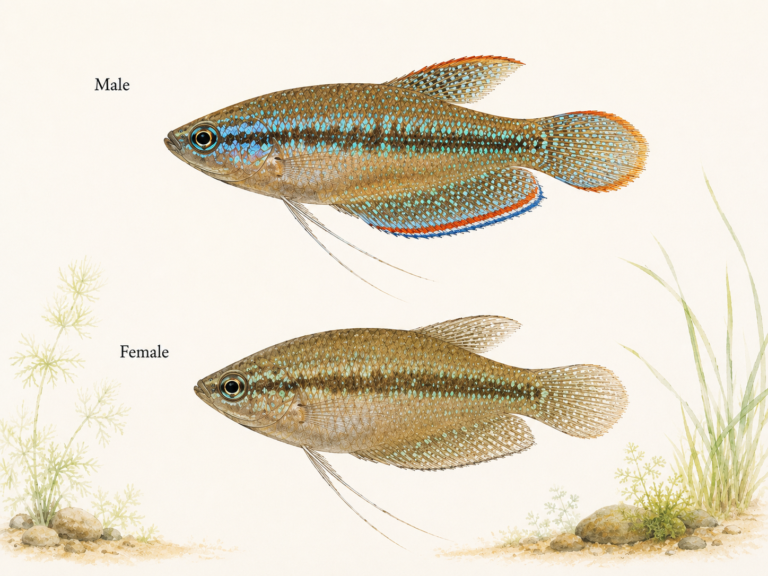
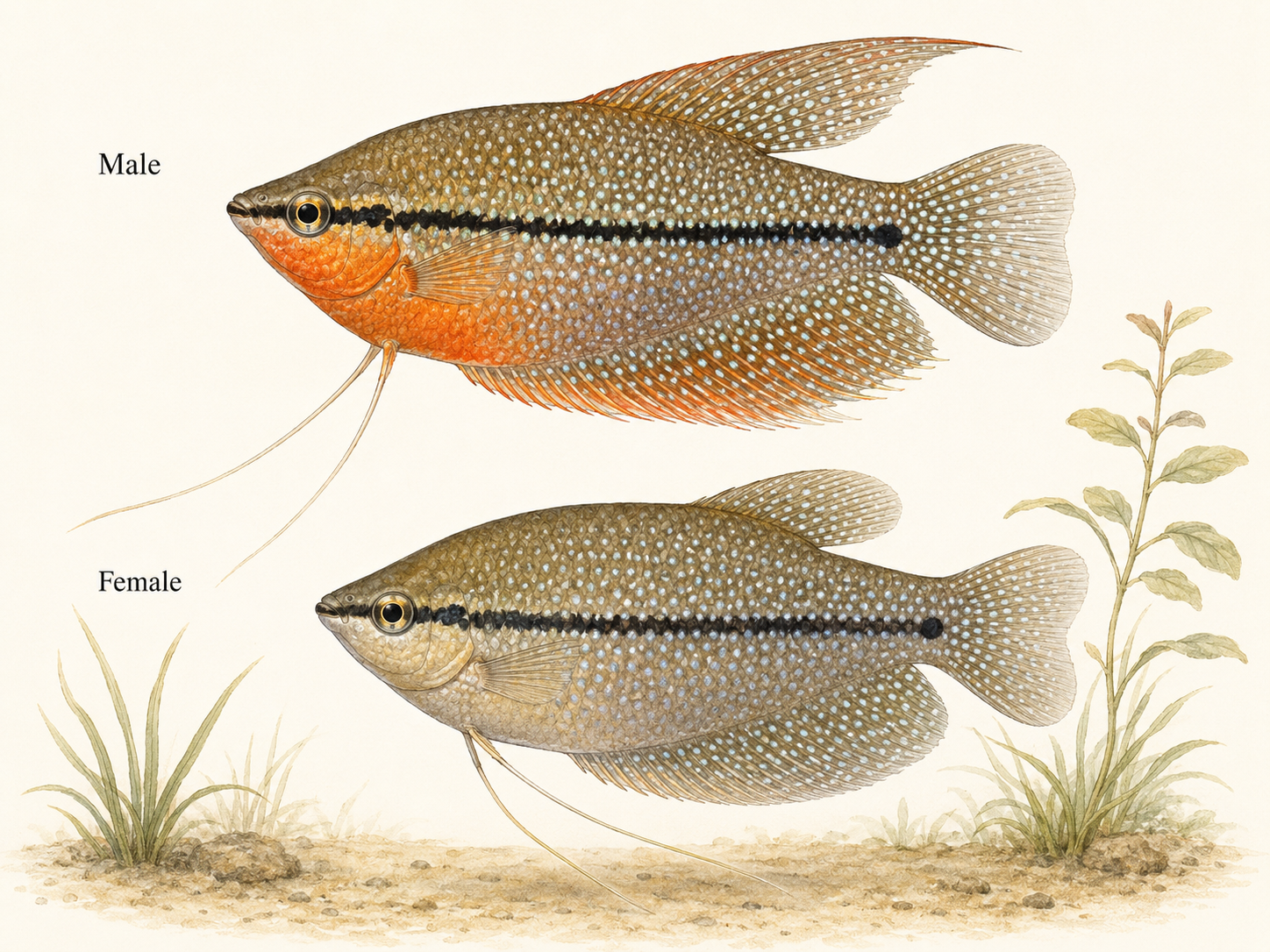
The Pearl Gourami’s common name tells you most of what you need to know about its looks. The body is laterally compressed and elongated, coloured a warm brownish-silver that is overlaid with a dense pattern of white, pearl-like spots extending across the flanks, fins, and even the head. A dark, irregular horizontal line runs from the snout through the eye and tapers off toward the caudal peduncle. The fins are semi-transparent with the same pearl spotting, and the ventral fins are long, thin, and thread-like, a characteristic feature of gouramis that they use as sensory feelers to navigate their environment.
Sexual dimorphism is fairly straightforward once the fish reach maturity. Males are generally slimmer, slightly larger, and develop a vivid orange to deep red colouration across the throat, chest, and belly, which intensifies dramatically during courtship and spawning. Their dorsal fin is also more elongated and pointed. Females are rounder in the body, especially when carrying eggs, and tend to stay in the subtler brownish-silver palette without that striking red flush. Both sexes display the signature pearl patterning, so even females are attractive fish in their own right. There are no widely established colour morphs or selectively bred variants of this species in the hobby, which means the fish you see in shops are very close to what you would encounter in the wild.
Natural habitat
Pearl Gouramis are native to the lowland waters of Southeast Asia, found across the Malay Peninsula, Sumatra, Borneo, and parts of Thailand. Their habitats include slow-moving rivers, swamps, marshes, and acidic peat bogs where the water is often stained brown with tannins from decomposing plant material. These are warm, shallow environments heavily choked with aquatic and marginal vegetation, offering plenty of cover and relatively dim lighting conditions beneath the canopy of overhanging plants and trees.
Understanding this natural setting helps enormously with replicating good conditions in the aquarium. Pearl Gouramis evolved in still to gently flowing water with low mineral content and a slightly acidic pH. As labyrinth fish, they possess a supplementary breathing organ that allows them to gulp air from the surface, an adaptation to the oxygen-poor waters of their native swamps. This means they need access to the water surface at all times, and a tight-fitting lid is important not just to prevent jumping but also to maintain a warm, humid air layer above the waterline. Cold, dry air above the tank can actually damage the labyrinth organ over time, so this detail matters more than many keepers realise.
Tank size and setup
A single Pearl Gourami or a pair can be housed in a 120-litre tank, but if you plan to keep a small group or a community with other species, aim for 150 to 200 litres or more. These are not hyperactive swimmers, but they do appreciate horizontal swimming space, so a longer tank footprint is preferable to a tall, narrow one. A standard 100 × 40 cm footprint works well as a starting point.
For substrate, a dark fine-grain sand or small gravel works best. Something like CaribSea Super Naturals or ADA La Plata Sand gives a natural look and makes the fish’s colouration pop. Pearl Gouramis spend very little time near the bottom, so the substrate choice is more about plant growth and aesthetics than the fish’s direct interaction with it. That said, avoid sharp or coarse substrates if you are keeping bottom-dwelling tank mates alongside them.
Plants are not optional for this species, they are a core part of creating a comfortable environment. Dense planting along the back and sides of the tank provides the sense of security Pearl Gouramis need. Good choices include Vallisneria spiralis, Cryptocoryne wendtii, Hygrophila polysperma, and Java Fern (Microsorum pteropus) attached to driftwood. Floating plants like Salvinia natans, Amazon Frogbit (Limnobium laevigatum), or Red Root Floaters (Phyllanthus fluitans) are especially valuable because they diffuse overhead light and give the fish shaded areas to retreat to. If you plan to breed them, floating plants also serve as anchor points for the male’s bubble nest.
Include a few pieces of driftwood and perhaps some smooth rocks to break up sightlines and create natural territory boundaries. Lighting should be moderate, strong enough to grow your plants but not so intense that the fish feel exposed. If you are running high-output LEDs, the floating plant layer will naturally take the edge off. Water flow should be gentle. Pearl Gouramis are not strong swimmers and come from still waters, so avoid powerheads or strong filter outflows directed across the main swimming area. A spray bar or lily pipe can help diffuse the output.
Water parameters
| Temperature | 24–28 °C |
| pH | 6.0–8.0 (ideal 6.5–7.5) |
| Hardness (GH) | 5–15 dGH |
| Ammonia | 0 ppm |
| Nitrite | 0 ppm |
| Nitrate | Below 20 ppm |
Pearl Gouramis are reasonably flexible when it comes to water chemistry, which is part of what makes them a good choice for less experienced keepers. They will tolerate moderately hard water, though they genuinely thrive in softer, slightly acidic conditions that more closely mirror their natural habitat. Consistency matters more than hitting a perfect number, avoid sudden swings in pH or temperature, and keep up with regular water changes to maintain low nitrate levels. If your tap water is very hard or alkaline, mixing in some RO water or adding Indian Almond leaves and driftwood to gently lower the pH can make a noticeable difference to their colouration and overall vitality.
Filtration and equipment
A hang-on-back filter or a small canister filter is perfectly adequate for a Pearl Gourami setup. The key priority is gentle flow. Sponge filters are another excellent option, especially in breeding tanks, because they provide biological filtration without creating any significant current. If you are running a canister filter like an Eheim Classic 250 or a Fluval 207, use a spray bar or lily pipe to spread the outflow and reduce surface agitation. Some surface movement is fine and helps with gas exchange, but you do not want a strong current pushing the fish around or disrupting bubble nests.
A reliable heater is essential. Pearl Gouramis are tropical fish and need stable temperatures in the mid-to-upper twenties. An adjustable heater rated for your tank volume, such as an Eheim Jäger or Fluval M series, will do the job. Place it near the filter outflow to help distribute heat evenly. A digital thermometer stuck to the glass gives you a quick visual check each day.
Invest in a good liquid water testing kit, the API Freshwater Master Test Kit is the standard recommendation for a reason. It tests ammonia, nitrite, nitrate, and pH accurately and will last you hundreds of tests. Keeping on top of your water parameters is the single most impactful thing you can do for your fish’s long-term health.
Diet and feeding
In the wild, Pearl Gouramis are omnivores that feed on small invertebrates, insect larvae, algae, and organic detritus. They are not picky eaters in captivity and will accept a wide range of foods, which makes feeding them straightforward.
A high-quality flake or small pellet should form the staple diet. Hikari Micro Pellets, Fluval Bug Bites (small tropical formula), or New Life Spectrum Small Fish Formula are all excellent choices that provide balanced nutrition. Supplement this two to three times per week with frozen or live foods such as bloodworms, brine shrimp, daphnia, or mosquito larvae. These protein-rich foods help bring out the best colour and are especially important when conditioning fish for breeding.
Pearl Gouramis also appreciate occasional blanched vegetables, a small piece of zucchini or a blanched spinach leaf will often get some attention. They will sometimes graze on soft algae growth in the tank as well. Feed once or twice daily, offering only what the fish can consume within two to three minutes. Overfeeding is a common mistake that degrades water quality faster than almost anything else, so err on the side of slightly less rather than more.
Behaviour and temperament
Pearl Gouramis are among the most mild-mannered fish in the gourami family. They spend much of their time gliding through the middle and upper portions of the tank, pausing to inspect plant leaves, driftwood surfaces, or anything that catches their attention. Their thread-like pelvic fins are constantly in motion, reaching forward to “taste” and explore their surroundings, which is endlessly entertaining to watch.
Males can be mildly territorial toward one another, especially in smaller tanks or when breeding hormones are running high. This rarely escalates beyond fin flaring and brief chasing, and it almost never results in injury if there is adequate space and plenty of visual barriers. Keeping a single male with one or two females is the simplest approach, though a group with multiple males can work in a larger, well-planted tank where each fish can establish its own area.
One notable quirk is that Pearl Gouramis can be timid, especially when first introduced to a new aquarium. They may hide among plants or hover behind decor for the first few days. This is completely normal and not a sign of illness. Once they settle in and learn the tank routine, they become confident and will often approach the glass at feeding time. Keeping them with calm, non-aggressive tank mates goes a long way toward encouraging this bolder behaviour.
Tank mates
Good tank mates
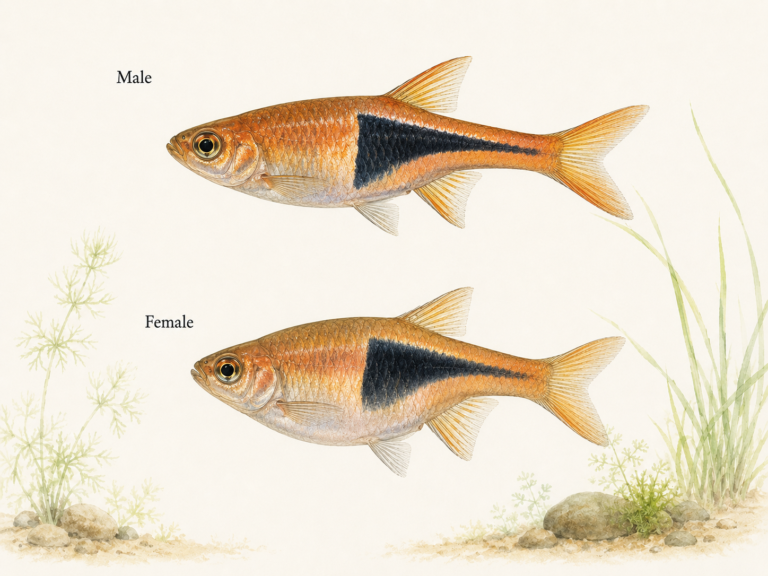
- Harlequin Rasbora, peaceful schooling fish that occupy similar water conditions and stay out of the gourami’s way.
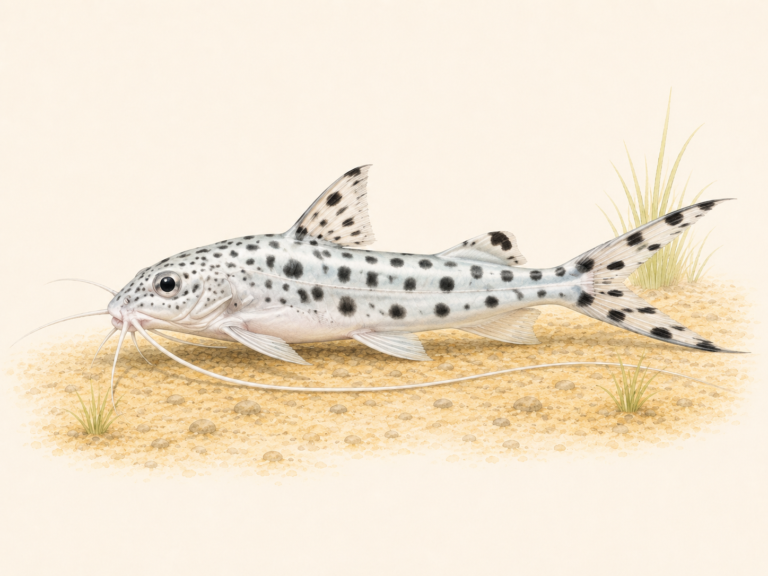
- Corydoras catfish (such as C. sterbai or C. panda), gentle bottom-dwellers that complement Pearl Gouramis perfectly in terms of tank zone and temperament.
- Kuhli Loach, another bottom-dwelling species that is completely non-threatening and appreciates similar water conditions.
- Cardinal Tetra, calm schooling fish with stunning colour that pairs beautifully with Pearl Gouramis aesthetically and behaviourally.
- Ember Tetra, tiny, peaceful, and warm-water-tolerant, making them ideal companions in a planted tank.
- Cherry Barb, active but not nippy, and they thrive in the same temperature range.
- Bristlenose Pleco, a useful algae eater that stays small enough and is completely indifferent to gouramis.
- Otocinclus, gentle algae grazers that stick to surfaces and never bother other fish.
- Amano Shrimp, large enough not to be eaten by adult Pearl Gouramis and excellent cleanup crew members.
Fish to avoid
- Tiger Barb, notorious fin nippers that will target the gourami’s long pelvic fins relentlessly.
- Male Betta, another labyrinth fish that may see the gourami as a rival, leading to aggression from one or both fish.
- Chinese Algae Eater, becomes aggressive and territorial as it matures, and may harass slower tank mates.
- Convict Cichlid, far too aggressive and territorial for a Pearl Gourami community.
- Red Tail Shark, highly territorial bottom-dweller that can bully timid fish into permanent hiding.
- Other large or aggressive gouramis such as the Giant Gourami or Three Spot Gourami, can dominate or harass Pearl Gouramis, especially in confined spaces.
Breeding
Breeding Pearl Gouramis is a rewarding project and entirely achievable for hobbyists willing to put in a bit of preparation. The first step is sexing your fish accurately, which becomes straightforward once they are mature. Males are slimmer, have a more pointed dorsal fin, and display that characteristic red-orange flush on the throat and belly. Females are fuller-bodied and lack the intense red colouration.
To condition a pair for spawning, feed them generously with high-protein foods, frozen bloodworms, live brine shrimp, and daphnia, for one to two weeks. A separate breeding tank of around 60 to 80 litres works best, filled to a depth of about 15 to 20 centimetres with warm water (27–28 °C) and a very gentle sponge filter. Floating plants like Salvinia or Amazon Frogbit are essential, as the male builds his bubble nest among them.
When ready, the male constructs a large, frothy bubble nest at the surface, often incorporating bits of plant material. He then courts the female with displays of colour and fin spreading. Spawning itself involves the classic gourami embrace, the male wraps his body around the female beneath the nest, and she releases eggs which he fertilises and then carefully collects in his mouth, placing each one into the bubble nest. This process can repeat many times, with hundreds of eggs produced in a single session.
After spawning, remove the female, as the male takes over all parental duties and may become aggressive toward her. He guards and tends the nest diligently, retrieving any fallen eggs and repairing the bubble structure. The eggs hatch in about 24 to 48 hours, and the fry become free-swimming two to three days later. Once they are free-swimming, remove the male as well. Feed the fry infusoria or liquid fry food for the first week, then transition to freshly hatched baby brine shrimp as they grow. Keep the water clean with small, frequent water changes and maintain the warm, humid air layer above the water to support proper labyrinth organ development.
Common diseases and health
Ich (White Spot Disease)
Ich is one of the most common diseases in freshwater aquariums and Pearl Gouramis are not immune. Symptoms include small white spots resembling grains of salt on the body and fins, along with flashing (rubbing against surfaces), clamped fins, and lethargy. Treatment involves gradually raising the temperature to 30 °C over 24 hours and adding aquarium salt at a dose of one tablespoon per 20 litres. For stubborn cases, medications containing malachite green or formalin, such as Esha Exit or Seachem ParaGuard, are effective. Maintain treatment for at least a week after the last visible spot disappears to catch remaining parasites in their free-swimming stage.
Bacterial infections and fin rot
Poor water quality is the number one cause of bacterial infections in Pearl Gouramis. Symptoms include frayed or disintegrating fins, reddened areas at the base of fins, cloudy eyes, or general listlessness. The first and most important step is to address water quality, perform a large water change, test your parameters, and identify what went wrong. Mild cases often resolve with improved conditions alone. For more advanced infections, an antibacterial treatment like Esha 2000 or API Melafix can help, though in serious cases a broad-spectrum antibiotic like kanamycin may be needed.
Iridovirus (Dwarf Gourami Disease)
While Dwarf Gourami Iridovirus (DGIV) primarily affects Trichogaster lalius, Pearl Gouramis and other gourami species can occasionally be susceptible to viral infections with similar presentations, lethargy, loss of colour, bloating, and open sores. There is no known cure for iridovirus, so prevention is everything. Purchase fish from reputable sources, avoid tanks in shops where other fish appear sick, and always quarantine new arrivals.
On that note, quarantining every new fish for a minimum of two to four weeks before adding it to your main display tank is one of the smartest habits you can develop as a fishkeeper. A simple quarantine setup, a spare 40 to 60 litre tank with a sponge filter, heater, and a hiding spot, lets you observe new fish for signs of illness before they have a chance to introduce pathogens to your established community. It is a small investment that can save you enormous headaches down the line.
Frequently asked questions
How many Pearl Gouramis can I keep together?
In a 120-litre tank, a single male with one or two females is the most harmonious arrangement. If you want to keep multiple males, aim for 200 litres or more with dense planting to break up sightlines. Multiple males in a small space will lead to constant low-level tension and may cause the subordinate fish to hide permanently and lose condition.
Are Pearl Gouramis suitable for a community tank?
Absolutely. They are one of the best gourami species for community setups because of their peaceful nature. Just avoid pairing them with known fin nippers like Tiger Barbs or aggressive species that will intimidate them. Choose calm, similarly sized tank mates and you will have a very harmonious aquarium.
Why is my Pearl Gourami hiding all the time?
New Pearl Gouramis often hide for the first several days as they adjust to their surroundings. This is normal. If the hiding continues beyond a week or two, check for sources of stress, aggressive tank mates, insufficient cover, bright lighting without shade, or poor water quality can all cause prolonged shyness. Adding more floating plants and ensuring there are no bullies in the tank usually resolves the issue.
Do Pearl Gouramis need to breathe air from the surface?
Yes. Like all labyrinth fish, Pearl Gouramis have a specialised organ that allows them to breathe atmospheric air in addition to extracting oxygen through their gills. They will regularly rise to the surface to gulp air, and this is completely normal behaviour. Make sure the water surface is accessible and not entirely blocked by dense floating plants, and keep a tight-fitting lid to maintain a warm, humid air layer above the water.
Can Pearl Gouramis live with shrimp?
Adult Pearl Gouramis generally leave larger shrimp like Amano Shrimp alone but may snack on small or juvenile shrimp, including Cherry Shrimp. If you want to keep a breeding shrimp colony alongside Pearl Gouramis, provide very dense plant cover, especially mosses like Java Moss or Christmas Moss, so the shrimplets have places to hide. In an open tank, you should expect some predation on smaller shrimp.