Asian Bumblebee Catfish Care Guide — Tank Setup, Feeding and Breeding
Introduction
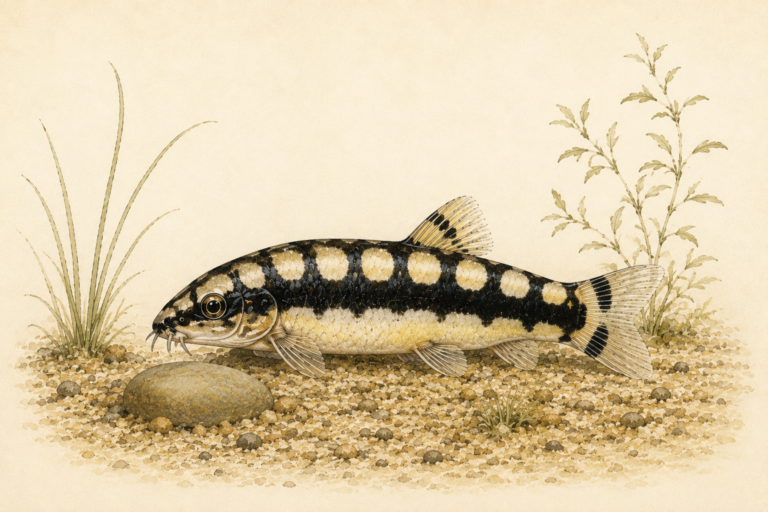
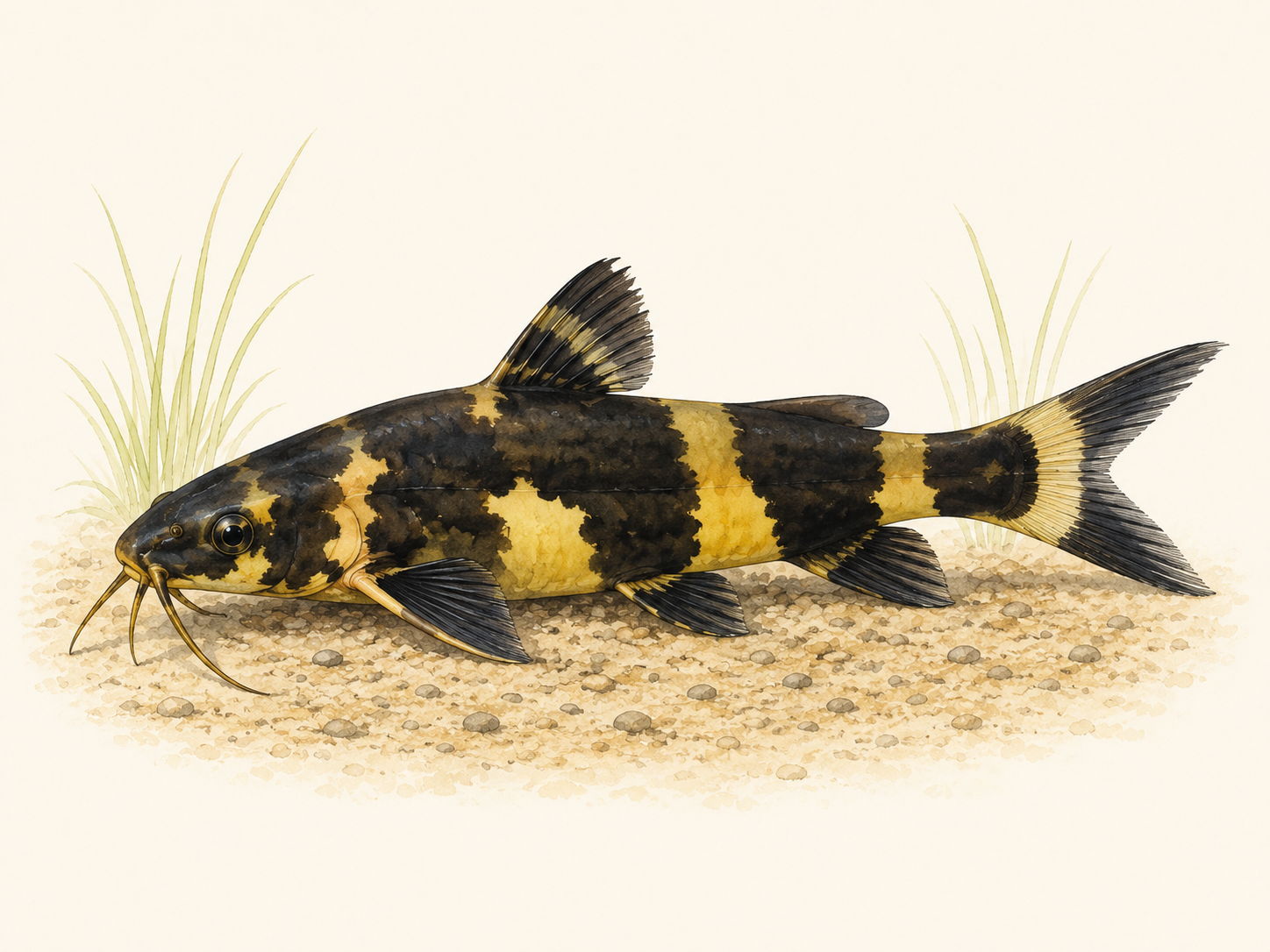
The Asian Bumblebee Catfish is one of those species that quietly wins over fishkeepers with its striking patterning and endearingly secretive behaviour. Known scientifically as Pseudomystus siamensis, this small to medium-sized catfish hails from the slow-moving rivers and streams of Southeast Asia. Its bold bands of dark brown or black against a pale golden-yellow body immediately call to mind the markings of a bumblebee, lending the fish its popular common name.
Despite being available in the aquarium trade for decades, the Asian Bumblebee Catfish remains somewhat underappreciated compared to more widely kept catfish families such as Corydoras or Loricariidae. This is a shame, because it offers a fascinating combination of attractive looks, manageable adult size, and interesting nocturnal behaviour that rewards patient observation. It is not a demanding species, but it does have particular requirements regarding water quality, tank décor, and social dynamics that prospective keepers should understand before bringing one home.
In this guide we cover everything you need to know to provide excellent long-term care for Pseudomystus siamensis, from setting up an appropriate aquarium and dialling in the right water parameters to choosing compatible tank mates and understanding why this catfish is so rarely bred in captivity. Whether you are an experienced catfish enthusiast or a relative newcomer looking for something a little different, the Asian Bumblebee Catfish is well worth your consideration.
Quick Stats
| Scientific name | Pseudomystus siamensis |
| Common names | Asian Bumblebee Catfish, Siamese Bumblebee Catfish, Bumblebee Catfish |
| Family | Bagridae |
| Origin | Southeast Asia — Thailand, Cambodia, Vietnam, Laos, and the Mekong River basin |
| Adult size | 15–18 cm (6–7 inches) |
| Lifespan | 8–12 years |
| Difficulty | Moderate |
| Breeding difficulty | Difficult |
| Temperature | 22–26 °C |
| pH range | 6.0–7.5 |
| General hardness (GH) | 2–12 dGH |
| Carbonate hardness (KH) | 2–8 dKH |
| Minimum tank size | 150 litres |
| Conservation status | Least Concern (IUCN) |
Appearance
The most immediately recognisable feature of Pseudomystus siamensis is its bold banding pattern. The base body colour ranges from warm golden-yellow to creamy tan, overlaid with broad, irregular bands of dark brown to almost black. These bands vary in width and number between individuals, and the boundaries between the light and dark zones are often slightly diffuse rather than razor-sharp, giving each fish a unique look. The fins typically carry the banding pattern as well, with alternating dark and light sections visible on the caudal, dorsal, and anal fins.
The body shape is typical of many bagrid catfish — moderately elongated, somewhat laterally compressed, and deepest just behind the head. The head itself is broad and slightly flattened, equipped with four pairs of barbels. The maxillary barbels are the longest, often reaching back past the pectoral fins, and serve as the fish’s primary sensory apparatus for navigating murky water and locating food in dim conditions. The eyes are relatively large for a predominantly nocturnal species, sitting prominently on the upper portion of the head.
The dorsal fin is tall and features a strong leading spine, as does each pectoral fin. These spines are mildly serrated and can deliver a painful prick if the fish is handled carelessly, so net the species with caution and avoid fine-mesh nets in which the spines can become entangled. The adipose fin is well-developed, a trait shared across the Bagridae family. Overall, the Asian Bumblebee Catfish cuts a handsome figure, and when kept in good conditions the contrast between the light and dark bands becomes particularly vivid.
It is worth noting that Pseudomystus siamensis is sometimes confused with the South American Bumblebee Catfish, Microglanis iheringi, which shares a similar colour pattern but belongs to an entirely different family (Pseudopimelodidae) and remains considerably smaller. Ensuring you have the correct species identification at the point of purchase is important, as the two have different care requirements and eventual adult sizes.
Natural Habitat
Pseudomystus siamensis is found across a broad swathe of mainland Southeast Asia, with confirmed records from the Mekong River basin in Thailand, Laos, Cambodia, and Vietnam, as well as the Chao Phraya River system in central Thailand. It inhabits lowland rivers, tributaries, and associated floodplain habitats, often favouring areas with slow to moderate current where submerged wood, root tangles, and overhanging vegetation provide abundant cover.
The substrates in its native waters tend to be a mixture of sand, silt, and leaf litter, with pH values that lean acidic to neutral and relatively soft water. During the wet season, these fish may move into seasonally flooded forests and marshes where the water is heavily tannin-stained and visibility is low. This seasonal variation in their natural environment hints at their adaptability, but it also underlines the importance of providing ample hiding places and subdued lighting in captivity, conditions that replicate the dark, cluttered environments where this catfish feels most at ease.
In the wild, Asian Bumblebee Catfish are typically found sheltering in crevices, hollow logs, and dense root systems during the day, emerging at dusk and after dark to forage for small invertebrates, insect larvae, crustaceans, and other benthic organisms. They are primarily solitary foragers but are not strictly territorial in the way some other catfish species can be, and multiple individuals often share the same stretch of river provided sufficient shelter is available.
Tank Size and Setup
A single Asian Bumblebee Catfish can be housed in an aquarium of at least 150 litres, but a larger tank of 200 litres or more is strongly recommended, particularly if you intend to keep a small group or house them alongside other species. These catfish are active swimmers once darkness falls, and a tank with a generous footprint gives them adequate room to roam without constantly bumping into décor or glass. A standard 120 cm × 40 cm tank provides a good starting point for a community setup featuring this species.
Décor should prioritise hiding places above all else. Driftwood, bogwood, and branching root structures are ideal, as they create the kind of natural crevices and overhangs this catfish gravitates towards. Lengths of PVC pipe, ceramic caves, and coconut shell hides also serve well if you want to guarantee that every fish has access to its own retreat. Without sufficient shelter, Asian Bumblebee Catfish can become stressed, which leads to subdued colouration and reluctance to feed. In a well-decorated tank, you may still catch glimpses of them during the day as they peer out from their chosen spot, which is part of the species’ charm.
Substrate choice should lean towards fine sand or smooth gravel. This catfish spends a good deal of time resting on and foraging across the bottom, and rough or sharp substrates can damage its barbels over time. A scattering of dried leaf litter — Indian almond leaves or oak leaves work nicely — adds an extra layer of realism, gently lowers the pH through tannin release, and provides additional surface area for biofilm and micro-organisms that the catfish will graze upon.
Live plants are not essential but can be included if desired. Hardy, low-light species such as Java Fern, Anubias, and Cryptocoryne tolerate the subdued lighting conditions that suit this fish and contribute to water quality by absorbing nitrate. Floating plants are particularly useful for diffusing overhead light and making the catfish feel more secure during daylight hours.
Lighting should be kept moderate to low. If you run stronger lighting for the benefit of plants, ensure the tank has plenty of shaded retreats where the catfish can escape the brightness. A moonlight or dim blue LED setting for evening viewing is an excellent way to observe the species’ natural crepuscular and nocturnal activity without causing it undue stress.
Water Parameters
Maintaining stable water parameters within the recommended ranges is more important than hitting a single target number. The Asian Bumblebee Catfish is reasonably adaptable, but like most scaleless or lightly-scaled catfish it can be sensitive to sudden swings in temperature, pH, or hardness. Consistency should be your guiding principle.
| Temperature | 22–26 °C |
| pH | 6.0–7.5 |
| General hardness (GH) | 2–12 dGH |
| Carbonate hardness (KH) | 2–8 dKH |
| Ammonia | 0 ppm |
| Nitrite | 0 ppm |
| Nitrate | Below 20 ppm |
Slightly acidic to neutral water in the range of pH 6.5 to 7.0 tends to bring out the best colouration and behaviour. If your local water supply is particularly hard or alkaline, using a mix of RO water and tap water to achieve softer, slightly acidic conditions is a worthwhile approach. Weekly water changes of 20–30 per cent will keep nitrate in check and replenish essential minerals. Always match the temperature and chemistry of new water as closely as possible to what is already in the tank before adding it.
Filtration and Equipment
Good mechanical and biological filtration is essential for keeping the water clean and well-oxygenated. An external canister filter rated for the tank volume — or ideally slightly above — is the best choice for a setup housing Asian Bumblebee Catfish. Canister filters offer excellent biological filtration capacity and can be loaded with a variety of media including ceramic rings, sponge, and activated carbon or peat if you wish to soften and tannin-stain the water.
While Pseudomystus siamensis can tolerate gentle to moderate current, it does not naturally inhabit fast-flowing rapids, so position the filter outlet to create a broad, gentle flow rather than a powerful jet. A spray bar is an effective way to distribute flow evenly across the tank. Supplementary aeration via an air stone or sponge filter is beneficial, particularly during warmer summer months when dissolved oxygen levels drop.
A reliable, adjustable heater is necessary to keep the temperature within the 22–26 °C range. In larger tanks, two smaller heaters positioned at opposite ends provide more even heating and offer a degree of redundancy should one fail. Use a separate thermometer to verify the heater’s accuracy — built-in heater thermostats are not always perfectly calibrated.
Because this catfish is most active at night, a timer-controlled lighting system on a consistent photoperiod of around 8–10 hours of light per day helps establish a reliable day-night cycle. Adding a dimmable moonlight phase in the evening allows you to observe the catfish at its most lively without disrupting its natural rhythms.
Diet and Feeding
The Asian Bumblebee Catfish is an omnivore with a strong preference for meaty, protein-rich foods. In the wild it feeds on insect larvae, small crustaceans, worms, and other invertebrates, supplemented by organic detritus and biofilm. In captivity it readily accepts a wide range of prepared and live foods, making it straightforward to feed once it has settled into its new environment.
A high-quality sinking pellet or wafer designed for carnivorous or omnivorous catfish should form the staple of the diet. These ensure balanced nutrition and are convenient for daily feeding. Supplement the staple with regular offerings of frozen or live foods such as bloodworm, tubifex, brine shrimp, daphnia, and chopped earthworm. These not only provide excellent nutrition but also encourage natural foraging behaviour and help maintain vibrant colouration.
Because this is primarily a nocturnal feeder, offer the main meal shortly after lights-out or during the evening dim period. Drop food near the fish’s known hiding places to ensure it has easy access before more active daytime species intercept everything. If you keep a community tank with boisterous mid-water feeders, feeding the catfish separately in the evening is a reliable strategy to prevent it from going hungry.
Avoid overfeeding. One main meal per day, with an occasional fasting day once a week, is sufficient for adult fish. Juveniles benefit from being fed twice daily in smaller portions to support their growth. Remove any uneaten food after a few hours to prevent it from decomposing and degrading water quality.
Behaviour and Temperament
Pseudomystus siamensis is a peaceful, predominantly nocturnal catfish that spends most of the daylight hours tucked away in a cave, crevice, or beneath a piece of driftwood. New keepers sometimes worry that they never see their fish, but patience and a suitable environment go a long way — once settled, Asian Bumblebee Catfish become more confident and will often position themselves at the entrance to their hiding spot, barbels twitching, clearly aware of what is happening in the tank even if they are not inclined to come out in bright light.
At dusk and through the night they become remarkably active, methodically patrolling the substrate and investigating every surface for food. Watching this nocturnal exploration under moonlight LEDs is one of the genuine pleasures of keeping the species. They move with a deliberate, almost gliding motion that is quite different from the frantic dashing of many smaller fish.
While generally peaceful towards other species, Asian Bumblebee Catfish can be somewhat territorial towards conspecifics, particularly in cramped quarters with insufficient hiding places. Squabbles tend to involve brief chasing and the occasional flaring of pectoral spines, but rarely result in injury if the tank is large enough and well-furnished. Keeping them singly is perfectly acceptable, but a small group of three or more in a suitably spacious tank often results in more natural behaviour and reduced individual aggression, as no single fish can monopolise the space.
One important behavioural note: this catfish is an opportunistic predator of very small fish. Anything small enough to fit in its mouth — neon tetras, small rasboras, freshly born livebearer fry — is fair game, particularly under cover of darkness. This does not make the species aggressive in the conventional sense, but it does mean tank mate selection requires careful thought regarding size.
Tank Mates
The Asian Bumblebee Catfish is compatible with a wide range of peaceful to semi-aggressive community fish, provided those tank mates are too large to be considered prey and are not so boisterous or aggressive that they outcompete the catfish for food or invade its hiding places. Mid-water and upper-water species that remain active during the day tend to coexist particularly well, as their activity patterns scarcely overlap with the catfish’s nocturnal habits.
Good tank mates
- Pearl Gourami — A peaceful, similarly sized species that occupies the mid-to-upper water column and rarely bothers bottom-dwellers.
- Congo Tetra — Large enough to avoid predation and peaceful enough to share a community tank without conflict.
- Cherry Barb — A calm, mid-sized barb that stays in the middle water layers and will not harass resting catfish.
- Bristlenose Pleco — Occupies a different ecological niche as an algae grazer and generally ignores other catfish species.
- Kuhli Loach — A peaceful bottom-dweller small enough to coexist safely, as its elongated shape makes it difficult to swallow.
- Boesemani Rainbowfish — An active, colourful mid-water swimmer that is too large for predation and too peaceful to cause trouble.
- Angelfish — Compatible in terms of water parameters and temperament, provided the tank is large enough for both species to establish their own space.
- Clown Loach — Another Southeast Asian species with similar water requirements and a sociable disposition that pairs well in larger setups.
Fish to avoid
- Neon Tetra — Far too small and will almost certainly be eaten during the catfish’s nocturnal foraging.
- Celestial Pearl Danio — Its tiny adult size makes it vulnerable to predation by any medium-sized catfish.
- Guppy — Small-bodied adults and abundant fry make guppies an easy target for an opportunistic predator.
- Red-Tail Catfish — Grows far too large and will eventually consume any fish it can fit in its massive mouth, including Asian Bumblebee Catfish.
- Oscar — A large, aggressive cichlid that will intimidate and potentially injure or eat a catfish of this size.
- Tiger Barb — Notorious fin-nippers that can harass slow-moving catfish, particularly when they emerge at night.
- African Rift Lake Cichlids — Require hard, alkaline water incompatible with the soft, acidic conditions this catfish prefers, and many species are overly aggressive.
- Dwarf Shrimp — Cherry shrimp and similar small invertebrates will be readily consumed as a snack.
Breeding
Breeding Pseudomystus siamensis in the home aquarium is a rare achievement, and verified accounts of successful captive reproduction are scarce. The species is believed to be an egg scatterer in the wild, likely spawning during the onset of the wet season when rising water levels, increased flow, and cooler influxes of rainwater trigger reproductive activity. Replicating these environmental cues in an aquarium setting is challenging but not necessarily impossible for the dedicated breeder.
Sexing adult fish is difficult outside of the breeding season. Mature females tend to be slightly fuller in the body when viewed from above, particularly when carrying eggs, while males may be marginally more slender and occasionally display slightly longer pectoral fin spines, though these differences are subtle and not always reliable.
For those wishing to attempt breeding, a dedicated spawning tank of at least 150 litres is advisable, furnished with plenty of caves, driftwood, and leaf litter. Conditioning the pair or group with high-quality live and frozen foods for several weeks prior to a spawning attempt helps bring them into reproductive condition. Simulating the onset of the monsoon season by performing a large, slightly cooler water change (dropping the temperature by 2–3 °C) and increasing flow may serve as a trigger. Lowering the water level and then gradually refilling the tank with soft, slightly acidic water is another technique sometimes used with species that respond to wet-season cues.
If spawning does occur, the eggs are typically scattered among décor or leaf litter. The parents should be removed after spawning, as they may consume the eggs. The eggs generally hatch within 48–72 hours depending on temperature, and the resulting fry are tiny and require infusoria or liquid fry food initially, graduating to newly hatched brine shrimp as they grow. Maintaining pristine water quality during the fry-rearing stage is absolutely critical.
Given the difficulty involved, most specimens available in the trade are wild-caught. If you come across captive-bred individuals from a reputable breeder, they are well worth seeking out, as they tend to acclimate to aquarium conditions more readily.
Common Diseases
The Asian Bumblebee Catfish is a fairly hardy species when kept in appropriate conditions, but like all freshwater fish it is susceptible to certain diseases, particularly when water quality deteriorates or the fish is subjected to prolonged stress.
White spot disease, caused by the protozoan parasite Ichthyophthirius multifiliis, is one of the most common ailments encountered by aquarists across all species. It presents as small white cysts on the body and fins. Treatment involves raising the temperature slightly (to around 28 °C) and using a half-dose of a malachite green or formalin-based medication, as scaleless and lightly-scaled catfish are more sensitive to these chemicals at full concentration. Always read medication labels for specific catfish safety guidance.
Bacterial infections, including fin rot and body sores, can occur when water quality is poor or when the fish sustains an injury, for example from a sharp piece of décor or a confrontation with a tank mate. Maintaining excellent water quality is both the best prevention and the first line of treatment. In more advanced cases, a broad-spectrum antibacterial treatment may be necessary.
Fungal infections occasionally arise on the barbels or body, often secondary to a pre-existing wound or bacterial infection. These appear as cotton-wool-like growths and respond well to antifungal medications when caught early. Damaged or eroded barbels are a sign of poor substrate conditions — switching to fine sand and ensuring the substrate is kept clean will help prevent this issue.
Internal parasites may be present in wild-caught specimens. Signs include weight loss despite a healthy appetite, stringy white faeces, and general lethargy. A course of praziquantel or a similar antiparasitic medication, ideally administered in a quarantine tank, is the standard treatment. Quarantining all new arrivals for two to four weeks before introducing them to your main display tank is strongly recommended, both for this species and any other fish.
FAQs
Is the Asian Bumblebee Catfish the same as the South American Bumblebee Catfish?
No, they are entirely different species from different continents and families. The Asian Bumblebee Catfish (Pseudomystus siamensis) belongs to the family Bagridae and grows to around 15–18 cm, while the South American Bumblebee Catfish (Microglanis iheringi) belongs to Pseudopimelodidae and typically stays under 8 cm. Although they share a similar common name and banded colour pattern, their care requirements differ, so it is important to confirm which species you are purchasing.
Why does my Asian Bumblebee Catfish hide all day?
This is completely normal behaviour for a nocturnal species. In the wild, Pseudomystus siamensis spends daylight hours sheltering in crevices and under submerged wood, venturing out only as light levels drop. Providing dim lighting, plenty of hiding places, and feeding after lights-out will encourage the fish to become more visible during dusk and evening hours. Over time, well-settled individuals often become bolder and may emerge briefly during the day, especially at feeding time.
Can I keep just one Asian Bumblebee Catfish?
Yes, a single specimen will do perfectly well on its own and will not suffer from loneliness in the way that obligate shoaling species might. However, if you have the space, keeping a small group of three or more in a large, well-furnished tank can result in more interesting social dynamics and natural behaviour patterns. Just ensure that each fish has access to its own hiding place to minimise territorial disputes.
Will an Asian Bumblebee Catfish eat my shrimp?
Almost certainly, yes. Pseudomystus siamensis is an opportunistic predator that will readily consume any invertebrate small enough to catch and swallow. Dwarf shrimp such as Cherry Shrimp or Amano Shrimp are very likely to be eaten, particularly at night when the catfish is actively foraging. If you wish to maintain a shrimp colony, it is best kept in a separate tank.
How can I tell if my Asian Bumblebee Catfish is healthy?
A healthy specimen will have vivid, well-defined banding, clear eyes, intact barbels, and smooth, unblemished skin. It should be responsive when disturbed from its hiding place — not lethargic or listless — and should feed readily when food is offered in the evening. Clamped fins, faded colouration, rapid breathing, visible spots or growths, and refusal to eat are all warning signs that something may be amiss, and water parameters should be tested immediately if any of these symptoms are observed.
Related Guides
- Bristlenose Pleco Care Guide — Another popular catfish species that makes an excellent companion in a community tank with similar water requirements.
- Clown Loach Care Guide — A fellow Southeast Asian bottom-dweller that shares many environmental preferences with the Asian Bumblebee Catfish.
- Kuhli Loach Care Guide — A peaceful, nocturnal loach that thrives in similar soft-water setups and coexists well with Pseudomystus siamensis.
- Pearl Gourami Care Guide — An ideal mid-water companion species for Southeast Asian biotope-style community aquariums.
- Aquarium Water Chemistry Guide — Essential reading for understanding pH, hardness, and how to create the soft, slightly acidic conditions this catfish prefers.