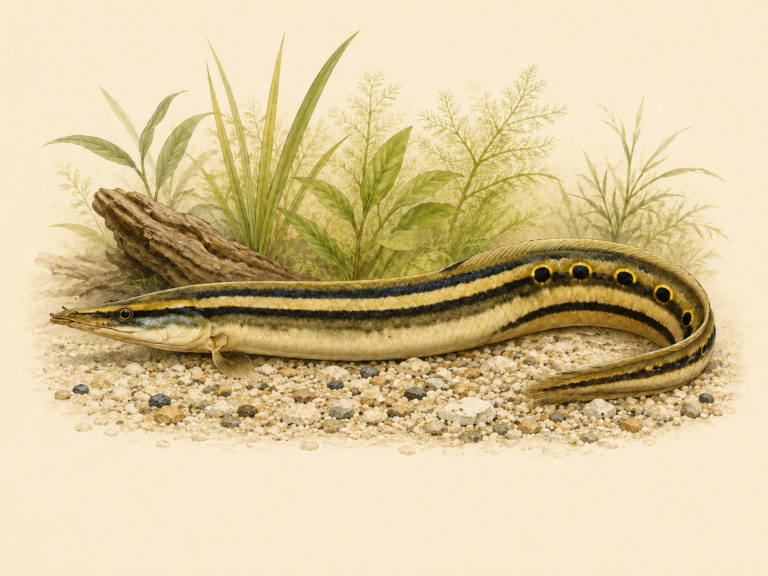
Nicaraguan Cichlid Care Guide — Tank Setup, Feeding and Breeding
Introduction
The Nicaraguan Cichlid, known scientifically as Hypsophrys nicaraguensis, is one of Central America’s most underappreciated cichlid species. Despite its relatively modest reputation compared to flashier relatives such as the Convict Cichlid or the Firemouth, this species rewards patient keepers with a stunning display of iridescent colour, engaging parental behaviour, and a temperament that sits comfortably between docile and assertive. Originally described by the ichthyologist Albert Günther in 1864, this fish hails from the lakes and rivers of Nicaragua and Costa Rica, where it inhabits warm, often alkaline waters rich in dissolved minerals.
In the aquarium hobby, the Nicaraguan Cichlid is sometimes marketed under the common names Nickie, Moga, or Butterfly Cichlid, though the latter name can cause confusion with the South American Mikrogeophagus ramirezi. What sets this species apart from many other Central American cichlids is its relatively peaceful disposition, making it a viable option for mixed-species setups when housed with appropriately sized and tempered tank mates. Mature specimens develop a remarkable golden-to-copper body sheen overlaid with turquoise and green highlights, and breeding pairs display some of the most devoted biparental care seen in the cichlid world.
This care guide covers everything you need to know to keep Hypsophrys nicaraguensis thriving in the home aquarium, from tank setup and water chemistry to diet, breeding, and disease prevention. Whether you are a seasoned cichlid enthusiast looking to diversify your collection or a relative newcomer drawn in by this species’ understated beauty, the information below will help you provide the best possible environment for these charismatic fish.
Quick Stats
| Scientific name | Hypsophrys nicaraguensis |
| Common names | Nicaraguan Cichlid, Nickie, Moga, Butterfly Cichlid, Parrot Cichlid |
| Family | Cichlidae |
| Origin | Nicaragua and Costa Rica, Central America |
| Adult size | 20–25 cm (8–10 inches) |
| Lifespan | 10–15 years |
| Difficulty | Moderate |
| Breeding difficulty | Moderate |
| Temperature | 24–28 °C |
| pH range | 7.0–8.5 |
| General hardness (GH) | 10–20 dGH |
| Carbonate hardness (KH) | 8–15 dKH |
| Minimum tank size | 280 litres |
| Conservation status | Least Concern (IUCN) |
Appearance
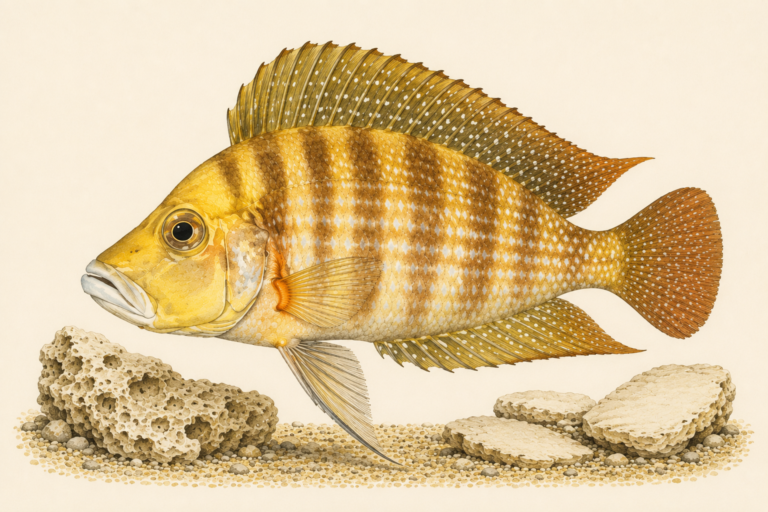
The Nicaraguan Cichlid is a strikingly attractive fish whose beauty deepens considerably with age and good husbandry. Juveniles are somewhat plain, displaying a silvery-grey base coloration with a faint lateral stripe and occasional dark barring, giving little hint of the splendour to come. As the fish matures, the body takes on a warm golden to coppery hue, particularly along the ventral region and flanks. This warm base is overlaid with iridescent scales that shimmer in shades of turquoise, blue, and green, especially prominent along the upper half of the body and the operculum. The overall effect is a fish that seems to glow under aquarium lighting, with colours shifting subtly as the fish changes angle.
The head profile of H. nicaraguensis is distinctive among Central American cichlids. It features a strongly curved, almost concave forehead that gives the face a slightly downturned appearance, and mature males often develop a modest nuchal hump, though this is far less pronounced than in species such as Amphilophus citrinellus. The lips are relatively thick, an adaptation linked to the species’ natural feeding behaviour of sifting through substrate. The eyes are large and dark, set high on the head, and often surrounded by a ring of blue-green iridescence.
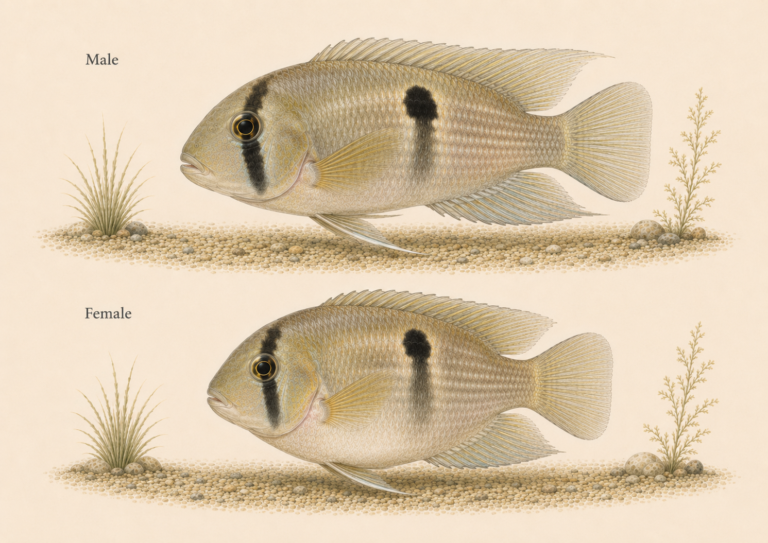
Sexual dimorphism is evident in adult specimens. Males tend to be larger and more robust, reaching up to 25 cm in total length, while females typically max out around 18–20 cm. Males generally display more intense blue and green iridescence on the flanks and fins, whereas females often show a deeper gold or copper tone on the belly, which intensifies dramatically during breeding. The dorsal and anal fins are more elongated and pointed in males, with the trailing edges sometimes extending to or beyond the base of the caudal fin. The caudal fin itself is rounded to slightly truncate, and the pectoral fins are translucent with a faint yellowish wash.
During courtship and breeding, both sexes undergo a dramatic colour change. Females develop an intensely vivid golden-yellow ventral region, and the dark lateral stripe becomes bolder and more contrasted. Males often deepen their overall coloration and display heightened iridescence. These colour shifts serve as important visual signals during pair formation and territorial defence.
Natural Habitat
In the wild, Hypsophrys nicaraguensis is found in the freshwater systems of Nicaragua and northern Costa Rica. Its primary range includes the large rift lakes of Lake Nicaragua (Lago Cocibolca) and Lake Managua (Lago Xolotlán), as well as numerous rivers and tributaries that drain into these lakes, including the San Juan River system. These are some of the largest freshwater bodies in Central America, and they provide a diverse range of microhabitats that this species exploits throughout its life cycle.
The lakes and rivers where this cichlid is found are characterised by warm temperatures, typically ranging from 24 to 28 degrees Celsius, and water that is moderately hard to hard with an alkaline pH. Lake Nicaragua, in particular, is notable for its relatively high mineral content and slightly turbid conditions, with visibility that varies seasonally depending on rainfall and runoff. The substrate in these habitats is typically a mix of sand, fine gravel, and mud, often strewn with fallen branches, submerged roots, and scattered rocks.
H. nicaraguensis tends to favour the littoral zone—the shallower, nearshore areas where vegetation is more abundant and substrate foraging is productive. It is frequently found near submerged woody debris, root tangles, and rocky outcrops that provide shelter and define territorial boundaries. Unlike some of its more open-water relatives, this species is closely associated with the substrate, spending much of its time sifting through sand and detritus for food. This benthic feeding strategy is reflected in its mouth morphology and its behaviour in captivity.
The species shares its habitat with a number of other cichlid species, including Amphilophus citrinellus, Parachromis managuensis, and Archocentrus centrarchus, as well as various livebearers, characins, and catfish. Understanding these natural conditions is key to replicating a suitable environment in the aquarium, and keepers who provide hard, alkaline water with a sandy substrate and ample structure will find that their Nicaraguan Cichlids display the most natural behaviour and the best coloration.
Tank Size and Setup
Given the adult size and territorial nature of Hypsophrys nicaraguensis, a minimum tank volume of 280 litres is recommended for a single pair. If you intend to keep this species in a community setting with other similarly sized cichlids, you should aim for 400 litres or more to allow for the establishment of multiple territories and to reduce the frequency and intensity of aggressive encounters. Length is more important than height for this species; a tank measuring at least 120 cm in length provides adequate horizontal swimming space and room for territorial partitioning.
The substrate should ideally be fine sand or a sand-and-gravel mix, as this closely replicates the natural lakebed habitat and allows the fish to engage in their characteristic sifting behaviour. Watching a Nicaraguan Cichlid take mouthfuls of sand, filter it through its gills, and expel it is one of the simple pleasures of keeping this species, and a coarse or sharp substrate can inhibit this behaviour or even cause injury to the mouth and gill rakers.
Hardscape is essential. Arrange rocks, bogwood, and root structures to create distinct territories and visual barriers. Flat rocks or slate pieces are particularly valuable, as they serve as preferred spawning sites. Caves and overhangs provide refuge for subordinate fish and can help defuse aggression in multi-species setups. Be sure to secure any heavy rockwork firmly, as this species will dig enthusiastically around the base of structures, potentially undermining them.
Live plants can be used, but success is variable. Robust species such as Anubias, Java Fern (Microsorum pteropus), and Vallisneria are the most likely to survive, especially if attached to hardscape rather than rooted in the substrate. Delicate stem plants are generally not suitable, as the fish will uproot them during digging. Floating plants can be added to diffuse lighting and provide a sense of security from above.
Lighting should be moderate. Overly bright conditions can make the fish feel exposed and lead to washed-out coloration, whereas moderate lighting with some shaded areas encourages natural behaviour and allows the iridescent scales to catch the light attractively. A natural day-night cycle of approximately 10–12 hours of light is ideal.
Water Parameters
The Nicaraguan Cichlid is adapted to the hard, alkaline waters of Central American lakes and rivers, and maintaining appropriate water chemistry is one of the most important aspects of its care. This species is notably less tolerant of soft, acidic conditions than many South American cichlids, and keeping it in water that is too soft can lead to poor health, reduced coloration, and difficulty in breeding.
| Temperature | 24–28 °C |
| pH | 7.0–8.5 |
| General hardness (GH) | 10–20 dGH |
| Carbonate hardness (KH) | 8–15 dKH |
| Ammonia | 0 ppm |
| Nitrite | 0 ppm |
| Nitrate | Below 30 ppm |
Consistency is arguably more important than hitting a specific number within these ranges. Sudden swings in pH or temperature can stress the fish and make them susceptible to opportunistic infections. If your tap water is naturally soft and acidic, you can raise hardness and pH by using crushed coral, limestone, or aragonite in the substrate or filter, or by adding a commercial buffer designed for African or Central American cichlids. Perform regular water changes of 25–30 per cent weekly to keep nitrate levels in check and maintain overall water quality. If stocking is heavy, more frequent or larger changes may be warranted.
Filtration and Equipment
A robust filtration system is essential for keeping Hypsophrys nicaraguensis in good health. As a medium-to-large cichlid with a hearty appetite, this species produces a considerable bioload, and the filtration must be capable of handling the resulting waste efficiently. A canister filter rated for the total volume of the tank, or ideally slightly over-rated, is the preferred choice. Models offering a turnover rate of six to eight times the tank volume per hour will provide effective mechanical, biological, and chemical filtration. Sump-based filtration systems are also an excellent option for larger setups, offering greater water volume, more media capacity, and easier maintenance.
Because this species is an active digger, fine substrate particles can be stirred into the water column frequently. A filter with good mechanical pre-filtration—such as coarse sponge or filter floss in the first stage—will help trap these particles before they clog the biological media. Rinse mechanical media regularly in old tank water to prevent it from becoming a nitrate factory.
An appropriately sized aquarium heater is necessary to maintain stable temperatures within the recommended range. In larger tanks, two heaters positioned at opposite ends can provide more even heat distribution and serve as a backup in case one unit fails. A reliable thermometer, preferably a digital model, should be used to monitor temperature continuously.
An air pump with a sponge filter or airstone can supplement oxygenation, though this is generally not necessary if the main filter provides adequate surface agitation. Good oxygen levels are important for this species, particularly at the upper end of the temperature range where dissolved oxygen naturally decreases.
Diet and Feeding
Hypsophrys nicaraguensis is an omnivore with a natural diet that leans towards plant matter, algae, detritus, and small invertebrates. In the wild, it spends much of its time sifting through substrate and grazing on biofilm-covered surfaces, supplementing this with insect larvae, small crustaceans, and the occasional seed or fruit that falls into the water. This dietary profile should be replicated as closely as possible in captivity.
A high-quality cichlid pellet formulated for omnivorous or herbivorous species should form the staple diet. Look for products that list whole fish meal, spirulina, or other plant-based ingredients prominently in the ingredient list, and avoid those that are excessively high in animal protein or fat. Pellets should be appropriately sized for the fish’s mouth—sinking pellets are generally preferred, as this species naturally feeds at or near the substrate.
Supplement the staple pellet diet with a variety of fresh and frozen foods to ensure nutritional completeness and to keep the fish engaged. Blanched vegetables such as courgette, peas (shelled), spinach, and cucumber are usually accepted readily and provide valuable fibre and micronutrients. Frozen foods such as bloodworm, brine shrimp, mysis shrimp, and daphnia offer protein and variety. Live foods can be offered occasionally as an enrichment, though they are not strictly necessary.
Feed adults once or twice daily, offering only as much food as the fish can consume within a few minutes. Overfeeding is one of the most common husbandry errors with cichlids and leads to water quality problems, obesity, and associated health issues. Juveniles can be fed more frequently—three times daily is appropriate—to support their rapid growth. One fasting day per week can be beneficial for adult fish, allowing the digestive system to clear and reducing the risk of bloat.
Behaviour and Temperament
By Central American cichlid standards, the Nicaraguan Cichlid is considered moderately peaceful. It lacks the intense aggression of species like the Jaguar Cichlid or the Red Devil, and it can coexist with a range of tank mates provided that the aquarium is large enough and properly structured. However, it would be misleading to describe this fish as gentle. Like all cichlids, it is territorial, and its temperament shifts markedly during breeding, when both sexes become fiercely protective of their chosen spawning site and, later, their fry.
Outside of breeding, H. nicaraguensis tends to establish a home territory centred around a favourite piece of hardscape and will patrol this area regularly, chasing away intruders with flared fins and lateral displays rather than outright physical attacks. Conspecific aggression is most intense between males, and keeping two males in a tank that is too small almost invariably leads to the subordinate individual being relentlessly harassed. For this reason, a single pair is the safest configuration in most home aquaria.
This species is an inveterate digger, and keepers should expect the substrate to be rearranged frequently and dramatically. Pits will be excavated around rocks, plants may be uprooted, and carefully planned aquascapes can be remodelled overnight. Rather than fighting this behaviour, it is best to embrace it as part of the species’ charm and design the tank accordingly, using attached plants and well-secured hardscape.
Nicaraguan Cichlids are also notably intelligent and responsive to their keepers. They quickly learn to recognise the person who feeds them and will often approach the front glass in anticipation. This interactivity, combined with their complex social behaviour, makes them exceptionally engaging fish to observe over the long term.
Tank Mates
Choosing tank mates for Hypsophrys nicaraguensis requires careful consideration of size, temperament, and habitat preferences. The ideal companions are fish that are large enough not to be viewed as prey, robust enough to withstand the occasional bout of cichlid posturing, and not so aggressive that they dominate or injure the Nicaraguan Cichlid. Fish that occupy different areas of the water column or have distinct territorial preferences can coexist more easily, as competition for the same space is reduced.
Good tank mates
- Firemouth Cichlid (Thorichthys meeki) — A similarly sized Central American cichlid with a largely bluffing defensive strategy, making cohabitation feasible in spacious tanks.
- Rainbow Cichlid (Archocentrus multispinosus) — A relatively peaceful Central American species that occupies similar water parameters and can hold its own without provoking excessive conflict.
- Blue Acara (Andinoacara pulcher) — A mild-mannered cichlid of comparable size that thrives in similar water conditions and generally avoids confrontation.
- Bristlenose Pleco (Ancistrus sp.) — An excellent algae-eating bottom-dweller that is armoured enough to avoid harassment and occupies a different ecological niche.
- Synodontis Catfish (Synodontis sp.) — Hardy, nocturnal catfish that generally stay out of the cichlid’s way and appreciate the same hard, alkaline water chemistry.
- Salvini Cichlid (Trichromis salvini) — A colourful Central American cichlid that can coexist with Nicaraguans in sufficiently large tanks with ample territory divisions.
- Giant Danio (Devario aequipinnatus) — A fast, active schooling fish that is too quick and too large to be easily predated, providing lively upper-water movement.
- Swordtail (Xiphophorus hellerii) — A robust livebearer that tolerates hard, alkaline water well and is generally fast enough to evade cichlid attention.
Fish to avoid
- Jaguar Cichlid (Parachromis managuensis) — A highly predatory and aggressive species that will likely dominate and injure or consume the Nicaraguan Cichlid.
- Red Devil Cichlid (Amphilophus labiatus) — An extremely territorial and aggressive cichlid that will outcompete and harass most tank mates relentlessly.
- Neon Tetra (Paracheirodon innesi) — Far too small and will be viewed as food by any adult Nicaraguan Cichlid.
- Oscar (Astronotus ocellatus) — Grows considerably larger and can become excessively dominant, creating a stressful environment for the Nicaraguan Cichlid.
- Discus (Symphysodon sp.) — Requires soft, acidic water and a peaceful environment, making it fundamentally incompatible on both temperament and water chemistry grounds.
- Guppy (Poecilia reticulata) — Much too small and slow-moving to avoid predation by a medium-to-large cichlid.
- Flowerhorn Cichlid — A hybrid known for extreme aggression and territorial behaviour that will almost certainly dominate and injure the Nicaraguan Cichlid.
- Dwarf Gourami (Trichogaster lalius) — Too small, too slow, and prefers softer water, making it a poor match on every level.
Breeding
Breeding Hypsophrys nicaraguensis in captivity is an achievable goal for dedicated hobbyists and provides one of the most rewarding experiences available in the cichlid-keeping hobby. This species is a biparental substrate spawner, meaning that both parents play active roles in defending the nest, tending the eggs, and guarding the free-swimming fry. The level of parental care displayed is exceptional, and watching a bonded pair raise their brood is a genuinely captivating experience.
Obtaining a compatible pair is the first and often most challenging step. The most reliable method is to raise a group of six to eight juveniles together and allow them to pair off naturally as they mature. Forced pairing—placing an adult male and female together and hoping for the best—can work, but it carries a significant risk of aggression, particularly if the female is not ready to spawn. Once a pair has formed, it is generally advisable to remove the remaining fish from the tank, or to move the pair to a dedicated breeding tank, to minimise disturbance and reduce the pair’s defensive stress.
Conditioning the pair for spawning involves providing a varied, high-quality diet with increased protein content, such as frozen bloodworm, mysis shrimp, and high-protein pellets. A slight increase in water temperature to 26–28 °C and a large water change with slightly cooler water can sometimes trigger spawning behaviour, mimicking the onset of the rainy season in their natural habitat.
When ready to spawn, the pair will clean a flat surface—typically a smooth rock, a piece of slate, or even the aquarium glass—with meticulous care. The female deposits rows of adhesive eggs onto the cleaned surface, and the male follows immediately behind to fertilise them. A typical clutch contains between 200 and 500 eggs, depending on the size and condition of the female. The eggs are small, oval, and yellowish in colour.
Both parents fan the eggs to maintain water flow and remove any that become fungused. At 26 °C, the eggs typically hatch within 48 to 72 hours. The parents then move the wrigglers to pre-excavated pits in the substrate, where they remain for a further four to five days until they absorb their yolk sacs and become free-swimming. During this stage, the parents may move the fry between several different pits, a behaviour thought to reduce the risk of predation and fungal infection.
Once free-swimming, the fry can be fed newly hatched brine shrimp (Artemia nauplii), microworms, or finely crushed flake food. The parents will continue to guard and herd the fry for several weeks, and it is a remarkable sight to see several hundred tiny fish moving as a cohesive cloud around the vigilant adults. Growth is steady with good feeding, and the fry will reach approximately 2–3 cm within the first two months.
Common Diseases
Hypsophrys nicaraguensis is a reasonably hardy species, but like all aquarium fish, it is susceptible to a number of common diseases, particularly when water quality is suboptimal or the fish is stressed by poor tank mates, inadequate nutrition, or incorrect water parameters.
Ich (white spot disease), caused by the protozoan parasite Ichthyophthirius multifiliis, is perhaps the most frequently encountered ailment. It presents as small white spots scattered across the body and fins, accompanied by flashing (rubbing against surfaces) and laboured breathing. Raising the temperature to 30 °C gradually over 24 hours and adding aquarium salt at a concentration of 2–3 grams per litre is often effective. In persistent cases, a copper-based or malachite green medication may be necessary.
Hole-in-the-head disease (HITH), also known as lateral line erosion, is a condition particularly associated with cichlids. It manifests as pitting and erosion around the head and lateral line, and is thought to be linked to poor water quality, inadequate diet (particularly a lack of vitamins and minerals), and possibly the flagellate parasite Hexamita. Prevention is the best approach: maintain excellent water quality, provide a varied and nutritionally complete diet, and avoid overcrowding. Metronidazole is the most commonly used treatment if the condition develops.
Bloat, sometimes called Malawi bloat despite occurring in Central American cichlids as well, is characterised by abdominal swelling, loss of appetite, and lethargy. It can be caused by bacterial infection, internal parasites, or dietary issues such as overfeeding or an excessively protein-rich diet. Treatment involves fasting the fish, improving water quality, and administering an appropriate antibiotic or antiparasitic medication if an infectious cause is suspected.
Fin rot, typically caused by bacterial infection secondary to physical damage or poor water quality, presents as fraying, discolouration, or erosion of the fin margins. Improving water quality is the first and most important step, and mild cases often resolve with clean water alone. More advanced cases may require treatment with a broad-spectrum antibiotic.
Regular observation is the keeper’s best diagnostic tool. Familiarise yourself with your fish’s normal appearance and behaviour so that subtle changes—a loss of appetite, a change in colour, clamped fins, or unusual swimming patterns—can be detected early, when treatment is most likely to be successful.
FAQs
How can I tell if my Nicaraguan Cichlids are male or female?
Sexing juveniles is difficult, but adult fish can be distinguished by several features. Males are typically larger and more robustly built, with more pointed dorsal and anal fins, and may develop a slight nuchal hump on the forehead. Females are generally smaller, have a deeper golden-copper coloration on the belly (especially when in breeding condition), and have more rounded fin profiles. Venting—examining the genital papillae—is the most reliable method, with females showing a broader, blunter papilla compared to the male’s more pointed one.
Can I keep a Nicaraguan Cichlid in a planted tank?
You can, but plant choice and placement must be strategic. This species is a dedicated digger and will uproot most rooted plants with ease. Hardy species such as Anubias and Java Fern attached to rocks or driftwood are the most practical options, as they are not planted in the substrate and are generally left alone. Floating plants like Amazon Frogbit or Water Lettuce can also work well, providing shade and diffusing light without being vulnerable to digging. Delicate stem plants and carpeting species are unlikely to survive.
Is the Nicaraguan Cichlid suitable for beginners?
While not the most demanding cichlid species, the Nicaraguan Cichlid is best suited to aquarists with some prior experience in keeping medium-to-large fish. The need for a spacious tank, hard alkaline water, robust filtration, and careful tank mate selection places it at a moderate difficulty level. A keeper who has successfully maintained a community tank and understands the basics of water chemistry and cichlid behaviour should find this species manageable and highly rewarding.
How aggressive does this species get during breeding?
Breeding pairs become significantly more territorial and aggressive than at any other time. Both parents will vigorously defend their nest and fry against any fish that ventures too close, regardless of size. In a community tank, this can lead to injuries or severe stress among tank mates if the tank is not large enough to allow other fish to retreat to a safe distance. Providing ample space, visual barriers, and ideally a dedicated breeding tank is the best way to manage breeding aggression.
How long does it take for Nicaraguan Cichlids to reach full size?
Growth rate depends on diet, water quality, tank size, and genetics, but most individuals reach roughly half their adult size within the first year. Full adult size is typically attained by 18 to 24 months of age, though males may continue to fill out and develop their nuchal hump over a longer period. Providing a spacious tank, excellent water quality, and a varied diet from a young age will help ensure the fish reaches its full potential in both size and coloration.
Related Guides
- Convict Cichlid Care Guide — Another popular Central American cichlid with prolific breeding habits, useful for comparison of temperament and care requirements.
- Firemouth Cichlid Care Guide — A similarly sized and tempered Central American species that makes a compatible tank mate for the Nicaraguan Cichlid.
- Blue Acara Care Guide — A mild-mannered cichlid that shares comparable water parameter needs and community tank compatibility.
- Jack Dempsey Care Guide — A well-known Central American cichlid whose care requirements overlap significantly with those of Hypsophrys nicaraguensis.
- Central American Cichlid Tank Setup Guide — A broader guide covering aquascaping, water chemistry, and filtration strategies for Central American cichlid biotopes.