Quick summary
Betta mahachaiensis is a moderately challenging wild betta suited to keepers with some prior betta experience, requiring stable water conditions and, ideally, a slightly brackish setup for best results, plus a minimum 40 litre tank. It’s a rewarding choice if you want a striking, active fish and are willing to source pure, non-hybrid stock to support conservation of this range-restricted species.
🐠 Build a tank around this species
In this guide:
- Introduction
- Quick Stats
- Appearance
- Varieties and Morphs
- Natural Habitat
- Tank Size and Setup
- Water Parameters
- Filtration and Equipment
- Diet and Feeding
- Behaviour and Temperament
- Tank Mates
- Breeding
- Common Diseases
- FAQs
Introduction
Betta mahachaiensis is a wild betta species that has captivated aquarists since its formal scientific description in 2012, though it had been known to Thai hobbyists and collectors for some years prior. Endemic to a remarkably small area around the Samut Sakhon province of Thailand – near the town of Mahachai, from which it takes its name – this species occupies one of the most unusual ecological niches of any betta. Unlike the vast majority of its relatives, which inhabit soft, acidic freshwater, Betta mahachaiensis is naturally found in brackish, slightly saline water among the roots of nipa palms in coastal swamp habitats. This tolerance for salinity is genuinely rare among the Betta genus and represents one of the most fascinating aspects of this species’ biology.
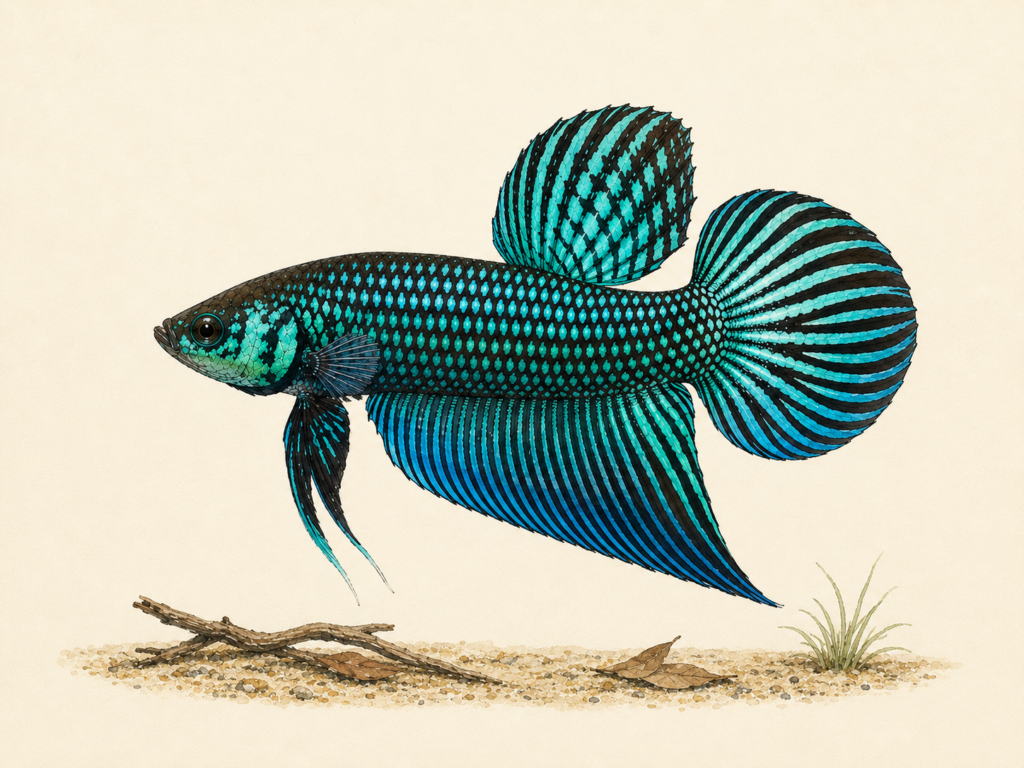
Visually, Betta mahachaiensis is a stunning fish. Males display an iridescent blue-green body that shifts and shimmers depending on light angle and mood, paired with deep red fins that create a striking contrast. It is a member of the Betta splendens complex, closely related to both Betta splendens (the domestic betta) and Betta smaragdina (the emerald betta). This close relationship has made it one of the parent species used to create the increasingly popular “Alien Betta” hybrids, which are typically crosses between B. mahachaiensis and B. smaragdina or other splendens complex members. However, the pure species is a rewarding and beautiful aquarium subject in its own right, and given its restricted natural range and the ongoing threats to its habitat, keeping and breeding pure populations in captivity carries genuine conservation significance.
While Betta mahachaiensis is not an especially difficult species to maintain, it does have specific requirements that differ from those of the common domestic betta. Understanding its brackish origins, its behavioural patterns, and its environmental needs is essential for providing proper care. This guide covers everything you need to know to keep Betta mahachaiensis successfully, from tank setup and water parameters to diet, breeding, and compatible tank mates.
Quick Stats
| Scientific name | Betta mahachaiensis |
|---|---|
| Common names | Mahachai Betta, Mahachai Fighter |
| Family | Osphronemidae |
| Origin | Samut Sakhon province, Thailand |
| Adult size | 6 cm |
| Lifespan | 3–5 years |
| Difficulty | Intermediate |
| Breeding difficulty | Moderate |
| Temperature | 22–28 °C |
| pH | 7–8.5 |
| GH | 5–20 dGH |
| KH | 3–12 dKH |
| Minimum tank size | 40 L |
| Conservation status | Not evaluated |
Appearance
Betta mahachaiensis is a moderately sized betta, with adult males reaching approximately 5 to 6 centimetres in total length. Like other members of the splendens complex, it has the classic betta body shape – laterally compressed, with a relatively deep body and an upturned mouth adapted for surface feeding and breathing at the water’s surface via its labyrinth organ.
The true beauty of this species lies in its colouration, particularly in males. The body is covered in iridescent scales that display a brilliant blue-green sheen, which can shift from deep emerald to vivid turquoise depending on the angle of light and the fish’s mood. This iridescence is most intense along the flanks and opercular (gill cover) region. The unpaired fins – dorsal, caudal, and anal – are a deep, rich red, sometimes verging on maroon or crimson, which creates a magnificent contrast against the blue-green body. The ventral (pelvic) fins are typically dark, often with iridescent blue-green edging and sometimes tipped with white or pale blue. When a male is in full display – either courting a female or confronting a rival – the colours intensify dramatically, and the fish flares its gill covers to reveal iridescent patches on the opercular membrane.
Females are considerably less colourful, as is typical for the genus. They display a brownish or olive base colour with faint horizontal barring, though some females do show a degree of iridescent scaling, particularly on the gill covers. Females are generally slightly smaller and have shorter fins than males. Juveniles of both sexes resemble adult females until the males begin to develop their characteristic colouration as they mature, usually becoming apparent by around three to four months of age.
Compared to the domestic betta (Betta splendens), Betta mahachaiensis has shorter, more natural finnage. The caudal fin is rounded to slightly pointed, the dorsal fin is relatively small, and the anal fin is elongated but not exaggerated. This natural fin shape gives the fish a sleek, athletic appearance and allows it to swim with far greater agility than the long-finned domestic varieties. The overall impression is of a wild, vibrant fish that looks every bit the predator it is, albeit a small one.
Varieties and Morphs
As a wild species with a very restricted natural range, Betta mahachaiensis does not exhibit the enormous variety of colour forms and fin types seen in domestic Betta splendens. However, there is some natural variation within the species, and captive populations may display subtle differences depending on their lineage and the conditions in which they are kept.
The most notable variation is in the intensity and hue of the iridescent body colouration. Some individuals lean more towards a deep blue, while others display a more pronounced green or turquoise tone. The intensity of the red in the fins can also vary, ranging from a bright cherry red to a darker, more subdued maroon. These differences are partly genetic and partly influenced by environmental factors such as water chemistry, diet, and lighting.
It is important to note the role of Betta mahachaiensis in the creation of so-called “Alien Betta” hybrids. These hybrids, which are typically crosses between B. mahachaiensis and B. smaragdina (or sometimes other splendens complex members), have become enormously popular in the aquarium trade. Alien Bettas often display intensely vivid iridescent colouration across the entire body and fins, combining traits from both parent species. While Alien Bettas are attractive fish, they should not be confused with pure Betta mahachaiensis. If you are seeking to keep or breed the pure species – which is important for conservation purposes – it is essential to source your fish from reputable breeders who can confirm the provenance of their stock. Hybridisation represents a real concern for the genetic integrity of captive populations of this species.
There are no recognised selectively bred morphs of Betta mahachaiensis in the way that exists for domestic bettas. The fish available in the hobby should ideally represent the natural wild-type form, and responsible keepers aim to maintain this rather than select for exaggerated traits.
Natural Habitat
The natural habitat of Betta mahachaiensis is one of the most distinctive of any betta species and is central to understanding its care requirements. This species is endemic to a small area of coastal lowland in the Samut Sakhon province of Thailand, specifically in and around the town of Mahachai, which lies near the mouth of the Tha Chin River as it flows into the Gulf of Thailand.
Unlike most bettas, which inhabit freshwater rice paddies, forest streams, or peat swamp forests, Betta mahachaiensis is found in brackish, slightly saline environments. Its primary habitat consists of shallow pools, ditches, and swampy areas among nipa palm (Nypa fruticans) groves. Nipa palms are a type of mangrove palm that thrives in brackish coastal areas, and the root systems of these palms provide the structure and shelter that B. mahachaiensis relies upon. The water in these habitats is typically shallow, warm, still or very slow-moving, and has a measurable salinity – often in the range of 2 to 10 parts per thousand, though this can fluctuate with tides, rainfall, and seasonal changes.
The substrate in these habitats is typically muddy, with an accumulation of decaying organic matter from fallen nipa palm fronds and other vegetation. The water is often tannin-stained and somewhat turbid, though not as acidic as the peat swamp habitats occupied by some other wild betta species. The pH tends to be neutral to slightly alkaline, and the water hardness is moderate to high – quite different from the soft, acidic water preferred by many other wild bettas.
This habitat is under significant threat. Urbanisation, industrial development, shrimp farming, and pollution have all encroached upon the limited range of Betta mahachaiensis. The nipa palm swamps that this species depends upon are being cleared or degraded at an alarming rate. While the species has not yet been formally assessed by the IUCN, it is widely considered to be vulnerable or endangered due to the extremely small size of its natural range and the severity of ongoing habitat loss. This makes captive breeding and the maintenance of genetically pure populations a matter of genuine conservation importance.
Tank Size and Setup
A single male Betta mahachaiensis can be housed in a tank of at least 40 litres, though larger is always preferable. For a breeding pair or a small group, a tank of 60 to 80 litres or more is recommended. If you wish to keep a male with multiple females (a common approach with wild bettas), aim for a tank of at least 80 litres with ample cover and visual barriers to reduce aggression and allow subordinate fish to retreat.
The aquascape should aim to replicate the natural habitat as closely as possible. Use a dark, fine-grained substrate such as sand or fine gravel. Dark substrates help to bring out the best colouration in the fish and more closely resemble the muddy bottoms of their native habitat. Provide plenty of cover in the form of driftwood, roots, and dense planting. Floating plants are particularly valuable, as they dim the lighting, provide surface cover (important for bubble-nesting), and create a sense of security for the fish. Indian almond leaves (Terminalia catappa) or other dried botanical leaves can be added to the tank to release tannins, further replicating natural conditions and providing beneficial antimicrobial properties.
Dense plantings of hardy species such as Java fern (Microsorum pteropus), Java moss (Taxiphyllum barbieri), Anubias species, and Cryptocoryne species work well and will tolerate the slightly brackish conditions that benefit this species. If you choose to add a small amount of marine salt to the water (see Water Parameters section), ensure that any plants you select are tolerant of low-level salinity.
A tight-fitting lid is essential. Like all bettas, Betta mahachaiensis possesses a labyrinth organ that allows it to breathe atmospheric air, and the fish will regularly visit the surface to gulp air. A lid prevents jumping (bettas are capable jumpers) and also maintains a warm, humid layer of air above the water surface, which is important for the health of the labyrinth organ. Leave a gap of at least 2 to 3 centimetres between the water surface and the lid to allow air access.
Lighting should be moderate to subdued. Betta mahachaiensis does not come from open, brightly lit habitats, and overly intense lighting can cause stress. Floating plants will naturally help to diffuse light and create dappled shade below.
Water Parameters
| Temperature | 22-28 °C |
| pH | 7.0–8.5 |
| General hardness (GH) | 5-20 dGH |
| Carbonate hardness (KH) | 3-12 dKH |
| Ammonia | 0 ppm |
| Nitrite | 0 ppm |
| Nitrate | Below 20 ppm |
The water parameter requirements of Betta mahachaiensis set it apart from most other betta species and are directly related to its unique natural habitat. While the species can be kept successfully in pure freshwater, its natural tolerance for – and arguably preference for – slightly brackish conditions is a genuinely distinguishing trait that should be acknowledged and, where possible, accommodated.
The addition of a small amount of marine salt (not aquarium tonic salt, which is pure sodium chloride) at a rate of approximately 1 to 3 grams per litre can be beneficial and more closely replicates natural conditions. This is not strictly necessary for the health of the fish, as they will adapt well to standard freshwater, but many experienced keepers of this species report improved vigour, colouration, and breeding success when a low level of salinity is maintained. If you do add salt, use a marine salt mix rather than pure sodium chloride, as marine salt contains a broader spectrum of trace elements and minerals that better replicate the ionic composition of the natural habitat.
The pH tolerance of this species is notably broad, ranging from mildly acidic (around 6.5) to mildly alkaline (up to 8.0). In the wild, the pH of their habitat tends towards neutral to slightly alkaline, which is unusual for wild bettas. Similarly, the species tolerates moderate to high levels of general and carbonate hardness, again reflecting its coastal brackish origins. This broad tolerance of water chemistry makes Betta mahachaiensis somewhat easier to keep than some other wild betta species that demand very specific soft, acidic water.
Temperature should be maintained in the range of 22 to 28 degrees Celsius, with the ideal being around 24 to 26 degrees Celsius for general maintenance. Slightly warmer temperatures (27 to 28 degrees Celsius) can be used to encourage breeding activity. As with all aquarium fish, stability is more important than hitting an exact number – avoid rapid fluctuations in temperature or water chemistry.
Regular water changes are essential to maintain water quality. Aim for weekly water changes of 20 to 30 per cent, using dechlorinated water matched to the tank’s temperature and salinity. Ammonia and nitrite must always be at zero, and nitrate levels should be kept below 20 ppm through a combination of water changes, live plants, and appropriate stocking levels.
Filtration and Equipment
Betta mahachaiensis, like all members of the splendens complex, comes from still or very slow-moving water. Strong water flow is stressful for these fish and should be avoided. A gentle sponge filter is the ideal choice for a Betta mahachaiensis tank. Sponge filters provide excellent biological filtration, are inexpensive, and produce a very gentle water flow that will not buffet the fish. They also have no intake strong enough to trap the fish or its fins. An air pump powering the sponge filter should be set to a low output to minimise surface agitation, though some gentle surface movement is acceptable.
If you prefer to use a hang-on-back filter or a small internal canister filter, ensure that the flow rate can be reduced to a minimum. Many such filters can be baffled using a piece of filter sponge or a pre-filter sponge over the outlet to diffuse the flow. The key principle is that the fish should be able to swim comfortably in all areas of the tank without being pushed around by the current.
A heater is necessary unless your ambient room temperature consistently stays within the acceptable range for the species. A reliable, adjustable heater rated for the tank’s volume should be used, and a separate thermometer is recommended to verify the heater’s accuracy. Position the heater near the filter outlet (if any) to help distribute warmth evenly throughout the tank.
Lighting should be moderate. A standard LED aquarium light on a timer, set for 8 to 10 hours per day, is sufficient. If the light is particularly bright, use floating plants to create shaded areas. Betta mahachaiensis does not require any specialised lighting, and subdued conditions are generally preferred.
If you choose to maintain the tank with a slight salinity, a hydrometer or refractometer is a useful tool for monitoring salt levels during water changes and top-offs. Remember that when water evaporates, salt does not evaporate with it – only top off evaporated water with fresh, unsalted water to avoid creeping salinity levels. Only add salt with water changes when you are replacing removed water.
Diet and Feeding
Betta mahachaiensis is a carnivorous species that primarily feeds on small invertebrates in the wild, including insect larvae (particularly mosquito larvae), small crustaceans, and other tiny aquatic organisms. In captivity, the species readily accepts a varied diet, and providing nutritional diversity is important for health, colouration, and breeding condition.
The foundation of the diet can be a high-quality micro-pellet formulated for bettas or other small carnivorous fish. Choose pellets that list whole fish or insect meal as the first ingredient, and avoid products with excessive fillers such as wheat or soy. Pellets should be small enough for the fish to consume in a single bite.
Live and frozen foods are eagerly accepted and should form a regular part of the diet. Excellent choices include frozen or live bloodworm, daphnia, brine shrimp (Artemia), mosquito larvae, and micro-worms. Live foods in particular stimulate natural hunting behaviour and are especially valuable for conditioning fish for breeding. Frozen foods should be thawed in a small amount of tank water before feeding to avoid introducing cold water and to allow any excess liquid to be discarded.
Feed adult fish once or twice daily, offering only as much food as can be consumed within two to three minutes. Overfeeding is a common cause of water quality problems and health issues in bettas. One fasting day per week can be beneficial for digestion. Juveniles and growing fry should be fed more frequently – three to four times daily in small amounts – to support growth.
Variety is key to good nutrition. Rotate between different food types throughout the week to ensure a broad spectrum of nutrients and to keep the fish interested in feeding. A varied diet also helps to maintain the vibrant iridescent colouration that makes this species so attractive.
Behaviour and Temperament
Betta mahachaiensis shares many behavioural traits with other members of the splendens complex, but as a wild species, its behaviour tends to be somewhat less aggressive and more nuanced than that of domestic Betta splendens, which have been selectively bred for heightened aggression over centuries of fighting culture.
Males are territorial and should generally not be housed together in small tanks. When two males encounter each other, they will display by flaring their gill covers, spreading their fins, and intensifying their colours. In the wild, these confrontations are usually resolved through display rather than physical combat, with the subordinate male retreating. However, in the confines of an aquarium, there is no retreat, and prolonged co-habitation of males in a small space can lead to serious injury or death. In a sufficiently large, heavily planted and structured tank (100 litres or more), it may be possible to keep more than one male, but this requires careful observation and a willingness to separate fish if aggression escalates.
Males are generally tolerant of females outside of breeding, provided the tank is large enough and offers sufficient hiding places. A ratio of one male to two or three females works well in a community setting. Females are less aggressive than males but may establish a loose hierarchy among themselves, occasionally displaying to each other.
Betta mahachaiensis is a bubble-nesting species. Males build nests of air bubbles at the water surface, often incorporating bits of plant material. Nest-building behaviour can occur even in the absence of a female and is a sign that the male is healthy, comfortable, and in breeding condition. The nest is typically constructed beneath floating plants, leaves, or other surface cover.
This species is generally curious and intelligent, as bettas tend to be. Individuals will often learn to recognise their keeper and may come to the front of the tank in anticipation of feeding. They spend much of their time exploring the tank, investigating hiding spots, and patrolling their territory. Unlike the lethargic behaviour sometimes seen in heavily finned domestic bettas, Betta mahachaiensis is an active and agile swimmer, moving through the water with a natural grace that is a joy to observe.
Tank Mates
Betta mahachaiensis can be kept with carefully chosen tank mates, though a species-only setup is often the simplest and most rewarding approach, particularly if breeding is a goal. When selecting companions, consider the species’ preference for calm, slow-moving water and its territorial nature. Avoid fish that are aggressive, overly active, fin-nipping, or that occupy the same upper water column where the betta spends most of its time. If you maintain a slight salinity in the tank, ensure that any tank mates are also tolerant of low-level brackish conditions.
Good tank mates
- Kuhli Loach – A peaceful, bottom-dwelling species that stays out of the betta’s territory and tolerates a wide range of water conditions.
- Pygmy Corydoras – Tiny, gentle bottom-dwellers that are unlikely to provoke aggression and add activity to the lower tank levels.
- Harlequin Rasbora – A calm, small schooling fish that occupies the mid-water column and is generally ignored by bettas.
- Ember Tetra – A small, peaceful tetra with no fin-nipping tendencies that does well in similar water conditions.
- Nerite Snail – Excellent algae grazers that are completely ignored by bettas and thrive in slightly brackish conditions.
- Amano Shrimp – Hardy shrimp that are generally too large for bettas to predate and serve as useful tank cleaners.
- Otocinclus – Peaceful algae-eating catfish that stay small and keep to themselves on glass and plant surfaces.
- Celestial Pearl Danio – A small, colourful species that is peaceful and occupies different areas of the tank from the betta.
Fish to avoid
- Tiger Barb – A notorious fin-nipper that will harass and damage the betta’s fins relentlessly.
- Betta splendens – Another betta species will be treated as a rival, leading to severe aggression, and hybridisation is also a serious concern.
- Chinese Algae Eater – Becomes aggressive and territorial with age and may attack the betta, especially at night.
- Guppy – The flowing, colourful tails of male guppies can be mistaken for a rival betta, provoking attacks.
- Paradise Fish – Another labyrinth fish that is territorial and aggressive, leading to constant conflict.
- Convict Cichlid – A highly aggressive cichlid that will dominate and injure the betta.
- Red Tail Shark – Territorial and aggressive towards similarly shaped or coloured fish, posing a significant threat.
- Serpae Tetra – Known fin-nippers that can cause persistent stress and fin damage to slow-moving tank mates.
Breeding
Breeding Betta mahachaiensis is a rewarding endeavour and follows the same general pattern as other bubble-nesting bettas in the splendens complex. With proper conditioning and setup, spawning can be achieved by aquarists with moderate experience in betta keeping.
Begin by conditioning a selected pair with a diet rich in live and frozen foods for one to two weeks. During this period, the male and female can be kept in visual contact but physically separated – for example, by using a clear divider in the breeding tank or by keeping them in adjacent tanks. This allows the pair to become accustomed to each other and stimulates breeding readiness. A receptive female will display vertical barring on her body and may show a visible ovipositor (egg spot) near her anal fin.
The breeding tank should be at least 20 to 30 litres, with shallow water (10 to 15 centimetres deep), gentle or no filtration, and a temperature of 27 to 28 degrees Celsius. Provide floating plants or a section of polystyrene cup at the surface to serve as an anchor point for the bubble nest. Indian almond leaves are a beneficial addition, as they release tannins with antimicrobial properties that help protect eggs and fry from fungal infection.
When the male has constructed a substantial bubble nest and is actively displaying, the female can be introduced to the breeding tank. Observe the pair closely. There may be some initial chasing and sparring, which is normal. If the female is receptive, she will approach the nest and display submissive posturing. The spawning embrace is typical of splendens complex bettas: the male wraps his body around the female in a U-shape beneath the nest, and the female releases a small batch of eggs. The male fertilises the eggs as they fall, then both fish (sometimes primarily the male) collect the sinking eggs in their mouths and spit them into the bubble nest. This process is repeated over several hours, with the total spawn typically numbering between 50 and 200 eggs.
After spawning is complete, remove the female, as the male assumes sole responsibility for guarding and tending the nest. He will repair the nest, replace fallen eggs, and fan the eggs to ensure adequate oxygenation. The eggs hatch in approximately 24 to 48 hours, and the fry become free-swimming roughly 3 to 4 days after hatching. At this point, the male can be removed, as his parental duties are complete and he may begin to see the fry as food.
Free-swimming fry are tiny and require infusoria or commercially available liquid fry food for the first few days. After approximately one week, they can be transitioned to freshly hatched brine shrimp nauplii (Artemia), which provide excellent nutrition for rapid growth. Micro-worms and vinegar eels are also suitable first foods. Maintain excellent water quality in the fry tank with gentle sponge filtration and frequent small water changes. As the fry grow, gradually increase the water depth and begin offering crushed pellets and larger food items.
It is critically important to breed pure Betta mahachaiensis only with other pure Betta mahachaiensis. Given the species’ restricted natural range and the threats it faces in the wild, maintaining genetically pure captive populations is a genuine conservation priority. Hybridisation with B. splendens, B. smaragdina, or other splendens complex members should be avoided unless the resulting offspring are clearly labelled as hybrids and not passed off as pure species.
Common Diseases
Betta mahachaiensis is susceptible to the same range of diseases that affect other betta species and tropical freshwater fish in general. Good husbandry, stable water conditions, and a varied diet are the best preventive measures against disease. Below are the most commonly encountered health issues.
Fin rot is one of the most common ailments in bettas. It is caused by bacterial infection, often secondary to poor water quality, stress, or physical damage to the fins. Symptoms include ragged, discoloured, or receding fin edges. Treatment involves improving water quality, and in moderate to severe cases, antibacterial medications may be required. Fin rot caught early can often be resolved through clean water alone.
Velvet disease (Oodinium) is a parasitic infection that causes a fine, gold or rust-coloured dusting on the body and fins. Affected fish may clamp their fins, lose appetite, and rub against surfaces. Velvet is highly contagious and can be fatal if untreated. Treatment typically involves raising the temperature slightly, dimming the lights (the parasite is photosynthetic), and using a copper-based medication. The species’ tolerance for slight salinity can be an advantage here, as a mild salt treatment can assist recovery.
Ich (white spot disease) is caused by the protozoan parasite Ichthyophthirius multifiliis and presents as small white spots on the body and fins, resembling grains of salt. Fish may flash against surfaces and show signs of irritation. Treatment involves raising the temperature to around 28 to 30 degrees Celsius to speed up the parasite’s life cycle and using an appropriate ich medication. Again, the addition of a small amount of salt can support treatment.
Swim bladder disorder can occur due to overfeeding, constipation, or infection. Affected fish may float at the surface, sink to the bottom, or swim at unusual angles. If caused by constipation, fasting for one to two days followed by feeding daphnia (which acts as a mild laxative) often resolves the issue. If bacterial infection is suspected, antibiotic treatment may be necessary.
Columnaris is a bacterial infection that can cause white or greyish patches on the body, frayed fins, and mouth fungus. It can progress rapidly and is often fatal if not treated promptly. Antibacterial medications and improved water quality are the primary treatments. Columnaris is more common in tanks with poor hygiene or high stocking levels.
Quarantining any new fish before adding them to an established tank is a sensible precaution that can prevent the introduction of disease. A quarantine period of two to four weeks in a separate tank, during which the new fish can be observed for signs of illness, is recommended practice.
FAQs
Can Betta mahachaiensis be kept in pure freshwater?
Yes, Betta mahachaiensis adapts well to pure freshwater and can live a healthy, full life without any added salt. However, the species naturally occurs in brackish water and may show improved vitality and colouration with the addition of a small amount of marine salt (1 to 3 grams per litre). This is a preference rather than a strict requirement, and many keepers successfully maintain them in standard freshwater conditions.
What is the difference between Betta mahachaiensis and an Alien Betta?
Betta mahachaiensis is a pure wild species endemic to coastal Thailand. An Alien Betta is a hybrid, typically a cross between B. mahachaiensis and B. smaragdina (or occasionally other splendens complex members). Alien Bettas often display more intense or extensive iridescence than either parent species and may show a wider range of colour variation. While Alien Bettas are attractive, they are not a pure species and should not be confused with or sold as Betta mahachaiensis.
Can I keep male Betta mahachaiensis together?
Generally, no. Males are territorial and will display and fight when housed together in small to moderate
Related Guides
- Checkerboard Dwarf Cichlid – Tank Setup, Feeding and Breeding – Another small, moderately challenging species that thrives in planted nano setups with stable water parameters, making it a great comparison for keepers stepping beyond beginner fish.
- Blue-Striped Rivulus – Tank Setup, Feeding and Breeding – A surface-dwelling labyrinth-like killifish that shares similar tank size requirements and benefits from a tightly fitted lid, much like Betta mahachaiensis.
- Altum Angelfish – Tank Setup, Feeding and Breeding – A rewarding species for experienced keepers that demands precise water conditions and careful sourcing of pure stock, paralleling the commitment needed for wild bettas.
- Demon Eartheater – Tank Setup, Feeding and Breeding – An interesting cichlid that tolerates a wide hardness range and benefits from a varied live and frozen diet, similar to the feeding approach recommended for Betta mahachaiensis.
- Dwarf Pleco – Tank Setup, Feeding and Breeding – A small, peaceful bottom-dweller that can work well in moderately hard water setups and makes a potential tank mate consideration for a Mahachai Betta community.