Betta rubra Care Guide – Tank Setup, Feeding and Breeding
Quick summary
Betta rubra is a moderately challenging wild betta best suited to hobbyists who can maintain soft, acidic water and provide a heavily planted, leaf-littered tank with minimal flow. It’s a rewarding choice if you’re specifically interested in observing paternal mouthbrooding behaviour, but it’s not a beginner “starter betta” and is best kept in a species-only or very carefully chosen community setup.
🐠 Build a tank around this fish
In this guide:
- Introduction
- Quick Stats
- Appearance
- Natural Habitat
- Tank Size and Setup
- Water Parameters
- Filtration and Equipment
- Diet and Feeding
- Behaviour and Temperament
- Tank Mates
- Breeding
- Common Diseases
- FAQs
Introduction
Betta rubra is one of the most visually striking wild betta species available to freshwater aquarists. Commonly known as the Red Mouthbrooder, this small labyrinth fish hails from the island of Sumatra in Indonesia, where it inhabits clear, slow-moving streams and waterways rich in vegetation. First described by Perugia in 1893, Betta rubra belongs to a small species group that also includes Betta dennisyongi, and it is distinguished from the many Borneo-native wild bettas by both its geographic origin and its particularly vivid crimson colouration.
Unlike the ubiquitous Betta splendens found in pet shops worldwide, Betta rubra is a paternal mouthbrooder. Males undertake the remarkable task of incubating fertilised eggs inside their mouths for an extended period, forgoing food entirely while they carry the developing fry. This devoted parental behaviour is one of the most fascinating aspects of keeping this species and is a major draw for hobbyists interested in observing natural reproductive strategies in the home aquarium.
Betta rubra is not a species commonly found in mainstream pet shops; it is primarily available through specialist breeders, wild betta enthusiast groups, and occasionally from importers dealing in wild-caught Sumatran fish. Its care requirements, while not extraordinarily demanding, do require a considered approach to water chemistry, tank setup, and social dynamics. This guide provides comprehensive information for anyone looking to keep and breed this beautiful and behaviourally rewarding species.
Quick Stats
| Scientific name | Betta rubra |
| Common names | Red Mouthbrooder, Toba Betta |
| Family | Osphronemidae |
| Origin | Northern Sumatra, Indonesia |
| Adult size | 4-5 cm |
| Lifespan | 3-5 years |
| Difficulty | Moderate |
| Breeding difficulty | Moderate |
| Temperature | 22-27 °C |
| pH range | 4.5-6.5 |
| General hardness (GH) | 1-5 dGH |
| Carbonate hardness (KH) | 0-3 dKH |
| Minimum tank size | 40 litres |
| Conservation status | Not Evaluated |
Appearance
Betta rubra is a compact, laterally compressed fish that typically reaches an adult size of 4 to 5 centimetres in total length. Its body plan is characteristic of the mouthbrooding bettas: relatively slender compared to the bubble-nesting Betta splendens complex, with a slightly elongated head and a subterminal mouth well adapted for oral incubation. The fins are moderate in size, with rounded caudal, anal, and dorsal fins that lack the elaborate trailing extensions seen in selectively bred domestic bettas.
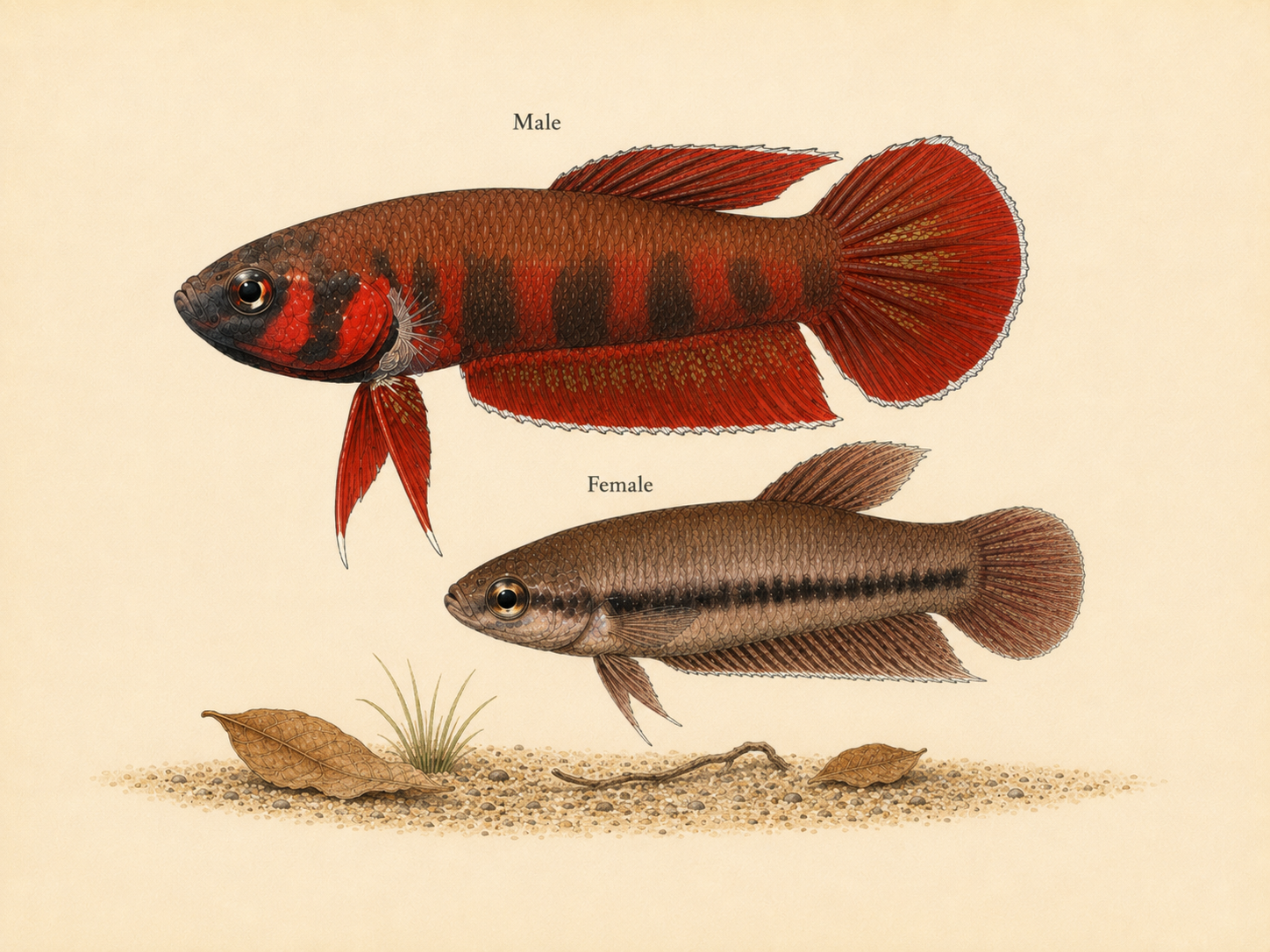
The most immediately striking feature of Betta rubra is its colouration. Males in breeding condition display a deep, rich red across the body, which intensifies dramatically during courtship and territorial displays. The red pigmentation extends across the flanks, head, and into the fins, creating a uniformly vivid appearance that gives this species its common name. Dark lateral bars or banding may appear along the body, particularly when the fish is stressed, submissive, or in transitional mood states. These bars can appear and disappear rapidly, providing a useful visual indicator of the fish’s emotional state.
Females are generally less intensely coloured than males, exhibiting a more subdued brownish-red or reddish-brown base colour. However, females are not without beauty; they often show attractive patterning and can display surprisingly vivid colours when in breeding condition or when asserting dominance within a group. The difference in colouration between the sexes becomes most pronounced in mature, well-conditioned specimens.
Sexual dimorphism beyond colour includes a slight difference in body shape, with males tending to have a marginally broader head and more pronounced jawline – an adaptation associated with mouthbrooding. The opercular (gill cover) region in males may also appear slightly more distended, reflecting the capacity to hold eggs and fry. Fins in males tend to be slightly longer and more pointed, particularly the anal fin, though this difference is subtle compared to the dramatic finnage distinctions seen in Betta splendens varieties.
Juveniles display muted colouration, typically a pale brown or beige with faint barring. The characteristic red colouration begins to develop as the fish matures, generally becoming apparent from around three to four months of age and intensifying over the following months. Full adult colouration is usually achieved by approximately six to eight months.
Natural Habitat
Betta rubra is endemic to northern Sumatra, Indonesia, where it has been collected from localities in the Aceh province and areas surrounding Lake Toba and its associated drainage systems. This Sumatran origin distinguishes it from the majority of wild betta species commonly kept in the hobby, many of which originate from Borneo, peninsular Malaysia, or mainland Southeast Asia.
In the wild, Betta rubra inhabits clear, slow-moving streams, small rivers, and associated pools and backwaters. These habitats are typically characterised by soft, acidic water with low mineral content, influenced by the surrounding tropical forest and the geological composition of the watershed. The water is often tinted with tannins from decomposing leaf litter and organic matter, lending it a slightly amber or tea-coloured appearance despite its fundamental clarity.
The substrate in these natural waterways is generally composed of sand, gravel, and accumulated leaf litter, with fallen branches, roots, and submerged wood providing structural complexity. Aquatic and semi-aquatic vegetation is present in varying densities, offering cover, foraging opportunities, and territorial boundaries. Emergent and riparian vegetation overhangs the water in many locations, providing shade that keeps light levels relatively subdued.
Water flow in these habitats is gentle, often negligible in the pools and backwaters where Betta rubra is most commonly encountered. The species possesses a labyrinth organ, an accessory breathing structure that allows it to extract oxygen directly from atmospheric air. This adaptation is particularly valuable in habitats where dissolved oxygen levels may fluctuate, though it should be noted that Betta rubra’s habitat is generally better oxygenated than the stagnant rice paddies and ditches associated with Betta splendens.
The forests of northern Sumatra face ongoing threats from deforestation, agricultural expansion (particularly palm oil plantations), and habitat degradation. While Betta rubra has not been formally assessed by the IUCN, the pressures on its native habitat give cause for concern regarding the long-term security of wild populations. Captive breeding efforts by dedicated hobbyists play an important role in maintaining the species in the aquarium hobby without placing additional collection pressure on wild stocks.
Tank Size and Setup
A single pair of Betta rubra can be comfortably housed in a tank of 40 litres or more. For a small group – which is the recommended approach, as this species exhibits interesting social dynamics when kept in appropriate numbers – a tank of 60 to 80 litres or larger is preferable. Groups of one male with two or three females, or trios and quartets, work well in suitably sized and furnished aquaria. Larger groups can be maintained in tanks of 100 litres and above, provided there is sufficient cover and visual barriers.
The tank should be set up to replicate the key features of the species’ natural habitat. A dark, fine-grained substrate such as sand or fine gravel is ideal, both aesthetically and functionally. A generous layer of dried leaf litter – Indian almond leaves (Terminalia catappa), oak leaves, or beech leaves – should be added to the substrate. This leaf litter serves multiple purposes: it releases beneficial tannins that acidify and soften the water, provides microbial biofilms that serve as supplementary food for fry, creates natural visual barriers, and gives the tank a naturalistic appearance.
Driftwood, bogwood, and root tangles are essential furnishings. These provide hiding spots, territorial markers, and contribute to the tannin-stained water conditions that Betta rubra thrives in. Arrange wood pieces to create caves, overhangs, and secluded areas where fish can retreat and, importantly, where mouthbrooding males can find quiet refuge away from tank mates.
Live plants are a valuable addition and can include species tolerant of soft, acidic conditions. Java fern (Microsorum pteropus), Java moss (Taxiphyllum barbieri), Bucephalandra species, Cryptocoryne species, and floating plants such as Salvinia or Amazon frogbit (Limnobium laevigatum) are all suitable choices. Floating plants are particularly beneficial as they diffuse overhead light and provide a sense of security for the fish below.
A tight-fitting lid is essential. Like all bettas, Betta rubra is an accomplished jumper, and even a small gap in the tank cover can result in the loss of a fish. The lid also helps maintain a layer of warm, humid air above the water surface, which is important for the proper function of the labyrinth organ. A significant temperature difference between the water and the air above it can potentially cause harm to the labyrinth organ, so draughty or uncovered setups should be avoided.
Lighting should be subdued. Betta rubra naturally occurs in shaded habitats and does not appreciate intense illumination. Low to moderate lighting, supplemented by the shading effect of floating plants, will encourage natural behaviour and bring out the best colouration. Under harsh lighting, the fish may appear washed out and will tend to hide more frequently.
Water Parameters
| Temperature | 22-27 °C |
| pH | 4.5-6.5 |
| General hardness (GH) | 1-5 dGH |
| Carbonate hardness (KH) | 0-3 dKH |
| Ammonia | 0 ppm |
| Nitrite | 0 ppm |
| Nitrate | Below 20 ppm |
Betta rubra is a soft, acidic water species and will not thrive in hard, alkaline conditions. Achieving and maintaining the appropriate water chemistry is one of the most important aspects of keeping this fish successfully. In areas with naturally soft tap water, minimal intervention may be needed beyond the use of a suitable water conditioner. In regions with hard tap water, the use of reverse osmosis (RO) water, remineralised to a very low level with a suitable GH remineraliser, will be necessary.
The addition of tannins through leaf litter, driftwood, and botanical materials naturally assists in lowering pH and provides a degree of antibacterial and antifungal benefit. Peat filtration can also be employed to soften water and reduce pH, though it should be used carefully and monitored to avoid excessively low pH crashes, particularly in tanks with very low KH buffering capacity.
Stability is more important than hitting an exact target number. Sudden swings in pH or temperature are far more dangerous than a pH that sits slightly outside the ideal range. Water changes should be performed with water matched to the tank’s temperature and chemistry. Small, regular water changes of 10 to 20 per cent weekly are generally preferable to large, infrequent changes, as they minimise the risk of parameter fluctuations.
Betta rubra is tolerant of a range of temperatures within its stated parameters but does best at the moderate end, around 24-26 °C. Excessively warm water (above 28 °C) can accelerate metabolism and shorten lifespan, while temperatures below 20 °C can suppress the immune system and leave the fish vulnerable to disease.
Filtration and Equipment
Filtration for a Betta rubra aquarium should prioritise biological efficiency and gentle water movement. Sponge filters are the most popular and arguably the most suitable option for this species. They provide excellent biological filtration, create minimal water current, and pose no risk of trapping small fry – an important consideration if breeding is a goal. An air-driven sponge filter rated for the tank’s volume, or slightly above, is typically sufficient.
Small internal filters or hang-on-back filters can also be used, but the outflow should be baffled or diffused to reduce current strength. Betta rubra originates from slow-moving to near-still waters and will become stressed by strong flow, often retreating to sheltered areas and refusing to display natural behaviour. If using a power filter, directing the output against the tank glass or adding a pre-filter sponge to the intake will help manage flow appropriately.
A heater is necessary in most climates to maintain a stable temperature within the recommended range. A reliable, adjustable heater rated for the tank size should be used, and a separate thermometer (digital or glass) should be employed to verify the temperature independently. Heater malfunctions are a common cause of fish loss, so regular monitoring is worthwhile.
An air pump connected to the sponge filter will typically provide adequate surface agitation for gas exchange. Additional airstones are generally unnecessary and may create more current than is desirable. The labyrinth organ allows Betta rubra to supplement its oxygen intake by breathing at the surface, so extreme aeration is not required provided there is some gentle surface movement.
Lighting should be low to moderate intensity. A basic LED light on a timer, set for 8 to 10 hours per day, is sufficient. If live plants are included, ensure the light output is adequate for the chosen plant species while not being so intense as to cause discomfort to the fish. Floating plants are an excellent way to naturally manage light intensity reaching the lower portions of the tank.
Diet and Feeding
Betta rubra is a micropredator in the wild, feeding on small invertebrates, insect larvae, and other tiny organisms found among leaf litter and vegetation. In captivity, the species accepts a range of foods, though live and frozen options are strongly preferred and should form the cornerstone of the diet.
Live foods such as Daphnia, Moina, baby brine shrimp (Artemia nauplii), grindal worms, micro worms, and wingless fruit flies are all eagerly accepted and are excellent for conditioning fish for breeding. Frozen foods including bloodworm, brine shrimp, Daphnia, and cyclops are also readily consumed and provide good nutritional variety. When feeding frozen foods, thaw them in a small amount of tank water before adding them to the aquarium to avoid introducing excessively cold material.
High-quality micro pellets and granules designed for small carnivorous or insectivorous fish may be accepted by some individuals, particularly those that have been raised in captivity. However, wild-caught specimens can be reluctant to recognise dry foods as edible, and even captive-bred fish generally show a strong preference for live and frozen fare. Dry foods should be considered a supplement rather than a dietary staple.
Feed small amounts two to three times daily rather than a single large feeding. Betta rubra has a small stomach, and overfeeding can lead to digestive issues and water quality deterioration. Offer only as much food as can be consumed within a few minutes and remove any uneaten material promptly. A varied diet rotating between different live and frozen food types will promote optimal health, vibrant colouration, and breeding condition.
Do not feed a mouthbrooding male. Males carrying eggs or fry will not eat for the duration of the incubation period, which can last two weeks or more. Attempting to entice a brooding male to feed may cause him to spit out or swallow the eggs. Simply resume normal feeding after the male releases the fry.
Behaviour and Temperament
Betta rubra is a relatively peaceful species by betta standards, though it is not without character. Males will engage in ritualised displays towards one another, flaring their opercula, spreading their fins, and intensifying their red colouration. These displays are typically more theatrical than violent; actual physical confrontations resulting in injury are uncommon in properly furnished tanks with adequate space and cover. Nevertheless, in very small tanks or environments lacking sufficient hiding spots, aggression between males can escalate.
The species is best kept in pairs or small groups. A single male with one to three females is a commonly recommended configuration. In larger tanks with ample cover, multiple males can sometimes coexist, though a clear dominance hierarchy will typically establish itself. Subordinate males may display reduced colouration and spend more time in hiding, so monitoring the group dynamics is important to ensure all individuals are thriving.
Betta rubra is not an overtly active swimmer. It tends to occupy the middle and lower portions of the water column, spending much of its time hovering among plants, driftwood, and leaf litter. It will explore its environment methodically and can often be observed hunting for micro-organisms among botanical materials. At the surface, it will periodically gulp air to supplement oxygen intake via the labyrinth organ.
The species is somewhat shy, particularly when newly introduced to a tank or when kept in sparsely decorated environments. Providing ample cover, subdued lighting, and a peaceful tank atmosphere will encourage bolder behaviour over time. Once settled, Betta rubra can become surprisingly confident, approaching the front glass during feeding time and displaying readily.
One of the most captivating aspects of Betta rubra behaviour is the mouthbrooding process. After spawning, the male collects the fertilised eggs in his mouth and incubates them for approximately 10 to 17 days. During this period, the male’s throat appears visibly distended, and he will typically retreat to a quiet area of the tank, reducing his activity and ceasing to eat. This behaviour is endlessly fascinating to observe and is a major attraction for hobbyists interested in natural fish behaviour.
Tank Mates
Betta rubra is a peaceful, small, and somewhat timid species that does best either in a species-only setup or alongside very carefully chosen tank mates. Ideal companions are small, non-aggressive fish that share similar water parameter requirements – specifically soft, acidic water. Boisterous, fast-moving, or fin-nipping species should be avoided, as should anything large enough to intimidate or predate upon Betta rubra. The best results are typically achieved in species-only aquaria, where the fish feel secure enough to display their full range of natural behaviours, including breeding.
Good tank mates
- Ember Tetra – A tiny, peaceful tetra that thrives in soft, acidic water and occupies the mid-water column without bothering bettas.
- Harlequin Rasbora – A calm, schooling species that appreciates similar water conditions and is too placid to cause conflict.
- Chili Rasbora – One of the smallest rasboras available, perfectly suited to the soft, acidic conditions Betta rubra requires.
- Pygmy Corydoras – A diminutive bottom-dwelling catfish that is unlikely to compete with or disturb mouthbrooding males.
- Chocolate Gourami – Another soft-water labyrinth fish with a gentle temperament, though ensure the tank is large enough for both species.
- Kuhli Loach – A peaceful, nocturnal bottom-dweller that keeps to itself and appreciates the same type of leaf-littered environment.
- Otocinclus – A small algae-eating catfish that is entirely non-threatening, though it prefers slightly higher pH than the extreme low end of Betta rubra’s range.
Fish to avoid
- Betta splendens – Domestic bettas are territorial towards other labyrinth fish and may attack or stress Betta rubra.
- Tiger Barb – A notorious fin nipper that will harass and stress Betta rubra relentlessly.
- Convict Cichlid – Far too aggressive and territorial to house with a small, peaceful species like Betta rubra.
- Chinese Algae Eater – Becomes aggressive and territorial as it matures and may physically harm bettas.
- Guppy – Requires hard, alkaline water that is incompatible with the soft, acidic conditions Betta rubra needs.
- African Cichlids – Require entirely different water chemistry and are far too aggressive for cohabitation.
- Paradise Fish – A robust and often belligerent labyrinth fish that would dominate and likely injure Betta rubra.
Breeding
Breeding Betta rubra in captivity is an achievable and deeply rewarding endeavour for the dedicated hobbyist. The species is a paternal mouthbrooder, and the breeding process is one of the most compelling aspects of keeping this fish. With proper conditioning, appropriate water parameters, and a well-structured environment, spawning can occur regularly in the home aquarium.
To condition a pair for breeding, provide a varied diet rich in live foods over a period of two to four weeks. Daphnia, Moina, baby brine shrimp, and grindal worms are all excellent conditioning foods. Ensure the water is soft and acidic, ideally with a pH between 4.5 and 6.0 and a GH below 3 dGH. Stable, warm temperatures around 25-26 °C are conducive to spawning.
Courtship begins with the male displaying intensely to the female, flaring his fins and deepening his red colouration. If the female is receptive, she will respond with her own subtle colour changes and body language. The spawning embrace is characteristic of anabantoids: the male wraps his body around the female in a U-shaped clasp, and eggs are released and fertilised simultaneously. This embrace may be repeated multiple times over the course of several hours.
After each embrace, the fertilised eggs sink or are caught in the fins, and the male collects them in his mouth. Once spawning is complete, the male assumes full responsibility for the brood. He will carry the eggs in his buccal cavity for approximately 10 to 17 days, during which time he does not eat. His throat will appear noticeably swollen, and he will typically seek out a quiet, sheltered area of the tank.
It is crucial to minimise disturbance to a brooding male. Excessive activity, loud noises, tank maintenance, or harassment from tank mates can cause the male to swallow or prematurely spit out the eggs. If the breeding tank houses other fish, ensure there are ample hiding spots where the male can brood undisturbed. Many breeders prefer to use a dedicated breeding tank with only the pair present to maximise the chances of success.
When the fry are fully developed, the male will release them. Newly released fry are relatively large compared to those of bubble-nesting bettas, typically around 5 to 7 millimetres in length. They are immediately free-swimming and capable of accepting small live foods such as micro worms, vinegar eels, and freshly hatched Artemia nauplii. The fry should be fed small amounts several times daily, and water quality must be maintained meticulously with gentle, partial water changes.
Brood sizes are generally small, typically ranging from 10 to 40 fry per spawn. The fry grow relatively slowly and can be raised in the breeding tank or moved to a dedicated grow-out tank. Cannibalism among siblings is uncommon, but providing adequate food and space will promote the best survival rates. Fry begin to develop adult colouration from around three to four months of age.
Common Diseases
Betta rubra is generally a hardy species when maintained in appropriate water conditions, but it is susceptible to the same range of diseases that affect other freshwater fish, particularly when stressed or kept in suboptimal environments.
Velvet disease (Oodinium) is perhaps the most significant health concern for wild bettas, including Betta rubra. This parasitic infection manifests as a fine, gold or rust-coloured dusting on the skin and fins. Affected fish may clamp their fins, lose appetite, and rub against objects in the tank. Velvet thrives in warm, still water, and early detection is critical. Treatment with proprietary medications containing copper-based compounds or malachite green, combined with raising the temperature slightly and dimming the lights, is typically effective if caught early.
Ichthyophthirius multifiliis (white spot or ich) is another common parasitic disease. It presents as distinct white spots resembling grains of salt on the body and fins. Treatment involves raising the temperature to 28-30 °C (if the fish can tolerate it) and using a suitable ich medication. The use of salt is sometimes recommended for ich treatment in other species, but Betta rubra’s soft, acidic water requirements mean that salt should be used with extreme caution, if at all, as it raises the mineral content of the water.
Bacterial infections, including fin rot and columnaris, can occur in stressed fish or in tanks with poor water quality. Symptoms include frayed or disintegrating fins, white or greyish patches on the body, and lethargy. Maintaining pristine water quality is the best preventative measure, and treatment with appropriate antibacterial medications should be undertaken promptly if symptoms appear.
Fungal infections may develop on wounds, damaged fins, or compromised tissue. They appear as white, cotton-like growths. Tannins released from leaf litter and botanicals have mild antifungal properties and may help prevent such infections, but established fungal growth requires treatment with a suitable antifungal medication.
Internal parasites can be a concern, particularly in wild-caught specimens. Signs include weight loss despite normal feeding, stringy or white faeces, and a generally emaciated appearance. Prophylactic treatment of newly acquired wild-caught fish with an appropriate anti-parasitic medication during quarantine is a sensible precaution.
The best defence against all diseases is prevention through good husbandry: stable, appropriate water parameters; a varied and nutritious diet; a stress-free environment with adequate cover; and a proper quarantine period for all new additions. Regular observation of the fish will help catch any issues early, when they are most treatable.
FAQs
Can Betta rubra be kept with Betta splendens?
No, this is not recommended. Betta splendens is territorial towards other labyrinth fish and is likely to attack or persistently harass Betta rubra. Additionally, the two species have somewhat different water parameter preferences, with Betta rubra requiring softer and more acidic water than most domestic Betta splendens are typically kept in. The stress of cohabitation would be detrimental to both species, and there is also a risk of hybridisation, which is undesirable from a conservation and species-integrity perspective.
How can I tell the difference between male and female Betta rubra?
Males are generally more intensely coloured, displaying a deeper, more vivid red, particularly when in breeding condition or during displays. They also tend to have a slightly broader head and more pronounced jawline, which is an adaptation for mouthbrooding. Females are typically more subdued in colouration, displaying a brownish-red or muted reddish tone, though they can colour up noticeably when breeding-ready. In mature specimens, the differences become more apparent, but young fish can be difficult to sex with certainty until they begin developing adult colouration.
How long does the male carry the eggs in his mouth?
The male typically carries the developing eggs and fry in his mouth for approximately 10 to 17 days, though the exact duration can vary depending on temperature and individual factors. Warmer temperatures within the recommended range tend to accelerate development slightly. During this entire period, the male will not eat, so it is important that he is well conditioned prior to spawning. His throat will appear visibly distended, and he will generally be less active and more reclusive than usual.
Does Betta rubra need a heater?
In most climates, yes. Betta rubra requires a stable temperature within the range of 22-27 °C, and fluctuations outside this range can cause stress and increase susceptibility to disease. A reliable, adjustable heater is strongly recommended to maintain consistent temperatures, even in warmer climates where daytime temperatures may be adequate but nighttime drops could be problematic. The only exception would be if the aquarium is kept in a room with a constantly controlled ambient temperature within the appropriate range.
Is Betta rubra suitable for a community tank?
Betta rubra can be kept in a community setting, but only with very carefully selected tank mates that share its need for soft, acidic water and possess a peaceful temperament. Small rasboras, ember tetras, pygmy corydoras, and similarly sized, non-aggressive species are the most suitable companions. However, breeding success is most likely in a species-only setup, where the male can brood without disturbance. If your primary goal is to observe the full range of natural behaviours, including breeding, a dedicated species tank is the superior option.
Related Guides
- Betta dennisyongi – The closest relative of Betta rubra, sharing the same species group and requiring very similar care.
- Betta channoides – Another small mouthbrooding betta with similar care requirements and a devoted following among wild betta enthusiasts.
- Betta albimarginata – A popular and relatively accessible mouthbrooding betta species that makes an excellent introduction to the group.
- Chocolate Gourami – A soft-water labyrinth fish with comparable habitat and water parameter requirements.
- Ember Tetra – A commonly recommended tank mate for wild bettas, thriving in the same soft, acidic conditions.