Spotted Congo Puffer Care Guide — Tank Setup, Feeding and Breeding
Introduction
The Spotted Congo Puffer, known scientifically as Tetraodon schoutedeni, is one of the most desirable and sought-after freshwater pufferfish in the aquarium hobby. Unlike many of its relatives, this species is entirely freshwater, requiring no brackish conditions at any stage of its life. Native to the Congo River basin in central Africa, it has earned a devoted following among experienced fishkeepers thanks to its striking spotted patterning, inquisitive personality, and relatively peaceful disposition compared to other pufferfish species.
Often described as the “holy grail” of freshwater puffers, the Spotted Congo Puffer commands a premium price and can be challenging to source. Wild-caught specimens appear sporadically in the trade, and captive-bred individuals, whilst becoming more available, remain uncommon. Political instability in the Democratic Republic of the Congo has historically disrupted collection and export, contributing to the species’ rarity and high price tag. For those fortunate enough to acquire one, however, this puffer rewards its keeper with a level of personality and intelligence rarely seen in freshwater fish.
This comprehensive care guide covers everything you need to know to provide an optimal environment for Tetraodon schoutedeni, from tank setup and water parameters to diet, behaviour, breeding, and disease prevention. Whether you are considering your first pufferfish or looking to add this gem to an established collection, the information here will help you give this remarkable species the care it deserves.
Quick Stats
| Scientific name | Tetraodon schoutedeni |
| Common names | Spotted Congo Puffer, Spotted Congo Pufferfish, Schouteden’s Puffer |
| Family | Tetraodontidae |
| Origin | Democratic Republic of the Congo, Congo River basin (Pool Malebo region and tributaries) |
| Adult size | 8–10 cm (3–4 inches) |
| Lifespan | 8–12 years |
| Difficulty | Moderate |
| Breeding difficulty | Difficult |
| Temperature | 24–28 °C |
| pH range | 6.5–7.5 |
| General hardness (GH) | 5–15 dGH |
| Carbonate hardness (KH) | 4–10 dKH |
| Minimum tank size | 120 litres |
| Conservation status | Least Concern (IUCN) |
Appearance
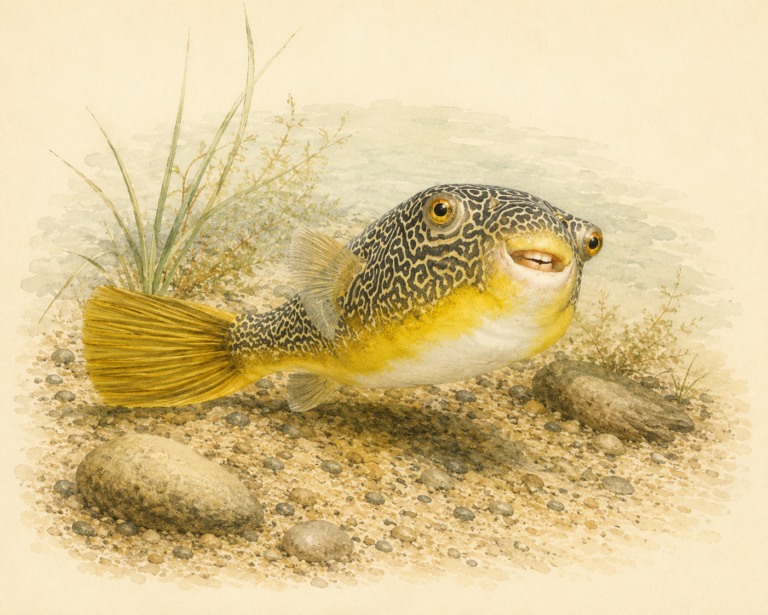
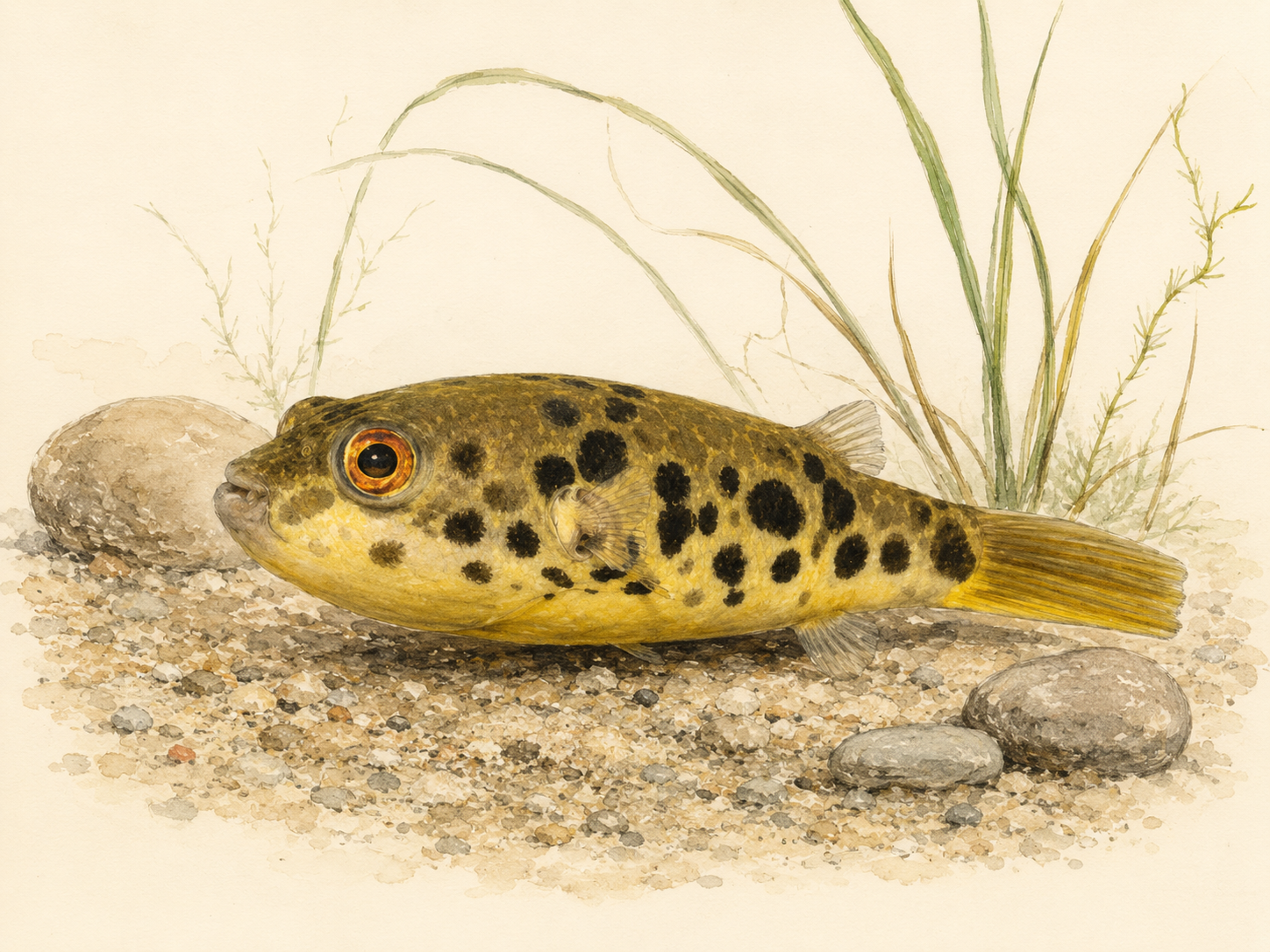
The Spotted Congo Puffer is a strikingly beautiful fish that immediately commands attention. Its base body colour ranges from a warm golden-yellow to a rich tan or olive hue, and this is covered with a dense pattern of dark brown to black spots that extend across the flanks, dorsal surface, and even onto the caudal fin. The belly is typically a paler cream or white, sometimes with faint spotting. The overall effect is somewhat leopard-like, and no two individuals display exactly the same pattern, making each fish visually unique.
In terms of body shape, T. schoutedeni exhibits the typical pufferfish form: a rounded, somewhat elongated body with a large head, prominent eyes, and a beak-like mouth formed by fused dental plates. The eyes are particularly noteworthy, being large, expressive, and capable of independent movement, which contributes enormously to the species’ charismatic appearance. The pectoral fins are used for precise manoeuvring, and observers will note the characteristic hovering and darting locomotion typical of the family.
Adult specimens generally reach between 8 and 10 centimetres in total length, making them a moderately sized freshwater puffer. Sexual dimorphism is subtle and difficult to discern with certainty. Males may display slightly more vivid colouration and can sometimes appear slimmer than gravid females, but these differences are not reliable enough for definitive sexing outside of breeding condition. When stressed or unwell, the spots may appear faded and the overall body colour can become dull or darkened, so vibrant colouration is often a useful indicator of the fish’s wellbeing.
Like all pufferfish, T. schoutedeni possesses the ability to inflate its body by swallowing water or air when threatened. This defence mechanism should never be deliberately triggered in captivity, as it causes significant stress and can be harmful to the fish. Similarly, the species possesses tetrodotoxin, a potent neurotoxin found in many pufferfish, though this poses no danger under normal aquarium conditions provided you are not consuming the fish.
Natural Habitat
Tetraodon schoutedeni is endemic to the Congo River basin in the Democratic Republic of the Congo, with the majority of collected specimens originating from the Pool Malebo region (formerly known as Stanley Pool) and its surrounding tributaries. This area represents a broad, lake-like expansion of the Congo River near Kinshasa, where the water slows and diversifies into a complex network of channels, backwaters, and flooded zones.
In the wild, Spotted Congo Puffers inhabit slow-moving to moderately flowing sections of rivers and streams, typically over sandy or muddy substrates with abundant submerged vegetation, fallen branches, and leaf litter. The water in these regions tends to be slightly acidic to neutral, soft to moderately hard, and warm throughout the year, with temperatures rarely dipping below 24 °C. Visibility can vary considerably depending on the season and specific location, but the fish are generally found in areas with reasonable water clarity.
The Congo River basin is one of the most biodiverse freshwater ecosystems on Earth, and T. schoutedeni shares its habitat with an extraordinary array of other fish species, including various cichlids, catfish, and characins. Understanding this natural environment is key to replicating appropriate conditions in the aquarium. The presence of dense cover, moderate flow, and stable water chemistry all contribute to the species’ wellbeing in captivity, and keepers who strive to emulate these conditions will be rewarded with a healthier, more confident, and more naturally behaving fish.
Tank Size and Setup
A single Spotted Congo Puffer requires a minimum tank volume of 120 litres, though larger aquaria of 150 litres or more are preferable and will provide a more stable environment. If keeping a pair or a small group, you should aim for at least 200 litres, with an additional 40–50 litres per extra individual to ensure sufficient territory and reduce the likelihood of aggression. Longer tanks are generally more suitable than tall ones, as these puffers spend most of their time in the mid-water and lower regions of the aquarium and benefit from ample horizontal swimming space.
The substrate should ideally be fine sand, which reflects the natural habitat and allows the puffer to forage comfortably without risk of injury to its delicate underbelly. Smooth gravel is an acceptable alternative, but sharp or coarse substrates should be avoided. The aquascape should include plenty of visual barriers and hiding spots created with driftwood, bogwood, smooth rocks, and robust live plants. These structures serve the dual purpose of providing security for the puffer and breaking up sightlines, which is particularly important if multiple puffers or other fish are housed together.
Live plants are strongly recommended and add both aesthetic value and functional benefits such as water quality improvement and additional cover. Hardy species that can withstand potential nibbling are the best choices. Anubias, Java Fern, Bolbitis, and Vallisneria are all good options, as they are tough enough to survive in a puffer tank. Floating plants such as Amazon Frogbit or Water Lettuce can help diffuse lighting and make the puffer feel more secure. Be aware that some individual puffers may occasionally nip at or uproot plants, though T. schoutedeni is generally less destructive in this regard than many other pufferfish species.
A secure lid is essential, as pufferfish can occasionally jump or push themselves out of the water, particularly when startled or stressed. Ensure that all gaps around filter pipes and wiring are covered. The aquarium should be placed in a relatively calm area of the home, away from excessive foot traffic, loud noise, or direct sunlight, all of which can cause stress to these sensitive and observant fish.
Water Parameters
Maintaining stable and appropriate water chemistry is crucial for the long-term health of the Spotted Congo Puffer. This species is entirely freshwater and does not require any salt supplementation at any stage of its life. The following table outlines the recommended water parameters for a thriving T. schoutedeni aquarium.
| Temperature | 24–28 °C |
| pH | 6.5–7.5 |
| General hardness (GH) | 5–15 dGH |
| Carbonate hardness (KH) | 4–10 dKH |
| Ammonia | 0 ppm |
| Nitrite | 0 ppm |
| Nitrate | Below 20 ppm |
Consistency is arguably more important than hitting exact numbers within these ranges. Rapid fluctuations in temperature, pH, or hardness can be extremely stressful and potentially fatal for pufferfish, which tend to be more sensitive to poor water conditions than many commonly kept freshwater species. A reliable heater with a thermostat is essential to prevent temperature swings, and regular water testing with a quality liquid test kit is strongly advised, particularly in the first few months after setting up a new tank or introducing a new puffer.
Weekly water changes of 25–30 per cent are recommended to keep nitrate levels low and maintain overall water quality. Use a good-quality dechlorinator when adding fresh water, and try to match the temperature and chemistry of the replacement water to the tank water as closely as possible. Pufferfish are messy eaters, and the high-protein diet they require generates a significant bioload, making diligent water maintenance all the more important.
Filtration and Equipment
Given the substantial bioload produced by a pufferfish diet rich in meaty foods, robust filtration is non-negotiable for a Spotted Congo Puffer aquarium. An external canister filter rated for at least 1.5 times the tank volume is ideal, as it provides ample biological, mechanical, and chemical filtration capacity whilst keeping the main tank uncluttered. Internal power filters can work in smaller setups but may struggle to cope with the waste output over time.
Biological filtration is the most critical component. Ensure your filter contains sufficient bio-media — ceramic rings, sintered glass, or similar high-surface-area materials — to support a healthy colony of nitrifying bacteria. Mechanical filtration through sponges and filter floss will trap particulate waste, and activated carbon can be used periodically to remove dissolved organics, odours, and any medication residues following treatment. Avoid replacing all filter media at once; instead, stagger cleaning and replacement to preserve the bacterial colony.
Water flow should be moderate. T. schoutedeni does not come from rapids or fast-flowing environments, and excessive current will stress the fish and make feeding difficult. If your filter output is too strong, use a spray bar, lily pipe, or flow diffuser to spread and soften the current. An air stone or additional surface agitation may be beneficial to ensure adequate oxygenation, particularly in warmer tanks where dissolved oxygen levels naturally decrease.
A reliable, adjustable heater is essential for maintaining the tropical temperatures this species requires. Choose a heater with a thermostat and consider using a heater guard to prevent the puffer from resting against it and sustaining burns, as these curious fish often investigate all objects within their environment. A thermometer placed at the opposite end of the tank from the heater will help you monitor temperature consistency across the aquarium. Standard LED aquarium lighting is perfectly adequate, and a timer set to provide 8–10 hours of light per day will help establish a natural photoperiod and support plant growth if live plants are used.
Diet and Feeding
Feeding is one of the most important and rewarding aspects of keeping a Spotted Congo Puffer. Like all pufferfish, T. schoutedeni is a carnivore with continuously growing dental plates (a fused beak-like structure) that must be worn down through the consumption of hard-shelled foods. Failure to provide an appropriate diet will result in overgrown teeth, which can prevent the fish from eating and may necessitate manual trimming — a stressful procedure for both fish and keeper.
The staple diet should consist of a variety of shelled invertebrates. Snails are the single most important food item and should be offered regularly. Ramshorn snails, Malaysian trumpet snails, and pond snails are all excellent choices and can be cultured at home relatively easily. The puffer will crush the shells with its beak, a behaviour that is both fascinating to observe and essential for dental maintenance. In addition to snails, other hard-shelled foods such as small mussels, cockles, and clams (all available from fishmongers or frozen food suppliers) should be offered as part of a rotating diet.
Beyond shelled foods, the diet should be supplemented with a range of meaty items including bloodworm (frozen, not freeze-dried), brine shrimp, daphnia, krill, chopped prawn, and earthworms. Live foods are often accepted with particular enthusiasm and can help encourage feeding in newly imported or shy specimens. Some keepers have success offering quality carnivore pellets or gel foods, though many individual puffers refuse non-living or non-meaty offerings, so these should never be relied upon as a primary food source.
Feed adult Spotted Congo Puffers once or twice daily, offering only what can be consumed within a few minutes. Young or growing specimens may benefit from slightly more frequent feeding. Remove any uneaten food promptly to prevent water quality deterioration. It is worth noting that puffers can be prone to obesity if overfed, so monitor body condition carefully and adjust portions accordingly. A slightly rounded belly after feeding is normal, but a persistently bloated appearance may indicate overfeeding or internal health issues.
Behaviour and Temperament
The Spotted Congo Puffer is widely regarded as one of the most peaceful and community-compatible pufferfish species available in the aquarium hobby. However, it is important to contextualise this statement: “peaceful for a puffer” does not equate to the temperament of a typical community fish such as a tetra or rasbora. Individual personalities vary considerably, and some specimens may display nipping behaviour, territoriality, or outright aggression towards tank mates, particularly in cramped conditions or when kept with inappropriate companions.
That said, T. schoutedeni is genuinely less aggressive than species such as the Amazon Puffer or the Green Spotted Puffer, and many keepers successfully maintain them alongside other fish species with careful planning. The Spotted Congo Puffer is an intelligent and curious fish that quickly learns to recognise its owner, often swimming to the front of the tank during feeding time or when it detects movement nearby. This interactive behaviour is one of the species’ greatest charms and is a significant draw for many aquarists.
In terms of social behaviour within their own species, Spotted Congo Puffers can sometimes be kept in small groups, particularly if the tank is large enough and contains ample hiding spots and visual barriers. Success with group keeping varies and depends heavily on the individual temperaments of the fish involved. Some groups coexist peacefully for years, whilst others develop hierarchies that lead to bullying and stress. It is advisable to have a contingency plan, such as a spare tank, in case conspecific aggression becomes problematic.
The species is primarily diurnal and most active during daylight hours. Spotted Congo Puffers are inquisitive explorers that will investigate every corner of their environment, and they benefit greatly from enrichment in the form of novel objects, rearranged décor, and varied feeding methods. Boredom can lead to stress-related behaviours, so keeping their environment stimulating is an important aspect of care.
Tank Mates
Selecting appropriate tank mates for a Spotted Congo Puffer requires careful consideration. The ideal companions are fish that are fast enough to evade any occasional nipping attempts, robust enough not to be intimidated, and neither small enough to be considered prey nor large enough to bully the puffer. Long-finned, slow-moving species should be avoided entirely, as should very small fish or invertebrates that might be consumed. It is also wise to avoid other bottom-dwelling species that might compete for territory.
Good tank mates
- Congo Tetra — a natural co-habitant from the same river basin, fast-swimming and large enough to avoid predation.
- African Red-Eye Tetra — a hardy, active schooling fish from West Africa that is too swift and robust to be bothered by the puffer.
- Synodontis petricola — a peaceful African catfish that occupies different zones of the tank and is well-armoured against nipping.
- Bristlenose Pleco — a sturdy, well-armoured algae eater that generally keeps to itself and is rarely targeted by puffers.
- Kribensis — a moderately sized West African cichlid that is assertive enough to hold its own without being aggressive.
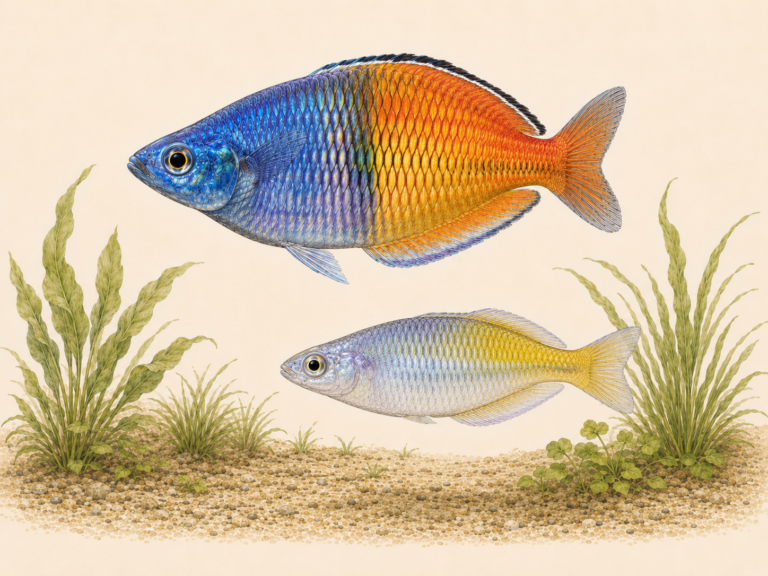
- Boesemani Rainbowfish — an active, fast-moving mid-water swimmer that is too large and quick to be harassed.
- Giant Danio — an extremely fast and hardy schooling fish that easily avoids any puffer aggression.
- African Butterfly Cichlid — a peaceful dwarf cichlid from West Africa that is territorial enough to maintain its own space.
Fish to avoid
- Betta — long, flowing fins make bettas an irresistible target for nipping, and they are too slow to escape.
- Guppy — far too small and slow, guppies will almost certainly be harassed or eaten.
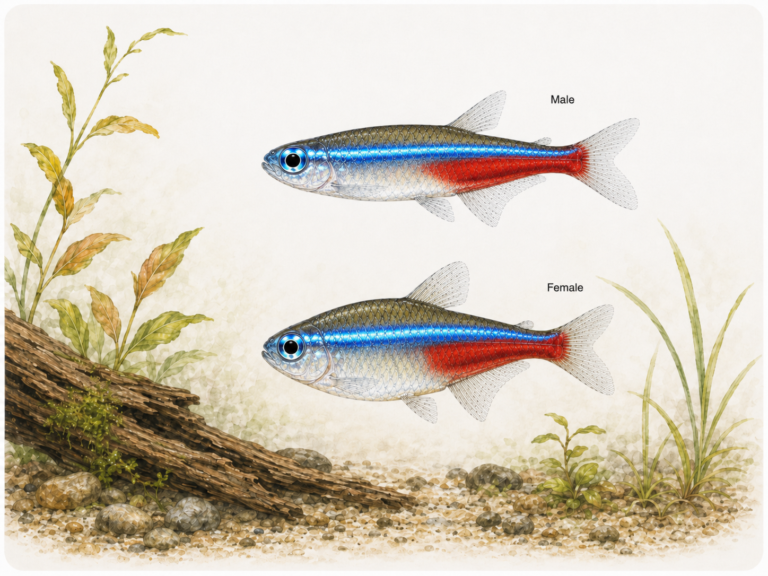
- Neon Tetra — their tiny size makes them potential prey items for an adult Spotted Congo Puffer.
- Angelfish — their slow movements, trailing fins, and laterally compressed bodies make them vulnerable to persistent nipping.
- Cherry Shrimp — all dwarf shrimp species will be treated as food and consumed rapidly.
- Mystery Snail — whilst snails are an excellent food source, any ornamental snails you wish to keep will be devoured.
- Corydoras Catfish — their small size, peaceful nature, and bottom-dwelling habits put them at risk of harassment and injury.
- Oscar — far too large and aggressive, an oscar would bully or potentially consume a Spotted Congo Puffer.
Breeding
Breeding the Spotted Congo Puffer in captivity is challenging but has been achieved by dedicated hobbyists and specialist breeders. The species is an egg scatterer, and unlike some pufferfish, it does not display significant parental care. Successful breeding typically requires a well-conditioned pair housed in a mature, well-maintained aquarium with appropriate environmental cues.
The first challenge lies in obtaining a confirmed pair, as sexual dimorphism is subtle at best. Males may appear slightly more slender and exhibit marginally brighter colouration, whilst females tend to be fuller-bodied, particularly when laden with eggs. Some breeders report that males develop faint keel-like ridges on the belly, though this is not universally observed. Acquiring a small group and allowing natural pair formation is often the most practical approach.
To condition a pair for spawning, provide an exceptionally varied and high-quality diet rich in live and frozen foods over a period of several weeks. Gradually increase the frequency of water changes and allow the temperature to rise slightly to the upper end of the recommended range, around 27–28 °C. Some breeders have found that simulating a seasonal change — such as a slight drop in temperature followed by a gradual increase, or performing larger-than-usual water changes with slightly cooler water — can help trigger spawning behaviour.
Spawning itself typically occurs over fine-leaved plants, moss, or purpose-provided spawning mops. The female will scatter eggs, often adhering them to plant surfaces, and the male will fertilise them externally. Neither parent provides care after spawning, and it is advisable to remove the adults promptly to prevent egg predation. The eggs are small, clear to slightly amber in colour, and typically hatch within 4–7 days depending on temperature.
Raising the fry is arguably the most demanding phase. The tiny hatchlings require infusoria or other microscopic foods for the first few days before graduating to newly hatched brine shrimp and microworms. Growth can be slow, and the fry may display aggression towards one another from a surprisingly young age, necessitating separation as they develop. Maintaining pristine water quality in the fry tank is critical, and frequent small water changes are essential to prevent losses from ammonia or nitrite spikes.
Common Diseases
The Spotted Congo Puffer is reasonably hardy when kept in optimal conditions, but like all pufferfish, it is sensitive to poor water quality and can be susceptible to a number of ailments. Prevention through excellent husbandry is always preferable to treatment, as puffers lack scales and are consequently more vulnerable to certain medications, particularly those containing copper or formalin.
Ich (white spot disease) is one of the more commonly encountered illnesses and manifests as small white cysts on the body and fins. It is usually triggered by temperature fluctuations or stress. Treatment should be undertaken with care, as scaleless fish are more sensitive to standard ich medications. Raising the temperature gradually to 30 °C and using half-strength doses of a malachite green or methylene blue-based treatment is often effective. Always remove activated carbon from the filter during medication.
Internal parasites are a significant concern, particularly in wild-caught specimens. Symptoms may include weight loss despite a good appetite, white or stringy faeces, lethargy, and a hollow or sunken belly. A quarantine period of at least four to six weeks for all new arrivals is strongly recommended, during which prophylactic treatment with an anti-parasitic medication such as praziquantel or levamisole can be administered. Consult a veterinarian or experienced fishkeeper for appropriate dosing in scaleless species.
Overgrown teeth are a common issue in pufferfish that do not receive sufficient hard-shelled foods. The dental plates continue to grow throughout the fish’s life and, if not worn down naturally, can become so elongated that the puffer can no longer eat. Regular inclusion of snails and other shell-on foods in the diet is the best preventative measure. If teeth do become overgrown, manual trimming by an experienced fishkeeper or veterinarian may be required, though this is a stressful procedure that should be regarded as a last resort.
Bacterial infections, often presenting as redness, ulceration, or fin erosion, can occur in response to poor water quality, injury, or stress. Maintaining pristine water conditions and addressing any aggression or environmental stressors promptly will help prevent these issues. If treatment is necessary, broad-spectrum antibacterial medications formulated for use with scaleless fish are the safest option.
FAQs
Is the Spotted Congo Puffer a freshwater or brackish species?
The Spotted Congo Puffer is an entirely freshwater species throughout its life. Unlike some other popular aquarium pufferfish, such as the Green Spotted Puffer or Figure Eight Puffer, T. schoutedeni does not require any salt in its water. It should be kept in standard freshwater conditions with a pH of 6.5–7.5 and soft to moderately hard water.
Can Spotted Congo Puffers be kept in groups?
Small groups can work in sufficiently large and well-decorated aquaria, but success depends heavily on individual temperament. Some groups coexist harmoniously, whilst others develop hierarchies that lead to stress and bullying. A tank of at least 200 litres with abundant hiding spots and visual barriers is recommended for group keeping, and you should always have a contingency plan in case individuals need to be separated.
Why is the Spotted Congo Puffer so expensive?
The high price of T. schoutedeni is primarily due to limited supply rather than extreme difficulty of care. The species’ range is restricted to the Congo River basin in the Democratic Republic of the Congo, a region where political instability and logistical challenges have historically made collection and export difficult and inconsistent. Captive breeding is becoming more common but remains challenging, so demand consistently outstrips supply.
How do I keep my puffer’s teeth from overgrowing?
The most effective way to maintain healthy dental plates is to offer a diet rich in hard-shelled foods. Snails — particularly ramshorn and Malaysian trumpet snails — should be a regular dietary staple, alongside mussels, clams, and cockles offered in their shells. The puffer’s beak naturally wears down as it crushes through these shells. If you notice the teeth becoming visibly elongated or the puffer struggling to eat, consult an experienced fishkeeper or veterinarian about manual trimming.
Do Spotted Congo Puffers recognise their owners?
Whilst it is difficult to prove scientifically in a home aquarium context, many keepers report that their Spotted Congo Puffers clearly recognise them and respond differently to their presence compared to that of strangers. These puffers are highly intelligent, observant fish that quickly learn to associate their owner with feeding time. They often swim to the front of the tank, follow their keeper’s movements, and display what can only be described as begging behaviour. This interactive quality is one of the species’ most endearing traits.
Related Guides
- Pea Puffer Care Guide — another popular fully freshwater pufferfish species, ideal for nano aquaria and an excellent comparison point for those new to pufferkeeping.
- Fahaka Puffer Care Guide — a much larger African freshwater puffer for keepers interested in bigger species from the same continent.
- Figure Eight Puffer Care Guide — a brackish-water puffer often confused with freshwater species, useful for understanding the differences in care requirements.
- Congo Tetra Care Guide — a natural companion species from the same river basin, making it one of the best tank mate choices for T. schoutedeni.
- Freshwater Aquarium Snail Guide — essential reading for anyone keeping pufferfish, as snails form a critical component of their diet.