Betta macrostoma Care Guide – Tank Setup, Feeding and Breeding
Quick summary
Betta macrostoma is a stunning but demanding wild species suited only to advanced aquarists, requiring soft acidic water, cooler temperatures, and pristine conditions to thrive. If you’re not prepared for RO water setup, precise water quality control, and a genuine long-term commitment, this is not the right fish for you.
🐠 Build a tank around this fish
In this guide:
- Introduction
- Quick Stats
- Appearance
- Varieties and Morphs
- Natural Habitat
- Tank Size and Setup
- Water Parameters
- Filtration and Equipment
- Diet and Feeding
- Behaviour and Temperament
- Tank Mates
- Breeding
- Common Diseases
- FAQs
Introduction
Betta macrostoma is widely regarded as one of the most spectacular freshwater fish available to the specialist aquarist. Commonly known as the Brunei Beauty or Bigmouth Betta, this mouthbrooding species has earned an almost legendary status among wild betta enthusiasts for its extraordinary colouration and fascinating breeding behaviour. Males display a vivid orange-red body contrasted by striking blue-black banding on their fins, a combination that rivals many marine species for sheer visual impact.
Unlike the ubiquitous Betta splendens found in pet shops across the world, Betta macrostoma is a genuinely challenging species to keep. It demands pristine water conditions, cooler temperatures than many tropical fish, and a carefully managed environment that mimics the shaded forest streams of its native Borneo. This is emphatically not a fish for beginners, nor even for intermediate hobbyists looking for their first wild betta. Successful long-term care requires dedication, experience, and a willingness to invest in the specific equipment and conditions this species needs.
Betta macrostoma is endemic to the small nation of Brunei Darussalam and limited areas of the Malaysian state of Sarawak on the island of Borneo. It is classified as Vulnerable by the IUCN, and habitat destruction from logging and land conversion continues to threaten wild populations. The aquarium trade relies almost entirely on captive-bred specimens, and responsible keepers view the maintenance of healthy breeding groups as a genuine conservation contribution. Acquiring this species typically involves connecting with specialist breeders, as it is rarely if ever available through mainstream aquarium retailers.
This care guide is intended for experienced aquarists who are prepared for the demands of keeping Betta macrostoma. It covers every aspect of their husbandry in detail, from water chemistry and tank setup to diet, breeding, and disease prevention. If you are willing to provide the conditions this remarkable fish requires, it will reward you with behaviour and beauty that few other freshwater species can match.
Quick Stats
| Scientific name | Betta macrostoma |
| Common names | Brunei Beauty, Bigmouth Betta, Spotfin Betta |
| Family | Osphronemidae |
| Origin | Brunei Darussalam and Sarawak, Malaysian Borneo |
| Adult size | 8-12 cm (3-5 inches) |
| Lifespan | 5-10 years |
| Difficulty | Advanced |
| Breeding difficulty | Advanced |
| Temperature | 22-26 °C |
| pH range | 4.0-6.5 |
| General hardness (GH) | 0-5 dGH |
| Carbonate hardness (KH) | 0-2 dKH |
| Minimum tank size | 80 litres |
| Conservation status | Vulnerable (IUCN) |
Appearance
Betta macrostoma is one of the largest members of the Betta genus, with adults regularly reaching 10 cm in total length and some exceptional specimens approaching 12 cm. The body shape is robust and somewhat elongated compared to domestic bettas, with a notably large mouth – the feature from which the species derives its scientific name (macro meaning large, stoma meaning mouth). This oversized mouth is a functional adaptation related to its mouthbrooding reproductive strategy.
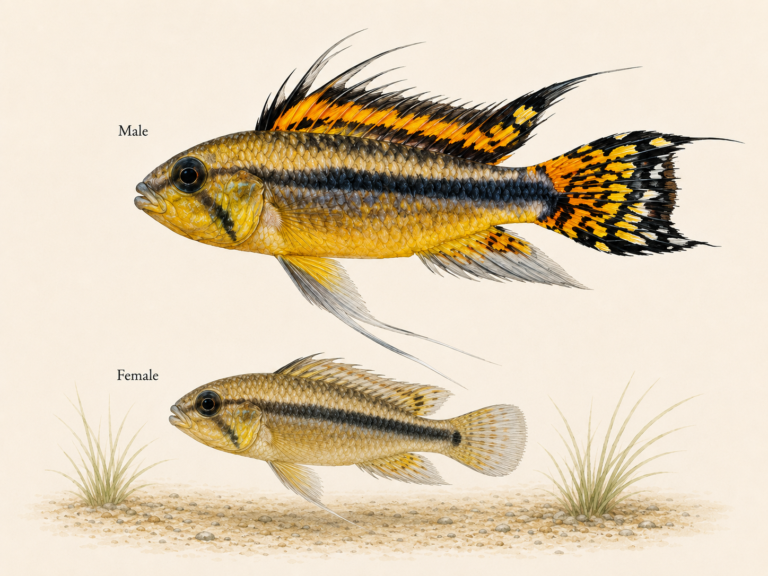
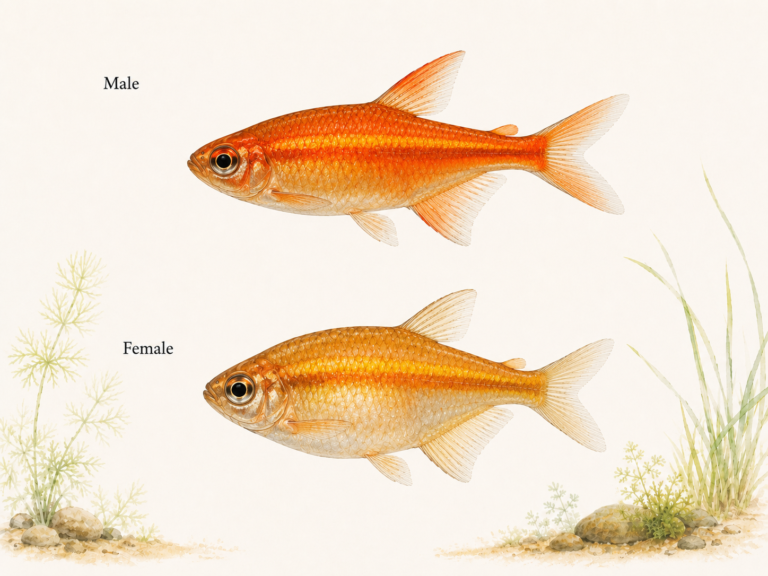
Males in breeding condition are breathtaking. The body displays a rich, deep orange to orange-red base colour that can intensify dramatically during courtship and territorial displays. The unpaired fins – dorsal, caudal, and anal – are marked with bold blue-black bands or edging, creating a striking contrast against the warm body colour. The caudal fin is rounded and relatively large, often showing a distinctive pattern of dark banding with lighter margins. A prominent dark spot or ocellus is typically present on the caudal fin, and a dark lateral stripe or series of bars may be visible along the flanks, particularly when the fish is stressed or displaying subdominant colouration.
Females are considerably less colourful but still attractive fish in their own right. They display a more muted brown to tan base colour with darker horizontal striping and barring. Female fins lack the bold banding seen in males and are generally shorter. Females also possess the characteristic large mouth, though it is slightly less pronounced than in males. Both sexes have a somewhat pointed head profile and well-developed opercles (gill covers).
Juvenile fish of both sexes resemble females, and reliable sexing is generally not possible until the fish are approximately 4-6 months old, at which point males begin to develop their characteristic orange colouration. The full adult colouration in males continues to intensify over the first 12-18 months of life.
It is worth noting that Betta macrostoma can change colour rapidly depending on mood, stress level, and social context. A dominant male in a well-maintained tank will display colours that are simply stunning, while a stressed or subordinate individual may appear washed out and pale. This colour variability is entirely normal and can serve as a useful indicator of the fish’s wellbeing.
Varieties and Morphs
Betta macrostoma does not have the selectively bred variety range seen in Betta splendens. As a wild species with a very limited natural range, the genetic diversity within the species is relatively narrow, and the aquarium hobby has not pursued the creation of artificial colour morphs or fin types. This is largely by design – specialist keepers of this species generally prioritise maintaining pure, wild-type genetics rather than developing ornamental varieties.
That said, there is some natural variation among captive populations. Fish from different collection localities may show subtle differences in the intensity or hue of their orange colouration, the extent and pattern of fin banding, and overall body proportions. Some lineages tend toward a deeper, more reddish-orange, while others display a brighter, more tangerine shade. The prominence and size of the caudal ocellus can also vary between individuals and lineages.
Occasionally, hobbyists report specimens with unusually extensive or reduced dark patterning, but these represent natural individual variation rather than established morphs. Some breeders maintain and track specific lineages based on locality data, and responsible keepers should always seek to preserve this information when acquiring or distributing fish. Crossbreeding Betta macrostoma with other species in the Betta unimaculata complex (its closest relatives) should be strictly avoided, as this undermines the conservation value of captive populations.
Any advertisement claiming to offer “fancy” or “designer” Betta macrostoma variants should be treated with extreme scepticism. Such claims may indicate hybridisation with other Betta species or outright misidentification.
Natural Habitat
Betta macrostoma is endemic to a remarkably small geographic area on the island of Borneo, found primarily in Brunei Darussalam and in limited localities in the neighbouring Malaysian state of Sarawak. Its natural habitat consists of clear, slow-moving to moderately flowing forest streams and pools within pristine or near-pristine lowland and hill dipterocarp rainforest.
These waterways are typically shaded by dense overhead canopy, which limits light penetration and keeps water temperatures relatively cool for a tropical environment – often in the low to mid-20s Celsius. The water itself is soft and acidic, stained a light amber or tea colour by tannins leached from decomposing leaf litter, wood, and other organic material. The substrate in these streams is usually composed of sand, gravel, and leaf litter, with submerged roots, fallen branches, and rocks providing abundant cover and structure.
The pH in these habitats is typically very low, often between 4.0 and 5.5, with negligible mineral hardness. Dissolved organic compounds from the surrounding forest contribute to the characteristically dark water, which also helps to filter ultraviolet light and provides a degree of natural antibacterial and antifungal protection. The water is clean and well-oxygenated despite the slow flow, owing to the undisturbed forest ecosystems that surround these streams.
Betta macrostoma shares its habitat with a variety of other fish species, invertebrates, and amphibians. In the wild, it occupies relatively shallow areas near the banks, where overhanging vegetation, root tangles, and leaf litter provide cover from predators and territories for breeding males. The fish feed on small invertebrates, insect larvae, and other small prey items that fall into or inhabit the stream.
Habitat loss is the primary threat to wild Betta macrostoma populations. Logging, palm oil plantation development, and other forms of land conversion continue to degrade the pristine forest streams this species depends on. Sedimentation, changes in water chemistry, and increased temperatures resulting from deforestation can render habitats unsuitable. The species’ restricted range makes it particularly vulnerable to localised disturbances. Conservation of remaining habitat is critical to the survival of wild populations.
Tank Size and Setup
A single pair of Betta macrostoma requires a minimum tank size of 80 litres, though 100-120 litres is strongly recommended. If keeping a small group or a breeding trio, a tank of 150 litres or more is advisable. Longer, shallower tanks are preferable to tall, narrow designs, as this species inhabits the lower and middle levels of the water column and benefits from a larger footprint.
A tightly fitting lid is absolutely essential. Betta macrostoma are accomplished jumpers, and an uncovered or poorly sealed tank will almost certainly result in losses. Every gap, including those around filter intakes, heater cables, and airline tubing, must be blocked. Many experienced keepers use a combination of a glass lid with additional mesh or clingfilm to seal any remaining openings. This is not optional – it is one of the most critical aspects of housing this species.
The tank should be set up to replicate the shaded, tannin-rich forest stream environment that Betta macrostoma inhabits in the wild. A soft, dark substrate of fine sand or a sand and leaf litter mix is ideal. A generous layer of dried Indian almond leaves (Terminalia catappa), oak leaves, or other botanicals should cover the substrate. These leaves serve multiple purposes: they release tannins that lower pH and provide antibacterial properties, they darken the water to reduce stress, and they create a naturalistic environment that encourages natural behaviour.
Provide plenty of structure and cover using driftwood, bogwood, and smooth rocks. Pieces of driftwood arranged to create caves, overhangs, and sheltered areas are particularly important, as males will use these as territories and potential brooding sites. Live plants such as Java fern (Microsorum pteropus), Java moss (Taxiphyllum barbieri), and Cryptocoryne species can be used to provide additional cover and help maintain water quality. Floating plants are highly recommended to dim the lighting further, as Betta macrostoma does not appreciate bright illumination.
Lighting should be subdued. If the tank is planted, low to moderate lighting is sufficient for the species mentioned above. If the tank is not heavily planted, ambient room lighting may be adequate, supplemented by the shade from floating plants and the tannin-stained water. Avoid bright, overhead lighting, which will cause the fish to remain hidden and display washed-out colours.
Minimise strong water flow. While the species does inhabit flowing streams, it favours calmer pockets and sheltered areas. A gentle current from the filter outlet is fine, but avoid powerheads or high-flow filters that create turbulent conditions.
Water Parameters
Maintaining appropriate water parameters is arguably the single most important aspect of Betta macrostoma care. This species is far less tolerant of suboptimal water conditions than Betta splendens or many other commonly kept labyrinth fish. Consistency and cleanliness are paramount.
| Temperature | 22-26 °C |
| pH | 4.0-6.5 |
| General hardness (GH) | 0-5 dGH |
| Carbonate hardness (KH) | 0-2 dKH |
| Ammonia | 0 ppm |
| Nitrite | 0 ppm |
| Nitrate | Below 10 ppm |
The temperature range for Betta macrostoma is notably cooler than many tropical species. In many temperate climates, room temperature may be sufficient for much of the year, and a heater may only be needed during colder months. In warmer climates or heated homes, keeping the temperature below 26 degrees Celsius can be a genuine challenge. Sustained temperatures above 28 degrees Celsius are stressful and potentially fatal. If your home regularly exceeds this temperature, you will need to consider cooling solutions such as fans directed across the water surface, a chiller unit, or locating the tank in the coolest room available.
Soft, acidic water is not merely preferred – it is a requirement for long-term health and any hope of breeding success. If your tap water is hard and alkaline, you will need to use reverse osmosis (RO) water or rainwater as the basis for your aquarium water, remineralised minimally if at all. Peat filtration, Indian almond leaves, and driftwood will help to naturally acidify the water and provide beneficial tannins. Many successful keepers maintain a pH of 5.0-5.5, which closely replicates natural conditions.
Ammonia and nitrite must be maintained at zero at all times. Betta macrostoma is exceptionally sensitive to nitrogenous waste, and even brief spikes can trigger disease or death. Nitrate should be kept as low as possible, ideally below 10 ppm. Regular water changes using properly prepared water of matching temperature and chemistry are essential. Most keepers perform 15-25% water changes once or twice weekly, using aged or treated RO water to avoid any sudden shifts in parameters.
Invest in a reliable liquid test kit (not test strips) and monitor parameters regularly, especially pH, ammonia, nitrite, and nitrate. A TDS (total dissolved solids) meter is also a valuable tool for monitoring water purity.
Filtration and Equipment
Filtration for Betta macrostoma should prioritise biological efficiency and gentle water flow. Sponge filters are the most popular choice among specialist keepers, as they provide excellent biological filtration, create minimal current, and pose no risk of trapping or injuring fish. A mature, well-seeded sponge filter is ideal. Dual sponge filters or a combination of a sponge filter and a small internal or hang-on-back filter can be used in larger tanks to increase filtration capacity.
If using a hang-on-back or canister filter, ensure the flow rate is adjustable and reduce the output to a gentle trickle. A spray bar or baffle on the outlet can help to diffuse the current. Avoid filters with strong suction intakes that could trap fry if breeding is attempted. Pre-filter sponges fitted over intakes are a sensible precaution.
A heater with a reliable thermostat is recommended, even if the ambient temperature of your home generally falls within the acceptable range for this species. A heater set to 23-24 degrees Celsius provides a safety net against sudden temperature drops, particularly overnight or during seasonal cold snaps. Choose a heater with a guard or use an inline heater to prevent accidental burns. Always verify the thermostat’s accuracy with an independent thermometer.
As mentioned above, a chiller or cooling fan may be necessary in warmer climates or during summer months. Clip-on fans that direct airflow across the water surface can lower temperatures by 2-4 degrees Celsius through evaporative cooling, though this will increase the rate of water evaporation and may require more frequent top-ups.
An air pump is only necessary if using an air-driven sponge filter. If additional aeration is desired, a gentle airstone can be used, but avoid creating excessive surface agitation. The labyrinth organ of Betta macrostoma allows it to breathe atmospheric air, so surface access is important – ensure floating plants do not completely cover the water surface.
Lighting should be low intensity. LED lights with adjustable brightness or a timer set for 8-10 hours per day are suitable. Many keepers use no dedicated aquarium lighting at all, relying on ambient room light supplemented by the glow from tannin-stained water. If plants require supplemental light, position the light source to one side or use floating plants to create shaded areas the fish can retreat to.
Diet and Feeding
Betta macrostoma is a carnivorous species that thrives on a varied diet of live, frozen, and high-quality prepared foods. In the wild, it feeds primarily on small invertebrates, insect larvae, and other small prey. Replicating this dietary variety in captivity is important for maintaining health, colour, and breeding condition.
Live foods are the gold standard for this species and should form a significant portion of the diet. Excellent options include white mosquito larvae (Chaoborus), bloodworm (Chironomus larvae), Daphnia, Moina, brine shrimp (Artemia), blackworms, and small crickets or fruit flies. Live foods stimulate natural hunting behaviour and are readily accepted by even newly acquired or shy specimens.
Frozen foods are a practical and nutritious alternative when live foods are unavailable. Frozen bloodworm, brine shrimp, Daphnia, and Mysis shrimp are all well accepted. Thaw frozen foods in a small amount of tank water before feeding and discard any uneaten portions promptly to avoid fouling the water.
High-quality pellet foods formulated for bettas or small carnivorous fish can be offered as a supplementary food source, but they should not constitute the sole diet. Many Betta macrostoma are reluctant to accept dry foods, particularly wild-caught or recently acquired specimens. Patience and gradual introduction may be needed. Choose pellets with high protein content and minimal fillers.
Feed adult fish once or twice daily, offering only as much as they will consume within a few minutes. Overfeeding is a common mistake that leads to water quality deterioration – a particularly dangerous outcome for this species. One or two fasting days per week can be beneficial for digestive health. Juveniles and growing fish should be fed more frequently, ideally two to three times daily with smaller portions.
Variety is key. Rotating between different food types ensures a balanced nutritional profile and helps prevent dietary deficiencies. Live and frozen foods are especially important for conditioning breeding pairs.
Behaviour and Temperament
Betta macrostoma is a relatively peaceful species by betta standards, though it is not without its complexities. Males can be territorial, particularly toward other males, but aggression rarely reaches the lethal intensity seen in domestic Betta splendens. In a sufficiently large, well-structured tank, a pair or even a small group can be maintained with careful observation.
This species tends to be somewhat shy and retiring, especially in the early weeks after introduction to a new tank. It appreciates plenty of cover and subdued lighting, and may spend much of its time near the bottom or among driftwood and leaf litter. Once settled and confident, Betta macrostoma becomes bolder and will begin to use more of the tank, though it never becomes a boisterous, open-water swimmer.
Males display to females and rival males with flared gills, intensified colour, and fin spreading. These displays are generally ritualised and rarely result in physical damage between a bonded pair. However, unpaired males housed together in a small tank may engage in more serious confrontations, and it is generally advisable to keep only one male per tank unless the aquarium is large enough to support distinct territories.
One of the most fascinating aspects of Betta macrostoma behaviour is the paternal mouthbrooding. After spawning, the male takes the fertilised eggs into his mouth and incubates them for approximately 12-21 days, during which time he does not eat. This is an extraordinary commitment, and a brooding male should be kept as calm and undisturbed as possible. Stress during the brooding period frequently causes males to swallow or spit out the eggs prematurely.
Betta macrostoma is an intelligent and often curious fish that will learn to recognise its keeper and may approach the front of the tank during feeding time. This responsiveness, combined with its stunning appearance and complex breeding behaviour, is a large part of what makes it so rewarding for dedicated hobbyists.
Tank Mates
Betta macrostoma is best kept in a species-only setup, and this is the approach most specialist keepers recommend. The specific water parameters this species requires – very soft, very acidic, and cooler than typical tropical temperatures – significantly limit the pool of compatible tank mates. Additionally, Betta macrostoma is a somewhat timid fish that can be outcompeted for food or stressed by more boisterous species. If you do wish to keep tank mates, choose small, peaceful species that thrive in similar water conditions and will not harass or outcompete the bettas.
Good tank mates
- Chocolate Gourami – Shares a preference for soft, acidic, tannin-stained water and is similarly peaceful and retiring.
- Harlequin Rasbora – A gentle, small schooling fish that tolerates soft, acidic conditions well.
- Chili Rasbora – Tiny and peaceful, unlikely to compete with or stress Betta macrostoma in a well-planted tank.
- Kuhli Loach – A bottom-dwelling species that is peaceful and occupies a different zone of the tank.
- Pygmy Corydoras – Small, peaceful bottom dwellers that can tolerate softer water conditions.
- Ember Tetra – A small, calm tetra that does well in dimly lit, acidic setups.
- Otocinclus – Peaceful algae eaters that stay small and are unlikely to cause any conflict.
- Celestial Pearl Danio – Tiny and non-aggressive, suitable for the cooler end of tropical temperatures.
Fish to avoid
- Betta splendens – Likely to provoke aggression and has different care requirements; hybridisation risk if female.
- Tiger Barb – A notorious fin nipper that will harass and stress Betta macrostoma relentlessly.
- Common Pleco – Grows far too large, produces excessive waste, and may disturb the bettas at night.
- African Cichlids – Require hard, alkaline water and are far too aggressive for cohabitation.
- Guppy – Requires harder, more alkaline water and the colourful males may trigger aggression.
- Angelfish – Too large and potentially aggressive; also prefers slightly different water parameters.
- Chinese Algae Eater – Becomes territorial and aggressive with age and may attack the bettas.
- Oscar – A large, predatory cichlid that would view Betta macrostoma as prey.
Breeding
Breeding Betta macrostoma is one of the most rewarding experiences available to the freshwater aquarist, but it is also one of the most challenging. Success requires a well-conditioned pair, optimal water conditions, and a calm, stable environment. Even experienced breeders face frequent setbacks, as males may swallow or prematurely release eggs, and fry are delicate and slow-growing.
Begin by establishing a compatible pair. Betta macrostoma pairs best when allowed to choose their own partner from a group, but this luxury is not always possible given the species’ scarcity and cost. When introducing a male and female, do so in a tank with ample cover and monitor closely for signs of aggression. A compatible pair will gradually begin to display to each other, with the male intensifying his colour and the female developing a more prominent pattern of vertical bars.
Condition the pair with frequent feedings of high-quality live foods for several weeks prior to any breeding attempt. Maintain water parameters at the softer, more acidic end of the acceptable range – a pH of 4.5-5.5, near-zero hardness, and a temperature of 24-25 degrees Celsius. Ensure the tank is quiet and free from disturbance. Sudden movements, loud noises, or frequent maintenance during the breeding period can cause the pair to abandon the attempt.
Spawning typically occurs in a sheltered area of the tank, often beneath driftwood or within a cave. The pair engages in an elaborate nuptial embrace in which they wrap around each other, and the female releases a small number of eggs (usually 10-40) which are fertilised by the male. The pair may embrace multiple times over a period of several hours. After spawning, the female gathers the eggs in her mouth and then transfers them to the male, who takes them into his buccal cavity for incubation.
The male will not eat during the entire incubation period, which lasts approximately 12-21 days. His throat will appear visibly distended as the eggs develop. It is vital that the male is not disturbed during this time. Some breeders isolate the female after spawning to prevent her from pestering the brooding male, while others leave the pair together if they have a well-established bond. Both approaches can work, depending on the individual fish.
When incubation is complete, the male will release fully formed, free-swimming fry. The fry are relatively large compared to many fish species but are still small and vulnerable. They should be separated from the adults if there is any risk of predation, though Betta macrostoma parents are generally not predatory toward their own young. Initial foods for fry include baby brine shrimp (Artemia nauplii), micro worms, and vinegar eels. Growth is slow, and it may take 6-12 months for juveniles to reach a size where they can be reliably sexed.
Many breeding attempts will fail, particularly with young or inexperienced males. Males may swallow the eggs due to stress, inexperience, or simply because they are not yet mature enough to complete a full brooding cycle. Patience and repeated attempts are usually necessary. Do not be discouraged by early failures – they are a normal part of the process.
Common Diseases
Betta macrostoma is not inherently more disease-prone than other fish, but its sensitivity to water quality means that disease often follows lapses in maintenance. Prevention through excellent husbandry is always preferable to treatment, as many medications are poorly tolerated by this species, particularly at the low pH values it requires.
Velvet disease (Piscinoodinium) is one of the most common and dangerous conditions affecting Betta macrostoma. It manifests as a fine, gold or rust-coloured dusting on the skin and fins, often accompanied by lethargy, clamped fins, and loss of appetite. Velvet can spread rapidly and is often fatal if not caught early. Treatment typically involves raising the temperature slightly (to 26-27 degrees Celsius), darkening the tank completely, and using a copper-based medication at a carefully measured dose appropriate for soft, acidic water. Be extremely cautious with copper-based treatments in soft water, as they can become toxic at lower pH.
Ich (white spot disease, caused by Ichthyophthirius multifiliis) is less common in the acidic, warm conditions preferred by this species but can occur, particularly if fish are stressed or newly introduced. Treatment involves a gradual temperature increase and the use of appropriate medication, again with careful attention to dosing in soft water.
Bacterial infections, including fin rot and ulcers, can develop in response to poor water quality, physical injury, or stress. These are best addressed by improving water conditions through increased water changes and, if necessary, the careful use of antibacterial treatments. Indian almond leaves and other tannin sources provide a degree of natural antibacterial protection and should always be present in the tank.
Fungal infections may occur on eggs during mouthbrooding or on fish with damaged skin. Maintaining clean, tannin-rich water is the best preventative measure. Methylene blue can be used as a mild antifungal in a separate treatment tank if needed.
Internal parasites are occasionally encountered, particularly in wild-caught specimens. Symptoms include weight loss despite normal appetite, white or stringy faeces, and general lethargy. Anti-parasitic foods or medications can be used, but treatment should be approached cautiously given the species’ sensitivity.
The most effective disease prevention strategy for Betta macrostoma is simple: maintain excellent water quality, provide a varied and nutritious diet, minimise stress, and quarantine all new fish before introducing them to an established tank.
FAQs
Can Betta macrostoma be kept in a community tank?
While it is technically possible to keep Betta macrostoma with certain small, peaceful species that tolerate soft, acidic water, a species-only setup is strongly recommended. The specific water parameters, subdued environment, and calm atmosphere this species requires are difficult to maintain in a busy community tank. Tank mates may also outcompete the bettas for food or cause stress that suppresses colour and breeding behaviour.
How can I tell the difference between male and female Betta macrostoma?
Adult males display vivid orange-red colouration with bold blue-black fin banding, a larger head and mouth, and more intense colouration overall. Females are smaller, with brown to tan colouration and subdued patterning. Juveniles are difficult to sex until approximately 4-6 months of age, when males begin to develop their characteristic colour. In some cases, reliable sexing may not be possible until the fish are even older.
Why does my male Betta macrostoma keep swallowing the eggs during mouthbrooding?
Premature egg swallowing is extremely common, especially with young or inexperienced males. The most frequent causes are stress from disturbance (including tank maintenance, loud noises, or the presence of other fish), poor water quality, and simple inexperience. Minimise disturbance during the brooding period, maintain pristine water conditions, and be patient – many males improve with successive breeding attempts.
Do I need to use RO water for Betta macrostoma?
In most cases, yes. Unless your tap water is naturally very soft and acidic (which is uncommon in most of the UK and many other regions), reverse osmosis water is essential for maintaining the low pH and minimal hardness this species requires. RO water can be used pure or with a very light remineralisation. Peat filtration and botanical additions help to further condition the water.
Is Betta macrostoma legal to keep and breed?
Betta macrostoma is legal to keep and breed in most countries, though its Vulnerable IUCN status and protected status within Brunei mean that wild collection is illegal and export from its native