Feathertail Betta Care Guide – Tank Setup, Feeding and Breeding
Quick summary
The Feathertail Betta is a visually striking but fragile variant best suited to moderately experienced keepers who can maintain pristine water quality, gentle flow, and snag-free decor. If you want a hardy, low-maintenance beginner betta, this extreme finnage variety is probably not the right choice, as it is prone to fin damage, swimming difficulty, and a shorter lifespan.
🐠 Build a tank around this fish
In this guide:
- Introduction
- Quick Stats
- Appearance
- Varieties and Morphs
- Natural Habitat
- Tank Size and Setup
- Water Parameters
- Filtration and Equipment
- Diet and Feeding
- Behaviour and Temperament
- Tank Mates
- Breeding
- Common Diseases
Introduction
The Feathertail Betta is one of the most visually striking – and most controversial – tail-type variants of the domestic Betta splendens. Closely related to the Rosetail, the Feathertail takes the extreme branching of fin rays even further, producing a distinctly ruffled, feather-like texture along the edges of the caudal, anal, and dorsal fins. When fully flared, the fins can resemble layered plumage or the ruffled edges of ornate fabric, which is precisely what draws many hobbyists to this variety.
However, it is important to be upfront about the realities of keeping a Feathertail Betta. This is a variant that has been selectively bred to push fin development to an extreme, and that extreme comes with genuine health and physical fragility concerns. Broken fin rays, self-inflicted fin damage from the sheer weight and complexity of the finnage, and difficulty swimming are all common issues. The Feathertail is not simply a prettier version of a standard Halfmoon – it is a fish that requires a more considered approach to tank design, water flow, decor selection, and ongoing health monitoring.
The Feathertail Betta is a variant of Betta splendens, the same species that encompasses virtually all domestic betta varieties sold in the aquarium trade. All of the foundational care principles – water chemistry, temperature, dietary needs, and general husbandry – are shared with every other domestic betta. For readers wanting a thorough grounding in baseline betta care fundamentals, the Betta Fish Care Guide covers everything you need to know. This guide will focus specifically on what makes the Feathertail different: the unique challenges of its finnage, the adjustments required to keep it healthy, and the honest trade-offs involved in choosing this variety over less extreme tail types.
Quick Stats
| Scientific name | Betta splendens var. Feathertail |
| Common names | Feathertail Betta, Feather Tail Betta, Extreme Rosetail Betta |
| Family | Osphronemidae |
| Origin | Selectively bred variant; wild ancestor native to Thailand, Cambodia, Laos, and Vietnam |
| Adult size | 6 – 7.5 cm (body length, excluding fins) |
| Lifespan | 2 – 4 years (often towards the lower end due to fin-related stress) |
| Difficulty | Moderate |
| Breeding difficulty | Difficult |
| Temperature | 24 – 28 °C |
| pH range | 6.0 – 7.5 |
| General hardness (GH) | 3 – 12 dGH |
| Carbonate hardness (KH) | 2 – 8 dKH |
| Minimum tank size | 20 litres |
| Conservation status | Not Evaluated (domestic variant; wild Betta splendens is assessed as Vulnerable by IUCN) |
Appearance
The defining characteristic of the Feathertail Betta is the excessive branching of its fin rays, which goes beyond what is seen in even the Rosetail variety. In a standard Halfmoon Betta, the fin rays split (or branch) a certain number of times as they extend outward from the body, producing a smooth, fan-like spread. In a Rosetail, the rays branch more than usual, creating overlapping folds that resemble the layered petals of a rose. The Feathertail takes this one step further – the branching is so extensive that the fin edges develop a distinctly ruffled, feathered, or fringed texture. Rather than smooth or gently scalloped margins, the fin edges appear shredded in a decorative way, with fine, wispy projections that give the fish its name.
This excessive branching affects all unpaired fins – the caudal (tail), dorsal, and anal fins – though the effect is usually most pronounced in the caudal. When the fish flares, the tail can look almost like a crumpled piece of lace or a cluster of delicate feathers. The pectoral fins may also show increased branching in some individuals, though this is less consistent.
In terms of body shape, the Feathertail is identical to other domestic Betta splendens varieties. Males typically reach 6 to 7.5 cm in body length, with short, laterally compressed bodies, upturned mouths, and prominent opercular (gill) covers. Females, when they occur in the Feathertail form, tend to show the excessive branching to a lesser degree, though they still display noticeably more fin ruffling than standard female bettas.
Feathertails are available in virtually every colour and pattern found across the broader Betta splendens hobby, including solid colours (red, blue, black, white, yellow), bicolours, marble patterns, butterfly patterns, koi patterns, and metallic or dragon-scale varieties. The ruffled fin edges can make certain colours particularly eye-catching – iridescent blues and greens, for instance, catch the light differently along each tiny fold and projection, creating a shimmering, almost prismatic effect.
It is worth noting that the line between Rosetail and Feathertail is not always sharply defined. The distinction is one of degree rather than kind, and individual fish may fall on a spectrum. Some breeders and sellers use the terms interchangeably, while others reserve “Feathertail” strictly for the most extreme examples. When purchasing, it is more useful to assess the individual fish’s finnage directly than to rely solely on the label.
Varieties and Morphs
The Feathertail is itself a sub-variant within the broader Halfmoon lineage of Betta splendens tail types. Understanding where it sits in this lineage helps clarify what distinguishes it from related varieties.
The Halfmoon Betta has a caudal fin that spreads to a full 180-degree arc when flared, with relatively clean, evenly spaced fin rays. The Over-Halfmoon (OHM) exceeds 180 degrees. The Rosetail is a Halfmoon (or OHM) with additional ray branching that creates overlapping, petal-like folds – attractive but already pushing into territory where fin weight becomes a concern. The Feathertail sits at the extreme end of this spectrum, with even more branching that produces the characteristic ruffled or fringed fin edges.
Because the Feathertail trait is about fin ray structure rather than colour or scale type, it can be combined with virtually any colour morph or pattern. Common combinations seen in the hobby include:
Feathertail Dragon – combining the heavy, metallic scaling of dragon-scale bettas with feathertail finnage. These are visually dramatic but potentially problematic, as dragon-scale bettas already carry a risk of diamond eye (scales growing over the eyes), and the additional fin burden of the feathertail trait compounds welfare concerns.
Feathertail Marble – the marble gene causes colour to shift and change over the fish’s lifetime, and the complex fin surfaces of a Feathertail can display these shifting patterns in particularly intricate ways.
Feathertail Butterfly – the butterfly pattern, where fins show distinct colour bands, can look especially striking when those bands are distributed across the ruffled feathertail edges, though the pattern may be harder to read clearly due to the folding.
Feathertail Dumbo (Elephant Ear) – combining enlarged, fan-like pectoral fins with the feathertail caudal. This pairing further increases the total fin surface area and can exacerbate swimming difficulties.
It should be acknowledged that many experienced breeders and betta enthusiasts view the Feathertail not as a desirable morph to pursue, but as an extreme that has gone too far. In competitive showing, excessive branching is often penalised rather than rewarded, as it is associated with structural weakness. The Feathertail exists primarily as a product of the ornamental pet trade rather than the competitive breeding community.
Natural Habitat
As a selectively bred domestic variant, the Feathertail Betta does not exist in nature. Its ancestor, wild Betta splendens, is native to the lowland regions of mainland Southeast Asia, particularly Thailand (where it was historically known as “pla kat,” meaning biting fish), Cambodia, Laos, and Vietnam. Wild bettas inhabit shallow, slow-moving or stagnant waters – rice paddies, floodplain marshes, roadside ditches, slow streams, and the margins of ponds. These habitats are typically warm, often somewhat acidic, and densely vegetated.
Understanding the wild habitat is relevant to Feathertail care because it underscores the conditions under which the species’ physiology evolved. Betta splendens developed its labyrinth organ – an auxiliary breathing structure that allows it to gulp atmospheric air – in response to the warm, oxygen-depleted waters it naturally inhabits. The fish is adapted to still or very gently flowing water, which is particularly important for the Feathertail variant. While a standard Plakat or even a Halfmoon can handle mild currents reasonably well, the Feathertail’s excessive finnage makes it exceptionally vulnerable to any meaningful water flow.
Wild Betta splendens also inhabits environments with abundant cover – dense aquatic vegetation, leaf litter, overhanging terrestrial plants, and submerged root structures. This preference for shelter translates directly into tank setup recommendations, though for the Feathertail, the choice of cover must be made with extra care to avoid anything that could snag or tear the delicate, highly branched fin edges.
The water in wild betta habitats is often stained with tannins from decomposing organic matter, resulting in soft, acidic conditions. While domestic bettas are generally more adaptable to a range of water chemistries than their wild counterparts, maintaining water on the softer and slightly acidic side can benefit Feathertails, as pristine water quality is essential for supporting the health of their extensive finnage.
Tank Size and Setup
The minimum recommended tank size for a single Feathertail Betta is 20 litres, though a tank of 30 to 40 litres is strongly preferable. While some hobbyists keep standard bettas in smaller volumes, the Feathertail benefits from additional space precisely because it is a less efficient swimmer. A larger tank allows the fish to move at its own pace without being constantly forced to navigate tight spaces, and it provides more stable water parameters, which is critical for a fish whose fins are perpetually at risk of damage and subsequent infection.
Tank shape matters more for the Feathertail than for many other betta varieties. Avoid tall, narrow tanks. Feathertails struggle with vertical swimming because the weight and drag of their fins make ascending to the surface for air laborious. A long, shallow tank with a generous footprint is ideal – something in the range of 30 cm or less in water depth is preferable. This ensures the fish can reach the surface to use its labyrinth organ without exhausting itself.
Decor selection requires particular attention. Every item in the tank should pass the “tights test” – if you were to run a pair of sheer tights (stockings) across the surface and they snagged, the decor is too rough or sharp for a Feathertail. The highly branched, ruffled fin edges are far more prone to catching on rough surfaces, sharp edges, or pointed decorations than the fins of less extreme varieties. Smooth river stones, silk or live plants, and driftwood with no sharp projections are all appropriate. Plastic plants with hard, pointed leaf tips should be avoided entirely.
Live plants are an excellent choice for a Feathertail tank. They provide cover, help maintain water quality by absorbing nitrates, and have soft surfaces that will not damage fins. Good options include Anubias species (which can be attached to driftwood or stones), Java Fern, Java Moss, floating plants such as Salvinia or Amazon Frogbit, and low-growing carpeting plants like Marsilea hirsuta. Floating plants are particularly beneficial, as they provide shade, reduce perceived openness (which can stress bettas), and create resting spots near the surface where the fish can breathe without needing to swim far.
Resting spots are more important for the Feathertail than for most other betta varieties. Betta hammocks (broad-leafed plants or commercially available suction-cup leaf rests positioned near the water surface), flat-topped decorations, and dense plant thickets at various heights all give the fish places to rest without having to constantly fin against gravity. Some Feathertail keepers find their fish spend a significant portion of the day resting on or near surfaces, which is normal behaviour for this variant rather than a sign of illness.
The substrate should be smooth – fine sand or smooth gravel is appropriate. Avoid anything with sharp or angular edges. A lid or cover is essential, as bettas are capable jumpers, though Feathertails are less likely to jump successfully due to their fin burden. Gentle lighting is preferable; excessively bright light without plant cover can stress the fish.
Water Parameters
| Temperature | 24 – 28 °C |
| pH | 6.0 – 7.5 |
| General hardness (GH) | 3 – 12 dGH |
| Carbonate hardness (KH) | 2 – 8 dKH |
| Ammonia | 0 ppm |
| Nitrite | 0 ppm |
| Nitrate | Below 20 ppm |
While the acceptable parameter ranges for a Feathertail are the same as for any domestic Betta splendens, the importance of water quality consistency and cleanliness is amplified. The Feathertail’s extensive finnage provides a vast surface area that is constantly exposed to the water column. Any degradation in water quality – elevated ammonia, nitrite, or even moderately high nitrates – will affect the fins disproportionately. Fin rot, bacterial infections, and fungal growth are more likely to take hold on damaged or stressed fin tissue, and the Feathertail’s fins are almost always under some degree of structural stress simply due to their construction.
Maintaining ammonia and nitrite at 0 ppm is non-negotiable. Nitrates should be kept below 20 ppm, and ideally below 10 ppm. This typically requires weekly water changes of 20 to 30 percent, though the exact schedule will depend on tank size, stocking, and filtration efficiency. Use a liquid test kit (not strips) to monitor parameters regularly, especially during the first few months of keeping a new Feathertail.
Temperature stability is important. Bettas are tropical fish and require a heater in most climates. A stable temperature of 25 to 27 °C is the sweet spot for most Feathertails. Fluctuations of more than 1 to 2 degrees within a 24-hour period can stress the fish and increase susceptibility to disease. An adjustable heater with a reliable thermostat is recommended over a pre-set model.
Some Feathertail keepers find that adding Indian almond leaves (Terminalia catappa) or other sources of tannins to the water provides benefits. The mild acidification and tannin release can have mild antibacterial and antifungal properties, and the softer, slightly tinted water may more closely approximate the conditions the species evolved in. This is not strictly necessary but can be a helpful supplementary measure, particularly for Feathertails that are prone to recurrent fin issues.
Filtration and Equipment
Filtration for a Feathertail Betta must prioritise biological filtration capacity while producing minimal water flow. This is the single most important equipment consideration that distinguishes Feathertail care from standard betta care. The excessive finnage acts like a sail, and even moderate currents can push the fish around the tank, exhaust it, and cause physical damage as fins are forced against decor or tank walls.
A sponge filter powered by an air pump is the ideal choice for a Feathertail tank. Sponge filters provide excellent biological filtration with very gentle water movement. The airstone-driven uplift creates a soft, diffuse current that a Feathertail can manage comfortably. The air pump should be adjustable, or fitted with a gang valve, so that the airflow – and therefore the current – can be fine-tuned.
If using a hang-on-back (HOB) or internal power filter, modifications will almost certainly be necessary. The outflow should be baffled using a pre-filter sponge, a piece of filter floss rubber-banded over the outlet, or a baffle fashioned from a plastic bottle cut to deflect flow against the tank wall. The goal is to reduce the output current to an absolute minimum while maintaining adequate turnover for biological filtration. A turnover rate of two to three times the tank volume per hour is sufficient; higher rates are unnecessary and counterproductive.
An adjustable heater rated appropriately for the tank volume is essential. For a 20 to 40-litre tank, a 25W or 50W heater is typically sufficient. Position the heater near the filter outflow (even if that flow is gentle) to help distribute heat evenly. A separate thermometer – either a digital probe or a glass thermometer – should be used to verify the heater’s accuracy.
Lighting should be moderate. If keeping live plants, a dedicated aquarium LED light on a timer providing 8 to 10 hours of illumination per day will support plant growth. If the tank is unplanted or lightly planted, ambient room lighting or a low-intensity light is preferable. Bettas do not require intense lighting, and excessively bright environments can cause stress.
An air gap between the water surface and any cover or lid is important. Bettas breathe atmospheric air through their labyrinth organ, and the air above the water surface should be warm and humid. A tight-fitting lid with a small gap helps maintain this warm air layer, which reduces the risk of damage to the labyrinth organ from breathing cold air – a particular concern in cooler climates.
Diet and Feeding
The dietary requirements of a Feathertail Betta are identical to those of any domestic Betta splendens – they are primarily carnivorous and require a protein-rich diet. However, the Feathertail’s reduced mobility and higher energy expenditure from constantly carrying heavy finnage make appropriate feeding practices particularly important.
A high-quality betta-specific pellet should form the staple diet. Look for pellets where whole fish, fish meal, or insect meal is the first ingredient, and avoid products heavy in fillers such as wheat or soy. Pellets are preferable to flakes for bettas, as they are easier to portion and less likely to foul the water. Feed two to four appropriately sized pellets twice daily. Feathertail bettas may be slower to reach food than other varieties, so ensure that pellets are dropped close to the fish or in a spot it regularly frequents, and that food is not swept away by any residual current.
Supplement the staple diet with frozen or live foods two to three times per week. Bloodworms (frozen or live), daphnia, brine shrimp, and mosquito larvae are all excellent choices. Daphnia is particularly beneficial, as it has a mild laxative effect that can help prevent bloating and constipation – issues that can be more consequential in a Feathertail because an already encumbered swimmer becomes even less mobile when bloated.
Avoid overfeeding. A Feathertail that is carrying excess body weight has to work even harder to move through the water. One fasting day per week is a common and sensible practice; it allows the digestive system to clear and reduces the risk of constipation. If you notice the fish’s belly appearing consistently rounded or distended, reduce portion sizes.
Freeze-dried foods (such as freeze-dried bloodworms or tubifex) can be offered occasionally but should be pre-soaked in a small amount of tank water before feeding. Unsoaked freeze-dried foods can expand in the fish’s stomach and contribute to bloating.
Behaviour and Temperament
The Feathertail Betta shares the core behavioural profile of all domestic Betta splendens – it is a territorial, intelligent, and often personable fish that readily recognises its keeper and can learn to respond to stimuli. However, its behaviour is noticeably modified by its finnage in ways that keepers should understand and expect.
Feathertails are, on the whole, less active than short-finned or moderately-finned betta varieties. The sheer physical burden of their fins means that extended bouts of active swimming are tiring. It is normal for a Feathertail to spend significant portions of the day resting – perched on a leaf, lying on the substrate, or hovering near the surface. This behaviour should not be mistaken for lethargy caused by illness, though keepers should remain observant for changes in resting patterns that might indicate a health problem.
Flaring – the dramatic display where a betta spreads its gill covers and fins to appear larger – is often less frequent or less sustained in Feathertails. The fish may flare briefly at its own reflection or at a perceived rival, but the physical effort of fully extending those heavy, complex fins often results in shorter displays. Some Feathertails rarely flare at all. While occasional flaring is considered a form of exercise and mental stimulation for bettas, do not force extended flaring sessions on a Feathertail by placing mirrors against the tank for prolonged periods. The strain on the fin rays can cause breaks and tears.
Aggression levels are variable and individual, as with all bettas. Males should never be housed together. Feathertails may be somewhat less aggressively inclined towards tank mates than faster-swimming betta varieties, simply because chasing is more effortful, but this is not a reliable generalisation – individual temperament varies widely.
Enrichment is important. Feathertails benefit from a varied environment with hiding spots, visual barriers, and gentle exploration opportunities. Rearranging decor occasionally, offering different food types, and ensuring the fish has areas of the tank to investigate can help maintain mental stimulation without demanding excessive physical activity.
Tank Mates
Choosing tank mates for a Feathertail Betta requires extra caution beyond the standard considerations for betta community setups. The Feathertail’s slow swimming speed, trailing fins, and reduced ability to evade or escape make it more vulnerable to fin nipping, harassment, and competition for food than faster or shorter-finned bettas. Any potential tank mate must be peaceful, not a known fin nipper, and unlikely to outcompete the betta at feeding time. It is also worth considering that in smaller tanks (under 40 litres), keeping the Feathertail alone is often the wisest choice, as the limited space amplifies any compatibility issues.
Good tank mates
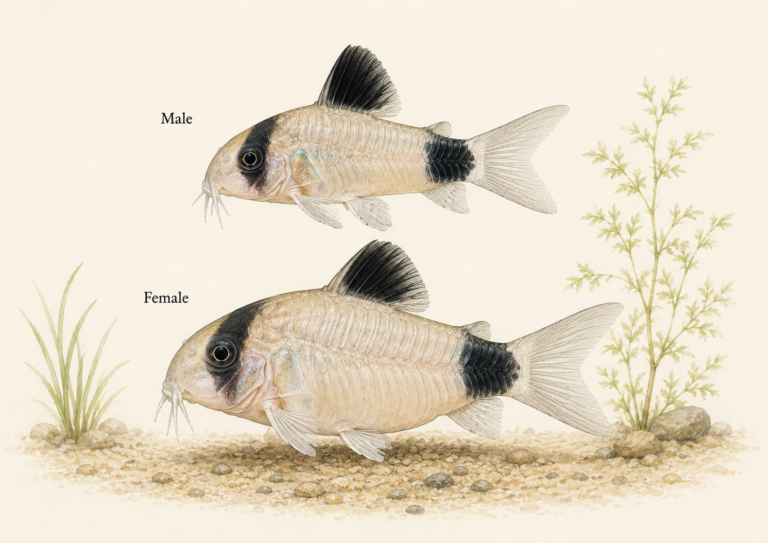
- Pygmy Corydoras – These tiny, bottom-dwelling catfish occupy a completely different zone of the tank and are far too small and peaceful to bother a Feathertail.
- Amano Shrimp – Hardy, algae-eating shrimp that are too large for most bettas to prey on and will not interact with the fish’s fins.
- Malaysian Trumpet Snail – A burrowing snail that spends most of its time in the substrate, providing useful cleanup without any risk of fin contact.
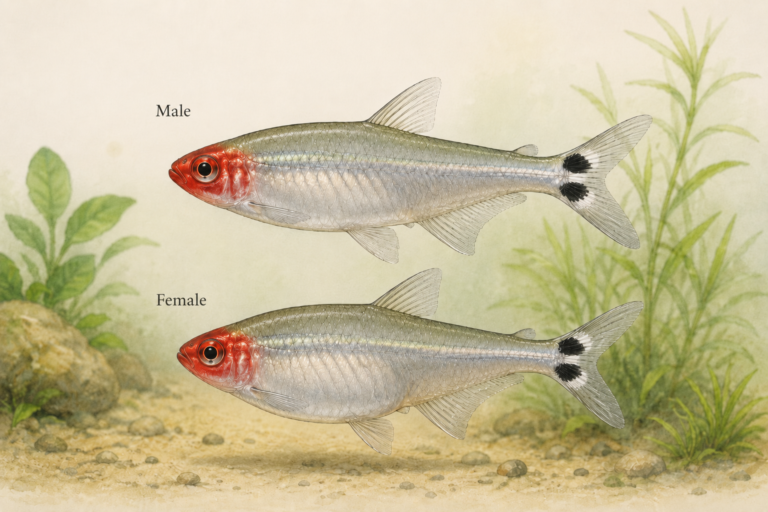
- Ember Tetra – A small, peaceful nano tetra that is not known for fin nipping and is active enough to avoid a slow-moving betta, provided the tank is at least 40 litres.
- Ramshorn Snail – A peaceful and unobtrusive snail that helps with algae and detritus without posing any threat to delicate fins.
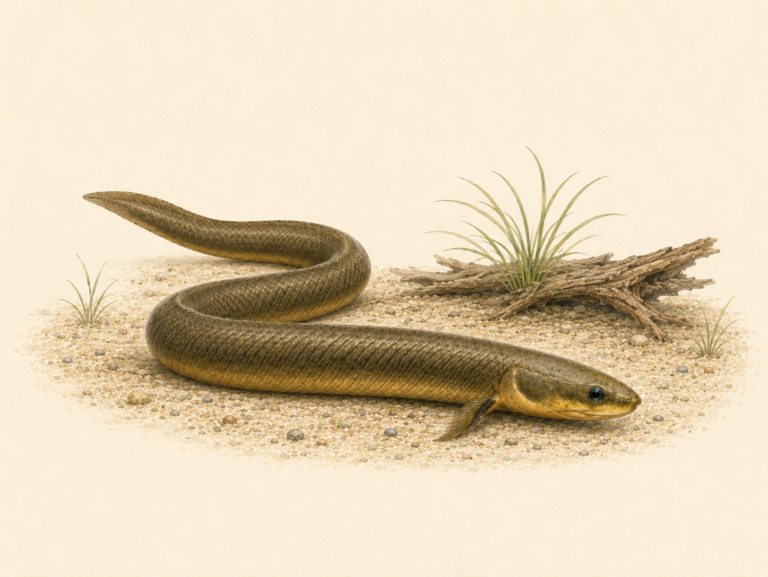
- Kuhli Loach – A shy, nocturnal bottom-dweller that rarely interacts with surface or mid-water fish, making it a low-conflict companion in tanks of 40 litres or more.
- Clown Pleco – A small, wood-eating pleco that is peaceful and reclusive, suitable for tanks of 60 litres or more.
- Otocinclus – A gentle algae eater that stays focused on grazing biofilm and will not interact negatively with a betta, though it requires a mature tank with established algae growth.
Fish to avoid
- Tiger Barb – A notorious fin nipper that will relentlessly target the Feathertail’s trailing, ruffled fins, causing severe damage.
- Serpae Tetra – Known for nipping behaviour, especially towards slow-moving fish with long fins, making it a particularly poor match.
- Chinese Algae Eater – Becomes territorial and aggressive as it matures and may latch onto or harass the betta.
- Male Guppy – The flowing, colourful tails of male guppies can be mistaken by the betta for a rival, triggering aggression from either party.
- Angelfish – Too large, too assertive, and territorial enough to stress or directly harm a slow-moving Feathertail.
- Paradise Fish – Another labyrinth fish with strong territorial instincts that will almost certainly conflict with a betta.
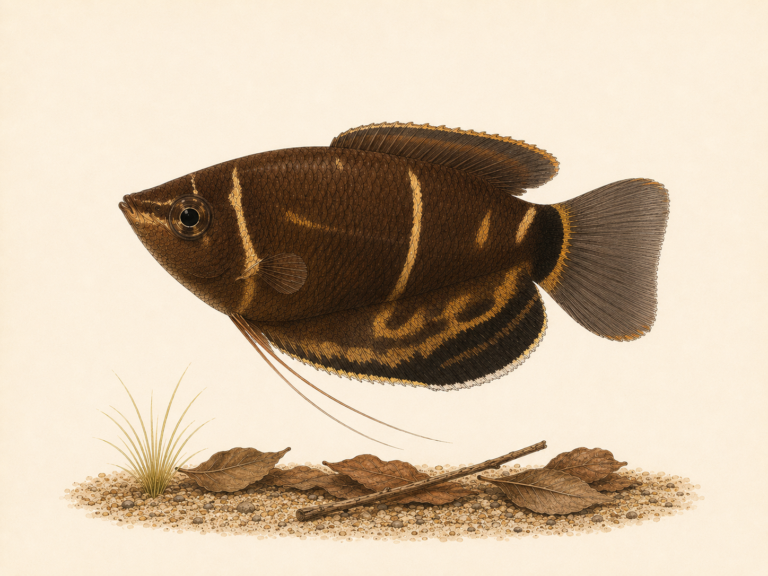
- Dwarf Gourami – A closely related labyrinth fish; territorial overlap often leads to aggression from one or both parties.
- Rainbow Shark – A semi-aggressive, fast-swimming bottom-dweller that can chase and stress a Feathertail in all but the largest tanks.
Breeding
Breeding Feathertail Bettas is possible but comes with significant considerations that go beyond standard betta breeding. The process itself – conditioning, introducing the pair, bubble nest building, spawning, and fry rearing – follows the same general pattern as breeding any domestic Betta splendens. The Betta Fish Care Guide covers the fundamentals of betta breeding in detail. This section will focus on the specific challenges and ethical considerations relevant to the Feathertail variant.
The primary concern with breeding Feathertails is the perpetuation of traits that compromise the fish’s health and quality of life. The excessive ray branching that defines the Feathertail is associated with structural fragility, reduced mobility, and increased susceptibility to fin damage and disease. Many experienced breeders actively avoid producing Feathertails, and when Feathertail fry appear in Halfmoon or Rosetail spawns, they are often culled from breeding programmes rather than selected for further development. Anyone considering breeding Feathertails should think carefully about whether producing more individuals with these welfare concerns is responsible.
If breeding is undertaken, the spawning process itself can be more difficult than with standard bettas. Males may struggle to wrap around the female during the spawning embrace due to the sheer volume and weight of their fins. This can result in failed spawns, physical exhaustion for the male, or damage to the female if the male becomes frustrated. Some breeders find that Feathertail males are less effective nest builders and less attentive fathers, though this varies by individual.
A breeding tank of at least 20 litres, with shallow water (10 to 15 cm deep), gentle heat (27 to 28 °C), no filter current, and floating plants or a halved polystyrene cup for nest building is the standard setup. The female should be conditioned with high-protein foods for one to two weeks before introduction and should be placed where the male can see her but not reach her (a clear divider or a jar within the tank) to assess compatibility before they are allowed direct contact.
Fry from Feathertail pairings will not all be Feathertails. The genetics of ray branching are complex and polygenic, meaning that a spawn may produce a range of fin types, from relatively standard Halfmoons to Rosetails to true Feathertails. This variability can be frustrating for those specifically attempting to produce Feathertails, and it is one reason the variety is less predictable to breed than some other tail types.
Fry care follows standard betta protocols: infusoria or commercially available liquid fry food for the first few days, transitioning to freshly hatched baby brine shrimp (Artemia nauplii) within the first week, then gradually introducing micro-pellets as the fry grow. Males will need to be separated as they mature and begin to show aggression, typically around 8 to 12 weeks of age. Feathertail finnage may not be fully apparent until the fish is several months old.
Common Diseases
Feathertail Bettas are susceptible to all of the diseases that affect domestic Betta splendens, but their unique finnage predisposes them to certain conditions more than others. Maintaining pristine water quality and a stress-free environment is the single most effective preventative measure.
Fin rot is the most common and most concerning disease for Feathertails. The extensive, highly branched fins provide an enormous surface area for bacterial or fungal pathogens to attack, and the fins are frequently under mechanical stress – rays may bend, break, or tear simply from the weight and complexity of the finnage. These micro-injuries create entry points for infection. Early fin rot presents as darkening or discolouration of the fin edges, followed by progressive erosion of fin tissue. In a Feathertail, it can be difficult to distinguish early fin rot from the natural ruffled edges, so keepers must learn what their individual fish’s healthy fins look like and monitor closely for changes. Treatment involves improving water quality (often the single most effective intervention), potentially adding Indian almond leaves or a tannin extract, and in more advanced cases, targeted antibacterial or antifungal medications.
Fin breakage and self-inflicted damage – while not a disease in the traditional sense, this is arguably the most common health issue in Feathertails. The overly branched rays are structurally weak, and the fins are heavy enough that the fish’s own movements can cause rays to snap or the fin membrane to tear. This is exacerbated by rough decor, strong currents, or excessive flaring. Damaged fins may regrow, but regrowth in Feathertails is often imperfect, with scar tissue or altered branching patterns. Keeping the environment as fin-safe as possible is the only real prevention.
Ich (white spot disease) is a common parasitic infection in all freshwater aquarium fish. It presents as small white spots on the body and fins, accompanied by flashing (scratching against surfaces) and lethargy