Jewel Cichlid Care Guide — Tank Setup, Feeding and Breeding
Introduction
The Jewel Cichlid is one of the most visually striking freshwater fish available to aquarists, renowned for the breathtaking crimson and scarlet hues that intensify dramatically during breeding. Native to the rivers and lakes of West and Central Africa, Hemichromis bimaculatus has been a staple of the aquarium hobby for well over a century, first imported to Europe in the late 1800s. Its hardiness, vivid colouration, and fascinating parental behaviour have ensured its enduring popularity, though its reputation for aggression means it is a species that demands respect and thoughtful planning.
Despite being widely sold under the common name “Jewel Cichlid,” there is considerable taxonomic confusion surrounding the Hemichromis genus. Fish sold as H. bimaculatus in the trade are frequently H. guttatus or H. lifalili, and positive identification can be difficult without examining specimens closely. For the purposes of this guide, we focus on the care requirements that broadly apply to the commonly traded jewel cichlids, with particular reference to H. bimaculatus as it is classically described. Regardless of the exact species, the husbandry principles remain largely consistent across the group.
This guide covers everything you need to know to keep Jewel Cichlids successfully, from tank setup and water chemistry through to breeding, disease prevention, and choosing appropriate tank mates. Whether you are considering your first cichlid or looking to add a splash of colour to an existing setup, understanding the specific needs and behavioural traits of this fish is essential to providing it with a thriving home.
Quick Stats
| Scientific name | Hemichromis bimaculatus |
| Common names | Jewel Cichlid, African Jewel Cichlid, Jewelfish, Two-spot Jewel Cichlid, Red Jewel Cichlid |
| Family | Cichlidae |
| Origin | West and Central Africa — widely distributed across river systems in Guinea, Sierra Leone, Liberia, Ghana, Nigeria, Cameroon, and the Congo basin |
| Adult size | 12–15 cm |
| Lifespan | 5–7 years |
| Difficulty | Moderate |
| Breeding difficulty | Easy |
| Temperature | 22–28 °C |
| pH range | 6.0–7.8 |
| General hardness (GH) | 4–18 dGH |
| Carbonate hardness (KH) | 3–12 dKH |
| Minimum tank size | 200 litres |
| Conservation status | Least Concern (IUCN) |
Appearance
The Jewel Cichlid possesses a robust, laterally compressed body typical of many African cichlids, with a moderately deep profile and a slightly pointed snout. The dorsal fin extends along much of the back and terminates in a gentle point in males, while the anal fin is similarly elongated. The overall body shape is built for power rather than speed, reflecting the fish’s territorial and combative nature.
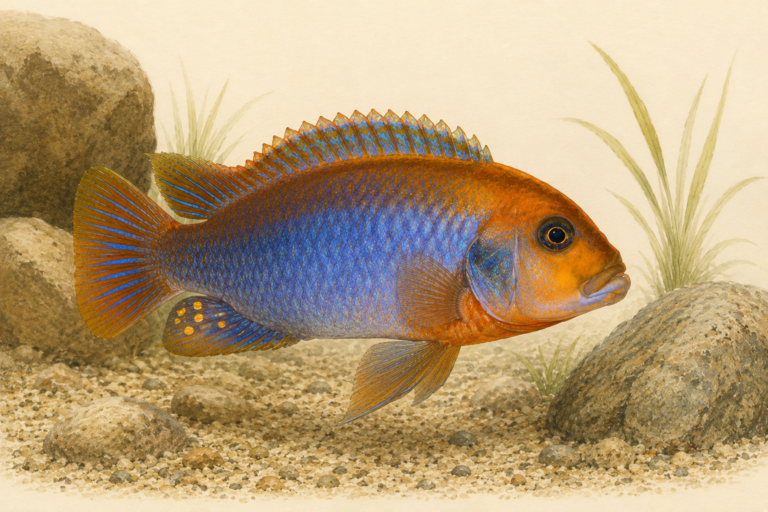
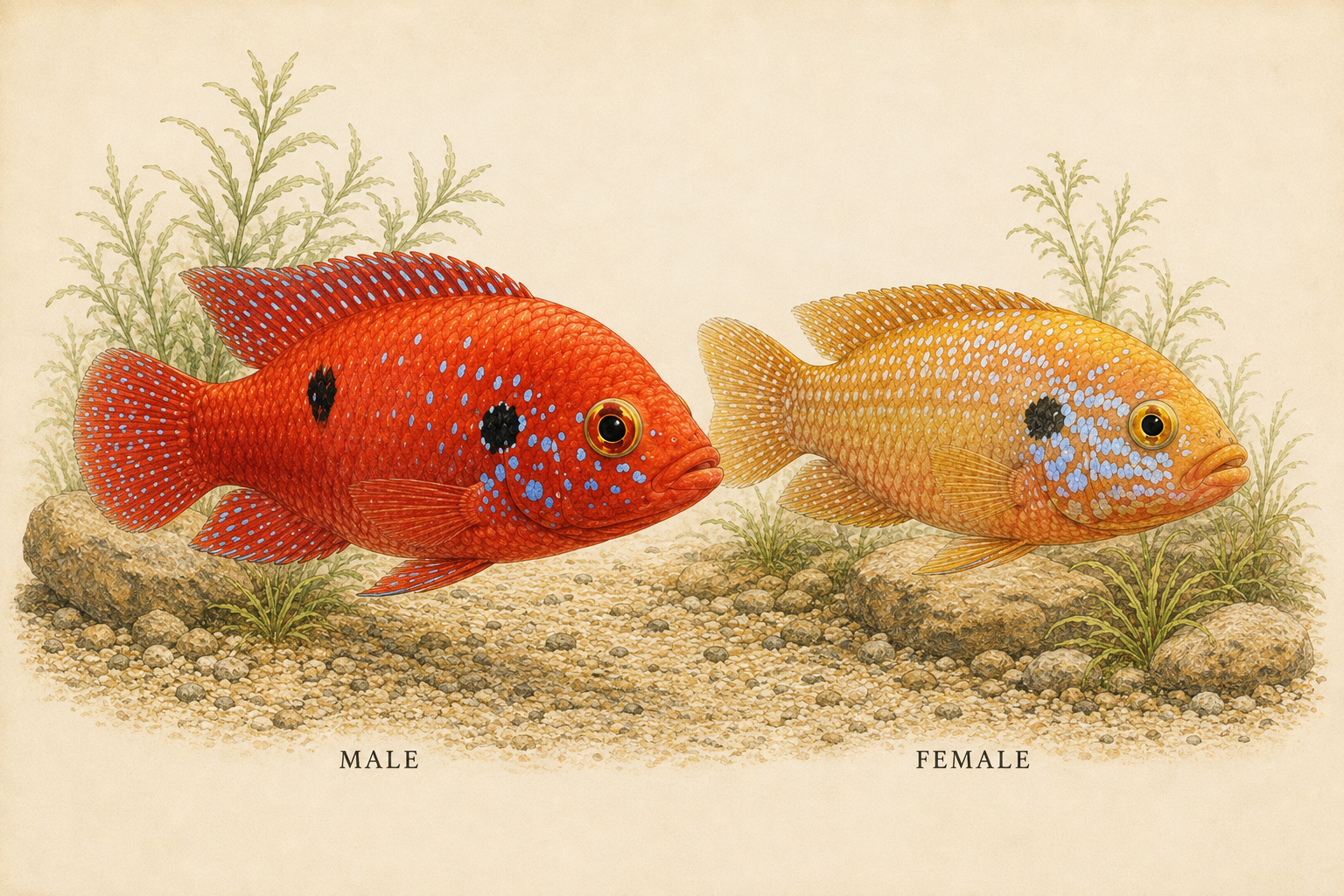
The base colouration of H. bimaculatus ranges from olive-green to greyish-brown in juveniles and non-breeding adults, but it is the breeding dress that gives this fish its common name. When in spawning condition or displaying to rivals, the body transforms into a vivid scarlet or deep crimson, adorned with rows of iridescent turquoise or blue-green spots that run along the flanks, gill covers, and fins. These spots catch the light magnificently, creating a jewel-like sparkle that is truly mesmerising under aquarium lighting.
A key identifying feature of H. bimaculatus is the presence of two to three dark spots on the body: one on the gill cover (operculum), one centrally placed on the flank, and occasionally a third at the base of the caudal fin. The intensity of these spots can vary depending on the fish’s mood and condition. The fins may display red, orange, or yellow tones, often edged with subtle blue iridescence. Males tend to be slightly larger and more intensely coloured than females, though both sexes display impressive colouration during breeding. Females often show a more rounded belly, particularly when gravid, and may have slightly shorter fin extensions.
Natural Habitat
Hemichromis bimaculatus occupies a remarkably broad range across West and Central Africa, inhabiting a diverse array of freshwater environments. It is found in slow-moving rivers, forest streams, coastal lagoons, drainage ditches, floodplain pools, and even brackish estuarine areas. This adaptability is one of the reasons the species has been so successful both in the wild and in captivity. Populations have been recorded from Guinea and Sierra Leone in the west through to Cameroon and the Congo basin further east, and introduced populations have become established in parts of North Africa, Madagascar, and even Florida in the United States.
In its natural environment, the Jewel Cichlid typically inhabits areas with abundant cover in the form of submerged vegetation, fallen branches, leaf litter, and rocky outcrops. The substrate is usually composed of sand or fine gravel mixed with decomposing organic matter. Water conditions vary considerably across the species’ range, from soft, acidic blackwater streams to harder, more neutral or slightly alkaline waters in open river systems. Temperatures in these tropical habitats generally range from 22 to 28 °C, though the fish can tolerate brief excursions beyond this range.
The varied nature of its native habitats explains the Jewel Cichlid’s remarkable tolerance of a wide range of water parameters in captivity. It is a generalist feeder in the wild, consuming invertebrates, small fish, insect larvae, plant matter, and detritus. Understanding this ecological flexibility is helpful when designing a captive environment, as it tells us the species is adaptable but still benefits from conditions that replicate the shelter-rich, moderately planted biotopes it naturally favours.
Tank Size and Setup
A single Jewel Cichlid can be maintained in a tank of around 150 litres, but for a pair or any community arrangement, a minimum of 200 litres is strongly recommended. If you intend to keep a breeding pair alongside other fish, or wish to house a small group to allow natural pair formation, you should be looking at 300 litres or more. The territorial nature of this species means that floor space is more important than height, so a tank with a large footprint—such as a standard 120 cm aquarium—is preferable to a tall, narrow design.
The aquascape should prioritise the creation of distinct territories and visual barriers. Use a combination of rocks, driftwood, and clay pots or coconut shells to establish caves, overhangs, and secluded areas. Flat stones placed horizontally provide ideal spawning sites and are readily adopted by breeding pairs. Arrange hardscape to break up sight lines across the tank, as this reduces the intensity of territorial disputes by allowing subordinate fish to move out of the dominant pair’s direct line of vision.
A sandy or fine gravel substrate works best, as Jewel Cichlids enjoy digging and rearranging their environment, particularly when preparing to spawn. Coarse substrates can damage their mouths during these excavation efforts. Hardy, well-rooted plants such as Anubias, Java Fern, and Vallisneria can be included to soften the appearance of the tank and provide additional cover, but be prepared for some uprooting during breeding periods. Attaching plants to hardscape rather than planting them directly in the substrate is a practical workaround.
Moderate to subdued lighting tends to bring out the best colouration in Jewel Cichlids. Very bright, unshaded lighting can make the fish feel exposed and may increase stress-related aggression. Floating plants can be used to diffuse overhead light and create a more natural atmosphere, while also providing additional cover for any fry that may appear.
Water Parameters
The Jewel Cichlid is one of the more tolerant cichlid species when it comes to water chemistry, thriving across a surprisingly broad range of parameters. That said, stability is always more important than hitting a specific number, and gradual changes are always preferable to sudden shifts. The following table outlines the ideal ranges for long-term health and breeding success.
| Temperature | 22–28 °C |
| pH | 6.0–7.8 |
| General hardness (GH) | 4–18 dGH |
| Carbonate hardness (KH) | 3–12 dKH |
| Ammonia | 0 ppm |
| Nitrite | 0 ppm |
| Nitrate | Below 30 ppm |
A temperature of around 24–26 °C is ideal for general maintenance, while raising it slightly to 27–28 °C can help trigger spawning behaviour. Jewel Cichlids are fairly forgiving of pH variation, but a neutral to slightly acidic range of 6.5 to 7.5 suits them well. Most UK tap water, once treated with a dechlorinator, falls within acceptable parameters for this species, making it a straightforward fish to keep from a water chemistry perspective.
Regular water changes of 25–30% per week are essential to keep nitrate levels in check and maintain overall water quality. Jewel Cichlids are messy eaters and produce a reasonable bioload for their size, so consistent maintenance is non-negotiable for long-term health. Test your water regularly, particularly in the weeks following any changes to stocking levels or feeding regimes.
Filtration and Equipment
Given the Jewel Cichlid’s moderate to high bioload and tendency to dig in the substrate, robust filtration is a must. An external canister filter rated for at least 1.5 times the tank’s volume per hour provides the best combination of mechanical, biological, and chemical filtration. Internal power filters can work for smaller setups, but they lack the media capacity needed for heavily stocked cichlid tanks. Sponge pre-filters fitted to intake strainers are a worthwhile addition, both to protect fry from being drawn into the filter and to provide an extra stage of mechanical filtration.
Water flow should be moderate. Jewel Cichlids are not rapid-water species, and excessive current can stress them and interfere with their natural behaviours, particularly during breeding when they fan eggs and guard fry in relatively calm areas. Position the filter outlet to create gentle circulation throughout the tank without producing a strong directional current.
A reliable heater with a thermostat is essential, as Jewel Cichlids are tropical fish that require stable temperatures. For tanks of 200 litres or more, consider using two smaller heaters rather than one large unit; this provides redundancy in case of equipment failure and distributes heat more evenly. A thermometer placed at the opposite end of the tank from the heater helps you verify that temperature is consistent throughout the aquarium.
Standard aquarium lighting is perfectly adequate. LED units with adjustable brightness are ideal, allowing you to dial down the intensity if the fish appear stressed. A timer-controlled photoperiod of 8–10 hours per day mimics a natural light cycle and supports any live plants in the setup. An air stone or additional powerhead can be used to improve oxygenation, though this is usually unnecessary if the filter provides adequate surface agitation.
Diet and Feeding
Jewel Cichlids are omnivores with a strong carnivorous inclination. In the wild, they feed primarily on small invertebrates, insect larvae, worms, and small fish, supplemented by plant material and algae. In captivity, they are enthusiastic and unfussy eaters that will accept virtually any food offered, which makes feeding straightforward but also means the keeper must exercise discipline to avoid overfeeding.
A high-quality cichlid pellet or flake food should form the dietary staple, providing a balanced nutritional profile that supports growth, colour, and immune function. Choose a product with a good proportion of animal protein and natural colour enhancers such as astaxanthin or spirulina. Supplement this base diet with regular offerings of frozen or live foods such as bloodworm, brine shrimp, daphnia, mosquito larvae, and chopped earthworms. These protein-rich treats are particularly valuable when conditioning a pair for breeding.
Vegetable matter should not be neglected. Blanched spinach, peas (with the skins removed), courgette slices, and spirulina-based foods help provide fibre and micronutrients. A varied diet is the single most effective way to maintain vibrant colouration and overall vitality in Jewel Cichlids.
Feed adult fish once or twice daily, offering only what they can consume within two to three minutes. Remove any uneaten food promptly to prevent it from fouling the water. Fry and juveniles benefit from more frequent, smaller meals—three to four times per day—to support their rapid growth. Fasting one day per week is a common practice among experienced cichlid keepers and can aid digestion.
Behaviour and Temperament
The Jewel Cichlid’s temperament is, in a word, assertive. This is a territorial and frequently aggressive fish, particularly during breeding, and this aspect of its character must be the central consideration in any stocking decision. Outside of breeding periods, Jewel Cichlids can be relatively peaceful—even somewhat shy—but once a pair forms and begins spawning, they become formidable defenders of their territory, capable of dominating an entire tank and inflicting serious harm on any fish that ventures too close to their brood.
In the aquarium, Jewel Cichlids spend much of their time patrolling their territory, investigating the substrate, and rearranging décor to suit their preferences. They are intelligent fish that quickly learn to recognise their keeper and will often approach the front glass at feeding time. This responsiveness and apparent personality is one of their most appealing qualities and is a trait shared by many cichlid species.
Aggression in Jewel Cichlids is primarily intraspecific—directed at members of their own species—and is amplified enormously during breeding. A bonded pair will work in concert to drive away intruders, with both parents sharing defensive duties. In tanks that are too small or poorly aquascaped, this aggression can extend to all tank mates regardless of species, leading to injuries and chronic stress. It is therefore critical to provide ample space, visual barriers, and carefully chosen companions if you wish to maintain a community setup.
It is worth noting that pair bonds in Jewel Cichlids can be volatile. Even established pairs may turn on each other, particularly if a spawning attempt fails or if one partner is not yet ready to breed. Having sufficient space for a rejected partner to retreat is essential, and keepers should always have a plan for separating fish if aggression becomes dangerous.
Tank Mates
Choosing tank mates for Jewel Cichlids requires careful thought. The ideal companions are robust, moderately sized fish that can hold their own without being so aggressive as to provoke constant conflict. Bottom-dwelling species that occupy different areas of the water column can work well, as can fast-swimming, schooling fish that are too quick and numerous to be easily targeted. Very small fish, slow-moving species, and long-finned fish are generally poor choices, as they are likely to be harassed, injured, or eaten.
Good tank mates
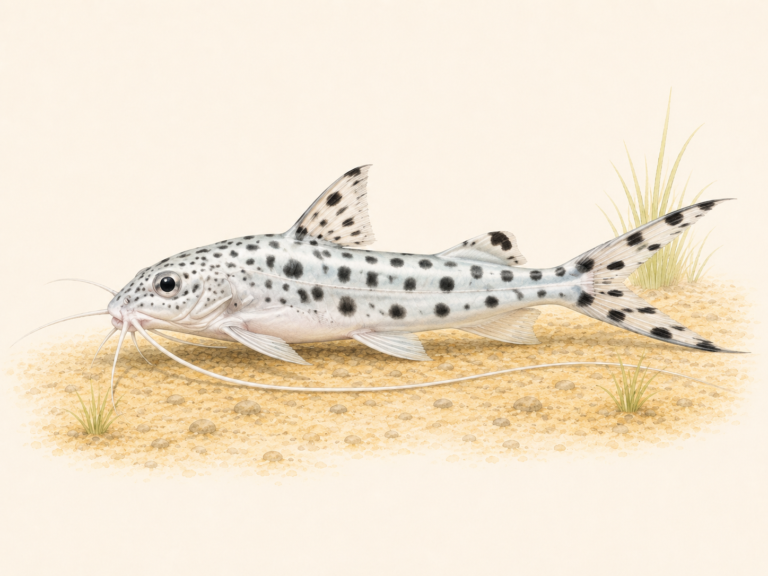
- Synodontis Eupterus (Featherfin Squeaker) — a robust, armoured catfish that occupies the bottom of the tank and is large enough to avoid predation.
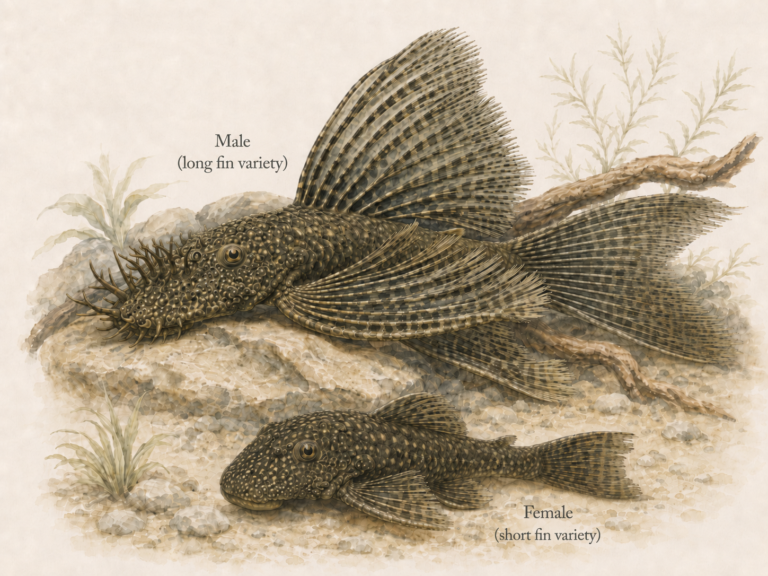
- Bristlenose Pleco (Ancistrus sp.) — a tough, algae-eating catfish that generally stays out of the cichlid’s way and has protective armour plating.
- Congo Tetra (Phenacogrammus interruptus) — a mid-water schooling fish from the same geographic region, fast enough to evade aggression when kept in groups of eight or more.
- Firemouth Cichlid (Thorichthys meeki) — a similarly sized cichlid capable of defending itself through threat displays without typically escalating to serious combat, though tank size must be generous.
- African Butterfly Cichlid (Anomalochromis thomasi) — a peaceful West African cichlid that can coexist in larger tanks with adequate hiding spaces.
- Clown Loach (Chromobotia macracanthus) — an active, sociable bottom-dweller that is large and robust enough to cohabit safely, provided the tank is suitably spacious.
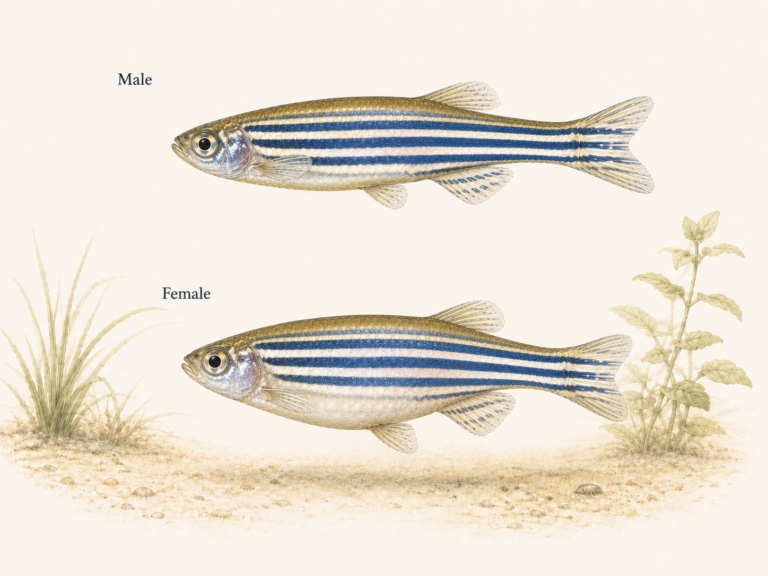
- Giant Danio (Devario aequipinnatus) — a fast, active schooling fish that stays in the upper water column and is too swift for most cichlids to catch.
- Blue Acara (Andinoacara pulcher) — a moderately tempered cichlid of similar size that can coexist well in a large tank with defined territories.
Fish to avoid
- Neon Tetra (Paracheirodon innesi) — far too small and slow; these will almost certainly be eaten or relentlessly chased.
- Guppy (Poecilia reticulata) — small, slow-moving, and long-finned, making them an easy and irresistible target.
- Angelfish (Pterophyllum scalare) — their tall, slow-moving profile and trailing fins make them extremely vulnerable to Jewel Cichlid aggression.
- Oscar (Astronotus ocellatus) — while robust, Oscars grow far too large for the tank sizes suited to Jewel Cichlids, and mixing them invites serious territorial conflict.
- Siamese Fighting Fish (Betta splendens) — slow, conspicuously finned, and unable to cope with the aggression a Jewel Cichlid will direct at it.
- Dwarf Gourami (Trichogaster lalius) — too small, timid, and slow to survive alongside a territorial Jewel Cichlid pair.
- Discus (Symphysodon sp.) — sensitive, slow-moving fish that require peaceful environments entirely incompatible with Jewel Cichlid behaviour.
- Cherry Shrimp (Neocaridina davidi) — invertebrates of this size are simply food for Jewel Cichlids and will not survive.
Breeding
Breeding Jewel Cichlids in captivity is one of the most rewarding experiences available to the freshwater aquarist, and it is refreshingly straightforward compared to many other cichlid species. These fish are prolific, devoted parents, and a well-conditioned pair in suitable conditions will often spawn with little encouragement from the keeper.
The first step is obtaining a compatible pair. The most reliable method is to purchase a group of six to eight juveniles and allow them to grow up together, selecting a naturally formed pair once bonding behaviour becomes apparent. Attempting to force a pair by placing two adult fish together often results in serious aggression, as compatibility is not guaranteed. Signs of pair formation include mutual tolerance, coordinated swimming, colour intensification, and collaborative territory defence.
Once a pair has bonded, condition them with frequent offerings of high-protein foods such as bloodworm, brine shrimp, and chopped earthworms. A slight increase in temperature to 27–28 °C and a large water change with slightly cooler water can help trigger spawning behaviour. The pair will select a spawning site—typically a flat rock, piece of slate, or the inside of a cave—and both partners will meticulously clean the surface in preparation.
The female deposits her eggs in neat rows on the chosen surface, and the male follows immediately to fertilise them. A single spawning can produce anywhere from 200 to over 500 eggs, depending on the size and condition of the female. The eggs are small, oval, and amber to reddish in colour. Both parents guard the clutch fiercely, fanning the eggs to maintain water flow and removing any that develop fungus.
At 26–27 °C, the eggs hatch in approximately two to three days. The parents then move the wriggling larvae to pre-dug pits in the substrate, where they continue to guard them intensely. The fry become free-swimming after a further three to five days and can be seen in a tight, shimmering cloud around both parents. It is at this stage that parental aggression reaches its peak, and any tank mates should have ample space to stay well clear of the family group.
Free-swimming fry can be fed newly hatched brine shrimp (Artemia nauplii), microworms, or finely crushed flake food. Growth is rapid with frequent feeding and clean water. The parents continue to guard the fry for several weeks, herding them together and defending them from perceived threats. Eventually, as the fry grow, the parental instinct wanes, and the adults may begin preparing for another spawning cycle. At this point, the juveniles should be removed to a separate grow-out tank to prevent them from being viewed as intruders by their own parents.
Common Diseases
Jewel Cichlids are generally hardy fish, and when kept in clean water with a balanced diet, they are not particularly susceptible to disease. However, like all aquarium fish, they can fall prey to common ailments, particularly when stressed by poor water quality, overcrowding, or inappropriate tank mates.
Ichthyophthirius multifiliis, commonly known as white spot or ich, is perhaps the most frequently encountered disease. It presents as small, white, salt-grain-like cysts on the skin, fins, and gills. Treatment involves raising the temperature gradually to 30 °C and administering a proprietary white spot remedy. Jewel Cichlids generally respond well to treatment if it is initiated promptly.
Hole-in-the-head disease (HITH) is another condition occasionally seen in cichlids, including Jewel Cichlids. It manifests as small pits or erosions on the head and lateral line, and is thought to be associated with poor water quality, nutritional deficiencies (particularly a lack of vitamins and minerals), and possibly the flagellate parasite Hexamita. Improving water quality through more frequent changes, diversifying the diet, and treating with metronidazole-based medications if a parasitic cause is suspected are the standard approaches.
Bacterial infections, including fin rot and ulcerative conditions, can occur when fish are injured during territorial disputes or when water quality deteriorates. Maintaining pristine water conditions is the best preventative measure. Affected fish should be treated with a broad-spectrum antibacterial medication, and any underlying causes of stress should be addressed.
Fungal infections typically appear as cotton-wool-like growths on wounds or damaged tissue. These are secondary infections that exploit existing injuries, and treatment with an antifungal medication combined with improved water quality usually resolves them. Internal parasites can occasionally affect Jewel Cichlids, particularly wild-caught specimens, and may present as weight loss, lethargy, or stringy white faeces. Antiparasitic treatments are available from specialist aquatic retailers.
Prevention is always preferable to cure. Quarantine all new fish for a minimum of two weeks before introducing them to an established tank. Maintain a consistent water change schedule, avoid overfeeding, and ensure the diet is varied and nutritionally complete. A well-maintained tank with stable parameters is the single most effective defence against disease.
FAQs
Can I keep a single Jewel Cichlid?
Yes, a single Jewel Cichlid can be kept successfully and will often display more relaxed, less aggressive behaviour than a pair. A lone specimen in a well-aquascaped community tank of 150 litres or more can be a perfectly viable option, particularly if you want the visual impact of the species without the heightened aggression that accompanies breeding. Just be aware that even a solitary Jewel Cichlid will establish and defend a territory, so provide adequate space and hiding places for tank mates.
How can I tell the difference between male and female Jewel Cichlids?
Sexing Jewel Cichlids outside of breeding condition can be challenging. Males tend to be slightly larger, with more elongated dorsal and anal fin tips, and they often display marginally more intense colouration. Females are typically a bit smaller and rounder in the belly, particularly when carrying eggs. During breeding, both sexes intensify their red colouration dramatically, but females often develop a noticeably more rounded abdominal profile. Venting—examining the genital papillae—is the most reliable method, but it requires experience and careful handling.
Why has my Jewel Cichlid lost its colour?
Colour fading in Jewel Cichlids is usually a sign of stress, illness, or poor diet. Check your water parameters for ammonia, nitrite, or elevated nitrate levels, and ensure the temperature is within the recommended range. A monotonous diet lacking in carotenoid-rich foods can also lead to dull colouration. Subdominant fish that are being bullied may also lose colour as a stress response. Address the underlying cause, and colour should return once the fish feels secure and healthy.
Will Jewel Cichlids destroy my plants?
Jewel Cichlids are not herbivorous in the way that some Central American cichlids are, but they are enthusiastic diggers, particularly during breeding. Plants rooted in the substrate are likely to be uprooted as the pair excavates pits for their fry. Hardy species attached to hardscape—such as Anubias bound to driftwood or Java Fern tied to rocks—are far more likely to survive. Floating plants are another excellent option, as they remain entirely out of reach of the fish’s landscaping efforts.
How many Jewel Cichlids can I keep together?
Keeping multiple Jewel Cichlids together is feasible only in large tanks with abundant hiding places and visual barriers. A bonded pair is the most natural social unit and can be maintained in a 200-litre tank, though larger is always better. Attempting to keep multiple pairs requires a tank of 400 litres or more, with carefully structured territories, and even then, there are no guarantees of peace. Unpaired individuals in the same tank as a breeding pair will often be subjected to relentless aggression and may need to be removed.
Related Guides
- Firemouth Cichlid Care Guide — another colourful, moderately aggressive cichlid species with similar tank requirements and an excellent alternative for those seeking manageable cichlid temperaments.
- Convict Cichlid Care Guide — a prolific, hardy cichlid with comparable breeding behaviour and territorial instincts, ideal for those interested in observing cichlid parental care.
- Kribensis (Pelvicachromis pulcher) Care Guide — a smaller, less aggressive West African cichlid that offers a gentler introduction to African cichlid keeping.
- African Butterfly Cichlid Care Guide — a peaceful West African species often kept alongside or as an alternative to Jewel Cichlids in biotope setups.
- Blue Acara Care Guide — a similarly sized New World cichlid with a comparable blend of beauty and moderate aggression, offering an interesting contrast in care approaches.