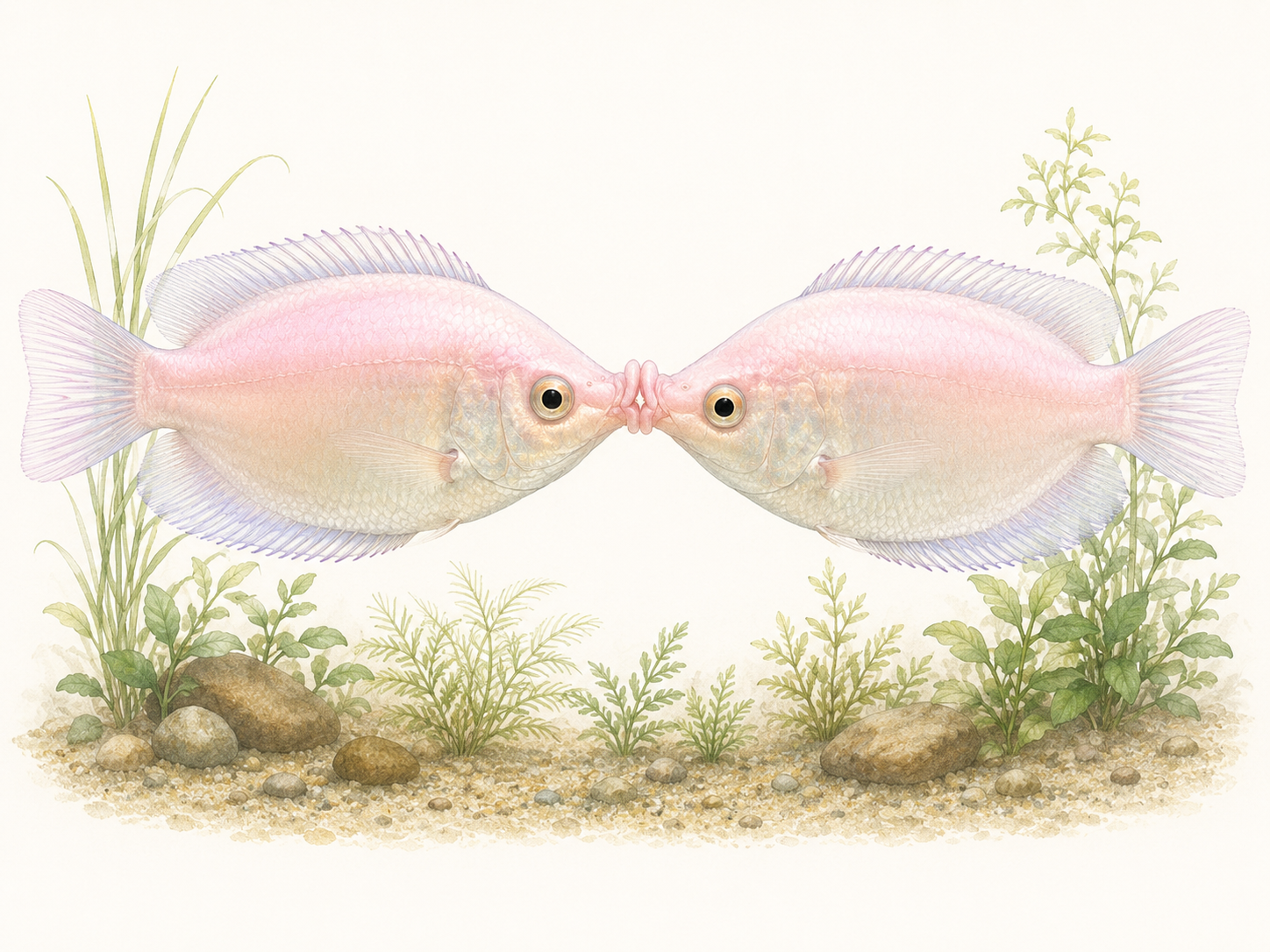
Kissing Gourami Care Guide — Tank Setup, Feeding and Breeding
Introduction
The Kissing Gourami (Helostoma temminckii) is one of the most recognisable and endearing freshwater fish in the aquarium hobby. Named for its distinctive habit of pressing its thick, fleshy lips against other fish, tank glass, and various surfaces, this species has captivated fishkeepers for well over a century. While many newcomers to the hobby assume the “kissing” behaviour is a sign of affection, it is in fact a display of aggression or a method of grazing algae from surfaces — a fascinating quirk that makes this species all the more intriguing to observe.
Originally hailing from the warm, slow-moving waters of Southeast Asia, the Kissing Gourami is the sole member of the family Helostomatidae, making it taxonomically unique among the labyrinth fishes. It is an important food fish throughout much of its native range, where it is farmed extensively and can reach impressive sizes. In the aquarium, it remains a popular choice for keepers with suitably large tanks, though its eventual adult size and sometimes assertive temperament mean it is not ideally suited to every community setup.
This comprehensive care guide covers everything you need to know about keeping Kissing Gouramis successfully in the home aquarium, from tank size requirements and water parameters to diet, breeding, and compatible tank mates. Whether you are considering your first Kissing Gourami or looking to refine your existing care routine, the information below will help you provide the best possible environment for this charismatic species.
Quick Stats
| Scientific name | Helostoma temminckii |
| Common names | Kissing Gourami, Kisser Fish, Pink Kisser, Green Kisser |
| Family | Helostomatidae |
| Origin | Thailand, Indonesia (Java, Sumatra, Borneo), Malaysia, Cambodia, Vietnam |
| Adult size | Up to 30 cm (12 inches) |
| Lifespan | 7–15 years |
| Difficulty | Moderate |
| Breeding difficulty | Difficult |
| Temperature | 22–28 °C |
| pH range | 6.0–8.0 |
| General hardness (GH) | 5–20 dGH |
| Carbonate hardness (KH) | 3–12 dKH |
| Minimum tank size | 350 litres |
| Conservation status | Least Concern (IUCN) |
Appearance
The most immediately striking feature of the Kissing Gourami is its mouth. Unlike most fish, which have relatively small, fixed jaws, Helostoma temminckii possesses thick, protrusible lips lined with fine, horny teeth on the inner surfaces. These specialised lips allow it to scrape algae and biofilm from rocks, wood, and other surfaces with remarkable efficiency, and they are also deployed during the characteristic “kissing” interactions with conspecifics.
The body shape is laterally compressed and deep, broadly oval when viewed from the side, with a gently sloping forehead and a relatively small eye. The dorsal and anal fins are long-based and roughly symmetrical, extending along much of the body and tapering to soft, rounded points towards the tail. The caudal fin is slightly concave or truncate. Unlike many other gourami species, the pelvic fins are not elongated into filamentous feelers; instead, they are relatively short and positioned just behind the pectoral fins.
In the wild, the typical colour form is a silvery-green to olive-grey with faint darker vertical bars that may appear and fade depending on the fish’s mood and condition. The fins are often tinged with a subtle greenish or yellowish hue. However, the form most commonly encountered in the aquarium trade is the pink or flesh-coloured variant, which is a leucistic morph that has been selectively bred for many generations. This pink form lacks the darker pigmentation of its wild counterpart, displaying a uniform pale pink to peach colouration across the body and fins, sometimes with a faint iridescent sheen. Both forms can reach up to 30 centimetres in length in captivity, though specimens in the 15 to 25 centimetre range are more typical in home aquaria.
Varieties and Morphs
While the Kissing Gourami does not exhibit the extensive range of selectively bred varieties seen in some other ornamental species, there are a few distinct forms recognised in the aquarium trade.
The wild-type or green form is the natural colouration of Helostoma temminckii as it appears throughout its native range. These fish display a silvery-green to olive-grey body with subtle darker vertical barring and greenish fins. Green Kissers are less commonly available in shops than the pink form, but they are periodically imported and are generally hardier and closer to the species’ natural behaviour. They tend to grow slightly larger than their pink counterparts in aquarium conditions.
The pink form, sometimes sold simply as the Pink Kisser, is by far the most popular variant in the hobby. This leucistic morph has been bred commercially in Southeast Asian fish farms for decades. Its uniform pale pink to peach colouration makes it immediately recognisable. There is some variation within this morph, with certain individuals displaying a more opaque, milky pink tone and others showing a slightly translucent quality to their skin, particularly when young.
A dwarf or balloon form has occasionally appeared in the trade, characterised by a shorter, more rounded body shape resulting from selective breeding for spinal deformity. This variant is controversial among fishkeepers and is generally not recommended, as the altered body proportions can compromise swimming ability and overall health. It is encountered far less frequently than the standard pink or green forms.
Natural Habitat
Helostoma temminckii is native to a broad swathe of mainland and insular Southeast Asia. Its range encompasses Thailand, peninsular Malaysia, the Indonesian islands of Java, Sumatra, and Borneo, as well as parts of Cambodia and Vietnam. It has also been introduced to various other tropical regions outside its native range, including parts of the Philippines, Papua New Guinea, Sri Lanka, and Colombia, where it has established feral populations in some cases.
In the wild, Kissing Gouramis inhabit slow-moving or still bodies of water, including rivers, floodplain lakes, swamps, marshes, and irrigation canals. They show a strong preference for shallow, heavily vegetated areas with abundant aquatic plants, submerged tree roots, and overhanging riparian vegetation. The substrates in these habitats are typically soft and muddy, often covered with a layer of decomposing organic matter. Water conditions across much of their range tend to be warm, slightly acidic to neutral, and soft to moderately hard, although the species demonstrates a notable tolerance for a wide range of water chemistries, which partly accounts for its success as both a food fish and an ornamental species.
As a labyrinth fish, the Kissing Gourami possesses a specialised accessory breathing organ that allows it to extract oxygen directly from atmospheric air. This adaptation enables it to thrive in oxygen-poor environments such as stagnant pools and swamps where many other fish species would struggle. In the wild, it is frequently observed rising to the surface to gulp air, a behaviour that is also readily observed in the aquarium.
The species plays an important ecological role in its native habitats as both a herbivore and an omnivore, grazing substantial quantities of algae, periphyton, and aquatic vegetation while also consuming zooplankton, insect larvae, and other small invertebrates. In many parts of Southeast Asia, it is an economically significant food fish, farmed in ponds and rice paddies, and sold fresh in local markets.
Tank Size and Setup
One of the most common mistakes made with Kissing Gouramis is underestimating the tank size they require. While juvenile specimens of five to eight centimetres are frequently sold in shops, these fish grow steadily and can reach 20 to 30 centimetres in length. A minimum tank volume of 350 litres is recommended for a single adult or a pair, and larger aquaria of 500 litres or more are preferable if you intend to keep a small group or house them alongside other sizeable tank mates.
The aquarium should be at least 120 centimetres long to provide adequate swimming space. Kissing Gouramis are active fish that patrol their territory and need room to move freely. A tank that is too cramped will lead to increased aggression, stress, and poor long-term health. Depth and height are also important, as the species occupies all levels of the water column and regularly surfaces to breathe atmospheric air.
When designing the tank layout, aim to replicate the species’ natural habitat by incorporating a mix of open swimming areas and planted zones. Hardy, robust plants such as Java Fern, Anubias species, and Vallisneria are the best choices, as Kissing Gouramis are notorious for nibbling on softer-leaved vegetation. Delicate plants are likely to be damaged or consumed. Pieces of bogwood and smooth rocks can be used to create visual barriers and hiding spots, which help to diffuse aggression in multi-fish setups. A soft, sandy substrate or fine gravel works well and mirrors the muddy bottoms of their natural environment.
Floating plants can be a valuable addition, providing shade and helping the fish feel secure. However, it is important to leave gaps at the water surface to allow easy access for air-breathing. A tight-fitting lid or cover glass is essential, as labyrinth fish can occasionally leap, particularly if startled or during breeding activity.
Water Parameters
Kissing Gouramis are broadly tolerant of a wide range of water conditions, which is one of the reasons they have proven so adaptable in both aquaculture and the ornamental fish trade. Nonetheless, maintaining stable parameters within their preferred range will promote the best health, colouration, and longevity.
| Temperature | 22–28 °C |
| pH | 6.0–8.0 |
| General hardness (GH) | 5–20 dGH |
| Carbonate hardness (KH) | 3–12 dKH |
| Ammonia | 0 ppm |
| Nitrite | 0 ppm |
| Nitrate | Below 40 ppm |
A temperature of around 24 to 26 °C is ideal for most community setups. The species is quite forgiving regarding pH, accepting anything from mildly acidic to slightly alkaline conditions, though a neutral to slightly acidic pH of 6.5 to 7.5 is optimal. Consistency matters more than hitting a specific number; avoid sudden swings in temperature or chemistry, which can stress the fish and leave them vulnerable to disease. Regular partial water changes of 20 to 30 per cent weekly will help keep nitrate levels in check and maintain overall water quality.
Filtration and Equipment
Given the substantial adult size of Kissing Gouramis and their correspondingly high bioload, robust filtration is essential. A canister filter or large hang-on-back filter rated for at least the full volume of the tank — and ideally somewhat more — is recommended. Combining mechanical, biological, and chemical filtration media will ensure efficient processing of waste products and maintenance of clear, healthy water.
Water flow should be moderate. In the wild, Kissing Gouramis inhabit relatively calm waters, and they do not appreciate strong currents. If your filter produces a powerful outflow, use a spray bar or flow diffuser to spread and soften the current. This is particularly important if you intend to breed the species, as eggs and fry can be swept away by excessive water movement.
A reliable aquarium heater with a built-in thermostat is necessary to maintain stable tropical temperatures. For larger tanks, using two heaters positioned at opposite ends of the aquarium can help ensure even heat distribution. Standard aquarium lighting is suitable; Kissing Gouramis are not particularly light-sensitive, but a regular photoperiod of eight to ten hours, ideally controlled by a timer, will benefit both the fish and any live plants in the aquarium.
An air pump and airstone can be used to improve surface agitation and gas exchange, although this is not strictly necessary given the species’ ability to breathe atmospheric air. However, supplementary aeration can be beneficial for other tank inhabitants and for promoting overall water quality in densely stocked setups. Always ensure that a portion of the water surface remains accessible and unobstructed by equipment or floating plants so that the fish can gulp air freely.
Diet and Feeding
Kissing Gouramis are true omnivores with a strong herbivorous tendency. In the wild, a significant portion of their diet consists of algae, periphyton, and aquatic vegetation, supplemented by zooplankton, insect larvae, and small invertebrates. In the aquarium, providing a varied diet that reflects this natural feeding ecology is essential for maintaining good health, vibrant colouration, and strong immune function.
A high-quality spirulina-based or vegetable-enriched flake or pellet food should form the staple diet. These commercially available foods are designed to meet the nutritional needs of herbivorous and omnivorous tropical fish and typically contain a blend of plant matter, protein, vitamins, and minerals. Choose a pellet or flake size appropriate to the size of your fish; larger adults will manage medium to large pellets readily, while younger specimens will do better with smaller flakes or micro-pellets.
Supplement the staple diet with blanched vegetables such as courgette (zucchini), cucumber, shelled peas, spinach, and lettuce. These can be weighted down with a vegetable clip or a small piece of stainless steel and left in the tank for the fish to graze on throughout the day. Remove any uneaten vegetable matter after 12 to 24 hours to prevent it from decomposing and affecting water quality.
Protein-rich foods should also be offered several times a week to ensure a well-rounded nutritional profile. Frozen or freeze-dried bloodworms, brine shrimp, daphnia, and tubifex worms are all eagerly accepted. Live foods can also be offered occasionally as enrichment. Avoid overfeeding with high-protein items, as an excessively protein-heavy diet can contribute to fatty liver disease and other health problems in species with strong herbivorous tendencies.
Kissing Gouramis are enthusiastic algae grazers and will spend considerable time using their specialised lips to scrape algae from glass, rocks, and décor. This natural feeding behaviour should be encouraged rather than eliminated; maintaining a moderate amount of algae growth in the tank provides both nutrition and behavioural enrichment. Feed two to three times daily, offering only as much food as the fish can consume within a few minutes at each feeding.
Behaviour and Temperament
The Kissing Gourami’s most famous behavioural trait is, of course, its “kissing.” When two individuals press their mouths together, it may appear affectionate, but this behaviour is actually a form of ritualised aggression — a test of strength between rivals, usually two males establishing dominance. The fish lock lips and push against each other, sometimes for extended periods, until one individual backs down. While this behaviour rarely results in serious physical harm, it can be stressful if one fish is consistently subordinate, so providing adequate space and visual barriers in the tank is important.
Beyond the kissing behaviour, Helostoma temminckii is a moderately active and generally peaceful species, though it can be somewhat assertive towards similarly sized or smaller tank mates. It is not overtly predatory, but very small fish may occasionally be consumed or harassed, particularly as the Kissing Gourami grows larger. Individuals vary considerably in personality; some are remarkably placid and coexist well in community settings, while others can be territorial and pushy.
Kissing Gouramis are not strongly shoaling fish, but they are social and generally do well when kept in pairs or small groups. A solitary individual may become lethargic or overly fixated on harassing other tank mates due to a lack of conspecific interaction. If keeping multiple specimens, ensure the tank is large enough to accommodate them comfortably, with plenty of décor to break up sight lines and reduce the intensity of any territorial disputes.
These fish occupy all levels of the aquarium but are most commonly observed in the middle and upper portions of the water column. They are active grazers and can frequently be seen methodically working their way along surfaces, using their specialised lips to scrape off algae and biofilm. They also regularly visit the surface to gulp atmospheric air, a normal behaviour linked to their labyrinth organ. Kissing Gouramis are generally diurnal, displaying most of their activity during daylight hours and becoming quieter at night.
Tank Mates
Choosing appropriate tank mates for Kissing Gouramis requires careful consideration of the species’ eventual size, its semi-aggressive tendencies, and its preference for warm, relatively calm water. The best companions are other robust, similarly sized fish that can hold their own without being aggressive enough to bully or injure the gourami. Very small, timid, or slow-moving species should generally be avoided, as should highly territorial or fin-nipping species.
Good tank mates
- Clown Loach — A large, peaceful bottom-dweller that occupies a different zone of the tank and is robust enough to coexist comfortably with adult Kissing Gouramis.
- Silver Dollar — A similarly sized, peaceful schooling fish that shares the gourami’s preference for a partly vegetarian diet and warm water conditions.
- Bala Shark — A fast-swimming, non-aggressive species that thrives in the same large tank setups required by Kissing Gouramis.
- Bristlenose Pleco — A hardy algae-eating catfish that stays at the bottom and is armoured enough to avoid any unwanted attention from the gourami.
- Rainbowfish — Active mid-water swimmers that are fast enough to avoid harassment and add colour and movement to the aquarium.
- Giant Danio — A robust, fast-moving cyprinid that is too quick to be bullied and appreciates similar water conditions.
- Tinfoil Barb — A large, peaceful barb species that matches the Kissing Gourami in size and activity level, making them well-suited companions in spacious tanks.
- Synodontis Catfish — Peaceful to semi-aggressive bottom-dwelling catfish that are hardy and generally ignored by mid-water species like the Kissing Gourami.
Fish to avoid
- Neon Tetra — Far too small and likely to be stressed or consumed by an adult Kissing Gourami.
- Betta Fish — Slow-moving with flowing fins that may attract unwanted lip-locking or harassment from the gourami.
- Tiger Barb — Notorious fin-nippers that may target the gourami’s fins, provoking retaliatory aggression and ongoing stress.
- Dwarf Gourami — Much smaller and more timid, likely to be bullied or outcompeted for food by the considerably larger Kissing Gourami.
- Oscar — A large, highly territorial cichlid that is likely to view the Kissing Gourami as a rival or target, leading to aggressive confrontations.
- Flowerhorn Cichlid — An extremely aggressive and territorial hybrid cichlid that would pose a serious threat to the Kissing Gourami.
- Guppy — Small, slow-swimming, and vulnerable; adult Kissing Gouramis may harass or eat them.
- Red-Tail Shark — Highly territorial towards bottom-dwelling and mid-water species, likely to cause persistent stress in a shared environment.
Breeding
Breeding Kissing Gouramis in the home aquarium is challenging but not impossible. Unlike many other gourami species, Helostoma temminckii does not build a bubble nest. Instead, it is a free-spawning species that releases eggs among floating vegetation at the water surface. This reproductive strategy is unusual among labyrinth fishes and contributes to the difficulty of breeding them in captivity, as the eggs require specific conditions to develop successfully.
Sexing Kissing Gouramis is notoriously difficult outside of the spawning season. Males and females are virtually identical in external appearance, with no reliable differences in fin shape, colouration, or size. When in breeding condition, mature females may appear slightly rounder in the belly when viewed from above, but this is a subtle distinction at best. Obtaining a group of several young fish and allowing them to pair off naturally is generally the most practical approach.
To encourage spawning, condition the intended breeding pair or group with a varied, high-quality diet rich in protein over a period of several weeks. Gradually raise the water temperature to the upper end of the preferred range, around 27 to 28 °C, and lower the water level in the breeding tank to approximately 15 to 20 centimetres. Provide abundant floating plants such as Water Lettuce, Duckweed, or Riccia to serve as spawning substrate and to give the eggs a surface to adhere to. Soft, slightly acidic water with a pH of around 6.5 to 7.0 may also help to trigger spawning.
Spawning typically occurs in the early morning. The male courts the female with a series of nudges and circling movements, and the pair eventually embrace in a manner similar to other anabantoids, with the male wrapping his body around the female to stimulate the release of eggs. The female can produce a very large number of eggs — several hundred to over a thousand in a single spawning event. The buoyant eggs float to the surface and become loosely trapped among the floating vegetation.
Unlike bubble-nesting gouramis, Kissing Gouramis show no parental care. The adults may eat the eggs if given the opportunity, so it is advisable to remove the parents from the breeding tank immediately after spawning. The eggs hatch within approximately 24 to 48 hours, depending on temperature, and the tiny fry become free-swimming after a further two to three days. Initial foods should be infusoria or commercially available liquid fry food, graduating to newly hatched brine shrimp (Artemia nauplii) as the fry grow. Growth can be rapid with frequent feeding and excellent water quality, but raising large numbers of fry to adulthood requires considerable space and dedication.
Common Diseases
Kissing Gouramis are generally hardy fish, but like all aquarium species, they are susceptible to a range of diseases, particularly when stressed by poor water quality, overcrowding, or an inadequate diet. Prevention through good husbandry is always the most effective strategy.
White spot disease, also known as ich (Ichthyophthirius multifiliis), is one of the most commonly encountered ailments. It presents as small white cysts on the body, fins, and gills and is typically triggered by temperature fluctuations or the introduction of infected fish. Treatment involves gradually raising the water temperature to 28–30 °C and administering a proprietary white spot remedy according to the manufacturer’s instructions. Note that some medications can affect the labyrinth organ, so always check that any treatment is safe for use with anabantoid species.
Bacterial infections, including fin rot and columnaris (Flavobacterium columnare), can occur when water quality deteriorates or when the fish sustains injuries through aggression or rough handling. Symptoms include ragged or eroding fins, white or greyish patches on the body, and lethargy. Improving water quality through increased water changes is the first line of defence, and antibiotic or antibacterial treatments may be necessary in more advanced cases.
Kissing Gouramis can also be affected by internal parasites, particularly if fed a diet of inadequately sourced live foods. Symptoms may include weight loss despite a normal appetite, white or stringy faeces, and a hollow-bellied appearance. Anti-parasitic medications formulated for internal worms or flagellates are available and generally effective when used promptly.
Hole-in-the-head disease (Hexamitiasis) is occasionally reported in larger cichlids and gouramis. It manifests as pitting or erosion of the skin, particularly around the head and lateral line. The condition is associated with poor diet, vitamin deficiency (particularly vitamins A and C), and suboptimal water quality. Treatment involves improving diet and water conditions and, in more severe cases, administering metronidazole-based medication.
Swim bladder disorders can occur in Kissing Gouramis, sometimes as a result of overfeeding, constipation, or bacterial infection. Affected fish may float abnormally, swim on their side, or struggle to maintain buoyancy. Fasting the fish for one to two days and then offering shelled, blanched peas can help in cases caused by constipation. Persistent or severe swim bladder issues may require veterinary assessment or antibiotic treatment.
FAQs
Why do Kissing Gouramis “kiss” each other?
Despite the romantic connotations, the kissing behaviour displayed by Helostoma temminckii is not a sign of affection. It is primarily a form of ritualised aggression in which two individuals — usually males — lock lips and push against each other to establish dominance. The behaviour can also be directed at surfaces such as tank glass or décor as the fish uses its specialised lips to scrape algae and biofilm. While the lip-locking contests rarely cause serious injury, persistent aggression between two individuals can lead to chronic stress, so providing ample space and visual barriers in the aquarium is important.
How big do Kissing Gouramis get?
In the aquarium, Kissing Gouramis typically reach between 15 and 25 centimetres, though specimens of up to 30 centimetres are possible with excellent care and a sufficiently large tank. In the wild and in aquaculture ponds, they can occasionally exceed 30 centimetres. Their significant adult size means they require a minimum tank volume of 350 litres, and larger aquaria are strongly recommended for long-term keeping.
Can Kissing Gouramis be kept with small fish?
It is generally not advisable to keep adult Kissing Gouramis with very small fish such as neon tetras, guppies, or endlers. While the gourami is not a dedicated predator, its large mouth and assertive temperament mean that small tank mates may be harassed, stressed, or occasionally consumed. The best companions are robust, similarly sized species that can hold their own without being aggressive.
Do Kissing Gouramis eat plants?
Yes, Kissing Gouramis have a strong herbivorous tendency and will readily graze on soft-leaved aquatic plants. Delicate species such as Cabomba, Elodea, and many stem plants are particularly vulnerable. If you wish to maintain a planted aquarium with this species, choose tough, unpalatable plants such as Java Fern, Anubias, and Bolbitis, which are less likely to be damaged. Supplementing the diet with blanched vegetables and spirulina-based foods can also help reduce the fish’s inclination to eat live plants.
Is the Kissing Gourami suitable for beginners?
The Kissing Gourami is rated as moderate in difficulty rather than easy, primarily because of its large adult size, substantial tank requirements, and semi-aggressive temperament. A beginner who is prepared to invest in a suitably large aquarium, maintain good water quality, and choose compatible tank mates can certainly keep this species successfully. However, it is not an ideal choice for a small first aquarium or a mixed community of smaller tropical fish. Prospective keepers should research the species thoroughly before purchasing and plan for the long term, as these fish can live for over a decade.
Related Guides
- Dwarf Gourami Care Guide — A popular smaller gourami species that provides a useful point of comparison for those choosing between different anabantoid species.
- Pearl Gourami Care Guide — Another elegant gourami species that shares similar water parameter requirements and makes an excellent alternative for medium-sized community tanks.
- Giant Gourami Care Guide — For keepers interested in even larger labyrinth fish, this guide covers the care of the closely related and impressively sized Osphronemus goramy.
- Clown Loach Care Guide — A comprehensive guide to one of the Kissing Gourami’s most compatible tank mates, covering care requirements for this popular large-growing loach.
- Silver Dollar Care Guide — Another herbivorous species that pairs well with Kissing Gouramis in large community setups, with similar dietary and environmental needs.