Hongsloi Dwarf Cichlid Care Guide — Tank Setup, Feeding and Breeding
Introduction
The Hongsloi Dwarf Cichlid (Apistogramma hongsloi) is one of the most visually striking members of the Apistogramma genus, prized by aquarists for its vivid colouration and fascinating breeding behaviour. First described by Kullander in 1979, this small South American cichlid has earned a devoted following among dwarf cichlid enthusiasts worldwide. Males in breeding condition display a spectacular combination of fiery reds, oranges, and yellows set against a backdrop of iridescent blues and greens, making them one of the most colourful freshwater fish available in the hobby.
Native to the llanos (tropical grassland plains) of Colombia and Venezuela, Apistogramma hongsloi inhabits slow-moving streams and seasonal floodplain pools where soft, acidic water flows over sandy substrates strewn with leaf litter and submerged vegetation. In the aquarium, they are considered moderately straightforward to keep, provided their basic requirements for warm, soft water and a well-structured environment are met. Their relatively peaceful disposition, manageable size, and captivating reproductive behaviour make them an excellent choice for aquarists looking to progress beyond community fish and into the rewarding world of dwarf cichlids.
This comprehensive care guide covers everything you need to know about keeping and breeding Apistogramma hongsloi successfully, from tank setup and water chemistry to diet, behaviour, and compatible tank mates.
Quick Stats
| Scientific name | Apistogramma hongsloi |
| Common names | Hongsloi Dwarf Cichlid, Hongslo’s Dwarf Cichlid, Red Hongsloi |
| Family | Cichlidae |
| Origin | Colombia and Venezuela (Orinoco River basin, Meta and Vichada drainages) |
| Adult size | 5–7 cm (males); 4–5 cm (females) |
| Lifespan | 3–5 years |
| Difficulty | Moderate |
| Breeding difficulty | Moderate |
| Temperature | 24–30 °C |
| pH range | 5.0–7.0 |
| General hardness (GH) | 1–8 dGH |
| Carbonate hardness (KH) | 1–5 dKH |
| Minimum tank size | 60 litres |
| Conservation status | Not Evaluated |
Appearance
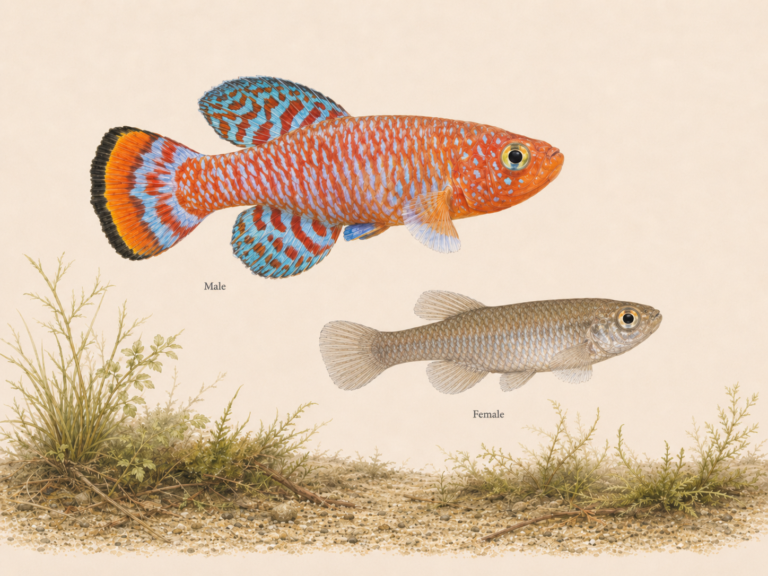
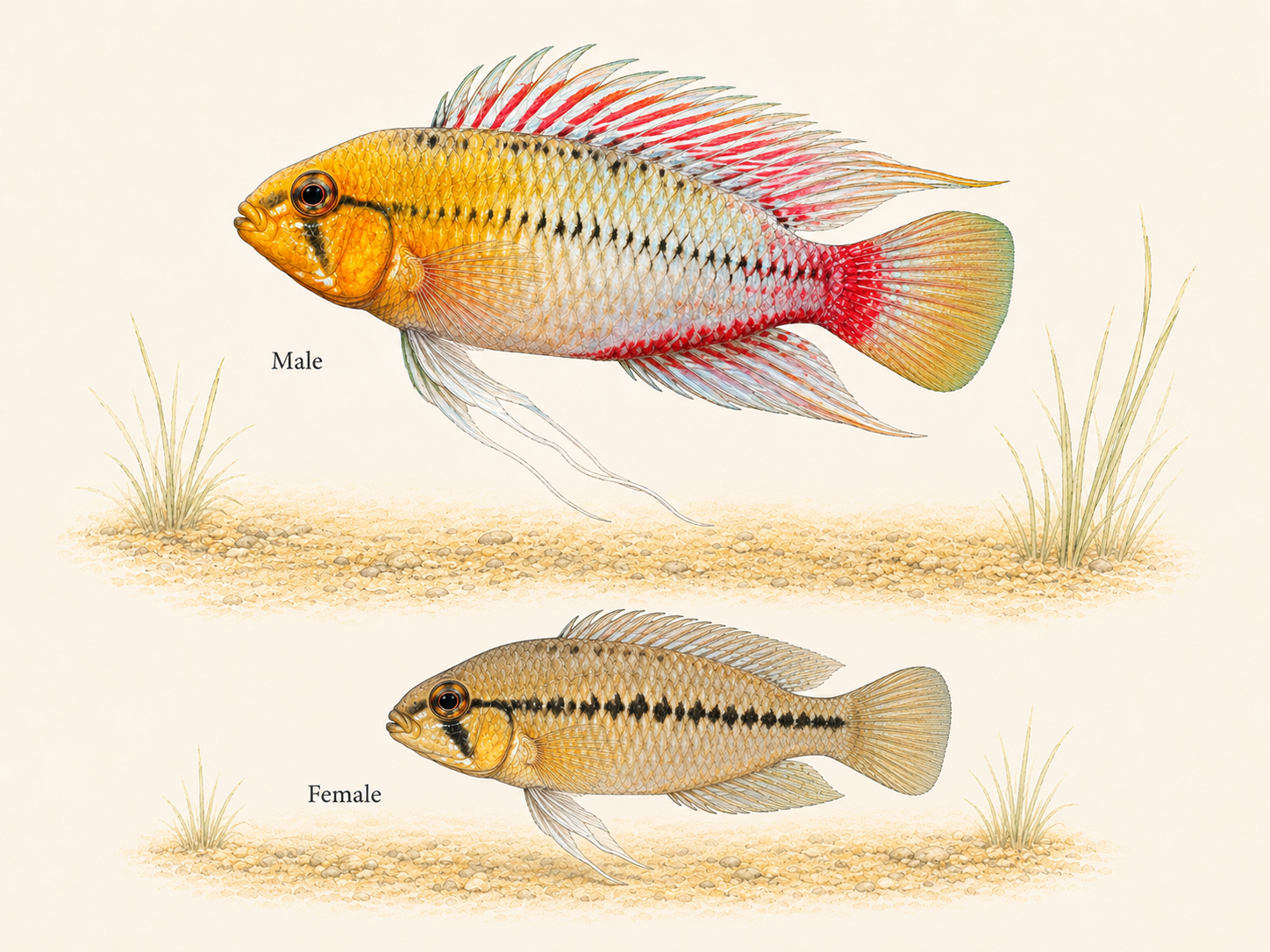
Apistogramma hongsloi is a genuinely eye-catching dwarf cichlid that displays pronounced sexual dimorphism. Males are the larger and more colourful sex, typically reaching 5 to 7 centimetres in total length. They possess an elongated, laterally compressed body with well-developed finnage. The dorsal fin is tall with extended anterior rays, and the caudal fin is rounded to slightly lyrate depending on the population and individual. In prime breeding condition, males exhibit a vivid red or orange-red blaze across the lower half of the face and throat that extends into the chest and belly region. The flanks shimmer with iridescent blue-green hues, and a prominent dark lateral band runs from the snout through the eye to the caudal peduncle, though this band can fade or intensify depending on mood. The dorsal fin often carries red, orange, or yellow highlights with a blue or clear edging, while the caudal and anal fins display similar warm tones interspersed with blue iridescence.
Females are noticeably smaller, reaching around 4 to 5 centimetres, and are more subdued in colouration during non-breeding periods, typically showing a yellowish-brown or greyish body with a visible lateral stripe. When in breeding condition, however, females undergo a dramatic transformation, turning a bright, intense yellow across the entire body. Black markings become more prominent on the ventral fins and cheeks, creating a bold contrast against the yellow. This bright yellow colouration serves as a signal to males and is also used to communicate with fry during brood care.
Both sexes have relatively large eyes in proportion to their head size, a characteristic common to many Apistogramma species that reflects their benthic, visually oriented lifestyle. The mouth is small and slightly subterminal, well suited to picking food items from the substrate and among leaf litter.
Varieties and Morphs
Apistogramma hongsloi has been selectively bred in captivity for several decades, resulting in a number of recognised colour forms and line-bred variants that are commonly available in the trade. The species also exhibits natural geographic variation, with different collection localities producing fish with subtly different colour patterns and intensities. Below are the most notable varieties encountered in the hobby.
The wild-type form displays the classic colour pattern described above, with moderate red-orange facial colouration in males and a balanced combination of blue-green iridescence along the flanks. Wild-type specimens tend to be hardier and more behaviourally authentic, making them a popular choice among purists and breeders seeking to maintain natural genetics.
The “Super Red” or “Rotkeil” form is perhaps the most widely traded variant. Through selective breeding, the red colouration on the face, throat, and ventral region has been intensified and extended, sometimes covering much of the lower body. Males of this morph can appear almost entirely red from the lower jaw to the belly, creating a striking contrast with the blue-green dorsal coloration.
The “Form II” variant originates from different collection points within the species’ range and tends to show a more orange rather than red facial blaze, with slightly different fin shapes and body proportions. This form is sometimes considered a separate population rather than a selectively bred morph.
The “Gold” or “Orange” form features enhanced yellow and orange tones throughout the body, with reduced blue iridescence compared to the wild type. Males of this variant are particularly attractive, displaying warm sunset-like hues across the entire flank.
Natural Habitat
Apistogramma hongsloi is found in the Orinoco River basin, primarily within the drainage systems of the Río Meta and Río Vichada in Colombia, extending into western Venezuela. The species inhabits the vast tropical grassland plains known as the llanos, a seasonally flooded ecosystem that undergoes dramatic changes between the wet and dry seasons. During the rainy season, vast areas of savannah become inundated, creating temporary pools, flooded meadows, and shallow streams that provide ideal breeding and foraging habitat for small cichlids.
The typical biotope for A. hongsloi consists of slow-moving or still waters with sandy to muddy substrates, often covered in a layer of fallen leaves, decaying organic matter, and scattered twigs or branches. Aquatic vegetation may be present but is typically sparse, consisting of submerged grasses, floating plants, and marginal vegetation along the water’s edge. The water itself is generally warm, soft, and mildly acidic, stained to varying degrees by tannins released from decomposing plant matter. Water temperatures in these habitats commonly range from 25 to 30 °C, with pH values between 5.0 and 6.5 and very low mineral content.
In these environments, A. hongsloi occupies the benthic zone, foraging among leaf litter and along the substrate for small invertebrates, insect larvae, and microorganisms. The leaf litter and submerged wood provide essential shelter from predators and serve as territorial markers during the breeding season. The seasonal nature of their habitat means that populations may become concentrated in residual pools during the dry season, where competition for resources and mates intensifies. Understanding this natural habitat is key to replicating appropriate conditions in the aquarium and encouraging natural behaviours, including breeding.
Tank Size and Setup
A single pair of Apistogramma hongsloi can be housed in a tank of at least 60 litres, though a larger aquarium of 80 to 100 litres or more is recommended, particularly if you plan to keep them alongside other species. For a small harem arrangement of one male with two or three females, a tank of 100 to 120 litres provides sufficient space for each female to establish her own territory without excessive conflict. Larger groups or community setups will naturally require proportionally greater volume and floor space.
The aquascape should prioritise horizontal floor space over height, as A. hongsloi spends the majority of its time near the bottom of the tank. A fine sand substrate is ideal, closely replicating the natural biotope and allowing the fish to engage in natural foraging behaviour, sifting through the substrate for food particles. Avoid sharp gravel or coarse substrates that may damage their delicate gill filaments during this sifting behaviour.
Providing abundant shelter is essential for the wellbeing of this species. Incorporate a generous layer of dried leaf litter, such as Indian almond leaves, oak leaves, or beech leaves, which not only provides cover and territorial boundaries but also releases beneficial tannins that soften and acidify the water naturally. Pieces of driftwood, coconut shells, and small clay or ceramic caves serve as potential spawning sites and refuges. Each female in the tank should have access to at least one or two potential cave sites to claim as her own. Rocks can be arranged to create additional hiding spots and visual barriers, which help reduce aggression by breaking lines of sight.
Live plants are not strictly necessary but are certainly beneficial. Hardy species that tolerate soft, acidic water, such as Java fern, Anubias, Cryptocoryne species, and various mosses, work well and provide additional cover and a sense of security. Floating plants are particularly useful for diffusing overhead light, which A. hongsloi generally prefers subdued. Dim lighting or filtered light replicates the shaded conditions of their natural habitat and tends to bring out the best colouration in the fish, as they feel more confident and less stressed.
Water Parameters
Maintaining appropriate water chemistry is one of the most important aspects of keeping Apistogramma hongsloi successfully. As a species originating from soft, acidic blackwater and clearwater habitats, they perform best in water that reflects these conditions. While captive-bred specimens tend to be somewhat more adaptable than wild-caught fish, keeping the water within the preferred ranges will promote optimal health, colouration, and breeding success.
| Temperature | 24–30 °C |
| pH | 5.0–7.0 |
| General hardness (GH) | 1–8 dGH |
| Carbonate hardness (KH) | 1–5 dKH |
| Ammonia | 0 ppm |
| Nitrite | 0 ppm |
| Nitrate | Below 20 ppm |
A temperature of 26 to 28 °C suits most purposes, though slightly higher temperatures of 28 to 30 °C can be used to stimulate breeding behaviour. A pH of 5.5 to 6.5 is considered optimal, and while captive-bred fish will often tolerate neutral conditions around 7.0, they rarely thrive or breed reliably in harder, more alkaline water. General hardness should ideally be kept below 5 dGH for best results, particularly if breeding is a goal.
Water quality must be kept pristine, as Apistogramma species are sensitive to the accumulation of dissolved organic waste. Regular partial water changes of 20 to 30 per cent weekly are essential. When performing water changes, ensure that the replacement water is matched closely in temperature and chemistry to avoid sudden fluctuations, which can stress the fish and suppress immune function. The use of reverse osmosis water remineralised with appropriate products is an effective method for achieving and maintaining the soft, acidic conditions this species prefers, especially in areas with naturally hard tap water.
Filtration and Equipment
Apistogramma hongsloi does not require powerful filtration and in fact prefers gentle water movement. A sponge filter is an excellent choice, particularly in breeding setups, as it provides effective biological filtration without creating strong currents and poses no risk to tiny fry that might otherwise be drawn into power filter intakes. For larger or more heavily stocked tanks, a small hang-on-back filter or canister filter with the flow rate reduced or the outlet dispersed through a spray bar can work well. The key is to ensure thorough biological filtration while maintaining a calm, low-flow environment.
A reliable, adjustable heater is essential for maintaining the warm temperatures this tropical species requires. Choose a heater rated appropriately for your tank volume and consider using a separate thermometer to verify the accuracy of the heater’s thermostat. In warmer climates or heated fishrooms, supplementary heating may not always be necessary, but consistent temperatures within the preferred range should always be maintained.
Lighting should be kept subdued to moderate. This can be achieved through the use of dimmable LED fixtures, floating plants that shade the water surface, or simply by selecting a lower-output light. Tannin-stained water from leaf litter and driftwood naturally dims the light within the tank and creates the warm, amber-toned environment in which A. hongsloi feels most at home and displays its finest colours. An air pump connected to a sponge filter can serve double duty by providing both filtration and gentle aeration, though surface agitation from any filter type is usually sufficient for adequate gas exchange.
Diet and Feeding
In the wild, Apistogramma hongsloi is a micro-predator that feeds primarily on small aquatic invertebrates, insect larvae, worms, crustaceans, and other tiny organisms found among leaf litter and along the substrate. In the aquarium, they should be offered a varied diet that reflects this natural feeding ecology. A diverse diet not only supports overall health and immune function but also enhances colouration and promotes breeding condition.
High-quality frozen foods should form the backbone of the diet. Bloodworm, daphnia, brine shrimp (Artemia), cyclops, and mosquito larvae are all readily accepted and provide excellent nutrition. Live foods are even better when available, as they stimulate natural hunting behaviour and are particularly valuable for conditioning breeding pairs. Live baby brine shrimp, grindal worms, microworms, and daphnia cultures are relatively easy to maintain at home and are especially important for raising fry.
Good-quality micro-pellets and granules designed for small cichlids or bottom-dwelling fish can be offered as a staple alongside frozen and live foods. Choose products with a high protein content and minimal filler ingredients. Crushed high-quality flake food is also accepted by most individuals, though it should be considered a supplement rather than the primary food source. Avoid relying exclusively on dried foods, as a diet lacking in variety and fresh nutrition can lead to diminished colouration, reduced breeding activity, and susceptibility to health problems.
Feed small amounts two to three times per day rather than a single large feeding. A. hongsloi has a small stomach relative to its body size, and frequent small meals more closely replicate the constant foraging activity it would engage in throughout the day in the wild. Remove any uneaten food promptly to prevent water quality deterioration, paying particular attention to frozen foods that can decompose quickly in warm water.
Behaviour and Temperament
Apistogramma hongsloi is a relatively peaceful dwarf cichlid that displays complex and engaging social behaviour. Outside of the breeding season, males are generally tolerant of other fish, spending their time patrolling their territory, displaying to females, and foraging along the substrate. They can be shy when first introduced to a new tank, often hiding among leaf litter and caves until they feel secure. Providing ample cover and keeping the lighting subdued will help newly introduced fish settle in more quickly.
Males are polygynous by nature and will attempt to maintain a territory that encompasses the smaller, overlapping territories of multiple females. In the aquarium, this means that a harem setup of one male with two or three females typically works better than keeping a single pair, as it distributes the male’s attention and courtship behaviour across multiple females, reducing pressure on any one individual. However, sufficient space and adequate cave sites must be provided for each female to maintain her own sub-territory.
Intraspecific aggression increases notably during breeding. Males become more territorial and will posture, flare their fins, and chase rival males with considerable vigour. Females guarding eggs or fry become fiercely protective of their brood and will aggressively drive away any fish, including the male, that ventures too close to the spawning site. This maternal behaviour is fascinating to observe but can cause problems in small tanks where subordinate fish have nowhere to retreat. Ensuring the aquarium is well-structured with plenty of visual barriers and hiding spots is the most effective way to manage this aggression.
Towards other species, A. hongsloi is generally mild-mannered and will largely ignore fish that occupy different areas of the water column. They may occasionally spar with other bottom-dwelling fish that encroach on their territory, but serious aggression towards non-Apistogramma tank mates is uncommon outside of breeding periods. Their interactions with conspecifics and their brood care behaviour are among the most compelling reasons to keep this species, offering a window into the complex social lives of cichlids in miniature.
Tank Mates
Choosing appropriate tank mates for Apistogramma hongsloi involves selecting species that share similar water parameter requirements and that will not outcompete, harass, or stress the dwarf cichlids. Ideal companions are small, peaceful fish that occupy the mid-water or upper water column, leaving the bottom of the tank to the Apistogramma. Avoid large, boisterous, or aggressive species, as well as other bottom-dwelling territorial fish that might compete for the same caves and substrate space.
Good tank mates
- Cardinal Tetra (Paracheirodon axelinae) — A classic companion that thrives in identical soft, acidic water conditions and occupies the mid-water column without competing for territory.
- Rummy-Nose Tetra (Hemigrammus rhodostomus) — A peaceful, schooling species that prefers warm, soft water and adds movement to the upper levels of the tank.
- Ember Tetra (Hyphessobrycon amandae) — A tiny, unobtrusive tetra whose small size ensures it poses no competitive threat and whose warm orange colour complements the Apistogramma beautifully.
- Beckford’s Pencilfish (Nannostomus beckfordi) — A slender, surface-oriented species that stays well out of the Apistogramma’s territory and thrives in similar water conditions.
- Pygmy Corydoras (Corydoras pygmaeus) — These diminutive catfish tend to shoal in the mid-water rather than exclusively on the substrate, reducing territorial overlap with the cichlids.
- Otocinclus Catfish (Otocinclus vittatus) — A gentle algae-grazing catfish that is too small and inoffensive to provoke aggression from breeding Apistogramma.
- Marbled Hatchetfish (Carnegiella strigata) — An obligate surface dweller that occupies an entirely different niche in the tank and appreciates the same soft, warm water.
- Chocolate Gourami (Sphaerichthys osphromenoides) — A soft-water specialist that is peaceful and inhabits the middle to upper areas of the water column, making it a compatible if somewhat demanding companion.
Fish to avoid
- Oscar (Astronotus ocellatus) — Far too large and predatory; an Oscar would view Apistogramma hongsloi as food rather than a tank mate.
- Convict Cichlid (Amatitlania nigrofasciata) — Highly aggressive and territorial, this Central American cichlid would bully and potentially kill dwarf cichlids.
- Tiger Barb (Puntigrus tetrazona) — A notorious fin nipper that would harass the slower-moving Apistogramma and cause chronic stress.
- African Rift Lake Cichlids (Mbuna) — Require hard, alkaline water that is completely incompatible with A. hongsloi, and their aggression levels are far too high.
- Common Pleco (Hypostomus plecostomus) — Grows far too large for tanks suitable for dwarf cichlids and can disturb breeding sites with its nocturnal activity.
- Angelfish (Pterophyllum scalare) — While they share similar water requirements, angelfish grow large enough to predate on Apistogramma fry and may intimidate the smaller cichlids.
- Chinese Algae Eater (Gyrinocheilus aymonieri) — Becomes increasingly aggressive with age and is known to attach itself to the flanks of slow-moving fish, causing injury.
- Buenos Aires Tetra (Hyphessobrycon anisitsi) — A large, robust tetra that can be boisterous and tends to prefer cooler, harder water than A. hongsloi requires.
Breeding
Breeding Apistogramma hongsloi is one of the most rewarding aspects of keeping this species and is well within the capabilities of moderately experienced aquarists. They are cave spawners, with the female selecting a sheltered site—typically a small cave, coconut shell, overturned clay pot, or similar enclosed space—in which to deposit her eggs. Successful breeding begins with proper conditioning, appropriate water parameters, and a well-structured environment.
To condition a breeding group, provide a varied diet rich in live and frozen foods for several weeks prior to the expected spawning. Females in breeding condition will develop their characteristic bright yellow colouration, which becomes increasingly intense as they approach spawning readiness. The male will display to receptive females with exaggerated fin flaring, lateral displays, and vibrating body movements, often intensifying his own colouration to an almost unbelievable degree.
When a female is ready to spawn, she will entice the male to her chosen cave site with a series of invitational displays, including a distinctive quivering motion and the presentation of her yellow-stained belly. The female deposits her eggs on the ceiling or walls of the cave, typically producing between 40 and 100 eggs depending on her size and condition. The eggs are small, oval, and reddish in colour. After the male fertilises them, the female takes over primary brood care duties, fanning the eggs to ensure water circulation and removing any that become fungused.
The eggs typically hatch within 48 to 72 hours at temperatures around 27 to 28 °C. The larvae remain attached to the substrate by their yolk sacs for a further three to five days before becoming free-swimming. During this period, the female guards the cave entrance vigilantly and will not tolerate any intrusion. Once the fry become free-swimming, the female leads them out of the cave and shepherds them around her territory, using body language and colour changes to communicate with her brood. The fry stay close to the mother, forming a tight cluster that she guides towards food sources and away from potential threats.
First foods for the fry should be extremely small. Infusoria, vinegar eels, and commercially available liquid fry foods can be offered in the first few days, transitioning to freshly hatched baby brine shrimp (Artemia nauplii) as soon as the fry are large enough to consume them. Baby brine shrimp are arguably the single most important food for raising Apistogramma fry successfully and should be offered two to three times daily. As the fry grow, microworms and finely crushed dry foods can be gradually introduced.
In a community setting, some fry losses to predation by tank mates are inevitable. For maximum fry survival, consider removing other fish from the breeding tank or relocating the mother and her free-swimming brood to a dedicated rearing tank. Maintaining excellent water quality with frequent small water changes is critical during the fry-rearing period, as the young fish are particularly sensitive to ammonia and nitrite.
Common Diseases
Apistogramma hongsloi is generally robust when kept in appropriate conditions, but like all aquarium fish, it is susceptible to certain health issues, particularly when water quality deteriorates or when the fish is subjected to chronic stress. Prevention through good husbandry is always preferable to treatment, and maintaining stable, clean water within the correct parameters is the single most important step in disease prevention.
Ich (white spot disease), caused by the protozoan parasite Ichthyophthirius multifiliis, is one of the most common ailments encountered. It presents as small white spots resembling grains of salt scattered across the body and fins. Raising the temperature gradually to 30 °C and treating with a half-dose of a malachite green or formalin-based medication is typically effective. Full-dose treatments can be harsh on Apistogramma, so caution is warranted.
Bacterial infections, including fin rot and body sores, can occur when fish are stressed or when water quality is poor. These conditions often manifest as frayed or disintegrating fins, reddened areas on the body, or open lesions. Improving water quality through increased water changes is the first line of defence, and targeted antibiotic treatments may be necessary in severe cases.
Internal parasites, including intestinal worms and flagellates such as Hexamita (which causes hole-in-the-head disease), can affect Apistogramma species, particularly wild-caught specimens. Signs include weight loss despite normal feeding, white or stringy faeces, and in the case of Hexamita, small pitting or erosion around the head and lateral line. Treatment with metronidazole or praziquantel, depending on the parasite involved, is usually effective when administered early.
Velvet disease (Oodinium), a parasitic infection that produces a fine, gold or rust-coloured dusting on the skin, is another concern, particularly in warm, still water. It is often more difficult to detect than ich in its early stages. Treatment involves dimming the lights (the parasite is partly photosynthetic) and medicating with copper-based treatments, though copper should be used cautiously and at reduced doses with sensitive species like Apistogramma.
Stress is the underlying factor in most disease outbreaks. Ensuring that A. hongsloi has adequate hiding places, appropriate tank mates, stable water conditions, and a nutritious diet will go a long way towards preventing illness. Quarantining new fish for a minimum of two weeks before introducing them to an established tank is also strongly recommended.
FAQs
Can I keep Apistogramma hongsloi in hard, alkaline water?
While captive-bred specimens are more tolerant of a wider range of water conditions than their wild counterparts, A. hongsloi does not thrive in hard, alkaline water. Keeping them in water with a pH above 7.5 or a general hardness above 10 dGH may result in subdued colouration, increased stress, reduced lifespan, and a near-total failure to breed. If your tap water is hard, using reverse osmosis water blended with a small amount of tap water or an appropriate remineraliser is the most effective solution.
How many Apistogramma hongsloi can I keep together?
In a standard 60-litre tank, a single pair is advisable. In tanks of 100 litres or more with plenty of caves and visual barriers, a harem of one male and two to three females works well and distributes aggression. Keeping two males together is only feasible in larger tanks of 150 litres or more with abundant structure, as the dominant male will otherwise relentlessly harass the subordinate. Multiple pairs can coexist in spacious, well-decorated aquariums where each pair can establish a distinct territory.
Are Apistogramma hongsloi suitable for beginners?
They are not the most challenging fish to keep, but they are not ideally suited to complete beginners either. Their requirements for soft, acidic water, a well-cycled tank, and a varied diet mean that some prior experience with tropical fishkeeping is beneficial. An aquarist who has successfully maintained a community tank and understands the basics of water chemistry and nitrogen cycling should be well prepared to take on this species.
Do I need to add leaf litter to the tank?
While not strictly mandatory, leaf litter is highly recommended. Dried leaves such as Indian almond leaves, oak leaves, or beech leaves release tannins that naturally soften and acidify the water, creating conditions closer to the species’ natural habitat. The leaf litter also provides cover, foraging opportunities, and surfaces for biofilm growth that benefits both adult fish and fry. It is one of the simplest and most effective additions you can make to an Apistogramma tank.
Will Apistogramma hongsloi eat shrimp?
Yes, A. hongsloi will readily prey upon small shrimp, particularly juvenile and dwarf species such as cherry shrimp. Adult Amano shrimp may coexist with them in a well-planted tank due to their larger size, but even these are not entirely safe, especially if the cichlids are breeding and defending territory. If maintaining a thriving shrimp colony is a priority, it is best to house them separately from Apistogramma.
Related Guides
- Apistogramma cacatuoides Care Guide — A closely related and popular dwarf cichlid species that shares many care requirements with A. hongsloi and makes an excellent alternative for beginners to the genus.
- Apistogramma agassizii Care Guide — Another widely kept Apistogramma species with similar water parameter needs and comparable breeding behaviour.
- Cardinal Tetra Care Guide — One of the best companion species for A. hongsloi, sharing a preference for warm, soft, acidic water in a planted or blackwater setup.
- Blackwater Aquarium Setup Guide — A comprehensive guide to creating the tannin-stained, soft-water environment that A. hongsloi thrives in.
- Breeding Dwarf Cichlids Guide — Detailed advice on conditioning, spawning, and raising fry for Apistogramma and other popular dwarf cichlid genera.