Festive Cichlid Care Guide — Tank Setup, Feeding and Breeding
Introduction
The Festive Cichlid, known scientifically as Mesonauta festivus, is one of the more understated yet captivating cichlids available in the freshwater aquarium hobby. Often overshadowed by its more flamboyant South American relatives, this species rewards the patient aquarist with subtle beauty, fascinating behaviour, and a surprisingly peaceful disposition. First described by Heckel in 1840, the Festive Cichlid has been a fixture of the hobby for well over a century, though it has never achieved the widespread popularity of angelfish or discus despite sharing many of their qualities.
Native to the slow-moving waters of the Amazon and Orinoco river basins, Mesonauta festivus is a laterally compressed cichlid that occupies a similar ecological niche to its close relatives, the angelfish. Its common name derives from the Latin “festivus,” meaning festive or cheerful, a reference to the attractive patterning and warm colouration that becomes especially vivid in well-maintained aquaria. Other common names include the Flag Cichlid, a nod to the prominent dark diagonal stripe that runs from the mouth through the eye to the dorsal fin, resembling a pennant or flag.
This species is an excellent choice for intermediate aquarists looking to explore South American cichlids beyond the usual beginner offerings. It is relatively hardy, adapts well to a range of water conditions, and its moderate adult size makes it suitable for medium-sized community tanks. Its intelligence and social behaviour make it genuinely engaging to observe, and pairs that bond will often breed readily in captivity, providing an accessible introduction to cichlid breeding.
Quick Stats
| Scientific name | Mesonauta festivus |
| Common names | Festive Cichlid, Flag Cichlid, Barred Cichlid, Festival Fish |
| Family | Cichlidae |
| Origin | South America — Amazon and Orinoco river basins (Brazil, Peru, Bolivia, Paraguay, Guyana) |
| Adult size | 12–15 cm (5–6 inches) |
| Lifespan | 8–12 years |
| Difficulty | Moderate |
| Breeding difficulty | Moderate |
| Temperature | 24–30 °C |
| pH range | 6.0–7.5 |
| General hardness (GH) | 2–15 dGH |
| Carbonate hardness (KH) | 1–10 dKH |
| Minimum tank size | 200 litres |
| Conservation status | Not Evaluated |
Appearance
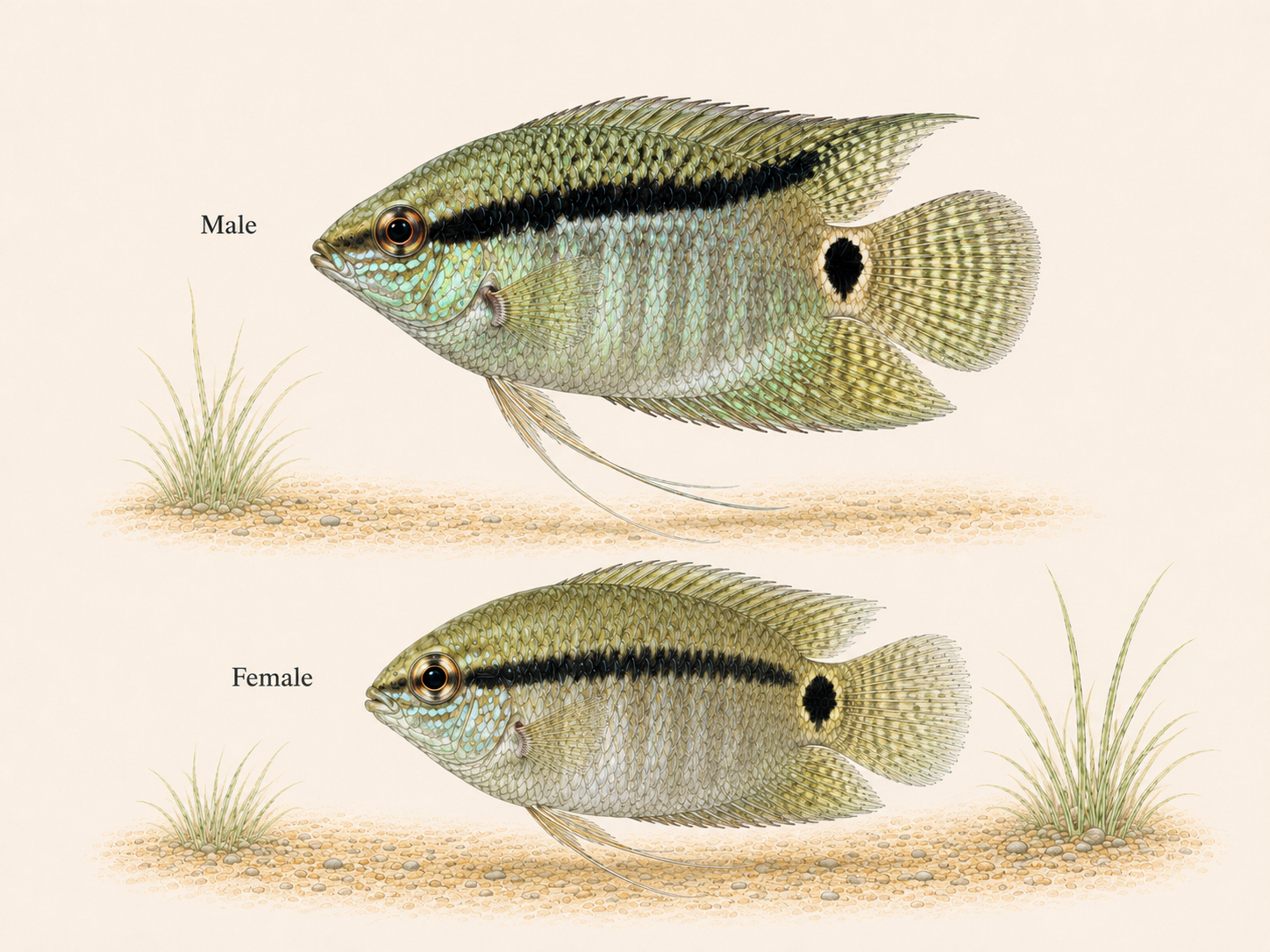
Mesonauta festivus possesses a deep, laterally compressed body shape that immediately invites comparison with angelfish, though it is somewhat less extreme in its proportions. The body is oval to diamond-shaped when viewed from the side, with a gently sloping forehead and a relatively small, terminal mouth. Adult specimens typically reach 12 to 15 centimetres in total length, with males occasionally growing slightly larger than females.
The base colouration of the Festive Cichlid is a warm olive-green to golden-yellow, overlaid with a series of faint vertical bars that can intensify or fade depending on the fish’s mood, social status, and environmental conditions. The most distinctive feature is the bold oblique stripe that runs diagonally from the tip of the snout, through the eye, and up to the posterior edge of the dorsal fin. This “flag” marking is present in all specimens and serves as the primary identification feature for the species. In healthy, well-conditioned fish, the stripe is sharply defined and contrasts beautifully against the lighter body.
The fins are generally translucent to pale yellowish-green, with the dorsal and anal fins sometimes displaying subtle orange or reddish edging in mature individuals. A small dark ocellus, or eyespot, is typically present at the base of the caudal peduncle, though its visibility can vary between populations. The eyes are large and expressive, often displaying a reddish-orange iris that adds to the species’ overall appeal.
Sexual dimorphism in Mesonauta festivus is subtle and often unreliable outside of breeding condition. Males tend to be marginally larger with slightly more pointed dorsal and anal fins, whilst females may appear fuller in the abdomen when gravid. During spawning, both sexes can intensify their colouration considerably, with the vertical barring becoming more pronounced and the overall body taking on a deeper golden hue.
Natural Habitat
The Festive Cichlid is widely distributed across tropical South America, occurring throughout the Amazon basin, the Orinoco drainage, and several river systems in the Guianas, Paraguay, and Bolivia. This broad range encompasses an impressive diversity of aquatic environments, though the species shows a clear preference for calm, heavily vegetated waters with abundant submerged structure.
In the wild, Mesonauta festivus is most commonly found in slow-moving tributaries, flooded forest margins, oxbow lakes, and backwater lagoons. These habitats are typically characterised by soft, acidic water stained a dark amber or tea colour by the tannins released from decomposing leaf litter and driftwood. The substrate in these areas is generally composed of fine sand or mud, overlaid with a thick carpet of fallen leaves, branches, and other organic detritus.
Dense aquatic and marginal vegetation is a defining feature of the Festive Cichlid’s preferred habitat. The fish use stands of submerged and floating plants as refuge from predators, as foraging grounds, and as spawning sites. In seasonally flooded forests, or igapó, they move into the inundated vegetation during the wet season, exploiting the rich feeding opportunities and shelter provided by the submerged terrestrial plants and root systems.
Water temperatures in these habitats typically range from 24 to 30 degrees Celsius, with pH values often falling between 5.5 and 7.0 and extremely low mineral content. The lighting in these environments tends to be subdued, filtered through overhanging canopy and the tannin-rich water itself. Understanding these natural conditions is invaluable for replicating a suitable environment in captivity and encouraging natural behaviour.
Tank Size and Setup
A minimum tank volume of 200 litres is recommended for a pair of Festive Cichlids, though a larger aquarium of 300 litres or more is preferable, particularly if the fish are to be kept in a group or as part of a community. These cichlids are active swimmers that appreciate horizontal swimming space, so tanks with a footprint of at least 120 centimetres in length are ideal. Taller tanks are less important than length and depth, though some vertical space is appreciated given the species’ tendency to occupy mid-water levels.
The aquascape should aim to replicate the densely vegetated, structure-rich environments that Mesonauta festivus inhabits in the wild. A sandy substrate is the most appropriate choice, as it mimics the natural riverbed and allows the fish to engage in natural foraging behaviours without risk of injury. Darker substrates tend to bring out the best colouration in these fish and help create a more naturalistic aesthetic.
Driftwood should be used generously to provide cover, territorial boundaries, and visual barriers. Tangles of roots and branching wood create the complex structure that these cichlids rely upon for security. The addition of dried Indian almond leaves or oak leaves to the substrate not only enhances the natural appearance but also releases beneficial tannins that soften and acidify the water, closely replicating the blackwater conditions of their native habitat.
Live plants are highly recommended and arguably essential for keeping this species at its best. Hardy, low-to-moderate light species such as Vallisneria, Amazon swords, Cryptocoryne, Java fern, and Anubias work well. Floating plants like Amazon frogbit or water lettuce are particularly valuable, as they dim the lighting and provide a sense of overhead cover that helps these fish feel secure. Mesonauta festivus is generally respectful of aquarium plants and rarely causes damage, making it an excellent candidate for planted tanks.
Subdued lighting is strongly recommended. Bright, unfiltered lighting will cause Festive Cichlids to appear washed out and stressed. The combination of floating plants, tannin-stained water, and moderate aquarium lighting creates the dappled, shaded conditions under which these fish display their finest colours and most confident behaviour.
Water Parameters
Mesonauta festivus is reasonably adaptable when it comes to water chemistry, but it truly thrives when conditions approximate those of its native soft, acidic waterways. Stability is always more important than hitting exact numbers, so gradual adjustments and consistent maintenance should be prioritised over chasing specific values.
| Temperature | 24–30 °C |
| pH | 6.0–7.5 |
| General hardness (GH) | 2–15 dGH |
| Carbonate hardness (KH) | 1–10 dKH |
| Ammonia | 0 ppm |
| Nitrite | 0 ppm |
| Nitrate | Below 20 ppm |
A temperature of 26 to 28 degrees Celsius represents the sweet spot for everyday maintenance, whilst slightly warmer temperatures of 28 to 30 degrees can be used to encourage breeding behaviour. The Festive Cichlid is sensitive to poor water quality, particularly elevated nitrate levels, so regular partial water changes of 25 to 30 per cent weekly are essential. When performing water changes, ensure that the replacement water is closely matched in temperature and chemistry to avoid sudden shifts that could stress the fish.
The addition of tannins through driftwood, leaf litter, or commercial blackwater extracts can be beneficial, lowering pH naturally and providing a water chemistry profile closer to wild conditions. If your tap water is particularly hard or alkaline, the use of reverse osmosis water blended with a suitable remineraliser can help achieve the softer, more acidic conditions that bring out the best in this species.
Filtration and Equipment
Effective filtration is crucial for maintaining the pristine water quality that Festive Cichlids require, but the choice of filter should also take into account the species’ preference for gentle water movement. In the wild, these fish inhabit calm, slow-flowing waters, and a powerful current in the aquarium will cause stress and encourage the fish to hide rather than explore.
An external canister filter rated for the tank’s volume, or slightly above, is the best option for most setups. Canister filters provide excellent biological, mechanical, and chemical filtration capacity whilst allowing the aquarist to control the flow output through the use of spray bars, lily pipes, or flow diffusers. Positioning the outlet so that it creates a gentle circulation rather than a strong directional current will keep the fish comfortable. Internal filters can also work well for smaller setups, provided they are adequately sized.
A reliable heater with a thermostat is essential, as Mesonauta festivus is a tropical species that requires consistently warm water. A heater rated at approximately one watt per litre is a sensible starting point. In larger tanks, using two smaller heaters rather than a single large unit provides a safety margin against equipment failure and ensures more even heat distribution.
Lighting should be moderate to subdued. LED fixtures with adjustable intensity and colour temperature are ideal, as they allow the aquarist to create the dim, warm lighting conditions that these cichlids prefer. A lighting period of 8 to 10 hours per day, with a gradual ramp-up and ramp-down to simulate dawn and dusk, is recommended. As mentioned, floating plants can supplement the lighting equipment by naturally reducing the intensity reaching the lower portions of the tank.
An air pump is not strictly necessary if the filter provides adequate surface agitation for gas exchange, but a gentle airstone can be beneficial in warmer conditions when dissolved oxygen levels may drop. Avoid creating excessive surface turbulence, as this can strip tannins from the water and disrupt the calm surface that Festive Cichlids appreciate.
Diet and Feeding
Mesonauta festivus is an omnivore with a flexible diet that makes feeding in captivity relatively straightforward. In the wild, it feeds on a varied mixture of small invertebrates, insect larvae, algae, plant matter, seeds, and organic detritus. Replicating this dietary diversity in the aquarium is key to maintaining good health, vibrant colouration, and successful breeding.
A high-quality cichlid pellet or flake food should form the staple of the diet. Choose a product formulated for medium-sized South American cichlids, ideally one with a balanced protein-to-vegetable ratio rather than an exclusively protein-rich formula. Spirulina-enhanced flakes or pellets can be offered regularly to ensure adequate plant-based nutrition, as the species does consume a significant proportion of vegetable matter in the wild.
Live and frozen foods should be offered several times per week to supplement the staple diet and provide enrichment. Bloodworm, daphnia, brine shrimp, mosquito larvae, and chopped earthworms are all eagerly accepted. These protein-rich foods are particularly important for conditioning breeding pairs and supporting the nutritional demands of egg production. Blanched vegetables such as courgette, spinach, and shelled peas can also be offered occasionally and are usually accepted with enthusiasm.
Feed adult Festive Cichlids once or twice daily, offering only as much food as can be consumed within two to three minutes. Overfeeding is a common pitfall that leads to poor water quality and obesity, both of which can significantly shorten the lifespan of the fish. Juveniles benefit from more frequent feeding, three to four times daily in small amounts, to support their growth.
Behaviour and Temperament
The Festive Cichlid is widely regarded as one of the more peaceful members of the Cichlidae family, and this reputation is largely well deserved, though with some important caveats. Outside of breeding, Mesonauta festivus is a calm, somewhat timid species that spends much of its time drifting amongst vegetation and driftwood in the mid-water column. It is an intelligent fish that quickly learns to recognise its keeper and will often approach the front of the tank in anticipation of feeding.
In terms of social structure, Festive Cichlids are loosely gregarious and benefit from being kept in small groups of four to six individuals, particularly in larger tanks. In groups, they establish a gentle hierarchy with minimal aggression, and the presence of conspecifics seems to boost their confidence and encourage them to spend more time in the open. Solitary specimens or isolated pairs can become excessively shy and spend much of their time hiding.
During breeding, however, the temperament of Mesonauta festivus shifts noticeably. Bonded pairs become territorial and will defend their chosen spawning site and, later, their fry with considerable vigour. This aggression is typically restrained compared to many other cichlid species and is usually limited to chasing and posturing rather than outright physical violence, but it can be disruptive in smaller or understocked tanks. Providing ample space, visual barriers, and tankmates that can hold their own without being aggressive in return is the best strategy for managing breeding-related territorial behaviour.
One particularly charming aspect of Festive Cichlid behaviour is their tendency to form pair bonds that can last for extended periods. Paired fish will often be seen swimming together, foraging side by side, and engaging in subtle communicative displays involving colour changes and fin movements. This bonded behaviour is one of the most rewarding aspects of keeping the species and is best observed in well-established, low-stress environments.
Tank Mates
Selecting appropriate tank mates for the Festive Cichlid requires balancing its peaceful nature with its occasional territorial behaviour during breeding. The ideal companions are similarly sized, non-aggressive species that share the same water parameter requirements. Avoid very small fish that could be seen as prey and highly aggressive species that would bully or outcompete the relatively docile Mesonauta festivus.
Good tank mates
- Angelfish (Pterophyllum scalare) — A natural companion that shares the same habitat, water requirements, and temperament, making them an excellent pairing in spacious tanks.
- Rummy-Nose Tetra (Hemigrammus rhodostomus) — A peaceful, mid-water schooling fish whose tight shoaling behaviour and soft-water preferences complement the Festive Cichlid perfectly.
- Cardinal Tetra (Paracheirodon axelaris) — A classic Amazonian tetra that adds vibrant colour to the lower-mid water column and is too quick to be troubled by the cichlids.
- Bristlenose Pleco (Ancistrus sp.) — A hardy, peaceful bottom-dweller that keeps algae in check and occupies a different niche, minimising competition and conflict.
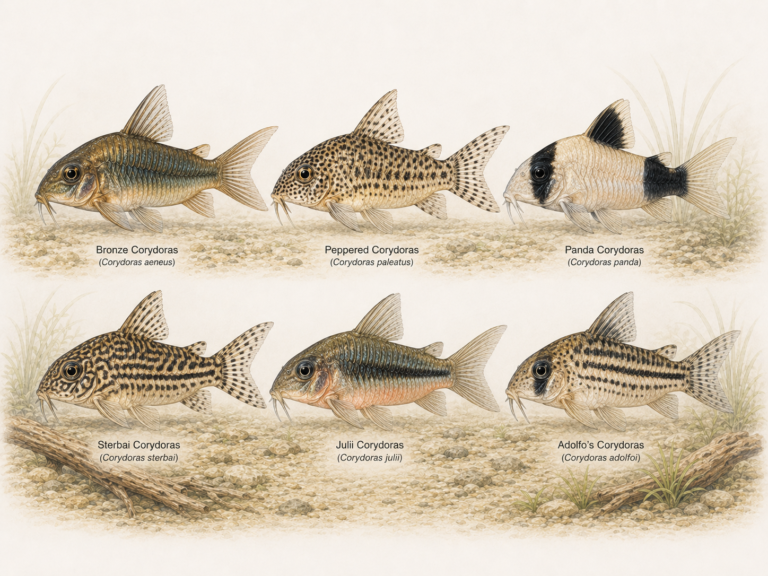
- Sterbai Corydoras (Corydoras sterbai) — A warm-water-tolerant Corydoras species that peacefully scavenges the bottom without interfering with the cichlids’ mid-water territory.
- Keyhole Cichlid (Cleithracara maronii) — One of the gentlest cichlids available, sharing similar temperament and water preferences with the Festive Cichlid.
- Marbled Hatchetfish (Carnegiella strigata) — A surface-dwelling species that occupies a completely different zone of the tank, reducing competition and adding visual interest.
- Kuhli Loach (Pangio kuhlii) — A peaceful, nocturnal bottom-dweller that stays out of the cichlids’ way and thrives in the same soft, warm conditions.
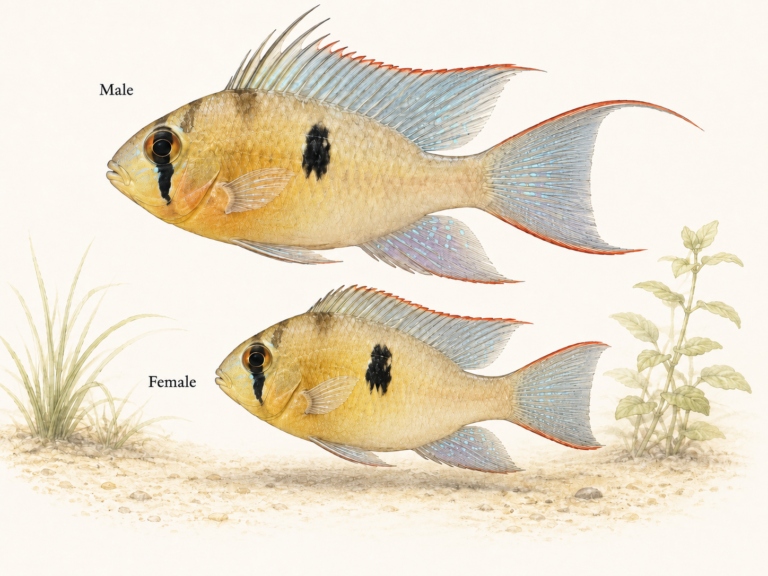
- German Blue Ram (Mikrogeophagus ramirezi) — A small, peaceful dwarf cichlid that occupies the lower levels and shares the same soft, acidic water requirements.
- Emperor Tetra (Nematobrycon palmeri) — A striking, moderately sized tetra with a calm disposition that cohabits well with Festive Cichlids in community settings.
Fish to avoid
- Oscar (Astronotus ocellatus) — Far too large and aggressive, an Oscar would easily bully, stress, or eventually consume a Festive Cichlid.
- Jack Dempsey (Rocio octofasciata) — A highly territorial and aggressive cichlid that would dominate the tank and intimidate the more passive Mesonauta festivus.
- Convict Cichlid (Amatitlania nigrofasciata) — Extremely aggressive when breeding and territorial at all times, making cohabitation with the peaceful Festive Cichlid untenable.
- Tiger Barb (Puntigrus tetrazona) — A notorious fin-nipper that would harass the relatively slow-moving Festive Cichlid, causing chronic stress and fin damage.
- Red Devil Cichlid (Amphilophus labiatus) — An extremely aggressive Central American cichlid that would pose a serious physical threat to the much milder Festive Cichlid.
- Green Terror (Andinoacara rivulatus) — Highly territorial and considerably more aggressive, this species would quickly dominate and stress the Festive Cichlid.
- Neon Tetra (Paracheirodon innesi) — Although peaceful, Neon Tetras are small enough to be seen as food by adult Festive Cichlids and prefer cooler temperatures.
- Flowerhorn Cichlid — An intensely aggressive hybrid that should only be kept alone or with equally robust species, making it wholly incompatible with Mesonauta festivus.
Breeding
Breeding the Festive Cichlid in captivity is an achievable and deeply rewarding undertaking for the dedicated aquarist. Mesonauta festivus is an open substrate spawner that forms monogamous pair bonds, and both parents participate actively in the care and defence of their eggs and fry. Success is most likely when the fish are kept in optimal conditions and allowed to form pairs naturally from a group of juveniles.
To encourage breeding, start with a group of six or more young fish and allow them to mature together. As they reach sexual maturity at around 10 to 12 months of age, pairs will begin to form naturally. Once a pair has bonded, they will typically select a flat, smooth surface on which to spawn, such as a broad leaf, a flat stone, or a piece of driftwood. Providing several potential spawning sites within the aquarium gives the pair options and increases the likelihood of spawning.
Conditioning the pair with a protein-rich diet of live and frozen foods for two to three weeks prior to the desired spawning period is beneficial. A slight increase in water temperature to 28 to 30 degrees Celsius, combined with a large, soft-water change to simulate the onset of the rainy season, can serve as an effective spawning trigger. Lowering the pH slightly and reducing the hardness of the water may also help.
The female deposits between 200 and 500 adhesive eggs on the chosen surface, and the male follows closely behind to fertilise them. Both parents then take up defensive positions near the clutch, fanning the eggs to maintain water flow and removing any that develop fungus. The eggs typically hatch within 48 to 72 hours, depending on temperature, and the wrigglers remain attached to the substrate for a further three to four days whilst they absorb their yolk sacs.
Once free-swimming, the fry can be fed newly hatched brine shrimp nauplii, microworms, or finely powdered fry food. The parents will continue to guard and herd the fry for several weeks, a behaviour that is fascinating to observe. In a community tank, the survival rate of fry will be lower due to predation by tankmates, so moving the pair to a dedicated breeding tank before spawning is recommended for those aiming to raise a significant number of young. Maintaining excellent water quality through frequent, small water changes is critical during the rearing phase.
Common Diseases
Mesonauta festivus is a reasonably hardy species when kept in appropriate conditions, but like all aquarium fish, it is susceptible to a range of diseases, particularly when stressed by poor water quality, inadequate diet, or inappropriate tankmates. Prevention through good husbandry is always far more effective than treatment.
Ich, or white spot disease, caused by the protozoan parasite Ichthyophthirius multifiliis, is one of the most common ailments encountered in freshwater aquaria. It presents as small white spots across the body and fins, accompanied by flashing, lethargy, and loss of appetite. Raising the temperature to 30 degrees Celsius and treating with a proprietary ich medication or a carefully dosed salt treatment is usually effective. The Festive Cichlid’s tolerance of warmer water makes the temperature-based approach particularly suitable.
Hole-in-the-head disease, also known as head and lateral line erosion (HLLE), is a condition that affects many cichlid species, including Mesonauta festivus. It manifests as small pits or lesions on the head and face, which can enlarge and deepen if left untreated. The condition is associated with poor water quality, particularly elevated nitrate levels, vitamin deficiencies (especially vitamins C and D), and the use of activated carbon in filtration. Improving water quality, diversifying the diet, and removing carbon from the filter typically leads to recovery over time. Metronidazole can be used in severe cases under veterinary guidance.
Bacterial infections, including fin rot and columnaris, can occur when fish are stressed or injured. These conditions typically present as frayed or disintegrating fins, white or grey patches on the body, or reddened areas indicating tissue damage. Prompt treatment with a broad-spectrum antibacterial medication, combined with an immediate improvement in water quality, is essential. Isolating affected fish in a hospital tank can prevent the spread of infection to tankmates.
Internal parasites, including intestinal worms and flagellates such as Hexamita, can affect Festive Cichlids, particularly wild-caught specimens or those that have been subjected to stress. Symptoms include weight loss despite a normal appetite, white or stringy faeces, and a general decline in condition. Antiparasitic medications containing praziquantel or metronidazole are effective treatments, but prophylactic quarantine and treatment of new arrivals is the best preventive measure.
Maintaining stable, clean water conditions, providing a varied and nutritious diet, avoiding overcrowding, and quarantining all new fish and plants before introducing them to the main aquarium are the cornerstones of disease prevention for this species.
FAQs
How can I tell male and female Festive Cichlids apart?
Sexing Mesonauta festivus is notoriously difficult outside of breeding condition. Males tend to grow slightly larger and may develop marginally more pointed dorsal and anal fins as they mature. Females in breeding condition will appear fuller in the abdomen and may display a visible ovipositor shortly before spawning. The most reliable method is to allow a group of juveniles to grow together and observe which individuals pair off naturally, as behavioural cues are often more telling than physical differences.
Can Festive Cichlids be kept with shrimp?
It is generally not advisable to keep Festive Cichlids with small ornamental shrimp such as Cherry Shrimp or Amano Shrimp. Although Mesonauta festivus is not a particularly aggressive predator, it is an opportunistic omnivore and will readily consume small invertebrates that fit in its mouth. Larger shrimp species may fare better, but there is always a risk of predation, particularly with juvenile or smaller shrimp.
Do Festive Cichlids need to be kept in groups?
Whilst Festive Cichlids can be kept as a single specimen or a pair, they are noticeably more confident and display more natural behaviour when kept in a small group of four to six individuals. In groups, they establish a loose social hierarchy and are more likely to spend time in the open rather than hiding amongst the decor. A group also increases the chances of natural pair formation for those interested in breeding.
Are Festive Cichlids suitable for a planted aquarium?
Yes, Mesonauta festivus is one of the better cichlid species for planted tanks. Unlike many of their relatives, Festive Cichlids rarely dig up or destroy aquarium plants. They actually benefit enormously from dense planting, which provides cover, reduces stress, and encourages natural behaviour. Hardy species such as Amazon swords, Vallisneria, Java fern, and Anubias are ideal choices. Some minor digging may occur during breeding, but it is generally limited to the immediate vicinity of the spawning site.
Why is my Festive Cichlid hiding all the time?
Excessive hiding is usually a sign of stress, and the most common causes include insufficient cover or plant density in the tank, overly bright lighting, aggressive or boisterous tankmates, poor water quality, or the fish simply being new to the aquarium and needing time to settle in. Increasing the amount of driftwood and vegetation, adding floating plants to dim the lighting, and ensuring that tankmates are peaceful and appropriately sized will usually resolve the issue over time. A newly added Festive Cichlid may take several weeks to become fully comfortable in its new environment.
Related Guides
- Angelfish (Pterophyllum scalare) Care Guide — A close ecological relative that shares similar habitat preferences and makes an excellent companion for the Festive Cichlid.
- Keyhole Cichlid (Cleithracara maronii) Care Guide — Another peaceful South American cichlid with comparable care requirements and temperament.
- German Blue Ram (Mikrogeophagus ramirezi) Care Guide — A popular dwarf cichlid from similar soft-water habitats that pairs well with Festive Cichlids in community setups.
- South American Biotope Aquarium Guide — A comprehensive guide to creating an authentic Amazonian biotope tank suitable for Festive Cichlids and their natural companions.
- Cardinal Tetra (Paracheirodon axelaris) Care Guide — An iconic Amazonian tetra that thrives in the same soft, acidic conditions favoured by Mesonauta festivus.